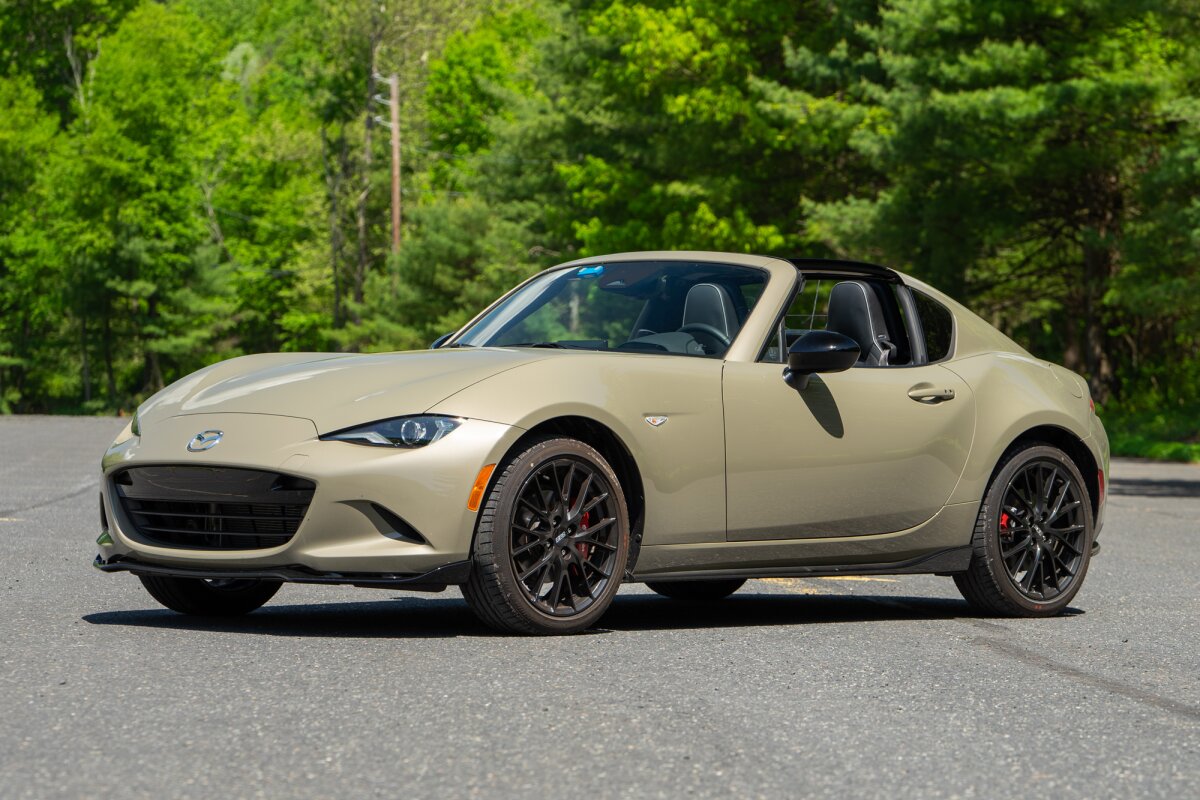
A Mazda executive indicated that synthetic fuel may allow the MX-5 Miata to preserve its defining characteristics, particularly its lightweight construction.
The current ND-generation MX-5 Miata has been on sale for more than a decade, making speculation about its successor unavoidable.
At the same time, mounting regulatory pressure and industry-wide decarbonization targets have led many to assume that some degree of electrification will define the next iteration. Mazda, however, is signaling that a fully electric or hybrid configuration may not be the only viable route forward.
Mazda Motor Europe Director of Research & Operations Christian Schultze suggested that synthetic fuel could allow the MX-5 to maintain the attributes that have long defined it: light weight, balanced dynamics and mechanical simplicity.
Unlike battery-electric systems, which require structural adjustments to accommodate heavy battery packs, synthetic fuel would enable the car to retain its existing architecture with minimal compromise.
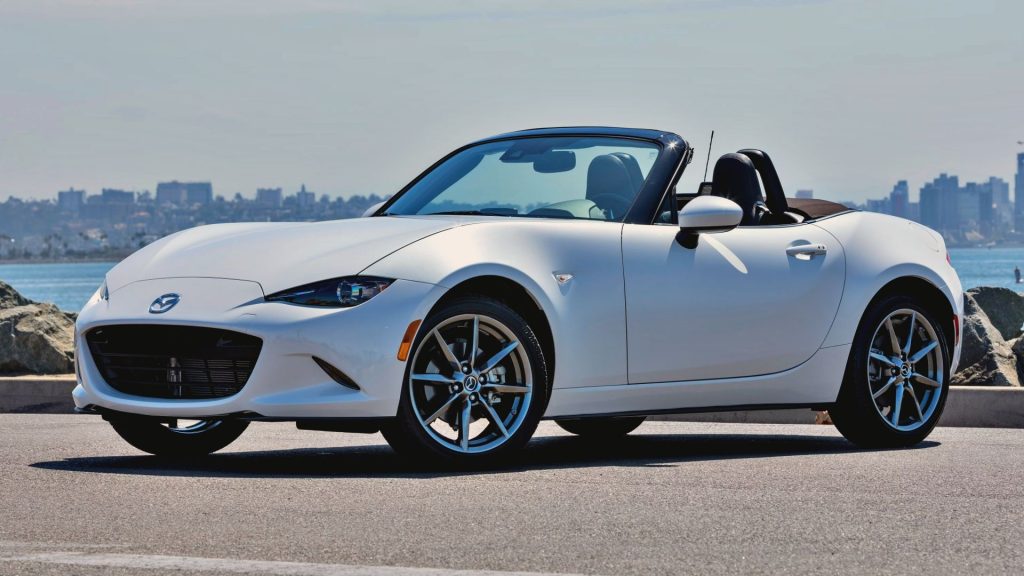
Schultze stated, “For a model like the MX-5, which relies so heavily on lightness, balance, and mechanical purity, that (the use of synthetic fuel) is a very logical route. The moment you go fully electric, you fundamentally change the architecture of the car.”
He continued, “That’s why I say, when it comes to the most direct and technically least drastic way to become more sustainable, synthetic fuels are the most obvious solution.”
While the concept aligns closely with the MX-5’s ethos, large-scale implementation presents economic and logistical hurdles. Synthetic fuel production remains costly, a reality acknowledged by Porsche, which supports an e-fuel initiative in Chile.
Mazda has also invested in this area and has previously competed with an MX-5 powered by synthetic fuel in Japan’s ENEOS Super Taikyu endurance racing series.
Government incentives could potentially narrow the cost gap, but current regulatory frameworks in many regions continue to prioritize battery-electric vehicles. Mazda has taken a measured approach to full electrification, opting instead to evaluate multiple technological pathways.
The company has not dismissed electrification entirely. Schultze referenced the appeal of quiet, open-top driving in a natural setting as a possible benefit of electric propulsion. Mild electrification is also under consideration, potentially paired with carbon-neutral fuel solutions.
Ultimately, Mazda’s direction will depend heavily on policy developments and regulatory allowances. While industry rumors have pointed to potential collaboration with Toyota on the next-generation MX-5, no formal partnership details have been announced.