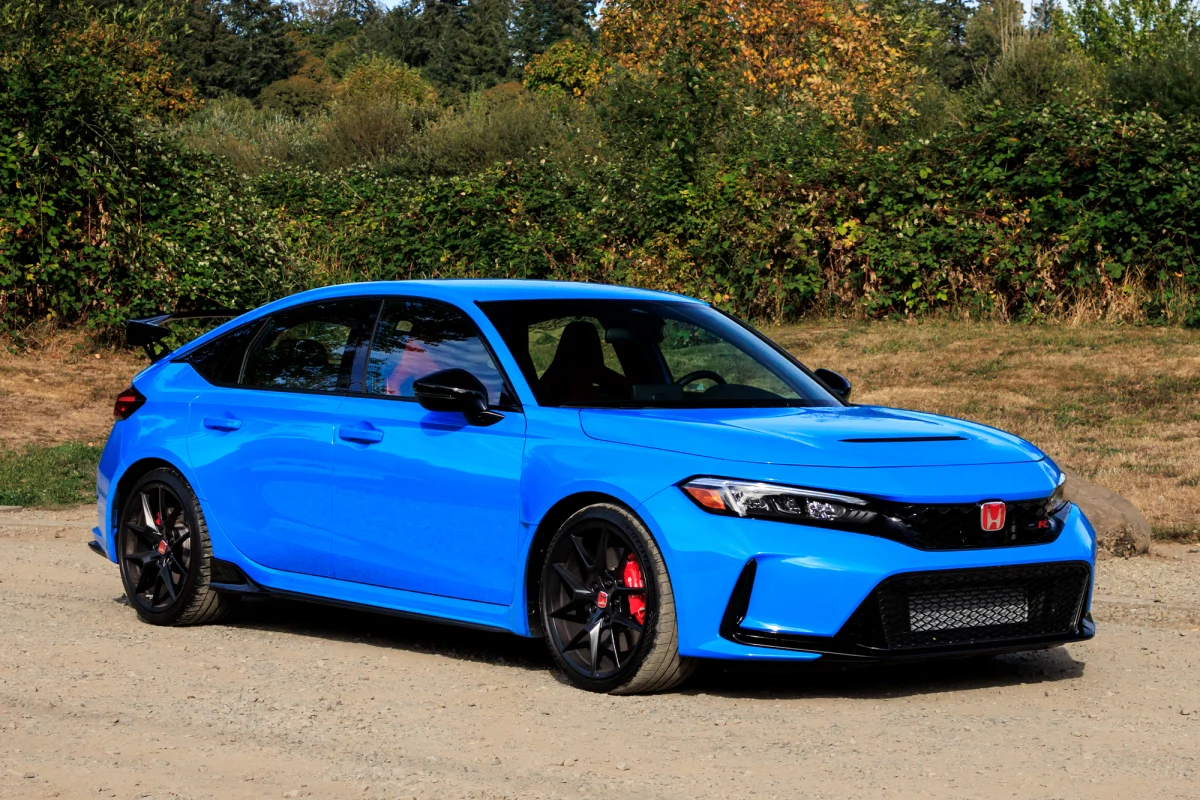
Manual transmissions may be increasingly rare, but they continue to hold a special place for driving enthusiasts who value control, precision, and engagement. The “Top 10 Cars With Manual Transmissions You Can Still Buy Brand New” highlights vehicles that keep the art of three-pedal driving alive, offering everything from nimble sports cars and hot hatches to powerful muscle cars and capable off-roaders.
These cars demonstrate that a manual gearbox can coexist with modern performance, comfort, and technology. Lightweight drivers like the Mazda MX-5 Miata and Subaru BRZ focus on balance, responsiveness, and connection, making every shift feel deliberate and rewarding.
Hot hatches such as the Honda Civic Type R, Toyota GR Corolla, and Volkswagen Jetta GLI blend everyday usability with spirited performance, giving enthusiasts a fun yet practical option. At the other end of the spectrum, cars like the Porsche 911 Carrera T, BMW M2, and Cadillac CT5-V Blackwing offer high-powered thrills, proving that manual transmissions are not just for entry-level models.
Even iconic American vehicles like the Ford Mustang GT and Jeep Wrangler show that a stick shift can complement both comfort and rugged capability, whether on the road or off it. This list celebrates cars that let drivers feel fully engaged, providing a driving experience that is increasingly rare among new vehicles.
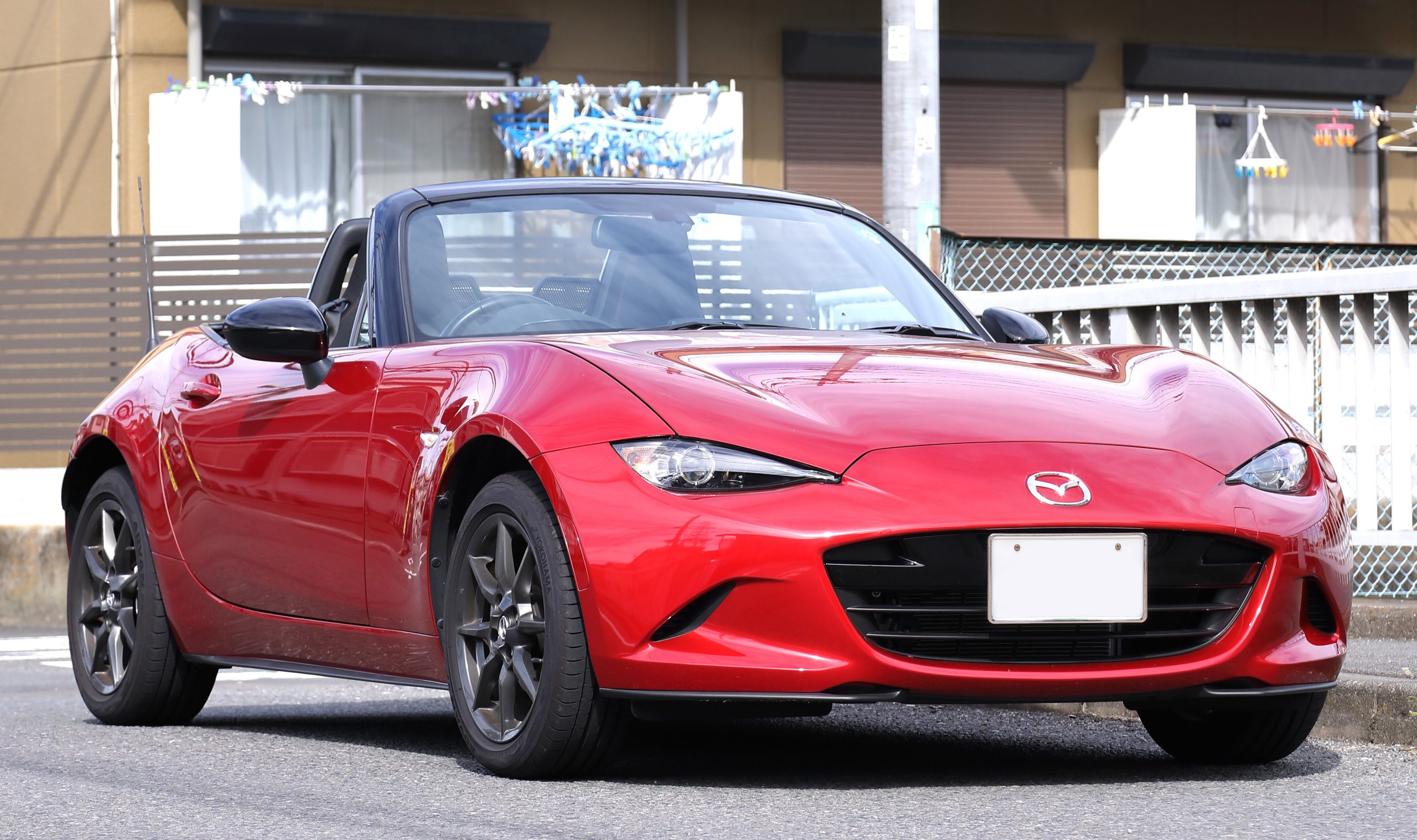
1. Mazda MX-5 Miata
The Mazda MX-5 Miata continues to stand as a benchmark for pure driving enjoyment, staying true to its lightweight, rear-wheel-drive formula. Powered by a 181-horsepower 2.0-liter naturally aspirated four-cylinder engine, the Miata prioritizes balance and responsiveness over outright power.
Its compact size and low curb weight allow the engine to feel lively and eager, especially when paired with its six-speed manual transmission, widely regarded as one of the finest in the industry. The short, precise throws and mechanical feel encourage drivers to explore the upper rev range, reinforcing the Miata’s philosophy of Jinba Ittai, the idea of horse and rider moving as one.
While a six-speed automatic is available and delivers quick, well-timed shifts, the manual remains central to the Miata’s identity. Manual-equipped trims often include performance enhancements such as Bilstein dampers, a limited-slip differential, and a strut-tower brace, features not offered with the automatic.
This focus on engagement and mechanical purity helps the Miata remain one of the most accessible and authentic sports cars on the market.
Performance is spirited rather than overwhelming. In testing, a Club RF manual model reached 60 mph in 5.5 seconds, placing it close to rivals like the Toyota GR86. Handling is sharp, playful, and highly communicative. The steering is light yet detailed, providing constant feedback about front tire grip. Ride quality is firm, particularly in the Club trim, but never punishing.
Fuel efficiency is another strength. EPA ratings reach up to 26 mpg city and 35 mpg highway, with real-world highway testing achieving 36 mpg.
Inside, the Miata offers a snug two-seat cabin that feels purpose-built. The design emphasizes essential controls such as the steering wheel, shifter, and tachometer. Materials are well finished, with leather available on higher trims. Space is limited, with minimal storage and a small trunk suitable for a weekend trip if packed carefully.
An 8.8-inch touchscreen infotainment system comes standard with Bluetooth, Apple CarPlay, and Android Auto. Safety features include automated emergency braking, blind-spot monitoring, and adaptive cruise control. Warranty coverage is average, with three years or 36,000 miles of limited coverage and five years or 60,000 miles for the powertrain.
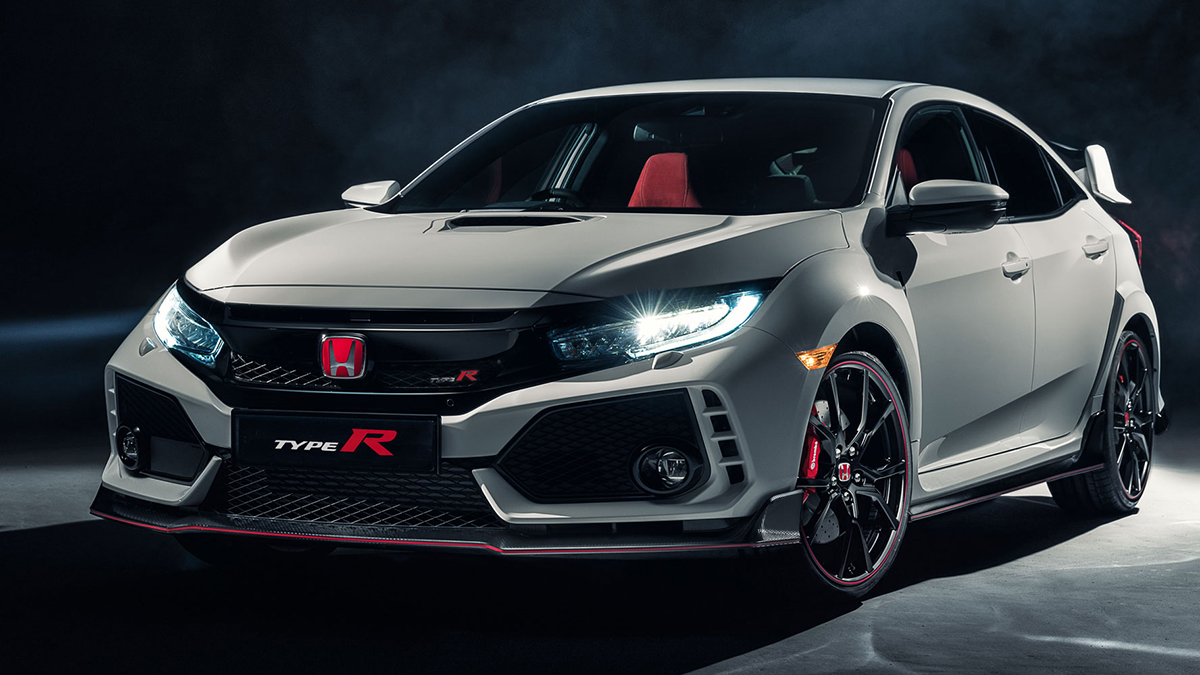
2. Honda Civic Type R
The Honda Civic Type R stands as one of the most celebrated front-wheel-drive performance cars ever produced. Powered by a 315-horsepower turbocharged 2.0-liter four-cylinder engine, it delivers high speed while maintaining the precision and balance expected from a track-focused machine.
A six-speed manual transmission is the only gearbox offered, reinforcing the car’s purist identity. The shifter, topped with a solid aluminum knob, is known for its crisp, mechanical feel, and the standard rev-match control system ensures smooth, stable downshifts during aggressive cornering.
Honda’s decision to retain a manual transmission reflects the Type R’s enthusiast focus. The manual provides direct control over torque delivery and corner entry behavior, giving drivers the ability to fine-tune the car’s attitude through bends. This commitment to engagement places it alongside performance cars such as the Nissan Z and select Porsche models that continue to offer manual options.
Performance numbers are impressive. In testing, the Civic Type R accelerated from 0 to 60 mph in 4.9 seconds and completed a demanding 0 to 150 to 0 mph test in just 52.7 seconds.
Its innovative dual-axis strut front suspension effectively minimizes torque steer, a common drawback in powerful front-wheel-drive cars. Compared to rivals like the Hyundai Elantra N with a manual transmission, the Type R is notably quicker to 60 mph.
Despite its track credentials, the Civic Type R remains practical. The four-door hatchback design offers generous passenger space, with rear seating comparable to the standard Civic hatchback, though configured for two rear passengers. Cargo capacity is a strong point, fitting seven carry-on suitcases in the trunk and up to 20 with the rear seats folded.
Fuel economy is respectable for a high-output performance car, rated at 22 mpg city and 28 mpg highway, with real-world highway testing returning 30 mpg.
Inside, the cabin blends minimalist design with racing-inspired details such as red accents, supportive sport seats, and shift lights integrated into the digital gauge cluster. A 9.0-inch touchscreen provides wireless Apple CarPlay and Android Auto, along with a 12-speaker Bose audio system.
Standard safety features include automated emergency braking, lane-keeping assist, and adaptive cruise control. Warranty coverage is average, with three years or 36,000 miles limited and five years or 60,000 miles powertrain coverage, plus one year of complimentary maintenance.
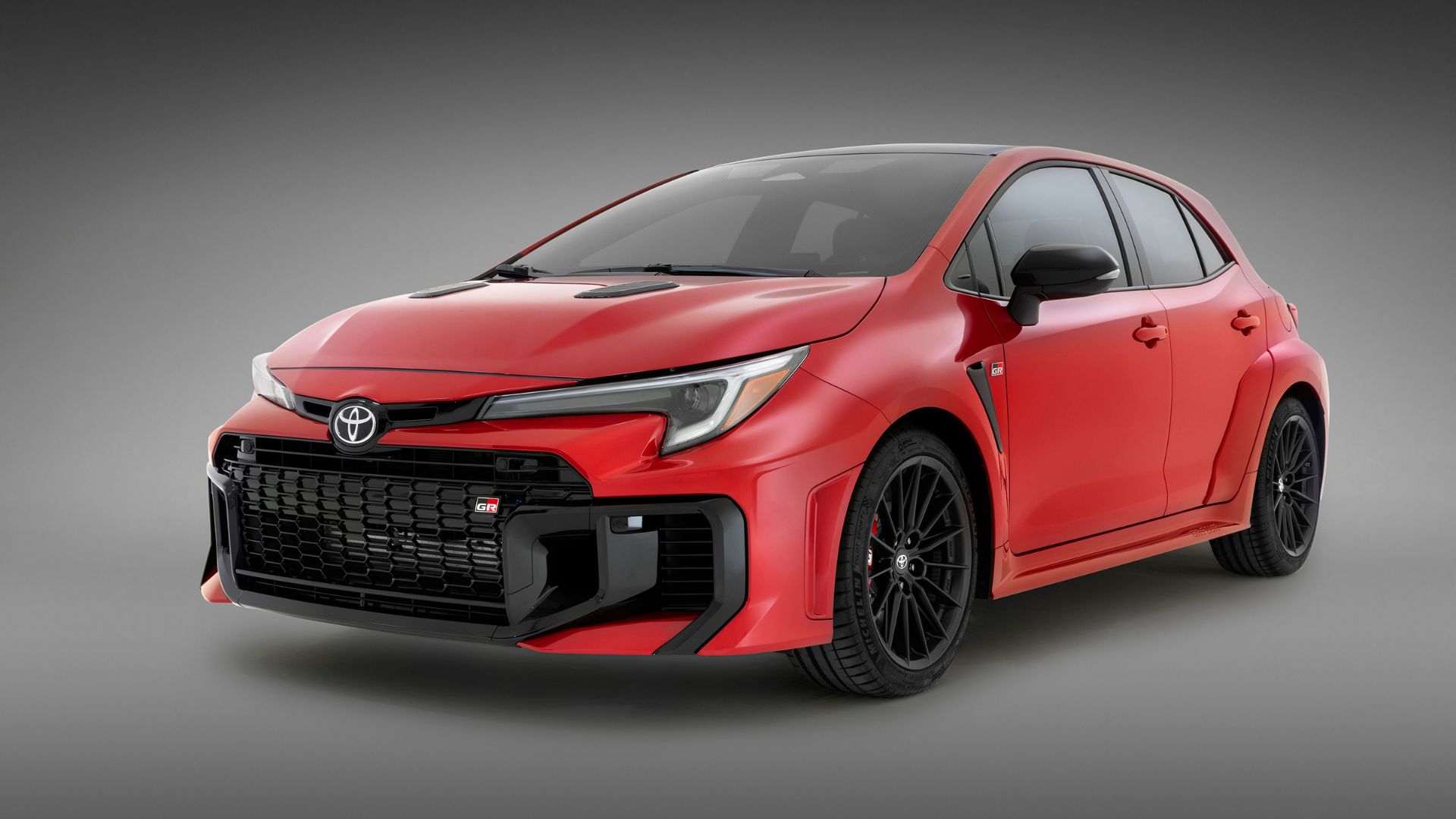
3. Toyota GR Corolla
The Toyota GR Corolla brings rally-inspired engineering to the hot hatch segment, combining a turbocharged 1.6-liter three-cylinder engine with a sophisticated all-wheel-drive system.
Producing 300 horsepower and 295 lb-ft of torque, this compact performance car delivers explosive acceleration in a practical five-door package. Developed under Toyota’s Gazoo Racing division, the GR Corolla emphasizes motorsports character while remaining usable for everyday driving.
A six-speed manual transmission comes standard, underscoring the car’s enthusiast focus. For 2025, Toyota introduced an optional eight-speed automatic, but the manual remains central to the model’s identity. Updates such as a snappier clutch return improve responsiveness, and a standard rev-match feature smooths downshifts.
While heel-toe shifting can be slightly awkward due to pedal placement, the manual gearbox offers strong engagement and precise control. Both transmissions are quick, with the manual reaching 60 mph in 4.9 seconds and the automatic close behind at 5.0 seconds. In comparison, the more powerful Volkswagen Golf R achieves 60 mph in 4.6 seconds.
The GR Corolla’s standout feature is its GR-Four all-wheel-drive system. Drivers can select different torque splits, including 60/40 for daily use, 50/50 for maximum traction, and up to 30/70 for a more rear-biased, playful feel. This flexibility gives the car impressive grip and balance on twisty roads while maintaining civility in normal driving.
Fuel economy is respectable for a high-output hatchback. Manual models previously achieved up to 21 mpg city and 28 mpg highway, slightly better than the automatic version.
Inside, the GR Corolla shares much of its layout with the standard Corolla hatchback, offering solid build quality and sport-focused touches such as supportive seats and aluminum pedals. Rear seat space is adequate but not generous. Cargo capacity is practical, fitting three carry-on suitcases with seats up and up to 15 with them folded.
Technology includes an 8.0 inch infotainment display with wireless Apple CarPlay and Android Auto. Standard safety features cover automated emergency braking, lane-keeping assist, and adaptive cruise control. Warranty coverage includes two years of complimentary maintenance, reinforcing its appeal as both a thrilling and rational performance choice.
4. Porsche 911 Carrera T
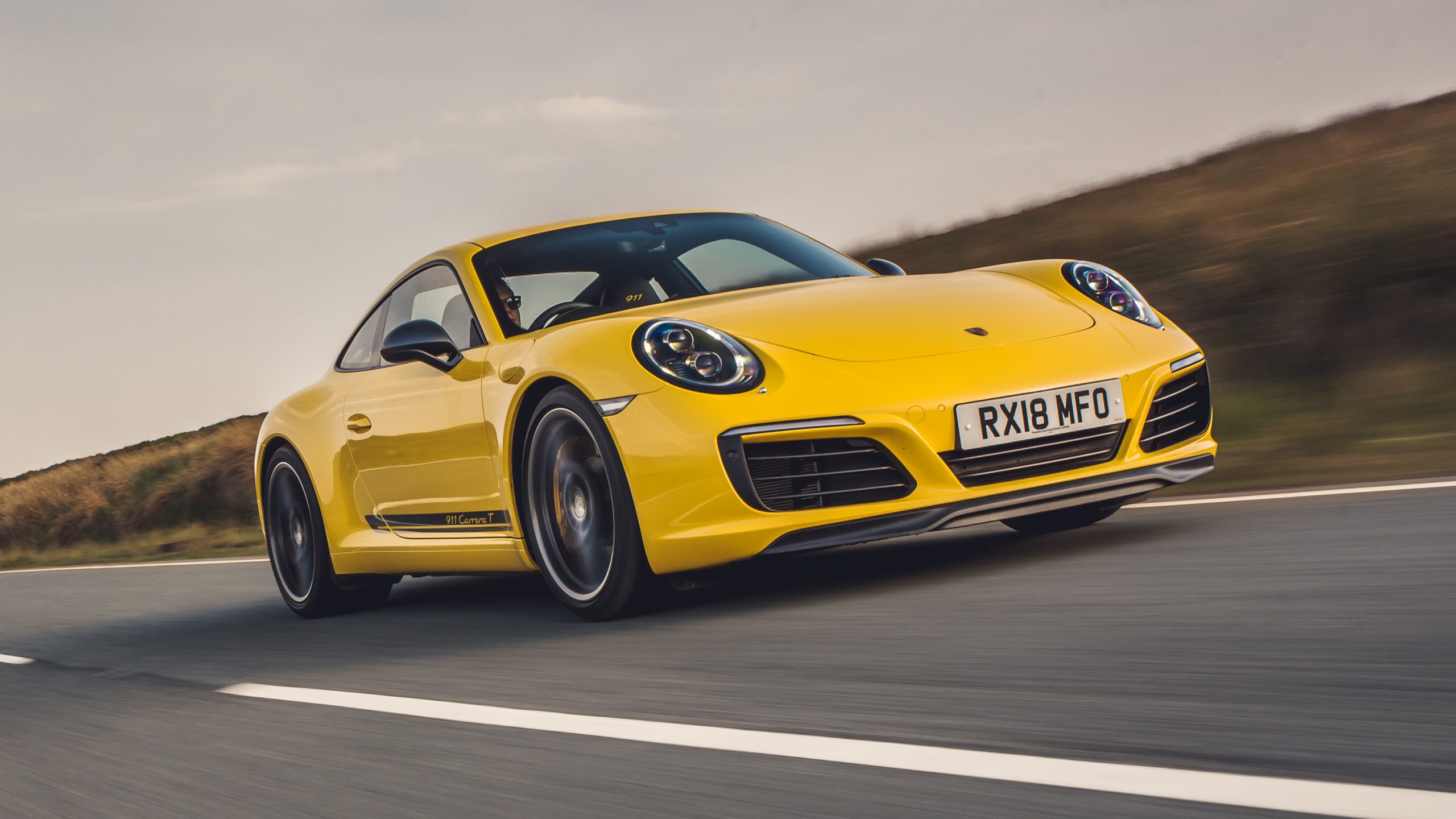
The Porsche 911 Carrera T represents a back-to-basics approach within the iconic 911 lineup, created specifically for drivers who value engagement over outright speed.
Positioned as a Touring model, the Carrera T is sold exclusively with a six-speed manual transmission, making it one of the few modern 911 variants, alongside the GT3, to retain a traditional three-pedal setup. Strong demand supports this strategy, with a large majority of recent Carrera T buyers choosing manual models.
Power comes from a twin-turbocharged 3.0-liter flat-six producing 388 horsepower and 331 lb-ft of torque. While it shares its engine with the base Carrera, the T distinguishes itself through weight reduction and chassis tuning.
By eliminating the rear seats, reducing sound insulation, using thinner glass, and fitting the lighter manual gearbox, the Carrera T becomes one of the lightest non-GT models in the range. Porsche also equips it with adaptive dampers that lower the ride height, rear-wheel steering, a sport exhaust, and larger staggered wheels wrapped in performance tires. These components are specifically tuned to sharpen responsiveness.
Performance remains impressive. The Carrera T reaches 60 mph in 3.7 seconds and completes the quarter mile in 12.0 seconds at 118 mph. Though slightly slower than the dual-clutch automatic Carrera, the manual model offers a more immersive experience.
The clutch is easy to modulate, and the shift linkage feels light and precise, encouraging drivers to stay engaged with the engine’s broad power band. As revs climb toward the 7500 rpm redline, the flat-six delivers an intense mechanical soundtrack that enhances the sense of occasion.
On winding roads, the Carrera T shines. Steering feedback builds naturally, grip peaks at 1.07 g, and braking performance is strong and confidence-inspiring. Despite its track capability, the suspension remains comfortable enough for daily driving, reinforcing the 911’s dual personality.
With a focused feature set and a base price reflecting its premium status, the Carrera T delivers a distilled 911 experience that blends heritage, balance, and pure driver involvement.
5. BMW M2
The BMW M2 blends traditional rear-wheel-drive performance with modern technology, standing out as one of the few remaining compact sports coupes to offer a manual transmission. Powered by a twin-turbocharged 3.0-liter inline-six, the standard 2026 M2 produces 473 horsepower.
Manual models generate 406 lb-ft of torque, while the eight-speed automatic version increases torque to 443 lb-ft and delivers quicker acceleration. Despite the automatic’s speed advantage, nearly half of M2 buyers choose the six-speed manual, underscoring strong enthusiast demand.
The manual gearbox is available only on the rear-wheel-drive base M2, reinforcing its purist positioning. Although the shifter can feel slightly springy compared to a Porsche’s, it adds a level of driver involvement that many enthusiasts value. BMW has indicated that this generation may be the final manual M car, making the M2 something of a last celebration of analog performance within the brand’s lineup.
Performance figures are impressive. A manual-equipped M2 reaches 60 mph in 3.9 seconds and completes the quarter mile in 12.1 seconds at 120 mph. The automatic trims those numbers to 3.5 seconds and 11.6 seconds, respectively.
For even greater intensity, the M2 CS raises output to 523 horsepower, though it is automatic only. The M2’s specially tuned suspension and rear-drive layout deliver sharp turn-in, strong grip, and balanced handling, while still maintaining everyday usability.
Fuel economy is rated at 16 mpg city and 23 mpg highway, though real-world highway testing has exceeded estimates.
Inside, the M2 shares its layout with the 2-series coupe but upgrades materials and adds M-specific details. A curved display integrates a 12.3-inch digital gauge cluster with a 14.9-inch touchscreen running BMW’s latest iDrive system. Apple CarPlay and Android Auto are standard. Optional carbon-fiber sport seats reduce weight and enhance track readiness.
Safety features include automated emergency braking, lane-departure warning, and adaptive cruise control. BMW backs the M2 with a four-year or 50,000-mile warranty and three years of complimentary maintenance, strengthening its appeal as both a performance icon and a livable daily driver.

Also read: 5 Cars That Are Unstoppable in Deep Snow vs 5 AWD Models That Get Stuck
6. Subaru BRZ
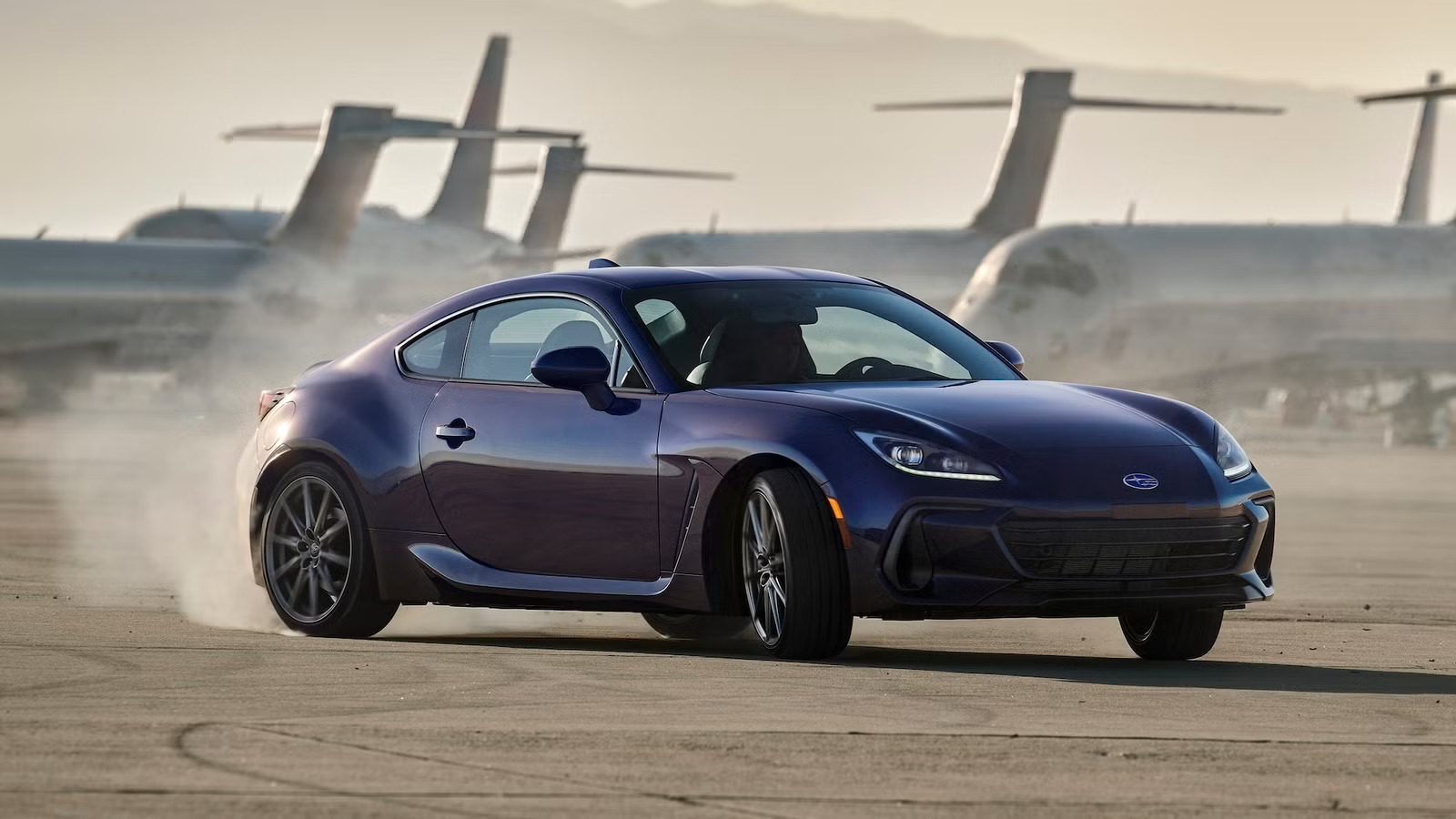
The Subaru BRZ remains one of the purest and most affordable rear-wheel-drive sports cars on the market. Developed alongside the Toyota GR86, the BRZ focuses on balance, agility, and driver involvement rather than outright horsepower.
Every model comes with a naturally aspirated 2.4-liter flat-four boxer engine producing 228 horsepower and 184 lb-ft of torque. A six-speed manual transmission is standard, reinforcing the car’s enthusiast-focused identity, while a six-speed automatic is optional.
The manual gearbox plays a central role in the BRZ’s appeal. Its direct mechanical feel enhances the connection between driver and machine, aligning with the coupe’s lightweight, rear-wheel-drive layout. Strong buyer demand continues to justify the availability of three pedals, even as manuals become rarer across the industry.
Performance is lively, with manual models reaching 60 mph in about 5.9 seconds, quicker than the automatic version. A new Sport mode sharpens throttle response in manual-equipped cars, adding even more immediacy.
Handling remains the BRZ’s greatest strength. The chassis delivers excellent balance, poised high-speed stability, and communicative steering. For drivers seeking enhanced performance, the tS trim adds STI-tuned suspension components, Hitachi dampers, and four-piston Brembo brakes. The tS has recorded a 0 to 60 mph time of 5.8 seconds and impressive braking and figure-eight results, making it the sharpest BRZ variant yet.
While the BRZ excels in dynamics, there are trade-offs. Cabin noise can be noticeable during daily driving, and rear-seat space is limited. The 2+2 layout works best for small passengers or additional storage. Trunk space, at 6.3 cubic feet, is practical for a sports coupe and surpasses the Mazda MX-5 Miata, though it trails larger coupes like the Ford Mustang.
Inside, all trims feature an 8.0 inch touchscreen with Apple CarPlay and Android Auto, along with a digital instrument cluster displaying performance data. Subaru’s EyeSight safety suite comes standard, offering adaptive cruise control, automatic emergency braking, and lane-departure warning.
With strong safety ratings, accessible pricing, and a genuine focus on driving enjoyment, the BRZ stands as a compelling entry point into authentic sports car ownership.
7. Cadillac CT5-V Blackwing
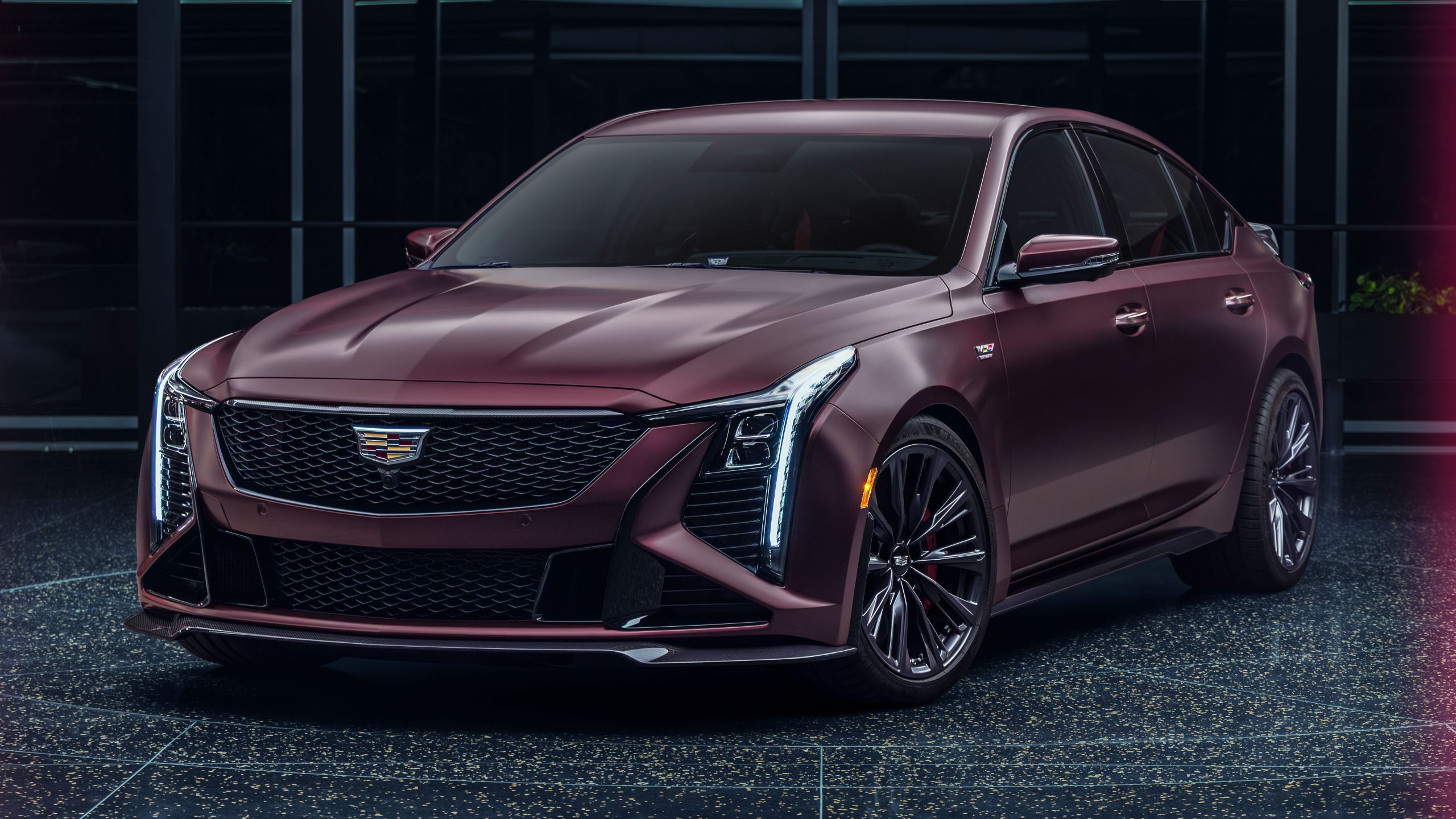
The Cadillac CT5-V Blackwing stands as one of the last great expressions of American performance in a luxury sedan. Powered by a supercharged 6.2-liter V8 producing 668 horsepower, it is currently General Motors’ most powerful vehicle offered with a manual transmission.
This four-door sedan blends everyday usability with track-ready capability, sprinting from 0 to 60 mph in as little as 3.4 seconds. Reviewers at Top Gear have called it the ultimate dad car, pairing muscle car intensity with executive comfort.
A defining feature of the CT5-V Blackwing is its standard six-speed manual gearbox. At a time when most high-performance sedans have shifted to automatic-only setups or electrification, Cadillac made the manual a priority for driving enthusiasts. Strong buyer demand justified the engineering investment, with a significant percentage of Blackwing customers choosing three pedals.
The Tremec-sourced transmission includes active rev-matching and no-lift shift capability, allowing drivers to keep the throttle pinned during gear changes. While the optional 10-speed automatic is slightly quicker on a track, the manual delivers a more connected and engaging experience.
Performance hardware supports the car’s immense output. A limited-slip differential, launch control with line lock, and Performance Traction Management help put power to the pavement.
Standard magnetorheological dampers continuously adjust to road conditions, balancing comfort and cornering precision. For even sharper dynamics, the available Precision package adds stiffer suspension tuning, additional tire grip, and revised camber settings.
In testing, manual models have reached 60 mph in 3.6 seconds, with the automatic trimming that to 3.5 seconds. In a demanding 0 to 150 to 0 mph test, the Blackwing performed within fractions of a second of the Porsche 911 GT3 RS, underscoring its serious credentials. Despite its performance focus, the sedan remains livable, offering EPA ratings up to 22 mpg highway with the automatic.
Inside, the Blackwing features leather upholstery, ventilated and massaging seats, a digital gauge cluster, and a massive 33-inch 9K resolution display with Google-based infotainment. Wireless Apple CarPlay, Android Auto, WiFi, and a 16-speaker AKG audio system are standard. Advanced driver assistance features are included, though Super Cruise is limited to automatic models.
With a six-year or 70,000-mile powertrain warranty, the CT5-V Blackwing represents a rare and compelling blend of heritage, technology, and unfiltered V8 performance.
8. Ford Mustang GT
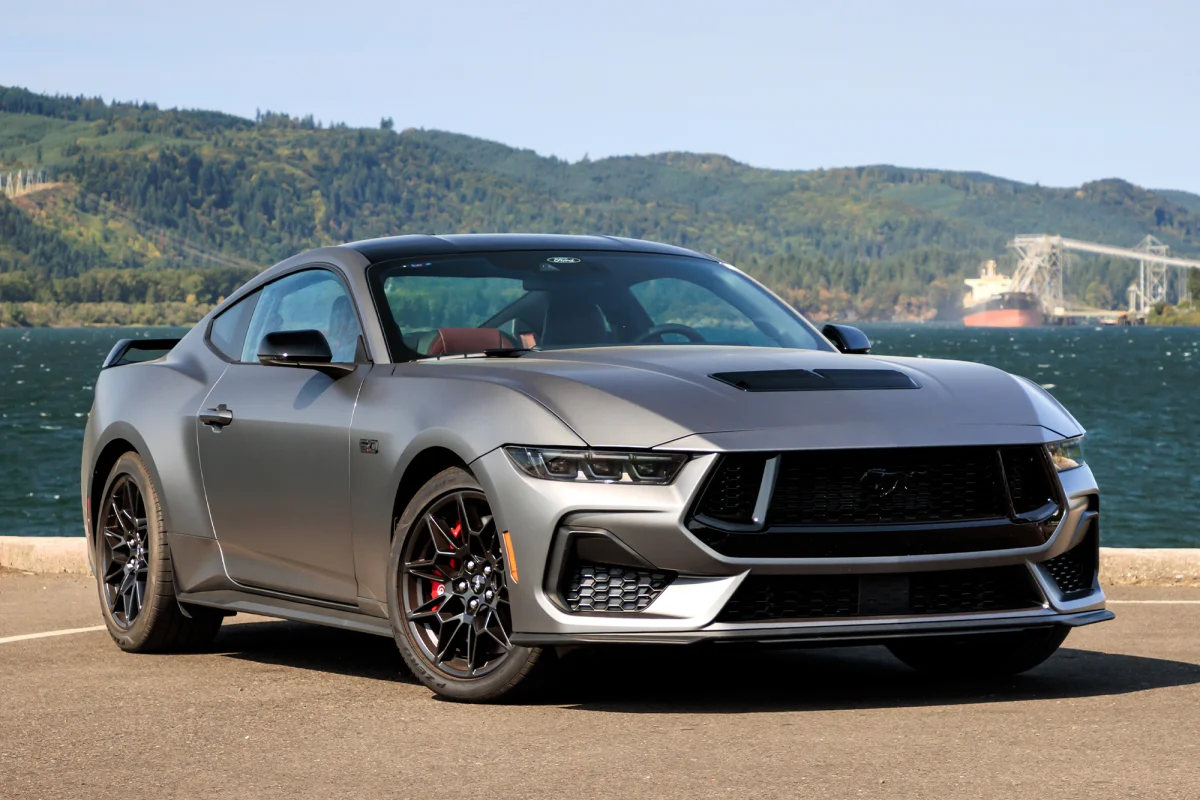
The Ford Mustang GT continues to uphold its reputation as an American icon by pairing a naturally aspirated 5.0-liter V8 with a six-speed manual transmission. In the 2025 to 2026 model years, the manual is reserved exclusively for V8 powered GT models, while EcoBoost versions have moved to automatic only.
This decision reinforces the Mustang’s appeal to purists who value a visceral, driver-controlled experience. Reviewers at Carwow note that the manual transmission is the ideal specification for unlocking the raw character and theatrical soundtrack of the V8.
The latest S650 generation Mustang represents one of the last opportunities to buy a Rear Wheel Drive, naturally aspirated V8 coupe with a manual gearbox in Europe. Tightening emissions regulations have reduced output slightly for European models to 440 bhp and 398 lb ft of torque, though the engine remains charismatic and eager.
Dual intake throttle bodies, revised induction, and updated cams help maintain strong performance. The manual gearbox comes standard, while a 10-speed automatic is optional. Although the automatic delivers marginally quicker acceleration, the manual better suits the Mustang’s personality with its heavy, positive shift action and features such as no lift shifting.
Performance is strong rather than extreme. The manual GT reaches 62 mph in about 5.3 seconds. Power delivery is linear and manageable, lacking the explosive surge of turbocharged rivals but offering smooth, progressive thrust.
The car’s size is noticeable on tight roads, yet comfortable seats, good visibility, and balanced controls make it easy to settle into. With selectable drive modes including Sport, Track, Drag, and Slippery, drivers can tailor steering weight, throttle response, and damping when equipped with optional MagneRide suspension.
Handling is friendly and predictable. The front end offers solid grip, and the limited slip differential allows subtle throttle adjustments through corners. Steering feedback is limited, yet the chassis balance inspires confidence. The GT feels more like a capable grand tourer than an out and out track weapon, delivering a sense of occasion on everyday drives.
Inside, the Ford Mustang GT features a modern twin-screen digital cockpit, trading some of its classic styling cues for contemporary technology. Interior quality has improved, and the system includes configurable displays along with updated infotainment.
Priced at around $58,000 in the United States, it competes with cars such as the Porsche 718 Cayman and BMW M2, yet few rivals deliver the same blend of naturally aspirated V8 character and hands-on manual engagement.
9. Jeep Wrangler
The Jeep Wrangler remains a favorite for off-road enthusiasts, offering a six-speed manual transmission that is now limited to models with the 3.6-liter V6 engine. This manual allows precise control during low-speed rock crawling and other difficult terrain, giving trail drivers an advantage over automatic models.
Recent updates removed the manual from turbo four-cylinder and hybrid 4xe variants, making the V6 the last option for stick-shift fans. Despite its rugged design, modern Wranglers include safety technologies such as Hill Start Assist and infotainment systems with 12.3-inch touchscreens to improve daily usability.
Manual transmissions continue in the Wrangler lineup to deliver engagement, simplicity, and reliability. They provide better engine braking on steep inclines, lower maintenance costs, and a lower starting price. Enthusiasts value the connected experience of controlling gear shifts, and the 3.6L Pentastar V6 paired with the six-speed manual ensures a traditional, high-torque off-road option.
Engine choices include a 285-hp 3.6L V6, a 270-hp turbocharged four-cylinder, and a 470-hp 6.4L V8, with the manual restricted to the V6. All Wranglers come with part-time four-wheel drive, while full-time systems are available on Sport, Sahara, and Rubicon models, and standard on the 392 variant.
The Wrangler’s ride is rugged yet manageable, with the four-door offering a smoother experience than the two-door, which can feel bouncy on rough terrain.
Performance varies widely, with the 392 V8 reaching 60 mph in 4.0 seconds and the Sport V6 manual taking 6.1 seconds. Towing capacity ranges from 2,000 pounds for the two-door to 5,000 pounds for the 392. Fuel economy is modest, with the V6 manual rated 16 to 23 mpg highway and the V8 at 13 to 16 mpg.
Inside, the Wrangler focuses on utility over luxury. It has an upright dashboard, round vents, and chunky controls. Rear seating is spacious in four-door models, but tight in two-door models, and cargo space favors the larger model.
Infotainment includes Apple CarPlay, Android Auto, and an optional Alpine 9-speaker stereo. Optional safety features include blind-spot monitoring, rear cross-traffic alert, and parking sensors, though advanced driver aids are limited.
Jeep offers a three-year or 36,000-mile limited warranty, a five-year or 60,000-mile powertrain warranty, and two complimentary maintenance visits. The Wrangler’s combination of manual engagement, off-road capability, and modern tech keeps it popular among adventure-focused drivers.

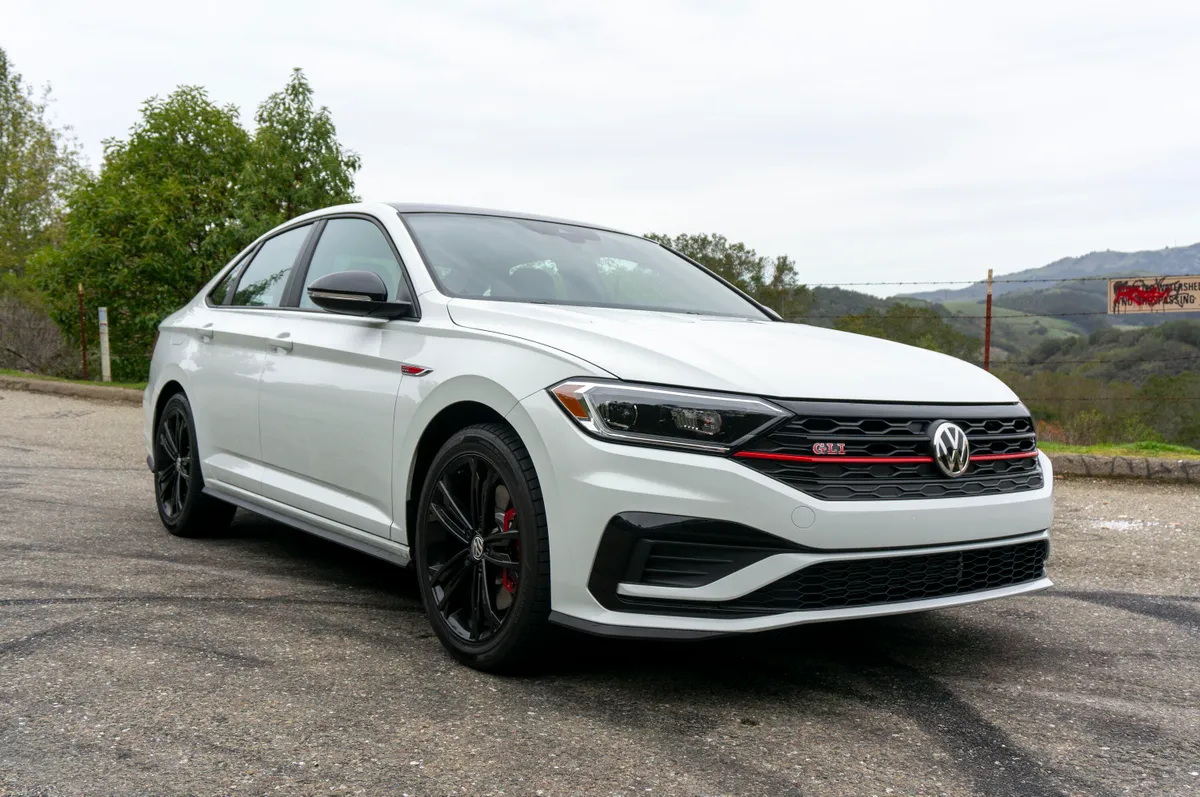
10. Volkswagen Jetta GLI
With the discontinuation of the Golf GTI manual in the United States, the Volkswagen Jetta GLI now stands as the only new Volkswagen available with a six-speed manual transmission for 2026.
Powered by a 228-horsepower turbocharged four-cylinder engine, the Jetta GLI blends practical sedan usability with sporty, driver-focused performance. It serves as a daily-driver alternative to a hot hatch, offering enthusiasts the ability to shift their own gears while retaining comfort and four-door convenience.
The manual transmission continues to be offered because U.S. buyers still demand it. Approximately 30 to 40 percent of GLI customers opt for the stick shift, making it a viable choice for Volkswagen despite the global trend toward automatics.
The manual preserves the “authentic” driving experience, giving more engagement than the seven-speed dual-clutch automatic while maintaining a niche against rivals like the Honda Civic Si, Hyundai Elantra N, and Subaru WRX.
Externally, the 2025/2026 GLI has received modest updates, including a refreshed front bumper, new wheels, and a unibrow-style rear taillight. The interior retains a traditional setup with physical climate controls alongside modern tech. Pricing for the fully loaded Autobahn trim starts at $34,970, positioning it competitively between the Civic Si and base Golf GTI, and slightly under the automatic Hyundai Elantra N.
Performance remains a strong point. The Jetta GLI reaches 60 mph in 5.6 seconds with the dual-clutch automatic, while the six-speed manual is just four-tenths slower.
Quarter-mile times are similarly close, with the GLI completing it in 14.2 seconds at 103 mph. Its electronically controlled, limited-slip differential and three-way adjustable adaptive dampers provide predictable, engaging handling on highways and twisty roads alike, making the GLI a fun, usable sports sedan for everyday driving.
Although the Jetta GLI is now in its seventh generation, its age shows in some interior elements and the lack of a summer-tire upgrade on the Autobahn trim. However, it continues to deliver a satisfying combination of daily comfort, sharp handling, and manual engagement. For enthusiasts seeking a turbocharged, manual-equipped sedan in the U.S., the GLI remains an appealing, practical, and surprisingly fun option.
The cars on this list show that manual transmissions still provide a unique and rewarding driving experience. They allow drivers to control every shift, fully utilize engine performance, and feel connected to the car in ways that automatic transmissions cannot match.
Owning a manual is a choice that emphasizes enjoyment, skill, and driver involvement. These vehicles combine modern amenities, safety features, and technology with the thrill of a stick shift, making them both practical and exciting.
Whether it is a lightweight sports car, a high-powered coupe, or a rugged off-roader, manual-equipped models provide an authentic driving experience. With three pedals becoming increasingly rare in new vehicles, the ten cars featured here represent the best opportunities to experience true engagement and enjoyment behind the wheel while keeping the tradition of manual transmissions alive.
Also read: Top 10 Cars Under 15000 Dollars That Feel Like They Cost Double