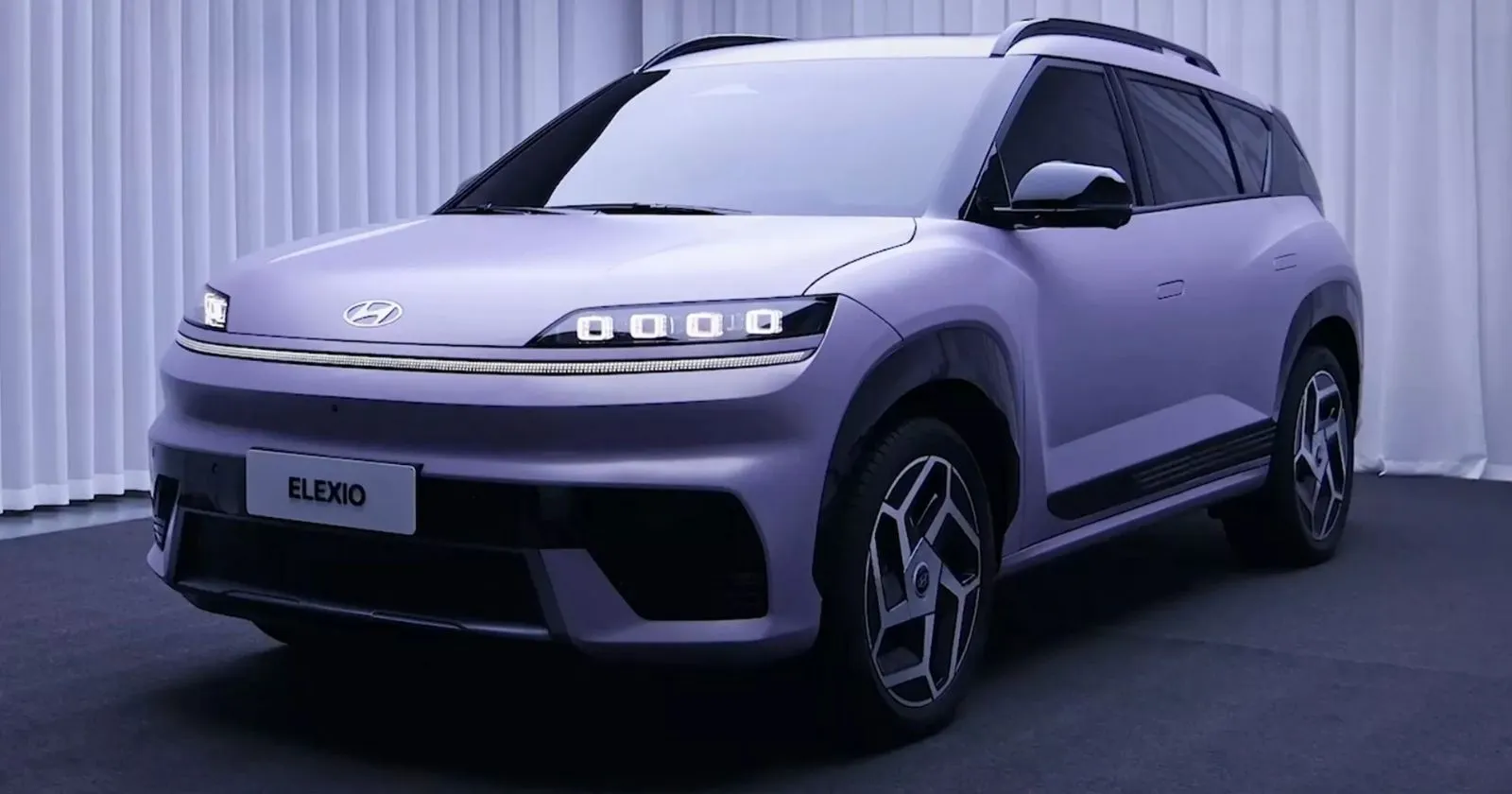
Electric vehicles account for just over eight percent of new car sales in Australia, so they remain far from dominant. Even so, competition in the segment has intensified sharply in recent years, driven largely by an influx of new Chinese brands. Hyundai’s response is the Elexio, its newest EV, aimed directly at this rapidly expanding field of rivals.
Unlike any previous electric Hyundai, the Elexio was not developed solely in-house. Instead, it was created through Hyundai’s joint venture with BAIC Motors.
As a result, it is manufactured in China, leveraging the country’s large-scale production capacity and efficiency, combined with Hyundai’s engineering expertise and brand credibility. When first unveiled last year, it appeared destined to remain exclusive to China. However, it has since launched in Australia, where we were among the first to drive it earlier this month.
Positioned between the Kona EV and Ioniq 5, the Elexio serves as an all-electric alternative to the Hyundai Tucson. It targets key competitors such as the Tesla Model Y, Kia EV5, BYD Sealion 7, and Xpeng G6, a strategy reflected in its pricing.
Two variants are available: the base Elexio and the range-topping Elexio Elite. The entry model starts at AU$58,990 (US$41,900) before on-road costs, while the Elite is priced from AU$61,990 (US$44,000). For a limited period through the end of March, the Elite is offered at AU$59,990 (US$42,600) drive-away.
Hyundai anticipates strong demand and expects the Elexio to become its best-selling EV in Australia. That ambition faces stiff competition, however, as the Kia EV6, Tesla Model Y Premium, BYD Sealion 7 Premium, and Zeekr 7X all undercut it on price.
Under the skin, the Elexio rides on Hyundai’s E-GMP platform, like the Ioniq range, though it uses a 400-volt system rather than the Ioniqs’ 800-volt architecture. Charging the 88.1 kWh battery from 10 to 80 percent on a 150 kW charger takes 38 minutes, with peak speeds in the mid-120 kW range.
While slightly slower than the Kia EV5’s 36-minute time, the Hyundai compensates with a substantially larger battery. Power comes from a front-mounted electric motor producing 160 kW (215 hp) and 310 Nm (236 lb-ft). Hyundai claims 18.2 kWh/100 km efficiency, though real-world testing returned 19.5 kWh/100 km.
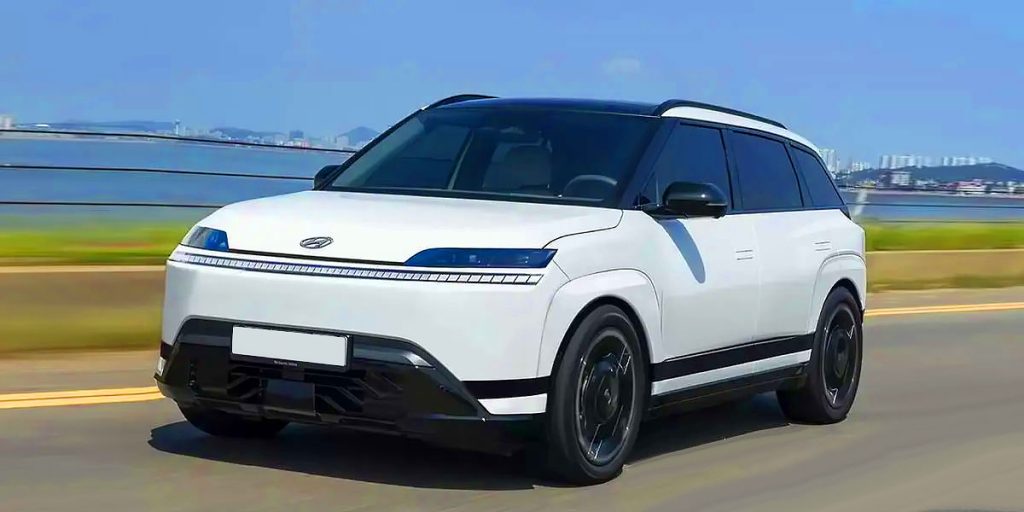
Inside, the Elexio adopts a distinctly digital-first approach. The flagship Elite features a sweeping 27-inch widescreen display integrating both infotainment and passenger functions. Running Hyundai’s new Connect-C system on Android Automotive with a Snapdragon 8295 processor and Unreal 3D graphics engine, the setup delivers sharp visuals and quick responses.
However, its reach and usability while driving can be inconvenient. A traditional instrument cluster is replaced by a head-up display that projects onto a dedicated black section of the windshield for improved contrast, though this may complicate windshield replacement.
Cabin quality is competitive with Chinese rivals like the BYD Sealion 7 and feels more premium than the Kia EV5. Soft-touch materials, suede trim, heated and ventilated seats, leather upholstery, and dual wireless chargers enhance the Elite’s appeal.
Passenger space is generous despite a 2,750 mm wheelbase, and cargo capacity stands at 506 liters, expanding to 1,540 liters with the rear seats folded. Notably absent are a panoramic glass roof and a frunk.
On the road, the Elexio delivers smooth and quiet performance suitable for everyday use. It avoids the torque steer issues seen in the EV5, though it can spin its inside front wheel under heavy throttle. Ride quality is comfortable and softer than many EV rivals. Regenerative braking is well calibrated, with seamless transitions between regen and mechanical braking.
However, software refinement remains a work in progress. Lane-keeping and lane-centering functions occasionally struggled with clearly marked roads, and adaptive cruise control once braked unexpectedly. The driver monitoring system is overly sensitive, and disabling it requires navigating multiple menu layers.
The Elexio surpasses the Kia EV5 and is likely to attract buyers considering the Kona EV or Ioniq 5. Still, prospective customers may benefit from waiting, given Hyundai’s recent price reductions on other EVs. More critically, further software improvements, particularly to its advanced driver assistance systems, would strengthen its position in an increasingly competitive segment.