

With gas prices in the United States fluctuating throughout the year, fuel economy remains a top concern for drivers.
While many consumers consider trading in their vehicle for a hybrid or electric model to reduce fuel costs, the reality is that most Americans will continue driving their current vehicle for years.
The good news is that meaningful improvements in fuel efficiency do not always require new hardware, expensive modifications, or professional upgrades. In many cases, simple behavioral and maintenance adjustments can produce noticeable savings, at no cost.
Fuel economy is influenced by more than engine size or vehicle weight. Driving habits, tire condition, aerodynamics, and even trip planning play significant roles in how efficiently your car consumes fuel. By optimizing these factors, drivers can often gain several miles per gallon without spending a dollar.
Below are nine practical, cost-free ways to improve your current car’s fuel economy.
1. Smooth Out Your Acceleration
Smoothing out your acceleration is one of the most effective and overlooked ways to improve fuel economy without spending a single dollar. Many drivers unintentionally waste fuel through rapid throttle inputs. pressing hard on the accelerator to reach cruising speed quickly, only to brake moments later.
While modern engines are designed to deliver responsive performance, they consume significantly more fuel during aggressive acceleration.
When you press the accelerator abruptly, the engine control system increases fuel injection to meet the sudden demand for power. This creates a spike in fuel consumption.
In city driving, where traffic lights and congestion are frequent, repeated bursts of hard acceleration followed by braking create a cycle of inefficiency. Each time you accelerate sharply, you burn more fuel than necessary to reach the same speed you could have achieved gradually.
By applying steady, progressive pressure to the accelerator, you allow the engine to operate within a more efficient range. Smooth acceleration reduces unnecessary fuel injection and helps maintain a consistent power curve.
The difference may feel subtle behind the wheel, but over time it can translate into measurable fuel savings, particularly for commuters navigating daily stop-and-go traffic.
In addition to improving fuel economy, smoother acceleration reduces wear on mechanical components. Transmission systems, engine mounts, and drivetrain parts experience less stress when throttle input is controlled. This can contribute to longer component life and lower maintenance costs over time.
This technique is especially beneficial in urban environments across the United States, where traffic signals and variable traffic flow dominate daily driving patterns. Instead of racing toward a red light, anticipate traffic changes and allow your vehicle to build speed naturally.
Smooth acceleration does not mean driving slowly or disrupting traffic flow. It simply involves eliminating unnecessary throttle spikes and maintaining controlled momentum. Combined with other efficiency habits, such as steady highway speeds and proper tire inflation, this adjustment can help stretch every gallon further.
2. Maintain Consistent Speeds on Highways
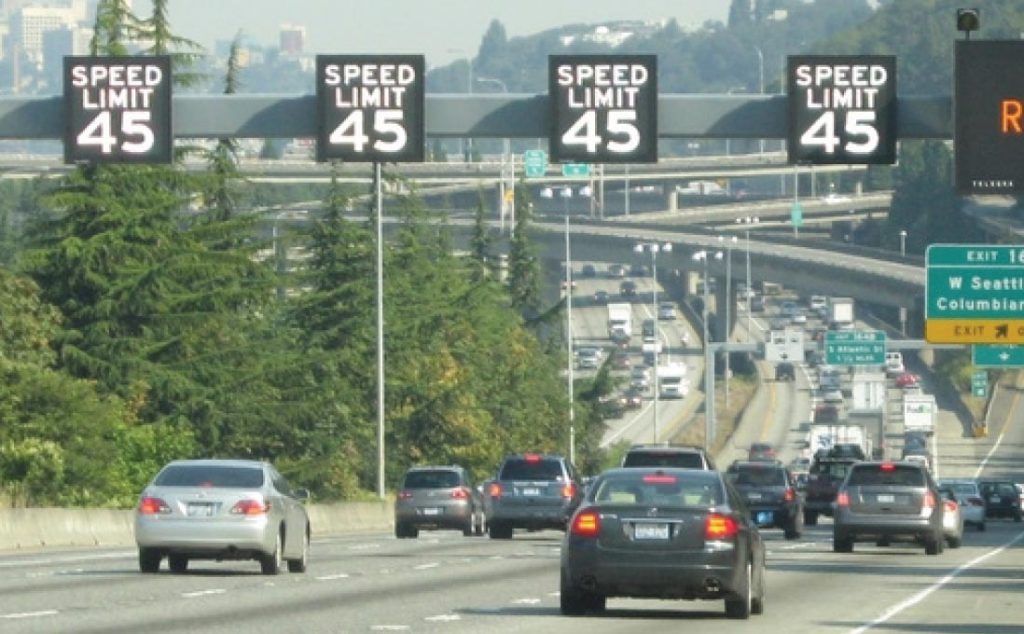
Maintaining consistent speeds on highways is one of the simplest ways to improve fuel economy, yet it is often overlooked.
Many drivers unknowingly waste fuel by frequently accelerating and decelerating, even when traffic conditions allow for steady cruising. Each time you press the accelerator to regain speed, the engine must inject additional fuel to overcome inertia. Over long highway drives, these small fluctuations add up.
Modern engines operate most efficiently within a stable RPM range. When speed remains consistent, the engine maintains a steady load, reducing unnecessary fuel consumption.
Sudden bursts of acceleration disrupt this efficiency, forcing the powertrain to work harder than necessary. Even modest speed variations, increasing by 10 mph and then slowing again, require measurable additional fuel.
Using cruise control on open stretches of interstate highways can help maintain uniform speed.
In many U.S. states where highways extend for long distances with minimal grade changes, cruise control prevents gradual speed creep and minimizes throttle variability. It is particularly effective on flat terrain, where maintaining constant velocity is easier.
However, consistent speed is not solely about using cruise control. It also involves anticipating traffic flow.
If you see congestion ahead, easing off the throttle early and allowing the vehicle to decelerate gradually helps preserve momentum and avoid abrupt braking.
Driving at moderate speeds also plays a role. Aerodynamic drag increases significantly at higher speeds. Maintaining steady speeds within posted limits reduces drag-related fuel consumption while improving stability and safety.
Beyond fuel savings, consistent highway driving reduces wear on engine components and transmission systems. Fewer abrupt throttle changes mean smoother mechanical operation over time.
3. Reduce Excess Weight
Reducing excess weight is one of the most straightforward ways to improve fuel economy, yet it is often ignored because the impact feels incremental rather than dramatic.
Every vehicle is engineered to move a certain mass efficiently. When unnecessary weight is added, whether through stored equipment, forgotten cargo, or accumulated items in the trunk, the engine must work harder to maintain the same level of performance.
Fuel consumption increases because additional mass requires more energy to accelerate and sustain motion.
In city driving, where frequent stops and starts are common, the effect is amplified. Each time you accelerate from a stop, the engine must overcome inertia. The heavier the vehicle, the more fuel is required to generate that force.
Common sources of excess weight include sports equipment, toolboxes, bottled water cases, unused child seats, emergency gear that is rarely needed, and seasonal items left in the vehicle long after their purpose has passed.
While individually these items may not seem significant, collectively they can add dozens, sometimes even hundreds of pounds.
For smaller sedans and compact vehicles commonly driven across the United States, even modest weight increases can affect fuel efficiency. Larger SUVs and trucks are also impacted, particularly when carrying cargo that is not needed for daily use.
In addition to interior weight, rooftop cargo carriers and unused roof racks contribute to both increased mass and aerodynamic drag. Removing them when not in use further improves efficiency.
Reducing weight does not mean sacrificing essential safety equipment. Spare tires, emergency kits, and required tools should remain accessible. The focus should be on eliminating nonessential cargo that has accumulated over time.
4. Keep Tires Properly Inflated
Keeping your tires properly inflated is one of the most effective and immediate ways to improve fuel economy without spending any money.
Tire pressure directly affects rolling resistance, the force required to keep your vehicle moving forward. When tires are underinflated, they create more surface contact with the road, increasing friction and forcing the engine to work harder to maintain speed.
In practical terms, low tire pressure reduces miles per gallon because the engine must compensate for the added resistance. Even a small drop of a few PSI below the manufacturer’s recommended level can lead to measurable decreases in fuel efficiency.
For drivers across the United States, especially in regions with seasonal temperature swings, this is particularly important. Tire pressure naturally decreases as temperatures drop, often losing about one PSI for every 10-degree Fahrenheit decline.
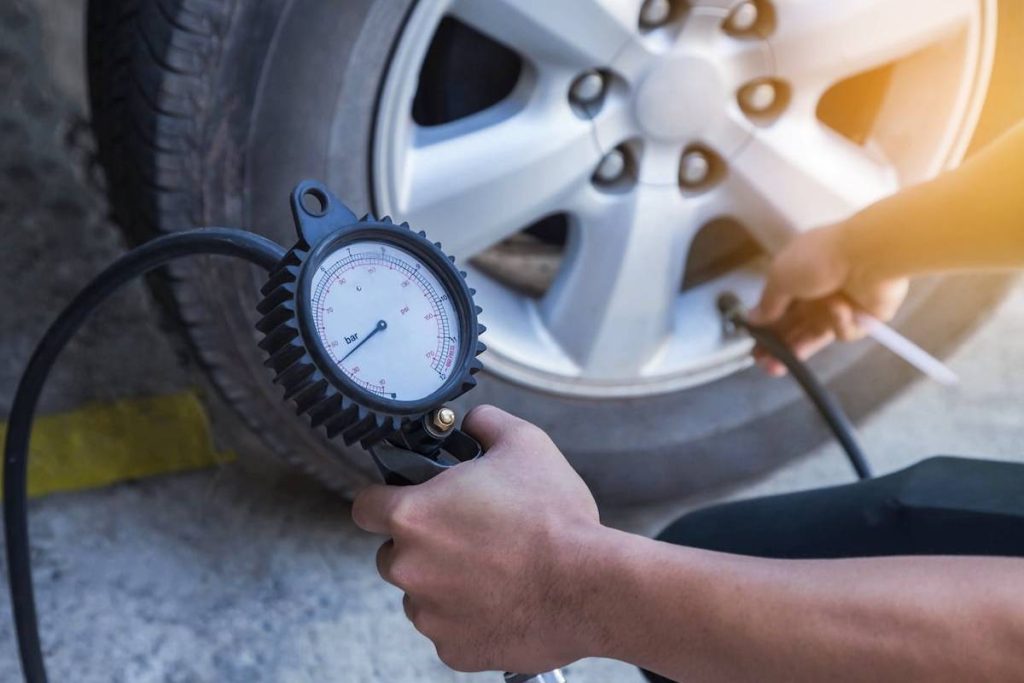
Checking tire pressure regularly is simple and free. Most gas stations provide air pumps, and inexpensive tire pressure gauges are widely available.
The correct inflation level is listed on a sticker inside the driver’s door jamb, not on the tire sidewall. Following the vehicle manufacturer’s recommendation ensures optimal balance between efficiency, comfort, and safety.
Properly inflated tires also wear more evenly. Underinflation causes the outer edges of the tire tread to wear prematurely, while overinflation can cause excessive wear in the center. Maintaining correct pressure extends tire lifespan and reduces the likelihood of uneven handling or blowouts.
In addition to improving fuel economy, correct tire pressure enhances braking performance and steering stability. This is particularly valuable during long highway drives, where consistent tire performance contributes to smoother handling and reduced driver fatigue.
Many newer vehicles include tire pressure monitoring systems (TPMS), but drivers should not rely solely on dashboard warnings. TPMS often alerts only when pressure drops significantly below recommended levels.
5. Avoid Excessive Idling
Avoiding excessive idling is a simple yet highly effective way to improve fuel economy and reduce unnecessary engine wear.
Idling occurs when the engine is running but the vehicle is not moving, such as when waiting in a parking lot, sitting in a drive-thru line, or warming up the car on a cold morning. While it may seem harmless, idling consumes fuel without providing any forward progress.
Modern engines are designed to operate efficiently without extended warm-up periods. In fact, most vehicles reach optimal operating temperature more quickly when driven gently rather than left idling.
Prolonged idling wastes fuel because the engine continues injecting gasoline to maintain combustion, even though the vehicle remains stationary. Over time, those wasted minutes translate into measurable fuel consumption.
For drivers in urban and suburban areas across the United States, reducing idle time can make a noticeable difference, especially during daily commuting routines.
Turning off the engine when parked for more than a minute, unless traffic conditions or safety concerns prevent it, helps conserve fuel.
Many newer vehicles now include automatic start-stop systems that shut the engine off at traffic lights and restart it when the brake pedal is released. Drivers of older vehicles can replicate this benefit manually.
Cold weather often leads drivers to idle their vehicles longer than necessary. However, today’s fuel-injected engines do not require extended warm-ups like older carbureted systems.
Driving moderately for the first few minutes allows the engine and transmission to reach operating temperature more efficiently than idling alone.
6. Plan and Combine Trips
Planning and combining trips is one of the most practical and cost-free strategies for improving fuel economy. Many drivers underestimate how much fuel is consumed during short, repeated outings, especially when the engine never fully reaches its optimal operating temperature.
Cold engines run less efficiently because fuel mixtures are richer during startup and initial warm-up phases. As a result, multiple short trips can consume significantly more fuel than one longer, consolidated drive covering the same total distance.
In everyday life across the United States, errands are often spread throughout the week, a quick grocery run, a stop at the pharmacy, picking up dry cleaning, or visiting the bank.
When these trips are made individually, the engine cools down between drives and must repeatedly restart its warm-up cycle. By combining these errands into a single planned outing, drivers minimize cold starts and allow the vehicle to operate at peak efficiency for a longer continuous period.
Route planning also plays a role. Organizing stops in a logical sequence reduces unnecessary backtracking and excess mileage.
Using navigation apps that provide real-time traffic updates can help avoid congestion and reduce idle time in stop-and-go traffic. Even small reductions in total driving distance accumulate into meaningful fuel savings over the course of a year.
Planning ahead is particularly valuable in suburban and rural areas, where destinations may be spaced farther apart. Combining trips reduces the total number of miles driven and improves time efficiency as well.
Beyond fuel savings, this strategy reduces wear on engine components. Frequent short trips can increase strain on the battery, starter motor, and exhaust system, especially in colder climates.
Longer, consolidated drives allow the engine to reach full operating temperature, promoting more complete combustion and reducing moisture buildup in the exhaust system.
7. Limit High-Speed Driving
Limiting high-speed driving is one of the most effective ways to improve fuel economy, particularly on highways where aerodynamic forces play a significant role.
While modern vehicles are engineered for stable high-speed travel, fuel efficiency decreases noticeably as speed increases. The primary reason is aerodynamic drag, which rises exponentially rather than gradually.
At lower speeds, air resistance remains relatively manageable. However, once a vehicle exceeds approximately 50 to 60 miles per hour, the engine must work increasingly harder to overcome wind resistance.
Driving at 75 or 80 mph instead of 65 mph may reduce travel time slightly, but it requires substantially more fuel to maintain that higher velocity. Over long highway trips, this difference becomes measurable at the pump.
For American drivers traveling across interstate highways, where speed limits vary by state, maintaining moderate speeds within posted limits not only improves safety but also enhances efficiency.
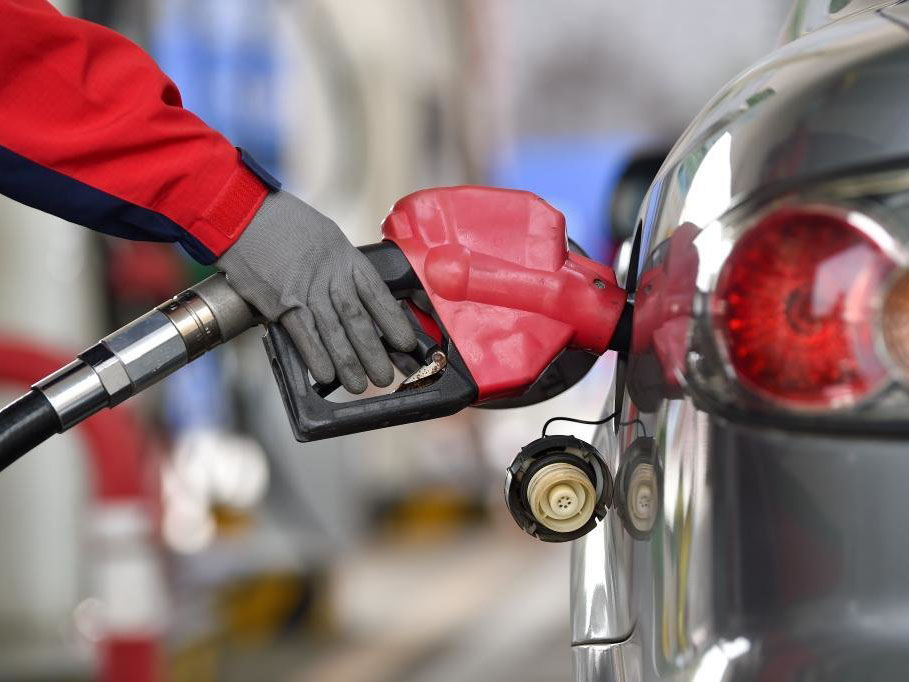
Even reducing cruising speed by 5 to 10 mph can produce noticeable improvements in miles per gallon, especially for SUVs and trucks that already experience higher aerodynamic drag due to their shape and size.
High-speed driving also increases engine load and RPM levels, particularly in vehicles without advanced transmission gearing designed to optimize fuel efficiency at elevated speeds. The engine burns more fuel to sustain those higher revolutions, compounding the impact of aerodynamic resistance.
Beyond fuel savings, limiting excessive speed reduces strain on tires, brakes, and suspension components. It also improves reaction time and driving stability, particularly in adverse weather conditions.
This does not mean driving significantly below traffic flow, which can create safety risks. Instead, it involves avoiding unnecessary high-speed cruising when conditions allow for more moderate pacing.
8. Use Air Conditioning Strategically
Using air conditioning strategically can help improve fuel economy without sacrificing comfort. While modern vehicles are far more efficient than older models, running the air conditioning system still places additional load on the engine.
That extra demand requires fuel, particularly in gasoline-powered vehicles where the compressor is driven directly by the engine belt system.
When the air conditioning is engaged, the engine must work slightly harder to power the compressor. In smaller cars with less engine output, this impact can be more noticeable.
While the difference in fuel consumption may seem minor on a short trip, it becomes more significant over long summer commutes or extended road trips common across the United States.
At lower speeds, such as city driving under 40 mph, it may be more fuel-efficient to use the vehicle’s ventilation system instead of full air conditioning when weather conditions allow.
Opening windows at low speeds typically has minimal impact on aerodynamics, making fresh airflow a viable alternative in mild temperatures.
However, at highway speeds, the situation changes. Open windows create aerodynamic drag that forces the engine to work harder to maintain speed.
In these cases, running the air conditioning with windows closed may actually be more efficient than driving with windows fully open. The key is adjusting climate control use based on driving conditions.
Another strategy is to avoid blasting the air conditioning at maximum power immediately upon entering a hot vehicle. Instead, briefly open the windows to release trapped heat before turning on the AC. This reduces the initial workload on the cooling system.
Parking in shaded areas or using windshield sunshades can also reduce interior heat buildup, minimizing the cooling demand once you begin driving.
9. Anticipate Traffic Flow
Anticipating traffic flow is one of the most effective yet underutilized strategies for improving fuel economy.
Many drivers focus only on their immediate surroundings, reacting to the vehicle directly ahead rather than observing broader traffic patterns. This reactive style of driving often leads to abrupt braking followed by rapid acceleration, a cycle that consumes unnecessary fuel.
Every time you press the brake pedal, you are dissipating energy that required fuel to generate. When you then accelerate again to regain speed, the engine must inject more fuel to rebuild that momentum.
In city environments across the United States, where traffic lights, congestion, and sudden slowdowns are common, this stop-and-go pattern significantly reduces miles per gallon.
By looking farther down the road and reading traffic behavior in advance, drivers can maintain smoother momentum.
If you notice a red light ahead or brake lights several vehicles forward, easing off the accelerator early allows the car to decelerate gradually. In many cases, the light may turn green before you fully stop, eliminating the need for a complete halt and subsequent hard acceleration.
Maintaining a safe following distance also plays a key role. Leaving adequate space between your vehicle and the one ahead provides time to respond smoothly rather than braking abruptly. This steady, controlled driving style reduces throttle spikes and conserves fuel.
On highways, anticipating merging traffic, construction zones, or slow-moving vehicles allows for gradual speed adjustments instead of sudden changes. Smooth transitions are far more fuel-efficient than aggressive lane shifts followed by rapid acceleration.
Beyond fuel savings, anticipating traffic improves safety and reduces mechanical wear. Brakes last longer when not subjected to repeated hard stops, and the transmission experiences less strain during smoother driving cycles.
Ultimately, efficient driving is about momentum management. By observing traffic patterns early and adjusting speed gradually, drivers can maintain steady progress, minimize wasted energy, and improve fuel economy without altering their vehicle or spending any money. Consistency and awareness are the keys to making this habit effective over time.
Improving fuel economy does not require purchasing a new vehicle or investing in aftermarket modifications. By refining driving habits, maintaining proper tire pressure, minimizing idling, and planning trips more strategically, drivers can stretch every gallon further, at zero cost.
In a time when fuel prices remain unpredictable, these practical adjustments empower vehicle owners to take control of operating expenses. Your current car is capable of better efficiency than you might expect, often simply by changing how you drive it.
Small habits lead to measurable savings. The key is consistency.
