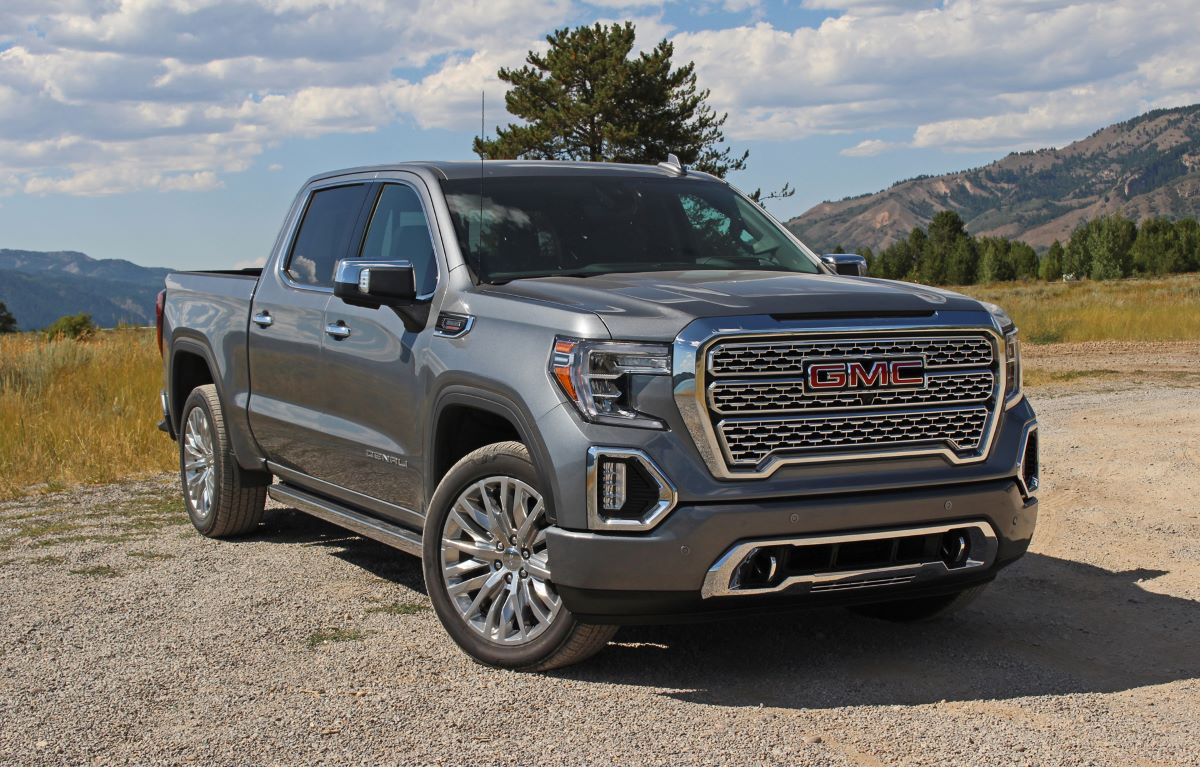
Full-size pickup trucks have traditionally been associated with V8 engines, heavy curb weights, and fuel economy numbers that made compact sedans look frugal by comparison. That narrative no longer holds.
Over the past decade, manufacturers have aggressively pursued weight reduction, forced induction, cylinder deactivation, hybridization, and advanced transmission strategies.
The result is a new class of full-size trucks that, in real-world driving, can match or even outperform some midsize and older compact pickups in fuel efficiency, while delivering far superior towing, payload, and cabin space.
For U.S. buyers who need capability but are wary of fuel costs, this shift matters. EPA highway figures in the high 20s and even low 30s mpg are now possible in properly configured half-ton trucks.
In some cases, these numbers exceed those of certain midsize pickups equipped with V6 engines or older transmissions.
Below are eight full-size trucks that demonstrate how smart engineering can outweigh simple vehicle size when it comes to efficiency.
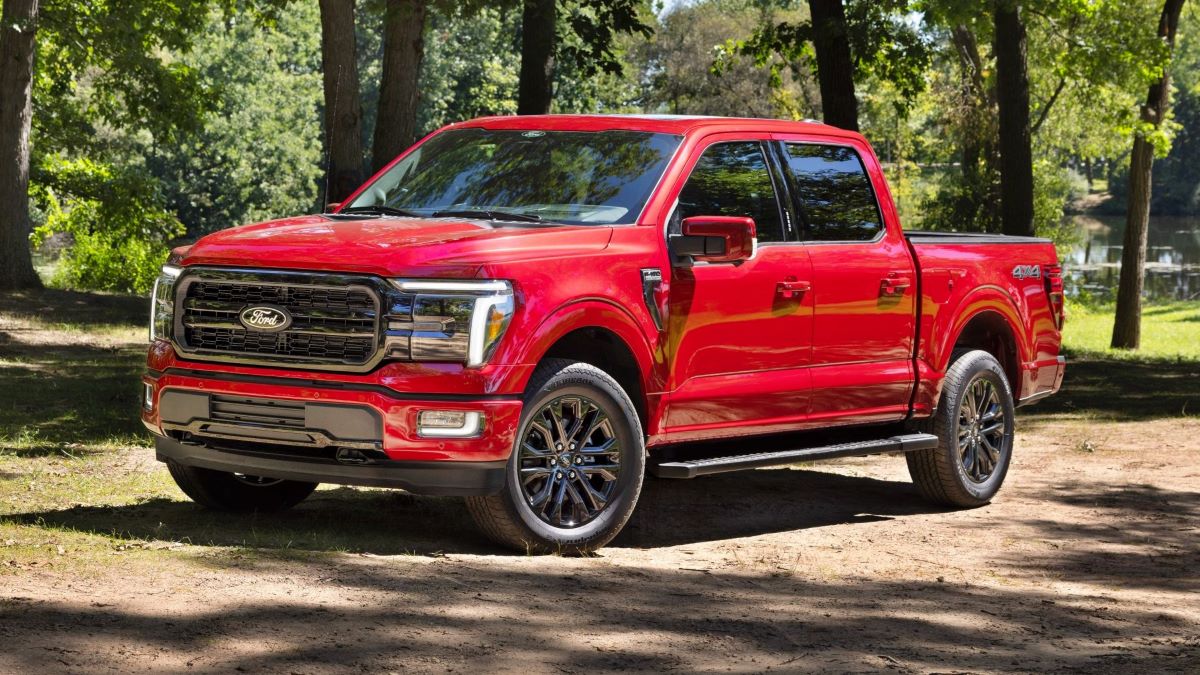
1. Ford F-150 PowerBoost Hybrid
The F-150 PowerBoost Hybrid pairs a 3.5-liter twin-turbo EcoBoost V6 with a 47-horsepower electric motor integrated into a 10-speed automatic transmission.
The combined output, 430 horsepower and 570 lb-ft of torque, would have been considered heavy-duty territory a decade ago.
Yet this configuration returns EPA estimates around 24–25 mpg combined, with higher figures achievable in city-biased driving.
The key is torque fill and regenerative braking. The electric motor reduces turbo lag and allows the gasoline engine to operate in more efficient load ranges.
Additionally, the hybrid system enables extended engine-off operation at low speeds. Compared to several midsize trucks that average in the low 20s combined, the PowerBoost offers superior fuel economy alongside 12,000-pound towing capability and available onboard power generation.
It is a case study in efficiency through electrification rather than downsizing. The Ford F-150 PowerBoost Hybrid stands as one of the clearest examples of how a full-size pickup can outperform smaller trucks in fuel efficiency without sacrificing capability.
In the context of full-size trucks that deliver better fuel economy than midsize alternatives, the PowerBoost configuration is not simply competitive, it is structurally engineered to challenge the assumption that size automatically means higher fuel consumption.
At the core of the PowerBoost system is a 3.5-liter EcoBoost V6 paired with a 35-kW electric motor integrated into a 10-speed automatic transmission. The combined output reaches 430 horsepower and 570 lb-ft of torque, figures that exceed many conventional V8-powered full-size trucks and significantly outperform most midsize pickups in torque delivery.
Despite this performance advantage, the hybrid system achieves EPA estimates of approximately 25 mpg combined in rear-wheel-drive configuration, with four-wheel-drive models remaining close behind.
What enables this efficiency is not merely electrification, but strategic load management. The electric motor supplements the gasoline engine during acceleration, reducing the need for sustained high-RPM operation.
At cruising speeds, the system can balance power delivery to optimize combustion efficiency. In low-speed or stop-and-go driving, the truck can operate on electric power alone for short distances, reducing fuel burn during urban use. This is particularly important because many truck owners use their vehicles for mixed commuting rather than constant towing.
Aerodynamics also play a role. The latest F-150 generation introduced improved airflow management, including active grille shutters and a more sculpted front fascia.
Combined with aluminum-intensive body construction that reduces overall weight compared to previous generations, the PowerBoost variant benefits from incremental efficiency gains that accumulate meaningfully over time.
Another reason the F-150 PowerBoost can surpass smaller trucks in fuel economy lies in drivetrain optimization. The 10-speed automatic transmission keeps the engine operating within its most efficient power band. Smaller trucks often use fewer gear ratios or less sophisticated hybridization, limiting their ability to maintain peak efficiency across varied driving conditions.
Importantly, the F-150 does not trade capability for efficiency. It maintains a maximum towing capacity exceeding 12,000 pounds when properly equipped, a figure well beyond most midsize pickups.
Payload ratings remain strong, and the hybrid system does not significantly compromise bed utility or cabin space. This dual achievement, high capability with competitive fuel economy, is what positions it uniquely in the segment.
The PowerBoost configuration also includes Pro Power Onboard, which turns the truck into a mobile generator. While this feature is not directly tied to fuel economy, it enhances overall energy efficiency from a practical standpoint. Owners can power tools or equipment without idling a standalone generator, reducing redundant fuel consumption on job sites.
In real-world ownership scenarios, drivers frequently report highway fuel economy that approaches or exceeds rated estimates when driving conservatively. Because the hybrid system assists under load, even light towing can be accomplished without the dramatic efficiency drop typically associated with traditional gasoline engines.
Within the broader discussion of full-size trucks delivering superior fuel economy compared to smaller models, the Ford F-150 PowerBoost Hybrid demonstrates that engineering sophistication can outweigh dimensional assumptions.
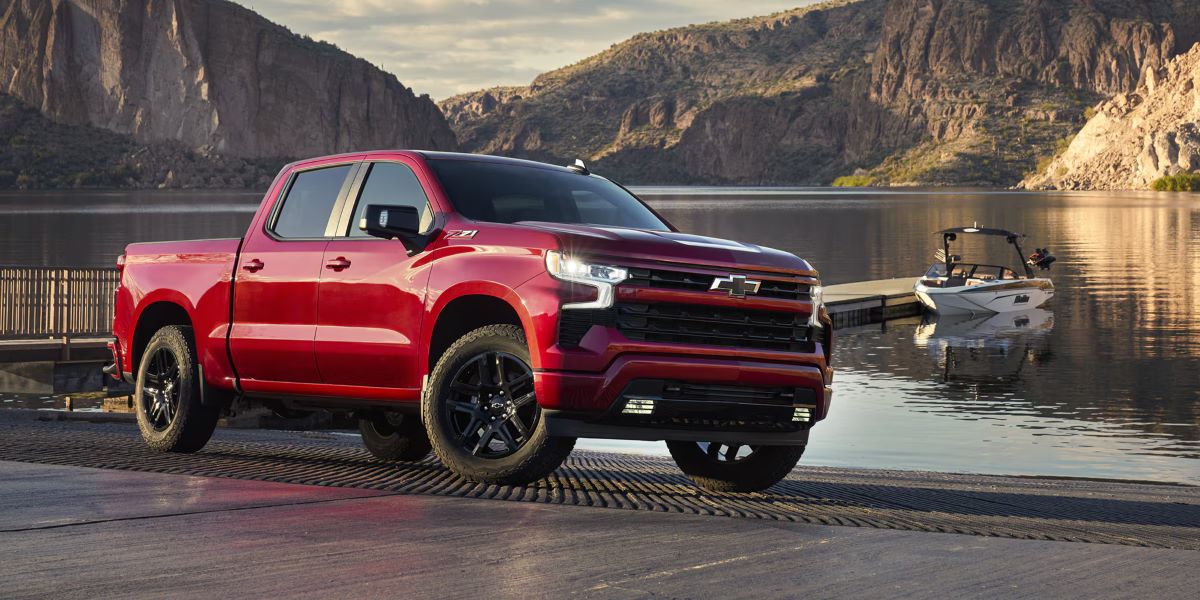
2. Chevrolet Silverado 1500 3.0L Duramax Diesel
The Chevrolet Silverado 1500 equipped with the 3.0-liter Duramax turbo-diesel engine represents a strong counterargument to the assumption that smaller trucks are inherently more fuel-efficient. Within the discussion of full-size pickups that outperform midsize alternatives in fuel economy, this Silverado configuration stands out due to its combination of diesel efficiency, high torque output, and long-distance capability.
At the center of its efficiency advantage is the 3.0L inline-six Duramax turbodiesel. Producing approximately 305 horsepower and 495 lb-ft of torque in its latest iteration, the engine emphasizes low-end pulling power while maintaining controlled fuel consumption.
When paired with the 10-speed automatic transmission, the Silverado Duramax achieves EPA ratings that can approach 24 mpg city and up to 29–31 mpg highway in rear-wheel-drive form, depending on configuration. These numbers are comparable to, and often exceed, many gasoline-powered midsize pickups, particularly when those smaller trucks are driven at highway speeds.
Diesel combustion efficiency plays a critical role here. Diesel engines operate with higher compression ratios and leaner air-fuel mixtures than gasoline engines, extracting more usable energy from each gallon of fuel.
For highway driving, where steady-state cruising dominates, this advantage becomes especially pronounced. Many midsize trucks rely on naturally aspirated gasoline V6 engines that must operate at higher RPMs to maintain speed, reducing efficiency under load. By contrast, the Duramax’s abundant torque allows the Silverado to cruise effortlessly at lower engine speeds.
The Silverado’s aerodynamic improvements and modern platform also contribute. Chevrolet refined the body design to reduce drag, and the integration of active thermal management helps the diesel engine reach optimal operating temperature quickly.
This minimizes inefficiencies during cold starts, a scenario where diesel engines historically struggled. The aluminum hood and strategic material choices reduce overall weight without compromising structural integrity.
Transmission calibration further enhances efficiency. The 10-speed gearbox keeps the Duramax operating within its most efficient torque band, reducing unnecessary fuel burn during acceleration and maintaining low RPM at highway speeds. Compared to some midsize trucks that use fewer gears or older transmission designs, this mechanical pairing results in smoother and more economical operation across varied driving conditions.
Importantly, the Silverado Duramax does not compromise capability. Towing capacity can exceed 13,000 pounds when properly configured, and payload ratings remain competitive within the half-ton segment.
Smaller trucks often experience dramatic drops in fuel economy when towing moderate loads. The diesel Silverado, however, maintains relatively stable efficiency under light to moderate towing due to its torque-rich power delivery and lower strain at speed.
For long-distance drivers, the Duramax also offers extended driving range. With a standard full-size fuel tank and superior highway MPG, owners can travel significantly farther between refueling stops than most midsize competitors. This makes the truck particularly appealing for road trips, fleet use, and rural environments where fuel stations may be spaced far apart.
In real-world usage, many owners report highway fuel economy figures that align closely with, or sometimes surpass, official ratings when driving conservatively. The diesel’s steady torque curve allows for relaxed cruising without aggressive throttle input, further reinforcing its efficiency advantage.
Within the broader context of full-size trucks that deliver better fuel economy than smaller models, the Chevrolet Silverado 1500 3.0L Duramax Diesel demonstrates that intelligent engine selection can offset size-related disadvantages. By combining diesel thermodynamic efficiency, advanced transmission tuning, and substantial torque output, it challenges the conventional hierarchy of fuel economy in the pickup market.
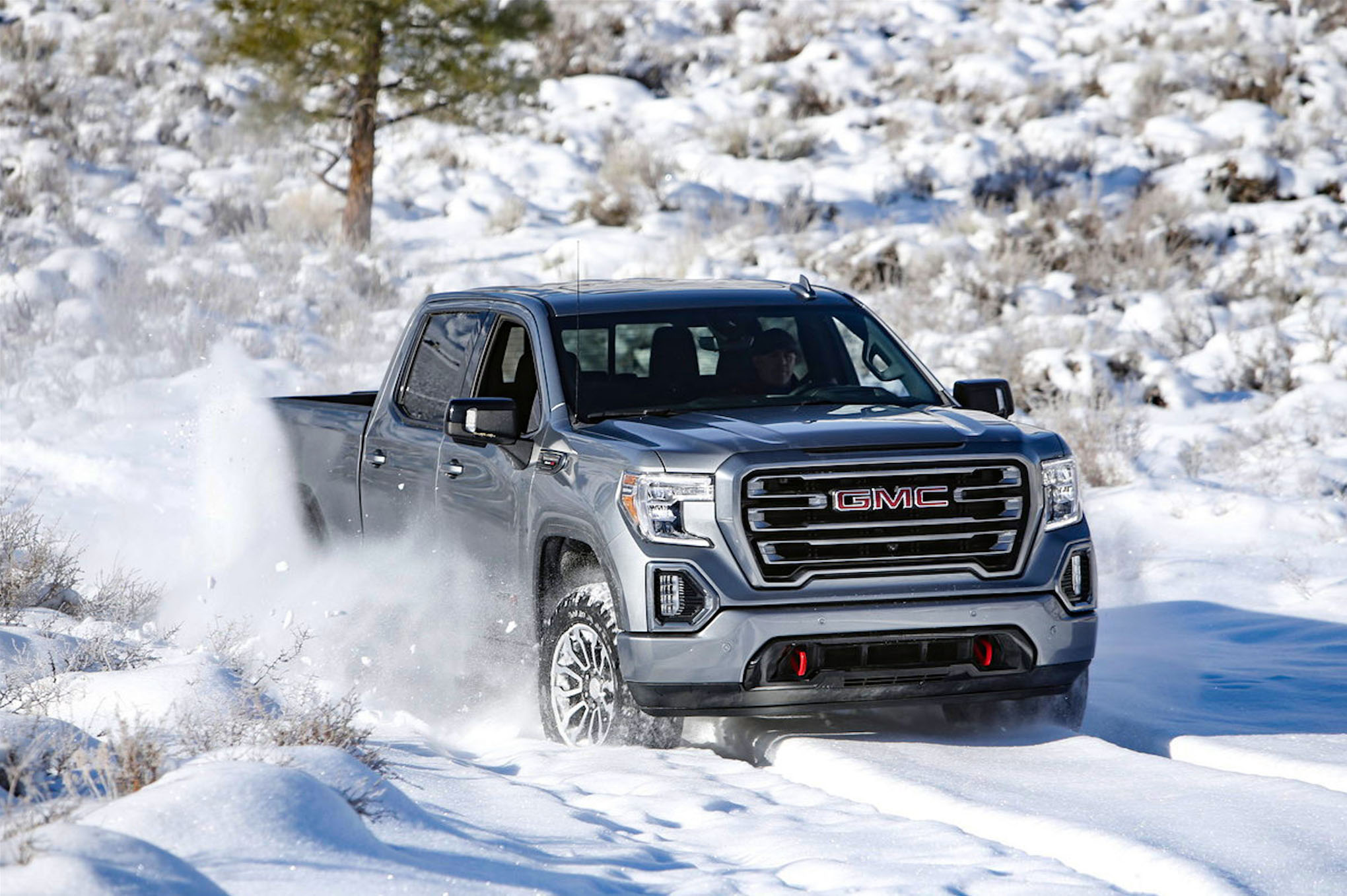
3. GMC Sierra 1500 3.0L Duramax Diesel
Mechanically similar to the Silverado, the Sierra 1500 equipped with the 3.0-liter Duramax achieves comparable fuel economy, approaching 30 mpg highway in optimal configurations.
What distinguishes it is trim positioning and aerodynamic tuning across certain variants.
The inline-six architecture provides smoother operation than traditional V6 diesels, which contributes to relaxed cruising characteristics.
Compared to some midsize pickups equipped with naturally aspirated V6 engines returning roughly 21–23 mpg combined, the Sierra diesel can exceed those numbers while offering a larger bed, higher towing ratings, and more rear-seat space in crew cab form.
4. Ram 1500 with eTorque
The Ram 1500’s eTorque system is a mild-hybrid setup available with both the 3.6-liter Pentastar V6 and, previously, the 5.7-liter HEMI V8.
The system replaces the traditional alternator with a belt-driven motor generator, providing torque assist and regenerative braking.
While not a full hybrid, eTorque improves stop-start smoothness and reduces fuel consumption in urban driving.
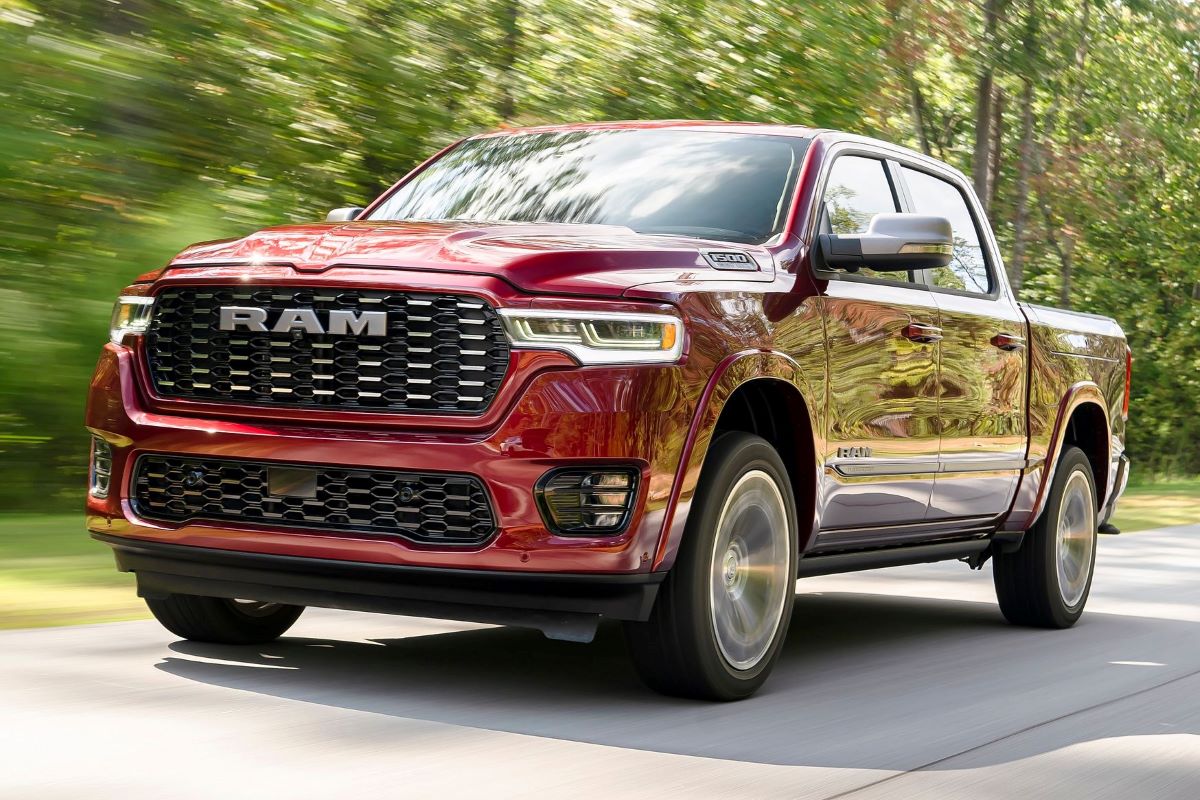
The V6 eTorque configuration can deliver fuel economy in the mid-20s mpg range on the highway, outperforming certain midsize trucks equipped with heavier four-wheel-drive systems and less efficient transmissions.
The Ram’s use of lightweight materials, active grille shutters, and an eight-speed automatic transmission further enhances efficiency.
This is an example of incremental electrification yielding measurable gains without altering the truck’s fundamental architecture.
5. Ford F-150
The 2.7-liter EcoBoost V6 has proven that displacement alone is not the determinant of efficiency.
Constructed with a compacted graphite iron block for durability and paired with a 10-speed automatic, this twin-turbo engine produces substantial torque while maintaining relatively modest fuel consumption.
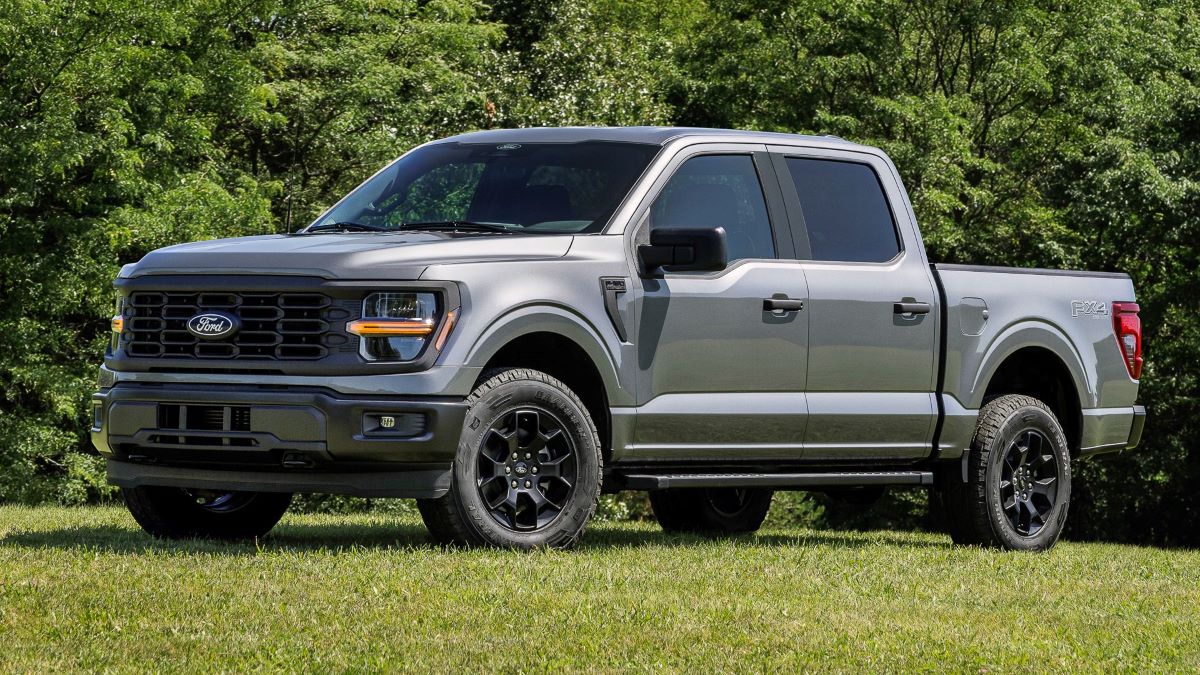
In two-wheel-drive form, the 2.7 EcoBoost F-150 can approach 26 mpg highway. Aluminum-intensive body construction reduces curb weight compared to traditional steel-bodied trucks.
In practical use, this configuration can rival or exceed the fuel economy of some midsize pickups equipped with older naturally aspirated V6 engines.
6. Toyota Tundra i-FORCE MAX
The Toyota Tundra i-FORCE MAX represents a strategic shift in the full-size truck segment, demonstrating that efficiency gains are no longer limited to smaller pickups.
Within the framework of full-size trucks that offer better fuel economy than midsize models, the Tundra’s hybridized powertrain positions it as a serious contender, particularly for drivers who demand both torque and reduced fuel consumption.
At the heart of the i-FORCE MAX system is a 3.4-liter twin-turbocharged V6 paired with an electric motor integrated within a 10-speed automatic transmission. The combined system output reaches 437 horsepower and 583 lb-ft of torque, making it one of the most powerful configurations in the half-ton category.
The efficiency advantage stems from torque-assisted operation and load balancing. The electric motor supplements the twin-turbo V6 during acceleration, reducing the engine’s need to operate at higher RPM ranges.
This improves fuel economy in urban driving scenarios, where stop-and-go traffic typically penalizes larger vehicles. In steady cruising conditions, the powertrain optimizes energy delivery by keeping the combustion engine within its most efficient operating band, assisted by the transmission’s wide ratio spread.
Another key factor is downsizing with forced induction. By replacing the previous generation’s naturally aspirated V8 with a twin-turbocharged V6 hybrid setup, Toyota reduced mechanical losses while improving thermal efficiency.
Turbocharging allows the engine to produce necessary power on demand without continuously consuming fuel at V8 levels. The hybrid system then mitigates turbo lag and enhances responsiveness, resulting in smoother and more efficient power delivery.
Platform modernization also contributes. The latest Tundra rides on Toyota’s TNGA-F architecture, incorporating high-strength steel and aluminum components to reduce weight while increasing rigidity.
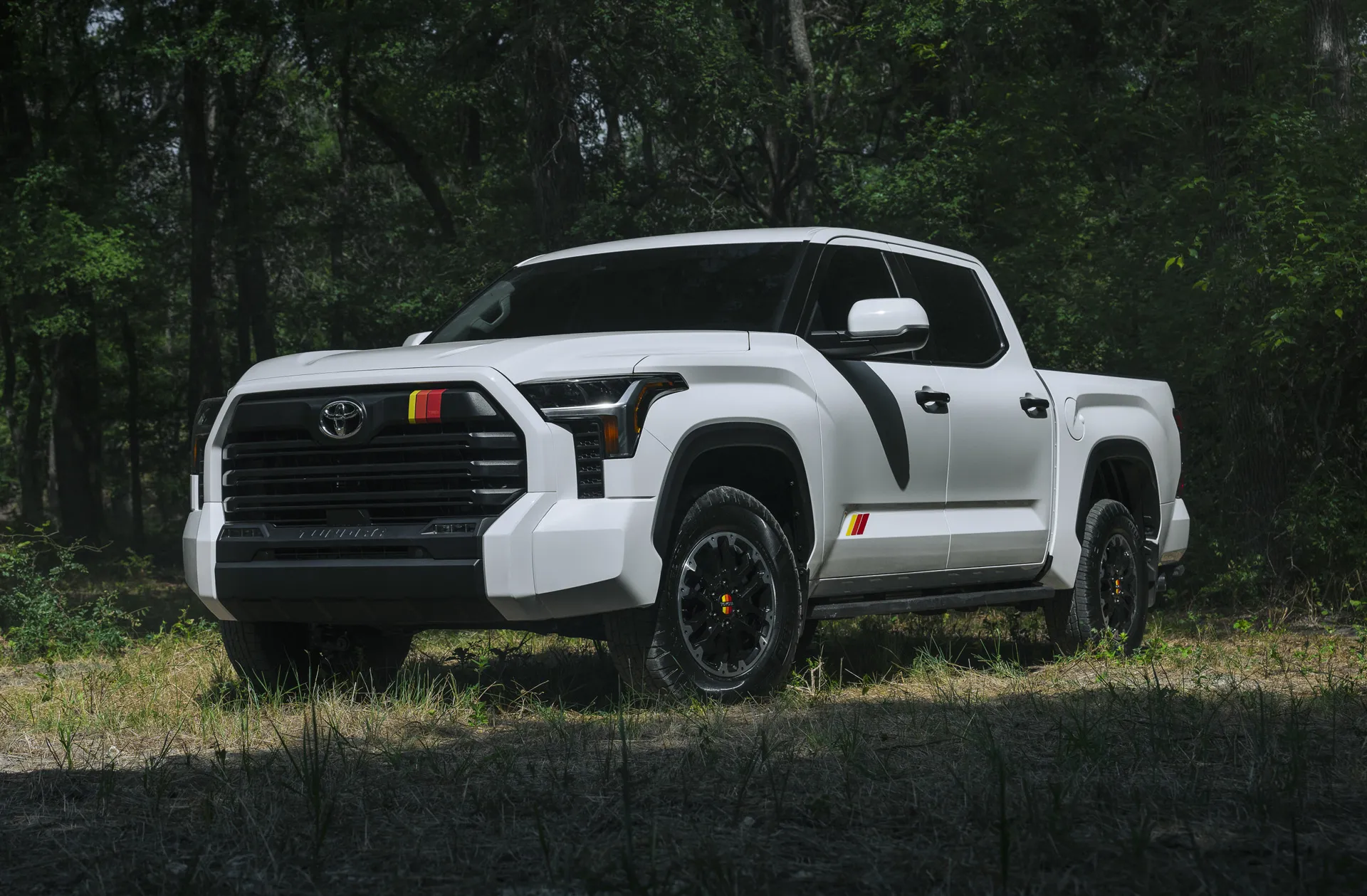
A stiffer chassis improves ride quality and aerodynamic stability, indirectly aiding fuel efficiency at highway speeds. Improved underbody airflow management and refined front-end design further reduce drag compared to prior generations.
Importantly, the Tundra i-FORCE MAX does not sacrifice capability in pursuit of efficiency. Towing capacity exceeds 11,000 pounds in properly configured models, and payload ratings remain competitive within the segment.
Many midsize trucks experience significant drops in fuel economy when towing moderate loads due to limited torque reserves. The Tundra’s hybrid torque output allows it to maintain performance with less strain, which helps stabilize fuel consumption under working conditions.
Real-world driving scenarios highlight the hybrid’s strength in mixed-use environments. For drivers who commute during the week and tow recreational equipment on weekends, the Tundra provides a balance of daily usability and heavy-duty readiness. The electric motor’s assistance during low-speed maneuvering and urban driving reduces the efficiency penalty typically associated with full-size dimensions.
Within the broader discussion of full-size trucks that outperform smaller models in fuel economy, the Toyota Tundra i-FORCE MAX challenges conventional expectations.
7. Chevrolet Silverado 1500
The Chevrolet Silverado 1500, when evaluated within the discussion of full-size trucks that can deliver better fuel economy than smaller models, demonstrates that efficiency is highly dependent on powertrain selection and drivetrain optimization rather than overall vehicle size alone.
While the Silverado lineup includes multiple engine options, certain configurations, particularly the turbocharged four-cylinder and diesel variants, allow this half-ton pickup to rival or surpass the real-world fuel economy of many midsize trucks.
One of the most relevant configurations in this context is the 2.7-liter turbocharged inline-four gasoline engine. This powerplant produces strong torque figures for its displacement, delivering approximately 310 horsepower and 430 lb-ft of torque in updated versions.
The high torque output at low RPM allows the engine to operate efficiently without constant high-revving, which is often necessary in naturally aspirated V6 engines found in smaller pickups. Paired with an 8-speed automatic transmission, this Silverado configuration can achieve EPA ratings around 19 mpg city and 22–23 mpg highway, placing it directly within the range of several midsize gasoline trucks.
Beyond raw fuel economy figures, drivetrain calibration plays a critical role. The Silverado’s transmission is tuned to keep the engine within its optimal efficiency band, reducing unnecessary fuel consumption during steady cruising.
The broad torque curve of the turbocharged engine allows the truck to maintain highway speeds with minimal throttle input. Many midsize trucks, especially those using older V6 designs, must work harder under load, which can reduce their efficiency advantage in real-world conditions.
Aerodynamic refinement also contributes to competitive performance. Chevrolet incorporated airflow management features such as active grille shutters and improved body sculpting to reduce drag.
Another important factor is load management. Full-size trucks like the Silverado 1500 are engineered with higher payload and towing capacities. This means that when carrying moderate loads, the vehicle operates well within its mechanical limits.
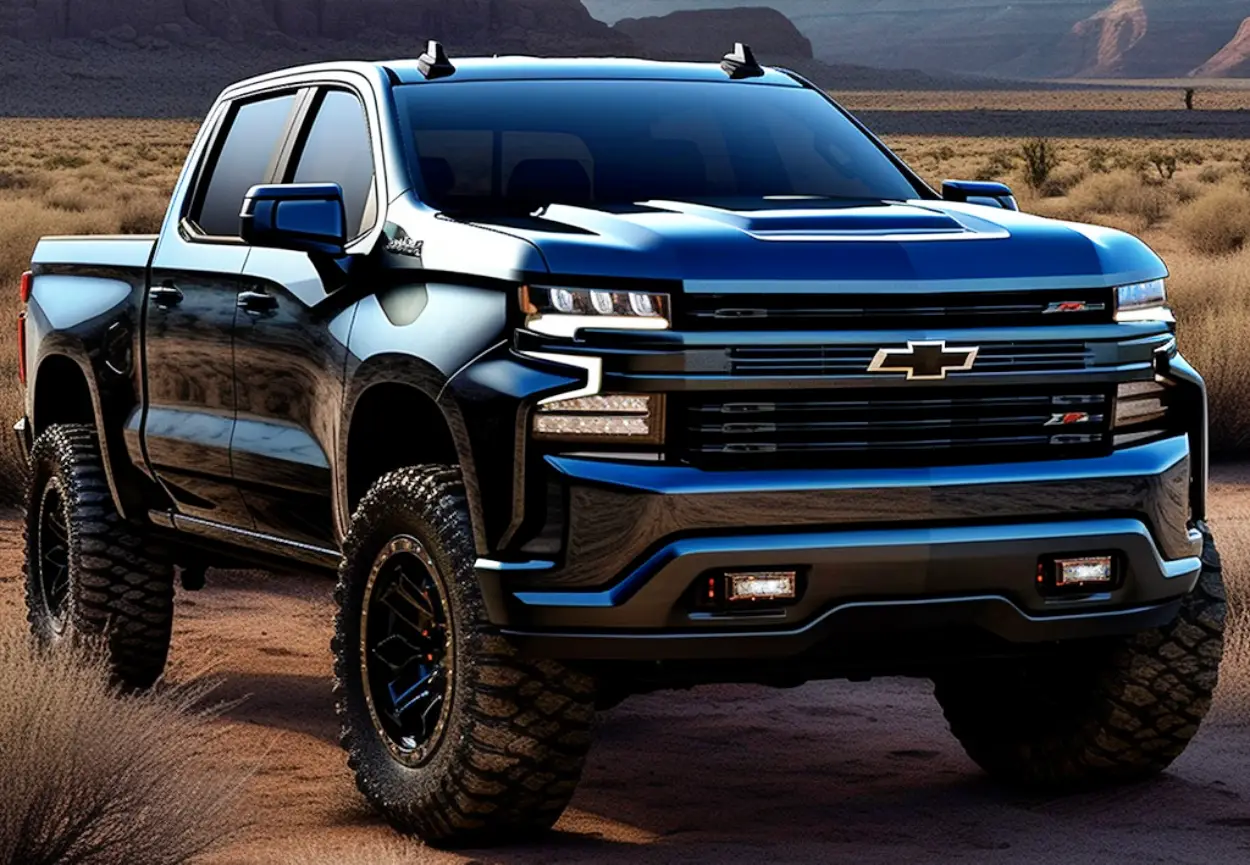
In contrast, midsize trucks may approach their capacity thresholds more quickly, causing engines to work harder and consume more fuel under similar conditions. As a result, the efficiency gap between full-size and midsize trucks often narrows, or even reverses, when towing or hauling.
The Silverado 1500 also benefits from modern cylinder deactivation technology in certain V8 configurations. Systems such as Dynamic Fuel Management can disable specific cylinders during light-load conditions, effectively reducing fuel consumption during highway cruising.
In practical ownership scenarios, many drivers report highway fuel economy that closely matches or exceeds official estimates when maintaining consistent speeds. The truck’s stability and torque-rich power delivery reduce the need for aggressive throttle inputs, which further supports efficient operation.
Within the broader context of full-size trucks that offer competitive or superior fuel economy compared to smaller models, the Chevrolet Silverado 1500 illustrates that intelligent engineering and powertrain diversity matter more than size alone.
By combining turbocharging, advanced transmissions, aerodynamic refinement, and load-capable chassis design, the Silverado challenges the long-standing assumption that downsizing automatically guarantees better fuel efficiency.
8. Nissan Titan
While not class-leading in raw mpg figures, the Titan’s naturally aspirated 5.6-liter V8 achieves competitive highway efficiency relative to some midsize trucks equipped with less powerful engines and older transmission designs.
In rear-wheel-drive form, highway ratings in the low 20s mpg range are attainable.
The Titan demonstrates that modern calibration, direct injection, and transmission gearing can mitigate the efficiency penalties historically associated with larger engines.
Although it lacks hybridization, it remains relevant in discussions about full-size efficiency relative to certain smaller alternatives.
In summary, fuel economy is no longer dictated solely by vehicle class. Powertrain design, aerodynamics, transmission ratios, electrification strategy, and material selection now play decisive roles.
The Nissan Titan occupies an interesting position in the discussion of full-size trucks that can deliver fuel economy comparable and in certain scenarios competitive with smaller pickups.
Although it does not employ hybridization or diesel options in its most recent generation, the Titan’s naturally aspirated V8, transmission tuning, and real-world operating characteristics allow it to remain relevant when evaluating efficiency beyond simple displacement comparisons.
Under the hood, the Titan is powered by a 5.6-liter Endurance V8 producing approximately 400 horsepower and 413 lb-ft of torque. At first glance, a large-displacement V8 may appear disadvantageous from a fuel economy perspective.
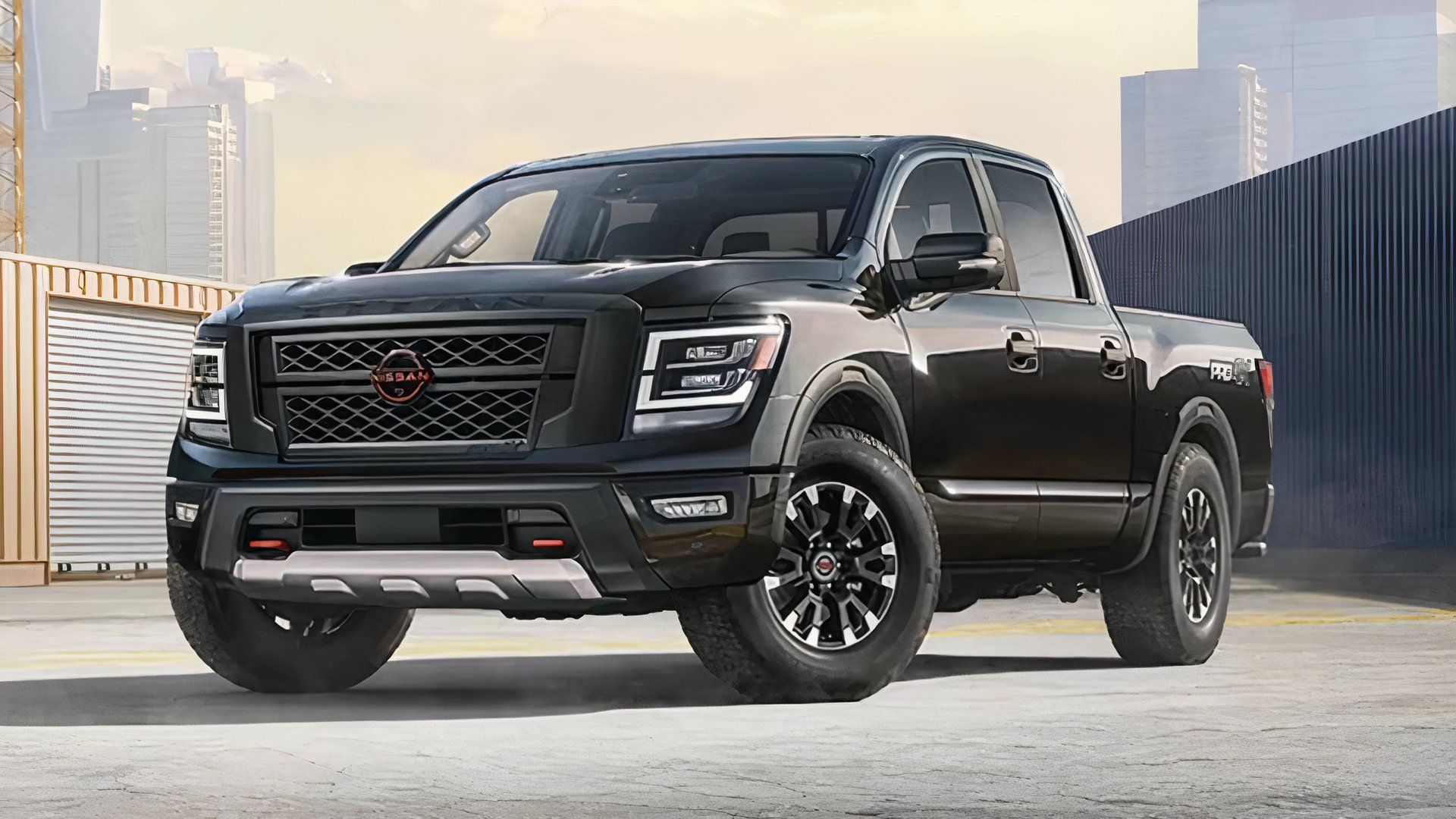
However, the engine is paired with a 9-speed automatic transmission designed to keep engine speeds controlled during steady cruising. The additional gear ratios allow for lower RPM operation at highway speeds, which reduces fuel consumption in long-distance driving scenarios.
EPA estimates for the Titan typically fall around 16 mpg city and 21 mpg highway in rear-wheel-drive configurations. While these numbers may not surpass hybridized or diesel-powered full-size competitors, they place the Titan within the range of many midsize gasoline trucks, particularly when factoring in real-world conditions.
Smaller trucks equipped with naturally aspirated V6 engines often experience efficiency drops when operating under load, during highway merging, or when maintaining higher cruising speeds. In those contexts, the Titan’s abundant torque allows it to operate without excessive throttle input, stabilizing consumption.
Torque delivery is a key element in this comparison. The Titan’s V8 generates strong low- and mid-range torque, reducing the need for constant downshifting during highway travel or moderate towing.
Midsize trucks frequently operate closer to their mechanical limits when hauling cargo or pulling trailers, which can significantly reduce fuel economy. Because the Titan is engineered with higher capacity margins, it can maintain efficiency more consistently under similar working conditions.
Aerodynamic refinement and structural design also contribute. While full-size trucks inherently have larger frontal areas, the Titan’s body design incorporates wind management features to reduce drag at speed.
Another factor is drivetrain simplicity. Without hybrid components or forced induction systems, the Titan’s V8 operates with linear power delivery and minimal lag.
For some drivers, this translates into smoother throttle application and steadier fuel usage in everyday commuting. Additionally, long-term maintenance simplicity can indirectly support efficiency by reducing the likelihood of software-related performance inconsistencies.
In mixed-use ownership scenarios, such as drivers who commute during the week and tow recreational equipment on weekends, the Titan’s efficiency profile becomes more competitive.
While smaller trucks may post higher city MPG ratings on paper, their fuel consumption can rise sharply when tasked with heavier workloads. The Titan, designed for greater capacity, absorbs these demands with less proportional strain.
Within the broader evaluation of full-size trucks that challenge smaller models on fuel economy, the Nissan Titan illustrates that engine displacement alone does not determine efficiency outcomes. Transmission design, torque characteristics, and real-world load performance all influence consumption patterns.
Although it does not lead the segment in MPG figures, the Titan demonstrates that a properly tuned full-size V8 truck can remain competitive with midsize gasoline pickups, particularly when operating under practical, everyday conditions.
For many American buyers, a properly configured full-size truck can deliver superior efficiency compared to smaller models. while providing greater comfort, higher capability ceilings, and stronger resale value.
The assumption that “smaller automatically means more efficient” is increasingly outdated in today’s pickup market.