
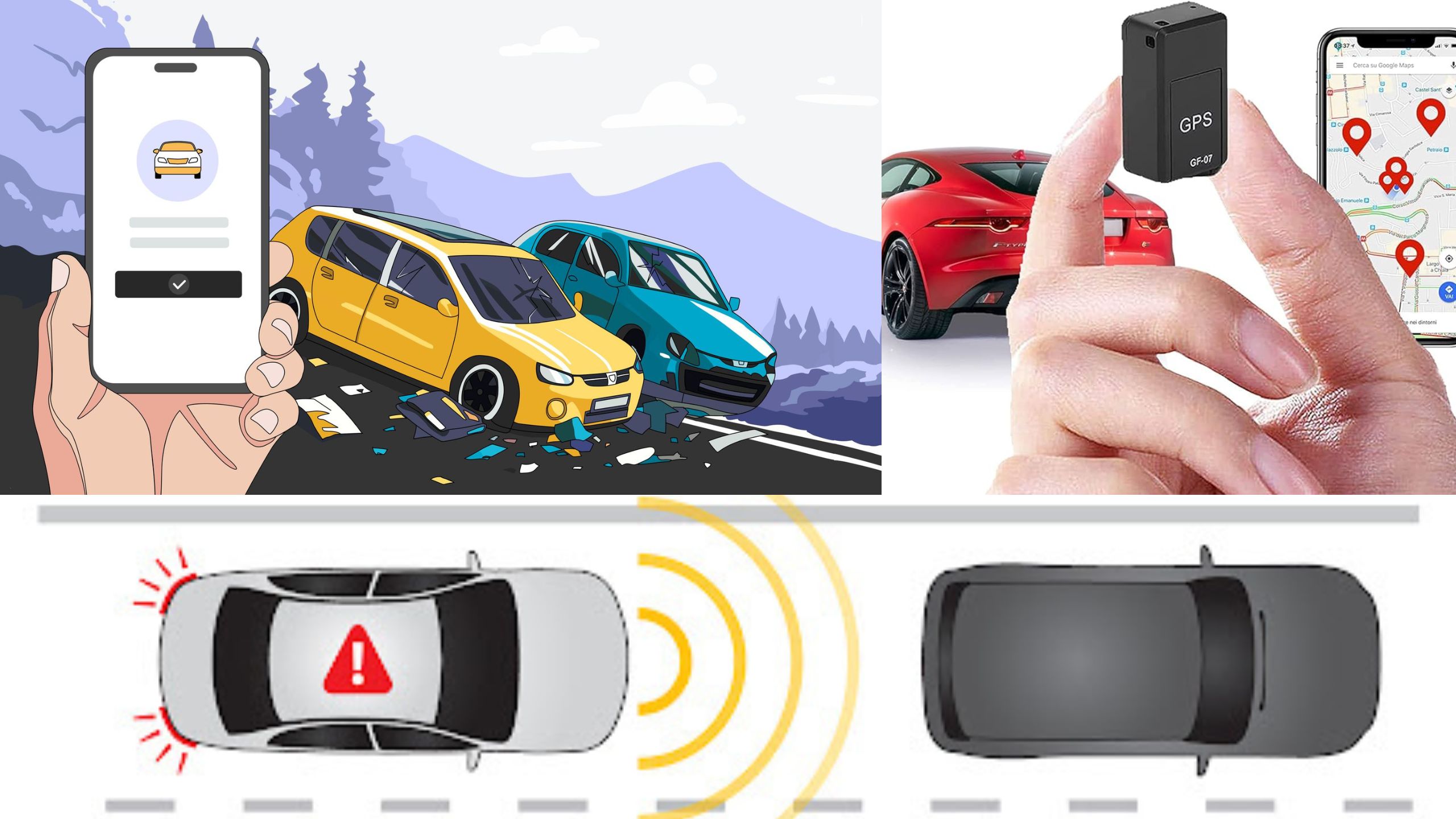
The automotive world is undergoing one of its most dramatic transformations in history, and 2026 is shaping up to be a landmark year for drivers who want to save serious money on their insurance premiums. For decades, insurance companies relied on broad demographic data your age, your zip code, your driving history to calculate how much you’d pay each month.
But that model is rapidly changing. Today, insurers are increasingly rewarding drivers who choose vehicles equipped with cutting-edge safety and monitoring technology, recognizing that smarter cars genuinely reduce the likelihood and severity of accidents.
The result? Drivers who invest in vehicles loaded with the right features can see insurance discounts ranging from 5% all the way to 30% or more, depending on their insurer and the specific technologies involved.
These aren’t gimmicks or minor perks they’re sophisticated systems that actively prevent collisions, reduce theft, monitor driving behavior, and even help emergency services respond faster when accidents do occur.
In this guide, we break down the 10 most impactful new car features available in 2026 that insurance companies are actively recognizing and rewarding. Whether you’re shopping for a new vehicle or simply curious about what’s out there, this list could save you hundreds or even thousands of dollars every single year.
1. Advanced Driver Assistance Systems (ADAS) 2.0
The first generation of Advanced Driver Assistance Systems introduced features like basic lane-keep assist and rudimentary automatic emergency braking. By 2026, ADAS 2.0 has evolved into something dramatically more capable, and insurance companies have taken serious notice.
These next-generation systems now operate with a level of precision and contextual awareness that was simply unimaginable a decade ago, making them one of the single most impactful features you can have on your vehicle when it comes to lowering your premium.
At the core of ADAS 2.0 is a fusion of sensor technologies high-resolution cameras, long-range radar, LiDAR arrays, and ultrasonic sensors all working in concert through powerful onboard processors.
The system doesn’t just detect obstacles; it predicts behavior. It can anticipate that a pedestrian is about to step off a curb, identify that a vehicle two cars ahead is braking hard, or recognize that road conditions ahead are deteriorating based on weather data and real-time road surface analysis. This predictive capability is what separates ADAS 2.0 from its predecessors.
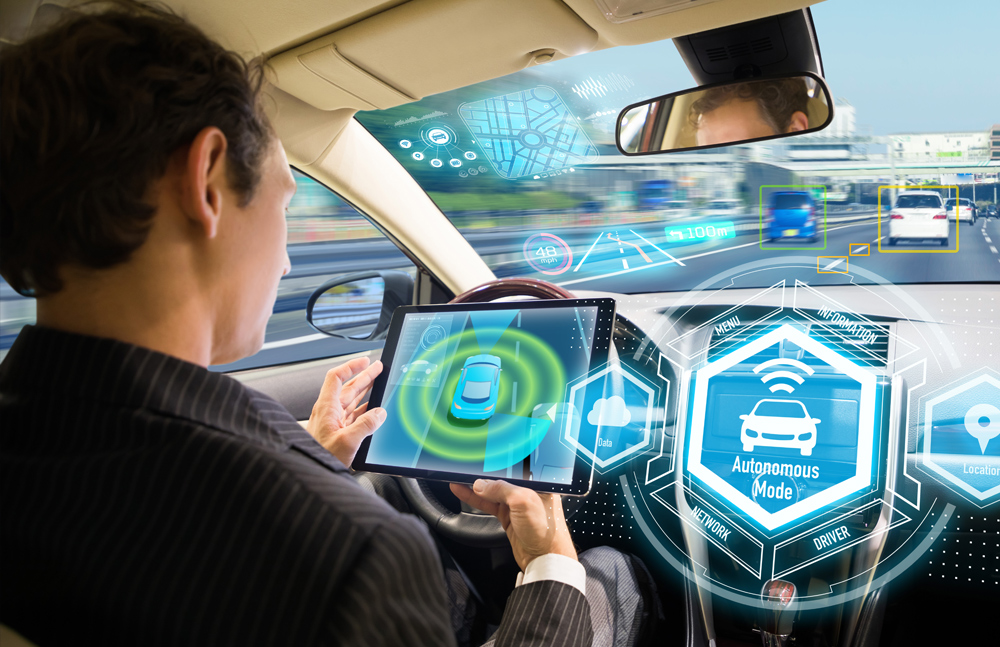
Insurance companies have responded with significant premium reductions for vehicles equipped with verified ADAS 2.0 systems. Major insurers across the United States and Europe have published data showing that vehicles with these advanced systems are involved in 28% to 40% fewer collision claims than their non-equipped counterparts.
That’s not a small margin that’s a statistically massive reduction that directly translates to lower risk profiles and, consequently, lower premiums for you.
What specifically does ADAS 2.0 cover that earns these discounts? Automatic Emergency Braking with pedestrian and cyclist detection is a cornerstone feature.
Unlike older systems that only activated in rear-end collision scenarios, 2026-generation AEB can identify cyclists crossing intersections, pedestrians obscured by parked vehicles, and even animals on rural roads. The system intervenes faster than any human reaction time, applying maximum braking force in fractions of a second.
Lane Centering Assist has also been significantly upgraded. Rather than simply warning you when you drift, the 2026 version actively steers the vehicle, compensating for crosswinds, road camber, and even driver fatigue.
Fatigue detection is now integrated directly into many ADAS 2.0 packages monitoring steering micro-corrections, eye-tracking data, and even physiological signals from steering wheel sensors to determine if a driver is becoming impaired.
To maximize your insurance discount from ADAS 2.0, it’s important to inform your insurer specifically which features your vehicle is equipped with and provide documentation from the manufacturer.
Many insurers offer tiered discounts base ADAS features might earn you 5–8%, while full ADAS 2.0 packages with predictive capabilities can push that discount to 12–18%. Over a five-year ownership period, that can easily amount to $1,500 to $3,000 in savings.
2. Telematics and Usage-Based Insurance (UBI) Integration
One of the most financially significant shifts in the insurance industry over the past few years has been the mainstream adoption of telematics and in 2026, vehicles are being built with native telematics integration straight from the factory floor.
This is a game-changer for safe drivers who have long felt penalized by demographic-based pricing models that lumped them together with higher-risk individuals simply because of their age, location, or vehicle type.
Usage-Based Insurance works on a beautifully simple principle: if you drive safely, you pay less. Traditional insurance pricing is essentially a bet that insurers make based on statistical averages. UBI flips the model, allowing your actual behavior behind the wheel to determine your rate.
In 2026, this is no longer something that requires plugging a third-party dongle into your OBD-II port the capability is built directly into the vehicle’s onboard architecture and communicates seamlessly with participating insurers.
Modern factory-integrated telematics systems track a comprehensive set of driving variables. Hard braking events those sudden, forceful stops that indicate distracted or aggressive driving are logged and weighted heavily in risk assessments.

Rapid acceleration patterns, sharp cornering, and high-speed driving all contribute to your driving score. But the 2026 systems go further, incorporating contextual data: were you braking hard because you were following too closely, or because a child ran into the street? Advanced systems increasingly attempt to distinguish between these scenarios using surrounding sensor data.
Time-of-day driving is another significant variable. Statistically, late-night driving and rush-hour driving carry a raised risk profiles. UBI systems track when you drive and reward those who primarily operate their vehicles during lower-risk daylight hours.
Similarly, total mileage plays a role the less you drive, the less exposure you have to potential accidents, and low-mileage drivers can see substantial discounts on programs that incorporate odometer data.
For 2026 vehicles with native UBI integration, the onboarding process with insurers has become remarkably streamlined. Many manufacturers have direct data-sharing partnerships with major insurance providers.
With your consent, driving data flows automatically to your insurer, eliminating the need for manual reporting or hardware installation. Privacy-conscious consumers can rest somewhat easier knowing that 2026 data-sharing agreements are governed by stricter data protection frameworks than earlier telematics programs.
The potential savings are considerable. Drivers who maintain excellent telematics scores consistently report premium reductions of 15% to 30% compared to equivalent standard policies. For a driver paying $1,800 annually, that’s a savings of $270 to $540 per year purely by driving the way they already do.
3. Automatic Emergency Braking with Intersection Detection
While AEB has been mentioned in the context of ADAS 2.0, the 2026 iteration of Automatic Emergency Braking with dedicated Intersection Detection deserves its own spotlight.
Intersections have historically been among the most dangerous locations on any road network. According to traffic safety research, intersection-related crashes account for roughly 40% of all reported accidents and a disproportionate share of fatal collisions. The 2026 generation of AEB systems has been specifically engineered to address this critical vulnerability.
Traditional AEB systems were primarily designed for rear-end collision prevention on straight roads. They excelled at detecting the vehicle directly ahead and triggering emergency stops when closing speeds became dangerous. Intersection Detection AEB is an entirely different challenge.
At intersections, threats can come from multiple directions simultaneously a vehicle running a red light from the left, a cyclist coming from the right, a pedestrian crossing diagonally. The sensor suite required to manage this complexity is substantially more sophisticated.
The 2026 systems use wide-angle radar and 360-degree camera arrays that create a complete environmental model around the vehicle. This model is processed in real time by onboard AI chips capable of handling millions of calculations per second.
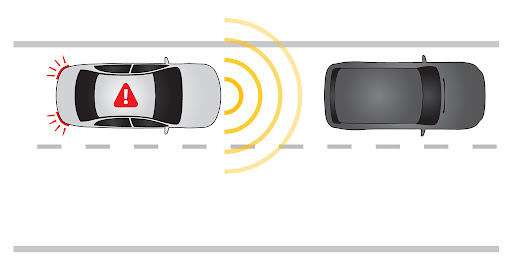
The system tracks not just the position of surrounding objects but their velocity vectors and predicted trajectories, identifying conflict points before they become emergencies. When a collision course is detected even with a vehicle approaching from a perpendicular direction the system can initiate emergency braking, steering corrections, or both, simultaneously.
Insurance companies are deeply interested in this feature because intersection accidents are not only common but frequently severe. Side-impact collisions the type most commonly produced by intersection failures are significantly more injurious than rear-end impacts due to the reduced structural protection on vehicle sides.
Fewer severe intersection crashes mean fewer large medical claims, fewer total-loss vehicle claims, and fewer liability payouts. Insurers have modeled these reductions and are translating them directly into premium discounts of 7% to 14% for verified intersection AEB systems.
For consumers, this technology works best when combined with other safety systems. A vehicle equipped with intersection AEB, adaptive cruise control, and robust lane assistance represents a comprehensively safer package, and many insurers offer bundled discounts for vehicles that carry the full suite rather than individual feature-based reductions.
4. AI-Powered Dashcams with Incident Recording
The dashcam has been a staple of fleet vehicles and safety-conscious private drivers for years. In 2026, however, factory-integrated AI-powered dashcams represent a quantum leap beyond the simple loop-recording cameras of the past decade.
These systems don’t just passively record they actively analyze, contextualize, and report, transforming raw video footage into actionable safety data that insurers can use to dramatically reduce your premium.
Modern AI dashcams, now available as standard or optional equipment across a wide range of 2026 vehicles, feature multi-channel recording typically a forward-facing high-resolution camera, a rear-facing unit, and interior monitoring capability.
The AI layer processes footage in real time, identifying specific events: hard braking, lane departures, near-miss scenarios, tailgating, and distracted driving behaviors. Each incident is tagged, timestamped, and stored in a secure, tamper-resistant format.
From an insurance perspective, the most valuable function of these systems is dispute resolution. One of the most expensive aspects of the claims process is fault determination particularly in multi-vehicle accidents where drivers give conflicting accounts.
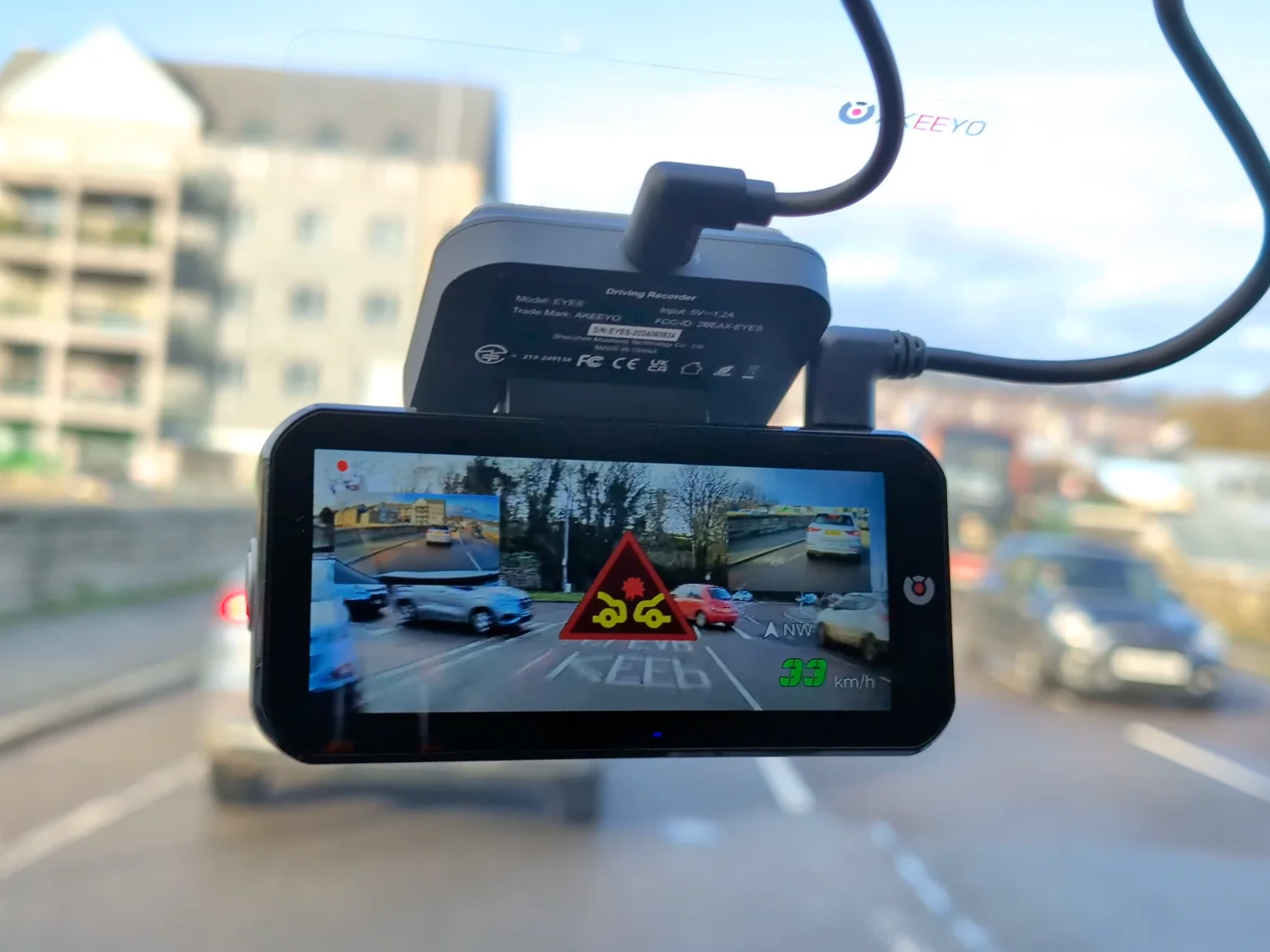
AI dashcam footage provides objective, timestamped, geolocated evidence that can resolve fault disputes rapidly. Insurers save enormous amounts of money when fault is established quickly and clearly, and they pass a portion of those savings on to customers who have these systems installed.
Beyond dispute resolution, AI dashcams provide a coaching function. Drivers can review their flagged incidents through a companion app, understand what behaviors triggered safety alerts, and consciously adjust their habits.
Some insurance programs actively monitor this coaching engagement drivers who demonstrate improvement in their flagged behaviors over time earn additional premium reductions as a reward for active safety commitment.
Privacy remains a concern for many drivers, and 2026 systems have addressed this more thoughtfully than earlier generations. Incident data is stored locally and encrypted, with uploads to insurer systems only occurring for flagged events or at the explicit direction of the vehicle owner. Interior camera data, in particular, is subject to strict consent frameworks.
Drivers can opt in to full monitoring for maximum discounts or configure partial data sharing based on comfort level. Insurance discounts for AI dashcam-equipped vehicles typically range from 5% to 12%, with higher discounts available in programs that incorporate active data sharing with insurers.
Also Read: 8 Myths About High Mileage Oil That You Should Stop Believing
5. Vehicle-to-Everything (V2X) Communication Technology
Vehicle-to-Everything communication often abbreviated as V2X is one of the most forward-looking technologies making its way into mainstream 2026 vehicles, and its implications for insurance pricing are profound.
V2X allows your car to communicate not just with other vehicles but with traffic infrastructure, pedestrian devices, emergency services, and cloud-based traffic management systems. It’s the technological foundation for a genuinely connected road ecosystem, and insurers are beginning to price its safety benefits into their premium structures.
The core safety benefit of V2X lies in its ability to extend a vehicle’s awareness far beyond what any onboard sensor can detect. A radar or camera can only see what’s within its physical line of sight.
V2X communication can warn you about a vehicle running a red light two seconds before it enters your intersection information no camera could provide.
It can alert you to emergency vehicles approaching from three blocks away, allowing you to safely yield before sirens are even audible. It can communicate with school zone infrastructure to trigger automatic speed reduction during dismissal times.
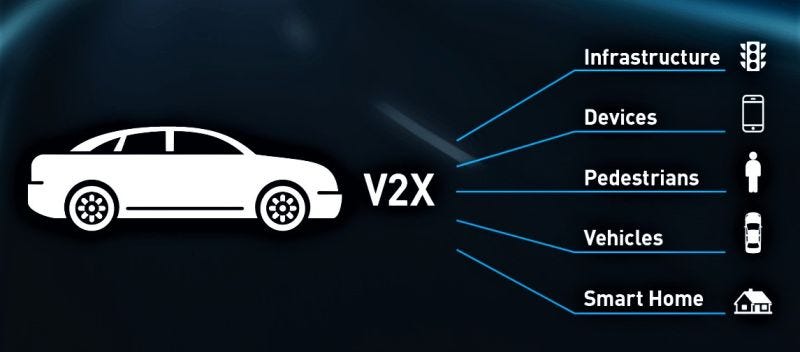
For insurance companies, V2X represents a reduction in the unpredictability that drives claim costs. The majority of accidents are caused not by driver negligence per se, but by information failures drivers who didn’t know a hazard existed until it was too late.
V2X directly attacks this root cause, giving drivers and vehicle automation systems more time to respond to emerging dangers. Early studies from traffic safety institutes suggest V2X-equipped vehicles could see intersection crash reductions of up to 80% over time as network density increases.
The discount for V2X in 2026 is still somewhat modest typically 4% to 8% because the technology is most powerful when widespread adoption creates dense communication networks.
A single V2X-equipped vehicle in a sea of non-equipped traffic captures only a fraction of the technology’s potential benefit. However, as adoption grows through the latter half of the 2020s, these discounts are expected to increase substantially. Buying a V2X-equipped vehicle in 2026 is both a present safety benefit and a forward investment in increasing insurance savings.
6. Advanced Anti-Theft Systems with GPS Tracking
Vehicle theft represents one of the most direct financial losses that insurance companies face, and the claims costs associated with theft including comprehensive coverage payouts, administrative costs, and fraud-related losses are substantial.
In 2026, advanced anti-theft systems have evolved dramatically beyond simple alarm systems and immobilizers, incorporating real-time GPS tracking, biometric authentication, remote disabling capability, and AI-powered anomaly detection. Insurance companies reward these systems generously because they directly reduce theft claim frequency and severity.
The 2026 generation of anti-theft technology starts with biometric access control. Rather than traditional key fobs or even smartphone-based entry, some high-end and mid-range 2026 vehicles now offer fingerprint or facial recognition as either the primary or supplementary access method.
These systems are significantly harder to defeat than traditional entry methods and create an authentication layer that theft-ring techniques including relay attacks on keyless entry systems, which surged dramatically in the early 2020s cannot easily circumvent.
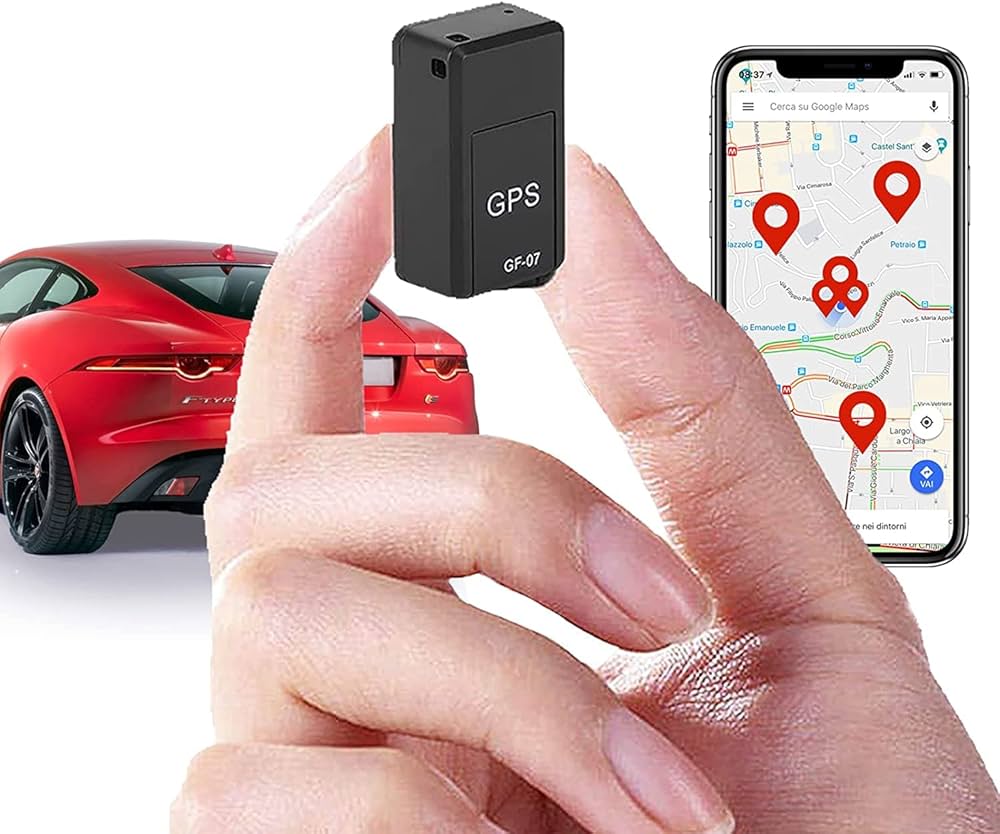
GPS tracking in 2026 vehicles has become highly sophisticated. Modern factory-installed GPS anti-theft systems operate on multiple network bands cellular, satellite, and Bluetooth mesh ensuring that location data remains available even when a vehicle is moved into a garage or structure designed to block signals.
Real-time location is accessible via manufacturer apps and, with owner authorization, can be shared directly with law enforcement and insurance investigators. Recovery rates for vehicles equipped with these systems are substantially higher than for unequipped vehicles, dramatically reducing the total loss claim exposure for insurers.
AI anomaly detection adds another layer of protection. These systems learn the typical patterns of vehicle use usual starting times, typical locations, common routes and flag deviations that might indicate unauthorized use.
If your car starts at 3 AM on a Tuesday and begins moving toward an unusual destination, the system can alert you immediately and, if confirmed as unauthorized, trigger a remote engine disable command that safely immobilizes the vehicle once it comes to a stop.
For insurance purposes, comprehensive coverage premiums which cover theft can be reduced by 10% to 25% for vehicles with verified advanced anti-theft packages. Given that comprehensive coverage typically represents a meaningful portion of total premium, these are real-dollar savings that compound over the ownership period.
7. Driver Monitoring Systems (DMS)
Driver Monitoring Systems have been making headlines in automotive safety discussions for several years, but 2026 represents the year they’ve truly gone mainstream as factory-standard equipment across multiple vehicle segments.
These systems continuously monitor the driver for signs of distraction, drowsiness, and impairment three of the most common contributors to serious accidents and intervene with escalating alerts and, in some configurations, automatic vehicle management responses. Insurance companies are taking note and rewarding drivers who operate DMS-equipped vehicles.
The technology behind modern DMS is anchored in infrared camera systems mounted within the cabin, typically positioned to observe the driver’s face without being intrusive or distracting.
These cameras operate in complete darkness, using infrared illuminators invisible to the human eye. Onboard AI processes the video feed to track eye openness, gaze direction, head position, and blinking frequency.
The system detects microsleep events those terrifying moments when a fatigued driver loses consciousness for one to three seconds and triggers escalating alert responses, from subtle seat vibrations to loud audible warnings to, ultimately, automatic speed reduction and hazard light activation.
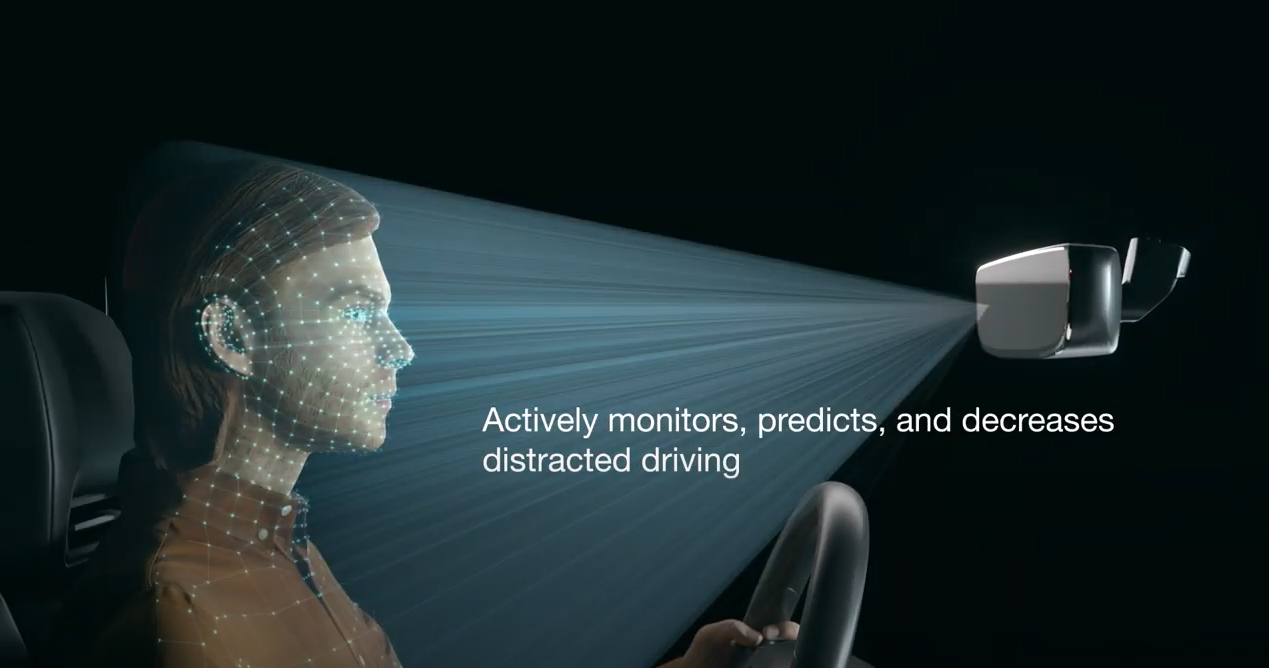
Distraction monitoring adds a complementary layer of protection. The 2026 generation of DMS doesn’t just look for closed eyes it monitors where the driver is looking.
Sustained gaze away from the road ahead toward a phone, the center console, or out a side window triggers progressive warnings calibrated to the severity of the inattention.
Some systems are now sophisticated enough to distinguish between a driver briefly checking mirrors (acceptable behavior) and a driver looking down at a device (dangerous distraction requiring intervention).
Insurance companies value DMS because distracted and drowsy driving are among the most preventable causes of serious accidents. Claims data consistently shows that distraction-related accidents tend to be severe high-speed impacts with minimal pre-collision braking which results in large bodily injury and property damage payouts.
Any technology that meaningfully reduces distraction events directly reduces the expected value of claims from a policyholder. Discounts for DMS-equipped vehicles currently range from 5% to 10%, with some specialty insurance products offering higher reductions for drivers who also share DMS performance data.
8. Autonomous Emergency Steering
While emergency braking has been a feature in vehicles for over a decade, Autonomous Emergency Steering is a significantly more sophisticated intervention capability that 2026 vehicles are beginning to offer at scale.
In scenarios where braking alone cannot prevent a collision typically because the stopping distance required exceeds what’s available emergency steering maneuvers can redirect the vehicle around an obstacle while staying within the vehicle’s lateral control envelope.
This capability represents a major leap in active safety and is attracting premium discounts from forward-thinking insurers. The physics are straightforward: at speeds above approximately 40 mph, the stopping distance required to avoid a stationary object in the road may exceed what braking alone can achieve.
Emergency steering can, in many of these scenarios, successfully avoid the collision entirely by moving the vehicle laterally at high speed while maintaining stability through simultaneous brake modulation and active suspension management.
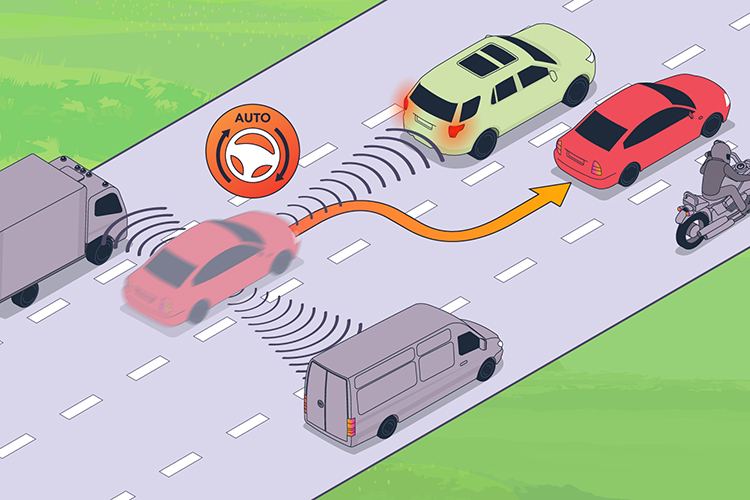
The computational challenge is enormous the system must assess available space in adjacent lanes, calculate a safe trajectory, execute the maneuver with precise steering torque commands, and stabilize the vehicle throughout the event, all within less than a second.
In real-world testing environments, vehicles equipped with Autonomous Emergency Steering demonstrated the ability to avoid or significantly reduce the severity of collisions in approximately 30% of high-speed scenarios where braking alone would have been insufficient.
That 30% represents a meaningful reduction in high-severity, high-cost claims the type that drive insurance premiums across entire demographic segments.
Insurance discounts for Autonomous Emergency Steering are typically offered as part of a broader advanced active safety package, contributing to bundled discounts of 10–15% for the complete safety suite.
Standalone recognition of the feature typically yields 5–8% premium reductions, and the technology is expected to earn greater discount recognition as more real-world claims data accumulates over the 2026–2028 period.
9. Automatic Post-Collision Safety Systems
One of the most underappreciated categories of vehicle safety technology is what happens immediately after a collision occurs. For all the focus on collision prevention, the reality is that some accidents are unavoidable a fault of physics, road conditions, or circumstances beyond any driver or system’s control.
Automatic Post-Collision Safety Systems, now increasingly standard in 2026 vehicles, address this reality by minimizing the consequences of accidents once they begin, and insurance companies are recognizing their value in reducing secondary accident costs and medical claim severity.
Post-collision systems activate the moment crash sensors detect an impact above a defined severity threshold. The most basic function automatic emergency braking following an initial impact has been shown to dramatically reduce secondary collisions.
In a significant percentage of multi-vehicle accidents, the most severe injuries and damages come not from the initial impact but from subsequent collisions as the stricken vehicle slides uncontrolled through traffic.
By applying maximum braking force immediately after impact detection, post-collision systems can arrest this dangerous momentum and prevent vehicles from entering opposing traffic lanes or striking additional objects.
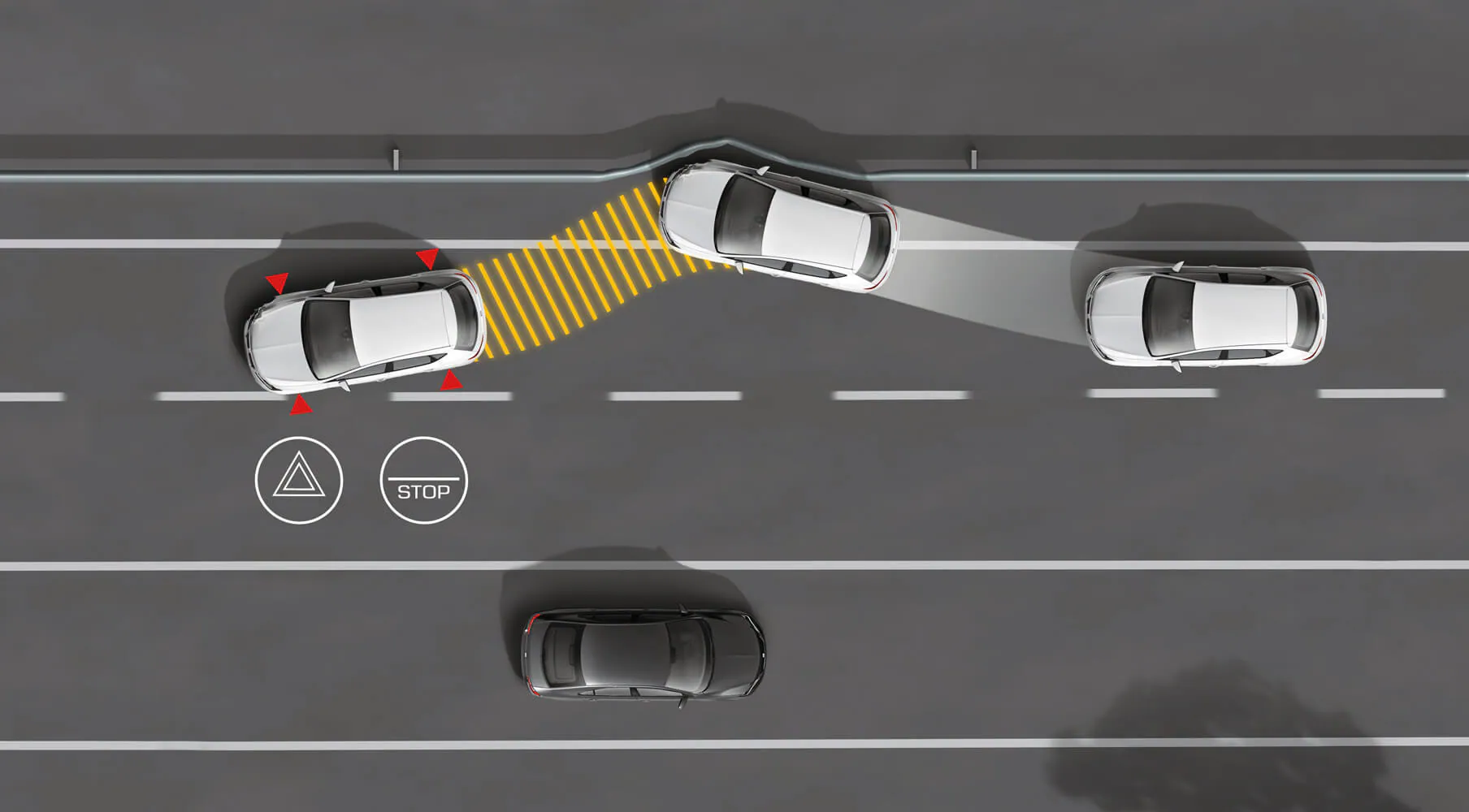
Beyond emergency braking, 2026 post-collision systems integrate automatic emergency calling (eCall in European markets, similar proprietary systems in North America) that immediately contacts emergency services with the vehicle’s precise GPS location, the number of occupants detected by seat sensors, and the severity data from crash sensors.
Faster emergency response directly correlates with better medical outcomes and better medical outcomes mean lower medical claim costs for insurers. Some systems now transmit real-time vehicle health data to emergency dispatchers, allowing paramedics to prepare for specific injury types before arriving on scene.
Hazard light activation, door unlocking for emergency access, fuel system shutoff, and high-voltage battery isolation in electric vehicles are all automatic functions that modern post-collision systems manage without driver input.
Each of these functions contributes to faster, safer emergency response and reduced secondary risk. Insurers offering discounts for post-collision systems typically provide premium reductions of 4% to 9%, reflecting the measurable reduction in claim severity rather than claim frequency.
10. Over-the-Air (OTA) Safety Updates
The final feature on our list is perhaps the most future-oriented of all, and yet it’s one that insurance companies are increasingly incorporating into their pricing models in 2026.
Over-the-Air update capability the ability for a vehicle to receive software improvements, safety patches, and new feature activations via wireless internet connection, much like a smartphone represents a fundamentally new model of vehicle safety.
A car that can get safer over time without visiting a dealership is, from an actuarial standpoint, a continuously improving risk profile, and that has real value for premium calculation.
The significance of OTA updates for safety cannot be overstated. Traditional vehicles were fixed at their level of software sophistication at the moment they left the factory.
If a safety system had a bug, a vulnerability, or simply a suboptimal calibration, the only remedy was a dealership service visit which a majority of owners never pursued for non-urgent issues.
OTA-capable vehicles in 2026 receive continuous improvements pushed by manufacturers as they identify and resolve safety system performance issues in their global fleets.
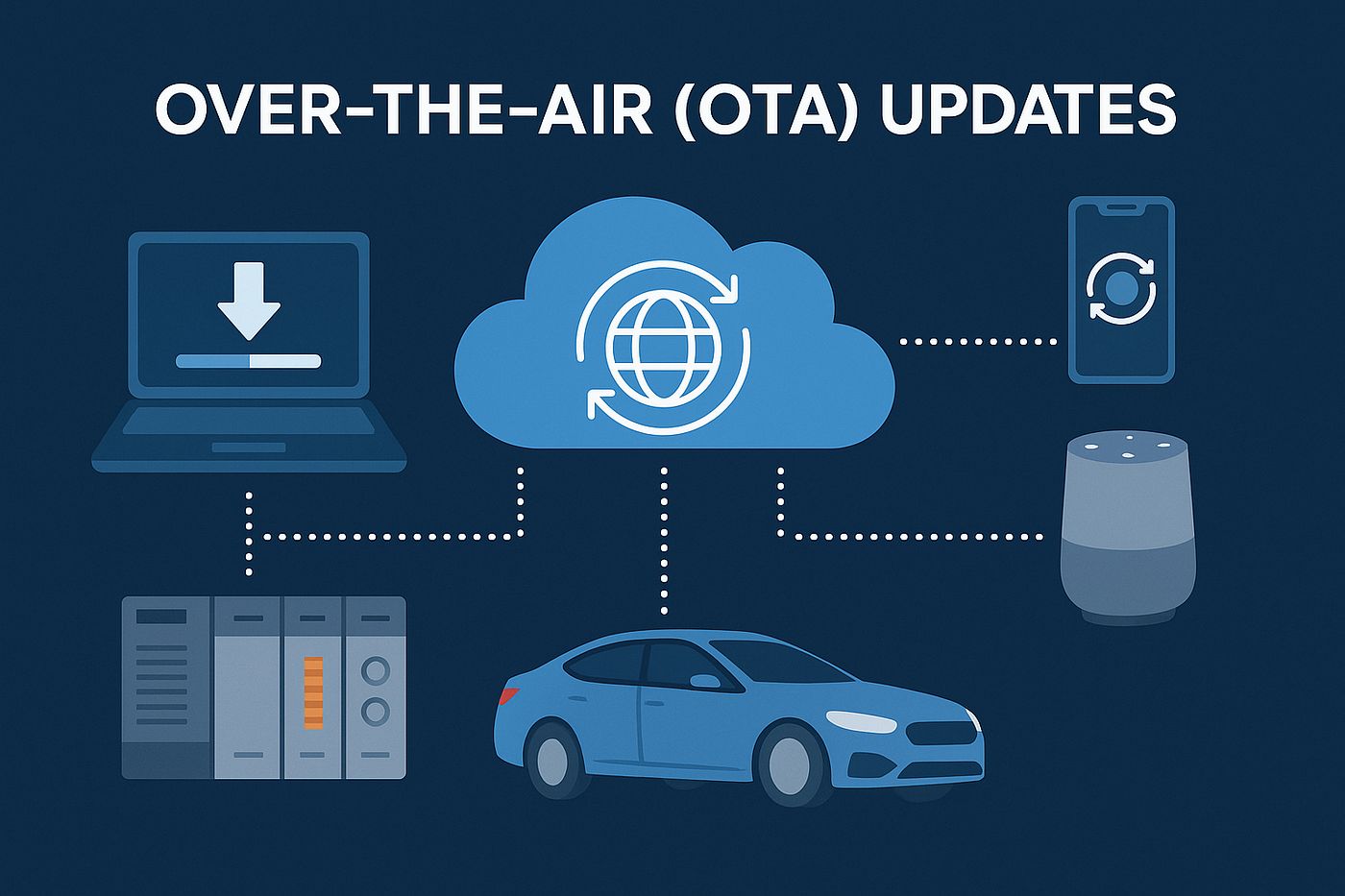
Consider the implications: if a manufacturer identifies through fleet data analysis that a particular AEB calibration is causing false negatives in specific scenarios failing to trigger in situations where it should they can push a corrected calibration to every equipped vehicle in their fleet within days or weeks.
In the traditional model, that same improvement might reach vehicle owners only through a formal recall process that takes months and achieves only partial compliance. OTA updates make safety improvements immediate and universal.
Insurance companies recognize this dynamic. Several major insurers have begun offering explicit OTA discounts typically 3% to 6% for vehicles from manufacturers with robust over-the-air safety update programs, specifically because the vehicle’s safety profile can improve over the policy period rather than degrading.
This is a relatively small but meaningful discount that compounds with the other features on this list. More significantly, OTA updates can unlock or improve other insurance-relevant features.
A vehicle that arrives with basic telematics capability might receive an OTA update that enables full UBI integration with insurance partners. A vehicle with standard AEB might receive updates that add intersection detection or improved pedestrian recognition.
From an insurance perspective, the OTA-capable vehicle is not just the vehicle you drove off the lot it’s a platform that continues to evolve, and that evolution has real financial value.
Also Read: Top 10 Cars That Came With a Matching Bike or Scooter
