
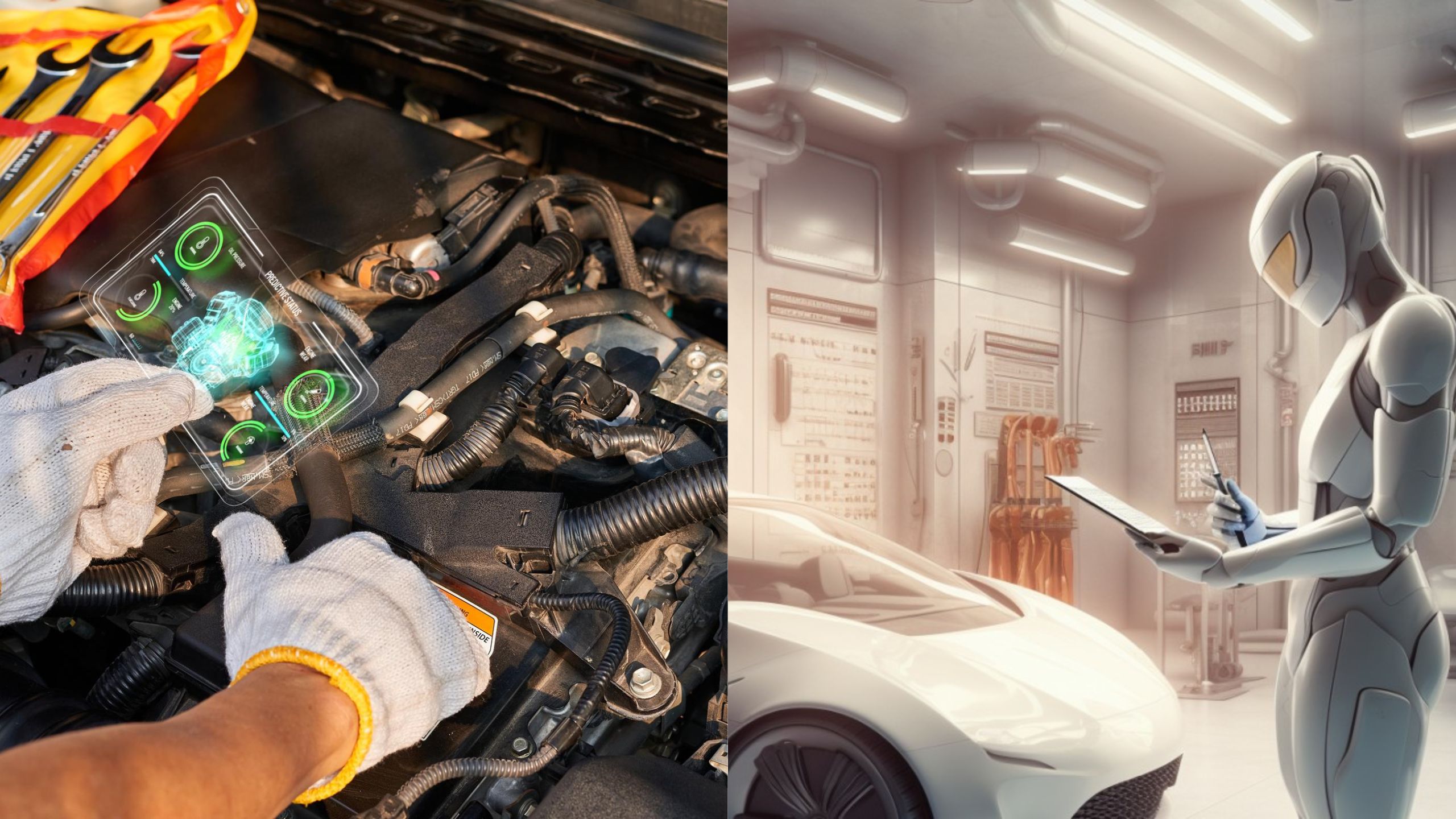
The automotive repair industry has long been synonymous with hefty bills, unexpected breakdowns, and the uncomfortable feeling that you’re being overcharged for something you don’t fully understand.
For decades, car owners have walked into repair shops with a sense of dread, unsure whether the mechanic’s diagnosis is accurate or whether the quoted price reflects the actual work required. Billions of dollars spent annually on repairs that could have been cheaper, faster, or even avoided altogether.
Artificial intelligence is changing that narrative and fast. From the moment a warning light flickers on your dashboard to the final invoice handed over at the service counter, AI is quietly revolutionizing every stage of the car repair process. It is making diagnostics sharper, predictions smarter, and labor more efficient.
It is empowering both mechanics and vehicle owners with information that was previously locked away in expensive equipment or years of specialized training.
The financial impact is staggering. Industry analysts estimate that AI-driven innovations could reduce vehicle maintenance and repair costs by up to 30% over the next decade.
For the average car owner spending $1,000 or more per year on maintenance, that’s a meaningful saving. This article explores six powerful ways AI is making professional car repairs more affordable and why the future of the auto shop looks dramatically different from its past.
1. AI-Powered Diagnostics: Pinpointing Problems Before They Escalate
There was a time when diagnosing a car problem was equal parts science and guesswork. A mechanic would plug in a basic OBD-II scanner, retrieve a generic error code, and then spend considerable time billed to the customer, of course, narrowing down the root cause through trial and error. Sometimes parts were replaced unnecessarily.
Sometimes the real problem was masked by a secondary symptom. The customer always paid the price for this uncertainty. AI-powered diagnostics have fundamentally disrupted this process.
Modern AI diagnostic platforms, such as those developed by companies like Opus IVS, Repairify, and Bosch’s diagnostics division, don’t simply read error codes they interpret them within a vast contextual framework.
These systems analyze thousands of data points simultaneously: sensor readings, historical fault patterns, vehicle mileage, driving behavior, and manufacturer-specific technical service bulletins. The result is a diagnosis that is not only faster but dramatically more accurate.
The financial benefit is direct and immediate. When a mechanic knows precisely what is wrong with a vehicle within minutes rather than hours, labor costs collapse.
A diagnosis that once required two or three hours of investigative work can now be completed in twenty to thirty minutes. For a shop billing at $120 to $180 per hour, that reduction alone can save a customer $200 or more on a single visit.
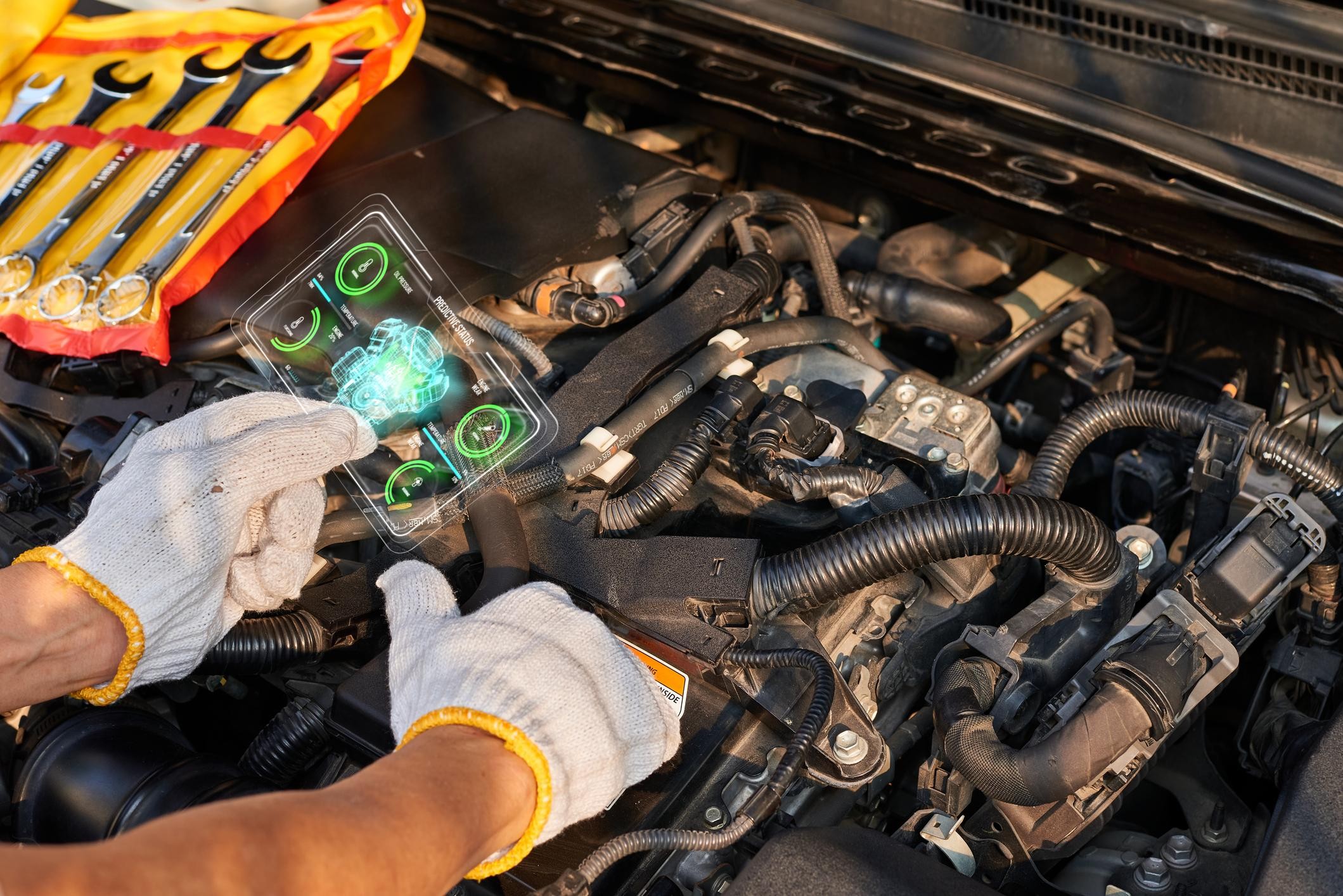
Beyond speed, AI diagnostics reduce the risk of misdiagnosis one of the most costly problems in the repair industry. Studies suggest that misdiagnosis contributes to roughly 20% of unnecessary part replacements in independent repair shops.
When an AI system cross-references a fault code against millions of similar repair cases from vehicles with identical configurations, it dramatically narrows the possibility of replacing the wrong component. Instead of swapping out a $400 sensor only to discover the actual issue was a $15 wiring connector, the mechanic goes straight to the source.
AI diagnostics also empower vehicle owners before they even enter a shop. Consumer-facing apps powered by machine learning such as FIXD, Carly, and similar platforms allow drivers to scan their own vehicles and receive plain-language explanations of problems, estimated repair costs, and urgency ratings.
Armed with this information, car owners can walk into a dealership or independent shop with confidence, significantly reducing the chance of being upsold unnecessary services. Transparency, in this case, translates directly into savings.
Furthermore, AI diagnostic tools are becoming increasingly predictive rather than merely reactive. Instead of waiting for a fault code to appear, advanced systems monitor real-time data streams from a vehicle’s onboard sensors and flag anomalies before they trigger a warning light.
A cooling system showing subtle pressure fluctuations may not yet have triggered any dashboard alerts, but an AI system monitoring the data can flag it as a developing problem allowing the owner to schedule a repair before a $90 thermostat replacement becomes a $1,500 engine overheating event.
The cumulative effect of faster, more accurate, and more transparent diagnostics is a repair industry where customers pay for solutions, not investigations. As AI diagnostic technology continues to mature and becomes standard equipment in shops of all sizes, the era of the bloated diagnostic bill is drawing to a close.
2. Predictive Maintenance: Stopping Expensive Breakdowns Before They Happen
The most expensive car repair is always the one you didn’t see coming. An engine that seizes on the highway, a transmission that fails without warning, a timing belt that snaps at 80 miles per hour these catastrophic failures don’t just result in enormous repair bills.
They cause towing costs, rental car expenses, lost workdays, and in some cases, total vehicle loss. The financial and emotional toll of unexpected breakdowns is one of the most significant pain points for car owners everywhere.
Predictive maintenance powered by artificial intelligence is tackling this problem at its root. Rather than following a fixed schedule changing the oil every 3,000 miles regardless of actual engine condition, or replacing brake pads at a set mileage regardless of driving style AI-driven predictive maintenance systems analyze real-world data to determine exactly when a component actually needs attention.
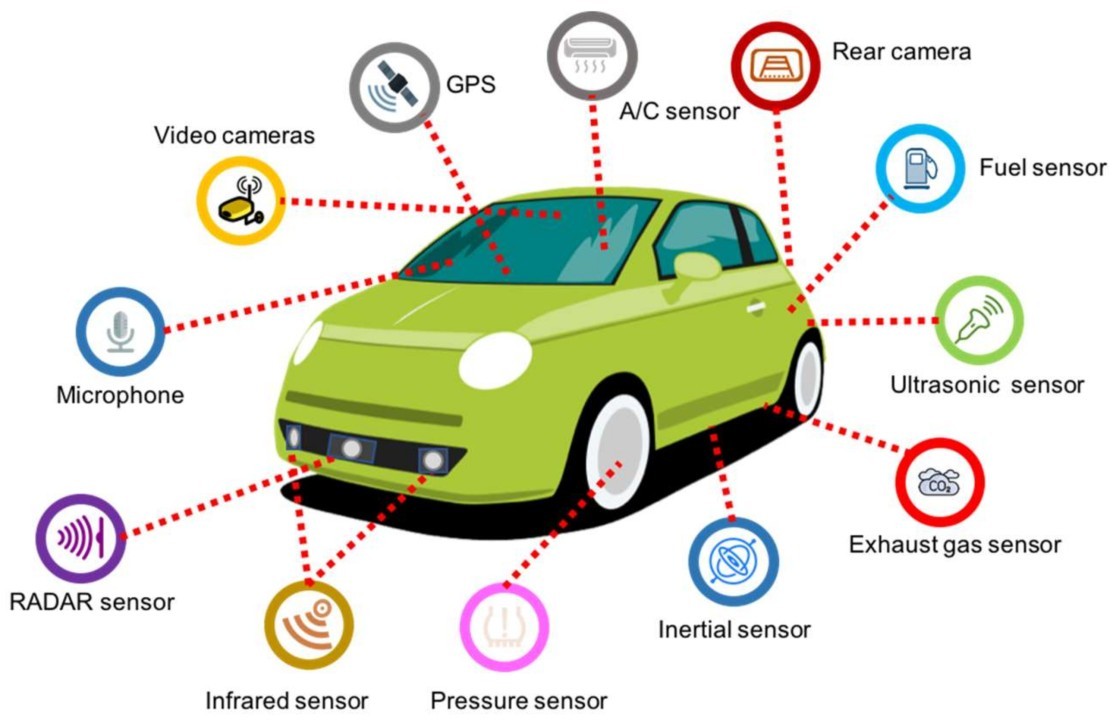
This shift from time-based to condition-based maintenance is one of the most financially impactful developments in automotive care. The technology works by continuously collecting data from a vehicle’s network of sensors monitoring everything from engine temperature and oil viscosity to battery voltage and brake pad thickness.
Machine learning algorithms process this data against vast databases of component failure histories, identifying patterns that reliably precede specific types of breakdowns. When the system detects that a pattern matches a known failure trajectory, it alerts the driver or fleet manager well in advance, providing enough lead time to schedule a convenient, planned repair rather than an emergency one.
The cost difference between a planned repair and an emergency breakdown is enormous. Consider the transmission as an example. A transmission service fluid change and filter replacement performed proactively when an AI system detects degraded fluid quality might cost $150 to $250.
A full transmission rebuild or replacement, triggered by a failure that the same service could have prevented, typically costs between $2,500 and $5,000. AI-driven predictive maintenance effectively converts potential catastrophes into routine line items.
Fleet operators have been among the earliest and most enthusiastic adopters of this technology, precisely because the financial returns are so clear. Companies like Samsara, Geotab, and Uptake have developed AI platforms specifically for commercial vehicle fleets, and the data they report is compelling.
Fleet operators using predictive maintenance consistently report reductions in unplanned downtime of 25% to 40%, translating into millions of dollars in avoided repair costs and lost productivity.
As the same technology filters down to consumer vehicles through connected car platforms, OEM telematics systems, and aftermarket devices private car owners stand to capture similar savings.
Predictive maintenance also extends the useful life of vehicle components by ensuring they are neither replaced too early nor run to catastrophic failure.
An AI system that recommends a brake service at precisely the optimal moment not 10,000 miles too early out of excessive caution, and not after the rotors have already been scored maximizes the value extracted from every part. Over the lifetime of a vehicle, this optimization can save thousands of dollars in premature replacements and avoided secondary damage.
Also Read: Top 10 Non Hybrid Cars That Get Over 40 Miles Per Gallon
3. AI-Driven Parts Pricing and Procurement: Eliminating the Markup Mystery
Ask any car owner what they find most frustrating about repair bills, and parts pricing will almost always feature prominently in the answer. The traditional parts procurement model in the automotive repair industry has long been opaque to the point of being adversarial.
A shop purchases a part at wholesale cost, marks it up by 40% to 80%, and presents the inflated figure to the customer as the market price. For customers without the time or technical knowledge to challenge the markup, there was little recourse. They paid what they were told.
Artificial intelligence is bringing unprecedented transparency and competition to automotive parts pricing and the savings for consumers are substantial. AI-powered parts procurement platforms now enable repair shops and vehicle owners alike to instantly compare prices across hundreds of suppliers, distributors, and online marketplaces in real time.
Platforms like PartsTech, OEC, and RevolutionParts aggregate inventory and pricing data from thousands of suppliers, allowing a mechanic to identify the best available price for an exact-match part in seconds. The pressure this creates on traditional high-margin parts sales is already reshaping the economics of the repair business.
For vehicle owners who choose to source their own parts a practice known as “customer-supplied parts” AI-powered tools make it dramatically easier to identify quality components at fair prices.

Machine learning algorithms trained on warranty claims, return rates, and customer reviews can distinguish between a reliable aftermarket part and a low-quality substitute that will fail within months.
Rather than defaulting to the most expensive OEM option or gambling on an unknown brand, consumers can make data-driven decisions that balance cost and quality effectively.
AI is also transforming the way shops manage parts inventory, which has a direct and often overlooked effect on what customers pay. Traditionally, shops have maintained large inventories of commonly needed parts, tying up capital in stock that may sit on shelves for months.
The carrying costs of that inventory financing, storage, obsolescence are ultimately built into labor rates and parts markups charged to customers.
AI-powered inventory management systems, by analyzing repair order histories, seasonal demand patterns, and local vehicle demographics, allow shops to maintain leaner inventories of precisely the right parts. Lower inventory costs mean less financial pressure to inflate parts pricing.
The impact extends to warranty and quality assurance as well. AI systems that track part performance across thousands of vehicles and repair orders can identify specific part numbers or brands with raised failure rates, flagging them for shops and consumers before a substandard component gets installed.
This reduces comebacks situations where a vehicle returns to the shop for the same problem shortly after a repair which benefit everyone. The customer avoids the frustration and cost of repeat repairs, and the shop avoids the labor expense of warranty work. It’s a dimension of cost savings that rarely appears on an invoice but represents real financial value.
As AI-driven parts pricing tools become more widely accessible to consumers through apps and online platforms, the information asymmetry that has historically favored repair shops over customers is steadily eroding.
The result is a market where fair pricing is the norm rather than the exception, and where the cost of the parts in your repair bill actually reflects something close to their true market value.
Also Read: 10 New Car Features in 2026 That Save You Money on Insurance
4. Robotic and AI-Assisted Repair Processes: Reducing Labor Time and Human Error
Labor is consistently the largest single cost component in most automotive repair bills. Depending on the region and the type of shop, hourly labor rates range from $80 at a modest independent garage to $200 or more at a franchised dealership. When a repair requires four, six, or eight hours of work, the labor portion of the bill can dwarf the cost of the parts themselves.
Any technology that reduces the time a skilled technician must spend on a repair or that reduces the likelihood of a mistake that requires rework has an immediate and significant effect on what customers pay.
Artificial intelligence, combined with robotics and advanced computer-assisted repair systems, is doing exactly that. While fully autonomous repair robots remain largely in the experimental phase for most automotive applications, AI-assisted tools are already dramatically accelerating the work of human technicians in real shops today.
Computer vision systems, AI-guided alignment equipment, and augmented reality repair assistance platforms are reducing both the time and the expertise required for a growing range of repair tasks.
AI-powered wheel alignment systems illustrate the principle clearly. Traditional four-wheel alignment is a process that requires a skilled technician, specialized equipment, and considerable time often an hour or more.

Modern AI-driven alignment systems, such as those produced by Hunter Engineering, use cameras, machine learning algorithms, and automated adjustment guidance to complete precise alignments in a fraction of the traditional time.
The accuracy of these systems also surpasses what is consistently achievable by human operators, reducing the incidence of alignment-related tire wear that sends customers back to the shop prematurely.
Augmented reality platforms represent another frontier where AI is reducing labor costs meaningfully. Systems like the ones developed by Scope AR and Atheer overlay real-time repair instructions, torque specifications, component diagrams, and step-by-step guidance directly onto a technician’s field of view through AR headsets or tablet displays.
For complex repairs that would traditionally require a highly experienced technician and command correspondingly high labor rates AR-assisted systems allow a competent but less specialized mechanic to complete the work accurately. This democratization of expertise is reflected in lower labor charges passed on to customers.
AI is also reducing the cost of paintless dent repair, one of the more labor-intensive and skill-dependent services in the industry. AI-assisted dent detection and mapping tools can identify the precise location, depth, and contour of dents invisible to the naked eye, guiding technicians through the repair process with a level of precision that reduces working time and improves outcomes.
Repairs that once required hours of skilled bodywork and the associated cost can be completed more quickly, accurately, and affordably with AI assistance. The reduction in human error facilitated by AI-assisted processes carries its own financial benefit, one that is harder to quantify but no less real.
Every time a repair is done incorrectly a torque spec missed, a sensor connector left unplugged, a calibration skipped the vehicle returns to the shop. That comeback costs the shop time and the customer frustration, and it often generates dispute about who bears the cost.
AI systems that verify each step of a repair process, alert technicians to missed procedures, and confirm that calibrations have been completed correctly reduce comeback rates and the hidden costs embedded within them.
5. AI in Insurance and Claims Processing: Faster Settlements, Lower Overhead
The connection between artificial intelligence and the cost of car repairs extends well beyond the walls of the repair shop itself. A significant portion of the total financial burden associated with vehicle damage particularly after accidents flows through the insurance claims process. And that process, traditionally, has been slow, expensive, contested, and riddled with inefficiency.
Adjusters had to physically inspect damaged vehicles. Repair estimates had to be negotiated. Disputes over coverage extended timelines and increased administrative costs that ultimately contributed to higher premiums for everyone.
AI is transforming automotive insurance claims processing with remarkable speed and thoroughness, and the downstream effect on what consumers pay for repairs both directly and through their insurance premiums is substantial.
Computer vision AI systems can now assess vehicle damage from photographs submitted by smartphone with a level of accuracy that rivals or exceeds traditional in-person adjustments.
Companies like Tractable, CCC Intelligent Solutions, and Mitchell International have deployed AI damage assessment platforms that are now used by major insurers to process millions of claims annually.
The speed advantage alone carries significant financial value. When an AI system can analyze damage photos and generate a detailed repair estimate within minutes rather than the days or weeks required by traditional adjustment processes, the entire repair timeline compresses. Vehicles get into shops faster.

Rental car costs often covered by insurance but always contributing to claim costs and therefore to premiums are reduced. Body shops experience smoother workflow because they receive accurate, pre-approved estimates rather than spending hours negotiating with adjusters.
Accuracy is the other transformative dimension. AI damage assessment systems trained on millions of labeled vehicle images can identify damage that human adjusters miss cracked bumper reinforcements invisible beneath painted surfaces, subtle frame distortions, secondary impact damage as well as flag claims where the damage pattern doesn’t match the reported accident scenario.
This dual capability, finding genuine hidden damage and detecting potentially fraudulent inflation, simultaneously protects consumers from being underpaid on legitimate claims and helps control the fraud-driven premium inflation that affects all policyholders.
AI is also enabling the development of usage-based and behavior-based insurance products that allow safe, low-mileage drivers to pay premiums that more accurately reflect their actual risk profiles.
Telematics systems powered by machine learning monitor driving behavior acceleration patterns, braking force, cornering speed, time of day and translate this data into personalized premium calculations.
For careful drivers, these products can reduce insurance costs substantially. And because lower insurance premiums mean a smaller portion of every repair dollar is effectively subsidized by premium overhead, the total cost of vehicle ownership declines.
The integration of AI across the insurance ecosystem from first notice of loss through damage assessment, repair authorization, and final settlement is creating a faster, fairer, and less expensive system for processing automotive claims.
As these platforms mature and their adoption widens across the industry, the reduction in administrative overhead and fraud-related costs will continue to translate into tangible savings for consumers going through the intersection of vehicle damage and insurance.
6. AI-Powered Customer Transparency Tools: Ending Unnecessary Upselling
Perhaps the most insidious cost in the automotive repair industry has never appeared on a legitimate invoice at all. It is the cost of unnecessary work services recommended with confidence and authority that the vehicle doesn’t actually need, parts replaced before they’ve genuinely failed, maintenance intervals shortened beyond what the manufacturer requires.
Industry surveys consistently find that a significant percentage of car owners feel they have been sold services they didn’t need at a repair shop. The financial impact of this upselling whether born of dishonesty, excessive caution, or simple lack of information runs into billions of dollars annually across the industry.
Artificial intelligence is emerging as a powerful equalizer in this dynamic, giving vehicle owners access to the same quality of information that was previously available only to trained mechanics.
A growing ecosystem of AI-powered automotive advisory tools is enabling consumers to evaluate repair recommendations critically, verify whether proposed services are genuinely due, and benchmark quoted prices against fair market rates all before authorizing a single dollar of work.
Platforms like FIXD, YourMechanic, RepairPal, and a growing number of OEM-integrated telematics applications use machine learning to analyze a vehicle’s actual condition data alongside manufacturer maintenance schedules, real-world failure rates, and regional pricing benchmarks.
When a service advisor recommends a $200 fuel system cleaning on a three-year-old vehicle with 28,000 miles, an AI-powered tool can instantly evaluate whether any data from the vehicle’s sensors or the manufacturer’s service requirements supports that recommendation and in many cases, it will indicate clearly that the service is not warranted.
The customer saves $200, not by haggling, but by having access to objective information. AI tools also help consumers prepare for repair shop visits in ways that reduce vulnerability to unnecessary upselling.
When a driver understands, through an AI-generated vehicle health report, that their brake pads have 40% life remaining, that their battery is testing at normal capacity, and that their air filter was replaced eight months ago, they are far less susceptible to being talked into replacing any of those items prematurely. Knowledge, delivered clearly and accessibly through AI interfaces, is the most effective defense against inflated repair bills.
The transparency that AI tools provide is also beginning to influence the behavior of repair shops themselves. As consumers become more informed and more likely to challenge recommendations they can’t verify, shops that built their business models around upselling face increasing pressure to compete on genuine value.
This cultural shift from a model where the mechanic held all the information to one where the customer arrives prepared is driving a gradual but meaningful improvement in the ethical standards of the industry. AI isn’t just saving individual customers money on individual visits; it is systematically raising the floor of consumer protection across the entire sector.
Additionally, AI-powered review and pricing transparency platforms are making it easier than ever to compare shops on both quality and cost before committing to a repair. Machine learning algorithms that aggregate thousands of customer reviews, complaint patterns, and pricing data can surface shops with strong reputations for fair dealing and flag those with histories of disputed charges or quality problems.
This competitive pressure where the best shops are more visible and the predatory ones are more exposed creates market incentives that benefit all consumers. The era of the information-disadvantaged car owner, walking blindly into an appointment and accepting whatever the shop recommends, is ending.
AI-powered transparency tools are democratizing automotive knowledge, and the result is a repair industry that is, slowly but surely, being held to a higher standard of honesty and fair value. For the millions of car owners who have overpaid for unnecessary services, the arrival of AI as an informed advocate on their side of the counter is long overdue.
Also Read: 5 Reasons to Buy a CPO Vehicle vs 5 Reasons to Buy From a Private Seller
