
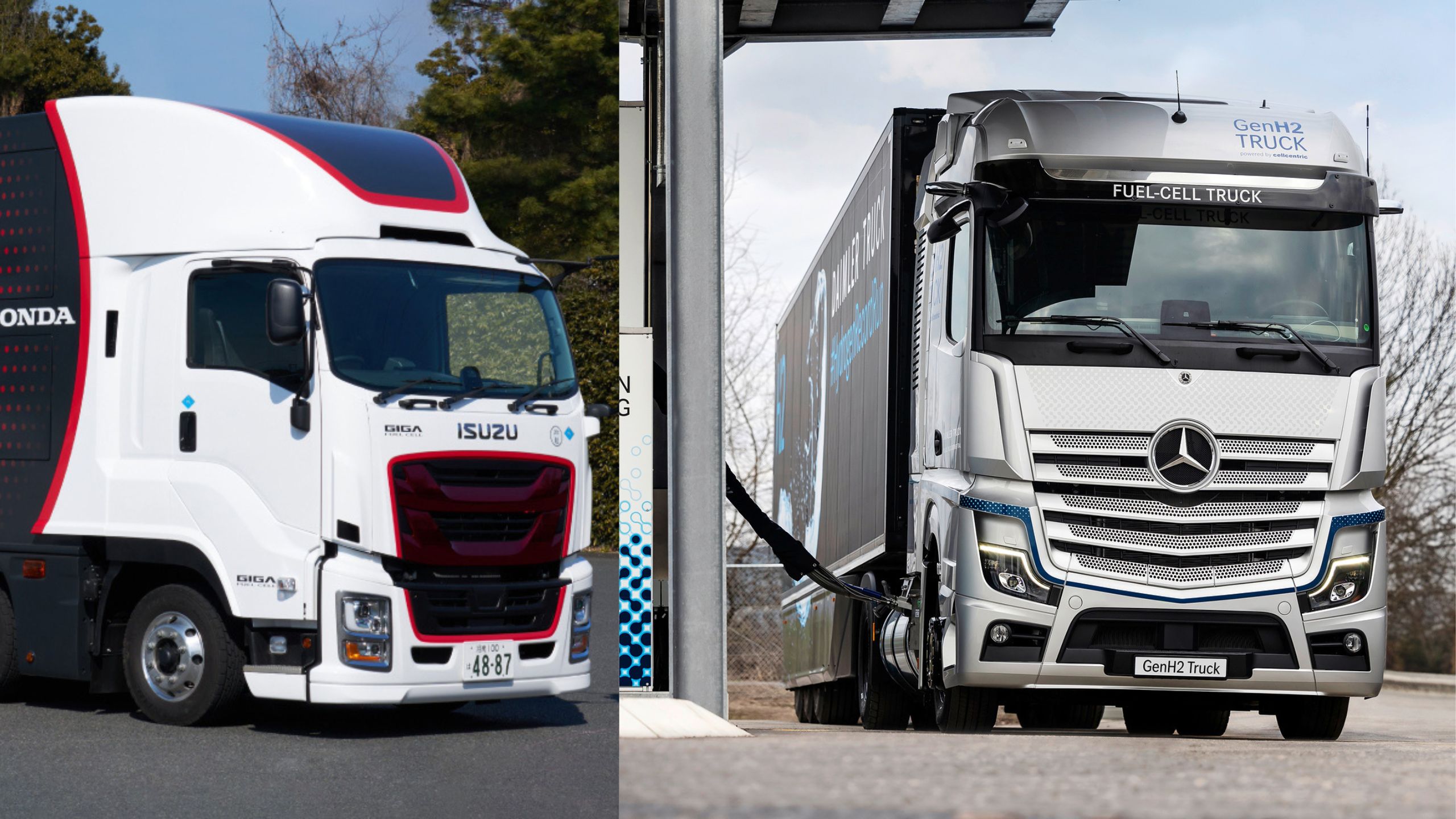
The global transportation sector stands at a pivotal crossroads. As governments tighten emissions regulations and corporations race to meet ambitious sustainability targets, the question of how to decarbonize heavy-duty trucking has never been more urgent.
Diesel-powered trucks, the backbone of global supply chains, account for a disproportionate share of greenhouse gas emissions, air pollution, and public health concerns.
Battery-electric vehicles have captured much of the public imagination, but when it comes to long-haul freight, the limitations of battery technology weight, range, and charging time leave a significant gap that the industry desperately needs to fill.
Enter hydrogen. Once dismissed as a futuristic fantasy, hydrogen fuel cell technology is now emerging as a genuinely viable, commercially competitive solution for heavy-duty trucking.
Major manufacturers including Toyota, Hyundai, Daimler, and Nikola are pouring billions into hydrogen-powered truck development. Governments across Europe, North America, and Asia are investing heavily in hydrogen infrastructure. Fleet operators are signing real contracts for real trucks that will move real freight.
The momentum is undeniable. Across eight compelling dimensions from energy density to economic opportunity hydrogen is making a powerful case for why it deserves to be at the center of the clean transportation revolution. Here is why.
1. Superior Range Capabilities Compared to Battery-Electric Alternatives
When evaluating the future of zero-emission heavy-duty trucking, one metric towers above nearly all others in practical importance: range. For long-haul truck operators who routinely cover 500 to 1,000 miles per day across vast stretches of highway, range is not merely a convenience consideration it is a fundamental operational requirement that directly determines whether a technology can function within existing logistics frameworks.
Battery-electric trucks, despite significant advances in recent years, continue to face hard physical limitations rooted in the basic chemistry of lithium-ion cells. To achieve ranges comparable to diesel trucks, battery packs would need to be so large and heavy that they would dramatically reduce payload capacity the very thing a freight truck exists to carry.
Tesla’s Semi, one of the most ambitious battery-electric truck projects, offers a claimed range of around 500 miles, but achieves this with a battery system so massive that payload trade-offs become a serious commercial concern, particularly on routes where maximum legal gross vehicle weight is a constant constraint.
Hydrogen fuel cell trucks operate on an entirely different principle. Rather than storing energy chemically in heavy battery banks, they generate electricity onboard through an electrochemical reaction between hydrogen and oxygen, with the only byproduct being water vapor.
The energy storage itself compressed hydrogen in lightweight composite tanks is dramatically lighter per unit of energy than lithium-ion batteries. This means hydrogen trucks can achieve ranges of 500 to over 1,000 miles per fill-up without the crippling weight penalties associated with large battery packs.
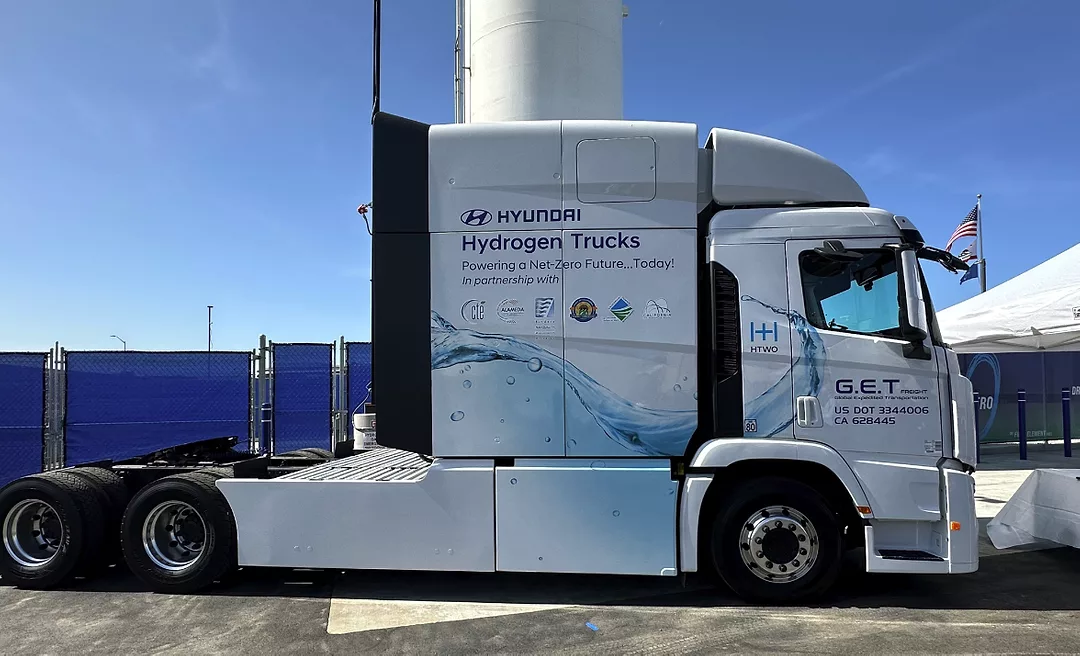
Hyundai’s XCIENT Fuel Cell truck, already operating commercially in Switzerland and other markets, demonstrates real-world ranges exceeding 400 kilometers per fill, with next-generation models targeting significantly more.
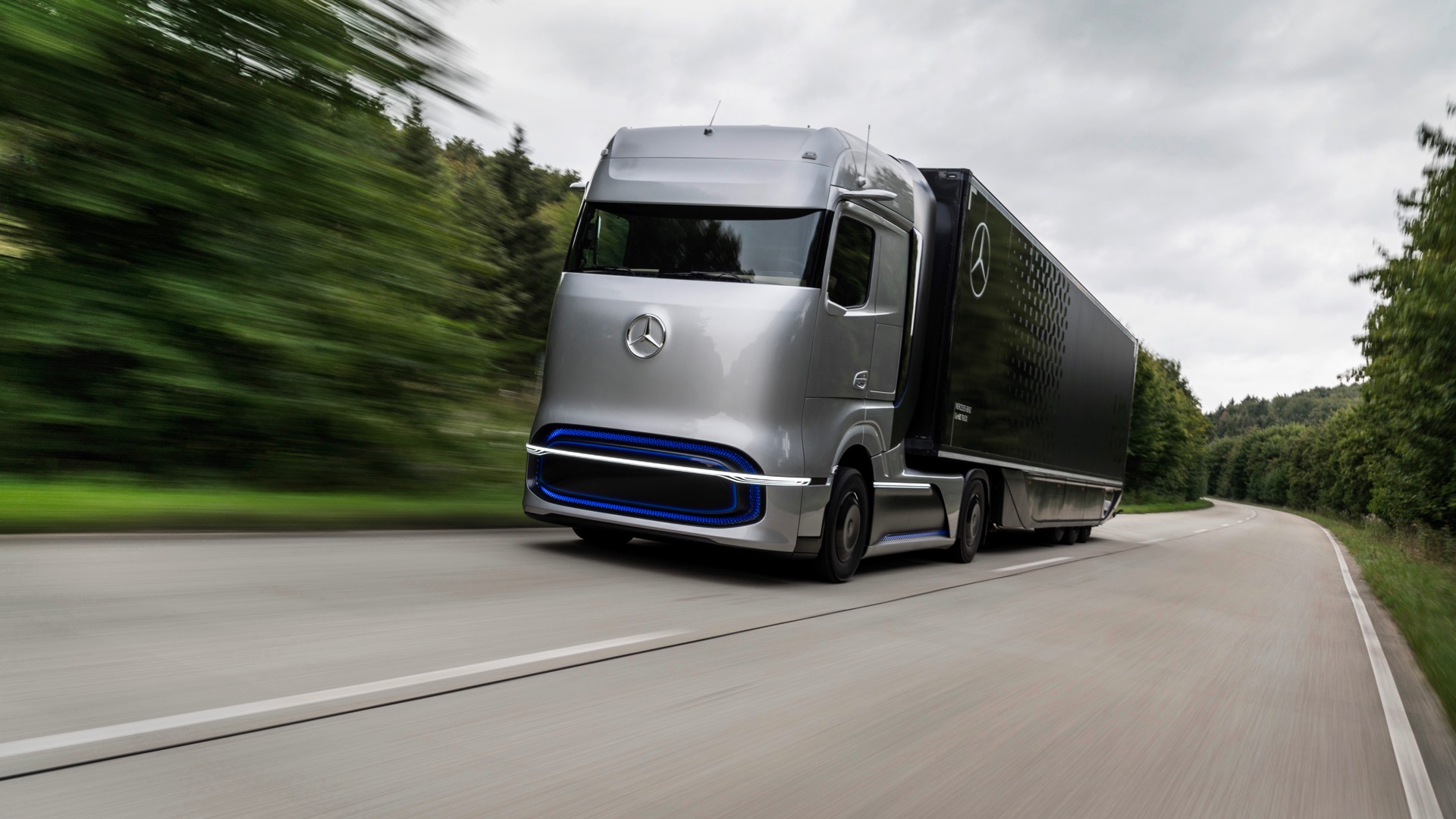
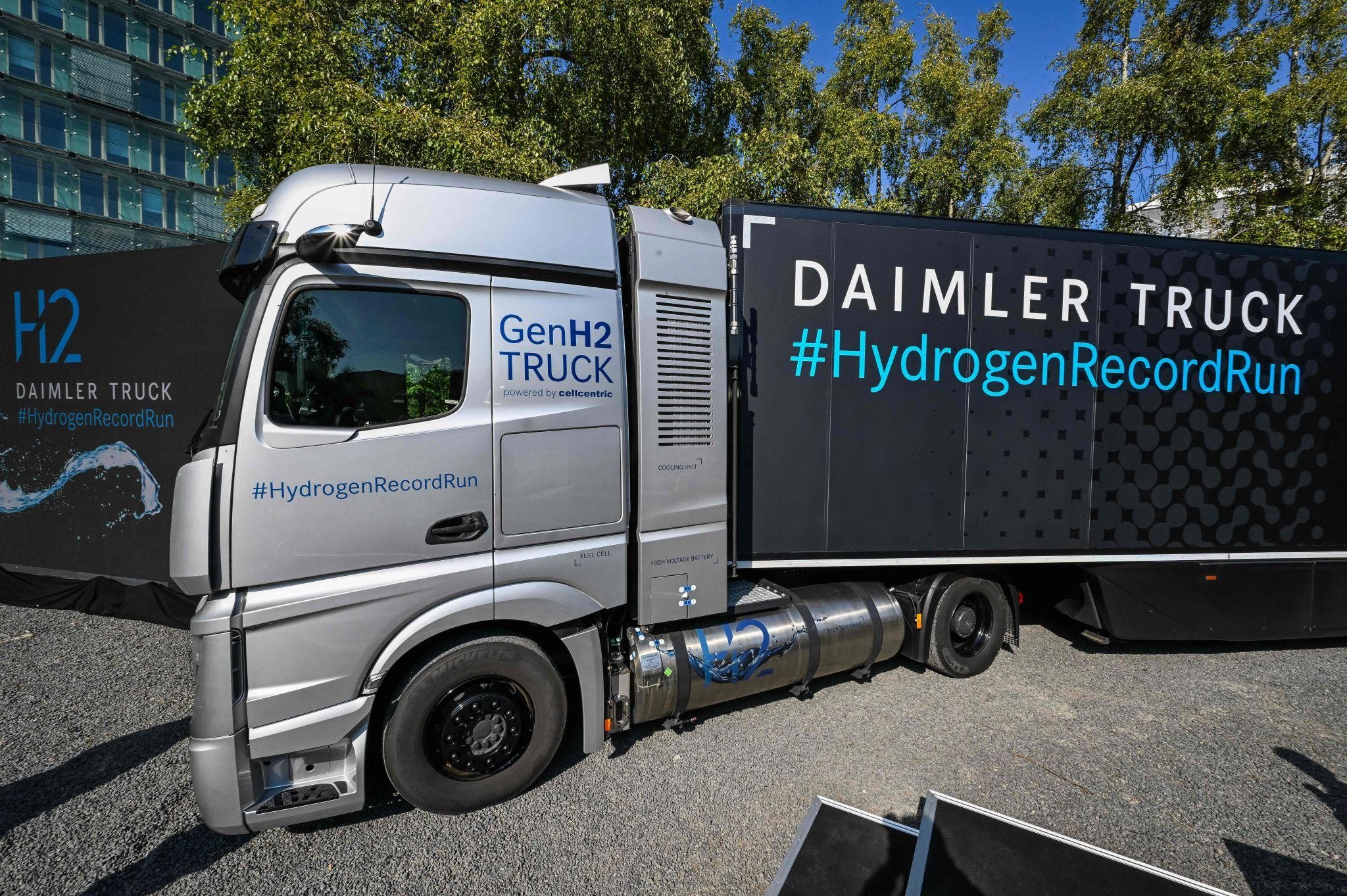
Daimler Truck’s GenH2 concept is engineering for a range of up to 1,000 kilometers roughly 620 miles on a single fill of liquid hydrogen. Toyota’s hydrogen semi-truck projects, developed in partnership with Kenworth, are similarly targeting long-haul performance that matches or exceeds diesel benchmarks.
This range advantage is not merely a specification bragging point. It has deep operational consequences. Long-haul carriers often operate under tight delivery windows where unexpected stops represent not just fuel costs but contractual penalties, spoiled cargo, and damaged customer relationships.
A technology that matches diesel range or comes close enough to be workable can slot into existing operations with minimal disruption. Battery-electric trucks requiring mid-route charging stops of 30 to 90 minutes represent a fundamentally different operational model that many freight networks simply cannot absorb without expensive restructuring.
Furthermore, the range of hydrogen trucks scales gracefully. Adding more hydrogen storage capacity increases range without the exponential weight penalties that plague battery scaling.
This physical scalability means that as hydrogen technology matures and tank designs improve, range numbers will continue to climb without fundamental engineering trade-offs, giving hydrogen a long-term trajectory that battery-electric trucking will struggle to match in the heavy-duty segment.
For fleet operators running transcontinental routes, remote logistics corridors, or time-critical supply chains, the range argument alone makes hydrogen a technology worth taking very seriously indeed.
2. Dramatically Faster Refueling Times Keep Trucks on the Road
In the trucking industry, time is money in the most literal possible sense. A heavy-duty truck that is not moving freight is not generating revenue, and every minute spent at a fuel stop is a minute subtracted from productive operation.
Diesel refueling has long set the benchmark for efficiency in this regard a standard diesel fill-up for a Class 8 semi-truck takes roughly 10 to 15 minutes, a process so fast and familiar that it barely registers as a disruption to operations.
Battery-electric trucks shatter this benchmark in the wrong direction. Even with access to the most powerful DC fast-charging infrastructure currently available or on the near-term horizon, charging a large commercial truck battery from low to operational capacity takes a minimum of 30 minutes for a partial charge and often 60 to 90 minutes or more for a meaningful top-up.
For a driver already constrained by legally mandated hours-of-service limits, those charging minutes eat directly into the time available for driving, reducing the effective daily range of the vehicle and forcing logistical compromises across entire fleet networks.
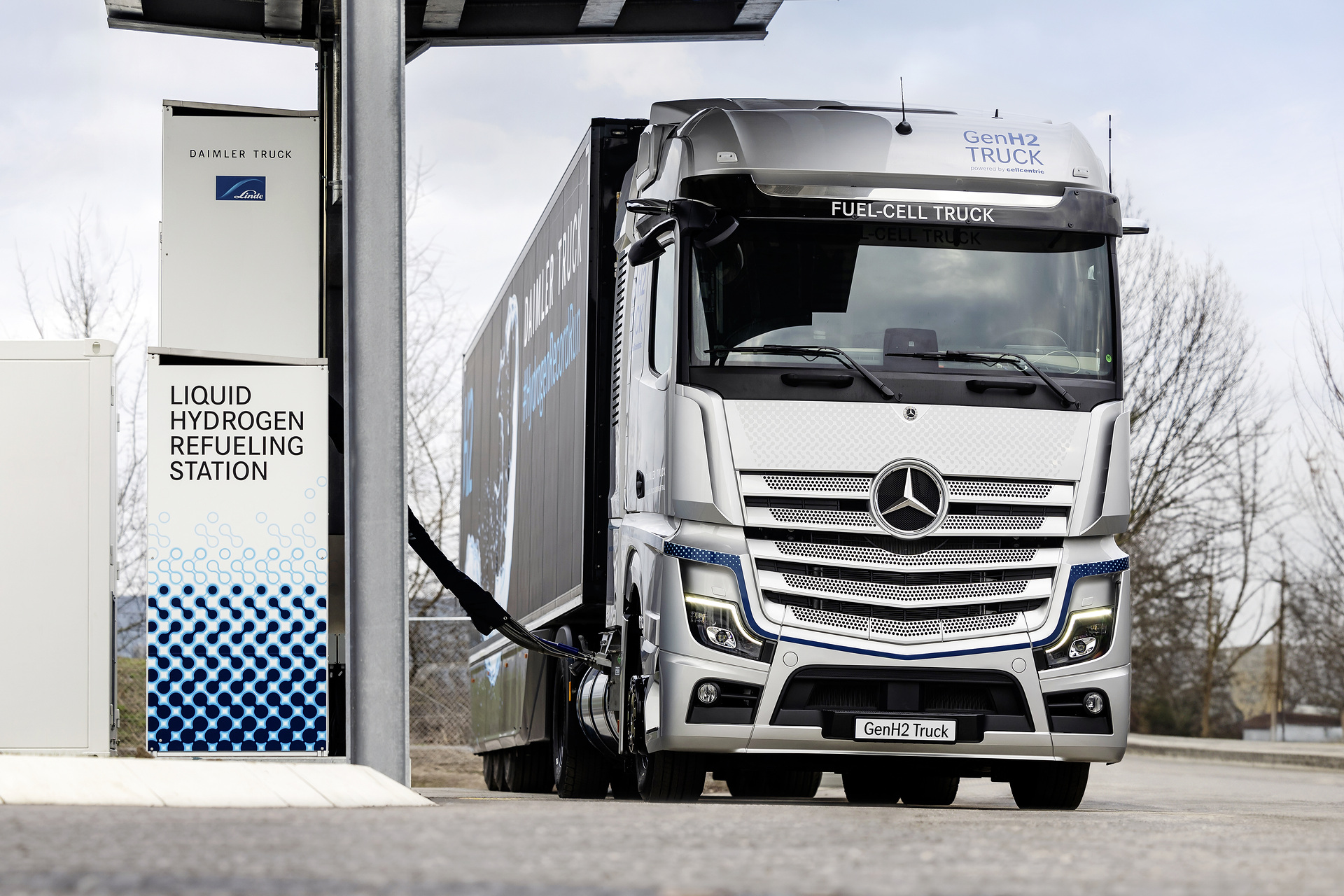
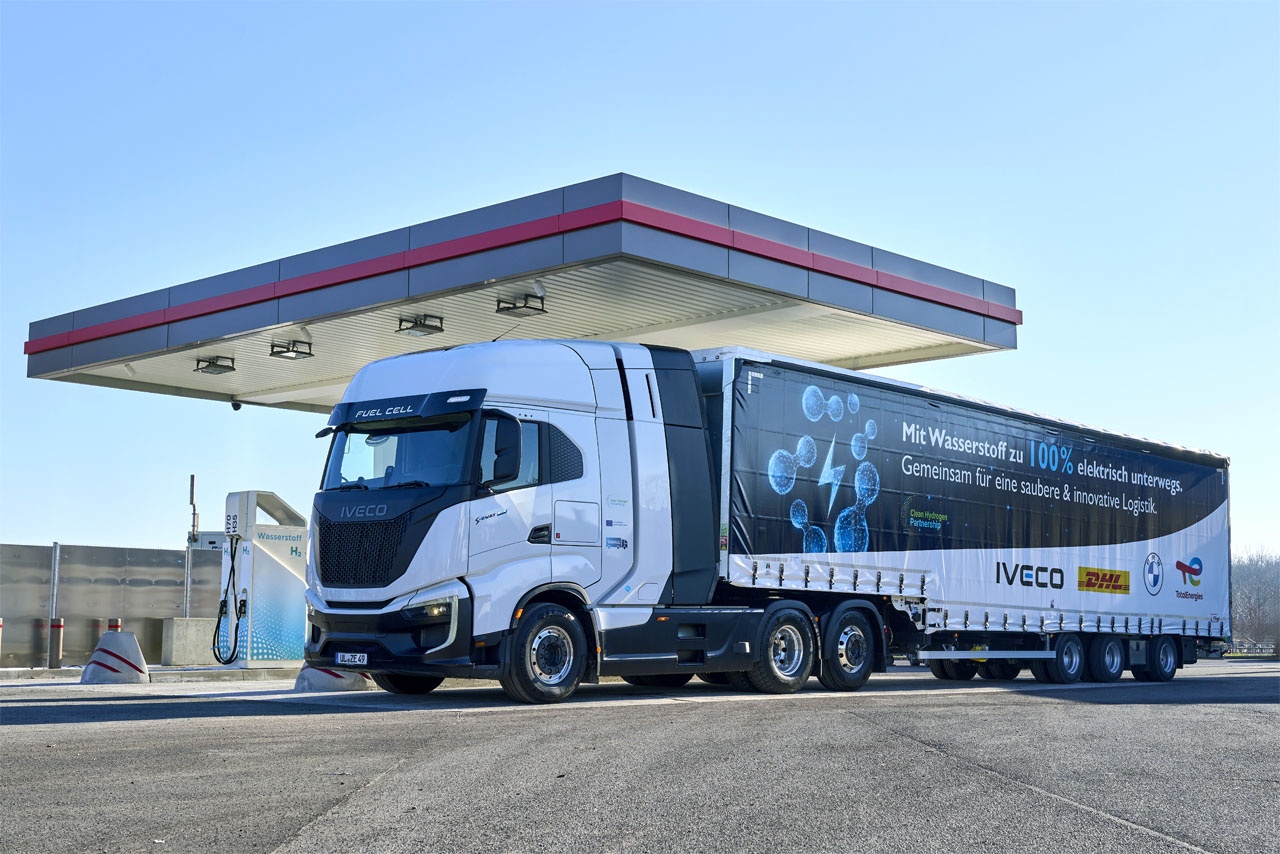
Hydrogen refueling changes this equation entirely. Filling a hydrogen fuel cell truck takes approximately 10 to 20 minutes closely comparable to diesel making it a true drop-in replacement from an operational tempo perspective.
Drivers can stop, refuel, potentially grab food and comply with required rest breaks, and be back on the road within the same time window they would have spent refueling a diesel truck. No operational model needs to change. No scheduling algorithms need to be rewritten. No delivery windows need to be renegotiated.
This refueling speed advantage becomes even more pronounced when you consider the fleet-level implications. A trucking company operating dozens or hundreds of vehicles needs to manage fueling as a logistical operation in itself.
With battery-electric trucks, depot charging infrastructure requires enormous electrical grid capacity upgrades, physical space for large numbers of charging stations, and sophisticated scheduling software to ensure trucks are charged when needed without overloading grid connections.
Hydrogen refueling stations, by contrast, can service multiple trucks quickly in sequence, more closely resembling the familiar model of diesel fueling infrastructure.
Companies like Shell, BP, FirstElement Fuel, and various government-backed consortia are actively investing in high-throughput hydrogen refueling stations specifically designed for heavy-duty commercial vehicles, with dispensing rates engineered to maintain that crucial 10 to 20-minute fill window even for large hydrogen tanks.
As this infrastructure expands, the operational case for hydrogen strengthens further, because the refueling experience becomes not just acceptable but genuinely seamless.
For logistics operators, time efficiency is not a luxury it is the difference between a profitable route and an unprofitable one. Hydrogen’s ability to match diesel’s refueling speed is one of its most practically powerful advantages in the commercial trucking space.
3. Zero Tailpipe Emissions Address Critical Air Quality and Climate Goals
The environmental imperative driving the shift away from diesel heavy trucking cannot be overstated. Heavy-duty diesel trucks are among the most polluting vehicles on the road, emitting not only carbon dioxide a primary driver of climate change but also nitrogen oxides, particulate matter, and other harmful pollutants that have severe public health consequences, particularly in communities located near major freight corridors, distribution centers, and ports.
Nitrogen oxide emissions from diesel trucks contribute to the formation of ground-level ozone and smog, which are linked to respiratory diseases including asthma, bronchitis, and chronic obstructive pulmonary disease.
Particulate matter from diesel exhaust especially fine PM2.5 particles penetrates deep into the lungs and bloodstream, contributing to cardiovascular disease, lung cancer, and premature death.
Studies consistently show that communities of color and lower-income communities bear a disproportionate burden of these health impacts due to their proximity to truck-heavy infrastructure.
Hydrogen fuel cell trucks produce zero tailpipe emissions. The only substance emitted from the exhaust pipe is water vapor pure, harmless, and environmentally inert.
This is not an incremental improvement over diesel; it is a complete elimination of the direct pollution associated with freight movement. In densely populated urban areas, port zones, and distribution hubs where truck traffic is most concentrated, switching to hydrogen represents an immediate, measurable improvement in air quality and public health outcomes.
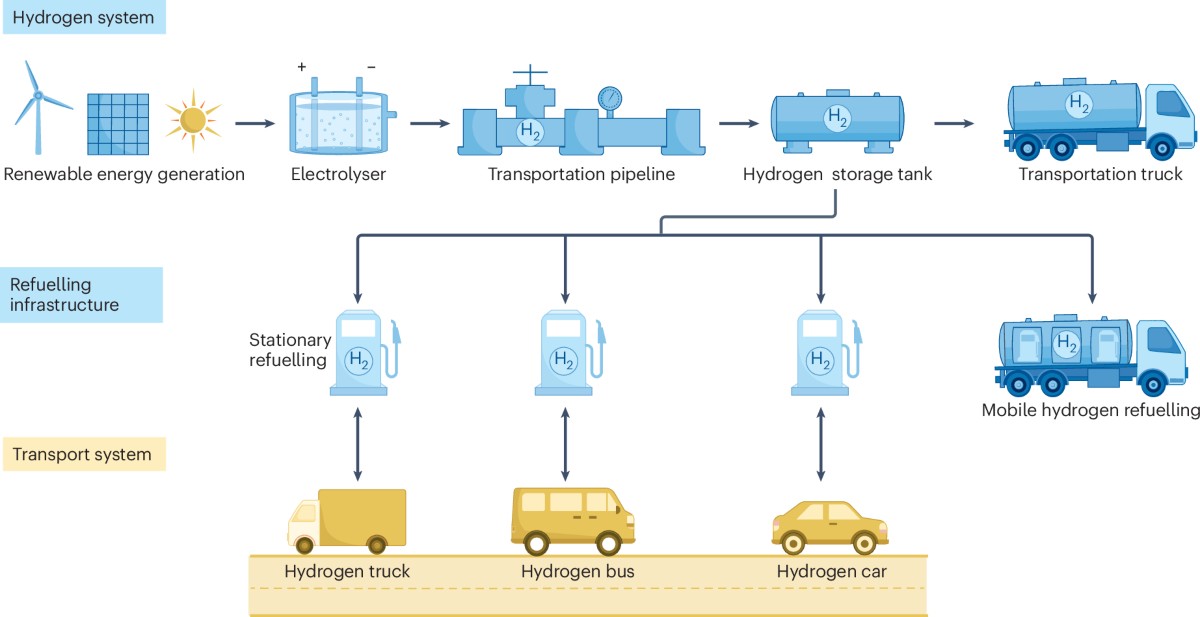
From a climate perspective, hydrogen fuel cell trucks offer a pathway to deep decarbonization of freight one of the hardest sectors to clean up. When the hydrogen fuel is produced from renewable energy sources through electrolysis, known as green hydrogen, the entire well-to-wheel emissions profile of the truck approaches zero.
Even today, when much commercial hydrogen still comes from natural gas, the emissions profile of hydrogen trucks compares favorably to diesel, and the trajectory is clearly toward greener production methods as renewable energy becomes cheaper and more abundant.
Regulatory pressure is accelerating this transition. California’s Advanced Clean Trucks regulation, the European Union’s CO2 standards for heavy vehicles, and similar policies around the world are setting binding targets for zero-emission truck sales that will make diesel-powered freight economically and legally untenable within the coming decades.
Hydrogen fuel cell trucks offer manufacturers and fleet operators a credible compliance pathway that addresses both tailpipe emissions and the broader carbon footprint of freight operations. The environmental case for hydrogen in heavy trucking is thus both an ethical imperative and a regulatory reality that the industry cannot ignore.
4. Payload and Weight Advantages Over Battery-Electric Trucks
In the commercial trucking world, payload capacity is not just an engineering specification it is the fundamental economic variable around which entire business models are constructed. Freight rates are calculated per ton or per unit of cargo.
The more a truck can legally carry on each trip, the more revenue each mile generates, and the lower the cost per unit of freight moved. This is why fleet operators scrutinize the curb weight of every vehicle they purchase with extraordinary care.
This is where battery-electric heavy trucks face a structural disadvantage that no amount of battery chemistry improvement is likely to fully resolve in the near term. The energy density of lithium-ion batteries even the best available today is dramatically lower than that of diesel fuel or compressed hydrogen.
To store enough energy for a long-haul journey, a battery-electric Class 8 truck requires a battery pack that can weigh anywhere from 5,000 to over 10,000 pounds. Every pound of battery is a pound of payload that the truck cannot legally carry on public roads governed by gross vehicle weight limits.
Hydrogen fuel cell powertrains do not impose this weight penalty to the same degree. The hydrogen storage tanks, fuel cell stack, and electric motors that make up the drivetrain are significantly lighter than an equivalent-range battery pack.
This translates directly into higher available payload capacity meaning hydrogen trucks can carry more freight per trip, generate more revenue per mile, and deliver a better return on investment for fleet operators.
Analyses conducted by various research organizations and truck manufacturers have suggested that hydrogen fuel cell trucks can offer payload advantages of several thousand pounds compared to battery-electric equivalents with similar range capabilities.
Over the course of thousands of trips per year, those extra tons of payload capacity represent substantial revenue differences that compound into significant competitive advantages.
For bulk commodity haulers, refrigerated freight operators, construction material movers, and other weight-sensitive applications, this payload advantage is not a minor footnote it can be the deciding factor between a viable business case and an unworkable one.
Hydrogen thus fits more naturally into the economic structure of heavy-duty trucking, preserving the revenue model that fleet operators depend on rather than fundamentally disrupting it.
As hydrogen truck designs continue to mature and engineers optimize tank configurations and fuel cell packaging, the weight efficiency of these vehicles is likely to improve further, reinforcing rather than eroding this competitive advantage over time.
Also Read: 5 Brands Leading the Way in Recyclable Interior Materials in 2026
5. Rapidly Expanding Government Support and Policy Frameworks
No energy transition in history has occurred without substantial government involvement, and the shift toward hydrogen in heavy-duty trucking is no exception.
What is striking about the current moment, however, is the breadth and depth of policy support that hydrogen is attracting across the world’s major economies simultaneously a convergence of political will, industrial strategy, and climate commitment that is creating genuinely favorable conditions for hydrogen trucking to scale.
The United States has made hydrogen a cornerstone of its clean energy industrial strategy. The Inflation Reduction Act introduced production tax credits for clean hydrogen that dramatically improve the economics of green hydrogen production, making it progressively more cost-competitive with diesel.
The Department of Energy’s Hydrogen Shot initiative has set an ambitious target of reducing the cost of clean hydrogen to one dollar per kilogram within a decade a price point that would make hydrogen fuel cost-competitive with diesel on an energy-equivalent basis.
The Bipartisan Infrastructure Law allocated billions toward hydrogen hubs, regional networks of hydrogen production, storage, and distribution designed to create the supply ecosystem that fuel cell trucks need.

Europe has been even more aggressive. The European Union’s hydrogen strategy envisions massive scaling of electrolyzer capacity and green hydrogen production, backed by regulatory mandates on truck manufacturers to meet increasingly stringent CO2 targets that effectively require zero-emission vehicles to make up a growing share of new sales.
Germany, the Netherlands, and other member states have launched dedicated hydrogen trucking programs with direct subsidies, tax incentives, and public procurement commitments.
In Asia, Japan and South Korea have positioned hydrogen as a strategic national priority with implications far beyond trucking viewing leadership in hydrogen technology as an economic and geopolitical advantage in the coming decades.
China, the world’s largest truck market, has deployed thousands of hydrogen fuel cell commercial vehicles and is investing heavily in lowering the cost of fuel cell systems through domestic manufacturing scale. This policy momentum matters because it does something crucial: it de-risks investment.
When manufacturers, infrastructure developers, and fleet operators know that governments are committed to hydrogen through subsidies, mandates, procurement, and long-term planning they are far more willing to commit the capital necessary to build production lines, refueling networks, and fleet deployments.
Policy support transforms hydrogen from a speculative technology bet into a supported industrial transition with genuine commercial foundations.
6. Growing Ecosystem of Major Manufacturer Commitments
Policy support creates the conditions for industrial commitment, and in the hydrogen trucking space, that commitment is now arriving from some of the most significant names in global transportation manufacturing.
The breadth of corporate investment now flowing into hydrogen-powered heavy trucking signals a technology whose commercial future is being actively built, not merely theorized about.
Daimler Truck, one of the world’s largest commercial vehicle manufacturers, has formed a joint venture with Volvo Group called cellcentric, specifically focused on developing and manufacturing hydrogen fuel cell systems for heavy-duty trucks.
This is not a minor research project it represents two of the industry’s biggest players pooling substantial engineering resources and capital around a shared conviction that hydrogen fuel cells will be central to the future of heavy trucking.
Their GenH2 truck concept is targeting liquid hydrogen storage for maximum range, with series production planned for the latter half of this decade.
Toyota, whose early commitment to hydrogen fuel cell passenger vehicles through the Mirai established it as a genuine believer in the technology, has translated that expertise into commercial vehicle applications.
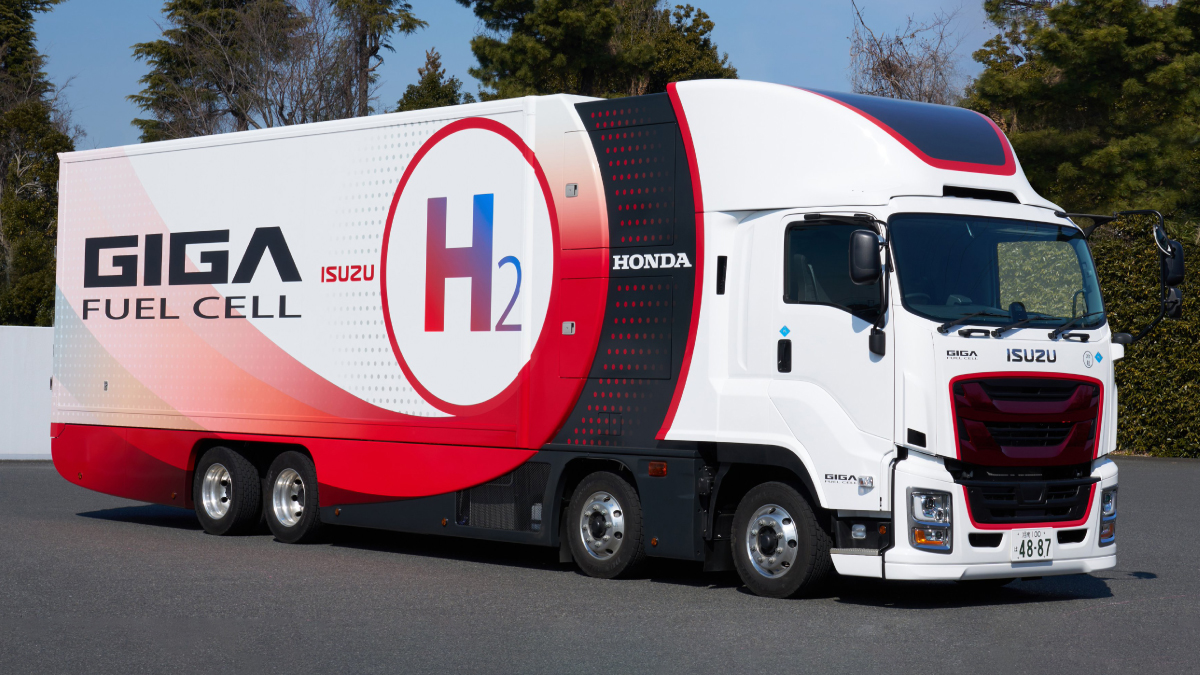
In partnership with Kenworth, Toyota has developed hydrogen fuel cell Class 8 trucks that have been deployed in real-world freight operations at the Ports of Los Angeles and Long Beach some of the highest-throughput freight hubs in North America demonstrating that hydrogen trucking can function reliably in demanding, high-utilization commercial environments.
Hyundai’s XCIENT Fuel Cell truck has achieved something particularly significant: it is already in commercial operation, not just testing. Swiss fleet operators have been running XCIENT trucks in regular freight service, accumulating real-world mileage data that validates the technology’s durability and operational performance. Hyundai has announced plans to expand XCIENT deployment across multiple international markets.
Nikola, despite its well-publicized corporate difficulties, has continued to develop and deliver hydrogen fuel cell trucks to commercial customers, with major logistics companies signing supply agreements that reflect genuine confidence in the product’s future.
IVECO, Ballard Power Systems, and numerous other suppliers and manufacturers are investing in complementary technologies fuel cell stacks, hydrogen storage systems, thermal management that together constitute a growing industrial ecosystem. The significance of this manufacturer commitment extends beyond the trucks themselves.
When major corporations commit production lines, engineering talent, and capital to a technology, they also develop supply chains, train technicians, build dealer networks, and create the commercial infrastructure that makes a technology practically accessible to buyers. The ecosystem being built around hydrogen trucking today is laying foundations that will support the industry for decades.
7. Compatibility With Existing Logistics and Driver Workflows
One of the most underappreciated obstacles to any major technology transition in a conservative, operationally complex industry like trucking is not technical performance it is behavioral and logistical compatibility with existing workflows, habits, and infrastructure investments.
A technology that requires trucking companies to fundamentally restructure their operations, retrain their drivers, rebuild their depots, and renegotiate their customer contracts faces adoption barriers that pure performance specifications cannot overcome.
Hydrogen fuel cell trucks clear this compatibility hurdle far more gracefully than battery-electric alternatives. The driving experience in a hydrogen fuel cell truck is essentially identical to driving any other electric truck smooth, quiet, with strong torque delivery.
Drivers do not need to learn a fundamentally different vehicle operation paradigm. The performance characteristics, braking behavior, and handling dynamics are familiar.
The refueling experience, as discussed earlier, closely mirrors the diesel model in terms of time and process. A driver pulls into a hydrogen station, connects a dispenser, waits roughly 15 minutes, and departs a sequence so similar to diesel fueling that it requires minimal behavioral adjustment.
This matters enormously because truck drivers are professionals who have built their working lives around specific routines, rest stop locations, and refueling habits. A technology that respects those routines rather than overturning them will achieve adoption far more quickly.
From a fleet management perspective, hydrogen trucks integrate naturally with existing maintenance schedules, driver log systems, and dispatch software.
Fuel cell powertrains have fewer moving parts than diesel engines, potentially reducing mechanical maintenance complexity. The vehicles operate within standard weight and dimension parameters, fitting existing loading docks, parking facilities, and route infrastructure without modification.
Even the economic model of hydrogen trucking paying per kilogram of fuel at a dispensing station mirrors the familiar per-gallon diesel model, making financial planning and cost accounting straightforward for operators accustomed to diesel economics.
As hydrogen fuel costs decline toward competitive levels with diesel a trajectory supported by both technology improvement and policy incentives the transition will feel less like a revolution and more like a sensible upgrade.
This compatibility with existing logistics culture and infrastructure is a strategic asset that hydrogen’s advocates sometimes understate but that fleet operators universally appreciate when evaluating real-world adoption decisions.
8. Long-Term Economic Opportunity and Energy Security Benefits
Beyond the immediate operational advantages, hydrogen’s momentum in heavy-duty trucking is also being driven by a broader economic and strategic calculus that resonates with governments, corporations, and investors thinking about the long-term structure of the global energy economy.
Hydrogen represents not just a fuel choice but a strategic positioning decision with implications for industrial competitiveness, energy independence, and economic development.
For nations that are significant importers of oil and diesel fuel, the shift to domestically produced hydrogen offers profound energy security benefits.
Countries that have historically been vulnerable to oil price shocks, supply disruptions, and the geopolitical leverage of oil-exporting nations can, with hydrogen, produce their transportation fuel from domestic renewable energy resources wind, solar, hydro that are available in virtually every country on earth. This is a transformative shift in the geopolitics of transportation energy, one that many governments are pursuing with considerable strategic intentionality.
The economic opportunity embedded in hydrogen is also substantial. The global hydrogen economy spanning production, storage, transportation, and end-use applications including but not limited to trucking is projected by various analysts and institutions to potentially reach trillions of dollars in value over the coming decades.
Countries and companies that establish early leadership in hydrogen technology, manufacturing, and infrastructure are positioning themselves to capture a significant share of that value.
For industrial nations with strong engineering traditions and existing clean energy capacity, hydrogen represents a genuine economic development opportunity of historic scale.
For fleet operators and logistics companies, the long-term economic case for hydrogen trucking strengthens as the technology matures and scales. Fuel cell systems, like most manufactured technologies, are subject to learning curves as production volumes increase, manufacturing costs decline, and performance improves.
Early commercial deployments are already demonstrating that fuel cell lifespans are extending toward commercially competitive levels, and the total cost of ownership for hydrogen trucks is on a trajectory toward parity and eventually advantage over diesel as green hydrogen production costs continue their decline.
Investors are taking note. Hydrogen-focused companies, clean energy funds, and infrastructure developers are attracting significant capital from institutional investors who view hydrogen as a structural growth opportunity over a multi-decade horizon.
This capital flow is accelerating the development of the refueling infrastructure, production capacity, and technology improvements that will make hydrogen trucking commercially mainstream.
Taken together, the economic and strategic dimensions of hydrogen ensure that its momentum in heavy-duty trucking is not merely a passing enthusiasm but a durable, multi-stakeholder commitment grounded in genuine long-term opportunity.
The trucks are coming. The infrastructure is being built. The economics are improving. Hydrogen’s moment in heavy-duty transportation has genuinely arrived.
Also Read: Top 8 Cars With the Best Augmented Reality Head Up Displays
