
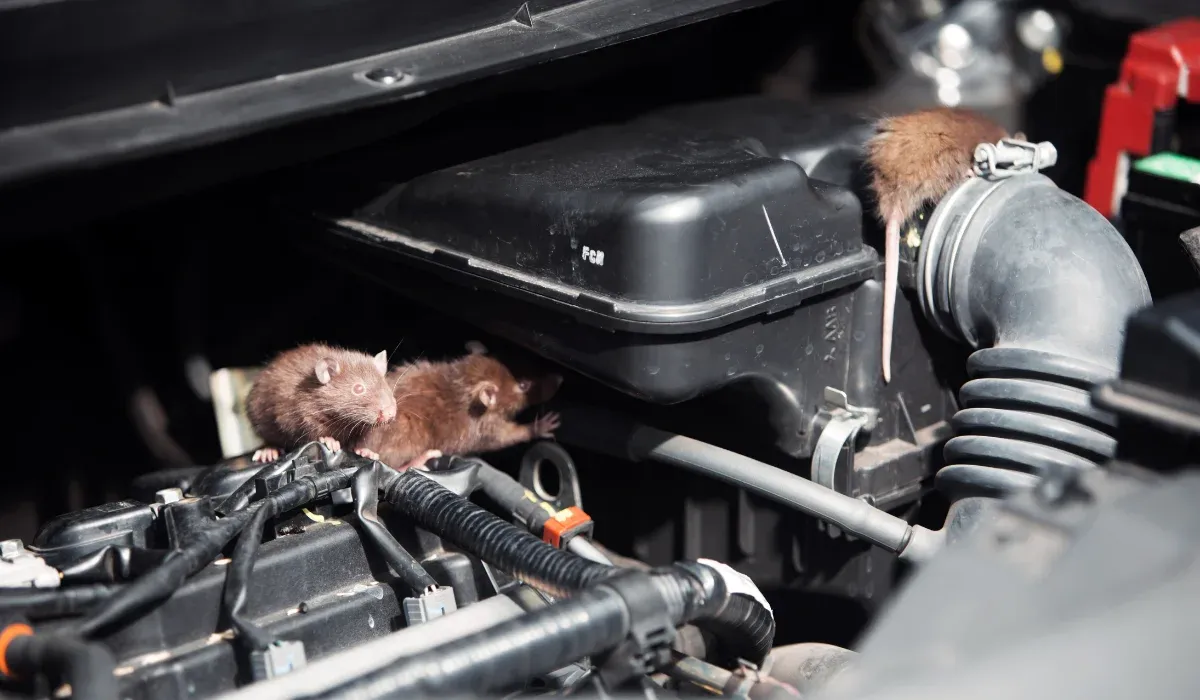
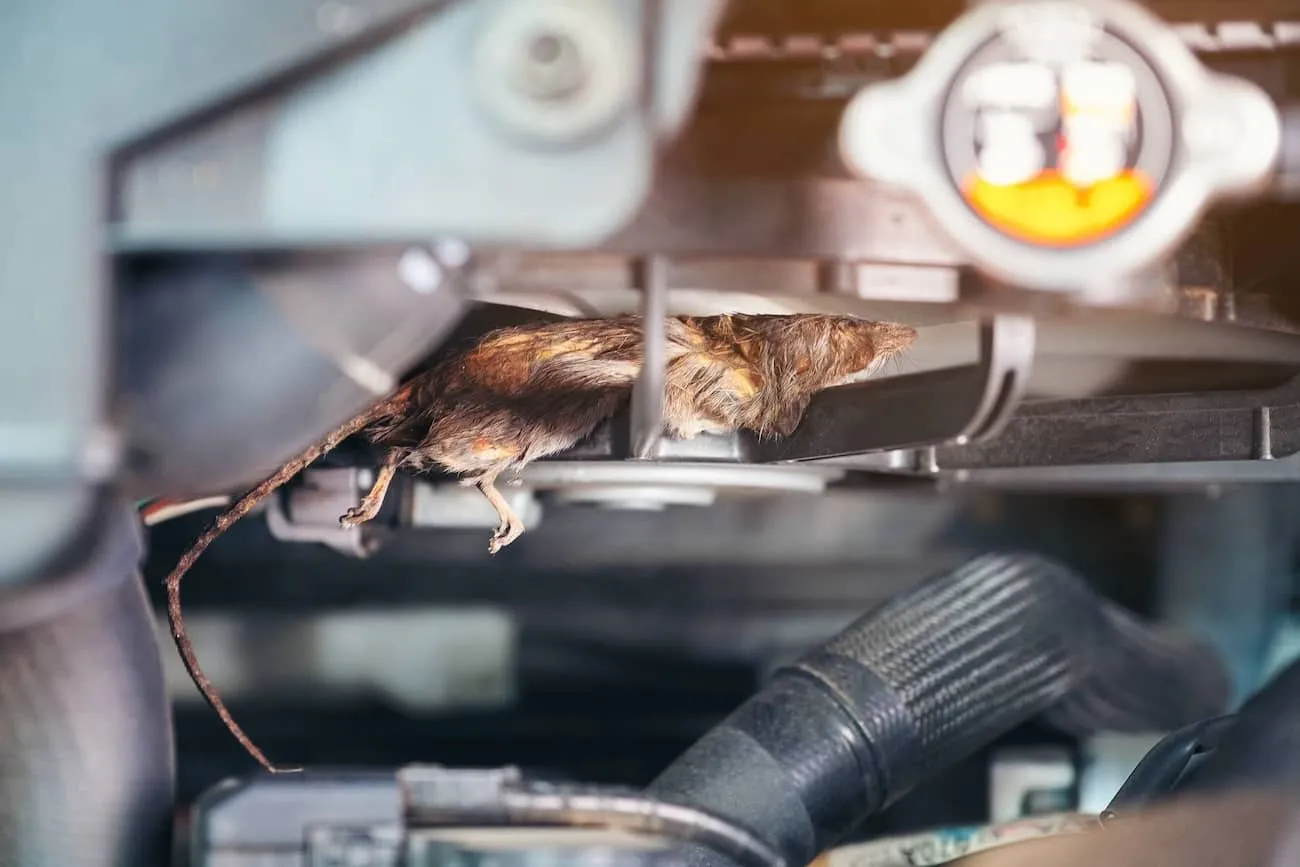
You walk out to your car on a Monday morning, turn the key, and nothing happens. Not a sputter, not a click, just silence. You pop the hood, and there it is: a nest made of shredded insulation, chewed wiring, and what appears to be a granola bar wrapper. Somewhere in your engine bay, a mouse or rat has been living its best life at your expense.
Rodent damage to vehicle electrical systems has become one of the most frustrating and costly problems car owners face today. Repair bills for chewed wiring harnesses can easily run from $500 to several thousand dollars, depending on which wires were targeted and how long the damage went unnoticed.
Insurance claims for rodent damage have climbed steadily, and auto technicians across the country report seeing this problem more frequently, regardless of the season or region. What makes it worse is that modern vehicles have given rodents even more reason to snuggle up inside engine bays and under dashboards.
Automakers like Toyota, Honda, and Ford have been using soy-based wire coatings for environmental reasons since the mid-2000s. Those coatings, while eco-friendly, smell and taste attractive to rodents. Squirrels, rats, mice, and even rabbits have been caught gnawing through wiring on brand-new vehicles. This is not a problem limited to old, neglected cars sitting in a field.
Here is the good news: rodent damage is largely preventable. With the right combination of deterrents, habits, and protective products, you can make your vehicle a place no rodent wants to visit. This article lays out eight practical, proven methods that car owners can start using right away.
Each one addresses a different angle of the problem, and using several of them together gives you the strongest possible defense. Your electrical system is worth protecting, and your wallet will thank you for it. Let us get into it.
1. Use Electronic Ultrasonic Repellers Under the Hood
Rodents rely heavily on their senses to find safe, comfortable shelter. Their hearing is exceptionally sensitive, extending well into ultrasonic frequencies that humans cannot detect at all.
That biological fact is the foundation of one of the most effective and non-toxic rodent deterrent strategies available to vehicle owners today: ultrasonic electronic repellers designed specifically for engine bays.
These devices emit high-frequency sound waves at intervals that rodents find deeply uncomfortable. Unlike traditional pest repellers used in homes, the versions built for automotive use are compact, weather-resistant, and designed to run on a vehicle’s 12-volt battery system with extremely low power draw.
Some models connect directly to the battery and cycle on automatically when the vehicle is parked and sitting idle, which is exactly when rodents choose to move in.
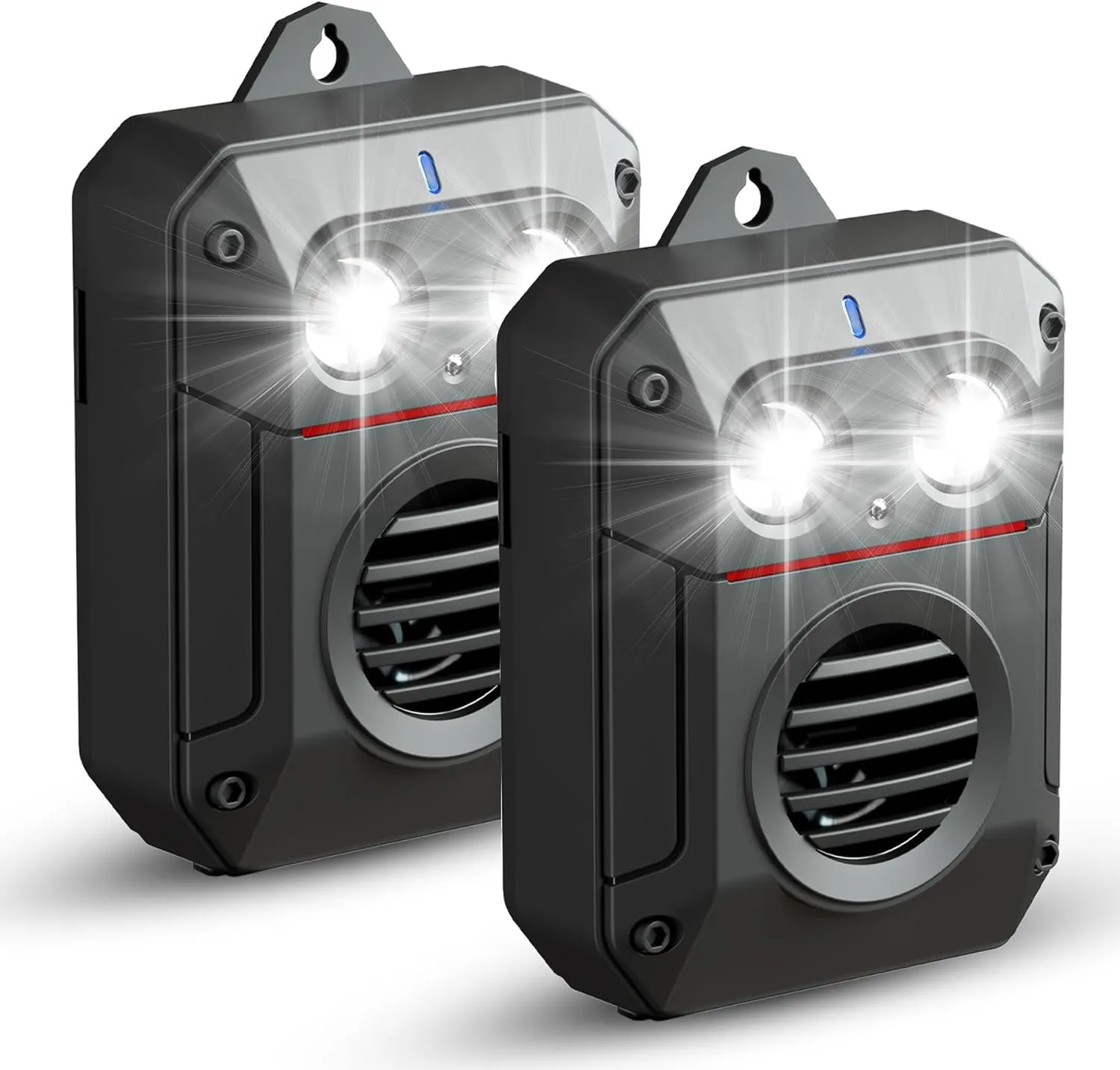
Products like the Angveirt LED Strobe Ultrasonic Car Repeller and similar models have earned strong reviews from car owners who park in garages, driveways near wooded areas, and storage facilities. These units typically combine ultrasonic sound with flashing LED strobe lights, creating a two-pronged sensory deterrent that makes rodents think twice about settling into the engine compartment.
For owners of vehicles with known soy-based wiring, this solution is especially worth prioritizing. Toyota issued service bulletins and even offered a Honda-sourced tape product after owners of models like the 2016 Toyota RAV4 XLE and the 2015 Toyota Tundra SR5 reported widespread rodent damage linked to eco-friendly wire insulation. Installing an ultrasonic repeller before damage occurs is a fraction of the cost of replacing a wiring harness after the fact.
Placement matters with these devices. Position them so the ultrasonic emitter faces inward and upward into the engine cavity, allowing sound waves to bounce off surfaces and cover the full compartment. Read the manufacturer’s instructions for your specific model before installation.
Replace batteries or check the power connection every few months to confirm the unit is still functioning. Combining ultrasonic repellers with at least one or two other methods from this list dramatically increases their effectiveness, since determined rodents may adapt to any single deterrent used in isolation.
2. Apply Rodent-Deterrent Tape to Exposed Wiring
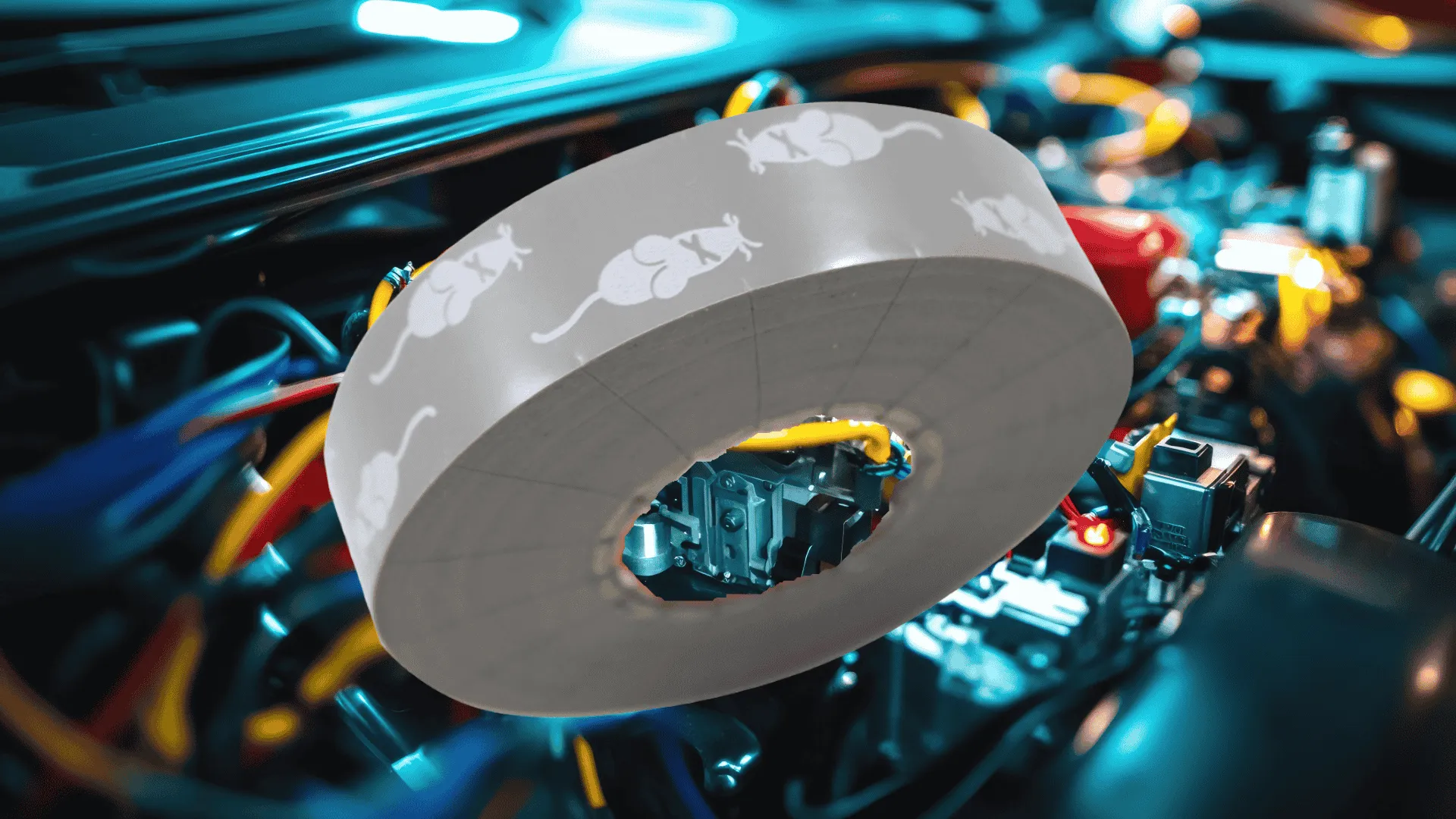
Rodent-deterrent tape sounds like something you would find in a novelty catalog, but it is a legitimate, chemically active product that has been endorsed by major automakers and tested in real-world conditions. Honda developed its own version of this tape, and Toyota has recommended it for owners dealing with recurring rodent issues.
It works by infusing the tape material with capsaicin, the active compound that gives hot peppers their heat. Rodents bite the tape once and learn very quickly that this particular wire is not worth chewing.
Wrapping exposed and vulnerable wiring with capsaicin-infused tape is one of the most direct protective measures you can take because it addresses the problem exactly where it happens.
Wiring harnesses that run along the firewall, through the engine bay, and near ground-level entry points are the most common targets. These are the sections to prioritize when applying the tape.
Honda’s Genuine Rodent Deterrent Tape is available through Honda dealerships and online retailers and is compatible with wiring on any vehicle brand, not just Honda models.
It is designed to withstand heat, moisture, and the general abuse that engine bay environments dish out. The application does not require mechanical skills. You clean the wire surface, dry it thoroughly, and wrap the tape tightly in a spiral pattern, overlapping each layer slightly for full coverage.
Owners of vehicles like the 2017 Subaru Outback 3.6R Limited and the 2018 Nissan Pathfinder SL 4WD have used this method successfully after experiencing the first incidents of rodent damage. Applying the tape proactively on a new or undamaged vehicle is smarter than waiting for chewing to occur.
Once a rodent discovers a food-like scent on wiring, it will keep returning until the source is gone or the wire is destroyed. One practical tip: wear gloves during application. Capsaicin is potent, and getting it on your hands and then touching your eyes or face is an experience you do not want.
Reapply the tape every 12 to 18 months or any time you notice wear, cracking, or peeling. Pair this method with regular hood checks, and you have a strong, active deterrent that costs very little and requires minimal effort to maintain.
Also Read: 8 Signs Your Transmission Fluid Needs Immediate Attention
3. Block Entry Points in the Engine Bay and Cabin
Rodents do not materialize inside your car by magic. They enter through physical gaps, and vehicles have more of those gaps than most owners realize. Blocking those entry points is one of the most structurally sound approaches to rodent protection because it addresses how they get in rather than just trying to discourage them once they are already there.
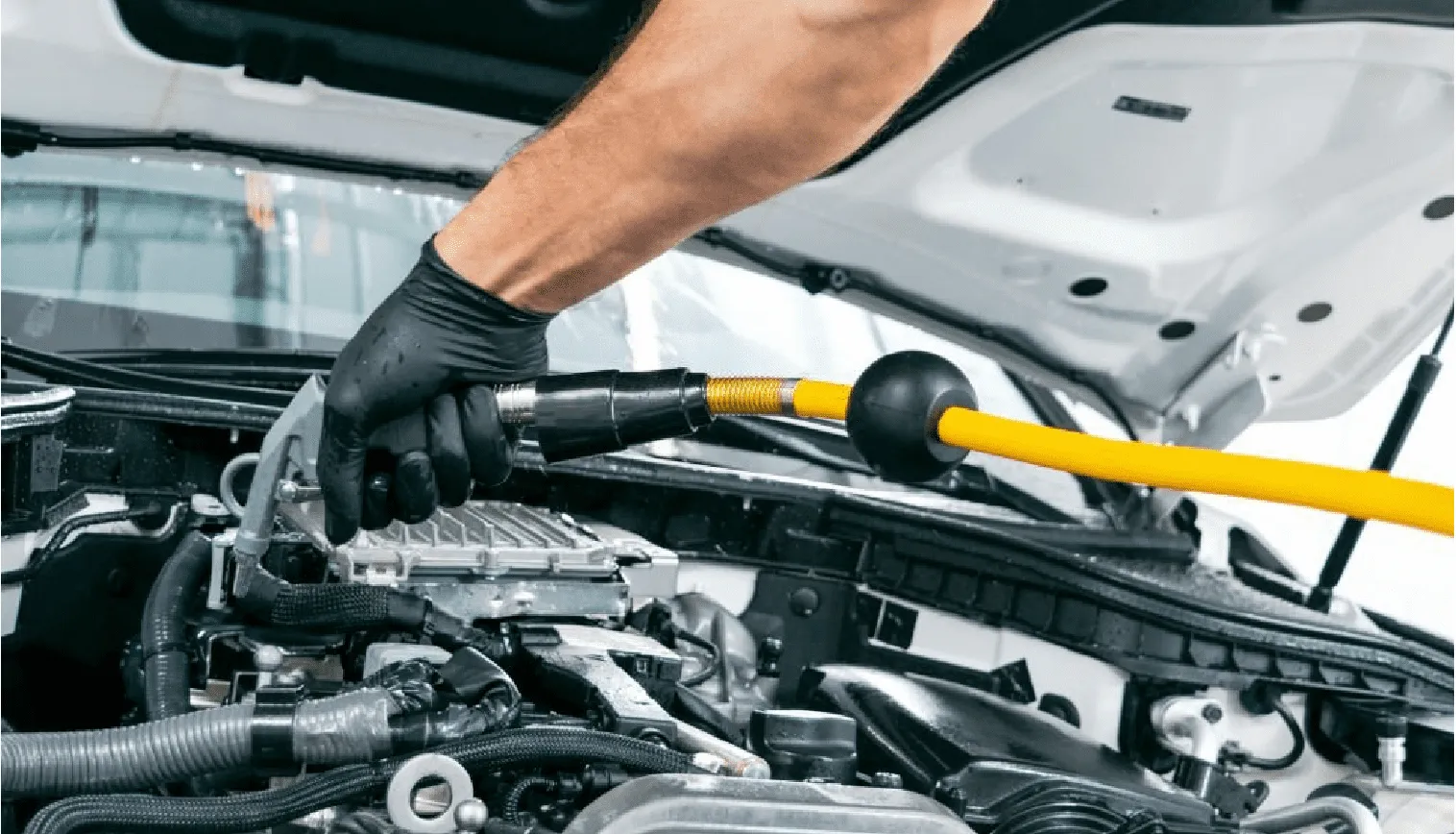
Start by inspecting the firewall area, which is the barrier between the engine compartment and the passenger cabin. Wiring harnesses, HVAC conduits, and other mechanical connections pass through this wall through openings that are often larger than strictly necessary.
Any gap around those pass-through points is a potential rodent highway. Steel wool, copper mesh, or purpose-made firewall plugs can seal these gaps without interfering with mechanical function. Cabin air intake vents, which typically sit at the base of the windshield in the cowl area, are another common entry point.
Rodents enter through these vents and nest directly inside the HVAC system, which can cause electrical shorts at the blower motor and contaminate the cabin air. Installing mesh screens over intake vents is a straightforward fix that blocks access without restricting airflow.
Owners of vehicles like the 2019 Ford F-150 XLT SuperCrew 4×4 and the 2020 Jeep Grand Cherokee Laredo 4WD have documented rodent intrusions through these exact access points.
Trucks and SUVs with larger engine bays and more complicated wiring layouts tend to suffer more extensive damage when rodents find their way in, which makes proactive sealing especially worth doing on these vehicle types.
Underneath the vehicle, inspect the area around the catalytic converter and exhaust heat shields. Rodents often nest in these warm spots during cold months, and the heat shields can be loosened or removed by nesting activity.
Tighten any loose heat shields and consider installing a stainless steel mesh barrier around particularly accessible nesting areas. Spend thirty minutes with a flashlight examining your vehicle from underneath and you will likely find more potential entry points than you expected. Sealing them off is tedious but highly effective and costs very little in materials.
4. Store Vehicles Properly and Keep the Surrounding Area Clean
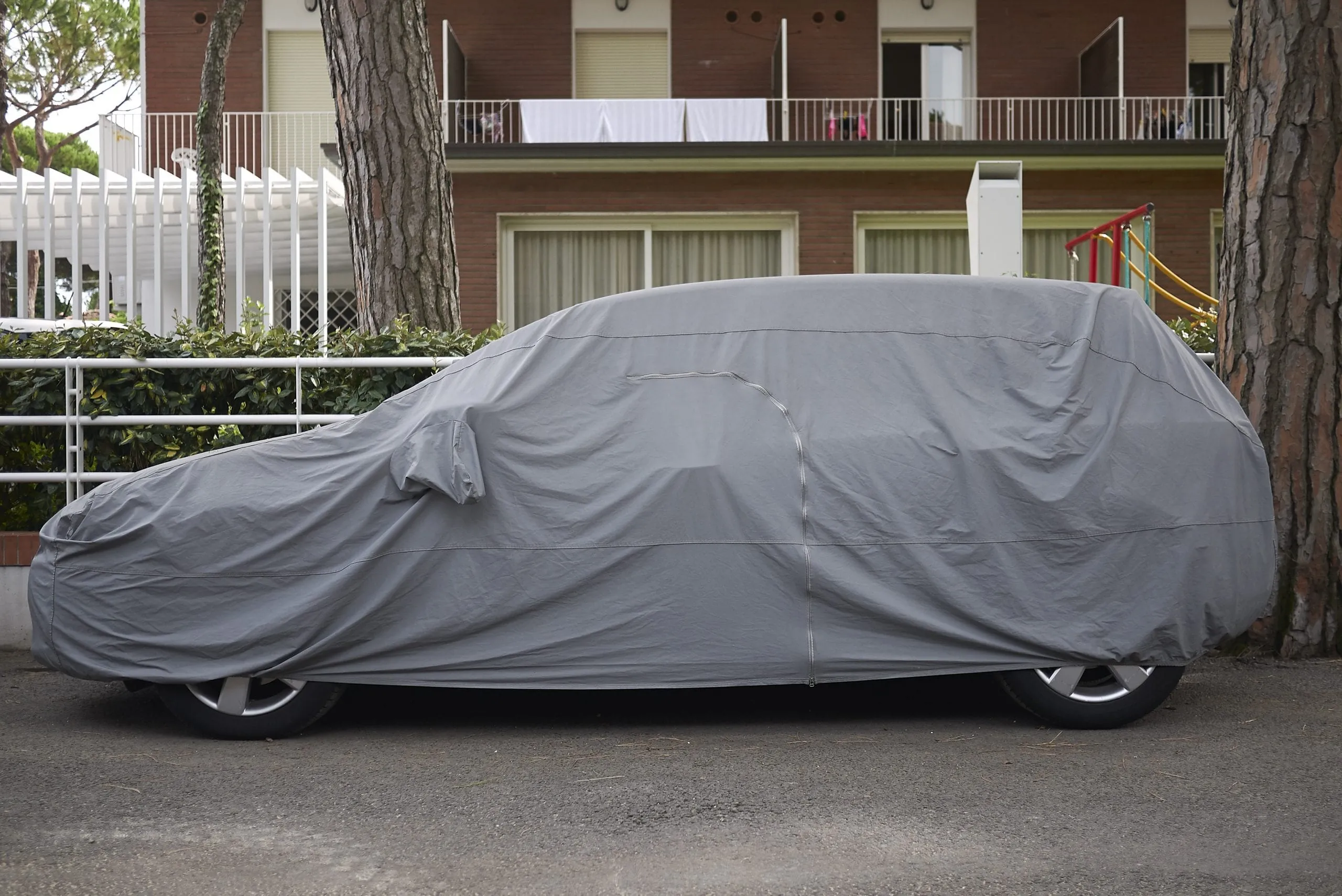
How and where you park a vehicle has a direct relationship with rodent risk that most car owners underestimate until damage has already occurred. Rodents need three things to choose a location as a home base: warmth, shelter, and nearby food.
A vehicle parked near clutter, wood piles, overgrown vegetation, or birdfeeders in a garage or driveway provides all three in abundance. Start with the garage if that is where your vehicle lives. Clutter is a rodent hotel. Cardboard boxes, stacked wood, piles of old clothing, and stored pet food create the exact conditions that attract rodents and encourage them to range into nearby vehicles.
Clearing out garage clutter, storing any pet food or birdseed in sealed metal containers, and keeping the floor clean of debris removes the infrastructure that supports a rodent population near your vehicle. If the vehicle is parked outdoors, the same logic applies.
Grass and shrubs that grow close to parking areas give rodents cover while they approach the vehicle. Keeping vegetation trimmed back creates an open zone that rodents are reluctant to cross in the open. This is a simple landscaping habit that reduces rodent pressure on your vehicle without any product purchase required.
For vehicles that will be stored for extended periods, like a 2016 Chevrolet Camaro 2SS Coupe being put away for winter or a 2015 Ford Mustang GT Premium going into seasonal storage, the risk level rises considerably. Stationary vehicles are warmer than the surrounding environment because residual heat takes a long time to dissipate after driving. That warmth is a beacon for rodents looking for a winter den.
When storing a vehicle for more than a few days, place rodent traps around the perimeter of the vehicle rather than inside it. Snap traps with peanut butter bait are effective and inexpensive. Check and reset them regularly.
5. Install a Physical Wire Mesh Barrier Around Critical Components
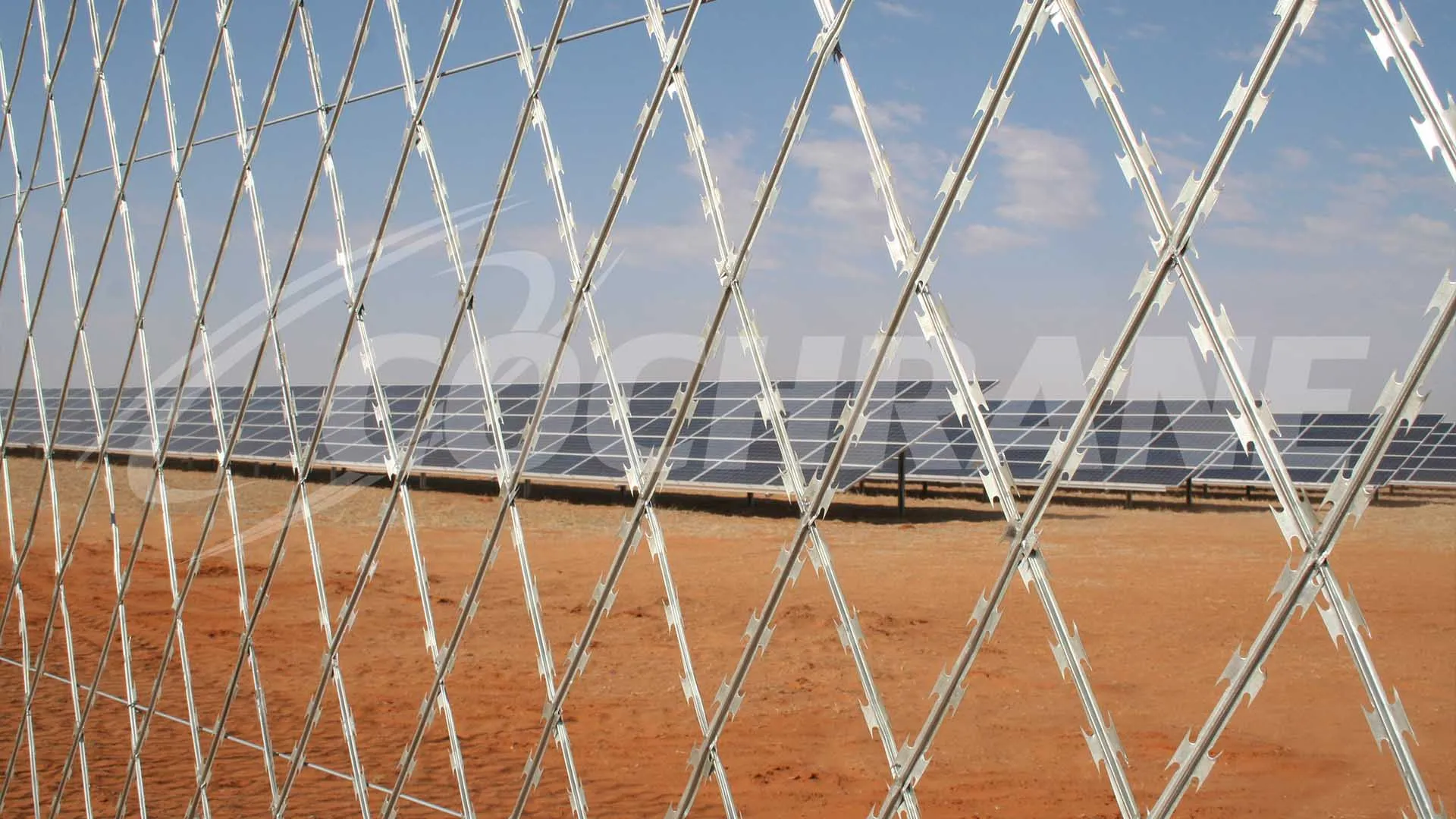
Deterrents are valuable, but physical barriers that rodents simply cannot chew through are in a different category of protection. Rodent teeth are extraordinarily strong. They can gnaw through plastic, rubber, soft metals, and standard wiring insulation without much effort.
What they cannot chew through efficiently is fine-gauge stainless steel mesh, and that material is the foundation of one of the most reliable protective strategies available. Wire mesh sleeves and conduit guards designed for automotive wiring are available from several manufacturers.
These products slide over exposed wire bundles and zip-tie or clamp into place, creating a physical armor layer that rodents encounter before they can reach the actual wiring underneath. Split-loom tubing alone does not provide adequate protection since rodents chew through it easily.
Stainless steel braided sleeving over split-loom or directly over wiring is the combination that creates genuine resistance. Particularly vulnerable areas include the wiring that runs along the lower sections of the engine bay, cables near the battery tray, and any wiring that passes near the firewall at an accessible height.
Owners of larger vehicles with long wiring runs should pay close attention to harness sections near the front suspension towers and along the frame rails underneath the vehicle. These areas are often reachable from below and are attractive to rodents moving along the ground.
On specific models like the 2021 Ram 1500 Classic Express Quad Cab and the 2019 GMC Yukon XL SLT 4WD, the wiring complication is high enough that full harness replacement after rodent damage is genuinely expensive, sometimes exceeding $2,000 in parts and labor. Installing mesh sleeve protection on a new or clean vehicle can cost under $50 in materials and a few hours of careful work.
That return on investment is difficult to argue against. When selecting mesh products, look for stainless steel braid rated for high-temperature environments since engine bays get hot, and some lower-grade products degrade quickly with heat exposure.
Secure all sleeves tightly at both ends to prevent rodents from finding a gap and entering the sleeve from either side. Check the condition of sleeves annually as part of your regular vehicle inspection routine.
6. Use Natural Scent Deterrents Strategically Around the Vehicle
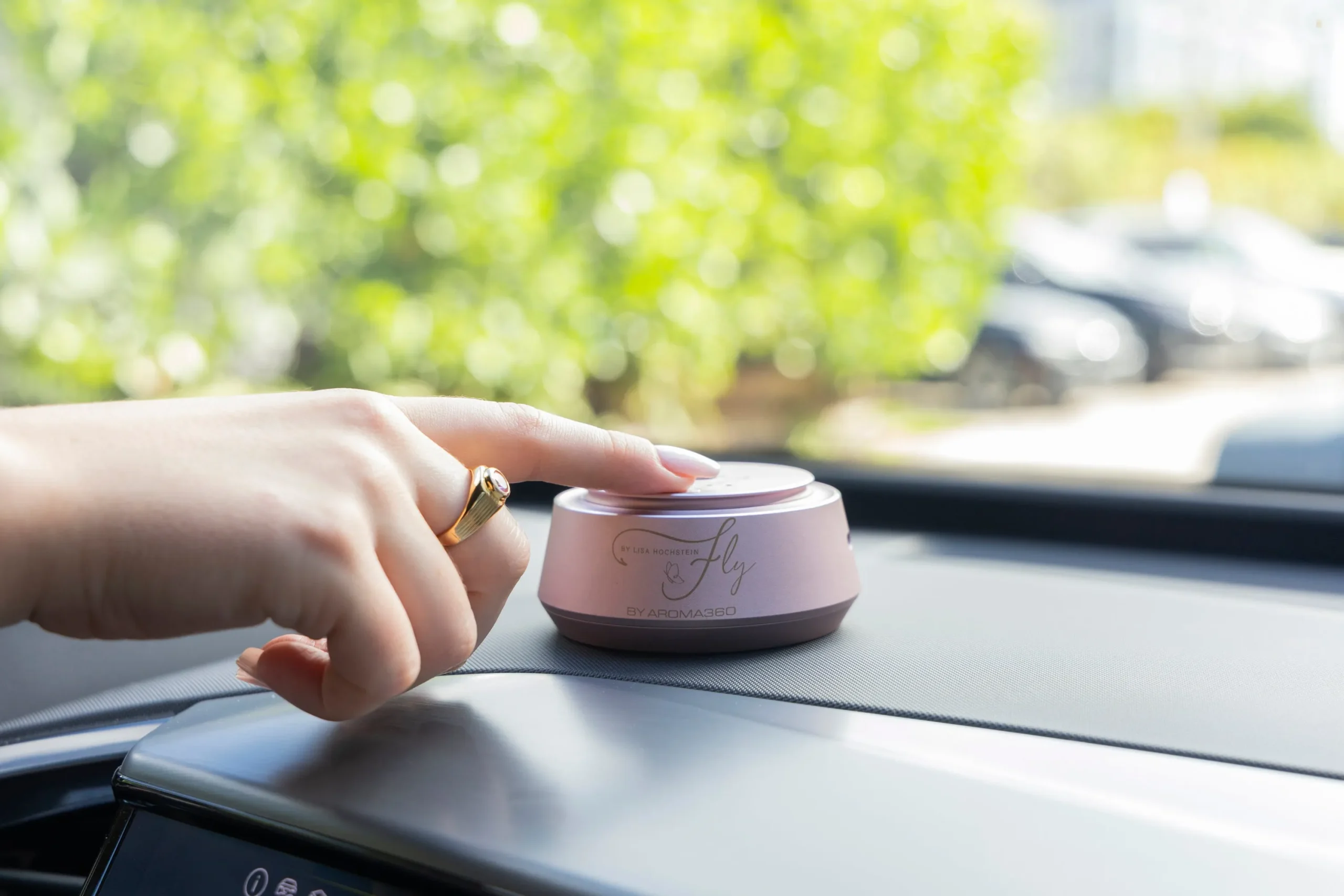
Rodents use their sense of smell constantly. It guides them toward food, away from predators, and toward or away from potential shelter. That olfactory sensitivity can be turned against them using natural scent deterrents that are safe for humans, non-toxic for the environment, and genuinely effective at discouraging rodents from getting comfortable near your vehicle.
Peppermint oil is the most widely used natural rodent deterrent and has real research supporting its effectiveness. Rodents find the intense menthol scent of concentrated peppermint oil deeply unpleasant.
Soaking cotton balls in pure peppermint essential oil and placing them in small mesh bags inside the engine bay, near entry points, and along the vehicle’s underside creates a scent barrier that rodents avoid. Replace the cotton balls every two to three weeks since the scent fades, and wet conditions accelerate that process.
Cedar chips and cedar oil sachets work through a similar mechanism. Cedar has been used as a natural pest deterrent for centuries, and small sachets placed in the engine bay, trunk area, and cabin air intake zones provide ongoing scent deterrence without any toxic chemistry.
These are available inexpensively at hardware stores and online, and they can be tucked into corners of the engine bay where they will not contact moving parts or hot surfaces. Predator scents are another angle worth considering.
Products containing the urine of foxes or coyotes trigger a fear response in small rodents. These are sold at garden centers and pest control retailers. Applying them around the perimeter of the parking area rather than directly inside the vehicle keeps the scent zone where it is most useful, discouraging rodents from approaching before they even reach the vehicle.
Owners of vehicles frequently parked near wooded areas or open fields, such as someone who regularly parks a 2020 Toyota Tacoma TRD Off-Road 4×4 at a trailhead or stores a 2018 Subaru Forester 2.5i Touring in a rural property garage, benefit most from this layered scent approach.
When you combine two or three natural deterrents and refresh them on a consistent schedule, the cumulative effect is a vehicle environment that rodents consistently avoid rather than treat as a comfortable option.
7. Check Under the Hood Regularly and Catch Problems Early
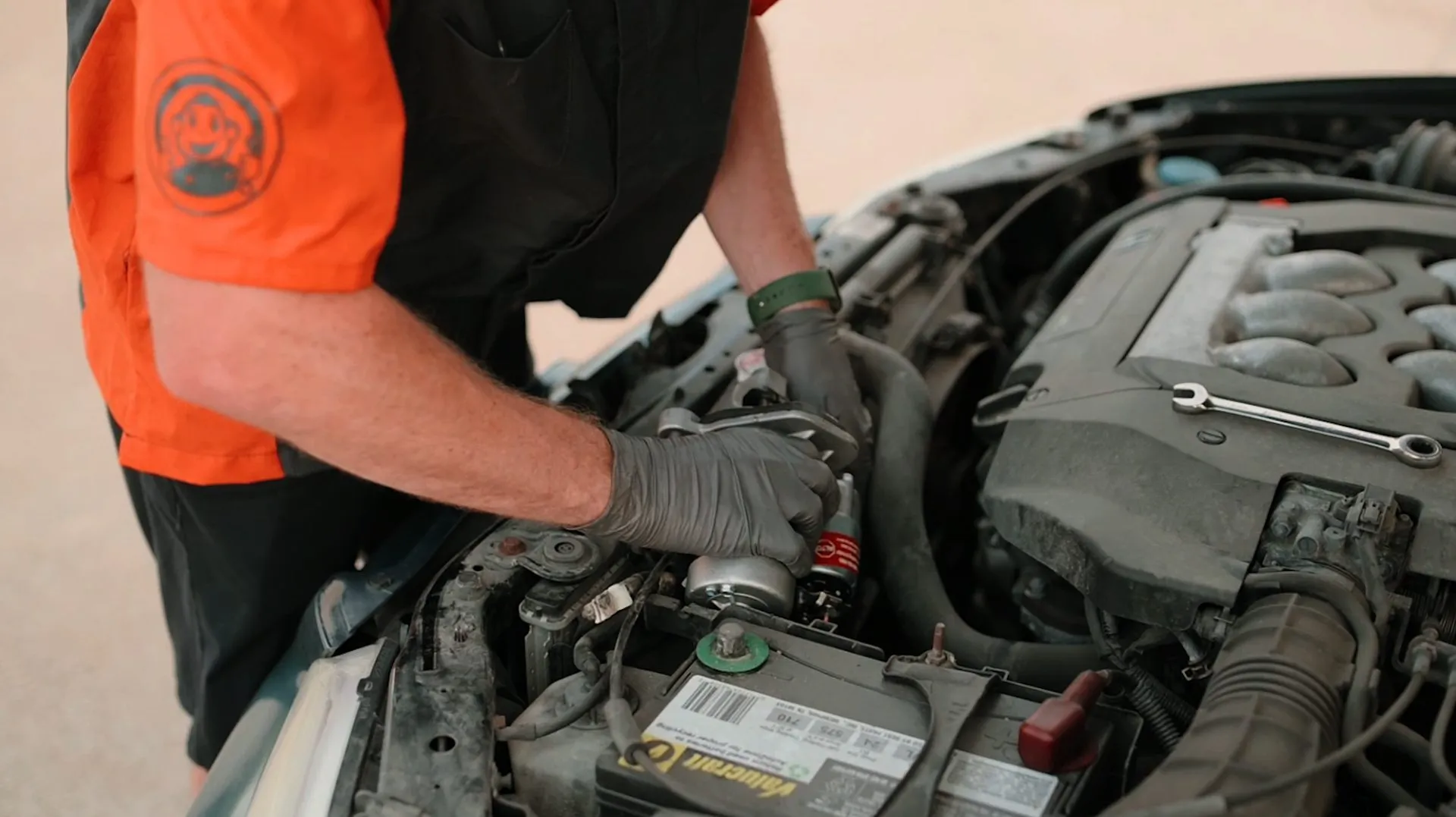
Prevention and early detection are not the same thing, but they work as a team. Even with deterrents in place, the smartest protection strategy includes regular visual inspections that catch any rodent activity before a single bite becomes an expensive electrical failure.
Most rodent damage that results in major repair bills started small and escalated because no one noticed early signs until a warning light appeared on the dashboard. Making a habit of opening the hood once a week and spending two minutes scanning the engine bay is a simple practice that costs nothing.
You are looking for a few specific things: nesting material such as shredded leaves, paper, or fibrous debris tucked into corners; rodent droppings, which are small, dark, and often found near the battery or along the firewall; evidence of chewing on wire insulation, rubber hoses, or plastic covers; and any foreign material draped over or packed around wiring bundles.
Fresh rodent droppings are a warning that activity is happening right now and that deterrent measures need to be strengthened immediately. Nesting material that was not there last week tells you a rodent has found the engine bay attractive and has started moving in.
Catching either of these signs before any chewing has started means your response can be purely preventive rather than reactive and expensive. A flashlight makes this inspection dramatically more useful. Most of the hiding spots rodents prefer are in dark corners that are difficult to see clearly in ambient light.
Shine the light along the firewall, behind the battery, around the intake manifold, and along any wiring harness you can reach from above. If you drive a vehicle with a large engine bay like the 2022 Ford Expedition MAX XLT 4WD or the 2021 Chevrolet Suburban Premier 4WD, there is more surface area to inspect, so give yourself a few extra minutes.
After any long parking period, such as a two-week vacation or an extended holiday, inspect the vehicle before driving rather than after. Running a vehicle with compromised wiring can cause electrical shorts, blown fuses, or, in rare cases, fires.
A two-minute check before starting the engine is a straightforward habit that experienced vehicle owners treat as standard practice once they have seen what rodent damage looks like up close.
Also Read: 8 Essential Safety Features to Look for When Buying a Used Car
8. Work With a Professional to Apply Comprehensive Rodent Protection Packages
Some vehicles require a more thorough, professionally applied protection strategy. This is especially true for new vehicles with soy-based wiring, for vehicles that will be stored long-term, and for owners who have already experienced one rodent damage incident and want to make sure it does not happen again. Professional auto detailers, pest control specialists, and automotive technicians now offer comprehensive rodent protection services that go well beyond what most owners can do on their own.
These professional services typically include a full inspection of the vehicle’s wiring harness and engine bay, identification of all active and potential entry points, application of capsaicin-based deterrent sprays on wiring, installation of mesh sleeves on exposed harness sections, sealing of firewall gaps with appropriate materials, and placement of ultrasonic repellers with proper positioning.
Some shops also offer cabin air filter replacement combined with HVAC system inspection to confirm no nesting has occurred in the ventilation system. The value of professional service is not just in the materials used but in the expertise applied.
A technician who has seen dozens of rodent damage cases knows exactly where to look, which wires get targeted first, and which entry points are most commonly overlooked by DIY attempts. Paying for that knowledge once can save you from paying for wiring repairs multiple times.
Dealerships for brands with known soy-wiring issues have become familiar with offering these services. Owners of vehicles like the 2023 Honda CR-V Sport Touring AWD and the 2022 Toyota Highlander XSE AWD should ask specifically about rodent protection packages when purchasing or servicing their vehicles. Many dealerships now include rodent deterrent tape application as an add-on service precisely because the demand has grown.
For long-term storage situations, professional wrapping of the entire wiring harness with stainless steel sleeving, combined with an electronic repeller and perimeter traps, creates the most robust protection available. Yes, this costs money upfront. A professional protection package might run $150 to $400, depending on the vehicle and the scope of work.
Compare that to a wiring harness replacement on a modern vehicle, and the math becomes straightforward very quickly. Protecting your vehicle’s electrical system is not an overreaction. It is one of the most practical investments a car owner can make.
