Cars have always been a symbol of freedom, speed, and technological progress. For decades, automobile enthusiasts have pushed the limits of engineering to create vehicles capable of extraordinary speeds. The pursuit of speed has not only defined automotive culture but has also influenced racing, car design, and the development of safety standards.
However, some vehicles reached a point where their speed and power were considered too dangerous for public roads. These machines, while engineering marvels, posed risks that surpassed what traffic laws and safety regulations could reasonably manage.
It is fascinating to consider that some of the most iconic cars in automotive history faced restrictions, not because of their style, comfort, or performance in isolation, but because they could travel faster than any practical road could safely accommodate.
The fascination with high-speed vehicles comes from the human desire to break limits. While ordinary cars might reach speeds of 100 to 150 miles per hour, some supercars were designed to exceed 250 miles per hour, testing both the skill of the driver and the limits of physics.
Speed is thrilling, but it is not always compatible with public roads crowded with pedestrians, slower vehicles, and traffic laws that prioritize safety. Governments and automotive authorities have occasionally stepped in to restrict or ban vehicles whose potential to exceed safe speeds far outweighed the benefits of having them on the road.
These bans are often controversial, with enthusiasts arguing that responsible drivers should be allowed to experience these marvels, while regulators focus on the risks posed to the general public.
The engineering behind banned vehicles often represents the peak of innovation. High-performance engines, lightweight materials, and advanced aerodynamics make these cars some of the fastest and most sophisticated machines ever built. Yet, despite their technological achievements, the speed capabilities of these vehicles created a dilemma.
They are celebrated in racing circuits and private tracks, where conditions are controlled and risks are managed. On public roads, however, the margin for error diminishes drastically, and the consequences of accidents at extreme speeds are catastrophic. This conflict between technological ambition and public safety has resulted in a small group of vehicles being restricted or banned from general use, cementing their status as legendary yet forbidden machines.
The allure of forbidden speed is part of what makes these vehicles so fascinating to car enthusiasts. Owning or even hearing about a car banned for being too fast adds to its mystique. It is a reminder that while humans can engineer incredible machines, society imposes limits to ensure collective safety.
These vehicles serve as milestones in automotive history, demonstrating the extremes of design, innovation, and raw power. They also remind us that speed, while exhilarating, requires responsibility and an understanding of consequences. The following list highlights ten of the most remarkable cars that were banned or restricted due to their extreme speed, showcasing the intersection of engineering brilliance and regulatory caution.
This article examines each of these vehicles, detailing why they were banned, their technical specifications, and their impact on car culture. From classic hypercars to modern engineering marvels, these machines illustrate how speed can be both an attraction and a danger.
While their restrictions may frustrate enthusiasts, they also provide a glimpse into the limits of automotive engineering and the importance of balancing performance with safety. Each vehicle on this list has a story that demonstrates why authorities deemed them too fast for ordinary roads, and why they remain objects of fascination for car lovers worldwide.
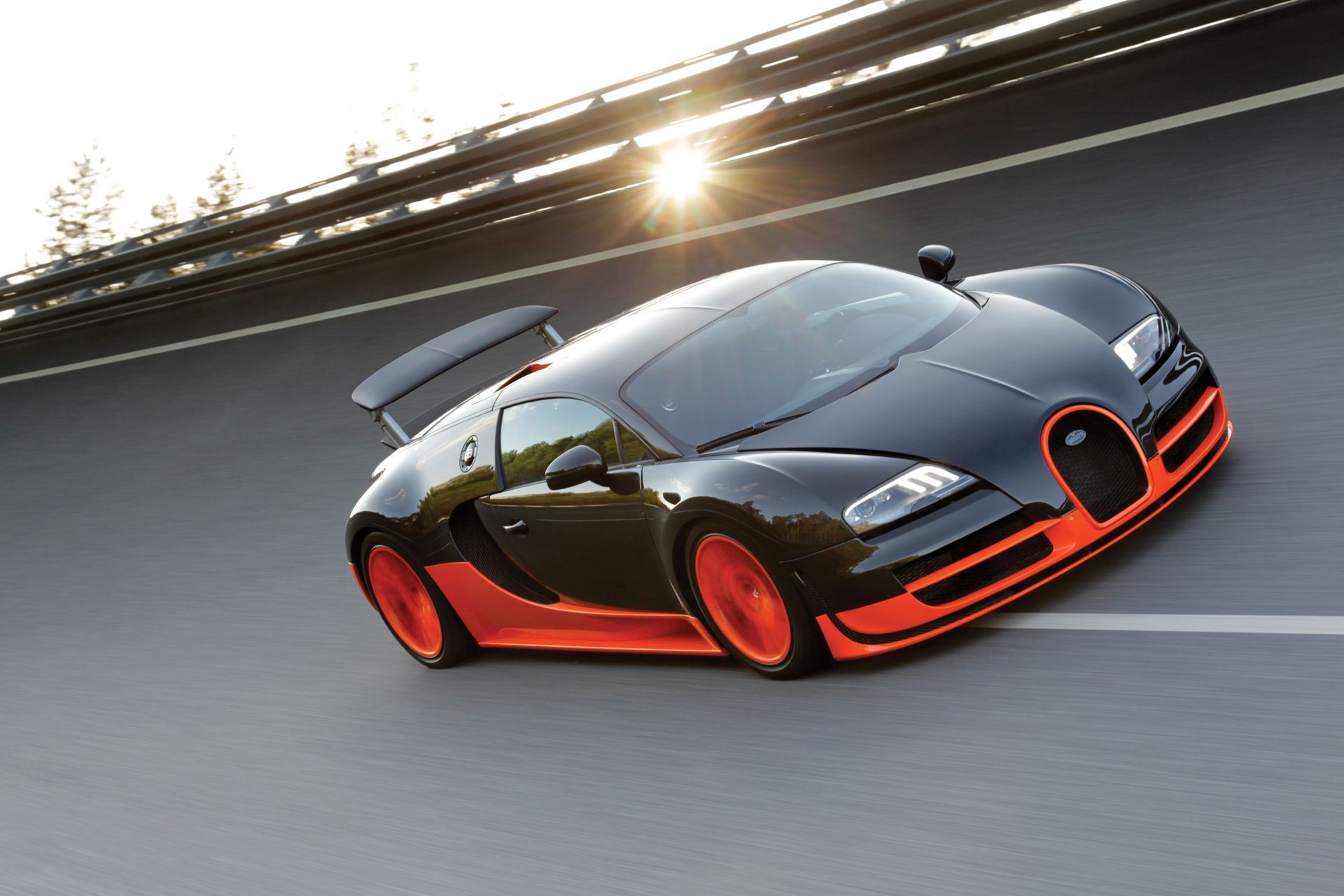
1. Bugatti Veyron Super Sport
The Bugatti Veyron Super Sport is one of the most iconic examples of a car that outpaced its environment. It features an 8.0-liter W16 engine with four turbochargers, producing over 1,200 horsepower.
This power allows it to reach speeds over 267 miles per hour, which is far beyond the capabilities of normal roads. While designed for performance, such speed poses dangers for traffic safety and structural limitations of highways. Its acceleration from zero to sixty occurs in just 2.4 seconds, challenging even the most experienced drivers.
Beyond its raw speed, the Veyron’s engineering demanded extreme precision. The car incorporates advanced aerodynamics to remain stable at high velocities, including active rear wings and diffusers.
Yet, even with these features, small errors at these speeds can result in catastrophic consequences. Regulators were concerned that drivers could misuse the vehicle on public roads, where pedestrians and slower vehicles cannot anticipate such velocity. The Veyron thus became restricted in many regions.
The production of the Veyron Super Sport also highlighted the intersection of exclusivity and performance. With a price tag exceeding two million dollars, the car was not just fast but also a status symbol.
Owners sought the thrill of commanding a vehicle few could afford, and fewer could handle safely. Despite careful design, the decision to restrict its use was based on the recognition that speed without proper infrastructure can become deadly.
Driving the Veyron on ordinary streets is essentially impossible to experience safely. Its top speed can only be realized on specially designed tracks or closed roads.
Even slight curves, weather changes, or traffic can make controlling the vehicle at high velocities extremely challenging. Authorities, therefore, issued speed restrictions and in some cases banned the car from unrestricted use on public highways. These decisions emphasized public safety over individual desire.
The Bugatti Veyron Super Sport remains a legendary vehicle today. Its restricted status adds to its allure and ensures that it is treated with respect rather than recklessness. The car’s story illustrates the balance between engineering ambition and the responsibility to maintain safety on roads used by millions. It is a reminder that speed, while fascinating, cannot exist without caution and awareness.
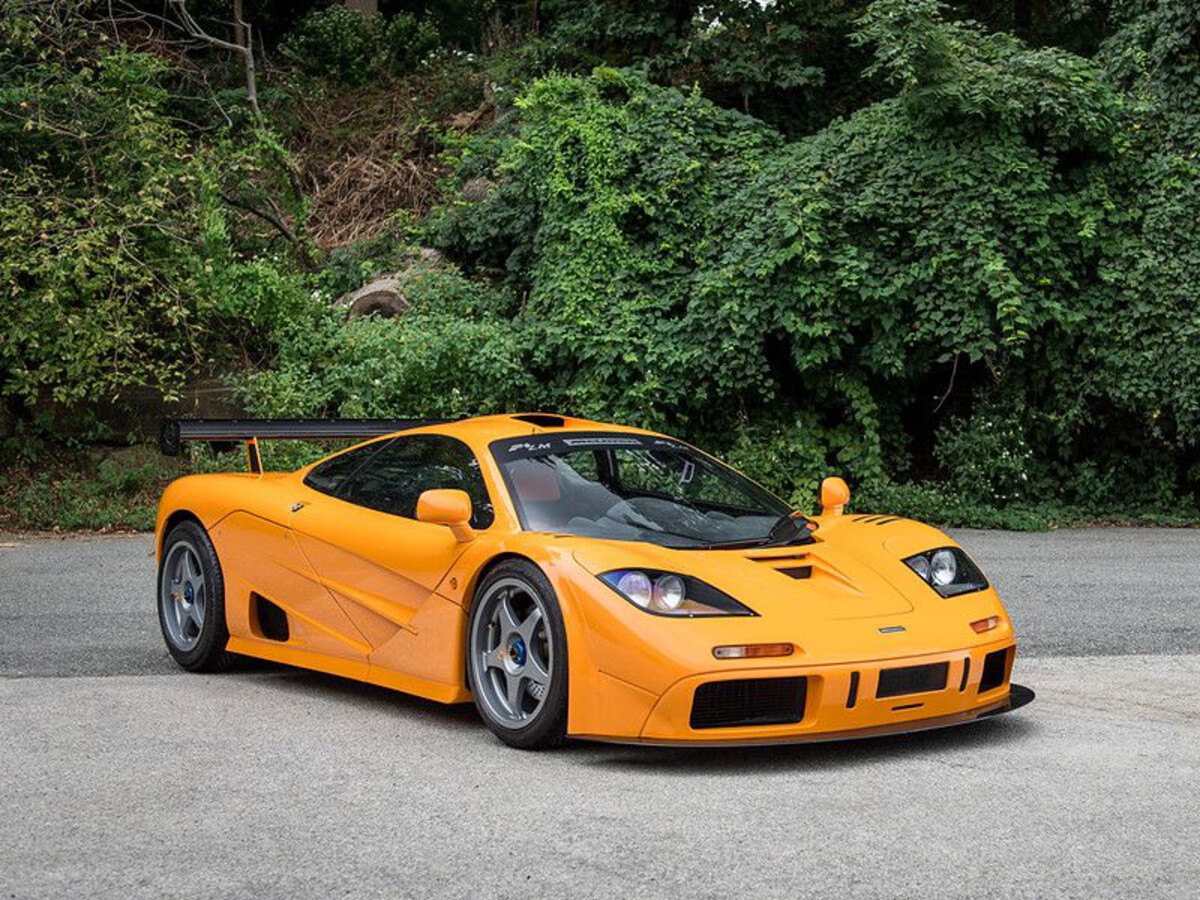
2. McLaren F1
The McLaren F1 was a revolutionary vehicle in the 1990s, widely regarded as one of the fastest road cars of its time. Its naturally aspirated V12 engine generated 627 horsepower, allowing it to reach a top speed of 240 miles per hour.
The McLaren F1 was designed for maximum performance and lightweight efficiency, using carbon fiber construction and a unique three-seat layout. The driver-centered design contributed to its precise handling at extreme speeds.
Safety concerns arose due to the vehicle’s ability to surpass common speed limits by more than double. Public roads were simply not equipped to handle such velocities, and even minor errors at high speed could prove fatal.
Authorities in several countries considered the F1 too powerful for regular traffic conditions. Its speed and acceleration made it nearly impossible to safely navigate typical urban or rural environments without putting others at risk.
The car’s reputation grew through its combination of technology and exclusivity. Only 106 units were ever produced, and each vehicle represented the pinnacle of early 1990s automotive engineering. The McLaren F1’s record-breaking top speed at the time captured the imagination of car enthusiasts around the globe. However, the same attributes that made it desirable also rendered it hazardous in everyday traffic.
The F1’s handling is precise, but it requires skill to operate safely at high speeds. The risk of losing control on ordinary roads led authorities to restrict its usage. Drivers were advised to limit their speed and seek racetracks to experience its full potential. In some cases, insurance restrictions further reinforced the limitations placed on the vehicle.
Today, the McLaren F1 is celebrated not only for its speed but also for its role in shaping supercar design. Its restricted status reinforces the idea that some engineering feats are best appreciated in controlled environments. The McLaren F1 remains a benchmark in automotive history, representing a rare combination of speed, technology, and the need for regulatory caution.
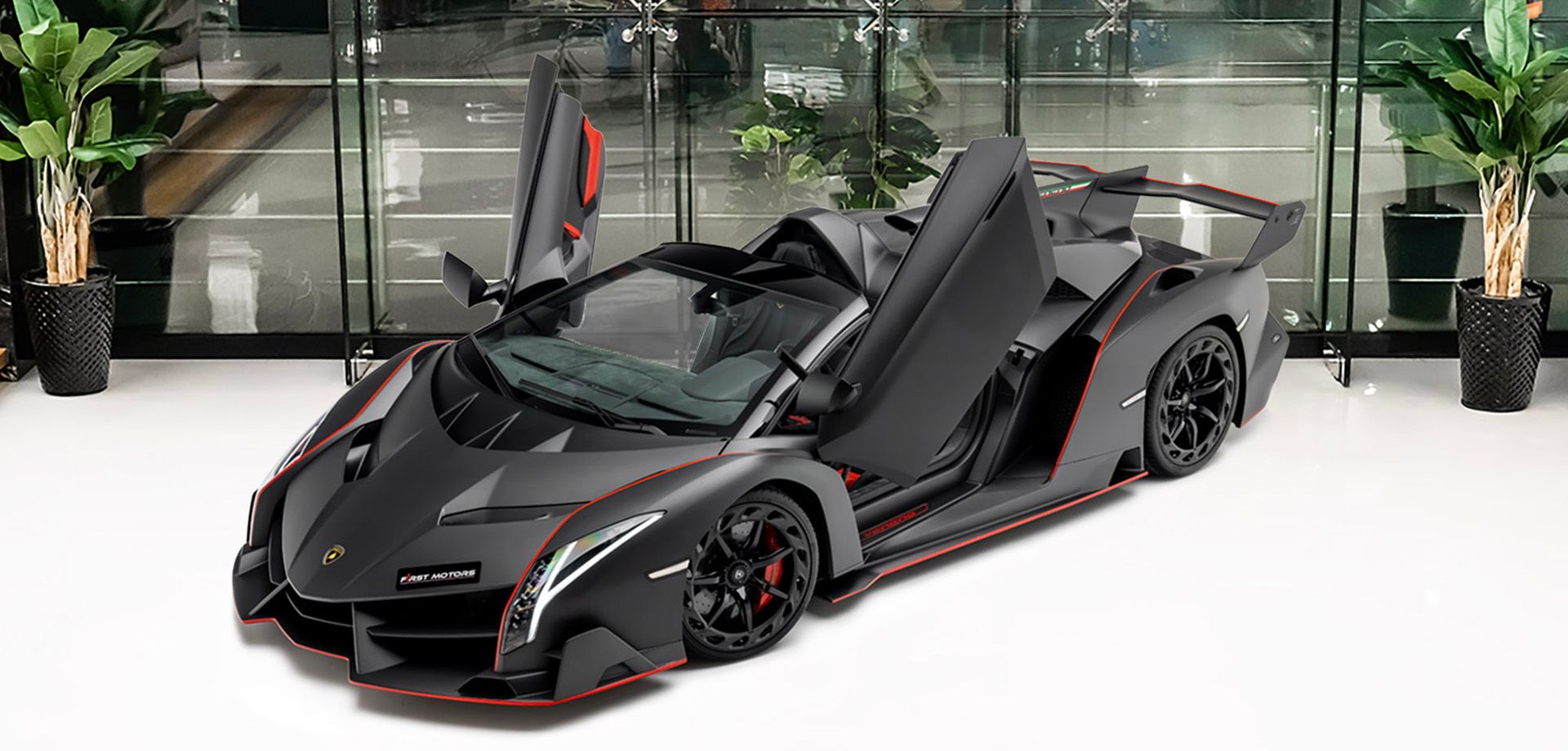
3. Lamborghini Veneno
The Lamborghini Veneno represents a radical combination of extreme design and raw speed. Built to celebrate Lamborghini’s 50th anniversary, the Veneno’s 6.5-liter V12 engine produces 740 horsepower, allowing it to reach a top speed of 221 miles per hour.
Its aggressive aerodynamics include massive front splitters and rear wings designed to maintain stability at extreme velocities. Every line on the car emphasizes airflow management, ensuring that high-speed performance remains controlled.
Its limited production, with only nine units made, made it both rare and highly sought after, yet the very elements that made it a masterpiece also rendered it difficult to manage on public roads.
While the car is visually striking, its performance capabilities pushed it beyond what normal roads could safely accommodate. The Veneno accelerates from zero to sixty in just 2.9 seconds, creating intense forces on the driver and tires.
Ordinary roads are filled with curves, other vehicles, and unpredictable obstacles, making such acceleration dangerous outside a racetrack environment. Authorities in multiple countries warned owners that exceeding standard speed limits could result in severe legal consequences or insurance complications. The car’s extreme focus on speed and aerodynamics meant that small errors could lead to catastrophic incidents.
The Veneno’s interior is equally performance-oriented. Minimalist controls, lightweight materials, and a racing-inspired cockpit emphasize speed and function over comfort. Drivers must remain highly alert and precise, as the car is designed to respond instantly to steering and throttle input.
Even experienced drivers unfamiliar with this level of power can misjudge braking distances or handling nuances, particularly on uneven or crowded roads. This challenge reinforces the reasons why speed regulations were imposed to prevent accidents and protect public safety.
Ownership of the Veneno also carries the weight of responsibility. With a price exceeding $4 million, only the wealthiest collectors could purchase it, often storing it as a rare showpiece rather than a daily driver.
Despite its track-ready engineering, using it casually exposes both driver and bystanders to unnecessary risk. Lamborghini emphasized that the car’s true performance should be explored in closed circuits designed to handle extreme speeds, and public roads are simply not equipped for such vehicles.
The Lamborghini Veneno has become an icon of automotive extremity. Its restrictions highlight the fine balance between producing awe-inspiring vehicles and maintaining safety on shared roads.
While enthusiasts celebrate its design and performance, the car also serves as a reminder that speed without proper environment and regulation can quickly become a hazard. Its rarity and capabilities continue to inspire admiration, even as its full potential remains largely inaccessible to the public.

4. Koenigsegg Agera RS
The Koenigsegg Agera RS pushed the boundaries of engineering with a combination of immense power and precision. Powered by a 5.0-liter twin-turbo V8 engine producing 1,160 horsepower, it reached top speeds exceeding 270 miles per hour.
Its lightweight carbon fiber body and aerodynamic enhancements allow it to remain stable at velocities far beyond what public roads were designed to handle. The Agera RS’s acceleration is breathtaking, moving from zero to sixty in 2.8 seconds, making it one of the fastest production cars in the world during its release.
While track performance is extraordinary, the car’s capabilities made it hazardous on ordinary highways. Even small obstacles, tight corners, or sudden traffic can become deadly at such speeds. Many regions introduced restrictions to ensure that drivers would not attempt to exploit the Agera RS’s top-end potential outside controlled environments.
The car’s extreme power amplifies the risk of accidents, and authorities emphasized that responsible usage is limited to private tracks or closed courses where safety measures are in place.
The interior and driving experience of the Agera RS are finely tuned for performance. Every control is responsive, allowing instant adjustments, while driver assistance technologies are minimal to reduce weight.
This design philosophy creates a situation where driver skill is paramount, and errors can lead to severe consequences. Public roads, however, do not provide sufficient room or safety mechanisms to accommodate such demanding performance characteristics, prompting legal and regulatory caution.
The limited production numbers of the Agera RS make it an exclusive collector’s item, with only 25 units built. The rarity and performance of the car increase its desirability, yet also elevate the potential danger if misused.
Insurance restrictions and speed regulations reinforce the idea that, despite ownership privileges, extreme vehicles like this must be treated responsibly. Enthusiasts are advised to use racetracks to explore the car’s capabilities safely, highlighting the divide between potential performance and public road feasibility.
The legacy of the Koenigsegg Agera RS lies in its combination of innovation and speed. It demonstrates what is possible when engineering pushes limits, while also serving as a cautionary tale about the importance of road safety.
Authorities and automotive experts alike recognize that extreme speed, while exhilarating, is not compatible with normal traffic environments, making the Agera RS both a marvel and a restricted icon.
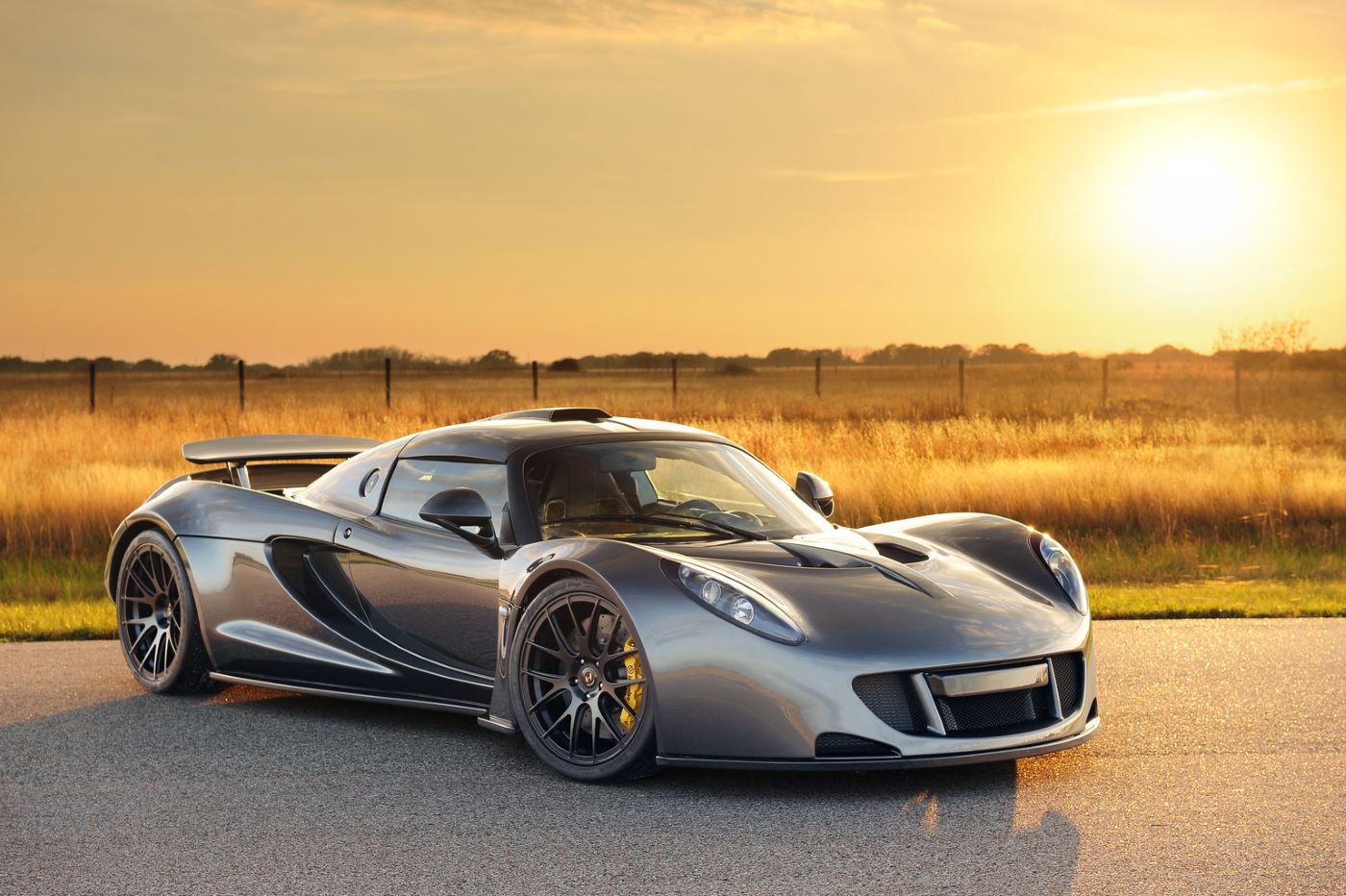
5. Hennessey Venom GT
The Hennessey Venom GT gained worldwide attention for breaking speed records and achieving performance previously thought unattainable for production vehicles. Equipped with a 7.0-liter twin-turbo V8 engine producing 1,244 horsepower, the car achieved top speeds of 270 miles per hour in ideal conditions.
Its lightweight chassis, streamlined body, and powerful engine made it a contender among the fastest vehicles in history. However, these same features made the Venom GT unsuitable for regular roads, leading to widespread restrictions and bans.
The Venom GT’s acceleration is extreme, with zero to sixty times around 2.7 seconds. While exhilarating on tracks, such acceleration on public roads leaves little room for error. Drivers can easily lose control due to high speeds, changing traffic, or environmental conditions.
Road regulations in several countries prohibited full exploitation of its speed potential, and authorities issued specific guidelines for safe operation. The vehicle’s raw power demanded experience and skill, which is why authorities discouraged its unrestricted use in urban or rural environments.
Ownership of the Venom GT emphasizes rarity and performance, as only 13 production models were made. Collectors and automotive enthusiasts prize the vehicle for its engineering excellence and record-breaking achievements. Yet, despite its allure, practical usage is limited.
Even small deviations in road conditions or reaction time can turn an extraordinary driving experience into a dangerous scenario. This reality reinforced the necessity of regulations limiting its public use.
Beyond raw speed, the Venom GT required advanced maintenance and careful handling. Its tires, suspension, and braking systems were optimized for high-speed performance rather than daily driving.
This engineering focus, while impressive, made the vehicle even more unsuitable for ordinary roads. Authorities recognized that access to such machines must be paired with responsibility, ensuring that their speed potential does not endanger others.
The Hennessey Venom GT continues to inspire admiration in the automotive world. Its restricted status highlights the tension between human engineering ambition and public safety.
The car’s achievements underscore the extremes of vehicle design, while its bans remind enthusiasts that speed must be balanced with responsibility and caution, particularly in environments not designed for such extraordinary capabilities.

6. Pagani Huayra BC
The Pagani Huayra BC is a limited-edition variant of the Huayra, engineered to achieve extraordinary speed while emphasizing precision handling. Its 6.0-liter twin-turbo V12 engine produces 790 horsepower, allowing the car to reach speeds over 230 miles per hour.
The BC’s carbon-titanium construction keeps it extremely lightweight, enhancing acceleration and agility. With active aerodynamics and carefully tuned suspension, the car is capable of cornering and stability at speeds far beyond normal traffic limits, making it a technical marvel.
Despite its sophistication, the Huayra BC is not suited for ordinary roads. Its extreme acceleration and sharp responsiveness can easily overwhelm drivers unfamiliar with high-performance hypercars.
Authorities recognized the risks posed by such power in urban or suburban settings, where reaction times must account for other vehicles, pedestrians, and traffic signals. Regulatory guidance often restricts owners to private tracks or closed courses, reinforcing the idea that these machines are for controlled environments rather than casual street use.
The interior of the Huayra BC reflects its performance-first philosophy. Lightweight seats, minimal distractions, and intuitive controls focus entirely on driving skill and experience. The cockpit is designed for precise driver input, meaning that at high speeds, even minor mistakes could have catastrophic results.
While aesthetically luxurious, its features prioritize speed and control, not comfort or everyday usability. These attributes underscore why public roads are unsuitable for exploiting the vehicle’s capabilities.
Production was limited to just 20 units, making the BC a highly coveted collector’s item. Its rarity increases demand but also amplifies the responsibility of owners to follow safety and regulatory guidelines.
Pagani actively advises that the car’s full potential should only be explored in controlled environments, highlighting the contrast between extreme engineering achievement and practical safety considerations. Public roads cannot accommodate a vehicle designed to operate safely at speeds far exceeding legal limits.
The Pagani Huayra BC exemplifies the tension between innovation and regulation. It demonstrates what is possible when precision engineering meets extreme ambition, while also illustrating why authorities limit such vehicles’ public road use. This car is a celebration of speed, yet its restricted operation ensures that it remains both a responsible and awe-inspiring example of automotive mastery.
7. SSC Ultimate Aero
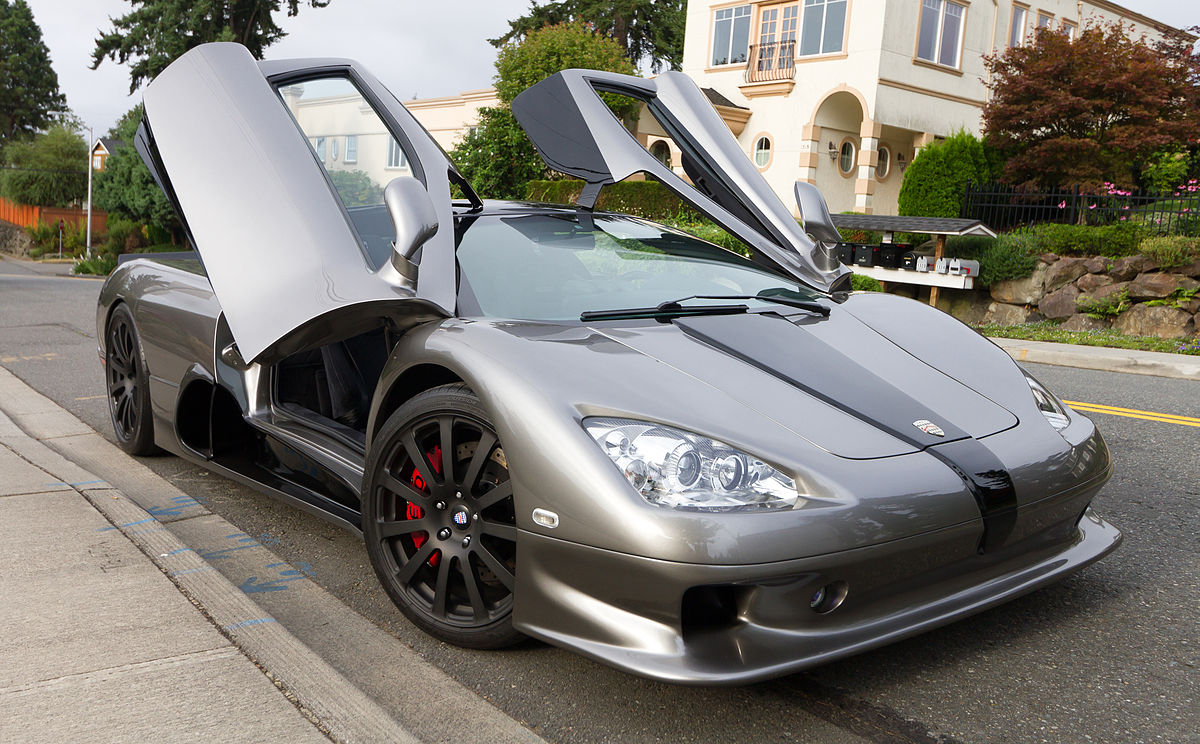
The SSC Ultimate Aero was a direct competitor to the Bugatti Veyron, vying to claim the title of the fastest production car in the world. Its 6.3-liter twin-turbo V8 engine produced over 1,200 horsepower, enabling speeds exceeding 256 miles per hour.
The car’s lightweight aluminum frame and aerodynamic body allowed it to accelerate from zero to sixty in under 3 seconds. While it could outperform almost every road vehicle in terms of speed, this extreme capability raised immediate safety concerns for public use.
Authorities noted that its top speed made ordinary highways highly dangerous. In real-world traffic, vehicles like the Ultimate Aero cannot safely interact with slower-moving cars or navigate complex city intersections at high velocity. Its sheer acceleration leaves minimal margin for error, increasing the risk of collisions.
Regulatory agencies in multiple regions warned owners that pushing the car to its limits outside controlled environments could be fatal and potentially illegal. The SSC Ultimate Aero thus earned a reputation as a hypercar whose speed exceeded what any road could reasonably sustain.
The interior of the car reflects its racing pedigree. Minimalistic design focuses on driving ergonomics, with little emphasis on comfort or convenience features. Steering, braking, and throttle responsiveness are tuned for precision at high speeds, making it challenging for inexperienced drivers to operate safely.
While the car provides an exhilarating driving experience on tracks, these features become liabilities when used on roads designed for everyday traffic conditions.
Limited production and exclusivity added to the Ultimate Aero’s mystique. Owners were often enthusiasts who valued performance above practicality. Despite careful engineering, authorities issued guidelines restricting the car’s operation on public roads to ensure that both drivers and bystanders were protected.
These restrictions reinforced the understanding that some hypercars, while technically legal to own, should not be fully exploited outside controlled environments.
The SSC Ultimate Aero remains an iconic example of extreme engineering and speed. Its banned or restricted status illustrates the delicate balance between pushing technological boundaries and maintaining public safety. While it continues to inspire car enthusiasts, its story reminds everyone that even the most advanced vehicles must respect the constraints of ordinary roads.
8. Porsche 911 GT2 RS
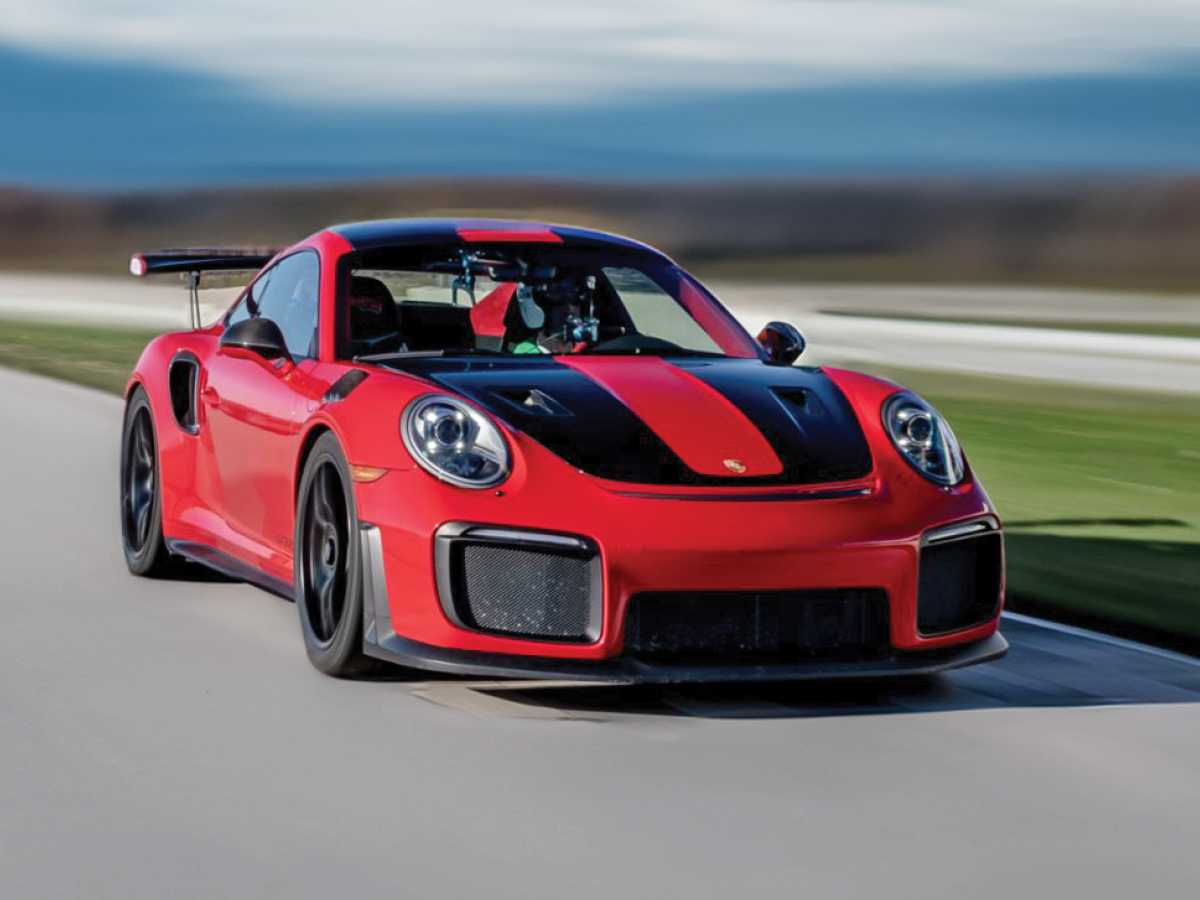
The Porsche 911 GT2 RS represents the pinnacle of Porsche’s 911 line, combining extreme speed with handling precision. Its 3.8-liter twin-turbo flat-six engine produces 700 horsepower, enabling acceleration from zero to sixty in 2.7 seconds.
The car’s lightweight construction, advanced aerodynamics, and rear-wheel-drive dynamics allow drivers to push performance limits with precision. Despite being a “street-legal” vehicle, its power and agility created serious safety concerns on public roads.
The GT2 RS can reach a top speed of 211 miles per hour, far exceeding the safety parameters of highways and urban streets. Authorities highlighted that even small mistakes at these speeds could lead to catastrophic accidents.
The car’s responsiveness amplifies the consequences of human error, making strict regulations and cautious driving essential. While legal in many regions, insurance restrictions and local speed laws often limit the ability to experience its full potential outside racetracks.
Porsche focused heavily on driver experience and control, equipping the GT2 RS with advanced suspension, braking, and stability systems. However, these features are designed for precise handling, not forgiving mistakes on public roads.
High-performance tires, carbon-ceramic brakes, and aerodynamic downforce make the car a racetrack specialist in all but name. Driving it recklessly on ordinary roads is both illegal and dangerous, prompting authorities to emphasize responsible ownership.
The 911 GT2 RS also represents the tension between accessibility and exclusivity. While more attainable than multi-million-dollar hypercars, it still requires advanced driving skills to operate safely. Owners often rely on track days or private courses to explore the vehicle’s limits. Regulations and manufacturer guidance consistently stress that public road conditions cannot safely accommodate the GT2 RS’s extreme capabilities.
The Porsche 911 GT2 RS continues to be celebrated as one of the fastest and most precise Porsche models ever created. Its restricted use in certain conditions reflects the broader pattern among high-performance vehicles: speed must be balanced with public safety. Enthusiasts respect the limitations imposed, recognizing that even street-legal supercars are not immune to the risks of excessive speed.
9. Ferrari LaFerrari
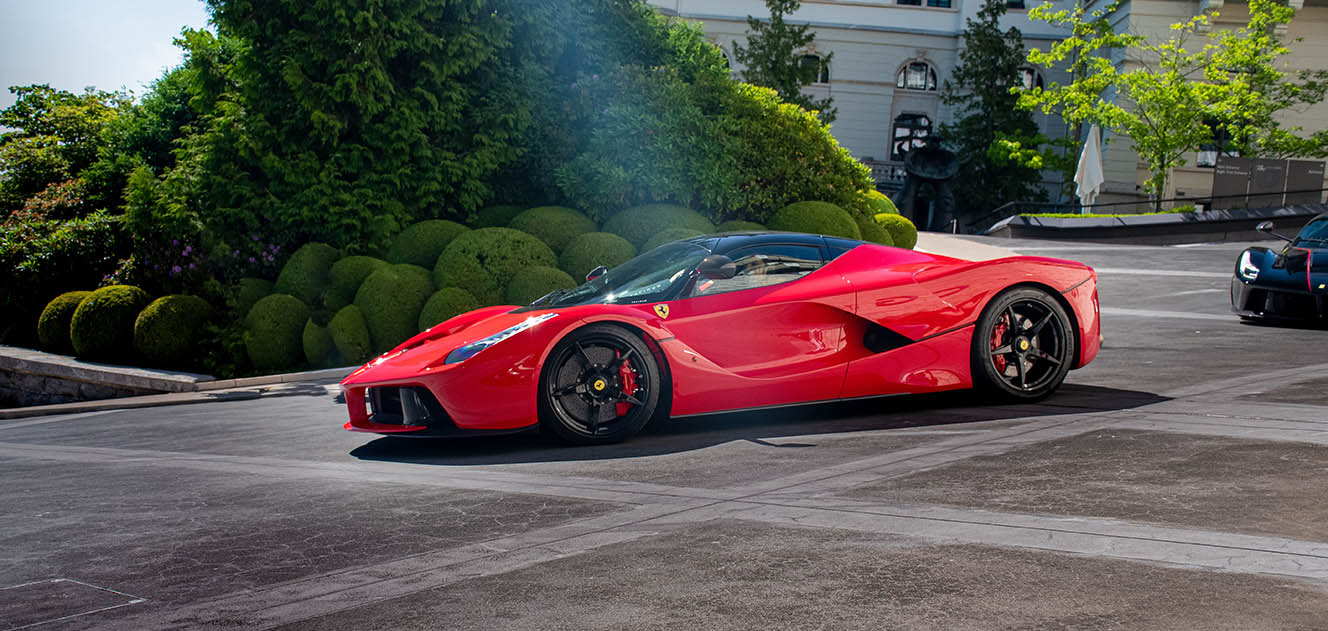
The Ferrari LaFerrari marked a significant shift in automotive engineering by combining hybrid technology with extreme performance. Its 6.3-liter V12 engine, paired with an electric motor, produces 950 horsepower, reaching top speeds over 217 miles per hour.
The hybrid system provides instantaneous torque, allowing acceleration from zero to sixty in 2.6 seconds. This combination of raw power and electric boost makes the car both fast and highly responsive, creating challenges for safe road use.
LaFerrari’s performance creates inherent risks on public roads. Its instantaneous power delivery and high top speed mean that drivers can unintentionally exceed safe limits.
Authorities recognized the potential for accidents and placed restrictions on excessive speed usage in urban or rural environments. While track usage is encouraged, the car’s capabilities far outstrip what ordinary highways were designed to accommodate. Safety regulations serve to protect both the driver and surrounding traffic.
The interior emphasizes performance and driver control. Lightweight materials, racing-inspired controls, and a focus on ergonomics allow drivers to fully harness the car’s potential on tracks. However, these same features make the car less forgiving for casual street driving. Owners must be constantly aware of speed limits, road conditions, and other vehicles. The learning curve is steep, and errors at high speed can have devastating consequences.
Production was limited to 499 units, making the LaFerrari highly exclusive. Its value and performance attract enthusiasts worldwide, yet its usage is constrained by laws and insurance restrictions. Ferrari actively recommends that owners use racetracks to experience the car’s full capabilities, reinforcing the divide between speed potential and public safety.
The Ferrari LaFerrari remains a symbol of hybrid innovation and extreme engineering. Its restricted use highlights the ongoing challenge of balancing performance ambitions with societal safety concerns. While admired globally, it demonstrates that even cutting-edge technology must respect the practical limitations of public roads.
10. Aston Martin Valkyrie
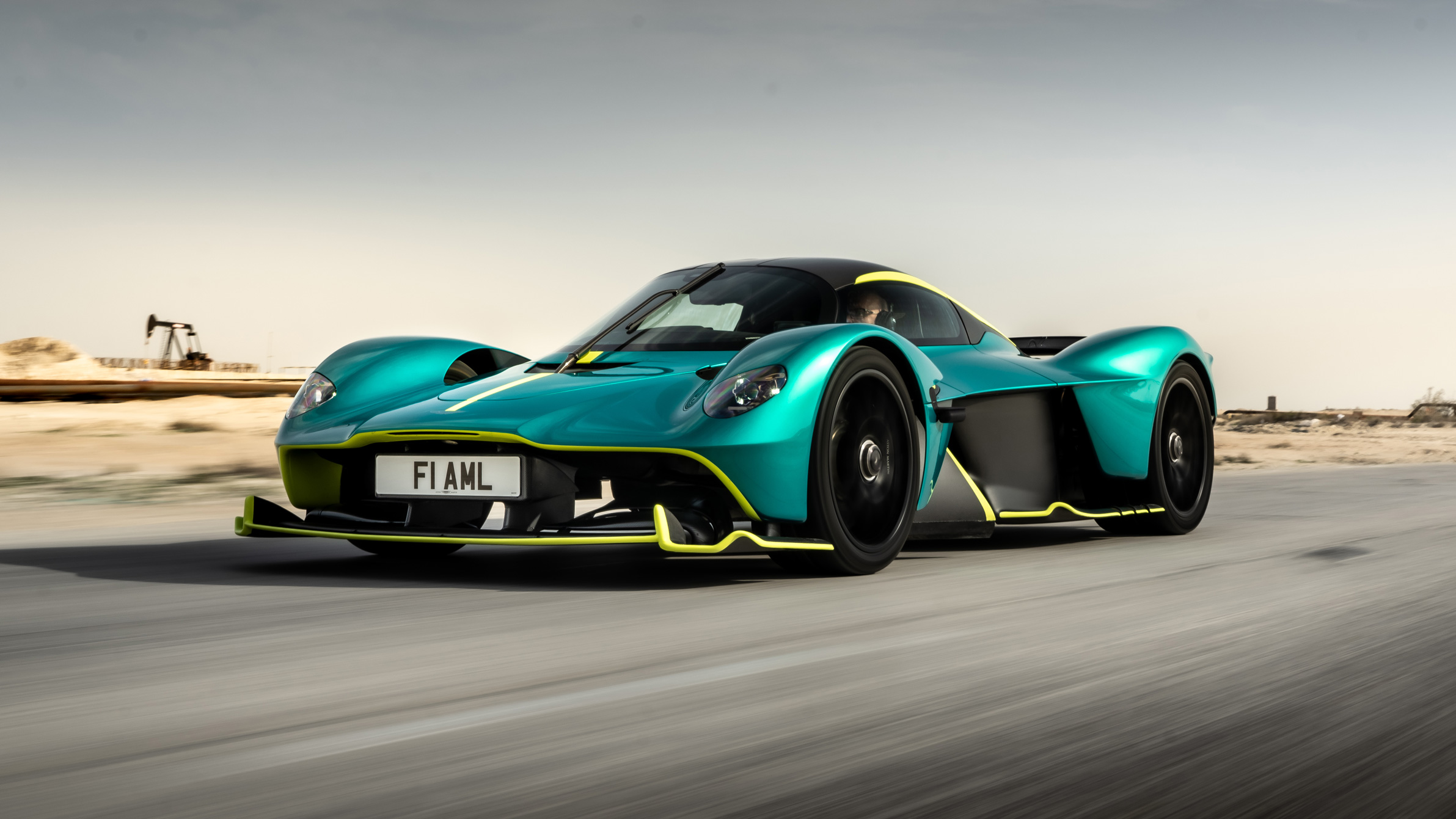
The Aston Martin Valkyrie represents a new era of hypercar design, blending Formula 1-inspired aerodynamics with extreme road-legal performance. Its 6.5-liter naturally aspirated V12 engine paired with an electric motor produces 1,160 horsepower, propelling the car to speeds exceeding 250 miles per hour.
Lightweight carbon fiber construction and active aerodynamic elements allow precise control at extreme velocities, ensuring stability under conditions far beyond ordinary roads.
Despite its advanced engineering, the Valkyrie is not suitable for conventional highways. Its acceleration and handling demand expert skill, as ordinary roads cannot provide the space or conditions to safely manage its capabilities. Authorities have issued strict guidelines for road usage, emphasizing track environments for full performance testing. Even experienced drivers must exercise caution to avoid accidents due to the vehicle’s extreme responsiveness and speed.
The interior is minimalistic and highly functional, reflecting its race-inspired origins. Controls are optimized for precision, and driver focus is essential at all times.
Comfort and convenience are secondary to performance, which emphasizes that the car was engineered for controlled environments. On public roads, high speeds combined with traffic and environmental factors create risks that regulators cannot overlook.
Aston Martin limited production to just 150 units, ensuring exclusivity and enhancing desirability. Owners are aware of the restrictions and often rely on private tracks to test and enjoy the car’s extreme performance. Regulatory authorities reinforce these restrictions to maintain safety, highlighting the ongoing tension between technological achievement and responsible operation.
The Aston Martin Valkyrie represents the cutting edge of speed and engineering in hypercars. Its restricted operation reminds enthusiasts that some vehicles, no matter how thrilling or advanced, are best experienced in environments designed to handle extraordinary performance. The Valkyrie is both a masterpiece and a cautionary tale about speed, skill, and safety.