

Solo off roading offers a unique kind of freedom. Drivers can explore remote trails, mountain paths, deserts, and forests without relying on a group or convoy.
However, traveling alone also means that when a vehicle becomes stuck in mud, sand, rocks, or snow, there may be no immediate help available. Because of this reality, recovery equipment becomes one of the most important parts of an off road setup.
Even the most capable off road vehicles can become trapped in difficult terrain. Deep mud can swallow tires, loose sand can prevent forward movement, and rocky trails can leave a vehicle perched in a position where traction disappears.
In these situations, having the proper recovery gear can mean the difference between getting back on the trail or being stranded for hours.
Winches and recovery tools are specifically designed to help drivers extract their vehicles from challenging situations. These tools allow a driver to create pulling force, stabilize the vehicle, and slowly move it out of obstacles without damaging the vehicle or the surrounding terrain.
For solo off roaders, this equipment becomes even more valuable because there may not be another vehicle nearby to assist with a tow or pull.
The most effective recovery setups usually include more than one piece of equipment. A winch provides the pulling power, but additional gear such as recovery straps, traction boards, and recovery jacks can expand the number of ways a driver can free a stuck vehicle.
Choosing reliable equipment is important because recovery situations often occur in harsh environments where gear failure can create serious problems.
This article explores five of the best winches and recovery tools that solo off roaders rely on when exploring remote trails. Each piece of equipment serves a different purpose, and together they form a recovery kit capable of handling a wide range of off road challenges.
Also Read: 8 Reasons Why 90s Japanese Cars Are the New Muscle Cars
1. WARN VR EVO 10-S Winch
Among off road recovery tools, the winch is often considered the most important piece of equipment a solo driver can carry. A properly installed winch allows the vehicle to pull itself out of difficult terrain without relying on another vehicle.
The WARN VR EVO 10-S winch has become a popular choice among off road enthusiasts because it provides strong pulling power combined with dependable construction.
This winch is rated with a pulling capacity of around 10,000 pounds, which is suitable for many off road vehicles including midsize trucks, SUVs, and modified trail rigs. The rating is important because the winch must be strong enough to move a vehicle that may be buried in mud, stuck in sand, or wedged between rocks.
One of the features that makes this winch particularly useful for solo off roaders is its synthetic rope. Unlike traditional steel cable, synthetic rope is lighter and easier to handle.
It also reduces the risk of dangerous recoil if the rope breaks under tension. These characteristics make it safer and more convenient when operating the winch alone.
The VR EVO 10-S is also designed to perform reliably in harsh conditions. Off road recovery situations frequently involve mud, water, dirt, and dust. The winch housing is built with sealing that helps protect internal components from contamination, ensuring the motor and gears continue working when needed.
Another useful aspect of this winch is its remote control system. Many models include wireless control options that allow the driver to operate the winch from a distance.
This is especially helpful during solo recoveries because the driver can stand in a position where they can monitor the vehicle, the anchor point, and the winch line at the same time.
Installation typically involves mounting the winch to a front bumper or winch plate designed to handle the load. Once installed, the winch becomes a permanent recovery tool that can be used whenever the vehicle becomes stuck.
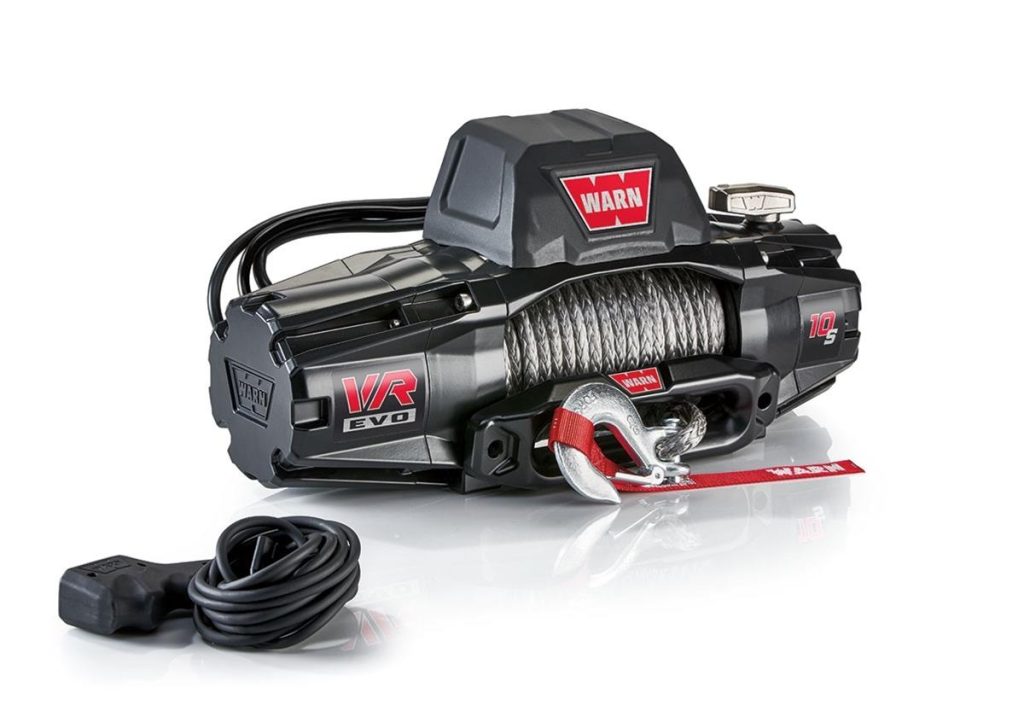
When a solo off roader encounters deep mud or a steep rocky incline, the process often begins by attaching the winch line to a secure anchor point such as a tree or large rock. As the winch slowly pulls the vehicle forward, the tires regain traction and the vehicle gradually moves out of the obstacle.
Because of its reliable pulling strength, durable construction, and user friendly design, the WARN VR EVO 10-S remains one of the most trusted winches for off road recovery situations.
2. ARB Recovery Snatch Strap
Not every off road recovery situation requires a winch. In many cases, the quickest way to free a stuck vehicle is by using a recovery strap designed to create momentum and pulling force. One of the most respected options in this category is the ARB Recovery Snatch Strap, a piece of gear widely trusted by off road enthusiasts who explore remote terrain.
A snatch strap works differently from a standard tow strap. Instead of remaining completely rigid, it is designed to stretch slightly under tension. That stretch stores kinetic energy during a recovery pull. When the strap contracts again, the stored energy helps pull the stuck vehicle forward with additional force.
This design can be extremely effective when a vehicle becomes trapped in mud, sand, or loose soil. The pulling vehicle gains momentum, the strap stretches as tension builds, and the stored energy then helps release the stuck vehicle from the terrain.
The process reduces the strain placed on both vehicles while improving the chances of a successful recovery.
ARB manufactures its snatch straps using heavy duty nylon webbing that provides both strength and elasticity. Many versions of the strap are rated to handle vehicles weighing several thousand kilograms, making them suitable for trucks, SUVs, and heavily equipped off road vehicles.
Even for drivers who often travel alone, carrying a snatch strap remains a wise decision. Off road trails frequently bring unexpected encounters with other drivers who may need assistance. Having a strong recovery strap allows a solo explorer to help another vehicle that becomes stuck, creating a cooperative environment on remote trails.
Another advantage of the ARB strap is its portability. Unlike a winch, which requires permanent installation on the vehicle, a snatch strap can be stored easily in a recovery bag or storage compartment. It takes up little space but provides enormous utility when a recovery situation arises.
Proper use of the strap is essential for safety. Both vehicles must attach the strap to designated recovery points that are engineered to handle heavy loads. Hooks or weak mounting points should never be used because they can fail under tension.
Many off roaders also place a dampening blanket or recovery damper over the strap during a pull to reduce movement if the strap releases.
Weather conditions often influence how frequently recovery straps are used. In sandy deserts, vehicles may become buried when tires lose traction. In muddy trails after heavy rain, the ground can trap even the most capable four wheel drive vehicles. A snatch strap provides a fast and effective method to overcome these challenges.
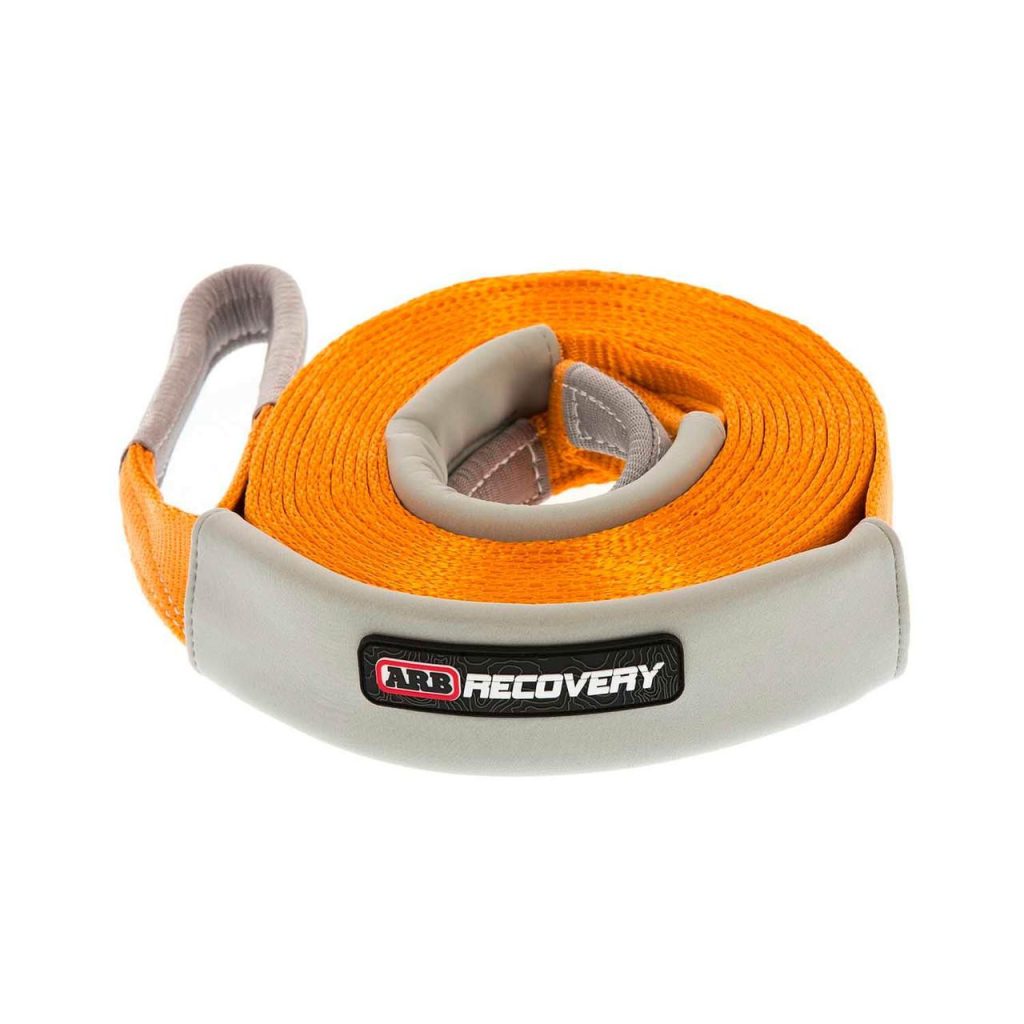
Another benefit is durability. ARB designs its recovery gear to withstand repeated exposure to dirt, water, and abrasive surfaces. After use, the strap can be cleaned and stored for future trips without losing its effectiveness.
Although it may appear simple compared with mechanical recovery tools, a high quality snatch strap is an essential part of any off road recovery kit.
The ARB Recovery Snatch Strap proves that a well designed piece of equipment can deliver reliable performance in some of the most challenging environments.
3. MAXTRAX MKII Traction Boards
Sometimes the most effective recovery tool is not one that pulls a vehicle out of trouble but one that helps the tires regain traction. Traction boards serve exactly this purpose.
Among the most widely respected options in the off road community are the MAXTRAX MKII traction boards, which have become a standard piece of recovery equipment for solo explorers.
When a vehicle becomes stuck, the problem often comes down to a loss of grip. Tires spin in mud, sand, or snow while the vehicle remains in the same position. The spinning motion digs the tires deeper, making the situation worse. Traction boards interrupt that cycle by creating a stable surface that allows the tires to climb out of the hole.
The MAXTRAX MKII boards are constructed from a durable reinforced nylon material that is designed to handle significant vehicle weight. Their surfaces feature a pattern of raised lugs that grip the tire tread. Once placed under the wheels, the boards give the tires something solid to push against.
The recovery process using traction boards is straightforward. A driver first clears loose material from around the tires, particularly from the front of the wheels that will drive the vehicle forward. The traction boards are then placed firmly under the tires at an angle that allows the vehicle to climb onto them.
Once the boards are positioned, the driver applies gentle throttle. Instead of spinning in loose terrain, the tires grip the textured surface of the boards and begin to climb upward. As the vehicle moves forward, the boards support the tires until the vehicle reaches solid ground again.
For solo off roaders, traction boards offer several important advantages. They require no external anchor point and no second vehicle to assist with recovery. This makes them particularly useful in remote areas where trees or rocks suitable for winching may not be available.
Another benefit lies in their versatility. MAXTRAX boards can be used in sand dunes, muddy trails, snowy mountain roads, and rocky terrain. The boards are also lightweight enough to carry easily on a roof rack or inside a vehicle.
Durability is a key factor in their popularity. The reinforced nylon construction allows the boards to flex slightly under pressure without breaking. This flexibility helps distribute the vehicle’s weight across the board, preventing damage during use.
The boards also include built in handles and mounting points that make storage and transportation simple. Many off road vehicles carry them externally on roof racks where they remain accessible during emergencies.
Another practical feature involves the ability to use traction boards as tools for terrain shaping. In some cases, drivers use them to fill deep ruts or create a ramp that helps the vehicle climb over rocks or ledges.
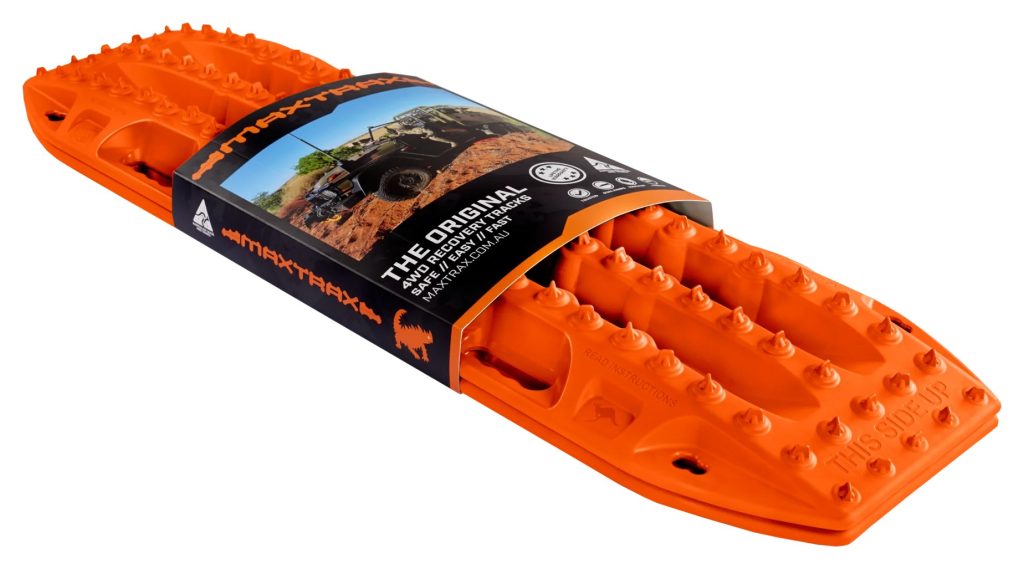
Because traction boards rely on tire grip rather than pulling force, they often provide a quicker recovery method than winching. The driver can deploy them within minutes and continue driving without needing complex equipment.
MAXTRAX MKII traction boards demonstrate how a relatively simple design can solve one of the most common problems encountered during off road travel. For drivers exploring remote trails alone, these boards provide a reliable way to regain traction and continue the journey.
4. Hi Lift Jack Recovery Tool
Among traditional off road recovery tools, the Hi Lift Jack holds a unique position because it serves multiple purposes beyond simple lifting.
While many drivers initially think of it as a jack for changing tires, experienced off roaders understand that it can also function as a powerful recovery device when a vehicle becomes stuck in difficult terrain.
Unlike conventional bottle jacks or scissor jacks, the Hi Lift Jack is built with a tall steel beam and a climbing mechanism that allows it to raise a vehicle much higher than most standard jacks. This height capability becomes extremely valuable when wheels are buried deep in mud, sand, or snow.
When a vehicle becomes trapped, one of the first steps in recovery may involve lifting the vehicle enough to place traction aids underneath the tires. The Hi Lift Jack allows the driver to raise the vehicle high enough to insert traction boards, rocks, or other materials that can help the tires regain grip.
The tool can also be used for pushing or pulling operations in recovery situations. By attaching chains or straps to the jack, drivers can create a manual winching effect that slowly moves the vehicle in the desired direction. This capability can be extremely helpful when a powered winch is not available.
Solo off roaders often value equipment that performs multiple functions, and the Hi Lift Jack fits this requirement well. It can assist with tire changes, vehicle lifting, manual recovery pulls, and even minor trail repairs when certain components need to be repositioned.
The construction of the Hi Lift Jack emphasizes durability. Made primarily from heavy duty steel, it is designed to withstand the harsh conditions encountered during off road travel.
Dirt, mud, and water exposure are common in recovery situations, and the jack’s simple mechanical design allows it to keep functioning in environments where more delicate equipment might struggle.
However, using a Hi Lift Jack requires proper technique and caution. Because it lifts vehicles from high points such as bumpers or rock sliders, the vehicle can become unstable if the ground is uneven.
Experienced off roaders often carry a jack base plate that spreads the load across a larger surface area, preventing the jack from sinking into soft terrain.
Another important safety practice involves maintaining a stable stance while operating the jack handle. The handle stores significant energy during lifting, and controlled movements are necessary to avoid sudden release.
Storage is another aspect to consider when carrying a Hi Lift Jack. The long steel beam means the tool is often mounted externally on roof racks, rear bumpers, or cargo racks. Proper mounting brackets keep the jack secure while driving over rough trails.
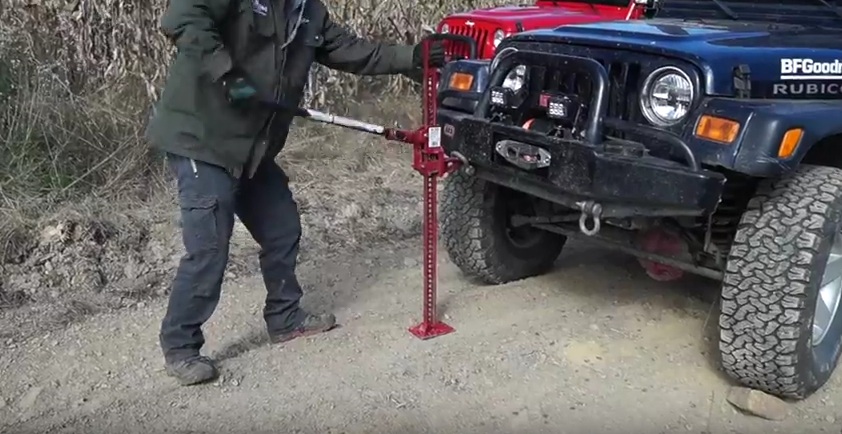
Despite the introduction of many modern recovery tools, the Hi Lift Jack remains a staple in the equipment kits of experienced off road drivers. Its versatility and mechanical simplicity allow it to solve several types of recovery problems using a single piece of gear.
For solo adventurers traveling through remote terrain, having a tool that can lift, pull, and stabilize a vehicle can make a significant difference during a recovery situation.
5. Bubba Rope Kinetic Recovery Rope
Among modern off road recovery tools, kinetic recovery ropes have gained enormous popularity because of their ability to generate powerful pulling force without the harsh shock loads that can damage vehicles.
One of the most widely recognized options in this category is the Bubba Rope kinetic recovery rope, a tool specifically engineered to help free stuck vehicles using controlled energy transfer.
A kinetic rope works on a principle that is different from a traditional tow strap. Instead of remaining rigid, the rope stretches significantly when tension is applied.
This stretch allows the rope to store kinetic energy as the recovery vehicle begins moving forward. As the rope contracts, the stored energy is transferred into a strong pulling motion that helps release the stuck vehicle.
This controlled energy transfer is particularly useful when dealing with terrain such as mud, sand, or snow. In these environments, a stuck vehicle often requires a sudden burst of pulling force to break free from the surrounding material.
The kinetic rope provides that force while reducing the abrupt stress that rigid straps can place on recovery points and vehicle frames.
The Bubba Rope is constructed from double braided nylon fibers that provide both strength and flexibility. Nylon is chosen because it can stretch under load without permanently deforming, allowing the rope to return to its original shape after use. This elasticity is what enables the rope to perform its energy storing function effectively.
Strength ratings for Bubba Rope products vary depending on the size of the rope, but many models are designed to handle the weight of large trucks and sport utility vehicles. This makes them suitable for a wide range of off road vehicles, from smaller trail rigs to heavily modified expedition trucks.
Another advantage of the kinetic rope is its smooth performance during recovery operations. Traditional tow straps often create sudden jerks that can place intense strain on vehicle components.
In contrast, the elasticity of the rope distributes the pulling force more gradually, helping protect recovery points, frames, and suspension components.
For off roaders who travel alone, a kinetic rope still holds value even though it requires a second vehicle for its primary use. Remote trails often bring drivers into contact with other off road enthusiasts who may also encounter difficult terrain.
Having a kinetic rope available allows a solo explorer to either assist another driver or receive assistance when necessary.
Handling and storage also contribute to the rope’s practicality. The braided nylon construction remains relatively lightweight compared with steel chains or heavy towing equipment. The rope can be coiled easily and stored in a recovery bag without occupying significant space inside the vehicle.
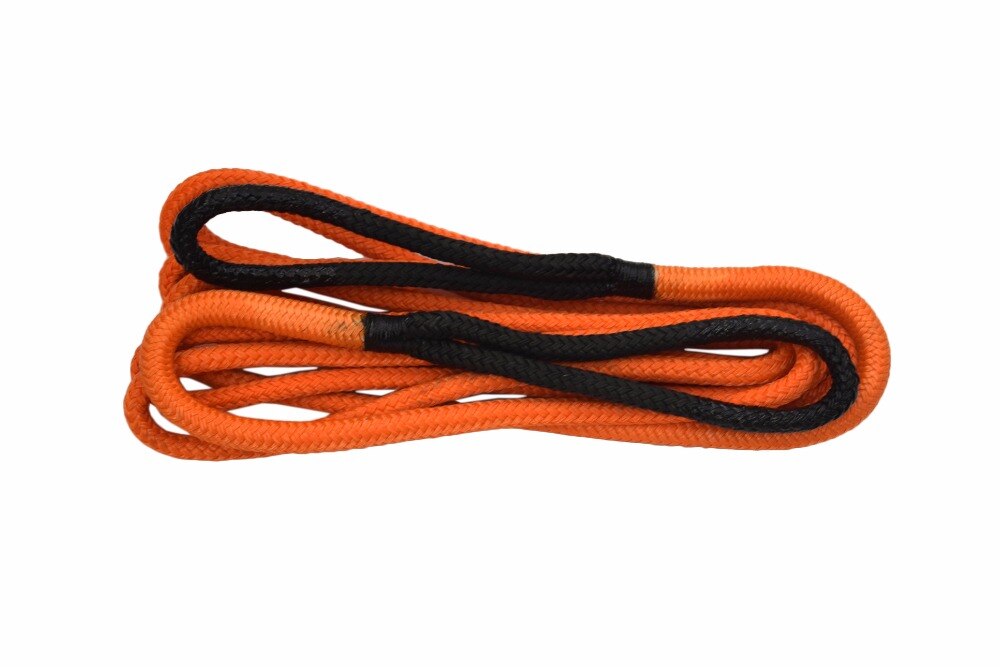
Proper usage remains essential for safety. Both vehicles must attach the rope to designated recovery points that are specifically designed to handle heavy loads. Shackles and recovery mounts are commonly used to create secure connections between the rope and the vehicles involved in the recovery.
Environmental conditions often influence how frequently a kinetic rope is used. Deep mud after heavy rain or soft sand in desert environments frequently traps vehicles that lose traction. In these situations, the rope’s ability to create a powerful but controlled pulling motion can free a vehicle quickly.
The Bubba Rope kinetic recovery rope demonstrates how modern materials and thoughtful design can improve the effectiveness of off road recovery equipment. For drivers who venture into remote terrain, it provides a powerful recovery option that complements winches, traction boards, and other essential tools.
Solo off roading offers incredible opportunities to explore remote landscapes, but it also requires careful preparation. When a vehicle becomes stuck far from assistance, the right recovery equipment becomes essential for continuing the journey safely.
Carrying a well planned set of recovery tools allows drivers to handle unexpected challenges without relying on outside help.
The equipment discussed in this article represents some of the most effective recovery solutions used by experienced off road enthusiasts.
Winches such as the WARN VR EVO 10 S provide strong pulling power that allows a vehicle to extract itself from difficult terrain. Recovery straps and kinetic ropes add additional pulling capability when another vehicle is available to assist.
Traction boards such as the MAXTRAX MKII offer a different approach by restoring tire grip instead of relying on pulling force. In many cases, they allow a vehicle to drive out of obstacles within minutes. Meanwhile, versatile tools like the Hi Lift Jack provide multiple recovery functions including lifting, pushing, and stabilizing vehicles.
Each piece of gear serves a unique purpose, but together they form a comprehensive recovery kit capable of addressing a wide variety of off road situations. Mud, sand, snow, and rocky terrain all present different challenges, and having several recovery options ensures that drivers can adapt to changing conditions.
For solo adventurers, preparation is the key to safe exploration. Reliable recovery gear not only protects the vehicle but also gives drivers the confidence to show more remote trails knowing they have the tools needed to overcome obstacles along the way.
Also Read: 8 Ways to Add Modern Safety Features to a Classic Without Ruining It
