
Car culture constantly evolves, and every generation finds its own definition of performance. In the 1960s and early 1970s, American muscle cars dominated the performance scene.
Large displacement V8 engines, aggressive styling, and straight line speed made them icons of automotive history. For decades, these machines represented the ultimate expression of accessible performance.
However, the modern enthusiast world has begun shifting its attention toward a different era. Cars produced in Japan during the 1990s are increasingly gaining the same cultural status that classic muscle cars once held.
These vehicles combine performance potential, mechanical durability, and strong enthusiast communities that continue to grow every year.
Unlike traditional muscle cars that relied heavily on big engines, many 1990s Japanese performance cars used smaller turbocharged engines, advanced engineering, and lightweight construction.
This approach allowed them to deliver impressive power while maintaining balance and reliability. As a result, many of these cars have proven capable of producing enormous performance gains with relatively simple modifications.
Another factor driving this shift is accessibility. Just as young enthusiasts in the past could buy affordable muscle cars and modify them, the same phenomenon is now happening with Japanese vehicles from the 1990s. These cars offer strong tuning potential, distinctive styling, and a deep connection to motorsport culture.
Their influence also extends beyond performance numbers. Many of these vehicles became icons through racing games, movies, and grassroots car communities. As the generation that grew up around these influences becomes older, the demand for these cars continues to rise.
Because of these factors, 1990s Japanese performance cars are increasingly being compared to the muscle cars of previous generations. The following reasons explain why these machines have earned a reputation as the modern equivalents of classic muscle cars.
Also Read: Top 10 Mechanical Sounds That Indicate a Serious Problem
1. Toyota Supra MK4 Shows the Power of Tuning Potential
When discussing the rise of 1990s Japanese performance cars, the Toyota Supra MK4 frequently appears at the center of the conversation. Introduced in 1993, the Supra represented a major achievement in engineering and performance design.
What truly elevated its status over time, however, was the incredible tuning potential hidden within its drivetrain.
At the heart of the Supra MK4 lies the legendary 2JZ GTE engine. This inline six engine quickly became known among enthusiasts for its extremely strong internal components. Forged internals, a robust iron block, and carefully engineered turbocharging allowed the engine to handle far more power than its original factory rating suggested.
Because of this durability, tuners discovered that the engine could reliably produce enormous horsepower with relatively modest modifications. Upgraded turbochargers, improved fuel systems, and proper engine tuning allowed many owners to double or even triple the original power output without sacrificing reliability.
This kind of performance potential closely mirrors the role that classic American muscle cars once played. Enthusiasts in the 1960s often purchased powerful V8 cars and modified them for even greater performance. Similarly, the Supra MK4 became a platform that encouraged experimentation and customization.
The car’s balanced rear wheel drive layout also contributes to its reputation. With strong acceleration and excellent traction, the Supra performs well both in straight line racing and high speed highway driving. These characteristics reinforce its image as a modern muscle car alternative.
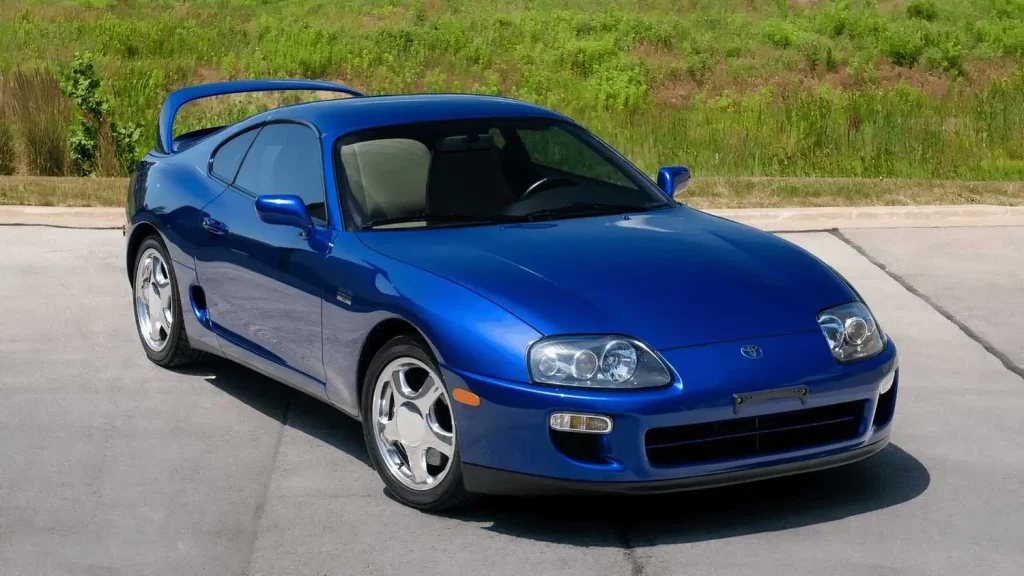
Cultural influence also played a major role in building the Supra’s reputation. Appearances in racing games, movies, and automotive media introduced the car to a global audience. Over time, this exposure helped transform it from a high performance sports car into a true icon.
Today, the Supra MK4 represents more than just a fast vehicle. It symbolizes the tuning culture that defines many 1990s Japanese performance cars.
Its ability to deliver massive power gains while remaining mechanically durable explains why enthusiasts often compare it to the legendary muscle cars of the past.
2. Nissan Skyline GT R R34 Proves Technology Can Create a Performance Icon
A different path to muscle car status appeared in the late 1990s through the Nissan Skyline GT R R34. Instead of relying on engine size alone, this car demonstrated how advanced engineering could produce performance that rivaled or surpassed traditional high horsepower machines.
The Skyline GT R lineage had already established a reputation in motorsports long before the R34 arrived. Earlier generations dominated racing championships in Japan, earning the nickname “Godzilla” for their overwhelming performance.
By the time the R34 version appeared in 1999, the platform had evolved into one of the most technologically advanced performance cars of its time.
At the center of the R34’s capabilities sits the RB26DETT engine. This twin turbocharged inline six engine was designed with strength and durability as key priorities. Like the famous 2JZ engine found in the Supra, the RB26 quickly gained a reputation for handling far more power than its official factory rating suggested.
However, the Skyline’s appeal extended beyond raw engine strength. Nissan equipped the R34 with the ATTESA E TS all wheel drive system, a sophisticated drivetrain that constantly adjusted power distribution between the front and rear wheels. This allowed the car to deliver strong acceleration while maintaining impressive stability and traction.
The car also introduced a multifunction display that provided drivers with real time performance data such as boost pressure, throttle input, and lap timing information. At the time, this level of driver feedback felt futuristic and reinforced the Skyline’s image as a technologically advanced performance machine.
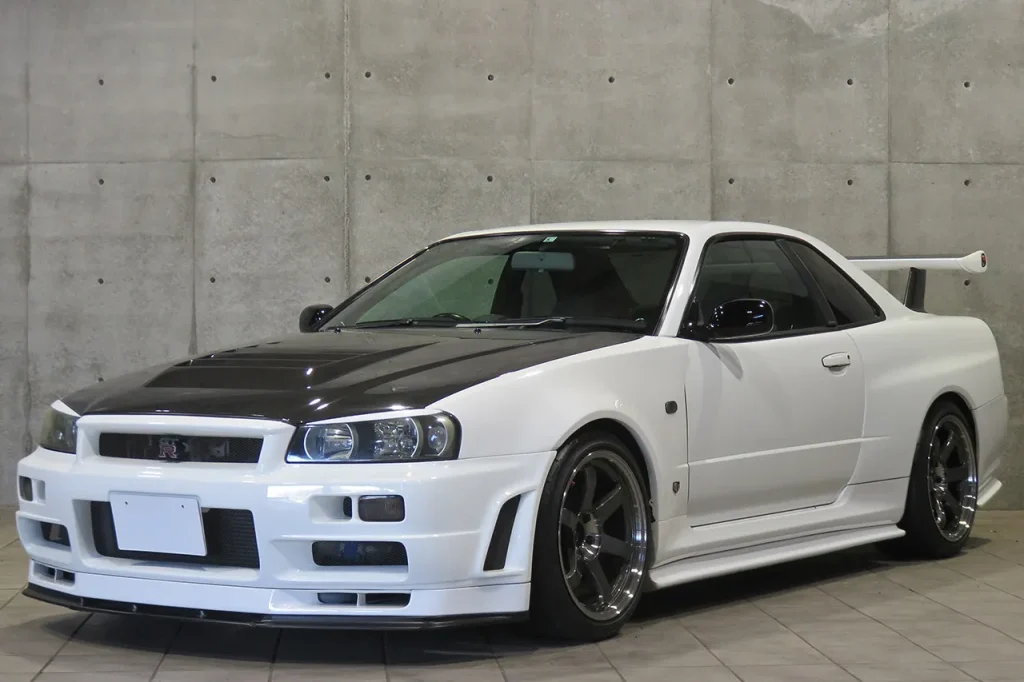
In terms of cultural impact, the R34 quickly became one of the most recognizable Japanese performance cars ever produced. Its aggressive styling, motorsport heritage, and presence in video games and films turned it into a dream car for an entire generation of enthusiasts.
Just like classic muscle cars once symbolized accessible performance for young drivers, the Skyline GT R R34 came to represent the peak of Japanese performance engineering.
Its combination of strong tuning potential, advanced technology, and racing pedigree helped establish 1990s Japanese cars as the modern equivalent of the muscle car era.
3. Mazda RX7 FD Demonstrates the Importance of Lightweight Performance
Not every performance legend depends on massive horsepower figures. Some cars achieve their reputation by focusing on balance, precision, and driving engagement.
The Mazda RX7 FD, introduced in the early 1990s, perfectly illustrates how a lightweight design philosophy can create a machine that earns the same admiration once reserved for classic muscle cars.
Mazda chose a very different engineering path for the RX7. Instead of using a conventional piston engine, the company developed a twin turbocharged rotary engine known as the 13B REW. This compact powerplant allowed the car to maintain an extremely low weight and an ideal weight distribution across the chassis.
Because the engine is physically smaller than most traditional engines, engineers were able to mount it lower and farther back in the chassis. This placement improved the car’s center of gravity and helped deliver exceptional handling balance. The result is a sports car that feels incredibly responsive to driver input.
When enthusiasts describe the RX7 driving experience, they often highlight the way the car communicates through its steering and suspension. The lightweight body structure and carefully tuned suspension allow drivers to feel connected to the road in a way that many modern cars struggle to replicate.
Another factor that contributes to the RX7’s muscle car comparison is its strong tuning culture. While the rotary engine operates differently from traditional engines, it offers significant performance potential when modified properly.
Upgraded turbochargers, improved cooling systems, and careful engine tuning can transform the RX7 into an extremely fast machine.
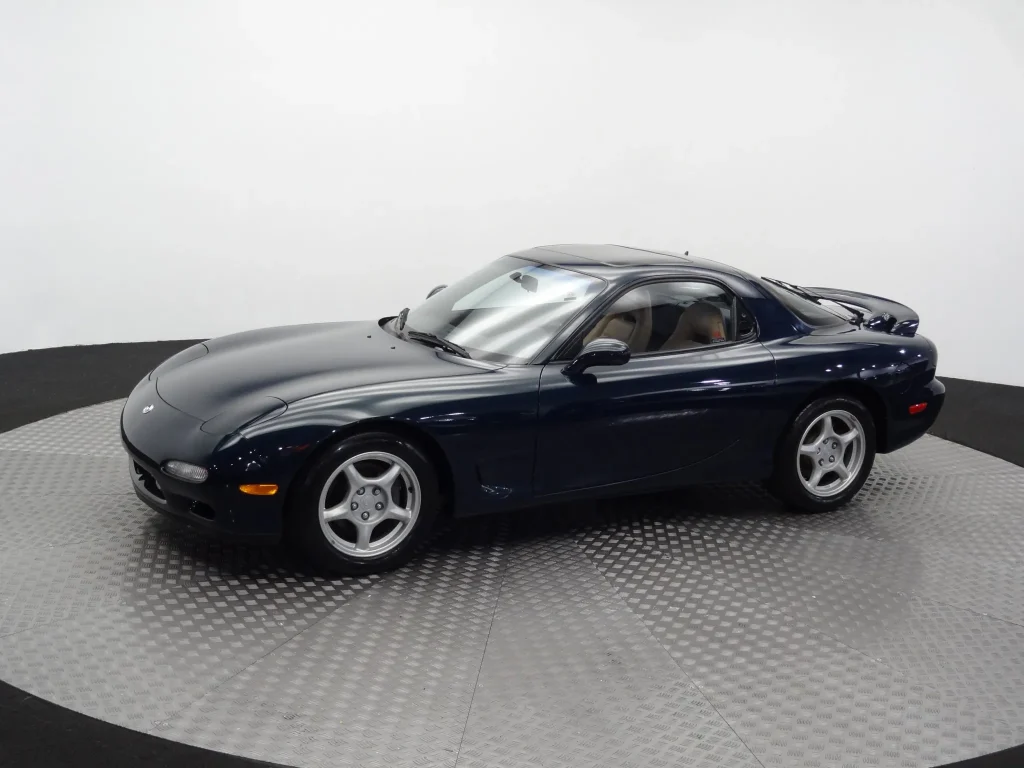
Visually, the RX7 also captures attention with its smooth aerodynamic design and distinctive pop up headlights. The shape reflects a time when sports cars focused on clean lines and purposeful styling rather than aggressive visual excess.
Because of its unique engine design, balanced chassis, and strong enthusiast following, the RX7 FD became one of the most respected Japanese performance cars ever built.
It represents the idea that performance does not always require brute force. Sometimes precision engineering and lightweight design create a machine that leaves an even stronger impression on drivers.
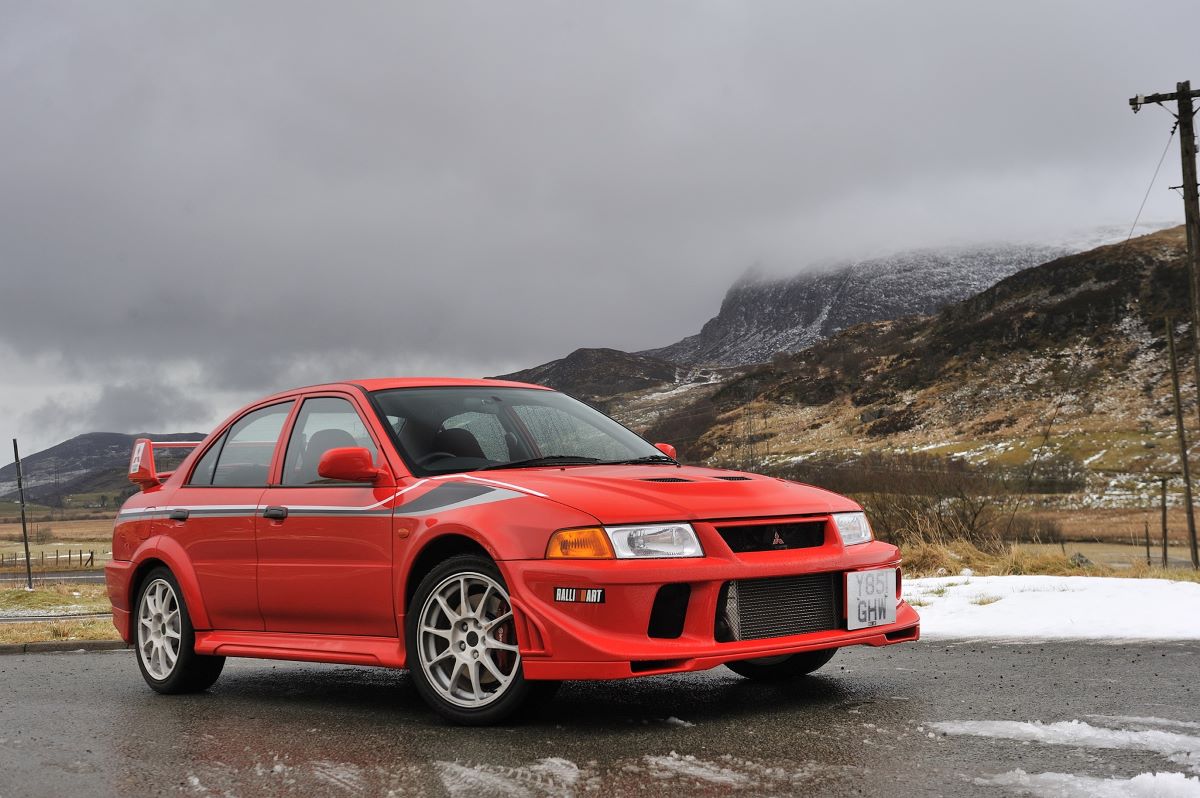
4. Mitsubishi Lancer Evolution VI Built Its Reputation Through Motorsport Dominance
One of the most important elements that once defined American muscle cars was their connection to racing.
Victories on the track translated directly into excitement on the street. During the 1990s, Japanese manufacturers achieved a similar effect through rally competition, and the Mitsubishi Lancer Evolution VI stands as one of the strongest examples.
This car did not become legendary simply because of styling or horsepower numbers. Its reputation was built through real performance in the World Rally Championship.
Mitsubishi designed the Evolution series specifically to compete at the highest levels of rally racing, which meant the production version inherited many features intended for demanding conditions.
Under the hood sits the turbocharged 4G63 engine, an engine that became famous among enthusiasts for both strength and tuning flexibility. The powerplant was engineered to deliver strong acceleration while remaining capable of handling significant performance upgrades.
Owners quickly discovered that the engine could support far higher power levels when properly modified.
The drivetrain also plays a major role in the Evolution’s identity. Mitsubishi equipped the car with an advanced all wheel drive system designed to maximize traction on unpredictable surfaces. Whether driving on gravel, wet roads, or pavement, the system helps the car deliver power efficiently and maintain stability.
Inside the car, the focus remains on driver engagement rather than luxury. Supportive sport seats, a driver oriented layout, and straightforward instrumentation reflect the car’s motorsport roots. Every element exists to support performance rather than unnecessary complexity.

This direct connection between competition and road car engineering mirrors the way classic muscle cars once gained credibility through drag racing and stock car competition. Enthusiasts admire vehicles that prove themselves under real performance conditions.
Because of its rally heritage, strong engine design, and unmistakable character, the Lancer Evolution VI helped reinforce the idea that 1990s Japanese performance cars could serve as the modern equivalent of muscle cars.
It showed that racing success could create the same lasting influence that defined earlier American performance legends.
5. Acura NSX Changed the Way Performance Cars Were Engineered
Some performance cars earn respect through raw power, while others transform the way manufacturers approach engineering. The Acura NSX belongs firmly in the second category.
When it appeared in 1990, the car challenged traditional ideas about exotic performance vehicles and demonstrated that precision engineering could create a new type of performance icon.
Before the NSX arrived, many high performance sports cars were powerful but difficult to live with. They often suffered from reliability problems, uncomfortable interiors, and complicated maintenance requirements. Acura decided to take a different direction by building a supercar that combined performance with everyday usability.
The NSX introduced an aluminum body structure that significantly reduced weight while maintaining impressive strength.
At the time, this approach was extremely rare for production vehicles. The lightweight structure allowed the car to achieve excellent handling balance and quick acceleration without relying on enormous engine displacement.
Power came from a high revving V6 engine equipped with Honda’s advanced variable valve timing system. Instead of focusing on brute force, engineers prioritized responsiveness and smooth power delivery.
Drivers experienced strong acceleration along with a level of control that many exotic cars of the era could not match.
Another defining feature of the NSX was the involvement of Formula One driver Ayrton Senna during development. His feedback helped engineers refine the suspension and chassis characteristics to create a car that felt precise and confidence inspiring at high speeds.
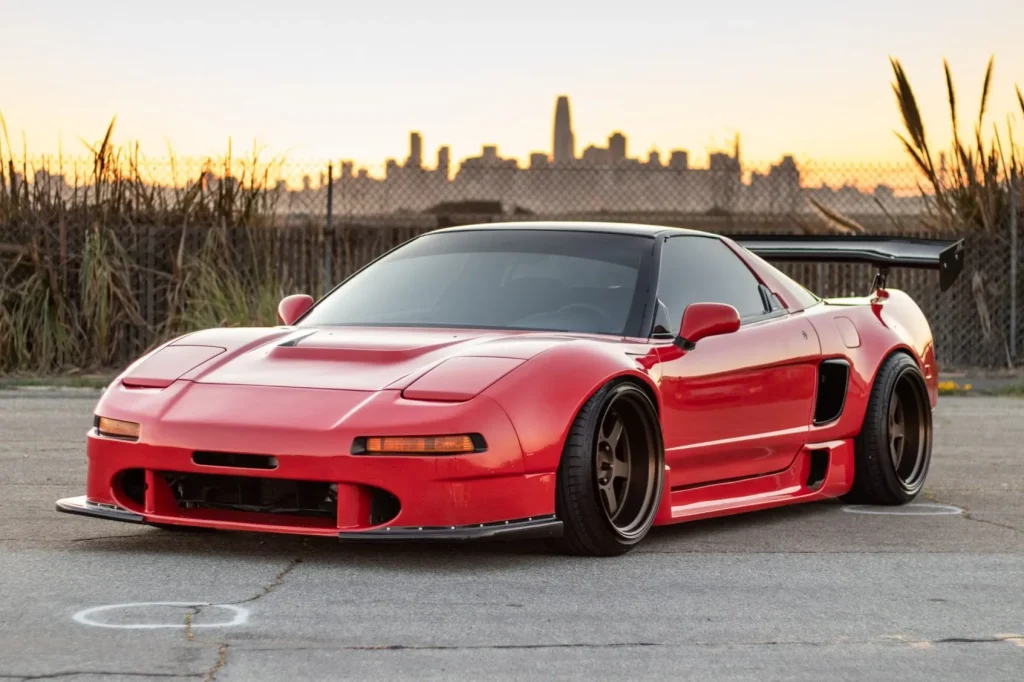
The influence of the NSX reached far beyond its production numbers. Many automakers began reevaluating their performance car designs after seeing how effectively Acura combined speed, reliability, and usability.
In the same way that certain muscle cars once forced competitors to rethink performance engineering, the NSX reshaped expectations for high performance vehicles.
Its impact on the automotive industry helped strengthen the argument that 1990s Japanese performance cars represent a new generation of muscle car legends.
6. Nissan 300ZX Twin Turbo Showed That Everyday Sports Cars Could Deliver Serious Power
During the 1990s, Nissan pursued a clear objective with the 300ZX. The company wanted to create a sports car that blended aggressive performance with refined engineering and daily usability. The result was the 300ZX Twin Turbo, a machine that quickly gained respect among enthusiasts for its balance of speed, technology, and durability.
Unlike many earlier sports cars that relied on simple mechanical setups, the 300ZX introduced a number of advanced features for its time. Beneath the hood sits the VG30DETT engine, a twin turbocharged V6 that delivered impressive power while maintaining smooth operation.
This engine produced strong acceleration without requiring the large displacement engines traditionally associated with muscle cars.
The real appeal of the 300ZX lies in the way its engineering works together as a complete package. The car features a carefully designed suspension system that helps maintain stability during high speed driving. Combined with precise steering and a well balanced chassis, the result is a sports car that feels confident and composed on the road.
Owners also discovered that the VG30DETT engine responded well to performance modifications. Upgraded turbochargers, improved intake systems, and better engine management could significantly increase power output.
This tuning potential helped the 300ZX become a favorite platform among enthusiasts who enjoyed building high performance street cars.
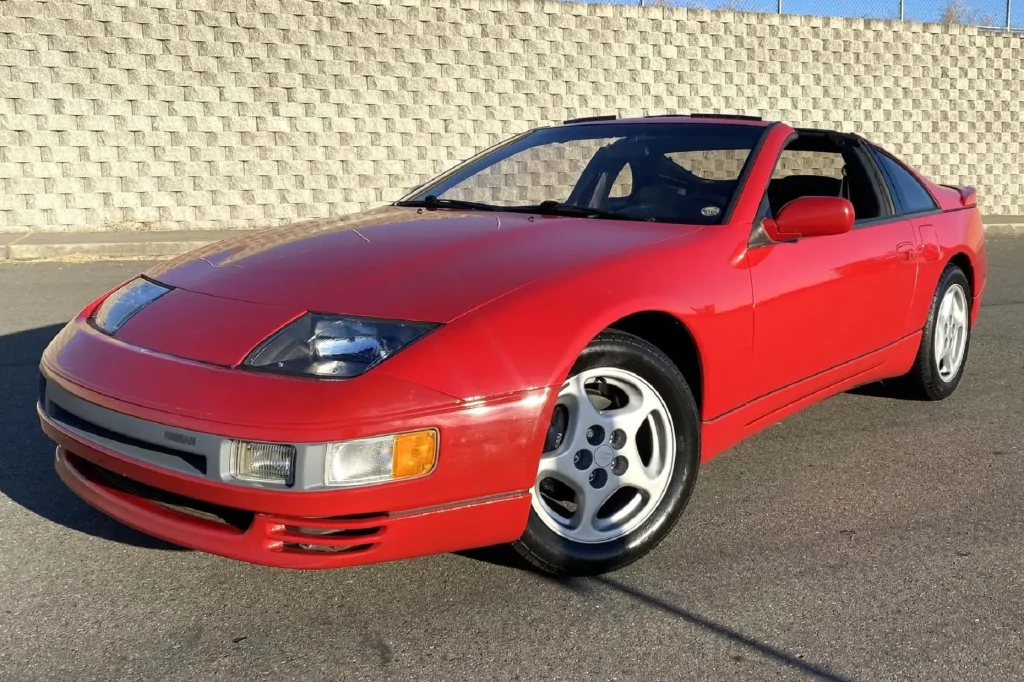
Design also played a role in the car’s popularity. The smooth aerodynamic shape, low stance, and wide body proportions gave the 300ZX a distinctive appearance that still looks modern decades later. Its styling communicates performance without relying on excessive visual aggression.
Much like traditional muscle cars that delivered accessible performance for everyday drivers, the 300ZX Twin Turbo proved that a well engineered sports car could combine practicality with serious speed.
It helped demonstrate that 1990s Japanese performance vehicles were capable of redefining the meaning of automotive muscle.
7. Subaru Impreza WRX STI Turned Rally Engineering Into Street Performance
A different type of performance icon emerged from Subaru during the 1990s. The Impreza WRX STI did not rely on massive engines or exotic materials. Instead, it became legendary because it translated rally car engineering directly into a production vehicle that ordinary drivers could own.
At the center of the WRX STI sits Subaru’s turbocharged boxer engine. The horizontally opposed layout lowers the engine’s center of gravity, which improves stability and handling. Combined with turbocharging, the engine delivers strong acceleration while maintaining a unique mechanical character that enthusiasts quickly recognize.
However, the engine alone does not define the WRX STI experience. The car’s symmetrical all wheel drive system plays an equally important role. This drivetrain distributes power to all four wheels, allowing the car to maintain traction on a variety of surfaces including rain soaked roads and gravel.
Drivers often describe the WRX STI as a car that encourages confidence. The combination of turbocharged power and strong traction allows the vehicle to accelerate aggressively while maintaining control. This capability mirrors the excitement that muscle cars once delivered through raw acceleration.
The visual identity of the WRX STI also helped build its reputation. Features such as hood scoops, large rear wings, and rally inspired bodywork communicate the car’s performance intentions immediately. Unlike subtle sports cars, the WRX STI proudly displays its motorsport influence.

Equally important is the passionate community that formed around these cars. Enthusiasts gather for rallies, track events, and modification projects that celebrate the car’s performance potential. This culture keeps the WRX STI relevant long after its original release.
By combining rally heritage, turbocharged power, and a loyal enthusiast following, the WRX STI helped cement the status of 1990s Japanese performance cars as the modern successors to the muscle cars of earlier decades.
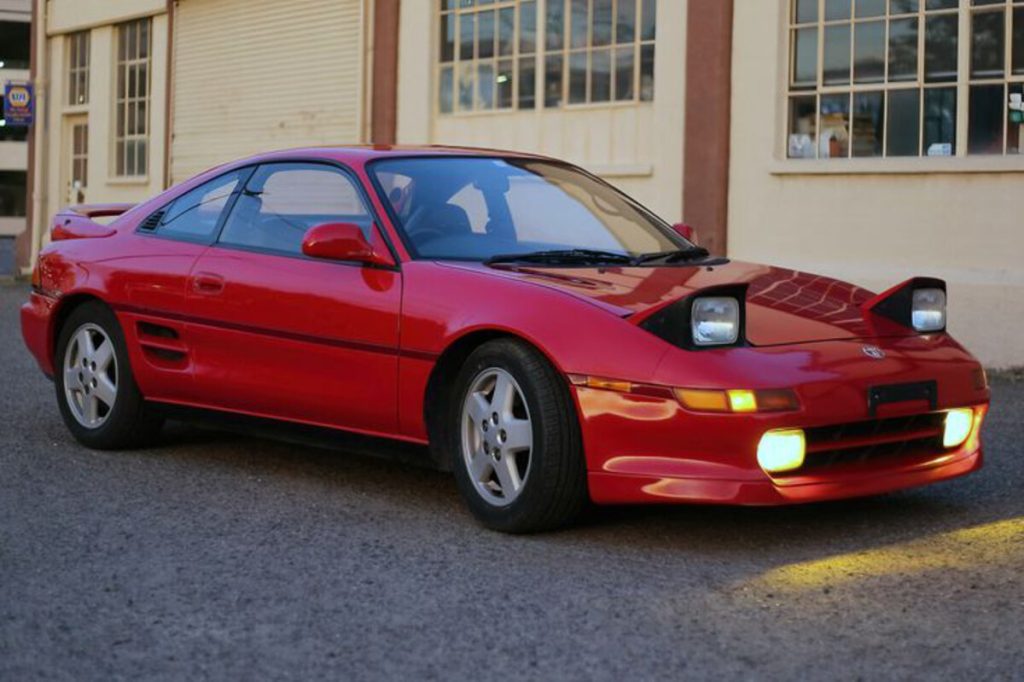
8. Toyota MR2 Turbo Proved That Affordable Mid Engine Performance Could Reach the Streets
While many performance legends rely on large engines or heavy modification culture, the Toyota MR2 Turbo demonstrated that intelligent engineering could deliver thrilling performance in a compact and accessible package.
Introduced in the early 1990s, the second generation MR2 brought mid engine sports car dynamics to drivers who could never afford exotic supercars.
The most defining aspect of the MR2 Turbo is its mid engine layout. Unlike traditional front engine vehicles, the MR2 places the engine directly behind the driver but ahead of the rear axle.
This design dramatically changes how the car behaves on the road. Weight distribution becomes more balanced, allowing the car to corner with impressive precision.
Toyota paired this layout with a turbocharged 2.0 liter four cylinder engine known as the 3S GTE. The engine delivered strong acceleration while maintaining the durability that Toyota powertrains were known for. Even in factory form the MR2 Turbo offered performance that could challenge many larger sports cars.
Drivers often remember the MR2 for the way it feels during spirited driving. The steering responds quickly, the chassis remains composed through corners, and the turbocharged engine provides a satisfying surge of power. This combination gives the car a personality that feels both engaging and rewarding.
The MR2 also captured attention because it made exotic style more accessible. Its low stance, wide body shape, and aggressive air intakes gave it a visual presence similar to much more expensive European sports cars. For many enthusiasts, the MR2 represented the closest experience to owning a mid engine supercar without the extreme price tag.
Tuning culture further strengthened the MR2’s reputation. Owners discovered that the turbocharged engine responded well to upgrades such as improved intercoolers, stronger fuel systems, and performance exhaust components. These modifications allowed the car to achieve impressive power gains while maintaining reliability.
By offering mid engine balance, turbocharged performance, and a strong enthusiast following, the Toyota MR2 Turbo helped define what made 1990s Japanese performance cars so exciting. It showed that innovation and smart engineering could deliver the same thrill that muscle cars once provided.
The growing popularity of 1990s Japanese performance cars has reshaped modern car culture in a way that closely mirrors the impact American muscle cars had decades earlier.
In the past, muscle cars became legendary because they offered powerful engines, strong aftermarket support, and the freedom for enthusiasts to modify and personalize their vehicles. Today, many cars from Japan’s golden performance era are fulfilling that same role for a new generation of drivers.
One of the main reasons these vehicles have earned such a strong reputation is their remarkable tuning potential. Cars like the Toyota Supra MK4 and the Nissan Skyline GT R quickly became known for engines that could handle massive increases in power.
Their turbocharged inline six engines were engineered with durability in mind, allowing enthusiasts to push performance far beyond factory specifications without sacrificing reliability.
This ability to produce extraordinary horsepower echoes the spirit of classic muscle cars that were often modified for drag racing and street performance.
However, raw power is only part of the story. Many Japanese performance cars from the 1990s emphasized balance, precision, and advanced engineering.
The Mazda RX7 FD demonstrated how lightweight construction and a unique rotary engine could create an incredibly responsive driving experience.
Meanwhile, the Acura NSX changed expectations for performance vehicles by combining supercar level performance with everyday reliability and usability. These cars proved that speed could come from intelligent design rather than simply large engines.
Motorsport also played an important role in shaping the identity of these vehicles. Cars such as the Mitsubishi Lancer Evolution and the Subaru WRX STI developed strong reputations through rally competition.
Their success on challenging rally stages translated into street cars that offered exceptional traction, turbocharged power, and driver focused performance.
This racing connection helped build excitement among enthusiasts in the same way that drag racing and stock car competition once elevated American muscle cars.
Other models expanded the idea of what a performance car could be. The Nissan 300ZX Twin Turbo showed how advanced technology and refined engineering could produce serious speed while still maintaining comfort and practicality.
At the same time, the Toyota MR2 Turbo brought mid engine performance to an affordable price range, giving enthusiasts a chance to experience sports car dynamics usually found in exotic vehicles.
Another reason these cars have become modern icons is their cultural impact. Many enthusiasts were first introduced to them through racing games, movies, and global car communities.
As that generation grew older, interest in these vehicles increased dramatically. Owners began restoring, modifying, and preserving them, further strengthening their legendary status.
Together, these factors explain why 1990s Japanese performance cars are often described as the new muscle cars. They deliver strong performance, endless modification possibilities, and a passionate community of enthusiasts.
Just as muscle cars once defined an era of American automotive culture, these Japanese machines now represent a new generation of performance legends that continue to inspire drivers around the world.
Also Read: Top 8 Car Myths That Mechanics Wish You Would Stop Believing
