
Automotive nameplates carry more than just a model designation, they represent decades of history, engineering progress, and cultural recognition.
In the United States especially, certain vehicle names have become deeply embedded in the public consciousness. Even people who do not closely follow the automotive industry can recognize these models immediately.
Many of these nameplates originated in the mid-20th century and survived economic downturns, oil crises, and dramatic shifts in consumer demand.
Instead of disappearing, they evolved through redesigns, technological upgrades, and sometimes complete reinventions.
Some started as muscle cars and remained performance icons, while others built reputations for reliability or practicality. A few transitioned into entirely different vehicle categories while still retaining their historic identity.
What ties them together is the strength of their branding and the loyalty they built among generations of drivers.
The following ten vehicles represent some of the most recognizable vintage automotive nameplates that still exist today, continuing to connect the industry’s past with its modern innovations.
1. Ford Mustang
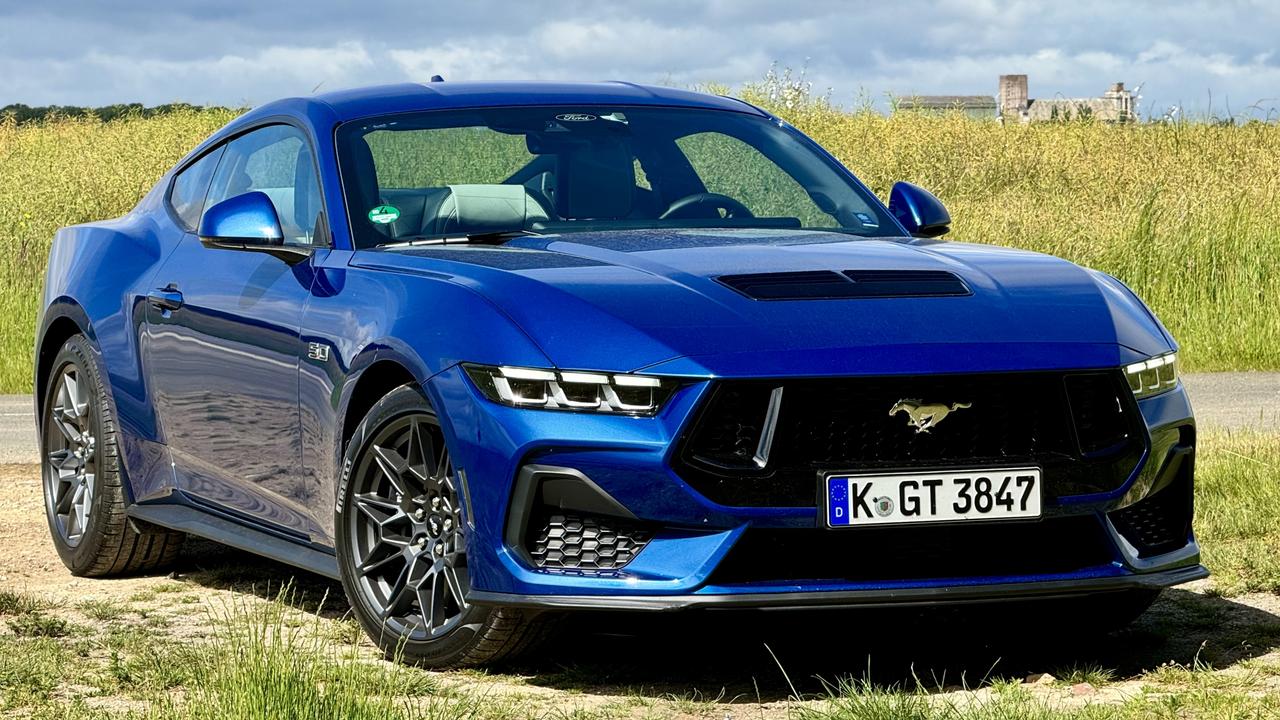
Few automotive nameplates have achieved the lasting cultural recognition of the Ford Mustang. First introduced in April 1964 by Ford Motor Company, the Mustang quickly transformed the American automotive landscape and established an entirely new market segment that came to be known as the “pony car.”
The original Mustang arrived during a period when automakers were trying to attract younger buyers who wanted sporty styling without the cost or impracticality of a full-size performance car.
The original Mustang arrived during a period when automakers were trying to attract younger buyers who wanted sporty styling without the costLee Iacocca, the development team created a vehicle that combined accessible pricing with eye-catching design and respectable performance. The formula proved instantly successful, with more than 400,000 units sold in its first year alone.
From an engineering perspective, the early Mustang was designed using proven mechanical components to keep production costs manageable while delivering reliable performance. The car employed a front-engine, rear-wheel-drive layout built on the compact platform that also underpinned the Ford Falcon.
Entry-level models were powered by an inline-six engine, offering dependable everyday usability, while more performance-focused variants featured Ford’s small-block V8 engines.
The widely available 289-cubic-inch V8 became one of the Mustang’s defining powerplants, delivering a balance of power, durability, and tuning potential that appealed to enthusiasts. Buyers could pair these engines with either manual or automatic transmissions, making the car accessible to both casual drivers and performance-minded owners.
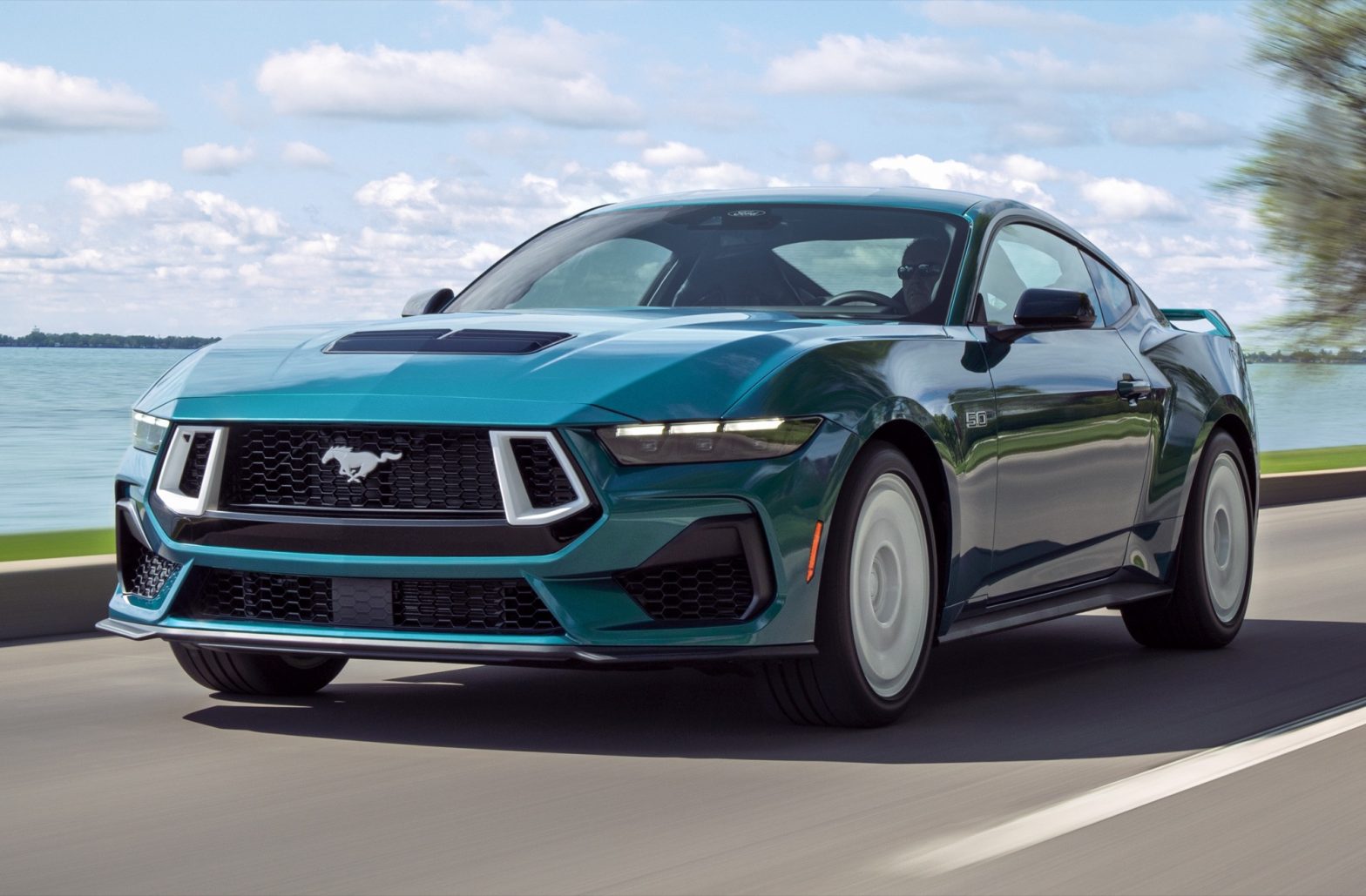
The Mustang’s design played an equally significant role in its enduring popularity. The long hood and short rear deck proportions created a profile that suggested performance even when the car was stationary.
Distinctive styling elements such as the galloping horse emblem in the grille, tri-bar taillights, and sculpted body lines helped establish a visual identity that was immediately recognizable. Inside, the cabin featured a driver-focused layout with bucket seats, a sporty instrument cluster, and optional floor-mounted shifters that reinforced the vehicle’s youthful and performance-oriented character.
2. Chevrolet Corvette
The Chevrolet Corvette represents America’s longest-running sports car legacy. First introduced in 1953, the Corvette began as a stylish roadster meant to compete with European sports cars entering the U.S. market.
Early models emphasized sleek design and open-top driving, but the Corvette quickly developed a reputation for serious performance as more powerful engines were introduced.
Throughout its generations, the Corvette has consistently pushed the boundaries of American sports car engineering.
Few American automobiles carry a legacy as enduring and instantly recognizable as the Chevrolet Corvette. First introduced in 1953 by General Motors under its Chevrolet division, the Corvette was conceived as the United States’ answer to the lightweight European sports cars that were gaining popularity among returning servicemen after World War II.
Early development was overseen by GM design chief Harley Earl, whose team sought to create a stylish, performance-oriented roadster that could capture the imagination of American drivers. The result was a two-seat sports car that would evolve over the decades into a global performance icon while retaining its original identity.
The Corvette’s engineering philosophy has consistently centered on delivering strong performance through a front-engine, rear-wheel-drive layout for most of its history.
Early models were powered by an inline-six engine paired with a two-speed automatic transmission, but the car’s performance potential truly emerged when Chevrolet introduced its small-block V8 engines beginning in the mid-1950s. These compact yet powerful V8 configurations became the backbone of Corvette performance for generations, delivering substantial horsepower while maintaining relatively lightweight packaging.
Over time, the Corvette’s powertrains evolved to include increasingly sophisticated V8 engines with larger displacement, improved fuel delivery systems, and advanced performance tuning. Manual transmissions became popular among enthusiasts, providing a direct mechanical connection between driver and machine that reinforced the Corvette’s reputation as a serious sports car.
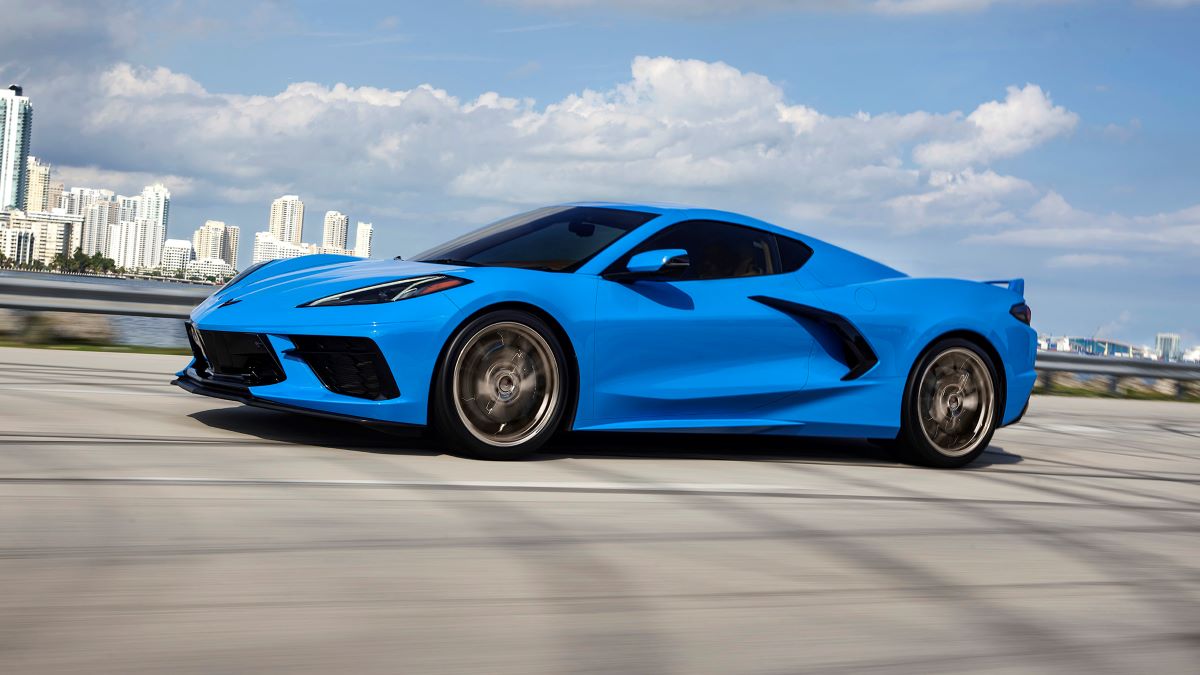
Design has always played a central role in the Corvette’s identity. From the original 1953 roadster to later generations such as the dramatic Chevrolet Corvette Sting Ray, each version has introduced distinctive styling elements while preserving the low-slung proportions expected from a performance coupe.
Sculpted bodywork, long hood proportions, and aggressive stance have remained defining characteristics. The Corvette also pioneered the use of fiberglass body panels in production cars, allowing designers greater flexibility in shaping aerodynamic forms while reducing overall weight.
Historically, the Corvette holds a unique place in American automotive culture as the country’s longest continuously produced sports car nameplate.
Over multiple generations, the model has served as both a technological showcase and a symbol of accessible American performance. Corvette variants have also achieved success in international endurance racing, strengthening the brand’s reputation among enthusiasts and collectors.
This uninterrupted lineage is precisely why the Corvette belongs on any list of the most recognizable vintage automotive nameplates that still exist today.
While many performance models from the mid-twentieth century disappeared or were replaced entirely, the Corvette name has remained a constant presence in the market for more than seventy years. Its unmistakable styling, powerful V8 heritage, and deep cultural significance ensure that the Corvette badge continues to represent American sports car performance across generations.
3. Chevrolet Camaro
The Chevrolet Camaro debuted in 1966 as General Motors’ direct response to the runaway success of the Ford Mustang. Almost immediately, it became a defining vehicle of the muscle car era.
With aggressive styling, powerful V8 engines, and a strong motorsports presence, the Camaro captured the attention of performance enthusiasts across the United States.
Production of the Camaro temporarily ended in 2002 due to declining demand for sports coupes, but the nameplate returned triumphantly in 2010.
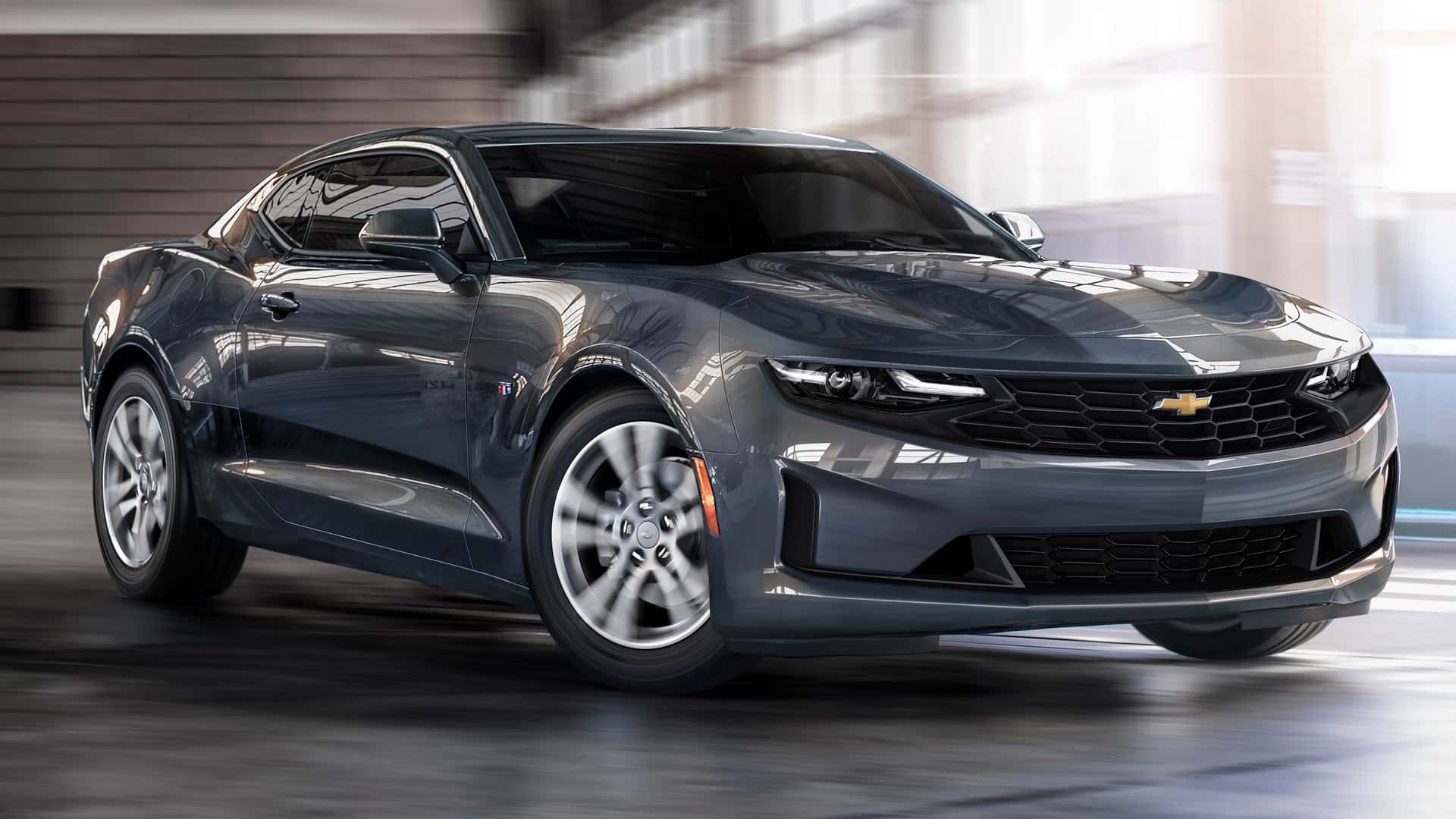
The redesigned model featured retro styling cues inspired by the original late-1960s Camaros while incorporating modern engineering and safety features.
Since its revival, the Camaro has remained a recognizable figure in the performance car market and popular culture, appearing in films, racing events, and enthusiast communities.
4. Toyota Corolla
Few automotive nameplates have achieved the global recognition and longevity of the Toyota Corolla. First introduced in 1966 by Toyota, the Corolla emerged during a period when the global automotive market was shifting toward smaller, efficient vehicles designed for everyday reliability.
Toyota’s objective was straightforward: create an affordable, easy-to-maintain car that could appeal to a broad range of drivers. The strategy proved remarkably successful.

Over the decades, the Corolla has evolved through numerous generations while maintaining its core identity as a practical and dependable compact car. Today it remains one of the best-selling automobiles in history, with tens of millions of units produced worldwide.
The original Corolla was engineered with simplicity and efficiency in mind. Early models featured a front-engine, rear-wheel-drive layout paired with a compact inline-four engine. These small-displacement four-cylinder engines emphasized fuel efficiency, durability, and low operating costs rather than outright performance.
As automotive technology progressed and consumer expectations changed, later generations transitioned to a front-engine, front-wheel-drive configuration. This layout improved interior space, traction in poor weather conditions, and practicality, reinforcing the Corolla’s role as an accessible everyday vehicle.
Modern versions continue to rely on efficient inline-four engines, now enhanced by advanced fuel injection systems, variable valve timing, and hybrid powertrain options that reflect contemporary engineering priorities.
5. Honda Civic
The Honda Civic first arrived in the United States in 1972 and quickly gained popularity for its efficiency and reliability.
At a time when fuel economy was becoming a major concern for American drivers, the Civic offered a small, economical alternative to larger domestic vehicles.
What makes the Civic particularly notable is its versatility. Over the years it has served many roles, from basic commuter car to high-performance compact.
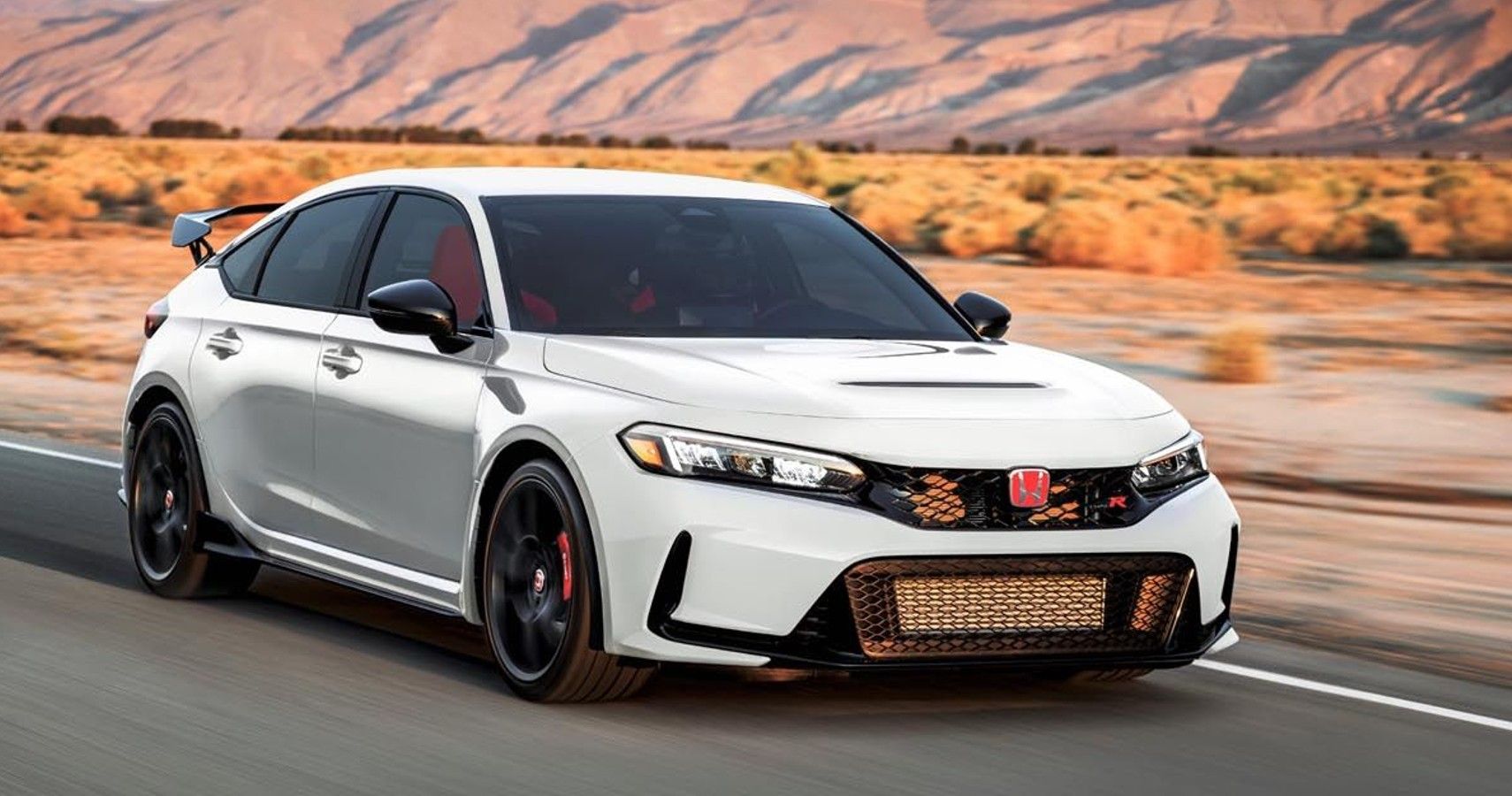
Sporty models such as the Civic Si and the high-revving Civic Type R have given the nameplate strong credibility among enthusiasts.
Meanwhile, the standard versions remain known for durability and practicality. More than fifty years after its debut, the Civic continues to evolve while maintaining its strong reputation in the American market.
6. Ford F-150
Pickup trucks are central to American automotive culture, and the Ford F-150 is arguably the most recognizable truck nameplate in the country.
Although Ford’s F-Series trucks date back to 1948, the F-150 designation was introduced in 1975 and quickly became the core model in the lineup. The F-150 has consistently ranked among the best-selling vehicles in the United States for decades.
Few vehicle nameplates are as deeply woven into American automotive culture as the Ford F-150. Introduced in 1975 as part of the long-running Ford F-Series lineup, the F-150 emerged during a period when pickup trucks were transitioning from purely utilitarian work machines into versatile vehicles used for both labor and everyday driving.
Manufactured by Ford Motor Company, the F-150 quickly positioned itself between the lighter-duty F-100 and the heavier F-250, offering a balance of durability, payload capacity, and daily usability. Over the decades, it has grown into one of the most recognizable and consistently best-selling vehicles in the United States, cementing its place as a cornerstone of the American truck market.
The engineering philosophy behind the F-150 centers on strength, adaptability, and mechanical simplicity. Early versions followed the traditional body-on-frame truck architecture that has defined the F-Series for generations.
This construction method pairs a rigid ladder frame with a separate body, allowing the truck to handle demanding workloads such as towing, hauling, and off-road use. Most F-150 models use a front-engine layout paired with either rear-wheel drive or four-wheel drive, depending on configuration.
Over time, the truck has been offered with a wide range of engine options reflecting the evolution of American powertrain engineering. Earlier generations relied heavily on large-displacement V8 engines that delivered strong torque for towing and heavy-duty tasks, while later versions introduced more efficient V6 engines, turbocharged powerplants, and advanced hybrid systems.
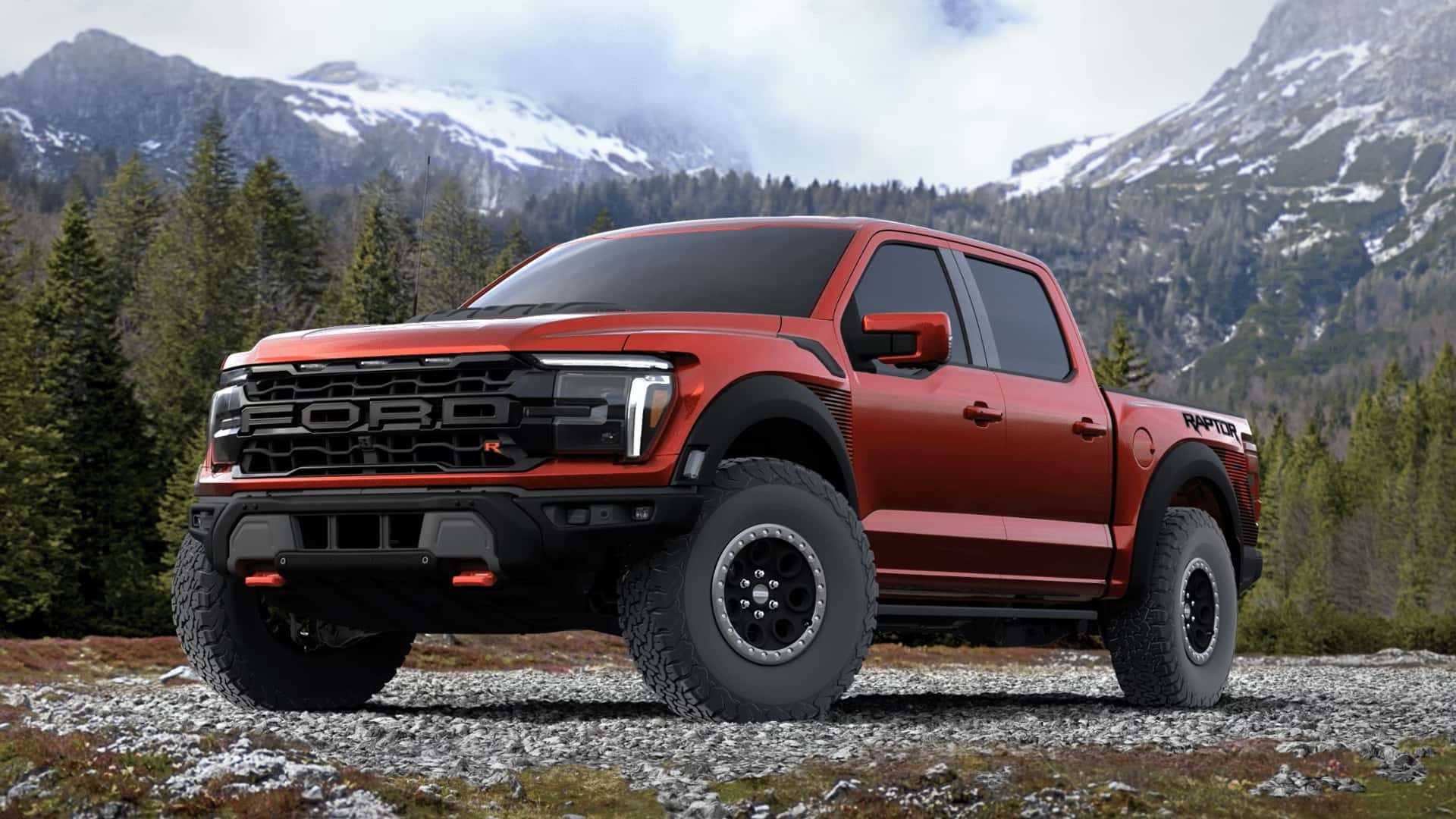
Design has also played a critical role in the F-150’s enduring recognition. The truck’s bold front grille, squared-off proportions, and elevated ride height create a visual identity that immediately signals capability and durability.
Over successive generations, the F-150’s styling has evolved to incorporate aerodynamic improvements, refined interiors, and modern lighting designs while still retaining the strong, upright stance that defines a traditional American pickup. Inside, modern versions combine rugged materials with advanced technology, reflecting the truck’s expanded role as both a work vehicle and a daily driver.
Historically, the F-150 represents the continuing evolution of the American pickup truck. As trucks became more central to both commercial industries and personal transportation in the United States, the F-150 adapted to meet changing needs without abandoning its core strengths.
The model has also served as a technological testbed within the F-Series family, introducing innovations such as lightweight aluminum body construction and advanced driver-assistance systems.
This continuous evolution explains why the F-150 belongs on a list of vintage nameplates that still exist today. Although the truck has changed significantly since its introduction, the name itself remains synonymous with durability, capability, and American truck culture.
7. Chevrolet Suburban
Few vehicle nameplates demonstrate the longevity and recognition of the Chevrolet Suburban. Introduced in 1935 by General Motors under the Chevrolet division, the Suburban is widely regarded as the longest continuously used nameplate in automotive history.
Originally conceived as a rugged utility vehicle capable of transporting both passengers and cargo, the Suburban emerged during an era when manufacturers were experimenting with larger multipurpose vehicles for commercial fleets, government agencies, and rural customers.
Early Suburban models were built on truck-based platforms, reflecting their practical role as work vehicles. The original versions featured a front-engine, rear-wheel-drive layout mounted on a body-on-frame chassis similar to Chevrolet pickup trucks of the period.
This architecture provided exceptional strength and durability, allowing the vehicle to handle heavy loads, rough roads, and demanding service conditions. Engines in early Suburbans typically consisted of inline-six powerplants designed for reliability and steady torque rather than outright performance.
As automotive technology advanced, later generations introduced increasingly powerful V8 engines that improved towing capability and highway performance. Modern versions continue to follow the front-engine, truck-based formula, often offering both rear-wheel-drive and four-wheel-drive configurations that enhance versatility across different driving environments.
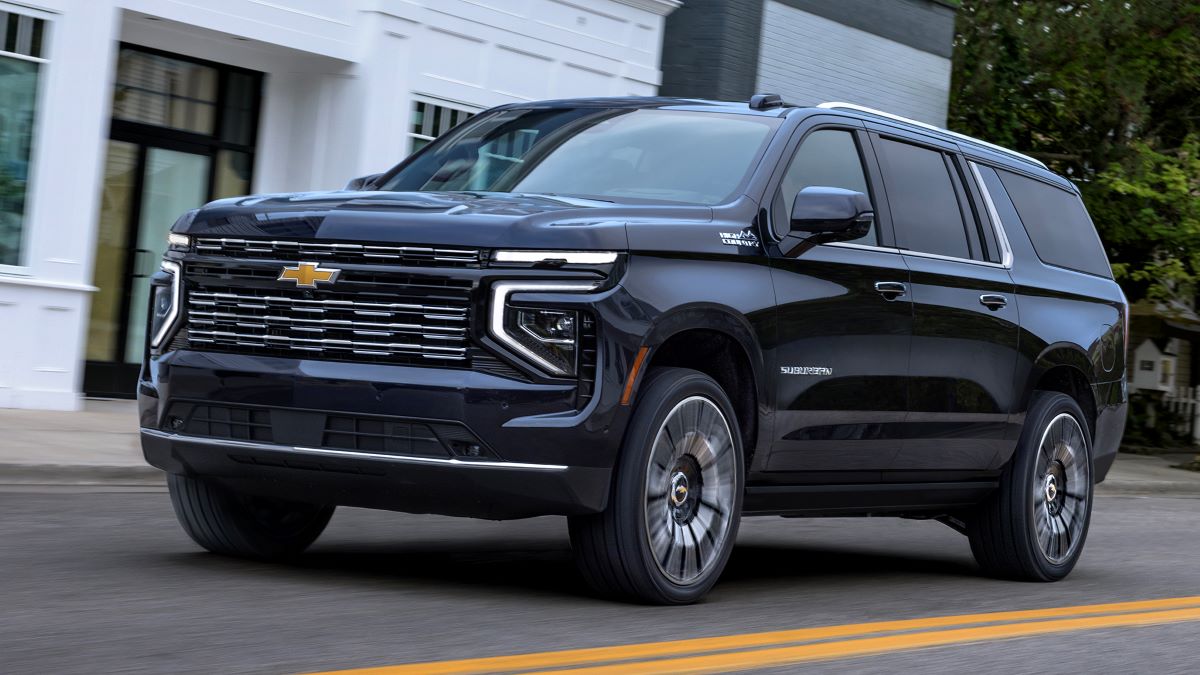
Design has always reflected the Suburban’s utilitarian mission. Early versions featured a long, boxy body with multiple rows of seating and large rear cargo areas, effectively combining the capacity of a station wagon with the strength of a truck chassis. This formula created a vehicle capable of transporting large families, work crews, or equipment in a single package.
Over time, the Suburban’s styling evolved to incorporate more refined proportions, larger grilles, and improved aerodynamics, but its extended wheelbase and tall stance remain unmistakable. The interior has also expanded in sophistication, transitioning from a simple work-focused cabin to one that now includes advanced infotainment systems, premium materials, and multiple seating configurations.
Historically, the Suburban played a crucial role in shaping the modern sport-utility vehicle market. Long before SUVs became mainstream family vehicles, the Suburban demonstrated how a truck-based platform could deliver both passenger comfort and substantial cargo capacity. It became a popular choice for government agencies, emergency services, and large families who needed dependable transportation with exceptional interior space.
8. Porsche 911
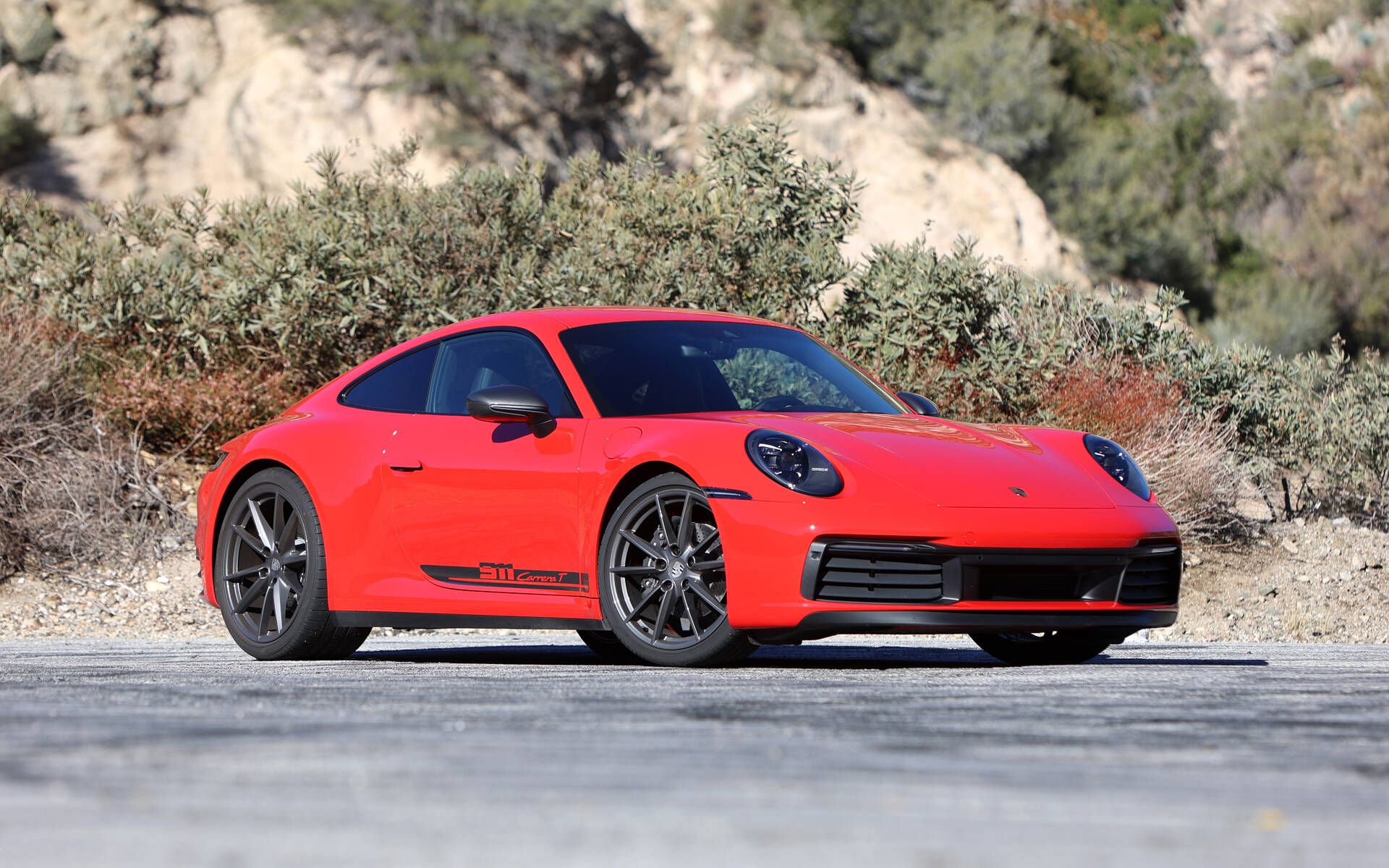
Few automotive nameplates demonstrate the continuity, engineering identity, and global recognition of the Porsche 911. Introduced in 1964 for the 1965 model year by Porsche, the 911 quickly became the brand’s defining vehicle and one of the most recognizable sports cars ever produced.
At the heart of the 911’s identity is its unconventional rear-engine layout paired with rear-wheel drive. This configuration places the engine behind the rear axle, giving the car a distinctive weight distribution that influences both handling dynamics and acceleration characteristics.
Early versions used an air-cooled flat-six engine mounted low in the chassis, providing a low center of gravity and a unique engine sound that enthusiasts quickly came to associate with the Porsche brand.
These horizontally opposed six-cylinder engines evolved steadily over time, increasing in displacement and power output while maintaining the same basic mechanical architecture. Power was typically delivered through four- or five-speed manual transmissions designed to maximize driver engagement and mechanical feedback.
Design continuity has been equally important to the 911’s enduring recognition. The car’s sloping fastback roofline, round headlamps, and compact rear-engine proportions have remained consistent across multiple generations.
This visual consistency has allowed the 911 to evolve technologically while still retaining a silhouette that is instantly identifiable even to casual observers. Inside, the cabin emphasizes the driver with a straightforward instrument cluster, supportive seating, and a layout focused on performance driving.
Historically, the Porsche 911 became a symbol of engineering precision and motorsport success. The model achieved significant victories in endurance racing, rally competitions, and international motorsport events, reinforcing Porsche’s reputation for building cars that combine everyday usability with serious performance capability. At the same time, the 911 remained practical enough to serve as a daily driver, further broadening its appeal.
That uninterrupted lineage explains why the 911 belongs on any list of vintage nameplates that still exist today. While many sports cars from the 1960s disappeared or were completely reinvented, the 911 has maintained its essential identity for more than half a century.
Through continuous refinement rather than radical reinvention, the model has preserved its distinctive engineering layout, unmistakable design, and strong enthusiast following. As a result, the Porsche 911 remains one of the most recognizable and enduring automotive badges still in production.
9. Volkswagen Golf
The Volkswagen Golf debuted in 1974 as the successor to the legendary Beetle. Designed as a practical compact hatchback, the Golf quickly became known for its balanced combination of efficiency, practicality, and enjoyable driving dynamics.
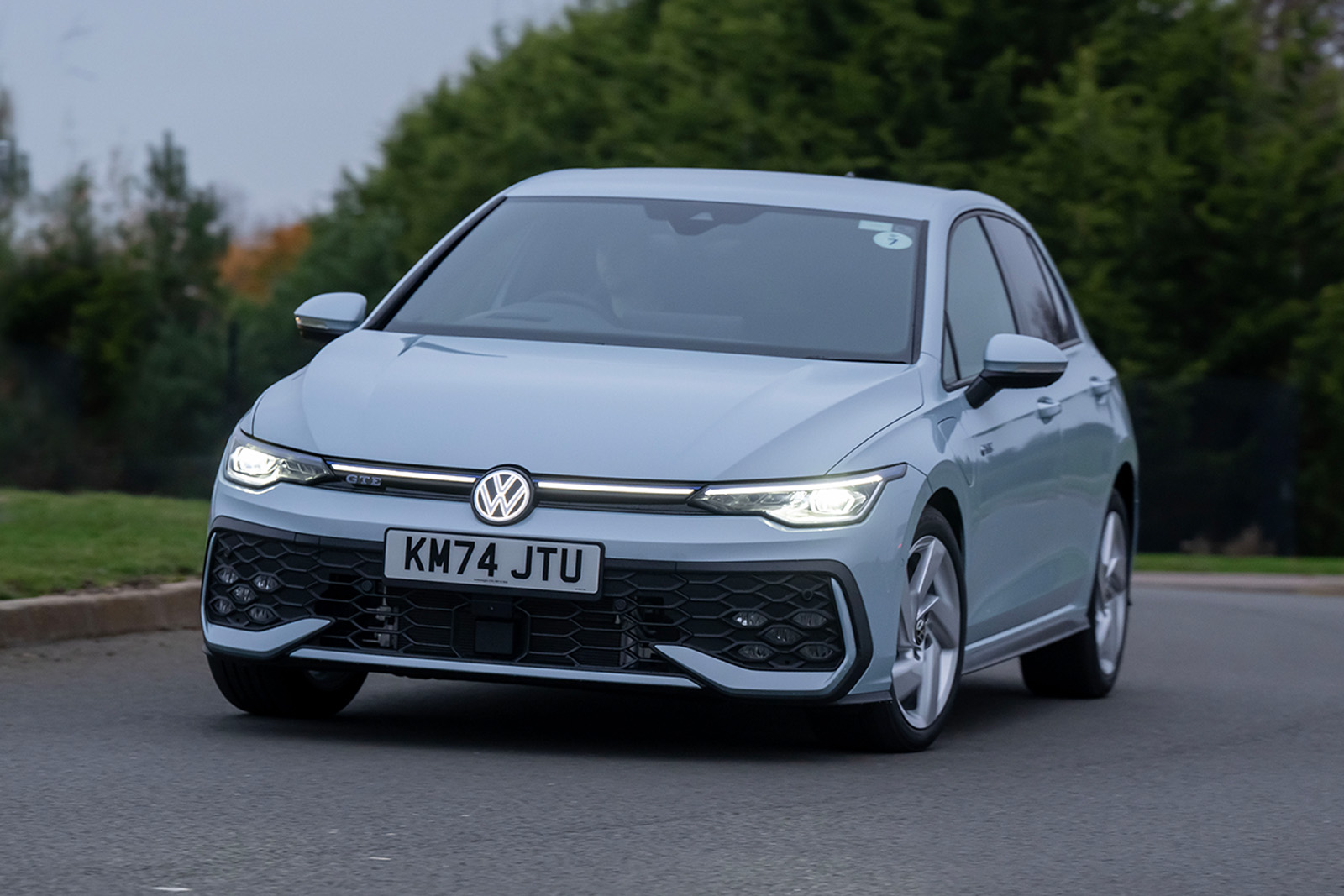
In the United States, the Golf gained a loyal following, particularly with the introduction of the high-performance GTI variant.
The GTI essentially created the “hot hatch” category, offering sports-car-like handling in a compact, practical vehicle. Through multiple generations, the Golf has remained a benchmark for the compact car segment and continues to influence hatchback design worldwide.
10. Dodge Charger
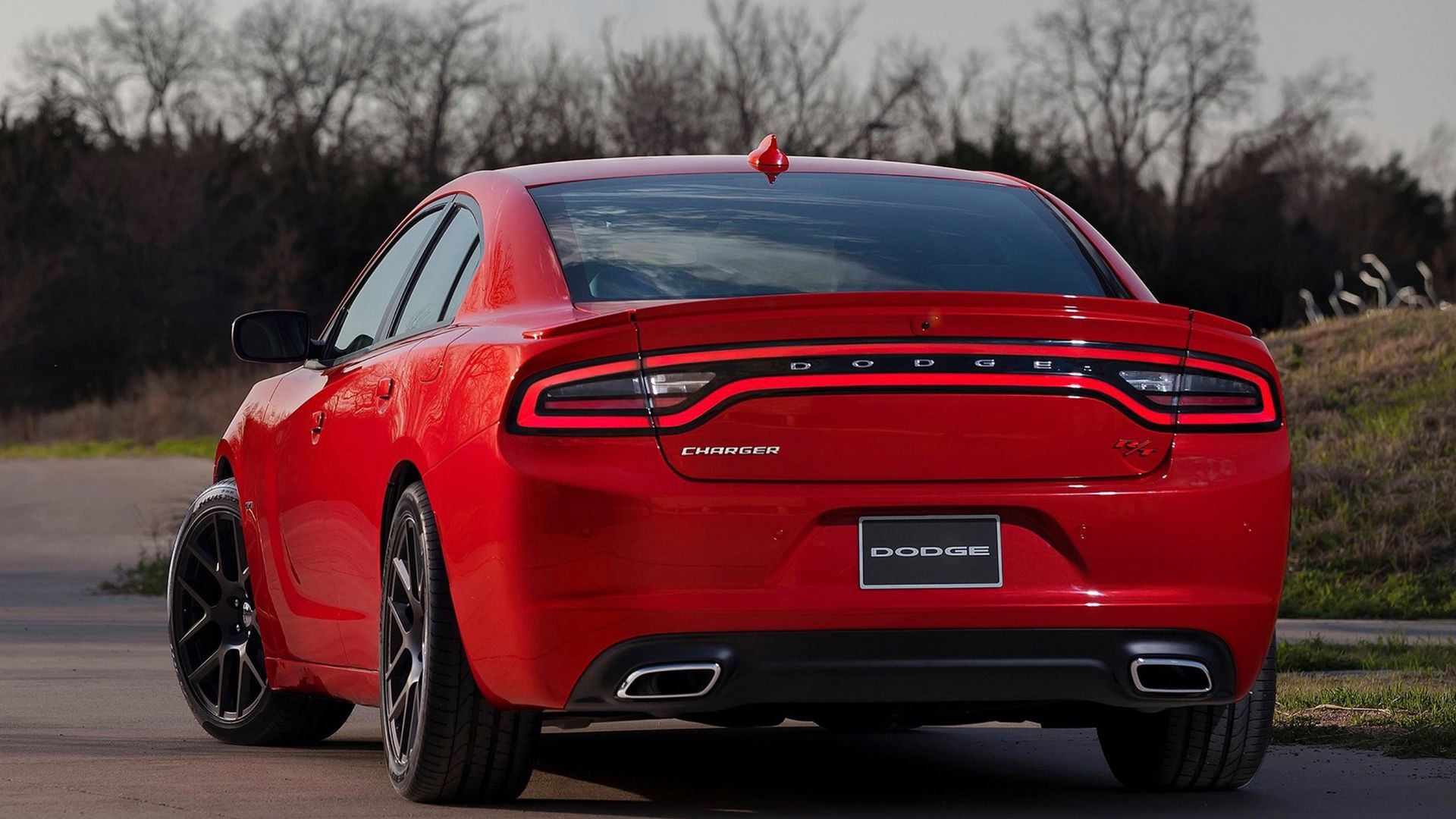
The Dodge Charger originally debuted in 1966 as a powerful fastback coupe designed to compete in the muscle car market.
Early Chargers became famous for their aggressive styling and high-performance V8 engines, helping them earn a place in American automotive history.
The modern Charger takes a different form as a four-door performance sedan, yet it still retains the muscle-car spirit that defined the original models.
High-performance versions equipped with powerful V8 engines continue to attract enthusiasts who want both speed and practicality. The Charger demonstrates how a historic nameplate can adapt to changing market demands while preserving its legacy.
The longevity of these vehicles illustrates how powerful a strong nameplate can be in the automotive industry. Each of these models survived dramatic shifts in technology, consumer preferences, and market conditions.
Some transitioned from classic muscle cars to modern performance machines, while others built lasting reputations through reliability and practicality.
As the automotive industry moves toward electrification and advanced mobility technologies, these vintage nameplates may continue evolving in new directions. What remains constant, however, is the cultural recognition they have built over decades.
Whether it is the roar of a Mustang, the reliability of a Corolla, or the practicality of an F-150, these vehicles demonstrate how a name can become a lasting symbol in automotive history.
