
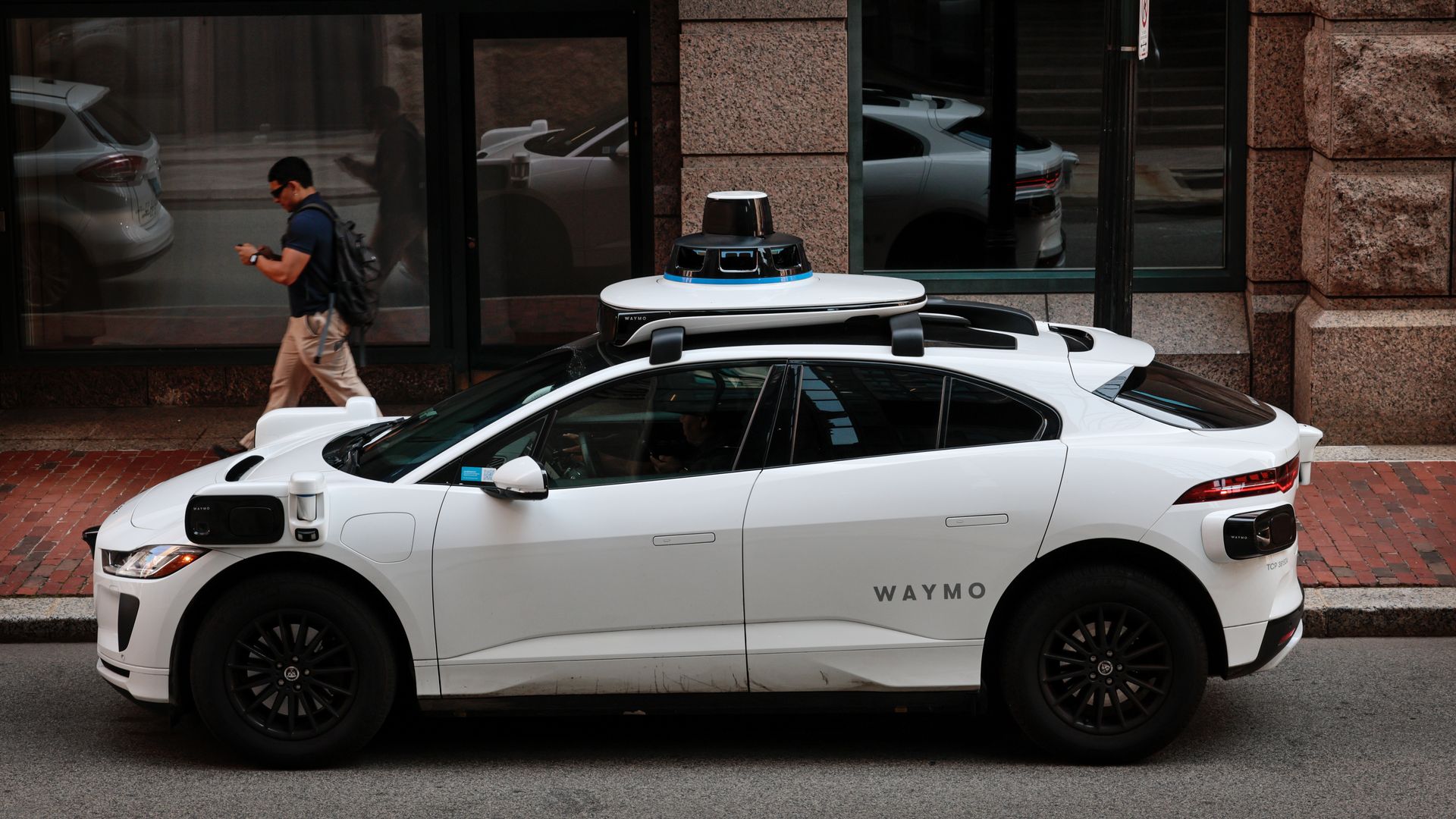
A viral video circulating online captures a Waymo robotaxi attempting a risky maneuver in Phoenix that nearly resulted in a T-bone collision.
Autonomous vehicles still struggle with several complex traffic situations, and among the most challenging are unprotected left turns across multiple lanes of busy traffic. These types of maneuvers are widely regarded as some of the most difficult driving tasks, even for experienced human drivers.
The reason is straightforward: executing an unprotected left turn often requires informal negotiation with oncoming vehicles. Drivers must yield to traffic moving in the opposite direction, and in many situations they slowly creep forward to signal their intention to cross.
If circumstances work in their favor, drivers who currently have the right of way may slow down slightly and allow the waiting vehicle to enter the intersection. After reaching the median, the driver must once again yield, this time to traffic approaching from the other side, essentially repeating the same process before completing the turn.
Autonomous systems attempt to replicate this kind of human behavior, but doing so is far from simple. Machines lack the ability to make eye contact or exchange subtle visual cues with other drivers.
As a result, situations like these can become tense for passengers riding inside an autonomous vehicle, particularly if the system appears uncertain. A video now circulating on social media illustrates exactly how stressful such a moment can become.
The footage, recorded from the front passenger seat of a Waymo-operated Jaguar I-Pace robotaxi, was first posted on TikTok and later spread widely across other social platforms. The clip may give some viewers pause before deciding to try a driverless ride-hailing service.
In the video, the Waymo vehicle attempts to cross eight lanes of traffic while making a left turn. Observers might reasonably question why the navigation system selected such a complex maneuver rather than routing the vehicle through a safer alternative.
As the situation unfolds, the self-driving vehicle begins inching forward into traffic without waiting for a sufficiently large gap. This gradual movement immediately unsettles the passengers. What starts as nervous gasps quickly escalates into shouting and expletives as the Jaguar progresses across two lanes before abruptly stopping in the middle of the roadway.
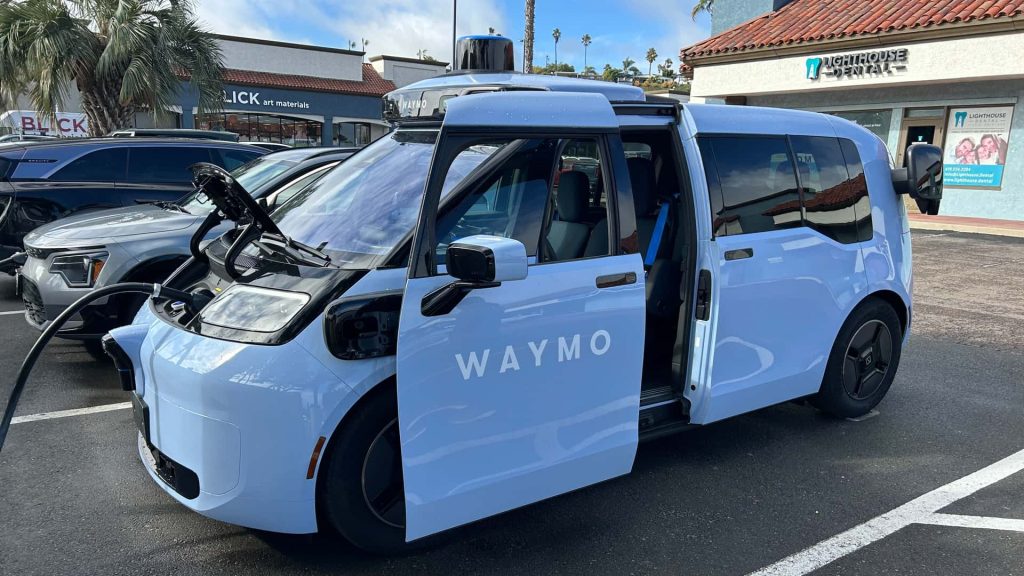
The robotaxi ends up blocking oncoming traffic, despite appearing to have enough room to continue toward the median. The sudden stop heightens the tension inside the vehicle, as cars approaching from the left are forced to react.
Fortunately, drivers in the oncoming lanes eventually slowed and stopped, allowing the Waymo vehicle to continue forward. After reaching the median, the robotaxi again waited for a safe opportunity, this time yielding to traffic approaching from the opposite side, before smoothly merging into the far-left lane.
That final part of the maneuver appeared far more controlled and predictable than the initial attempt. Nevertheless, the earlier moment of uncertainty likely left a strong impression on the passengers, who may hesitate before requesting another ride in a Waymo vehicle.
As the clip gained significant attention online, Waymo’s support team contacted the rider to address the situation and issued a refund for the trip. In a message shared with the passenger, the company stated:
“This is not the type of experience that we’d like to provide to our riders, and we are looking into the matter.”
The incident adds to a growing list of situations involving Waymo vehicles this year. Previous reports have included robotaxis passing stopped school buses, colliding with a child, and interfering with emergency responders.
On January 12, Waymo vehicles were reported passing stopped school buses in Texas, despite a recall issued the previous month to address similar behavior.
Later, on January 23, a Waymo vehicle struck a 9-year-old child near an elementary school in Santa Monica during morning drop-off. The child suffered minor injuries in the incident.
More recently, on March 1, a Waymo robotaxi reportedly became stuck and blocked an ambulance responding to a mass shooting in Austin, Texas.
Waymo currently operates autonomous ride-hailing services in 10 cities across the United States. Incidents like these highlight an important reality: while self-driving technology can perform impressively in many situations, it still faces challenges in complex real-world traffic scenarios. For now, fully autonomous driving remains a work in progress, even as the technology continues to improve.
