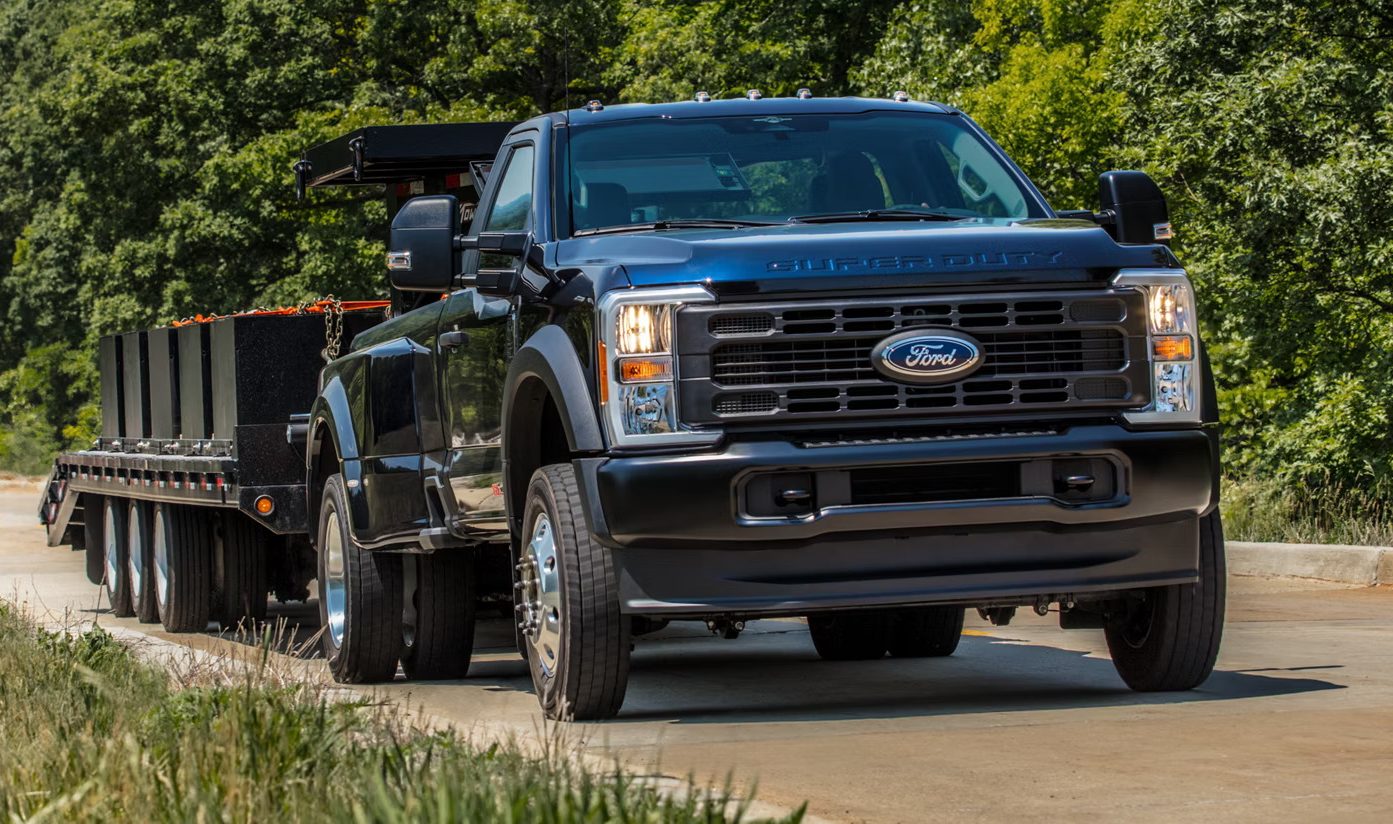
Choosing the right work truck requires careful attention to payload capacity and suspension performance. Some trucks are built to handle heavy loads while keeping the bed level and maintaining stability, making them reliable tools for demanding job sites. Examples include the Ford F-350 Super Duty, Chevrolet Silverado 3500 HD, and Ram 3500 Heavy Duty.
These trucks use reinforced frames, heavy-duty leaf springs, and dual rear wheels to carry thousands of pounds without sagging. Other trucks prioritize ride comfort, off-road performance, or wheel articulation. Models such as the Ram 1500, Ford F-150 Raptor, and Toyota Tacoma have softer suspensions that compress easily under moderate loads.
While they offer smooth rides and excellent handling over rough terrain, their rear ends can sag noticeably, reducing traction and steering precision. Understanding these differences is essential for buyers who want the right balance between work capability, off-road ability, and daily usability.
5 Work Trucks With High Payload Capacity
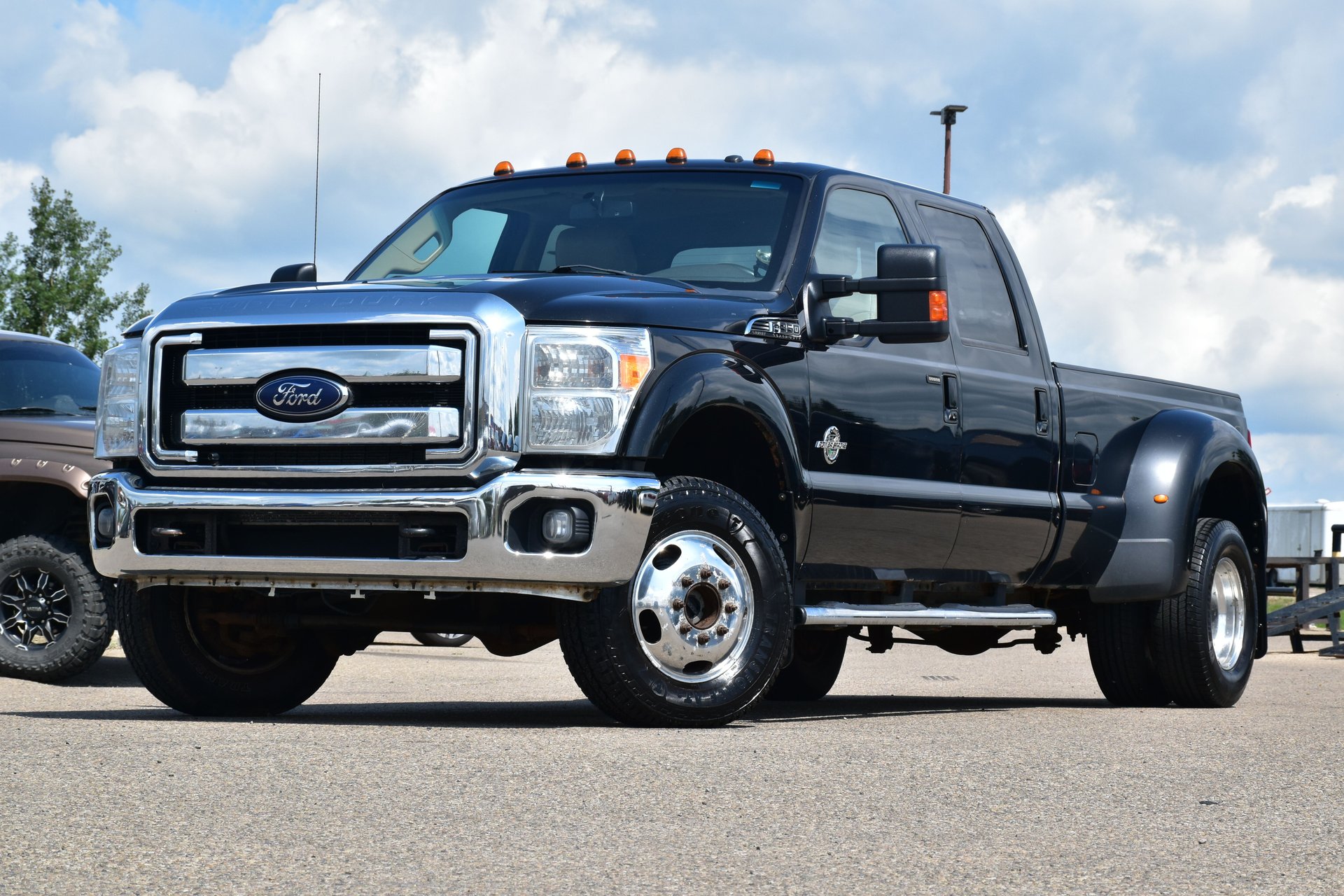
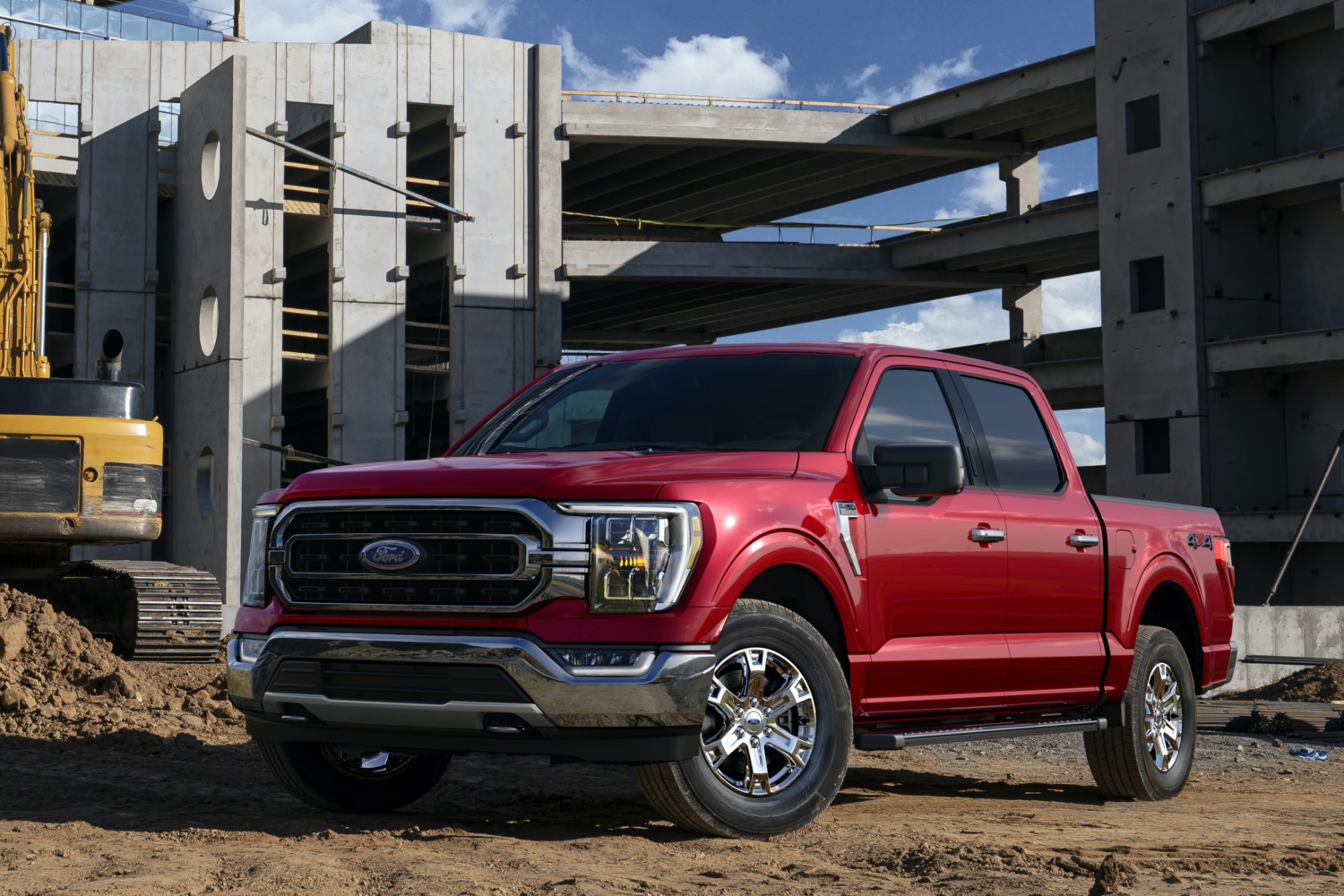
1. Ford F-350 Super Duty (DRW): The Ultimate Heavy-Duty Work Truck
The Ford F-350 Super Duty (DRW) is one of the most capable work trucks on the market, especially when equipped with the Heavy-Duty Payload Package and dual rear wheels. It offers a payload capacity of up to 8,000 lbs, making it ideal for demanding job site tasks.
Its high-strength steel frame and stiff leaf springs keep the bed level even when carrying gravel, heavy machinery, or other substantial loads, ensuring the rear end remains stable and high under pressure.
The dual rear wheel configuration provides superior stability by creating a wider footprint, which distributes weight evenly and improves traction and braking. A reinforced frame with up to 10 crossmembers and thicker gauge steel gives the truck the strength to withstand high-stress work conditions.
Heavy-duty suspension components, including stronger springs and a larger rear block, reduce cargo sag and maintain stability when handling heavy loads.
As a Class 3 truck, the F-350 has a high Gross Vehicle Weight Rating (GVWR) between 10,001 and 14,000 lbs. Engine options include a 7.3L gas V8 producing 430 hp and 485 lb-ft of torque, and a 6.7L High-Output Power Stroke diesel delivering 500 hp and 1,200 lb-ft of torque. These engines provide the power necessary for hauling gooseneck and fifth-wheel trailers up to 40,000 lbs and transporting large equipment efficiently.
The F-350 includes work-focused features designed for productivity. Onboard scales, Pro Trailer Hitch Assist, blind-spot monitoring with trailer coverage, and Pro Power Onboard capabilities enhance functionality on job sites. Higher trims offer a comfortable and well-appointed cabin, while practical utilities like a power tailgate, built-in bed steps, and upfitter switches increase versatility.
The ride can feel firm when the truck is empty, but it delivers excellent stability and handling when loaded. With immense towing and hauling capacity, commercial-grade engineering, and advanced trailering technology, the 2025/2026 Ford F-350 Super Duty DRW is built to meet the needs of professionals who require strength, reliability, and maximum utility in a heavy-duty truck.
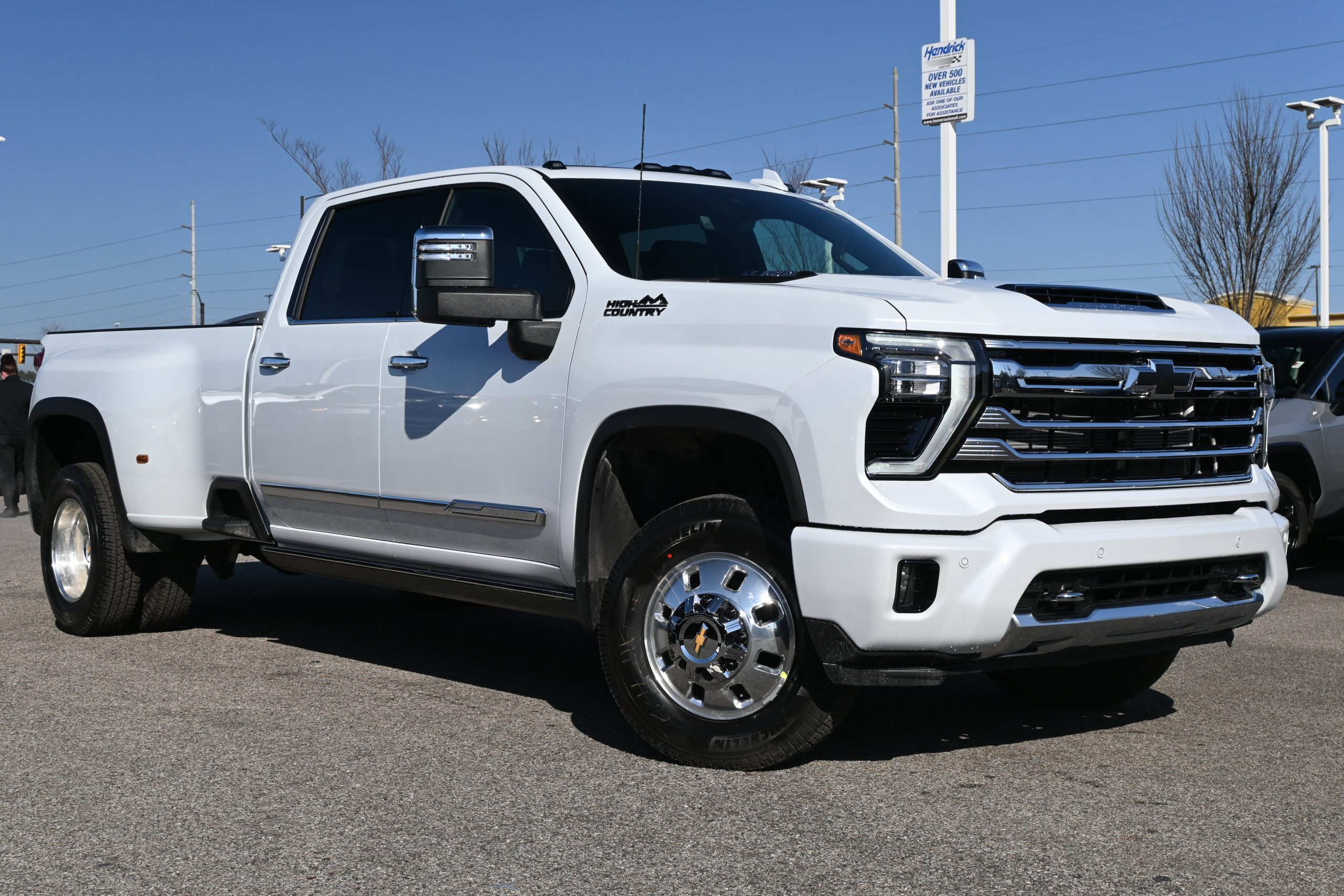
2. Chevrolet Silverado 3500 HD (DRW): Heavy-Duty Hauling and Towing Power
The Chevrolet Silverado 3500 HD Dual Rear Wheel (DRW) is a top-tier heavy-duty truck built for maximum payload and towing performance. In its regular cab configuration with a gas engine, it achieves a payload of up to 7,442 lbs, while the dual rear wheel setup ensures superior stability, better weight distribution, and reduced trailer sway.
Heavy-duty rear leaf springs and a robust axle setup resist compression, maintaining steering geometry and braking effectiveness even at full load, preventing the “nose-up” attitude common in lighter trucks.
The truck is powered by a 6.6L V8 gas engine producing 401 hp and 464 lb-ft of torque, or a 6.6L Duramax turbo-diesel V8 generating 470 hp and 975 lb-ft of torque.
Both engines are paired with a 10-speed Allison transmission, providing the strength needed for hauling heavy equipment and towing fifth-wheel or gooseneck trailers up to 36,000 lbs with the diesel DRW model. Gas versions often carry a higher payload due to the lighter engine, making them ideal for bed-heavy tasks.
The Silverado 3500 HD features a reinforced high-strength steel frame, heavy-duty suspension, and commercial-grade components designed for durability.
Maximum payload is achieved in the regular cab, long-bed, gas V8, dually, RWD configuration, while the diesel variant reaches slightly lower numbers. Specialized trailering technologies, onboard apps, and optional 120-volt power outlets in the bed increase utility on job sites.
Safety and convenience features include forward collision warning, automatic emergency braking, lane departure warning, adaptive cruise control, blind-spot monitoring with trailer coverage, and rear cross-traffic alert. While lane keep assist is not available, the truck’s suite of standard and optional safety technologies supports confident hauling.
Cab configurations include Regular, Double, and Crew Cab, offering spacious interiors with modern technology. Higher trims feature a 13.4-inch touchscreen, 12.3-inch digital gauges, a head-up display, wireless charging, and multiple USB ports. Beds measure up to 98.3 inches long, providing up to 83.5 cubic feet of cargo space.
With its combination of massive payload, towing capacity, refined interior, and advanced trailering technology, the 2025 Chevrolet Silverado 3500 HD DRW is a highly capable heavy-duty truck designed for professionals who demand strength, stability, and practicality in a commercial-grade pickup.
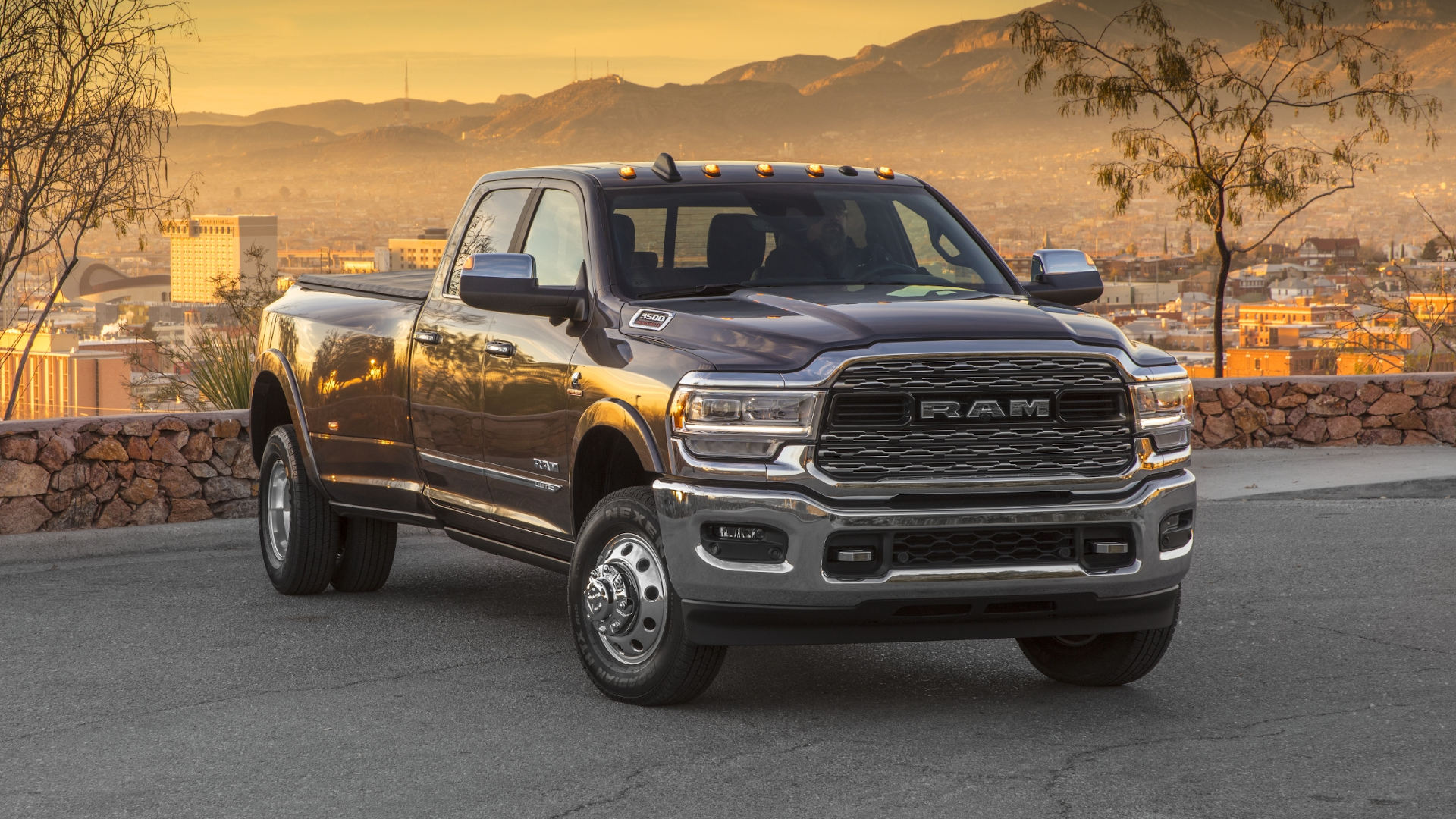
3. Ram 3500 Heavy Duty: A Commercial-Grade Hauling and Towing Machine
The Ram 3500 Heavy Duty is a full-size work truck engineered for maximum payload and towing performance. With a maximum payload of up to 7,680 lbs and towing capacity reaching 37,100 lbs, it is designed for professional use in construction, agriculture, and heavy-haul industries.
Unlike lighter Ram models that use coil springs, the 3500 features a traditional leaf-spring rear suspension to handle extreme vertical loads, minimizing squat and keeping the front tires firmly planted for precise steering.
The truck’s strength comes from a high-strength steel frame with reinforced crossmembers, a dual rear wheel option for added stability, and a “one-ton” classification that supports continuous heavy workloads.
The dual rear wheels distribute weight evenly, improve traction, and enhance load-bearing capacity for massive fifth-wheel or gooseneck trailers. Optional auto-level rear air suspension allows drivers to adjust the rear height to match payload, ensuring a level ride.
Engine choices include a 6.4L HEMI V8 producing 405 hp and 429 lb-ft of torque for maximum payload and a 6.7L High-Output Cummins Turbo Diesel I6 delivering 430 hp and a best-in-class 1,075 lb-ft of torque for extreme towing.
Both engines pair with an eight-speed automatic transmission, providing smooth, responsive performance whether hauling heavy materials or pulling massive trailers. Advanced trailer technology includes a 360° camera, trailer reverse steering control, and integrated tire-pressure monitoring.
The Ram 3500 offers a range of cab options from Regular Cab to Mega Cab, providing spacious interiors with modern, high-quality materials.
The Longhorn and higher trims feature luxury touches such as wood accents, leather detailing, and premium infotainment with up to 14.5-inch touchscreens, multiple USB ports, and power outlets. The cabin incorporates acoustic glass and active noise cancellation for a quiet, comfortable experience even with the diesel engine running.
Safety and driver-assistance systems are comprehensive, with standard forward-collision warning, automated emergency braking, adaptive cruise control, and available blind-spot monitoring and rear cross-traffic alert.
With its combination of high payload, extreme towing capacity, heavy-duty construction, and luxury-level interior, the 2025/2026 Ram 3500 Heavy Duty is a versatile and powerful truck built for demanding work and long-term reliability.
4. Ford F-150 with Heavy-Duty Payload Package: Bridging the Gap Between Half-Ton and Heavy-Duty Trucks
The Ford F-150 with the Heavy-Duty Payload Package (HDPP) transforms the popular half-ton truck into a serious workhorse, offering a best-in-class payload of up to 3,325 lbs. This specialized package is designed for contractors, tradespeople, and tow operators who need the maneuverability of a half-ton pickup combined with the hauling capacity of a larger truck.
Key mechanical upgrades enable the F-150 HDPP to handle such heavy loads. The truck features a higher-strength frame, heavy-duty suspension springs, and a 9.75-inch gear set.
A 3.73-geared electronic-locking rear axle and LT265/70R18C all-terrain tires provide stability and traction, while heavy-duty brakes and additional cooling systems maintain performance under continuous stress. These enhancements allow the F-150 to carry full pallets of materials or tow large trailers without sagging or compromising steering.
Maximum payload is achieved with specific configurations, including a Regular Cab, 8-foot box, and 4×2 drivetrain. Engine options include the 5.0L Ti-VCT V8 for up to 3,315 lbs of payload or the 3.5L EcoBoost V6 for up to 3,235 lbs.
The package often pairs with the Max Trailer Tow Package, which adds the electronic-locking rear axle, upgraded rear bumper, and improved towing stability. In practice, these upgrades reduce rear-end bounce and maintain a consistent steering feel even when towing near capacity.
The HDPP package offers significant advantages over standard F-150 models, which typically carry 1,800 to 2,200 lbs. It also surpasses competitors such as the Chevrolet Silverado 1500 and Ram 1500 in payload capacity. The truck’s enhanced suspension and reinforced structure allow it to carry heavy truck campers, tool loads, or construction materials without compromising safety or drivability.
Trade-offs include a firmer ride when the truck is empty, limited availability on dealer lots, and restrictions on luxury trims, as additional weight from premium features can reduce payload capacity. Despite these factors, the Ford F-150 HDPP stands out as a versatile, durable, and highly capable half-ton truck that effectively bridges the gap between everyday use and professional-grade hauling and towing needs.
Also read: 5 Cars That Are Unstoppable in Deep Snow vs 5 AWD Models That Get Stuck
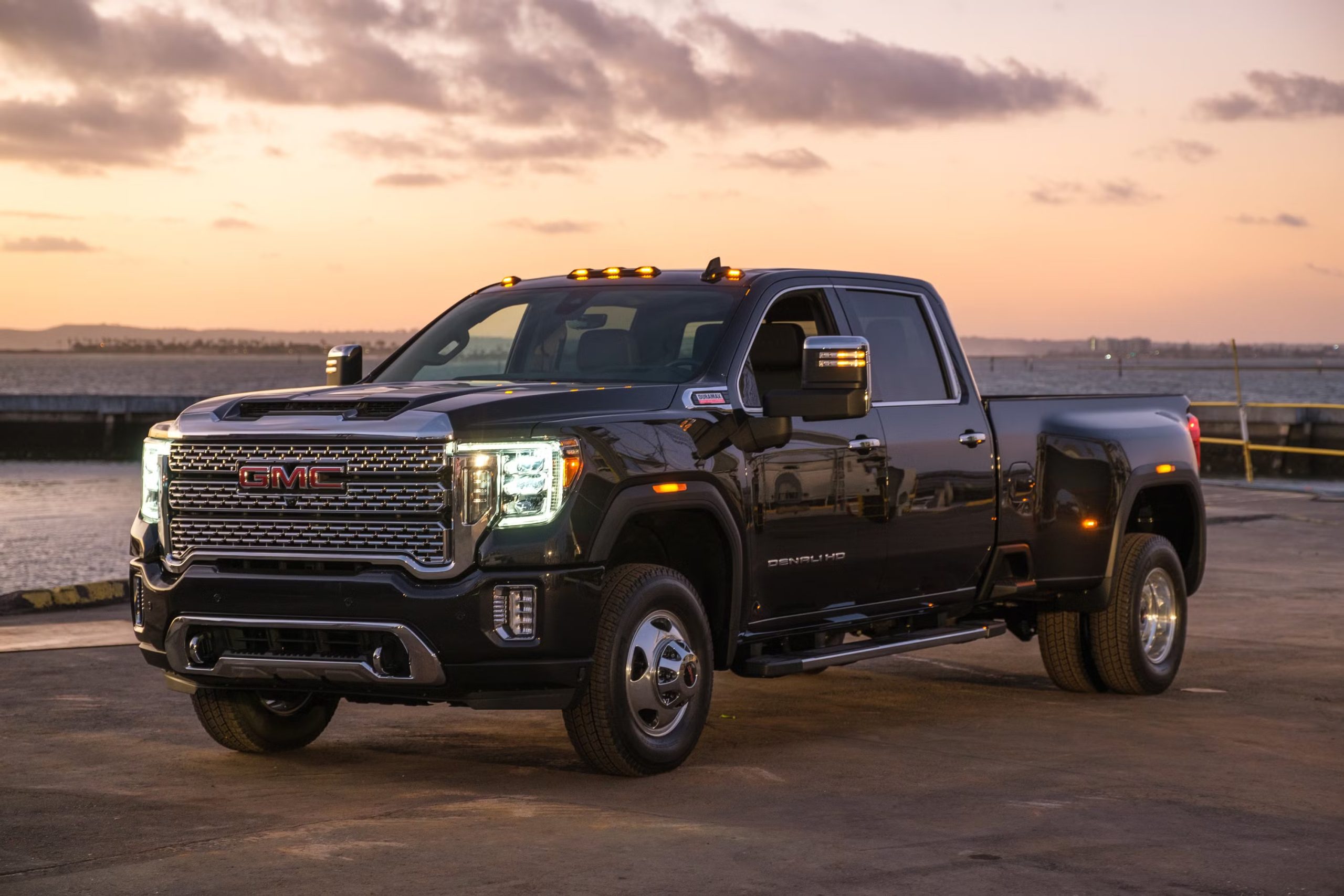
5. GMC Sierra 3500 HD: Luxury Meets Heavy-Duty Capability
The GMC Sierra 3500 HD is a premium heavy-duty truck that combines serious payload and towing capability with a refined, technology-rich interior. Sharing its mechanical foundation with the Chevrolet Silverado 3500 HD, the Sierra 3500 HD offers a maximum payload of up to 7,442 lbs.
Its reinforced high-strength steel frame and heavy-duty suspension components prevent rear sag under load, maintaining stability and control even when fully loaded. Optional dual-rear-wheel (dually) configurations further enhance stability and weight distribution, making it ideal for hauling heavy equipment, trailers, or materials.
The Sierra 3500 HD is powered by either a 6.6L V8 gasoline engine producing 401 hp and 464 lb-ft of torque, or a 6.6L Duramax Turbo-Diesel V8 delivering 470 hp and 975 lb-ft of torque.
Both engines are paired with a 10-speed Allison automatic transmission, enabling a maximum towing capacity of 36,000 lbs for gooseneck and fifth-wheel trailers, with conventional towing up to 20,000+ lbs. The suspension is tuned to handle full payloads while controlling rebound, reducing bounce over rough terrain, and keeping the truck’s handling precise.
Structurally, the Sierra 3500 HD features a fully boxed frame and specialized rear suspension components designed for sustained heavy use. These elements, combined with reinforced axles, allow the truck to endure continuous commercial workloads while preserving safety and performance.
Functional work features include cargo bed lighting, spray-on bedliners, integrated trailering technologies with up to 15 camera views, and the MultiPro tailgate, which offers six functions for easier loading and cargo management.
Inside, the Sierra 3500 HD emphasizes comfort and technology. Premium trims, such as the Denali and AT4, offer high-quality materials, a 13.4-inch infotainment touchscreen, and a 12.3-inch digital instrument cluster. Advanced driver aids include adaptive cruise control compatible with towing, while the ProGrade trailering system helps manage heavy trailers with precision.
While the Sierra 3500 HD excels in towing, payload, and luxury, it carries a higher price point than its Silverado counterpart, and its large grille design may not appeal to all buyers. The truck does not offer Super Cruise semi-autonomous driving. Despite these considerations, the Sierra 3500 HD remains a top choice for professionals who require both commercial-grade capability and high-end comfort in a heavy-duty pickup.
5 That Sag Under Moderate Loads
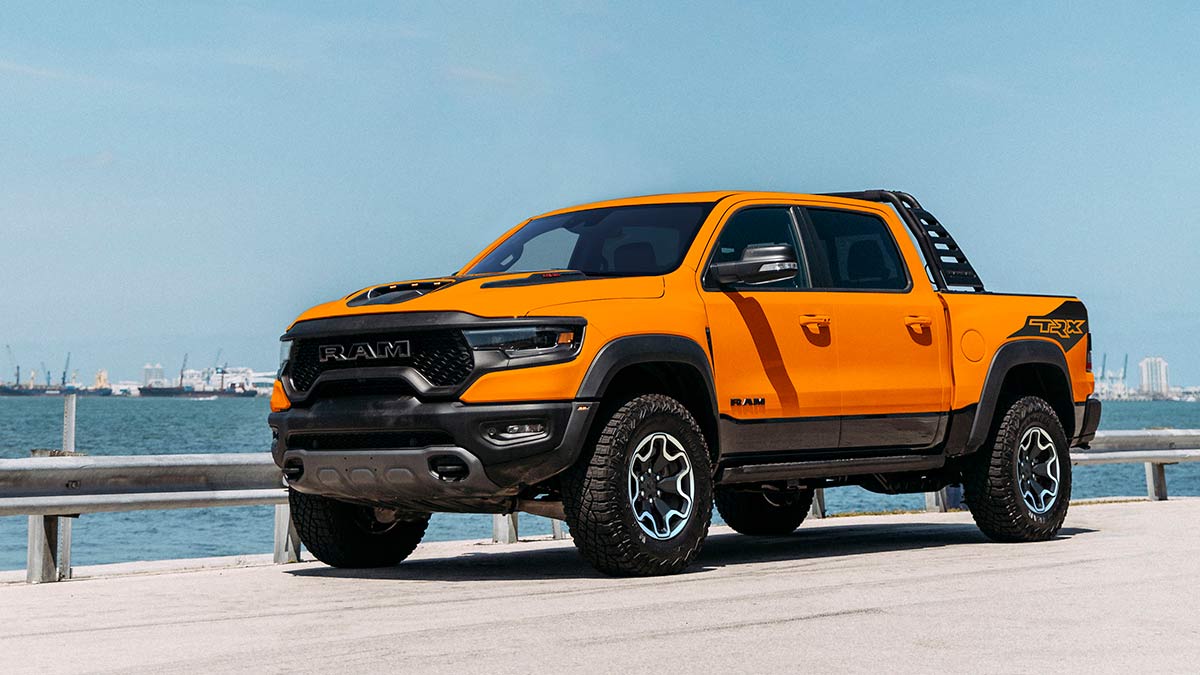
1. Ram 1500: Comfort-Focused Design with Limited Load Capacity
The Ram 1500 is widely regarded as one of the most comfortable full-size pickups in its class, thanks to its unique multi-link coil-spring rear suspension. Unlike traditional leaf-spring setups used in most trucks, coil springs provide a smoother, car-like ride that absorbs road imperfections, making the truck feel more like a luxury SUV when empty.
However, this focus on comfort comes at the expense of load-bearing capability. The standard Ram 1500 has a maximum payload of around 2,300 lbs, and even moderate bed or tongue loads can cause noticeable sagging in the rear, often referred to as the truck “squatting.”
The physics behind this trade-off lies in the linear compression characteristics of coil springs. Leaf springs distribute heavy loads across a larger section of the truck’s frame and resist sagging under weight, whereas coil springs compress more easily.
This compression under load can lower the rear end, reduce front-tire traction, and impair steering precision. Sagging also increases the risk of trailer sway, body roll, and accelerated suspension wear, including shocks, struts, and bushings. These issues are especially relevant when towing, as the rear-end dip alters weight distribution and handling dynamics.
Higher trims of the Ram 1500 offer an Active-Level Four Corner Air Suspension, designed to automatically level the truck under load. While effective in some conditions, this system is sensitive to cold temperatures and aging components.
Air contraction or frozen moisture in the lines can cause overnight sagging, and leaks in airbags or compressors can prevent proper leveling, creating uneven ride height and inconsistent handling.
Owners often rely on aftermarket solutions to address these limitations. Helper springs or SumoSprings provide extra support under heavy load while preserving ride comfort when empty.
Heavy-duty variable-rate coil springs can increase stiffness specifically for towing applications. Additionally, properly adjusted weight distribution hitches help maintain even load balance when pulling trailers, reducing sag and improving steering control.
The Ram 1500 standard model excels in ride comfort and refinement but sacrifices rigid load-handling capability.
Its coil-spring design provides a smooth driving experience when unloaded, but noticeable rear sag under moderate weight, and potential air suspension issues highlight the limitations for heavy-duty towing or payload applications. Aftermarket reinforcements are often necessary for users who regularly carry heavy loads or tow large trailers.
2. Ford F-150 Raptor: Off-Road Dominance with Limited Payload
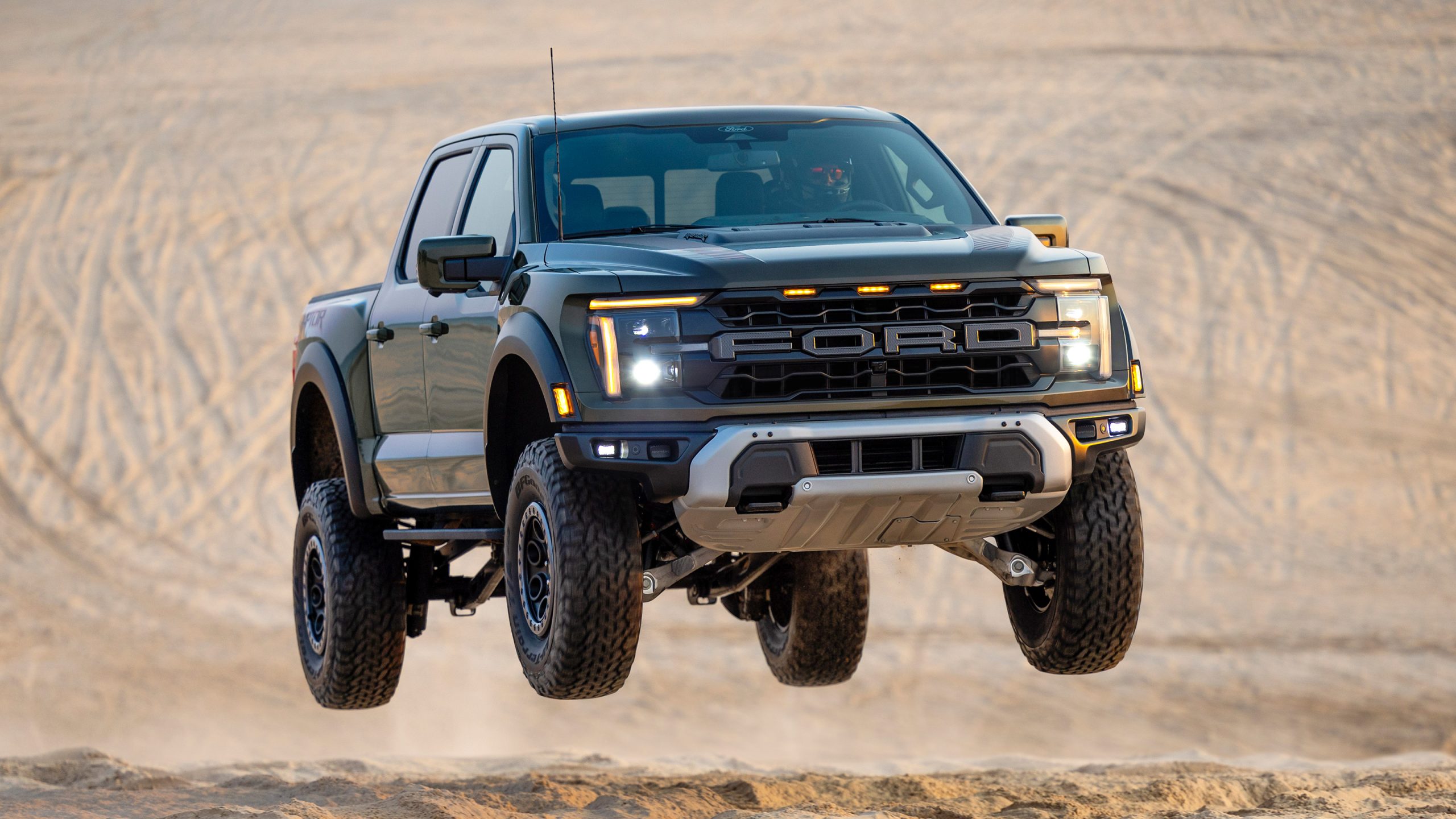
The Ford F-150 Raptor is engineered for high-speed off-road performance, excelling in desert racing and rugged terrain, but it is not optimized as a traditional work truck. Its suspension system prioritizes flexibility, long-travel articulation, and impact absorption over load-carrying capacity.
As a result, the Raptor has a relatively low payload rating of approximately 1,000 to 1,410 lbs, meaning even moderate loads of dirt, tools, or camping gear can cause noticeable rear sag. Carrying heavy cargo or towing beyond this capacity can compromise ride height and potentially stress the specialized off-road components.
The Raptor’s rear suspension is a sophisticated five-link design paired with 24-inch coil springs and Fox Racing Shox. These components are optimized for handling jumps, bumps, and rough terrain at high speeds.
The springs are extremely soft, and the progressive spring rates allow for maximum droop, which enhances traction and comfort off-road but reduces rigidity under load. Unlike standard F-150s with rigid leaf springs designed to maintain bed level, the Raptor’s system compresses easily when weight is added, resulting in a “squatting” effect that shifts weight away from the front tires and alters handling.
Fox Racing shocks further enhance off-road performance by controlling damping during high-speed terrain traversal. Even with Tow/Haul mode activated, the suspension prioritizes stability and comfort on uneven surfaces rather than supporting maximum payloads. Consequently, the Raptor’s suspension setup is excellent for absorbing large impacts but poorly suited for heavy-duty hauling.
Owners who wish to carry heavier loads often turn to aftermarket solutions. Upgraded rear springs or leaf packs, such as Deaver components, increase load capacity while preserving off-road capabilities.
Airbag systems, like Air Lift, can provide adjustable load-leveling support to reduce sag under cargo weight. Properly adjusted weight distribution hitches also help transfer trailer tongue weight forward, improving stability when towing moderate loads.
The Ford F-150 Raptor is a specialized performance truck designed for extreme off-road environments. Its long-travel suspension, soft coil springs, and high-speed damping systems provide unmatched capability on rough terrain, but they come at the cost of payload and utility.
For heavy hauling or consistent work-truck use, its suspension design makes it unsuitable without significant modifications. The Raptor excels as an adventure vehicle, but its plush, flexible setup is a limitation for traditional work applications.
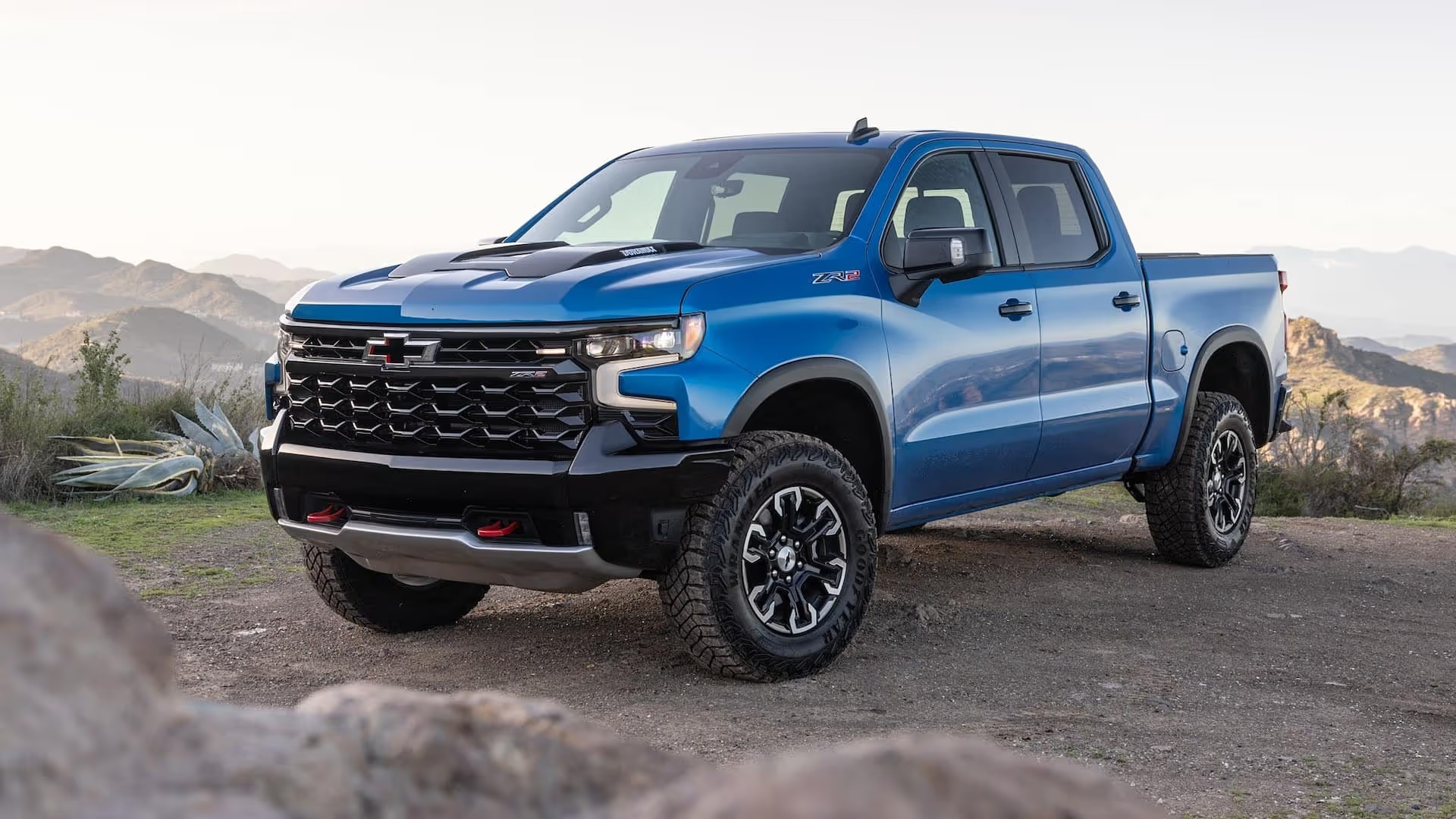
3. Chevrolet Silverado 1500 ZR2: Off-Road Dominance Limits Hauling Capability
The Chevrolet Silverado 1500 ZR2 is designed as a high-performance off-road truck, prioritizing suspension travel, articulation, and terrain control over traditional hauling or towing. Unlike work-focused Silverado trims such as the WT, which feature stiff suspensions for heavy payloads, the ZR2 sacrifices load-bearing capacity to deliver exceptional off-road performance.
With a maximum payload of approximately 1,440 lbs and a towing capacity of nearly 8,900 lbs, the ZR2 is one of the lighter haulers in the Silverado lineup. Even moderate loads in the bed or trailers with substantial tongue weight can cause the rear to sag significantly, which reduces front-tire traction and diminishes steering precision.
The ZR2 achieves its off-road prowess through specialized suspension components. It uses softer leaf and coil springs combined with Multimatic DSSV spool-valve dampers that respond quickly to bumps and uneven terrain.
These dampers provide smooth, high-speed off-road control but are not engineered for supporting heavy vertical loads. The combination of soft springs, high-travel shocks, and factory lift geometry creates a rear-end “squat” effect when loaded, further compromising steering and vehicle stability.
Additional design factors accentuate sag under load. The ZR2 comes with a factory-installed lift, raising the center of gravity, and 33-inch off-road tires with softer sidewalls, which amplify the compliant, squishy feel when hauling. Its 3.23 axle ratio favors general off-road performance rather than the higher-reduction gearing used in dedicated towing packages, further limiting payload and towing efficiency.
Owners who occasionally need to carry heavier loads can employ aftermarket solutions to reduce sag without sacrificing off-road capability. Helper air springs or airbags provide adjustable support that engages only under weight, maintaining ride quality when empty.
Weight distribution hitches help transfer trailer tongue weight to the front axle, improving control during towing. Helper springs, such as Hellwig components, offer permanent reinforcement for trucks carrying frequent bed loads.
The Silverado 1500 ZR2 is an off-road-focused machine optimized for desert trails, rocky paths, and rugged terrain. Its soft suspension, lifted height, and large off-road tires make it ill-suited for heavy hauling or towing. While it can handle moderate loads with aftermarket assistance, buyers seeking a capable work truck or high payload capacity are better served by Silverado trims with stiffer, work-oriented suspension systems.
4. Ram 1500 RHO: Off-Road Excellence at the Expense of Payload
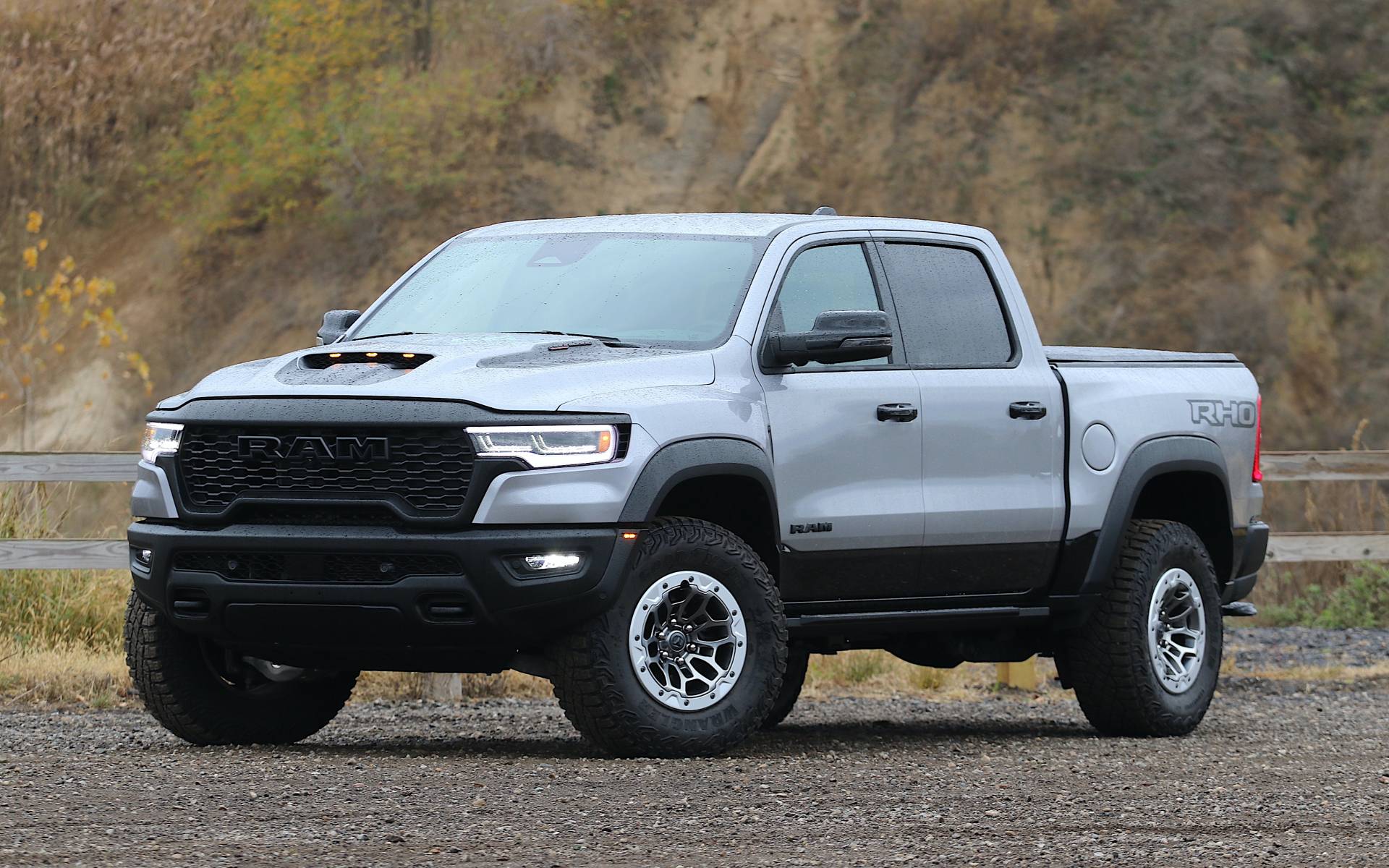
The Ram 1500 RHO is engineered as a high-performance off-road pickup, optimized for desert racing, trail work, and rough terrain at high speeds. Its long-travel suspension, coil springs, and adaptive shocks prioritize wheel articulation and impact absorption over heavy-duty hauling, resulting in a relatively low payload capacity of roughly 1,490 lbs.
Even moderate loads, such as a few hundred pounds of equipment or a trailer tongue weight, can cause noticeable rear sag. This makes the RHO less practical for daily work tasks compared to standard Ram 1500 trims like the Tradesman or Big Horn, which are built with stiffer suspensions for carrying tools and materials reliably.
The primary reason for the RHO’s sagging tendency is its off-road-specific suspension geometry. The truck features a five-link coil-spring rear suspension with up to 14 inches of rear-wheel travel.
While these coil springs offer smooth on-road handling and exceptional articulation over obstacles, they are more compressible than leaf springs found on conventional work trucks. Moderate weight quickly moves the suspension through its initial travel, creating a pronounced visual squat even when the truck is within legal payload limits.
Another contributing factor is the Bilstein Black Hawk e2 adaptive shocks. These sensor-driven, performance-focused dampers adjust for speed, steering, and jump impact but do not provide active load leveling.
Unlike other Ram 1500 trims with the Active-Level Four Corner Air Suspension, the RHO relies solely on coil springs and mechanical-hydraulic damping, allowing the rear to settle under load until equilibrium is reached. Optional off-road hardware, such as beadlock wheels or panoramic sunroofs, further reduces actual payload capacity, sometimes closer to 1,400 lbs.
The combination of soft long-travel springs, performance damping, and off-road equipment leads to a rear-end squat that can visually exaggerate the weight being carried.
While the Hurricane H/O 540-hp engine can move the payload easily, the truck can appear overloaded to the naked eye. To mitigate this, owners may engage Sport mode to firm the suspension or use weight distribution hitches to shift trailer weight forward and level the stance.
The Ram 1500 RHO is a top-tier off-road pickup that excels in rugged environments but sacrifices payload and traditional hauling capability. Its specialized suspension and adaptive shocks ensure outstanding off-road performance, but owners who need consistent work-truck utility may find the RHO’s “squishy” rear end limiting without aftermarket adjustments.
5. Toyota Tacoma Standard: Reliable Midsize, Limited Hauling Capability
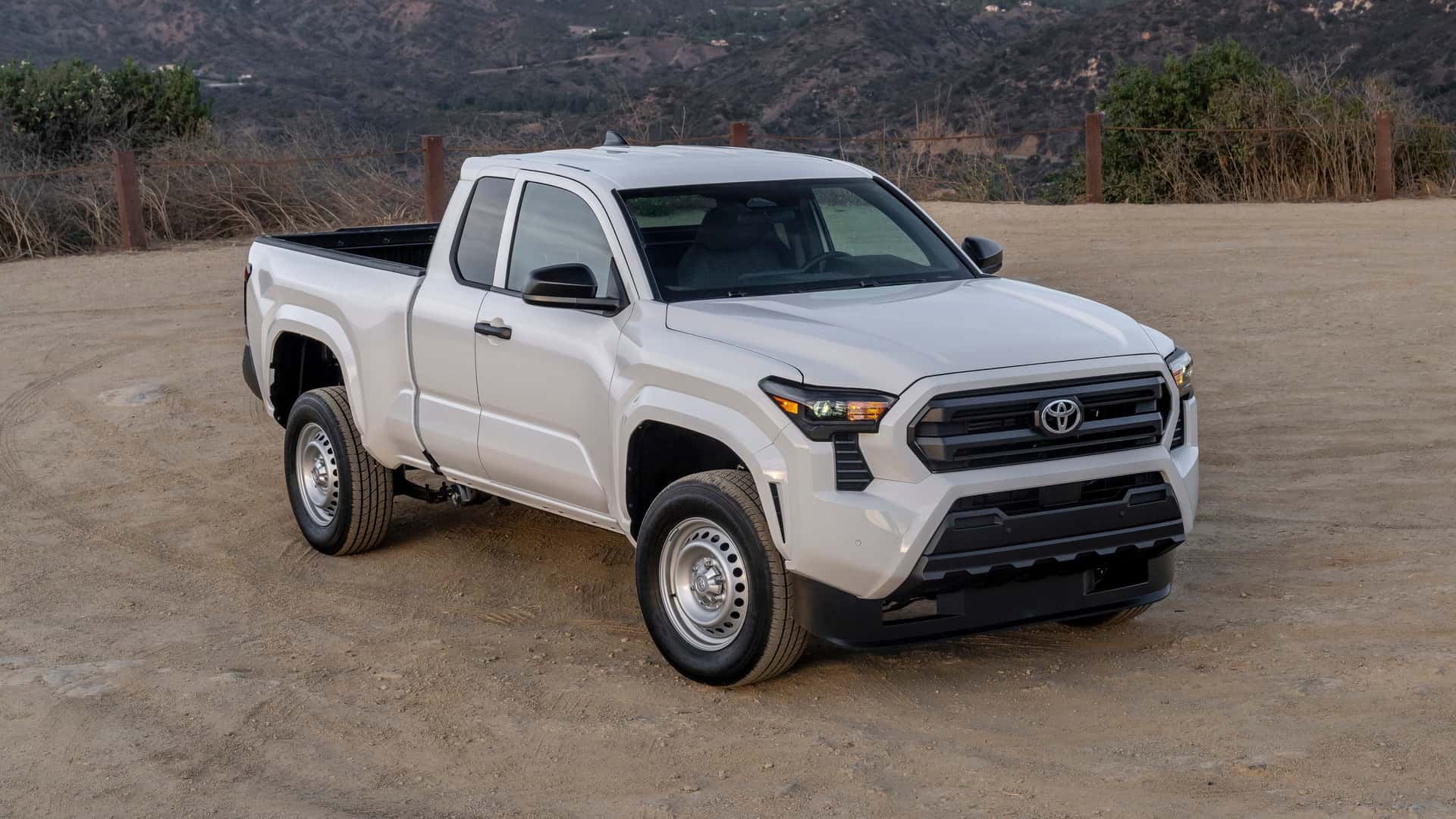
The Toyota Tacoma is widely recognized in the midsize truck segment for reliability and off-road performance, but its standard suspension limits heavy hauling capability. With a maximum payload of around 1,620 lbs, even moderate loads can cause visible rear sag. The factory leaf springs are soft, designed to prioritize ride comfort and off-road articulation over stiff load support.
Over time, repeated use near the payload limit can cause the springs to “de-arch,” leading to a permanent squat even when the truck is empty. This makes the Tacoma less suited for daily work involving full beds or heavy trailers without suspension upgrades.
The primary reason for sagging lies in the factory leaf spring design. The springs have a low spring rate and minimal leaf count, typically consisting of only two or three main leaves plus an overload leaf.
This contrasts with heavy-duty work trucks that use thicker, multiple-leaf packs to maintain ride height under load. Additionally, the Tacoma’s OEM springs feature a nearly flat profile, so even a few hundred pounds of tools or gear quickly forces the leaves into a negative arch, compressing the rear and bringing the frame closer to the axle.
The Tacoma’s suspension is also optimized for off-road use. TRD Off-Road and TRD Pro models employ soft springs and a spring-over-axle configuration to maximize wheel articulation, improve ground clearance, and enhance traction over uneven terrain.
While excellent for trails, this setup further contributes to rear-end sag under static loads. Owners often notice “Taco Lean,” where the driver’s side sits lower due to uneven weight distribution from the fuel tank and regular cargo.
To address sag, many Tacoma owners turn to aftermarket solutions. Add-A-Leaf inserts provide a cost-effective way to stiffen the existing leaf pack.
Full heavy-duty leaf packs from brands like Deaver or Old Man Emu offer rated support for repeated loads ranging from 300 lbs to over 1,000 lbs. Airbag systems are another option, allowing adjustable rear support to maintain level stance under load while preserving ride quality when empty.
The standard Toyota Tacoma excels at reliability and off-road performance but struggles with payload and heavy-duty hauling. Its soft, flat-profile leaf springs and off-road-focused suspension lead to visible sag under moderate weight, making aftermarket reinforcement necessary for consistent work-truck capability.
Selecting a work truck comes down to evaluating payload capability and suspension design. Trucks with high payload ratings, such as the Ford F-350, Chevrolet Silverado 3500 HD, and Ram 3500, provide reinforced frames, strong leaf-spring suspensions, and dual rear wheels to maintain stability and level cargo beds even under heavy loads.
These features make them ideal for construction, agriculture, and towing large trailers. Trucks that focus on comfort or off-road performance, including the Ram 1500, F-150 Raptor, and Toyota Tacoma, provide smoother rides and better wheel articulation but tend to sag under moderate loads.
This can reduce front-tire traction, affect handling, and increase suspension wear. For buyers who regularly carry heavy loads, choosing a truck with a high-capacity suspension or adding aftermarket support is critical. Knowing the strengths and limitations of each model helps drivers match their truck to the demands of their work and driving conditions.
Also read: Top 10 Cars With the Most Useful Hidden Storage Compartments