
There is something almost sacred about the sound of a great engine. Long before performance figures, lap times, or horsepower numbers entered the conversation, it was sound that stirred emotion in the hearts of drivers and bystanders alike.
The exhaust note of a car is not merely a mechanical byproduct it is the voice of the machine, a sonic fingerprint shaped by engineering philosophy, cylinder count, firing order, crankshaft design, and exhaust geometry all working together in an intricate, unscripted symphony.
With hundreds of explosions occurring per second within an engine, a car’s exhaust note is essentially the combined shockwaves of the internal combustion process reaching your ears.
These produce sounds with specific resonant frequencies, which are modified by several factors of a car’s exhaust system, such as resonators and mufflers, as well as the intake geometry on the other end.
Throughout automotive history, certain engines have transcended their purely functional roles to become cultural icons recognized not by sight, but by sound alone. From the operatic wail of an Italian V12 stretching toward its redline to the rolling, uneven potato-potato burble of an American V-twin, these engines speak a language that bypasses logic and travels straight to the spine.
This list celebrates ten of the most iconic, distinctive, and emotionally resonant exhaust notes in automotive and motorsport history. Each engine earns its place not just through raw performance, but through the sheer uniqueness and character of the sound it produces — sounds that have defined eras, brands, and the very culture of motoring itself.
1. Ferrari F40 / Ferrari V8 Flat-Plane
If there is one sound that has come to define the romance of the Italian supercar era, it is the sharp, stratospheric wail of a Ferrari V8 with a flat-plane crankshaft.
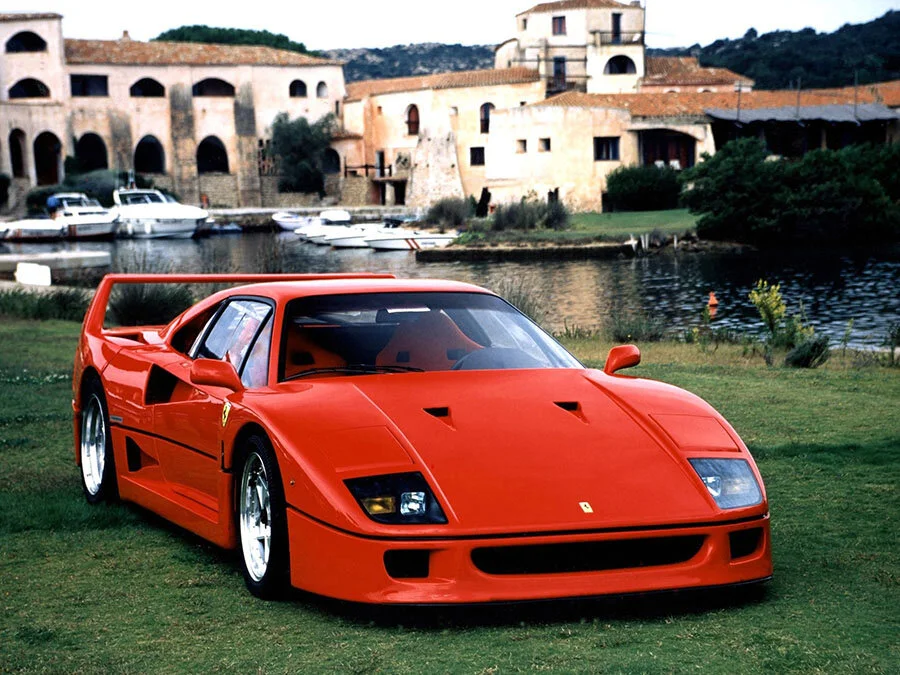
Few examples illustrate this better than the legendary Ferrari F40, one of the last cars personally approved by Enzo Ferrari himself. Powered by a twin-turbocharged 2.9-litre V8, the F40 didn’t just go fast it announced itself with a sound so savage and so visceral that it became permanently etched into automotive folklore.
The secret behind Ferrari’s signature exhaust voice lies in its engineering choices. Ferrari has long been known for its signature high-pitched, wailing exhaust note, which is largely attributed to its flat-plane crankshaft and the unique firing order of its V8 and V12 engines. A flat-plane crankshaft arranges the crank pins 180 degrees apart, rather than the 90-degree cross-plane layout common in American V8s.
This design means the engine fires in a pattern that produces no gaps between explosions in the same bank of cylinders, creating a relentless, revvy, almost frantic mechanical character that is entirely unlike the lazy, loping cadence of its American counterparts.
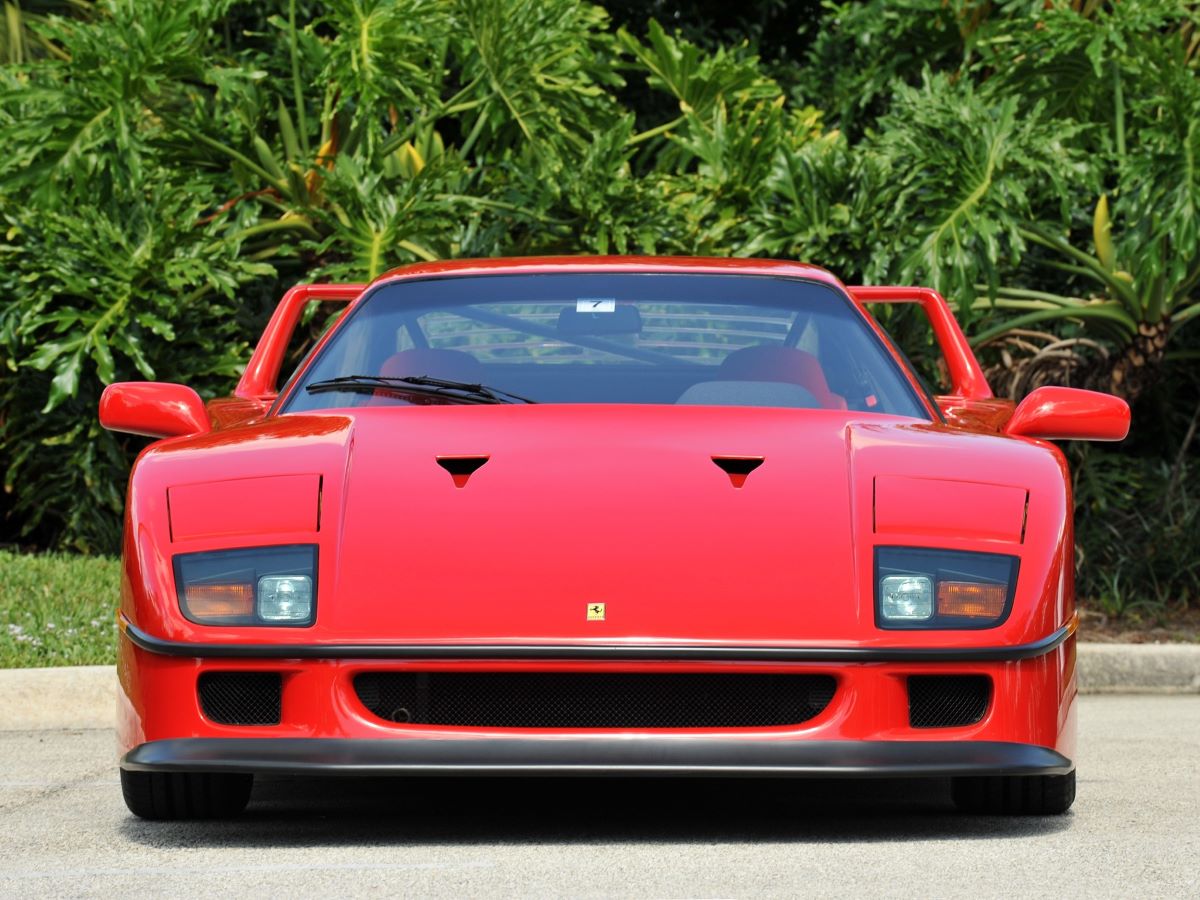
The F40’s soundtrack begins as a deep, purposeful mechanical thrum at idle, bristling with the barely contained energy of boost pressure building behind twin IHI turbochargers.
As the revs climb through the midrange, the note transitions growing harder, more urgent, more desperate until at full throttle it erupts into a banshee-like shriek overlaid with the unmistakable whoosh and whistle of the turbos spooling.
The combination of forced induction and a high-revving flat-plane V8 gives the F40 a sound unlike anything else: part race car, part wild animal, entirely unforgettable.
What makes the F40’s exhaust note so special beyond just volume or pitch is its texture. There is a rawness and an honesty to it no electronic sound enhancement, no active exhaust valves, no artificial tuning to please a focus group.
The sound you hear is the pure, unfiltered product of mechanical engineering working at its absolute limit. Every crack of a flat shift, every overrun pop and bang, every turbocharged snarl under hard acceleration tells a story of an era when supercars were built to thrill without apology.
The Ferrari F40 also represents a broader truth about the Italian approach to exhaust acoustics: sound was never an afterthought, but a core design parameter.
For many exotic car manufacturers, the sound of the exhaust is more than just a byproduct of engineering it’s a key part of their brand identity. Ferrari understood this decades before the rest of the industry caught on, and the F40 remains the purest proof of that philosophy.
Even today, decades after production ended, the sound of a Ferrari F40 at full song stops crowds dead in their tracks. It is not merely loud it is emotionally overwhelming, a sound that makes the hairs on your arms stand up and the rational part of your brain switch off entirely. In the hierarchy of great automotive exhaust notes, the F40’s is not just iconic it is irreplaceable.
2. Jaguar E-Type Straight-Six
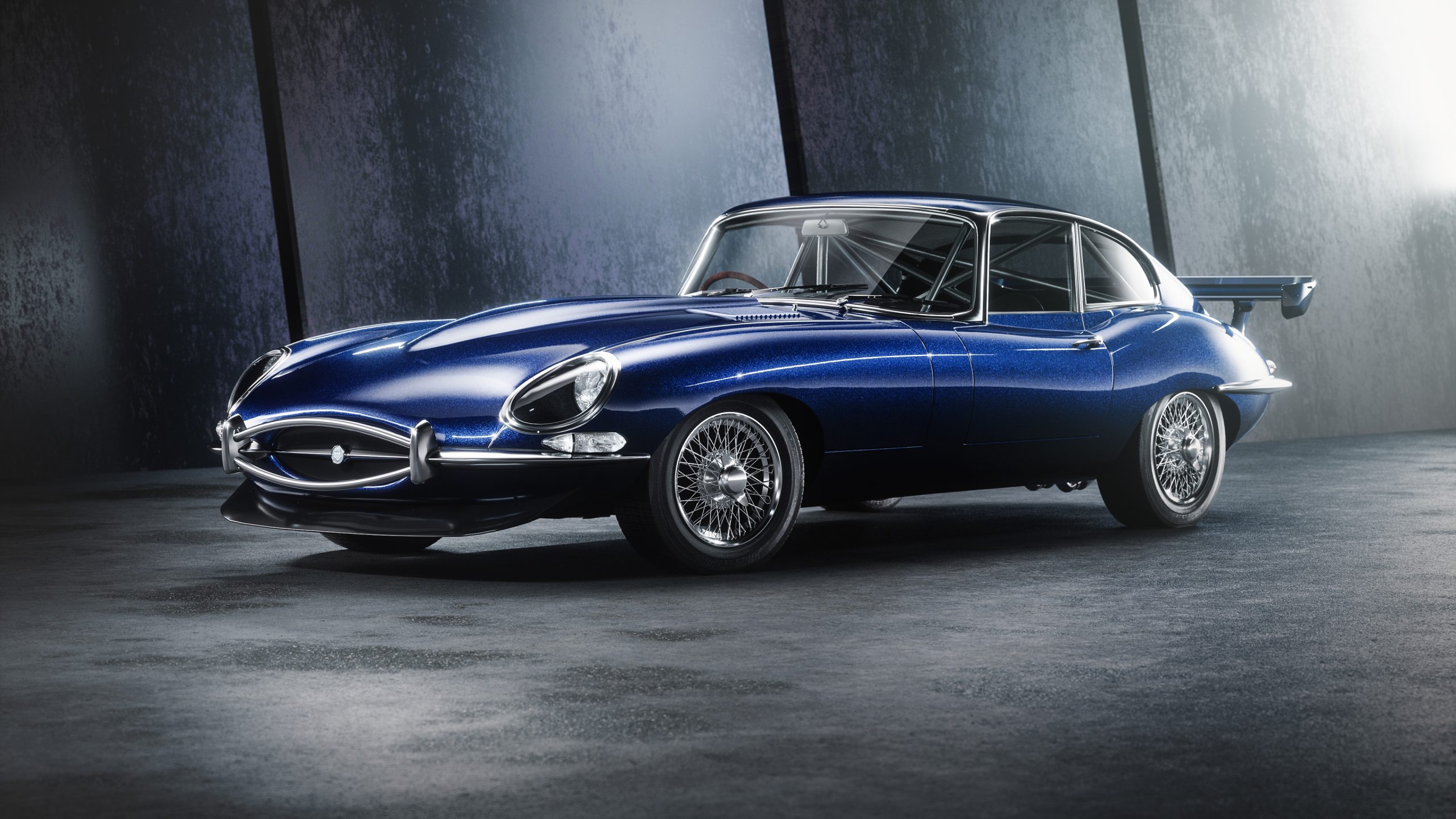
The Jaguar E-Type is widely considered one of the most beautiful automobiles ever made. Enzo Ferrari himself reportedly called it “the most beautiful car,” and while that quote has been disputed, what has never been in doubt is the deeply satisfying, rich, and characterful exhaust note produced by the E-Type’s celebrated XK straight-six engine.
This engine, in various displacements, powered the E-Type from its 1961 debut through to its final iteration, and its sound became as iconic as the car’s curvaceous silhouette.
The classic British muscle sound of the Jaguar E-Type is rich and guttural. Its straight-six engine produces a deep rumble that oozes vintage charm, reminding us why this car is still one of the most beloved classics on the road.
The XK engine was designed in the late 1940s by William Heynes and William Lyons, and its twin-cam architecture was revolutionary for its time. In the E-Type, it was initially offered as a 3.8-litre unit before growing to 4.2 litres in 1964, and finally a 5.3-litre V12 in the Series III though it is the straight-six versions that are most beloved for their sonic character.
The inline-six configuration is inherently well-balanced, with pairs of pistons naturally cancelling each other’s vibrations. This mechanical smoothness translates directly into the exhaust note: a sound that is wonderfully free of coarse harshness, full of smooth harmonic resonance, and rich with a deep, baritone quality that feels almost orchestrated rather than merely mechanical.
At idle, the E-Type’s straight-six settles into a calm, authoritative burble a sound of assured, aristocratic power rather than brash American muscle. Wind the revs up and the note deepens and strengthens, filling the surrounding air with a resonance that seems to belong to a different, more romantic era of motoring.
The exhaust system fitted to the E-Type plays a crucial role in shaping that sound. The long, individual header pipes from each cylinder merge into a collective system that promotes gas scavenging while simultaneously tuning the acoustic output.
The result is a note that peaks in a deep, throaty roar at high revs muscular but refined, aggressive but never crude. It is a sound that perfectly mirrors the E-Type’s character as a car: breathtakingly beautiful on the outside, genuinely formidable underneath.
Part of what makes the E-Type straight-six exhaust note so enduring is its period authenticity. Modern exhaust systems are engineered with complex resonators and catalytic converters that inevitably compromise the natural voice of the engine.
The E-Type’s system was simple, functional, and honest and that honesty shines through in every bark, blip, and roar the engine produces. Classic car enthusiasts who have driven a well-maintained original E-Type frequently describe the experience of hearing it accelerate through an open-top tunnel or mountain pass as one of the most purely emotional experiences in motoring.
The Jaguar E-Type’s straight-six exhaust note is not the loudest, not the most frenetic, and not the most extreme on this list. But it may well be the most dignified, the most characterful, and the most timelessly beautiful a sound as graceful and enduring as the car that produces it.
3. Dodge Viper V10
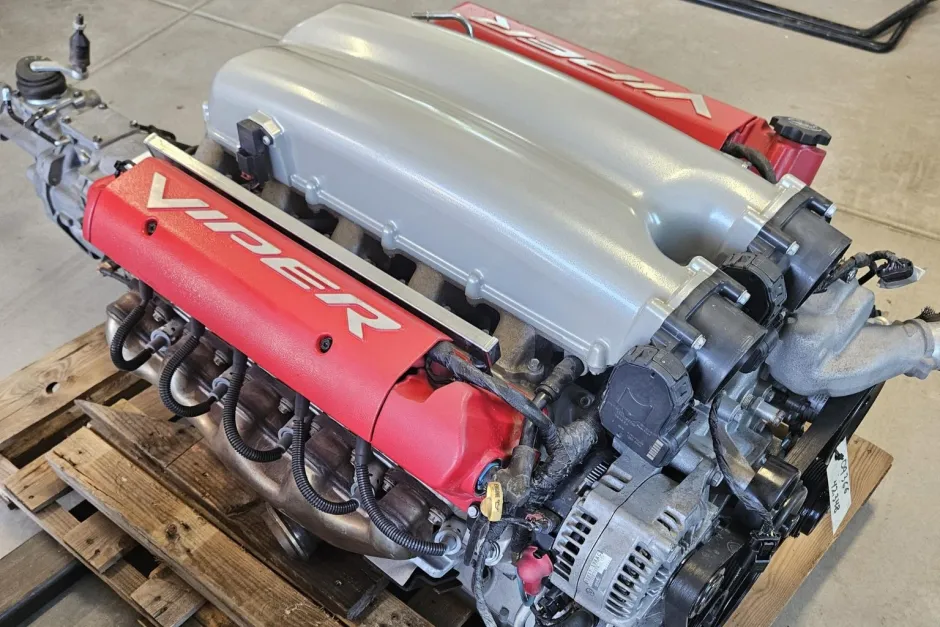
America has never been shy about displacement, and nowhere is this philosophy more explosively expressed than in the Dodge Viper’s monstrous 8.4-litre V10 engine.
The Viper was conceived as a modern-day Cobra a car of brutal simplicity and overwhelming power and its exhaust note embodies that philosophy completely.
There is nothing polite, subtle, or apologetic about the sound of a Viper at full throttle. It is loud, primordial, and spectacular in the most visceral sense of the word.
The Dodge Viper’s 8.4-litre V10 engine produces an enormous and unforgettable roar. Unlike the refined tones of European sports cars, the Viper offers an unfiltered and primal sound experience. It’s loud, bold, and unforgettable.
The V10 configuration gives the Viper an exhaust note that sits between the rhythmic burble of a V8 and the smoother, more continuous roar of a V12. There is an irregular, slightly syncopated quality to the sound an almost threatening irregularity that suggests contained violence about to be unleashed.
What makes the Viper’s exhaust note particularly distinctive is its sheer, physical weight. Low-frequency sound waves are felt as much as heard, and the Viper’s V10 produces bass frequencies of such intensity that they resonate through the chassis, through the seat, and through the chest of anyone within earshot.
This isn’t a car that merely sounds fast it sounds dangerous. The side-exit exhausts on many Viper variants position the outlet pipes directly beside the driver’s door, channelling the full ferocity of the V10’s thunder inches from the occupant’s ears, creating an experience that is equal parts terrifying and exhilarating.
The Viper’s engine was originally derived from a truck V10 developed in collaboration with Lamborghini, which Chrysler owned during the car’s development. The engineers refined and tuned the unit extensively for sports car use, but they deliberately preserved its raw, unfiltered character.
Unlike European manufacturers who might soften an exhaust note through careful muffling, the Viper’s creators leaned into the brutality, understanding that the car’s identity was inseparable from its intimidating soundtrack.
At idle, the Viper settles into a lumpy, menacing lope a big-displacement rumble that makes the ground vibrate and nearby car alarms nervous. Roll into the throttle and the volume builds in a long, relentless crescendo of fury.
At full throttle, the note reaches a terrifying roar that is part thunder, part explosion genuinely one of the loudest and most aggressive exhaust sounds ever to emerge from a road-legal automobile.
The Viper’s V10 exhaust note is not music in the traditional sense. It is something rawer and older than music a primal mechanical declaration of power.
4. Subaru EJ20 Boxer
Not every legendary exhaust note belongs to a supercar. Some of the most beloved and recognizable engine sounds in automotive culture come from everyday performance cars driven on real roads by real enthusiasts and few sounds are more instantly recognizable than the off-beat, rumbling burble of the Subaru EJ20 flat-four boxer engine.
This unassuming 2.0-litre four-cylinder became the acoustic calling card of an entire subculture of performance driving, rally heritage, and all-weather enthusiasm.
Ask a car enthusiast what the Subaru WRX is known for, and the answers most likely will be along the lines of rally heritage, all-wheel drive, and the iconic boxer engine noise.
There isn’t a single car that you could mistake it with. The distinctive sound of the EJ20 particularly in turbocharged WRX and STI specification is not just recognized; it is actively loved by millions of enthusiasts worldwide. It is a sound that triggers immediate recognition, turning heads in car parks, on motorways, and in the middle of quiet residential streets.
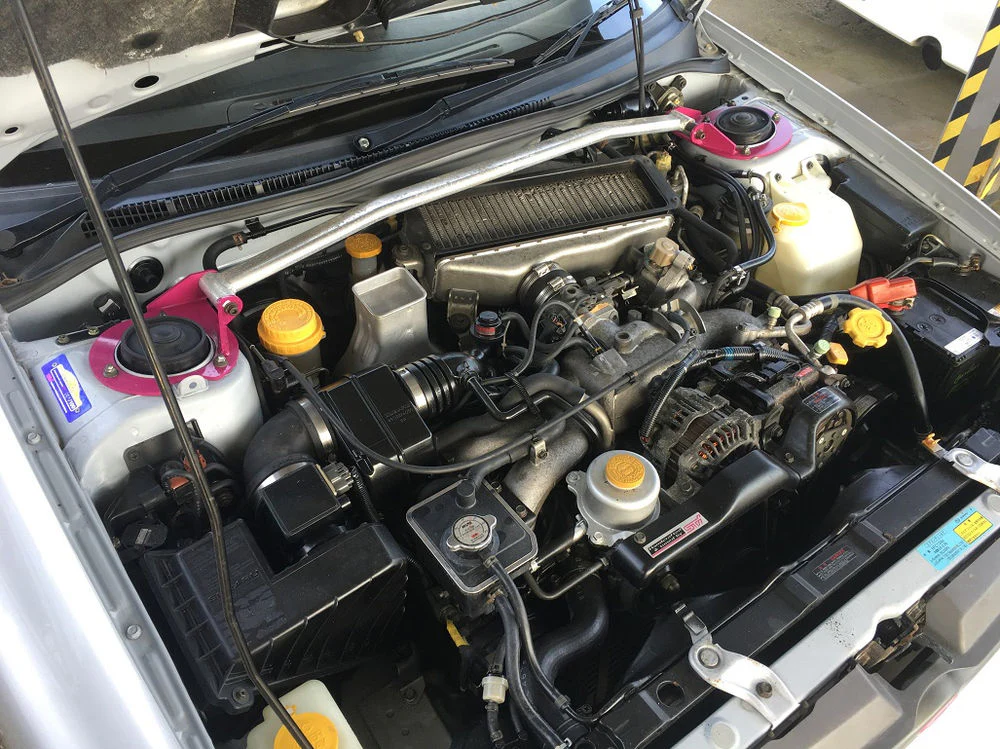
The acoustic character of the EJ20 stems directly from its physical architecture. A boxer engine, also called a horizontally opposed or flat engine, positions its cylinders horizontally, with pistons moving toward and away from each other on opposite sides.
In the EJ20, this configuration creates an inherently different exhaust geometry compared to conventional inline or V configurations. The headers from opposite cylinders meet at different lengths, creating unequal pressure pulses that produce the characteristic loping, slightly irregular idle note that has become the engine’s trademark.
The turbocharged variants add another layer of sonic complexity. Under boost, the EJ20 produces a rushing, pressurized induction roar combined with its characteristic exhaust burble and on overrun, the dump valve or blow-off valve releases pressure with a distinctive hiss or whoosh that became one of the defining sounds of 1990s and early 2000s performance car culture.
The combination of the boxer’s uneven burble at idle, the BOV hiss under lift, and the hard, boosted surge under power gives the EJ20 a multi-dimensional acoustic signature that no other engine family replicates.
The EJ is a four-cylinder horizontal facing engine that produces a unique and irregular idling sound, and is characterized by a heavy exhaust sound while driving.
From the gravel stages of the World Rally Championship to suburban streets in every country on earth, this sound became synonymous with a particular kind of enthusiastic, accessible, purpose-built driving performance that resonated with a generation of car lovers who couldn’t afford Ferraris but wanted something genuinely special.
The EJ20 proved that great exhaust notes don’t require twelve cylinders or a racing pedigree sometimes, all it takes is an inspired piece of engineering and an unconventional layout.
Also Read: 10 Cars With the Most Unusual Engine Placements in History
5. BMW S54 Straight-Six (E46 M3)
BMW has a long and celebrated history of building exceptional inline-six engines, but the S54 unit fitted to the E46-generation M3 stands apart as arguably the finest-sounding naturally aspirated six-cylinder engine ever installed in a road car.
This 3.2-litre DOHC unit, capable of revving to 8,000 RPM with individual throttle bodies feeding each cylinder, produced a sound that was simultaneously precise, angry, and deeply emotional a sound that embodied everything the driver-focused engineering philosophy of BMW’s M division stood for.
The S54 is a versatile yet characterful engine, capable of non-abrasive cruising with a lovely low-level burble, rising to a rasping crescendo as the valves open at high revs. This dynamic range is one of the S54’s most celebrated qualities.
Unlike a turbocharged engine that delivers a relatively constant wall of noise under boost, the naturally aspirated S54 tells a story with its sound a narrative arc that begins quietly and builds relentlessly toward a screaming, mechanical climax as the tachometer needle sweeps toward the redline.
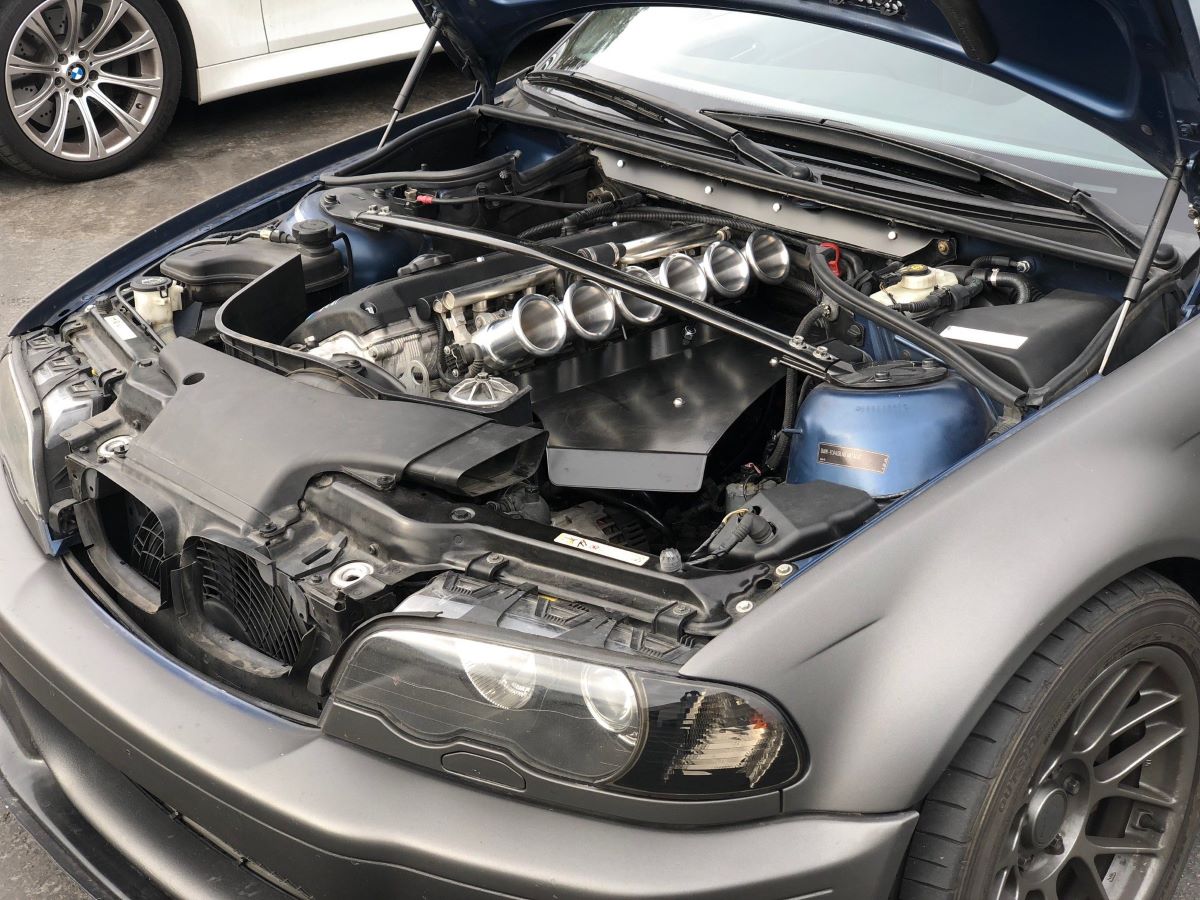
The individual throttle bodies are central to the S54’s acoustic character. Rather than a single throttle body controlling airflow to all six cylinders via a common intake manifold, the S54 features six individual throttles one per cylinder allowing each cylinder to breathe completely independently.
This arrangement produces a sharper, more immediate throttle response, and it also creates a more mechanical, almost racing-car-like intake roar that blends with the exhaust note to create a combined sound of extraordinary complexity and richness.
At low speeds and light throttle, the S54 is perfectly civilized a refined purr that belies the engine’s capabilities. Begin to push through the rev range and the character transforms progressively: at around 4,000 RPM the note begins to sharpen and harden, the intake roar becoming more prominent, the exhaust note shifting from burble to bark.
Above 6,000 RPM the transformation is complete the engine is screaming, a hard-edged, metallic howl that fills the cabin and demands every ounce of the driver’s attention and commitment. It is a sound that feels genuinely earned a reward for the bravery of pushing the car and yourself to the limit.
The BMW E46 M3 is a fan favourite for many reasons, and its inline-six engine produces a distinctive, high-pitched exhaust note that’s both sporty and emotional.
In an era increasingly dominated by turbocharged engines and electronic driver aids, the E46 M3 and its S54 stand as a monument to what naturally aspirated engineering can achieve both in performance terms and, perhaps more importantly, in the art of creating a driving soundtrack that connects driver to machine in the most direct and emotional way possible.
6. Harley-Davidson V-Twin
No engine in the history of powered transport has a more culturally embedded, more instantly recognizable sound than the Harley-Davidson V-twin. It is not merely an engine note it is a cultural icon, a lifestyle soundtrack, and a sonic identity so powerful that its creator once attempted to legally own it.
The famous “potato-potato-potato” idle of a Harley is known to millions of people who have never ridden a motorcycle in their lives, making it arguably the most universally recognized exhaust note on this entire list.
At the core of Harley’s iconic sound is its long-time decision to use a 45-degree V-twin engine with a shared crank pin. Other manufacturers offset crank pins to achieve smooth, evenly spaced firing, but not Harley.
It keeps both connecting rods on the same pin, creating an uneven firing order where the engine produces a quick succession of power strokes followed by a longer pause. It’s this irregular rhythm that generates the familiar loping idle.
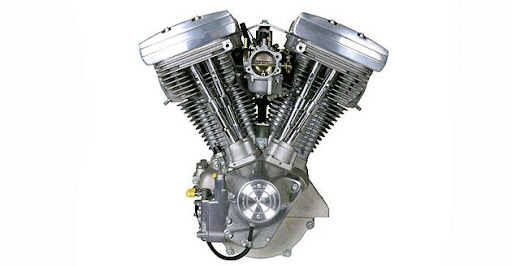
This engineering decision born of practicality and cost considerations in the early twentieth century rather than any deliberate acoustic design created a sonic identity so powerful and distinctive that it became the entire brand’s most valuable asset.
The 45-degree angle between the cylinders, combined with the shared crank pin arrangement, means the Harley fires its two cylinders 315 degrees apart and 405 degrees apart in alternating fashion. The result is a heartbeat-like rhythm two quick beats followed by a pause, then repeat that sounds less like machinery and more like something alive.
Harley also relies on a system where one cylinder at a time gets the spark, which adds to the quirky “put, put, rest” cadence. Traditionally, Harley engines haven’t used balance shafts, which means natural vibrations are left to resonate throughout the bike. Instead of dampening these mechanical nuances, Harley embraced them, letting the subtle shaking and grumbling become part of its character.
This philosophy of leaning into mechanical character rather than engineering it away is what separates the Harley V-twin’s sound from every other motorcycle engine.
Japanese and European manufacturers built smoother, more refined, more technically sophisticated engines. But Harley built something with soul, and that soul speaks most clearly through the exhaust.
The low, rolling rumble at idle, the rhythmic lope through town, and the deep, thunderous roar at highway speed all communicate the same message: this is not just transportation, it is an experience.
Harley’s exhaust note is so closely associated with its identity that the manufacturer attempted to trademark it in 1994, igniting legal battles that dragged on for six years before eventually being abandoned but cementing just how unique the sound is to the brand.
That a corporation would pursue legal ownership of a sound speaks to the extraordinary commercial and cultural power of this acoustic identity. No other engine in history has come close to achieving that level of sonic brand recognition.
7. Lexus LFA V10
The Lexus LFA is one of the most extraordinary automobiles ever built a project that consumed a decade of development, pushed the boundaries of materials science, and produced a supercar that stunned the world not only with its performance but with the unearthly, almost supernatural sound of its 4.8-litre naturally aspirated V10 engine.
This engine’s exhaust note was so unique, so unlike anything previously heard from a production road car, that it required the development of an entirely new instrument to display it accurately.
Starting production in 2010, the LFA was a car 10 years in the making and came packed with a mind-blowing amount of effort, advanced technology, and extraordinary attention to detail.
The V10 engine was developed entirely by Lexus engineers who wanted to create something that would define the car’s character in the most spectacular way possible.
They succeeded beyond all expectations, producing a unit that could rev to 9,000 RPM and did so with a speed and eagerness that defied belief. The engine’s response time the time between opening the throttle and the rev counter climbing was so fast that conventional analogue instruments couldn’t keep up. Lexus had to develop a digital tachometer that could respond quickly enough to accurately display what the engine was doing.
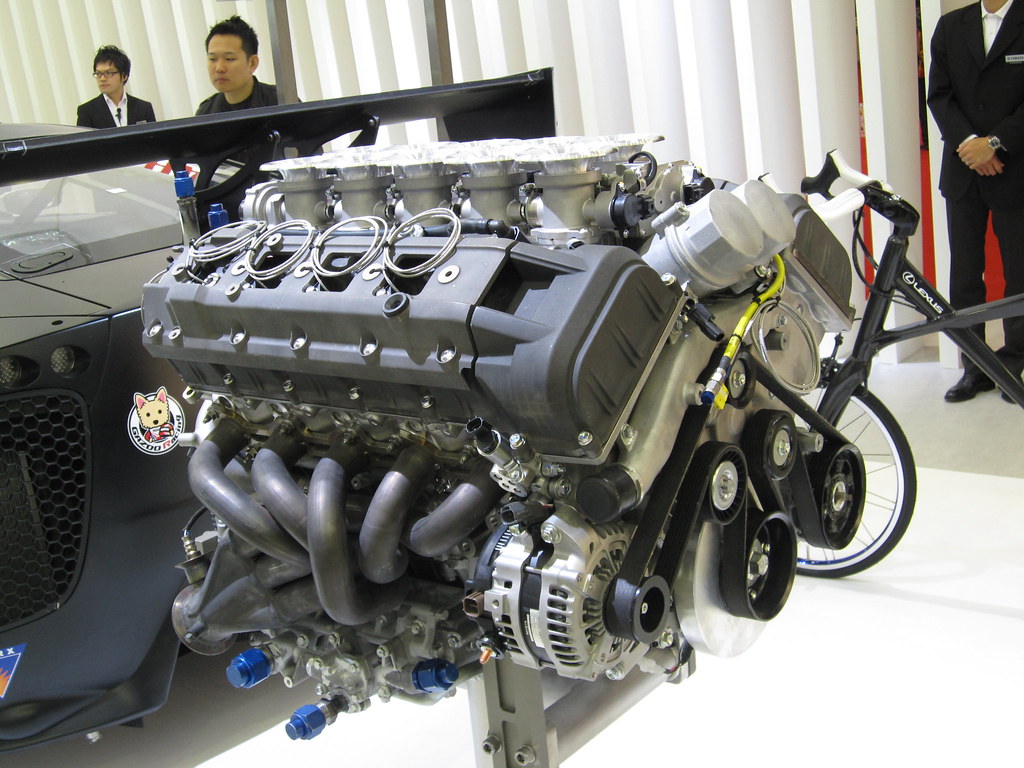
The LFA features a very sharp, howling Yamaha V10 4.8-litre engine that evokes the earlier stunning Formula 1 sound. Yamaha’s involvement in developing the engine’s acoustic properties was not incidental the musical instrument manufacturer brought expertise in acoustic engineering and sound design that helped shape the LFA’s exhaust into something transcendent.
The result is a note that begins as a low, purposeful V10 bark at idle and transforms, through the rev range, into a sound that seems to belong more to a Formula 1 car than to anything road-legal: a high-pitched, multi-layered scream of extraordinary intensity and musical quality.
What separates the LFA’s sound from other exotic V10s is its specific harmonic structure. The Yamaha-tuned exhaust system was designed to emphasize particular frequencies in the engine’s acoustic output frequencies that human hearing finds inherently exciting and emotionally stimulating.
The result is not merely loud; it is engineered to be beautiful in a very precise, scientifically informed way. This is sound design raised to an art form, executed by people who build musical instruments for a living.
The LFA’s exhaust note is a reminder that the most spectacular sounding engines in history are not always the oldest or the most celebrated. Sometimes, extraordinary devotion to engineering excellence can produce something entirely new and genuinely breathtaking. The LFA howl is in a category of its own.
8. Mazda 787B Four-Rotor Wankel
The Mazda 787B occupies a unique position in motorsport history it is the only rotary-engined car ever to win the 24 Hours of Le Mans, taking an improbable and historic victory at the 1991 race.
But beyond the record books, the 787B is remembered with near-religious reverence by racing fans for the sheer, unhinged savagery of its four-rotor Wankel engine’s exhaust note. It is a sound that belongs to no recognized category not a V8, not a straight-six, not a V12 but something entirely its own.
While the “normal” one or two-rotor rotary engines already have a uniquely awesome sound, the 787B stepped things up with four rotors of fury. Capable of producing 700hp without forced induction, the rotary-powered 787B took home the victory at Le Mans for Mazda in 1991.
Sounding like a snarling monster at low RPM, the 787B’s engine lets out a scream that could pierce the heavens as it approaches redline a brutal symphony like no other exhaust note.
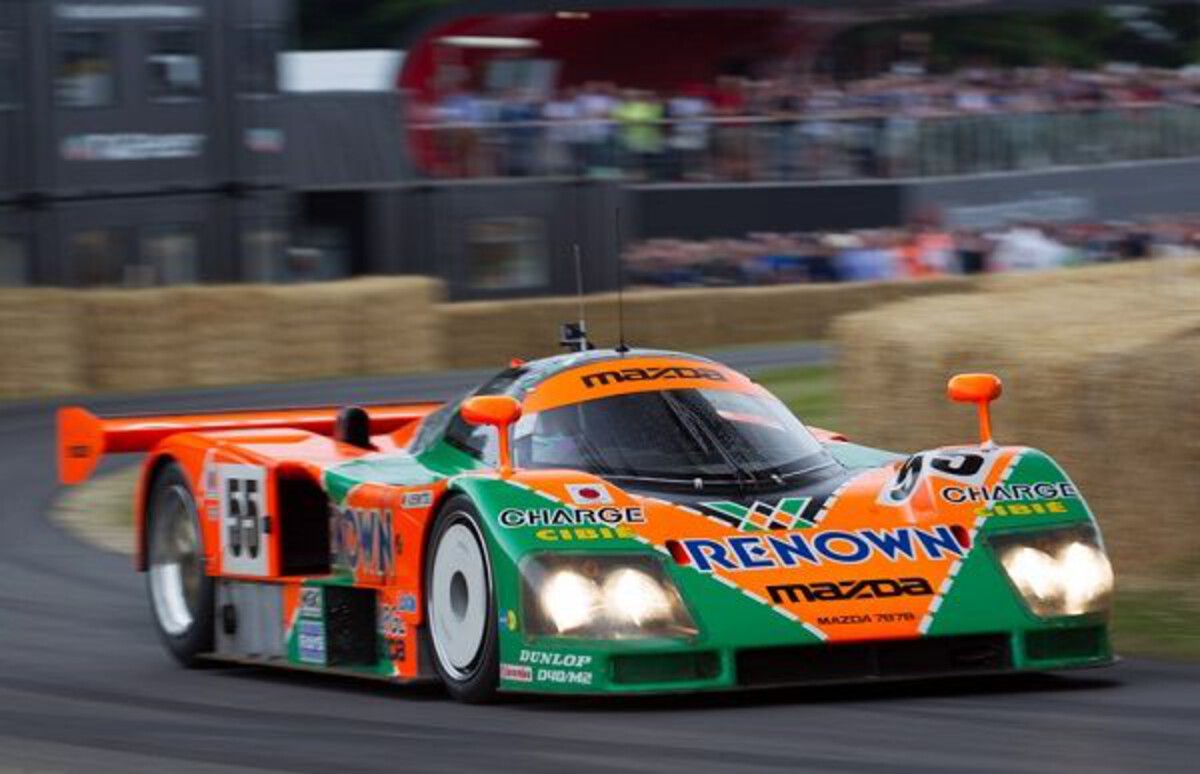
The Wankel engine’s fundamental operating principle a triangular rotor spinning eccentrically within an epitrochoidal housing rather than reciprocating pistons moving up and down produces a combustion and exhaust cycle that is fundamentally different from any piston engine.
Each face of the three-sided rotor functions as a separate combustion chamber, firing in rapid succession as the rotor spins. Multiply this across four rotors and the result is a power delivery of extraordinary smoothness and a firing frequency that is unlike anything a conventional engine can produce.
This unique mechanical architecture translates directly into the exhaust note. The 787B’s engine produces a sound at low RPM that is deep, complex, and vaguely threatening a mechanical cacophony of overlapping pulses that sounds almost turbulent, like the leading edge of a storm.
As the revs climb, this complexity resolves into something more focused and intense a penetrating, multi-layered scream that cuts through other sounds with astonishing clarity.
At maximum RPM, standing near the 787B at full throttle is an experience that witnesses consistently describe as bordering on religious a sound so extreme, so foreign, and so magnificent that it seems to exist outside the normal boundaries of mechanical noise.
The 787B was subsequently banned from Le Mans due to rule changes targeting the rotary engine’s fuel consumption, adding a bittersweet dimension to its legendary status.
The sound of that four-rotor Wankel will never be heard in competition again, which makes recordings and memories of it all the more precious to those who were fortunate enough to experience it in person.
9. Porsche 911 GT3 Flat-Six
The Porsche 911 GT3 represents the pinnacle of Porsche’s enduring commitment to naturally aspirated, high-revving flat-six engineering. In an era when the wider automotive industry has migrated almost entirely to turbocharged power units, the GT3 has remained defiantly, beautifully atmospheric and its exhaust note is the living proof that this stubbornness was entirely justified.
The GT3’s flat-six does not merely sound impressive; it sounds like precision itself, an acoustic embodiment of engineering excellence distilled to its purest form.
The 911 GT3 delivers a sound that is as much about precision and engineering as it is about power, perfectly complementing its track-focused feel. This precision is evident throughout the rev range.
Unlike engines that announce their power with a dramatic, somewhat crude roar, the GT3’s flat-six builds its note with a metronomic, controlled intensity each additional thousand RPM adding new layers of clarity, urgency, and mechanical excitement without ever descending into coarseness.
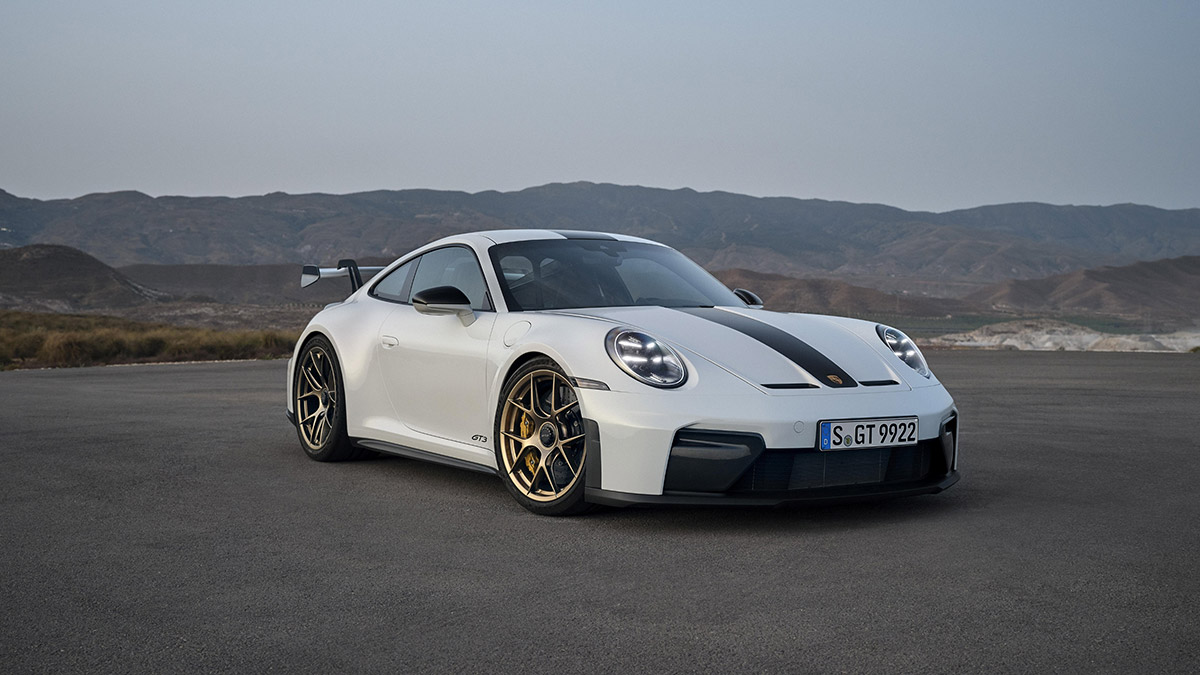
The flat-six configuration Porsche’s signature layout since the original 911 of 1963 positions its cylinders horizontally on either side of the crankshaft, creating a low centre of gravity and a very specific acoustic profile.
The GT3-specification engine, which revs to 9,000 RPM in its most focused incarnations, produces a sound that is simultaneously mechanical and musical: a hard-edged, rasping bark at lower revs that transforms into a shrill, metallic howl as the needle sweeps toward the redline.
The flat, horizontally opposed architecture gives the sound a slightly different spatial quality compared to inline or V configurations it seems to project horizontally as well as rearward, enveloping the car and its occupants in sound.
Porsche’s signature exhaust sound is sharp, precise, and aggressive the product of a finely tuned exhaust system designed to highlight the high-revving nature of Porsche’s engines.
Every element of the exhaust system header lengths, collector design, muffler volume has been obsessively refined to extract the maximum acoustic performance from the engine while meeting increasingly stringent noise regulations. The GT3 represents the extraordinary lengths to which Porsche’s engineers will go to preserve the character and emotion of their cars.
For driving enthusiasts, the GT3’s exhaust note is more than a sound it is a communication system. The engine’s voice tells the driver exactly where they are in the rev range, exactly how much performance remains available, and exactly when to shift.
In a turbocharged car, boost and power arrive relatively silently. In the GT3, the engine shouts everything it knows, and experienced drivers learn to read that acoustic information as naturally as reading a road surface. It is one of the most intimate and informative driving experiences available at any price point.
10. Lamborghini Miura V12
We close this celebration of extraordinary exhaust notes with the engine that can reasonably claim to have invented the supercar soundtrack: the 3.9-litre V12 fitted to the Lamborghini Miura.
Introduced at the 1966 Geneva Motor Show, the Miura was unlike anything the world had ever seen a mid-engined, transversely mounted V12 exotic that redefined what an automobile could be, and its engine note set a standard that Italian supercar manufacturers have been chasing ever since.
Lamborghini is famous for its deep, throaty exhaust note, which is largely the result of its V10 and V12 engines paired with custom exhaust systems that create a distinctive growl.
But the Miura’s original V12 captured something that later, more powerful Lamborghinis for all their technical advancement could never quite replicate: a rawness, an immediacy, and a sense of barely contained mechanical fury that spoke directly from the engine to the soul without any intermediary technology or electronic filtering.
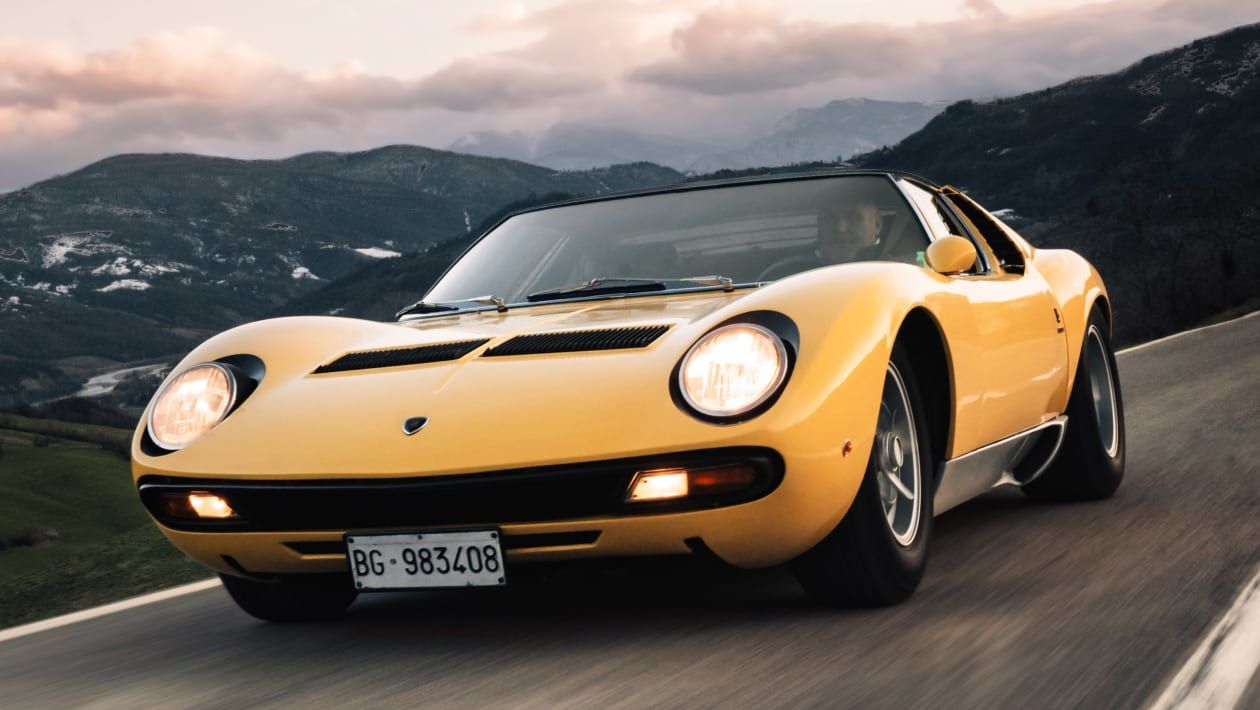
The Miura’s V12 was developed by Giotto Bizzarrini, the brilliant engineer who had previously worked on Ferrari’s legendary GTO. The engine’s architecture four overhead camshafts, six individual Weber carburettors, and a firing order that maximized mechanical harmony was state-of-the-art for 1966, and it produced an exhaust note of corresponding magnificence.
At idle, the six Webers produce a mechanical orchestra of fuel and air mixing, overlaid with the V12’s characteristic deep, velvety rumble. Roll the throttle open and the note transforms instantaneously into a howl of extraordinary quality high-pitched enough to cut through the surrounding environment, yet rich with harmonic depth that no four or six-cylinder engine can match.
A V12-powered supercar is always poster car material, but the Lamborghini Miura’s engine produces a raw, aggressive, and in-your-face exhaust note that especially when it reaches the upper rev-range emits a banshee-like shriek of pure Lamborghini madness.
This combination of mechanical rawness, Italian passion, and sheer V12 fury makes the Miura’s exhaust note not just great by the standards of its era, but genuinely competitive with anything produced in the six decades since.
The Miura’s sound carries a weight of historical significance that amplifies its emotional impact. When you hear a Miura sing, you are hearing the sound that began the supercar era the note that proved road cars could be as emotionally overwhelming, as sonically magnificent, and as artistically conceived as anything on a race track. It is the original supercar song, and nearly sixty years on, it remains one of the finest ever composed.
Also Read: Top 8 European Luxury Coupes That Dominated the 1980s Executive Market
