
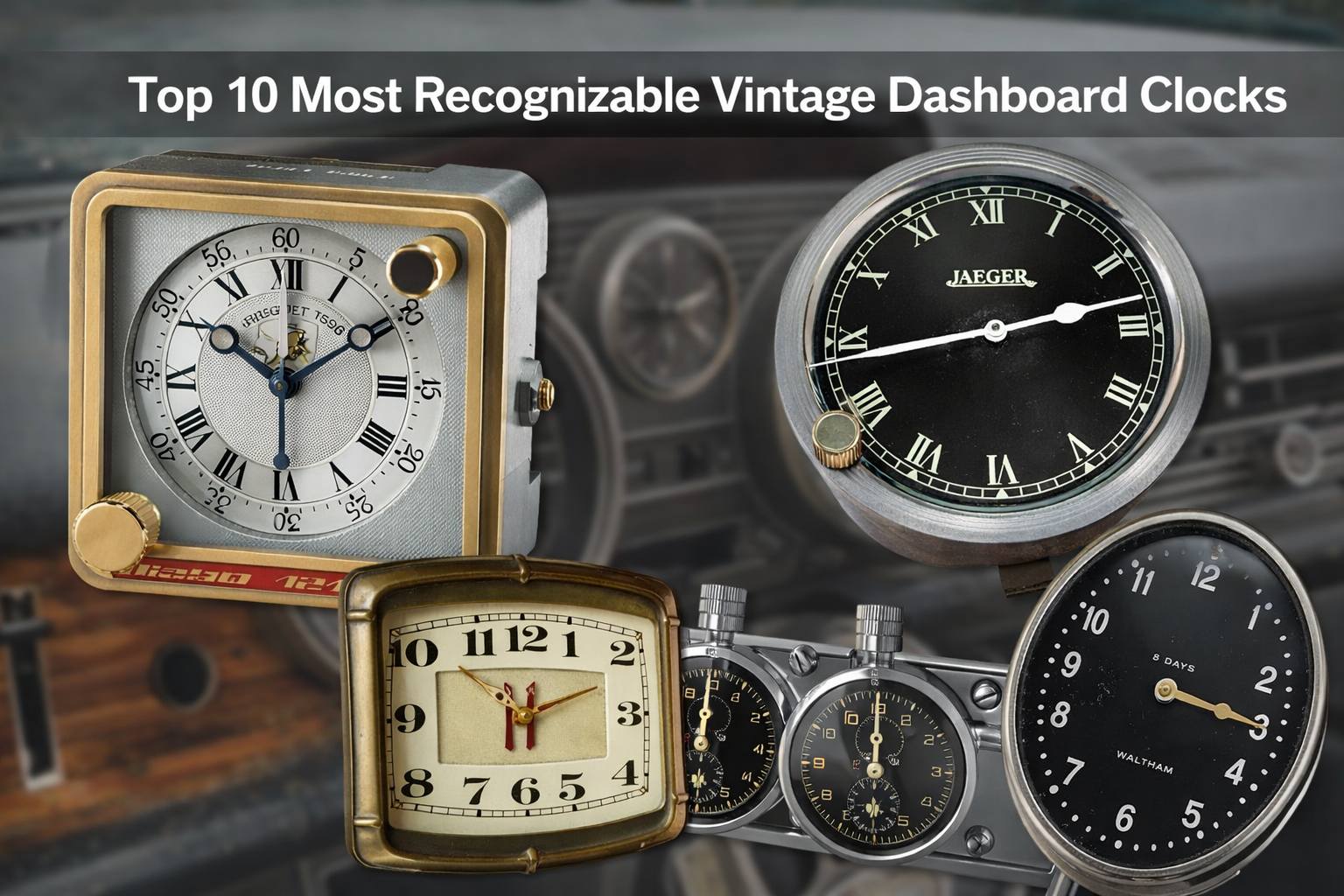
Long before digital displays colonized the modern automobile interior, the dashboard clock stood as one of the most intimate and telling objects in any car. It was part instrument, part jewelry a small mechanical heart beating quietly against the hum of the engine.
The story of the dashboard clock stretches back to the earliest days of motoring, when drivers simply hung a pocket watch from the front board of an open carriage.
As automobiles evolved and dashboards became increasingly sophisticated, the clock carved out a place of honor among the gauges and dials. By the 1920s, celebrated watchmakers were competing fiercely to supply their movements to the world’s greatest automobiles.
For a Bentley, a Rolls-Royce, or a Bugatti, the quality of the dashboard clock was as much a statement of prestige as the coachwork or the engine displacement.
These small timepieces were engineering marvels in their own right. They had to withstand temperature extremes, road vibration, dust, and the ceaseless hum of a combustion engine all while maintaining accuracy.
The finest examples were temperature-compensated, jeweled, and shock-proofed. Today, vintage dashboard clocks occupy a special place in horological and automotive collecting alike, representing a crossroads of two great mechanical traditions. Here are ten of the most recognizable and historically significant examples ever to grace an automobile dashboard.
1. Jaeger 8-Day Dashboard Clock (1920s–1940s)
Of all the names associated with vintage dashboard timekeeping, none carries more weight than Jaeger. The story begins in Paris in the late nineteenth century, when Edmond Jaeger, a brilliant French precision instrument maker, partnered with the celebrated Swiss watchmaker Jacques-David LeCoultre.
Together they developed onboard instruments of exceptional accuracy for use in early aviation during the First World War. Those instruments were so highly regarded that they were reportedly recovered from enemy aircraft shot down over the Western Front. After the war, this hard-won expertise was redirected toward the booming automobile industry, and the result changed the history of the dashboard clock forever.
The Jaeger 8-day clock became the defining dashboard timepiece of the interwar era. Its most distinctive feature was a practical one the movement was designed to run for a full eight days between windings, meaning a motorist who forgot to attend to it on Monday could safely ignore it until the following Tuesday without the clock stopping.
The winding stem protruded from the rear of the casing, through the dashboard itself, allowing the driver to wind the clock simply by reaching under and turning the stem without removing the instrument. This was an elegant solution to a genuinely awkward engineering problem.
The visual identity of the Jaeger dashboard clock is immediately recognizable to any collector. The round dial was typically finished in cream or white enamel, with clean Roman or Arabic numerals and a subsidiary seconds dial at the six o’clock position.
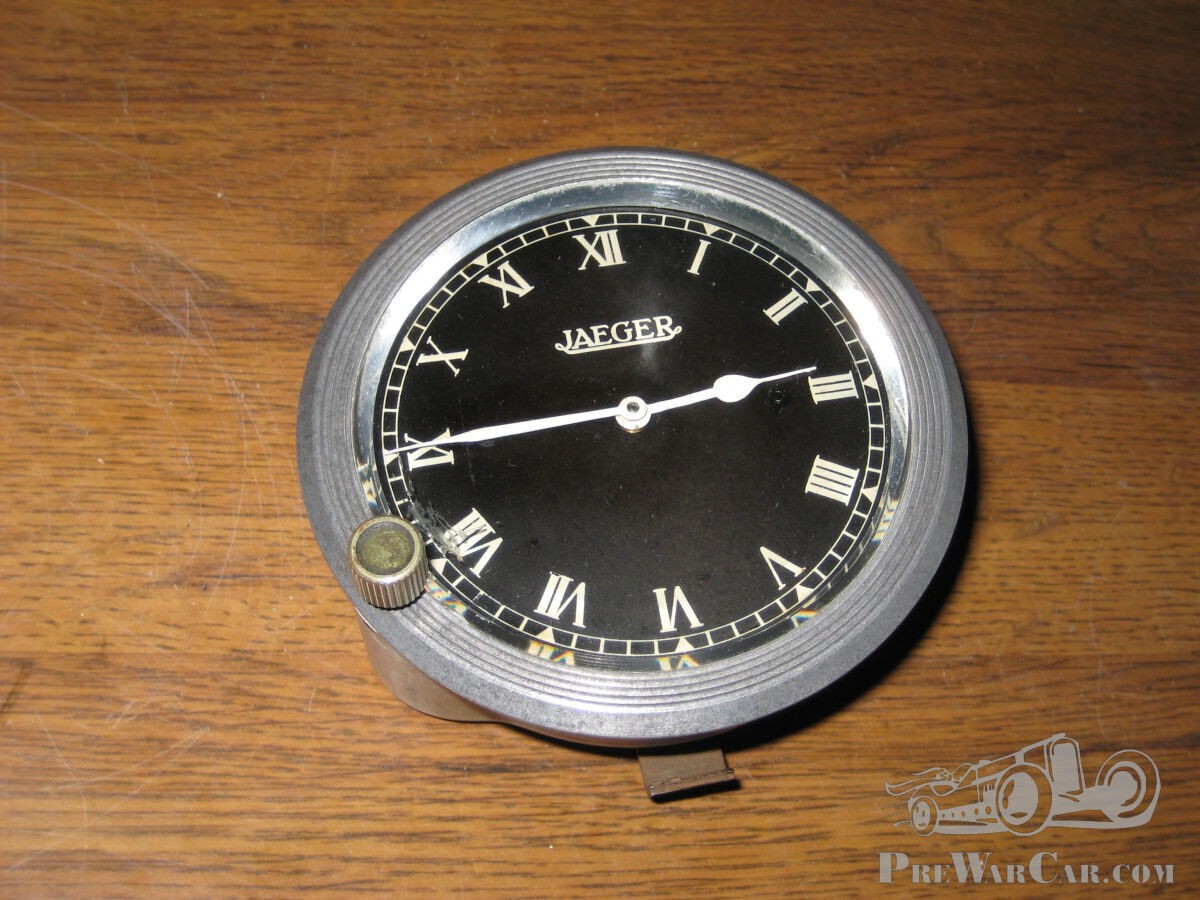
The bezel was frequently reeded featuring fine parallel ridges running around its circumference and made in nickel or chrome-plated brass. The impression was one of understated precision: a clock that looked as though it meant business without raising its voice.
The reach of Jaeger in the automotive world during the 1920s and 1930s was extraordinary. Their instruments graced the dashboards of Bugatti, Bentley, Aston Martin, Jaguar, Delaunay-Belleville, Rover, Citroën, Renault, and Vauxhall, among many others.
In France, virtually every prestige automobile of the period carried Jaeger instruments. In Britain, the firm’s market penetration was so complete that at one point they were said to supply approximately half of all cars on British roads.
A London operation was established to serve the British market, employing hundreds of workers at its peak. Across the Atlantic, Jaeger clocks found their way into Cadillacs, Lincolns, and Packards under the Jaeger Watch Co. New York name.
The early car clock had to withstand enormous punishment temperature swings from below freezing in winter to baking heat in summer, constant road vibration, and the general indignity of life bolted to a piece of wood or metal that shook with every pothole. Jaeger addressed this rigorously, equipping their movements with temperature-compensated balance wheels, shock-absorbing mounts, and meticulous quality control.
Collectors today prize the Jaeger 8-day above almost all other vintage dashboard clocks. A surviving example in original working order, still fitted in its original vehicle, commands serious attention at auction. Whether encountered on the dash of a vintage Bentley Speed Six or a pre-war Packard Tourer, the Jaeger clock is instantly recognizable its reeded bezel and quiet monochrome dial speaking of an era when the act of checking the time was itself a small ceremony.
2. Smiths Dashboard Clock (1920s–1960s)
While Jaeger dominated the premium continental and racing car market, Smiths the great British clock and instrument company supplied the backbone of the British motoring world.
Founded as S. Smith and Sons in 1851 as a watch and chronometer retailer on the Strand in London, the firm expanded into automotive instrumentation in the early twentieth century and eventually became the single most prolific supplier of dashboard clocks to British manufacturers.
Their instruments appeared in everything from entry-level Austins to the most dignified Rolls-Royces, making Smiths a name intimately familiar to generations of British motorists.
The relationship between Smiths and Jaeger was as much a partnership as a rivalry. In 1927, Jaeger and LeCoultre sold a controlling stake in their British automotive instrument operations to Smiths, and for many years the two brands shared production facilities at a factory in Cricklewood, north London.
A 1930 Bentley Speed Six, for example, might feature Jaeger gauges and a Smiths clock side by side on the same dashboard the products of the same factory floor, sold under different names, each with its own distinct character.
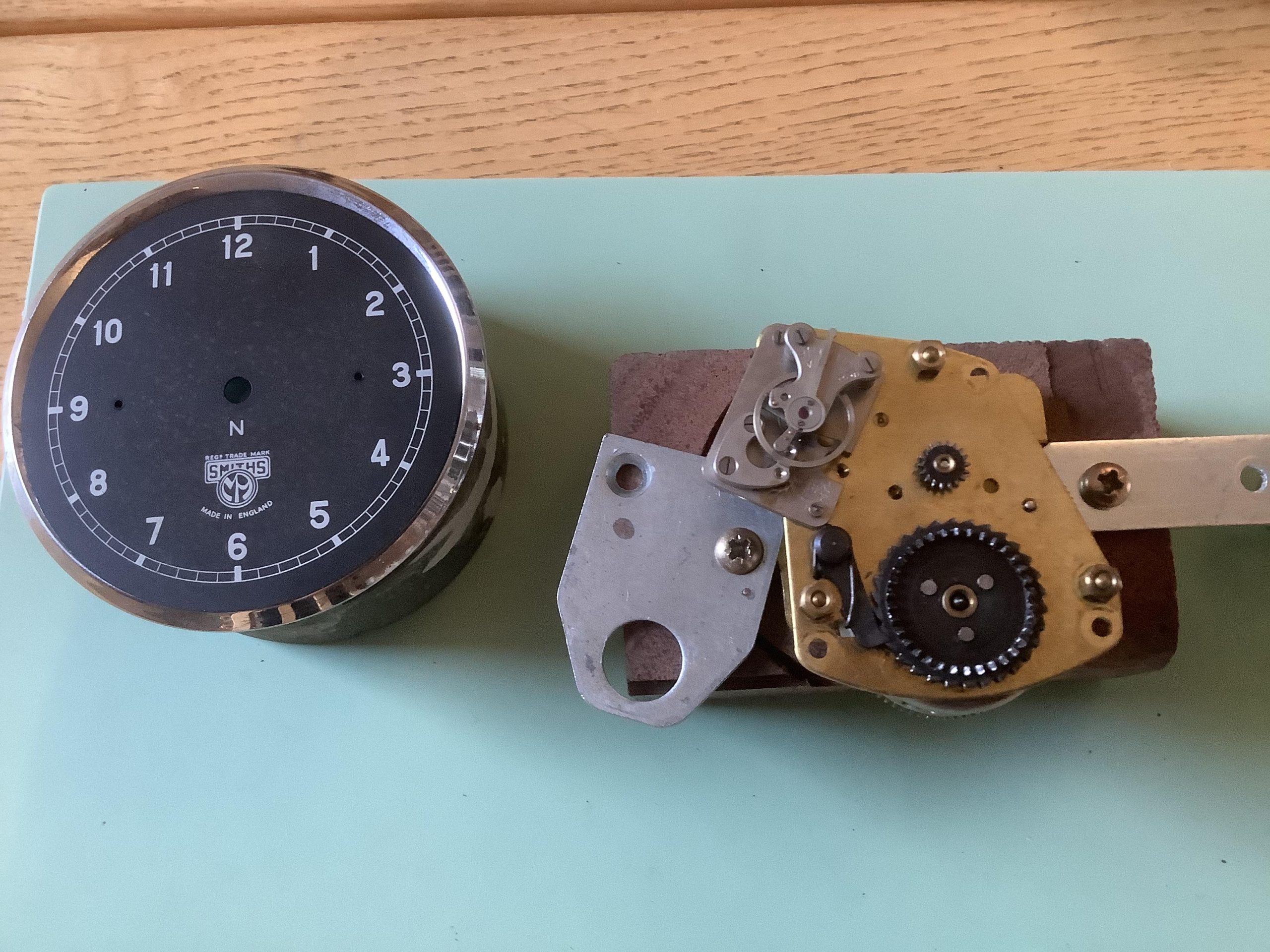
That distinct character was real and tangible. The Smiths clock had its own visual language slightly rounder in appearance than the Jaeger, often with a simpler and more open dial layout, and finished with the kind of practical plainness that suited the British temperament.
The Smiths swing-clock was one of the firm’s most clever designs: the entire clock movement was mounted on a hinge behind the dashboard, so that the face could swing outward to allow access to the winding and setting mechanism from the front, eliminating the need to reach awkwardly behind the dash. It was an ingenious solution that found wide acceptance particularly in British-built cars.
Through the 1930s and into the postwar decades, Smiths adapted with the times. As electric clocks began to supplant wound mechanical movements from the late 1940s onward, Smiths developed a range of electrically driven dashboard timepieces powered directly from the car’s battery.
These electric Smiths clocks with their slim profiles, elegant faces, and steady sweep seconds hands became ubiquitous across British cars of the 1950s and 1960s. A Jaguar Mark II, a Triumph TR3, an early Mini, a Rover P5 all carried Smiths instruments as a matter of course. The name became as inseparable from the British dashboard as the wooden steering wheel or the leather seat.
Today, Smiths dashboard clocks are among the most actively collected of all British automotive instruments, cherished for their mechanical simplicity, their intimate connection with the golden age of British motoring, and the quiet satisfaction of hearing one tick accurately after more than half a century.
3. Waltham 8-Day Automobile Clock (1910s–1930s)
Waltham Watch Company of Waltham, Massachusetts, holds a distinguished place in American horological history as one of the great pioneers of precision machine-made watchmaking.
By the early twentieth century, Waltham had recognized the growing automobile market as a natural extension of their business and began producing dedicated car clocks of exceptional quality.
Their 8-day automobile clock became one of the most respected dashboard timepieces available on the American market, prized by discerning motorists for its seven-jewel movement, its handsome dial design, and its reliable performance under road conditions.
The Waltham 8-day automobile clock was built to survive. Its movement was carefully engineered to tolerate the vibration and temperature extremes of automotive use, and the eight-day power reserve a genuinely practical feature in an era when the average motorist had a great deal on his mind meant the clock would continue running through an entire working week and well beyond without attention.
Waltham marketed identical timepieces for both automobile and marine use, reflecting the close engineering kinship between these two demanding environments. A Waltham clock that could survive the salt air and spray of a motorboat at speed was more than equal to the rattling roads of early twentieth-century America.
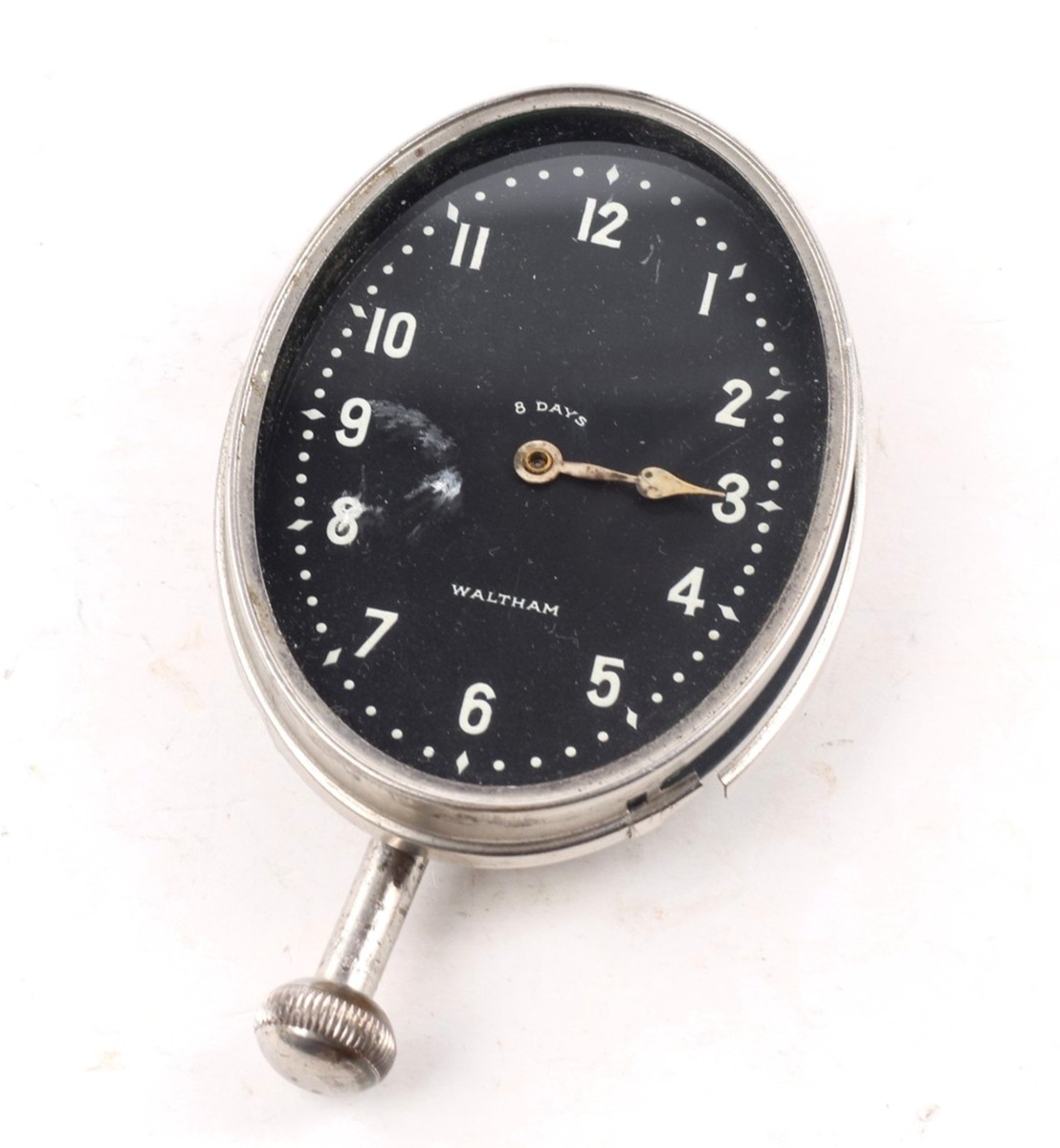
The visual style of the Waltham automobile clock reflected distinctly American tastes. Where European dashboard clocks tended toward restraint and functionality, Waltham’s creations were often more elaborately finished ornate Roman numerals, carefully decorated chapter rings, fine subsidiary seconds dials, and richly engraved bezels.
They were instruments designed to be admired as well as used. Among the most celebrated examples were the Waltham clocks made specifically for Cadillac limousines, mounted on the glass or wooden partition separating the driver’s compartment from the passenger saloon.
These were objects addressed entirely to the comfort and pleasure of the rear-seat passenger a statement that even in transit, time should be told with elegance.
Some Waltham automobile clocks featured an unusual complication rarely seen in dashboard timepieces of any era or country: a power reserve indicator, displayed as a small subsidiary dial, showing the driver at a glance how many days of running time remained in the mainspring. This thoughtful refinement raised the Waltham from a mere instrument to a genuine piece of precision engineering.
By the 1930s, as electric clocks began to take over the American dashboard, Waltham’s wound mechanical automobile timepieces were gradually phased out. Surviving examples, particularly those in original unrestored condition with documented vehicle provenance, remain among the most eagerly sought American automotive antiques of the early motoring era.
4. Heuer Autavia Dashboard Timer (1933)
The name Autavia carries a double legacy in horological history. Most collectors encounter it today as a celebrated line of wristwatch chronographs introduced by Tag Heuer in 1962 and worn by Formula 1 world champions.
But the name began its life not on anyone’s wrist it began on a dashboard. In 1933, the Swiss chronograph specialist Heuer introduced a dedicated dashboard timing instrument and gave it a name constructed from the two worlds it was built to serve: AUTomobile and AVIAtion. The Autavia dashboard timer was born.
Heuer had been thinking seriously about automotive and aviation timing for more than two decades before the Autavia appeared. As far back as 1911, the company had patented the Time of Trip a dashboard instrument that displayed the time of day on its main dial while two subsidiary hands measured elapsed journey time.
This dual-purpose functionality was genuinely revolutionary for the period, giving drivers and pilots a single instrument capable of doing the work of two. The 1933 Autavia built directly on that tradition, combining precise time-of-day display with stopwatch and elapsed time functions in a single robust case designed to be bolted to a dashboard or aircraft instrument panel.
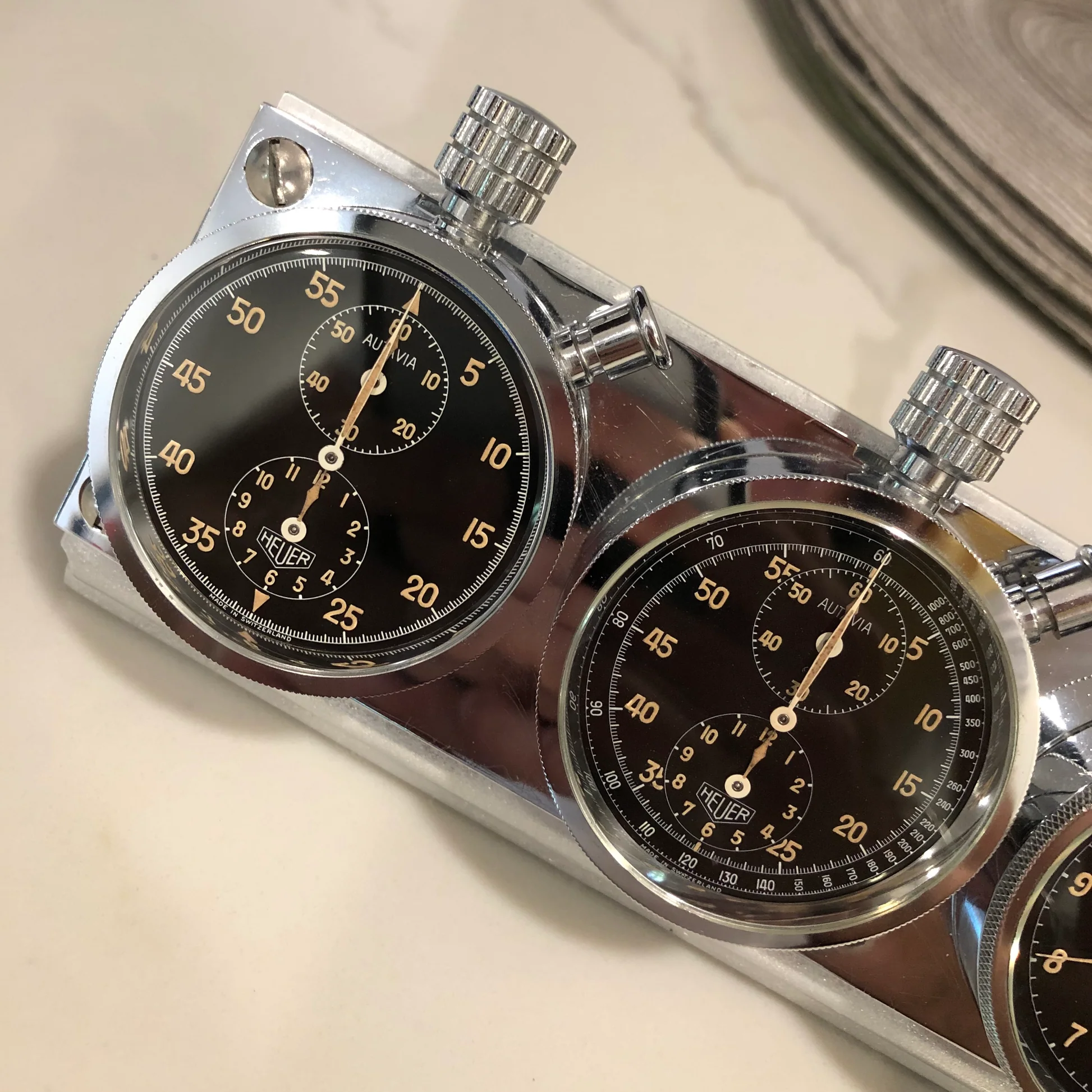
The visual character of the Heuer Autavia dashboard timer was defined entirely by its purpose. These were not ornamental objects they were working instruments, and they looked the part.
Black dials maximized contrast and legibility under the bright light of an open cockpit or the more demanding conditions of a night rally stage. Numerals were bold and clearly spaced.
Hands were broad, well-lumed, and instantly readable at a glance. The case was chunky, solid, and engineered to withstand the merciless vibrations of a racing car at full chat over a rough mountain stage.
Nothing about the Heuer Autavia dashboard timer was decorative every design decision served a single purpose, which was to tell the driver exactly what time it was and how long he had been going, with no ambiguity whatsoever.
By 1958, Heuer had developed the Super Autavia an evolution described at the time as the first dashboard chronograph for motorcars, powerboats, and aircraft simultaneously, showing time of day and time of trip on a single face. This instrument became a fixture in European rally cars throughout the late 1950s and into the 1960s.
Mounted on the dashboards of cars competing in the Monte Carlo Rally, the Tour de France Automobile, and countless other events, the Heuer dashboard timer was as much a part of the competitive motorsport world as the co-driver’s pace notes or the navigator’s map board. For any serious collector of motorsport memorabilia, a period-correct Heuer Autavia dashboard timer remains one of the ultimate acquisitions.
Also Read: 5 Vintage Hatchbacks That Defined the 1970s Commuter Lifestyle
5. Breguet Dashboard Chronograph for the Bugatti Type 41 Royale (1932)
If the Jaeger 8-day represents the democratic spirit of the dashboard clock produced in large quantities, fitted to half the cars in Europe then the Breguet chronograph created for the Bugatti Type 41 Royale in 1932 represents its absolute opposite: a singular, unrepeatable masterpiece conceived for what was intended to be the most extraordinary automobile ever built.
There is no other dashboard clock in history quite like it, and there never will be. The Bugatti Type 41 Royale was conceived by Ettore Bugatti as the definitive expression of automotive opulence.
At over six meters in length and weighing more than three tonnes, it was designed for royalty and heads of state a car so magnificent that no reigning European monarch could reasonably be seen without one.
The engine alone a straight-eight of 12.7 liters displacement was an object of wonder. Bugatti planned to build twenty-five examples. He completed seven.
Only three were ever sold to private customers, as the Great Depression intervened and rendered even the world’s wealthiest individuals cautious about such extravagance.
For a car of these ambitions, only one watchmaker could possibly have been considered to supply the timepiece: Breguet of Paris, the house founded by Abraham-Louis Breguet, the most revered horologist in the history of watchmaking. The result was an instrument of breathtaking sophistication.
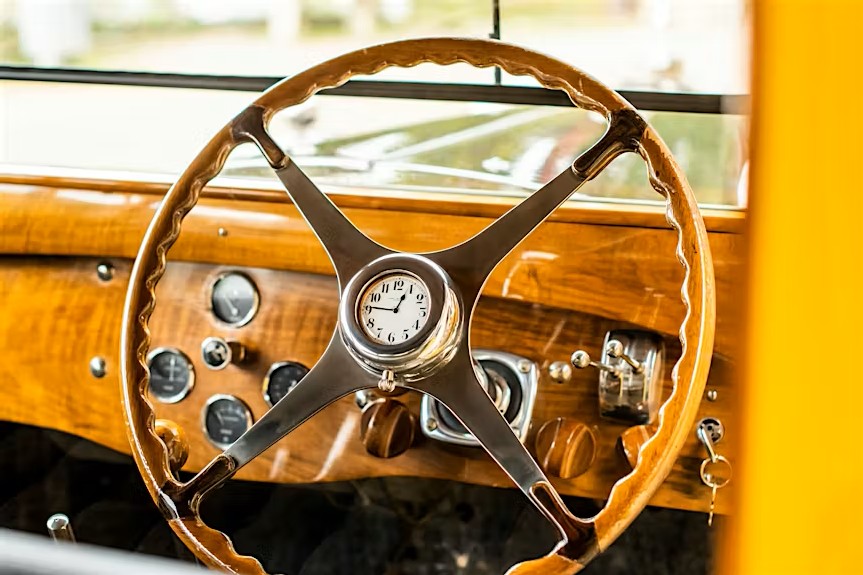
Rather than being mounted in the conventional position on the dashboard, the Breguet chronograph was integrated into the center of the Royale’s enormous steering wheel, placing it directly in the driver’s hands at all times.
The clock featured an 8-day power reserve movement, a chronograph complication with a digital minute counter, and a surrounding tachometer scale graduated to 250 kilometers per hour a speed the Royale was theoretically capable of approaching given sufficient road. It was not merely a clock; it was a complete chronometric instrument panel compressed into the hub of a steering wheel.
Breguet subsequently acquired this extraordinary dashboard chronograph for permanent display in its museum in Paris, where it remains one of the most historically significant automotive timepieces in existence.
The Bugatti Royale Breguet clock stands as the supreme example of what a dashboard timepiece could become when money was no object, ambition knew no limit, and the greatest watchmakers were given a commission worthy of their talents.
6. Phinney-Walker Keyless Automobile Clock (1900s–1920s)
Long before the Swiss and British firms that would later dominate the premium dashboard clock market had turned their attention seriously to the automobile, American ingenuity was already addressing the problem of keeping accurate time in a moving vehicle.
Among the earliest and most innovative contributors to this story was the Phinney-Walker Keyless Clock Company, whose defining innovation was captured entirely in its name: a clock for the car that required no separate key to wind.
Early automobile clocks were adapted from existing pocket watch or mantel clock movements and required a small dedicated key to wind the mainspring a fiddly, easily misplaced object that was poorly suited to the realities of automotive use. Drivers often left their clocks unwound simply because the key had been lost or forgotten.
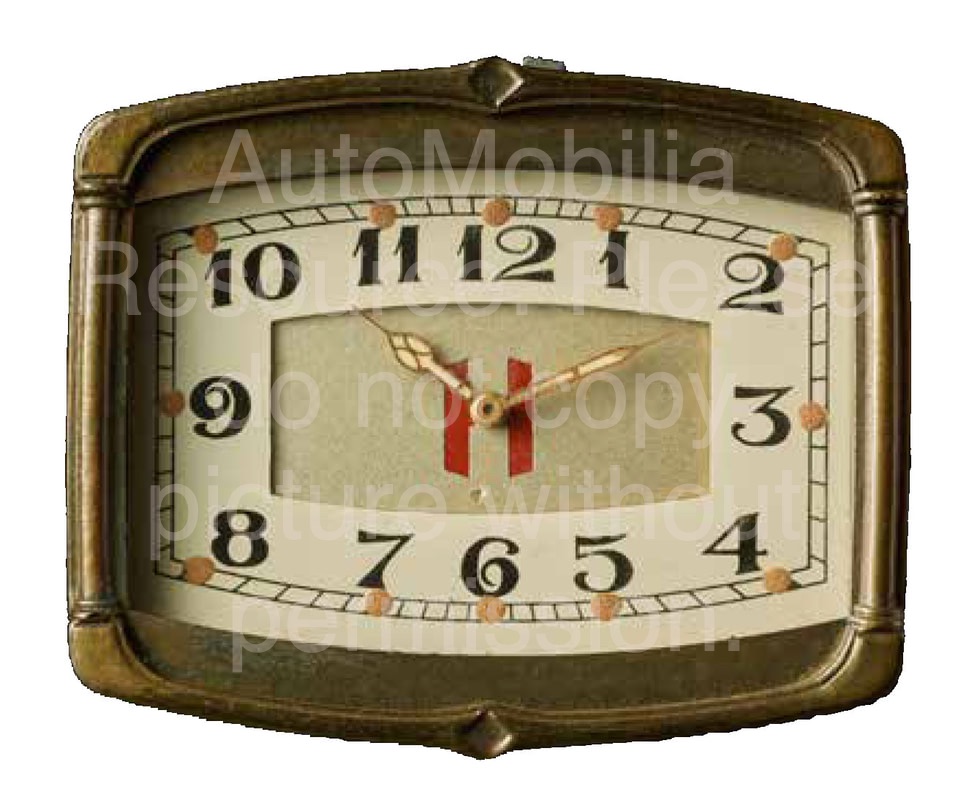
Phinney-Walker’s solution was to incorporate the winding mechanism directly into the clock’s case, typically in the form of a rotating bezel or a specially designed crown that could be turned by hand without any additional tool. The driver could wind the clock with a single twist of the fingers, without stopping the car or consulting the handbook.
This innovation represented a significant conceptual leap from a timekeeping instrument that happened to be installed in a car, to a timepiece genuinely designed around the specific requirements and habits of the motorist.
Phinney-Walker clocks were produced in considerable quantities and marketed across a wide range of American automobile brands from the mid-1900s through the 1920s.
Their dials were typically clean, legible, and plainly finished bold Arabic numerals on white or cream enamel, housed in round nickel or brass cases of sensible proportions. They were instruments made to be used, not displayed.
Surviving Phinney-Walker clocks are now keenly sought by early motoring collectors, particularly examples in original working condition with unpolished bezels and intact original dials.
They represent an important early chapter in American horological entrepreneurship the moment when a small manufacturer recognized a genuine problem faced by a growing class of motorists and solved it with practical elegance. In the broader story of the dashboard clock, the Phinney-Walker keyless automobile clock deserves its place as a genuine pioneer.
7. New Haven Clock Company Automobile Clock (1910s–1930s)
The New Haven Clock Company of New Haven, Connecticut, was one of the great pillars of American clock manufacturing from the mid-nineteenth century onward, producing an enormous variety of domestic, marine, and commercial timepieces.
When the automobile industry exploded in the first decade of the twentieth century, New Haven was well-positioned to serve the new market, and their automobile clocks quickly became some of the most widely fitted dashboard timepieces in American cars of the 1910s, 1920s, and 1930s.
New Haven’s automotive range was broad and commercially astute. At the accessible end, they supplied straightforward stemwind models for popular-priced cars reliable, adequately accurate, and priced to suit manufacturers who needed a clock on the dashboard without spending a fortune.
At the upper end, New Haven produced illuminated and more elaborately finished instruments for luxury vehicles, featuring electrically powered backlighting and more refined dial designs.
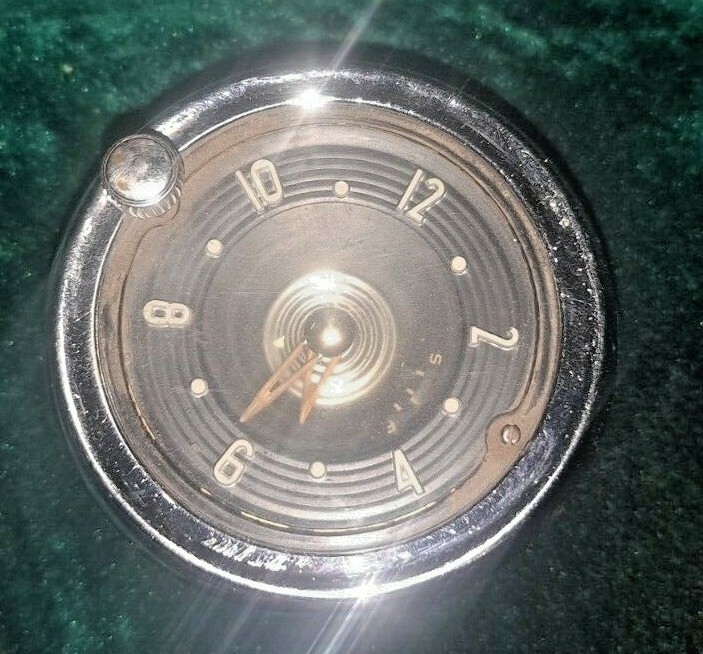
One particularly well-known example was produced for the 1939 Ford Deluxe a stemwind clock with decorative silver stripes on either side of the face and the Ford name applied to the dial, made readable at night through its built-in electric backlight.
The presence of the Ford logo on the movement spoke to how thoroughly the car clock had been absorbed into automobile brand identity by the late 1930s it was no longer a generic accessory but a component that belonged to the car and reflected its maker’s pride.
New Haven clocks were trusted by manufacturers for their durability and ease of servicing. The movements were uncomplicated by the standards of Swiss or high-grade American watchmaking, but they were well-proportioned to their task and could be maintained by any competent watchmaker without specialist training or exotic spare parts.
This practicality made them a natural choice for Ford and other volume manufacturers who needed instruments that could be serviced at dealerships across the country.
The visual signature of a New Haven automobile clock round white dial, clear Arabic numerals, sweep seconds hand, chromium-plated round case is one of the most characteristic images of the pre-war American dashboard, encountered today in barn finds and restoration projects from coast to coast.
8. Kienzle Automobile Clock (1920s–1960s)
Germany’s contribution to the history of the dashboard clock is most powerfully embodied by Kienzle a firm with roots in the Black Forest clockmaking tradition that reinvented itself in the twentieth century as one of Europe’s foremost automotive instrument manufacturers.
The Kienzle family had been making clocks in Schwenningen since the 1820s. In 1929, Herbert Kienzle departed from his father’s watch factory to establish a dedicated automotive instrument division, and what followed was one of the most successful industrial instrument businesses in Germany, eventually supplying clocks, speedometers, and tachographs to a broad spectrum of European manufacturers.
Kienzle’s automotive clocks had a distinctly Germanic character that set them apart from their British and French competitors. The dial design was precise, functional, and uncluttered every element justified by purpose rather than decorative ambition.
Cases were robustly made in nickel-plated or chrome-finished metal, built to withstand not the genteel demands of a touring Bentley on English country lanes but the more demanding conditions of long-distance German driving and commercial vehicle operation.
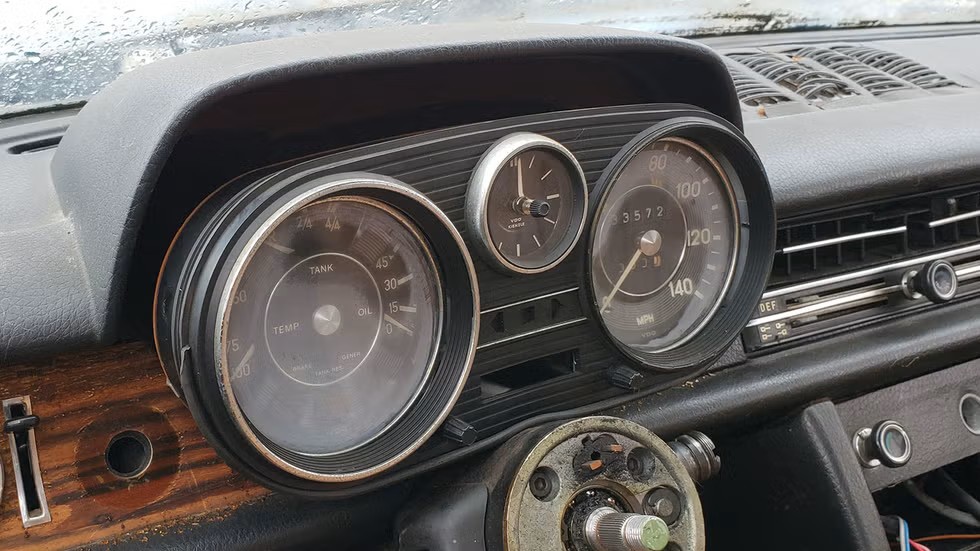
Mercedes-Benz, BMW, Horch, and Auto Union all fitted Kienzle instruments at various points, and the name became virtually synonymous with German automotive precision in the interwar and early postwar decades.
Beyond the passenger car market, Kienzle made its most significant and lasting contribution through the tachograph the recording instrument that monitors and documents the speed and driving hours of commercial vehicles.
Kienzle helped pioneer this technology in the 1920s and 1930s, developing mechanical tachographs that printed a paper record of a vehicle’s movements over time. This invention had enormous practical and regulatory consequences for the trucking and transportation industries across Europe, ultimately leading to mandatory tachograph legislation in many countries.
While the tachograph is a more prosaic object than a beautifully finished Breguet steering wheel chronograph, its impact on European road safety was incalculable, and Kienzle’s role in its development represents one of the more quietly consequential chapters in automotive instrument history.
9. Elgin National Watch Company Automobile Clock (1910s–1930s)
The Elgin National Watch Company of Elgin, Illinois, was for much of the late nineteenth and early twentieth centuries one of the three or four most important watchmakers in the United States, producing millions of pocket and wristwatch movements of consistent quality at accessible prices.
When the automobile market emerged, Elgin applied its considerable manufacturing expertise to dashboard timekeeping, producing a range of automobile clocks that reached a broad market across the United States during the teens, twenties, and thirties.
Elgin automobile clocks are distinguished by the quality of their underlying movements, which typically drew on the same precision manufacturing techniques the company applied to its pocket watch lines.
The movements were carefully jeweled, accurately regulated, and finished to a standard that exceeded what most drivers might have expected from a factory-fitted dashboard instrument.
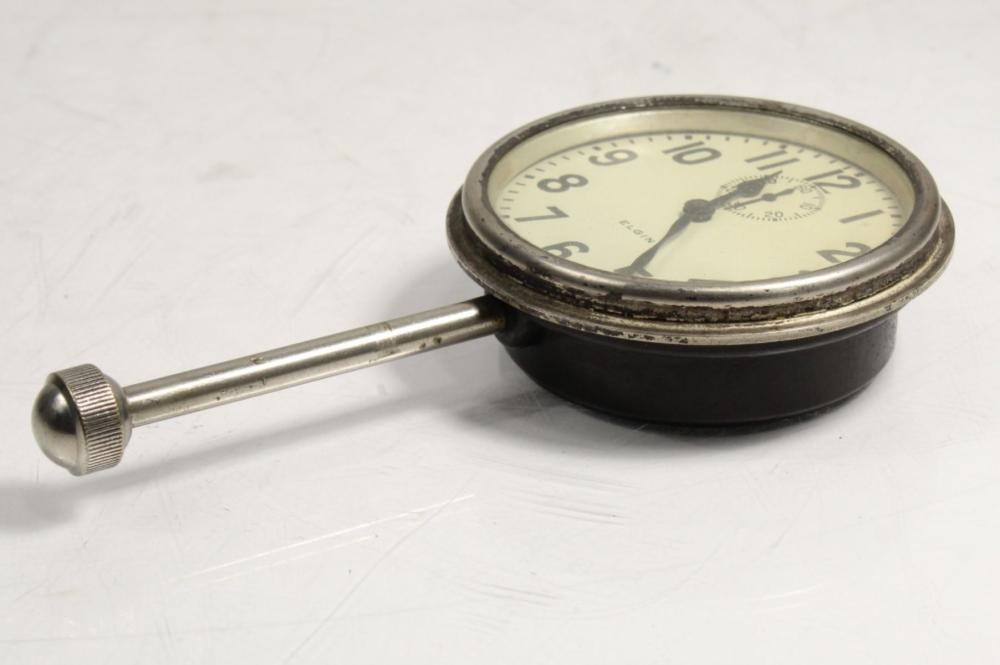
Elgin understood that the automobile was becoming an aspirational object for American consumers a symbol of freedom, modernity, and personal achievement and that the instruments fitted to it should reflect those values rather than undercut them.
The dials of Elgin automobile clocks were generally clean and well-proportioned, following the conventions of American dashboard design in the period white enamel faces, neat Arabic or Roman numerals, and subsidiary seconds dials.
Cases were made in nickel or brass, round in profile, and designed to fit the standard dashboard apertures of the time. Elgin marketed their automobile clocks both as factory-fit components supplied to manufacturers and as aftermarket accessories available through dealers and automobile supply catalogues.
This dual strategy gave them wide market coverage. Surviving Elgin automobile clocks are today collected both as horological artifacts and as pieces of early American automotive history, valued for the quality of their movements and their role in bringing precision timekeeping to the mass motoring public.
10. LeCoultre Dashboard Clock (1930s–1950s)
It is fitting that this list should end with LeCoultre the Swiss manufacture whose partnership with Jaeger gave birth to the golden age of the dashboard clock, and who eventually produced instruments under their own name that represent some of the finest automotive timepieces ever made.
Jacques-David LeCoultre founded his workshop in the Vallée de Joux in 1833, and the company he established became one of the most technically accomplished watch manufacturers in Switzerland, responsible for a string of horological innovations including the first fully automatic winding mechanism and the Atmos clock, which winds itself from changes in atmospheric temperature and pressure.
LeCoultre’s collaboration with Jaeger on automotive instruments began in the years surrounding the First World War and continued through the interwar period, with the two firms so closely intertwined that they eventually merged formally in 1937 as Jaeger-LeCoultre.
But before that merger, and for some years after it, LeCoultre also produced dashboard clocks under their own name for the most discerning clientele movements of exceptional quality, typically housed in cases of greater refinement than the standard Jaeger production pieces, intended for the very finest automobiles and for customers who wanted a timepiece that bore the name of the Swiss manufacturer directly.
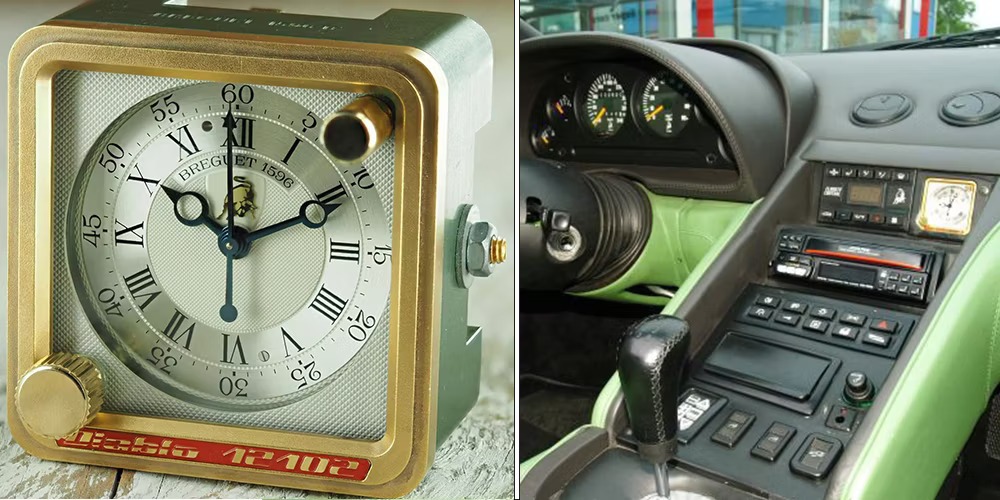
LeCoultre dashboard clocks from the 1930s and 1940s are among the most technically accomplished automotive timepieces of the era. Their movements featured all the refinements one would expect from a manufacture of LeCoultre’s standing temperature compensation, fine jeweling, careful positional adjustment, and elegant finishing of the internal components that went entirely unseen once the clock was installed.
The dials were characteristically refined often with more delicate typography and a more jewellike finish than the standard production Jaeger clocks, reflecting the Swiss atelier sensibility of the parent firm.
For the collector, a genuine LeCoultre-signed dashboard clock of the prewar or early postwar period represents perhaps the highest level of achievement in automotive timekeeping.
It combines the proven engineering excellence of a firm that literally helped define the category with the aesthetic sensibility of one of Switzerland’s great watchmaking houses.
In the broader narrative of the vintage dashboard clock from the humble keyless Phinney-Walker to the sovereign extravagance of the Bugatti Royale Breguet the LeCoultre brings the story to a satisfying end the realization, achieved in metal and glass and fine calibrated steel, that time is not merely something to be measured but something to be honored.
Also Read:Top 10 Boxy 1980s Sedans That Are Now Considered Modern Classics
