High-performance engines are often associated with complex turbochargers, extensive plumbing, and demanding heat management. Twin-turbo setups deliver impressive power and efficiency, but they also require frequent inspections, specialized servicing, and careful attention to prevent failures.
Supercharged engines offer a simpler alternative while maintaining high performance. Their belt-driven design, lower operating temperatures, and self-contained lubrication systems reduce stress on engine components, minimize potential failure points, and make routine maintenance more straightforward. This makes them ideal for drivers who want extreme performance without the complications of turbocharged systems.
This guide explores the Top 5 Supercharged Engines That Are Easier to Maintain Than Twin Turbo Setups, highlighting examples from American muscle, luxury performance, and heavy-duty trucks.
Engines such as the Dodge 6.2L HEMI V8 Hellcat and the Toyota 5.7L 3UR-FE V8 with TRD supercharger demonstrate how simplicity, robust engineering, and thoughtful design can deliver massive horsepower, instant torque, and engaging driving dynamics while reducing long-term maintenance concerns.
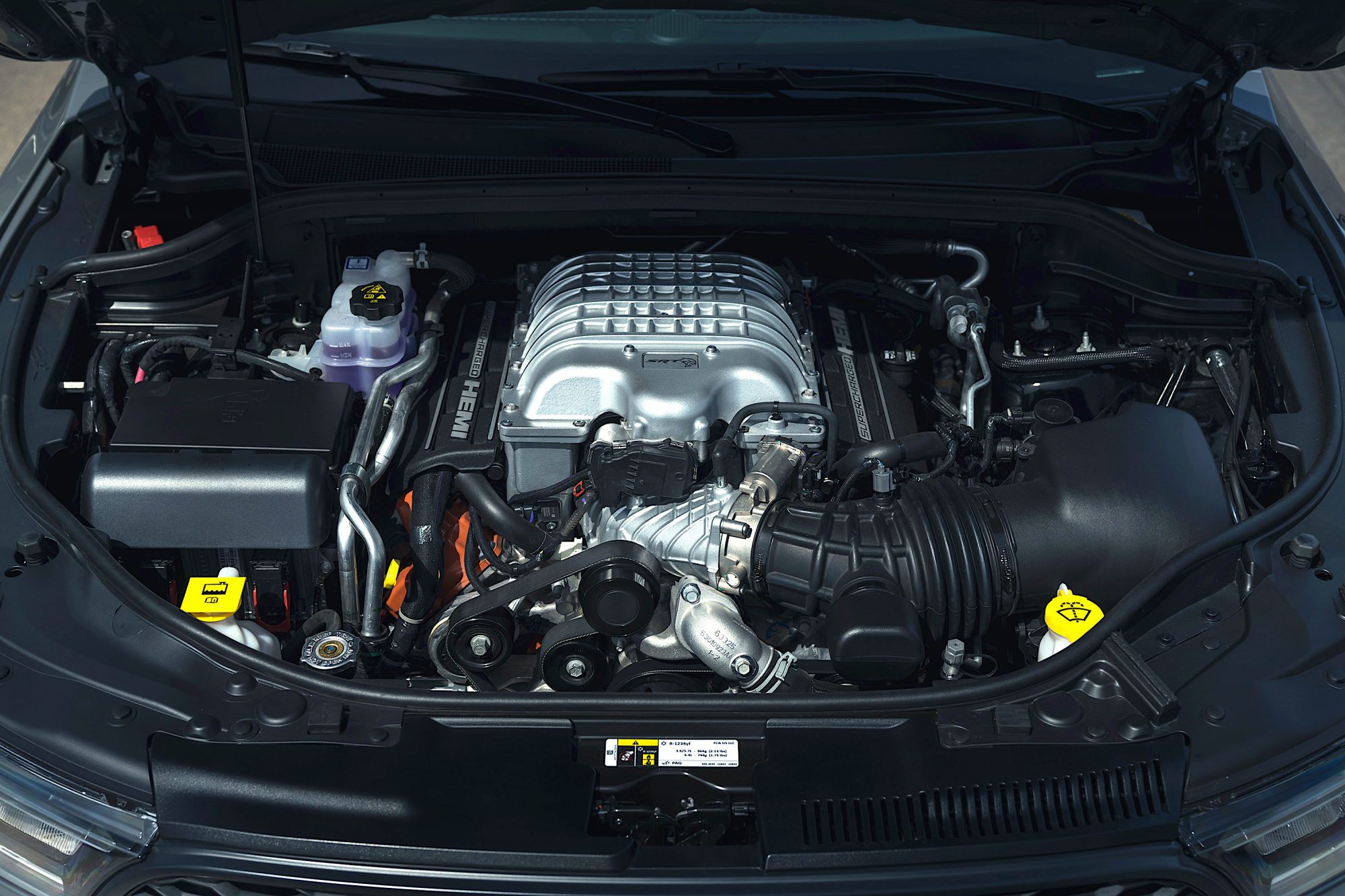
1. Dodge 6.2L HEMI V8 (Hellcat): Supercharged Muscle with Simplified Maintenance
The Dodge 6.2L HEMI V8, widely known as the Hellcat engine, exemplifies high-performance engineering that combines extreme power with manageable maintenance. Producing between 717 and 797 horsepower and 650 to 707 lb-ft of torque depending on the variant, it achieves massive output without the complexity of twin-turbo setups.
Instead of relying on intricate exhaust plumbing, intercoolers, and pressurized oil lines, the Hellcat features a 2.4L IHI twin-screw supercharger mounted directly atop the intake manifold. This self-contained system reduces friction, lowers operating temperatures, and minimizes the risk of heat-related failures.
A key advantage is the direct-drive supercharger, providing instant, predictable boost without turbo lag. The supercharger has its own sealed oiling system, requiring only periodic service, and it operates at lower temperatures than traditional twin-turbos, protecting hoses, wiring, and engine components.
The engine’s cast-iron block provides structural strength, allowing it to handle extreme cylinder pressures, while high-strength forged internals and a dedicated cooling circuit enable sustained performance under heavy loads.
The Hellcat engine delivers a thrilling driving experience with accessible torque and an iconic supercharger whine. Vehicles such as the Dodge Challenger, Charger, and Durango pair it with either a 6-speed manual for engagement or an 8-speed automatic for smooth acceleration.
Widebody variants improve traction and handling, though these cars are most effective in straight-line performance. Daily driving is comfortable thanks to supportive seats and a spacious interior, though fuel consumption remains high.
Maintenance demands are simpler than those of turbocharged engines because the Hellcat eliminates complex boost control, high-temperature exhaust components, and extra plumbing.
Routine oil changes, belt inspections, and tire replacements are recommended due to high torque output, yet the engine remains durable under intense use. With its combination of raw power, mechanical simplicity, and heat-resistant design, the Dodge 6.2L HEMI V8 (Hellcat) offers a uniquely exhilarating and reliable performance experience, making it a standout among American muscle car engines.
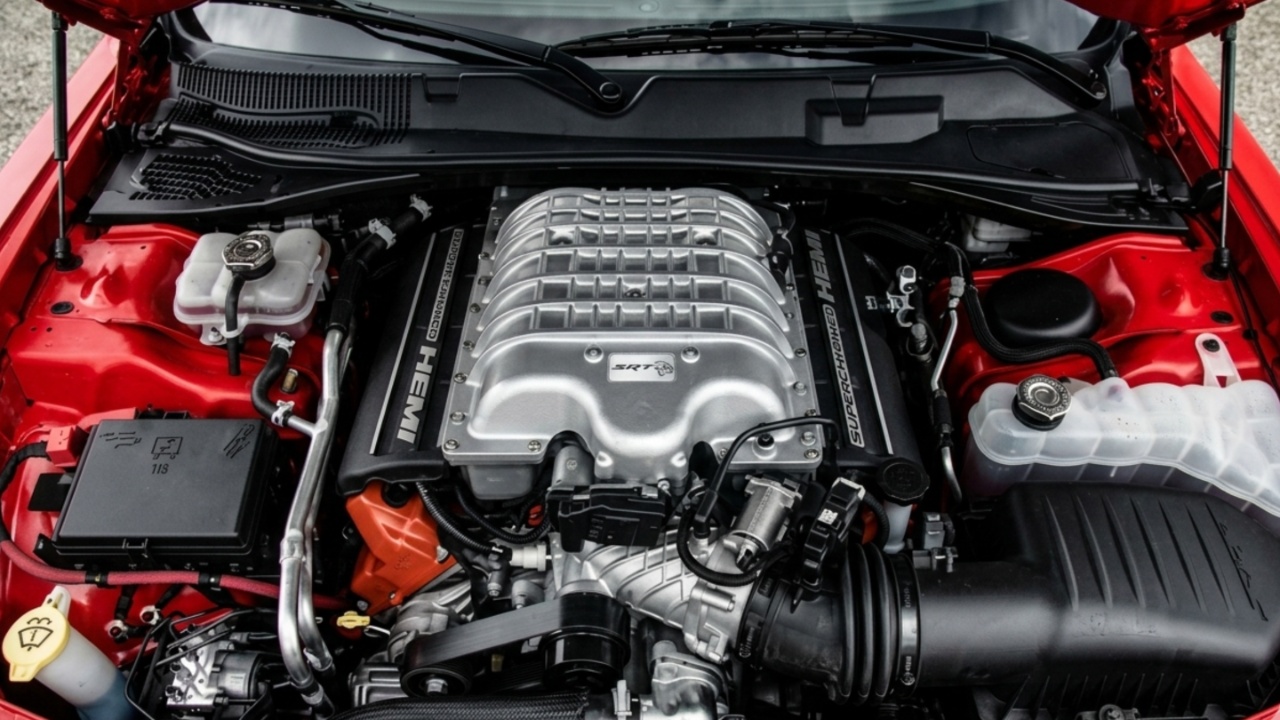
2. Mercedes-Benz 5.4L M113K V8: Supercharged Reliability Meets High Performance
The Mercedes-Benz 5.4L M113K V8, found in iconic models like the E55 AMG, SL55 AMG, CL55 AMG, and G55 AMG, is widely regarded as one of the most reliable and user-friendly high-performance engines Mercedes has ever produced.
Unlike modern AMG engines that rely on “Hot-V” twin-turbos, the M113K utilizes a mechanically simple IHI Lysholm supercharger, delivering instantaneous boost without the heat-related stress or complex plumbing issues associated with turbocharged engines.
This supercharger sits atop the intake manifold, belt-driven by the crankshaft, creating a direct and predictable system that simplifies maintenance and reduces potential failure points.
One of the key reasons the M113K is easier to maintain is its lower thermal stress. Turbocharged engines generate extreme heat in the V-valley due to exhaust-driven turbines, often leading to oil breakdown, failing plastic components, or coking of turbo bearings.
The M113K operates at cooler temperatures, reducing strain on hoses, wiring, and engine components. Its water-to-air intercoolers, paired with the supercharger, efficiently manage intake temperatures without the complexity of twin-turbo heat shielding or vacuum-actuated wastegates.
The engine architecture further enhances durability. Built on a proven naturally aspirated V8 foundation, the M113K features reinforced crankcases, strong pistons, and robust connecting rods to handle boost pressure. A duplex timing chain prevents timing chain stretch, and the port-injection design limits intake valve carbon buildup seen in modern direct-injection engines.
Dual spark plugs per cylinder improve combustion efficiency and reliability, although they require 16 spark plugs in total, which can increase service costs. Common maintenance items include valve cover gasket replacement and occasional intercooler pump servicing.
Performance characteristics are exceptional. The supercharger delivers immediate low-end torque, providing a linear, predictable power curve that reduces stress on the transmission and driveline. Acceleration is aggressive, with 0–60 mph times for E55 AMG models around 4.5 seconds, while the limited-edition CLK DTM AMG produces up to 574 horsepower. Despite its power, the M113K is remarkably drivable, offering smooth and manageable performance for daily use, long highway cruises, or spirited driving.
The M113K engine is also highly tunable. Minor upgrades such as smaller supercharger pulleys, ECU modifications, and improved cooling can push output well beyond factory ratings, making it a favorite among enthusiasts seeking supercharged performance with minimal mechanical complexity. With proper maintenance, these engines can surpass 200,000 miles, combining supercar-level torque with traditional Mercedes durability.
The 5.4L M113K V8 offers a balance of high performance, reliability, and simplified maintenance. Its mechanically straightforward supercharger, robust internal components, and lower thermal load make it easier to service and maintain than modern twin-turbo AMGs.
This combination of instant power, durability, and predictability has cemented the M113K as a legendary engine in the history of Mercedes-AMG performance vehicles.
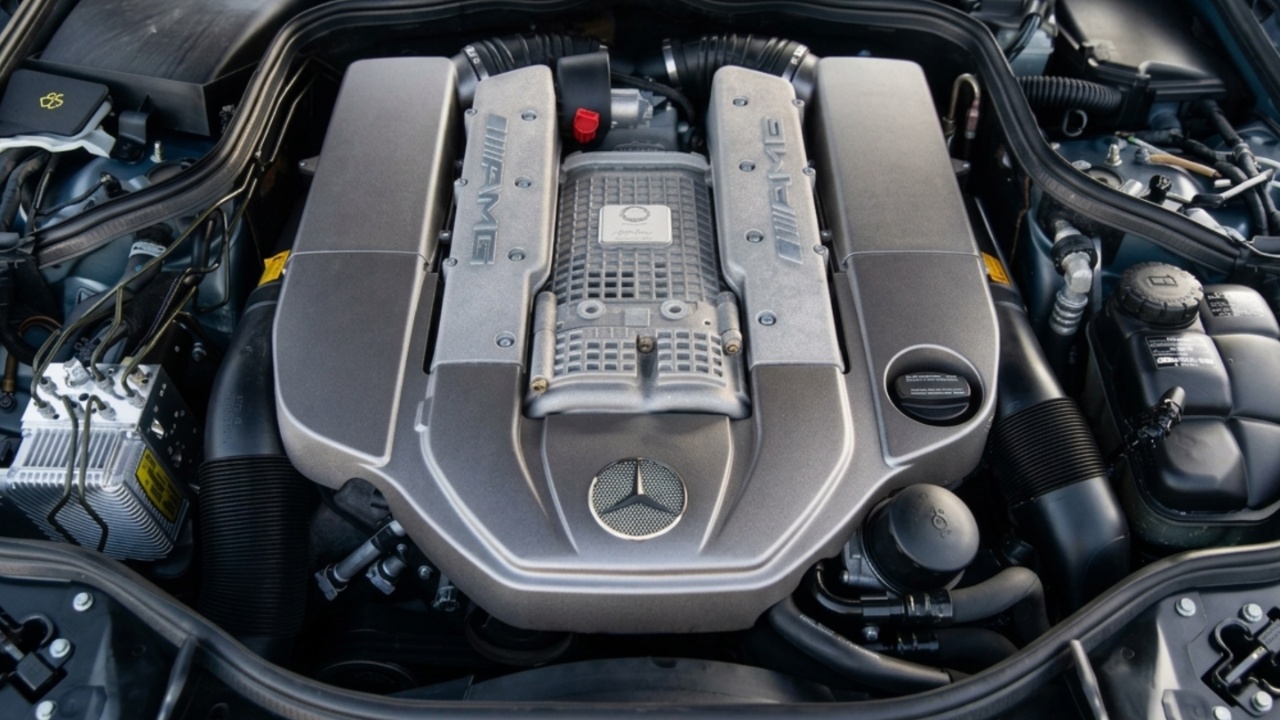
3. GM 6.2L LT4 V8: Supercharged Muscle with Maintenance-Friendly Design
The GM 6.2L LT4 V8 is a modern performance powerhouse, powering vehicles such as the Corvette Z06, Camaro ZL1, and Cadillac CT5-V Blackwing. It blends classic small-block pushrod architecture with advanced forced induction, making it one of the most potent and reliable supercharged engines on the market.
Central to its design is a compact Eaton R1740 TVS supercharger, spinning up to 20,000 RPM and mounted neatly in the engine’s V. This self-contained, belt-driven unit provides instantaneous boost without the extreme thermal stress common in twin-turbocharged setups, keeping engine oil cleaner and reducing strain on surrounding components.
Unlike turbo systems, the LT4 does not rely on complex exhaust manifolds, high-pressure oil lines, or brittle plastic coolant plumbing, making it mechanically simpler and easier to maintain.
Mechanical simplicity is a defining characteristic of the LT4. The supercharger integrates into the engine as a single unit, avoiding the dual turbochargers, wastegates, and extensive plumbing that increase maintenance points and failure risks in turbocharged engines.
The air intake path is direct and efficient, and there is no need for exhaust integration, reducing heat buildup and preventing component fatigue. Because it is belt-driven, the LT4 supercharger operates at lower temperatures than hot turbochargers, significantly reducing heat soak and oil coking.
The system also features a dedicated liquid-to-air intercooler integrated into the supercharger housing, stabilizing intake temperatures and protecting internal components.
Lubrication is another area where the LT4 excels. Twin-turbo engines often depend heavily on engine oil for both cooling and lubrication, demanding high-quality oil and frequent changes to prevent premature failure.
The LT4’s supercharger operates semi-independently from the engine’s primary oil system, reducing stress on the engine and minimizing risks related to oil starvation. Its forged internals, including powder-metal connecting rods and aluminum pistons, provide high durability under extreme boost pressures.
Performance is both immediate and predictable. The LT4 produces 650 horsepower and 650 lb-ft of torque, with some Cadillac variants reaching 668 horsepower. Instant torque delivery from the belt-driven supercharger minimizes drivetrain stress and eliminates the lag commonly associated with turbos.
Despite its high output, the LT4 maintains the small-block V8’s accessibility for maintenance, with clear component layout and fewer hard-to-reach systems compared to turbocharged engines. It also incorporates modern features such as direct injection and cylinder deactivation, which improve drivability without compromising performance.
While high cylinder pressures demand careful cooling and fuel management, the LT4 is widely regarded as robust and durable for both track and street use. Fuel consumption is understandably high for a 650-horsepower V8, but the engine’s low-maintenance design, predictable performance, and mechanical simplicity make it a standout among high-performance powertrains.
The GM LT4 V8 represents the last generation of classic pushrod supercharged engines that combine immense power, instant response, and easier long-term maintenance compared to modern twin-turbo alternatives.
Also Read: 5 Cars With Simple Interiors That Age Well vs 5 With Too Much Fragile Plastic
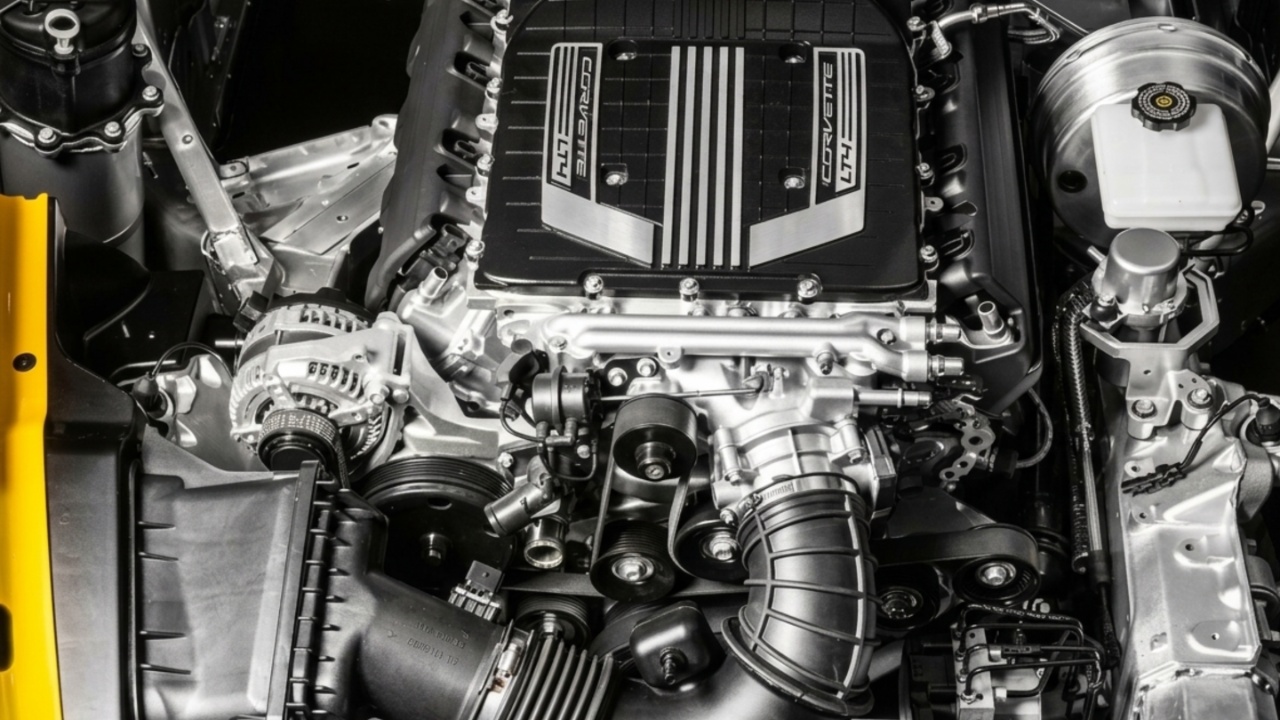
4. Jaguar 5.0L AJ133 V8: Supercharged Precision with Maintenance Advantages
The Jaguar 5.0L AJ133 V8 supercharged engine, powering models like the F-Type R and Range Rover SVR, exemplifies the combination of high performance and mechanical simplicity. Unlike twin-turbo engines, the AJ133 uses a twin-vortex, belt-driven supercharger mounted within the engine’s “V.”
This design avoids the extreme heat stress and complex plumbing typical of turbocharged setups, delivering linear, predictable power with near-instant throttle response.
By eliminating exhaust-driven turbines and associated oil lines, the engine reduces the risk of overheating, oil coking, and turbo-related failures, making maintenance more straightforward compared to high-performance twin-turbo alternatives.
Mechanical simplicity is a core strength of the AJ133. The belt-driven supercharger requires fewer moving parts than twin-turbos, avoiding components such as wastegates, boost actuators, and complex intercooler plumbing. The unit is self-contained, with its own oil supply, reducing dependence on the engine’s main lubrication system and lowering the risk of damage to primary engine components.
Slow operating speeds relative to turbochargers further reduce thermal stress, while accessibility from atop the engine simplifies inspection and service. Bearings and couplers show warning signs such as rattling before failing, providing predictable maintenance cues rather than sudden, catastrophic breakdowns.
Thermal management is another advantage. Turbocharged engines experience extremely high exhaust temperatures that stress surrounding components, degrade oil, and accelerate wear on hoses and electrical lines.
In contrast, the AJ133 supercharger runs cooler and features effective cooling pathways to ensure reliable performance. Combined with Jaguar’s direct-injection fuel system and aluminum construction, the engine maintains stable operating temperatures while delivering exceptional torque across a broad RPM range.
The AJ133 produces between 450 and 575 horsepower, depending on application, with up to 700 Nm of torque in high-performance SVR models. It is paired with either a 6-speed automatic in earlier applications or an 8-speed ZF automatic in newer models, a transmission combination noted for its reliability.
The engine delivers instant, lag-free acceleration, often described as “insane” on demand, and a distinctive supercharger whine enhances the visceral driving experience. Vehicles equipped with this engine can achieve 0–62 mph times of 3.5–4.0 seconds, highlighting its track-capable performance.
Despite its strengths, the AJ133 requires proactive maintenance. Early models used plastic timing chain guides and tensioners that can degrade over time, potentially leading to failure. Water pumps and coolant lines are known weak points that can cause overheating if neglected.
Oil consumption may reach 1L per 1,000 miles, necessitating regular monitoring. Additionally, supercharger couplers can wear, producing idle rattles and minor engagement delays. Attention to these areas is critical to preserving long-term reliability.
The Jaguar 5.0L AJ133 V8 supercharged engine blends linear, high-performance power with simpler mechanics than twin-turbo designs.
Its belt-driven supercharger, superior thermal management, and predictable service requirements make it easier to maintain while offering an engaging, responsive driving experience. With careful maintenance, it remains a potent, emotionally rewarding engine that defines Jaguar’s modern performance ethos.
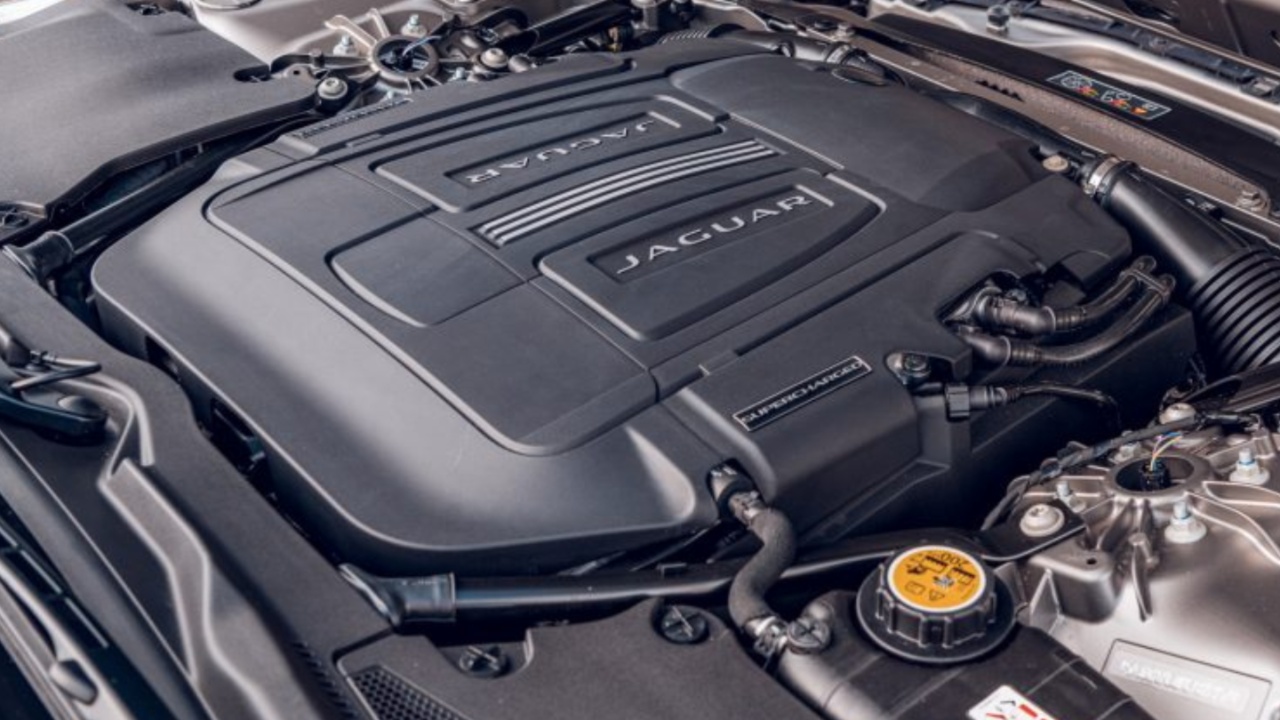
5. Toyota 5.7L 3UR-FE V8 (TRD): Supercharged Durability and Simplicity
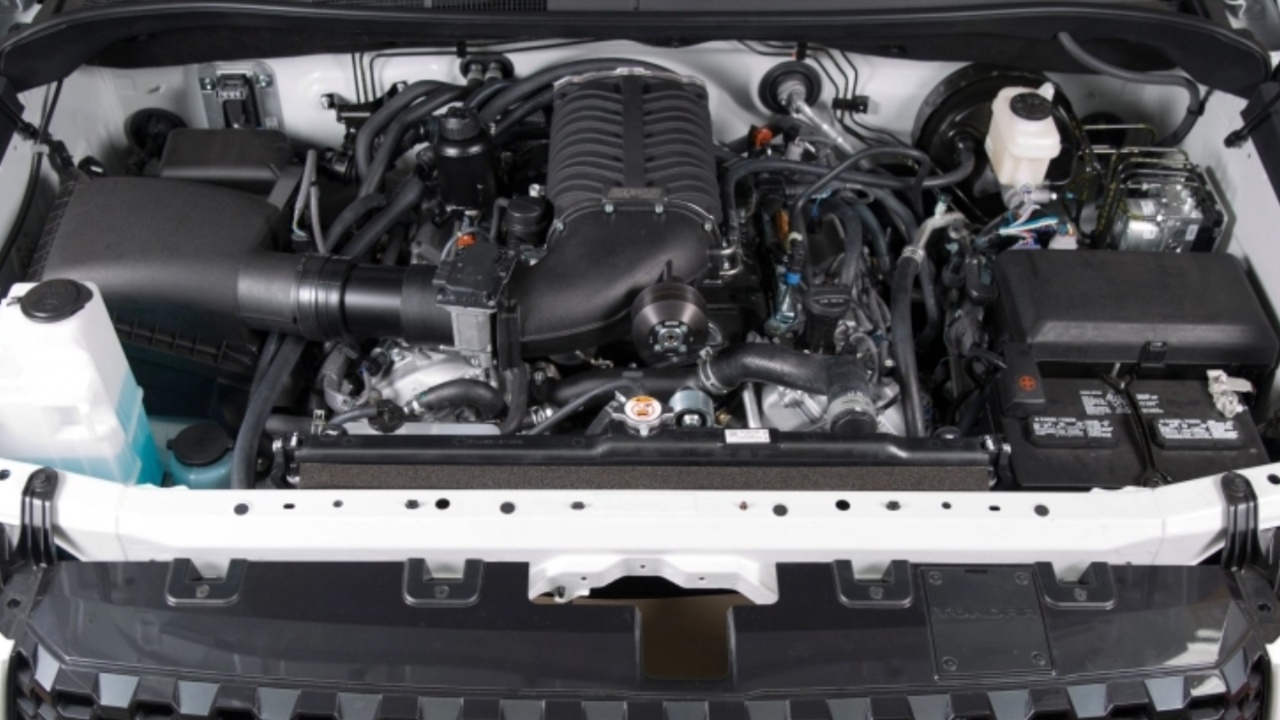
The Toyota 5.7L 3UR-FE V8, especially with the TRD-supercharged upgrade, is widely regarded as one of the most reliable forced-induction engines in modern truck history. Originally a naturally aspirated engine renowned for reaching 500,000 miles with proper care, the addition of a Magnuson TVS supercharger increases torque significantly without sacrificing Toyota’s legendary durability.
Unlike twin-turbo systems, which demand intricate exhaust plumbing, intercooler piping, and complex electronics, the TRD supercharger is a “bolt-on” solution that uses a self-contained oiling system, eliminating stress on the engine’s primary lubrication circuit. This makes it particularly appealing for owners seeking extreme towing capacity and effortless long-term maintenance.
Mechanical simplicity is one of the engine’s strongest points. The belt-driven supercharger is powered directly by the crankshaft, similar to an alternator or A/C compressor, removing the need for twin wastegates, blow-off valves, or exhaust-integrated turbos.
This arrangement significantly reduces heat stress compared to turbocharged engines, which operate at extreme temperatures and require additional cooling lines and heat shielding. The supercharger itself is largely maintenance-free, requiring only routine belt inspections, and its placement atop the engine provides easy access for servicing.
The 3UR-FE is built on an over-engineered foundation designed for durability and heavy-duty use. The aluminum block features deep-skirt reinforcement, while the forged steel crankshaft and chain-driven camshafts ensure the engine can handle both high torque and long-term operation.
The TRD supercharger is calibrated to work safely within the engine’s design limits, providing significant boost without over-stressing components. With proper maintenance, these engines regularly surpass 200,000–400,000 miles, a testament to Toyota’s conservative engineering philosophy.
Maintenance advantages extend beyond mechanical simplicity. Unlike turbo setups that often suffer from oil coking or require precise and frequent inspections of oil and coolant lines, the 3UR-FE retains a conventional servicing schedule.
Oil changes, spark plug replacements, and air filter servicing remain straightforward, while the supercharger’s self-contained lubrication reduces dependency on the engine’s main oil system. Immediate throttle response eliminates lag, giving trucks a naturally aspirated feel with the power of forced induction, ideal for towing or heavy hauling.
Performance-wise, the 3UR-FE produces 381 hp and 401 lb-ft of torque in stock form, with the TRD-supercharged variant pushing output to 504 hp. Trucks equipped with this engine can achieve 0–60 mph in 4.5–5 seconds, with a towing capacity rated up to 10,000 lbs. TRD models often include supporting upgrades such as Bilstein shocks, skid plates, and dual exhaust, enhancing both capability and drivability.
While highly durable, the 3UR-FE does have known issues, including water pump failures, cam tower oil leaks, and occasional secondary air pump faults. Despite these, owners frequently report engines surpassing 300,000 miles with proper attention. Fuel economy is low, reflecting the naturally aspirated roots of the design, but the trade-off is consistent power, immense torque, and low-maintenance longevity.
The Toyota 5.7L 3UR-FE V8 with TRD supercharger combines immense towing capability, immediate power delivery, and legendary Toyota reliability. Its belt-driven, self-contained forced-induction system, over-engineered V8 foundation, and simplified maintenance make it one of the most practical high-performance truck engines, ideal for long-term ownership and demanding use.
Supercharged engines show that high power does not have to come with high maintenance. The Dodge 6.2L Hellcat, Jaguar 5.0L AJ133 V8, Mercedes-Benz M113K, GM LT4, and Toyota 3UR-FE TRD supercharged engines combine mechanical simplicity, durable construction, and immediate throttle response with reduced heat stress and fewer failure points.
By avoiding complex exhaust plumbing, turbo bearings, and extreme exhaust temperatures, these engines simplify service and enhance long-term reliability.
For enthusiasts seeking dependable high-performance engines, supercharged V8s offer the best of both performance and practicality. They deliver thrilling acceleration, impressive torque, and an engaging driving experience while reducing routine maintenance and long-term repair challenges.
These five engines highlight the benefits of thoughtful engineering, demonstrating that supercharged power can be both exciting and dependable.
Also Read: Top 10 Cars with Most Iconic Headlight Covers and Bezels From the 1960s