
The US Department of the Interior has identified Tesla as the customer behind a US$4.3 billion battery supply agreement that LG Energy Solution first revealed in July without naming the partner involved.
As part of the arrangement, the companies plan to establish a lithium-iron-phosphate (LFP) prismatic battery cell facility in Lansing, Michigan. Production is expected to begin in 2027, and the batteries will be used not in electric vehicles but in Tesla’s Megapack 3 energy storage systems (ESS) produced at the company’s Houston facility.
The agreement will run for three years starting in August 2027, with provisions allowing the contract to be extended for as long as seven additional years.
LG Energy Solution currently has full ownership of the Lansing plant after purchasing General Motors’ stake in the former Ultium Cells joint venture in May 2025. That acquisition gave the company complete control of the site’s 50 GWh annual production capacity, enabling it to redirect the facility toward fulfilling the ESS supply contract.
The partnership also reflects efforts to reduce exposure to uncertain trade conditions. Tesla has previously depended heavily on prismatic LFP battery cells supplied by CATL for its Megapack energy storage products.
However, tariffs on Chinese imports in the United States have made that supply chain more expensive and vulnerable to sudden policy shifts tied to trade decisions from the Trump administration.
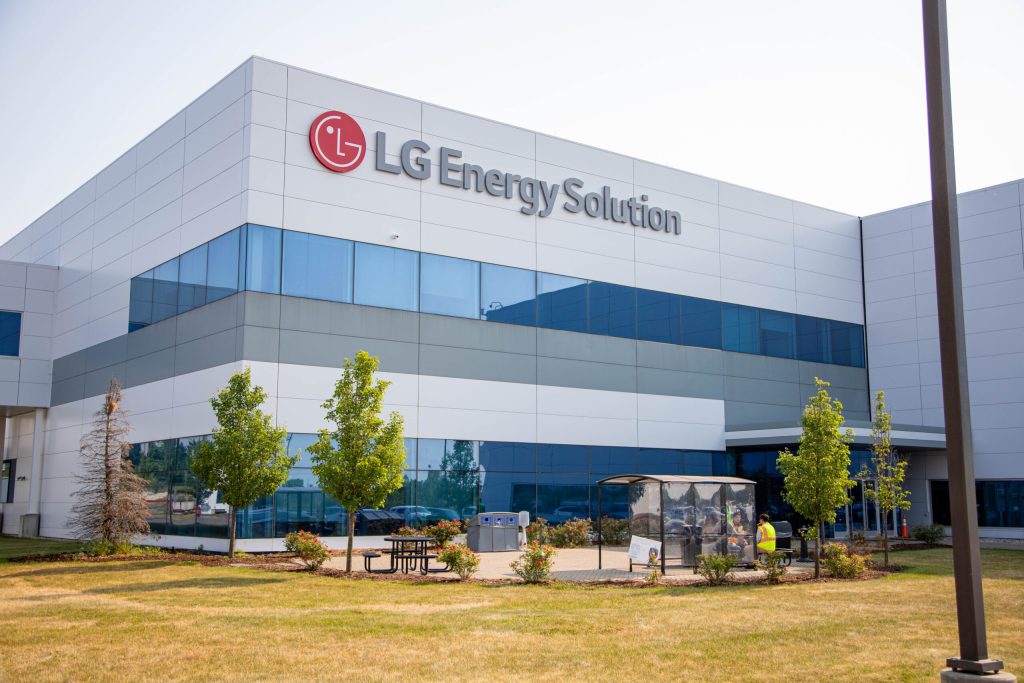
LG Energy Solution is among the limited number of battery manufacturers expanding LFP production capacity outside China. In contrast, much of the battery manufacturing activity in Europe and the United States has concentrated on nickel-manganese-cobalt (NMC) chemistries.
Producing the batteries domestically also provides an additional advantage for Tesla’s energy storage customers, as it allows them to qualify for federal tax incentives tied to products manufactured within the United States.
LFP battery chemistry is particularly well suited for stationary energy storage applications. It offers long cycle life and charging characteristics that align well with grid-scale storage demands.
In addition, LFP cells avoid reliance on volatile supply chains for materials such as cobalt and nickel. For Tesla’s rapidly expanding energy division, the new facility in Lansing addresses both supply chain reliability and battery chemistry considerations within a single agreement.
Despite this collaboration, the broader relationship between Tesla and LG Energy Solution has encountered some challenges, again related to battery chemistry. According to reporting from Business Korea, LG Energy Solution is considering replacing LG Chem as the cathode supplier for Tesla’s vehicle batteries.
The report indicates that the sister company has struggled to meet Tesla’s specifications for NMC battery cells containing 95 percent nickel. Cells with this composition can deliver roughly 20 percent higher energy density compared with the 90 percent nickel variants that LG Chem currently manufactures at scale.
Also Read:Tesla’s New Model Y AWD Brings Dual-Motor Power for Just $2,000 More
