
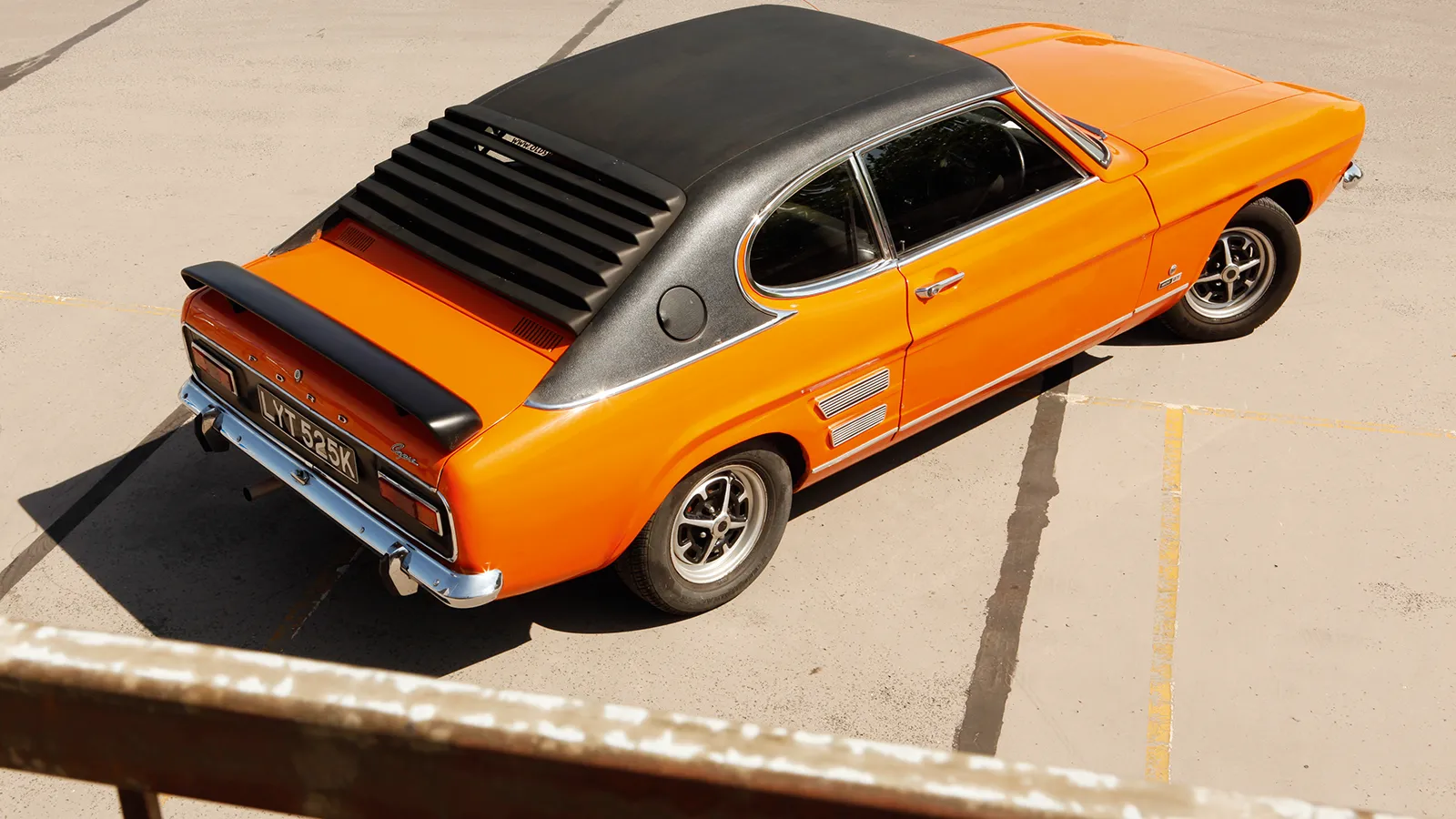
Few design elements in automotive history carry as much visual authority as a roofline. It defines a car’s silhouette from fifty yards away, communicates its character before a single detail is visible, and in the hands of a skilled designer, becomes the defining gesture of an entire era.
During the 1960s, luxury car design reached a creative peak that produced rooflines so distinctive, so perfectly suited to their vehicles, and so deeply embedded in automotive visual culture that they remain reference points for designers working today.
Luxury automakers of the 1960s were operating in a uniquely competitive creative environment. American manufacturers were locked in prestige battles that expressed themselves in sweeping lines, formal pillar treatments, and dramatic greenhouse profiles that communicated wealth and status as clearly as any other visible status symbol of the period.
European coachbuilders were applying postwar sophistication to platforms that had matured enough to support genuinely beautiful bodywork. Japanese luxury was beginning to announce its intentions through careful study of what made a car look expensive and refined. What produced the great rooflines of this decade was the convergence of design ambition, technical possibility, and cultural context.
Buyers of 1960s luxury cars expected their vehicles to make a statement, and manufacturers responded by creating rooflines that ranged from the quietly formal elegance of pillarless hardtop designs to the dramatically sculpted fastbacks and formal vinyl-topped sedans that dominated the upper end of the American market. Each approach reflected a specific understanding of what luxury car design was meant to communicate, and the decade’s most successful rooflines conveyed it perfectly.
This page covers ten rooflines from 1960s luxury vehicles that stood above the rest in design ambition, visual impact, and lasting influence. Each one is discussed with the specific vehicle that wore it best, because rooflines do not exist independently of the cars that carry them. They succeed or fail in context, and these ten succeeded completely.
1. The Formal Vinyl Hardtop of the 1967 Cadillac Fleetwood Sixty Special Brougham
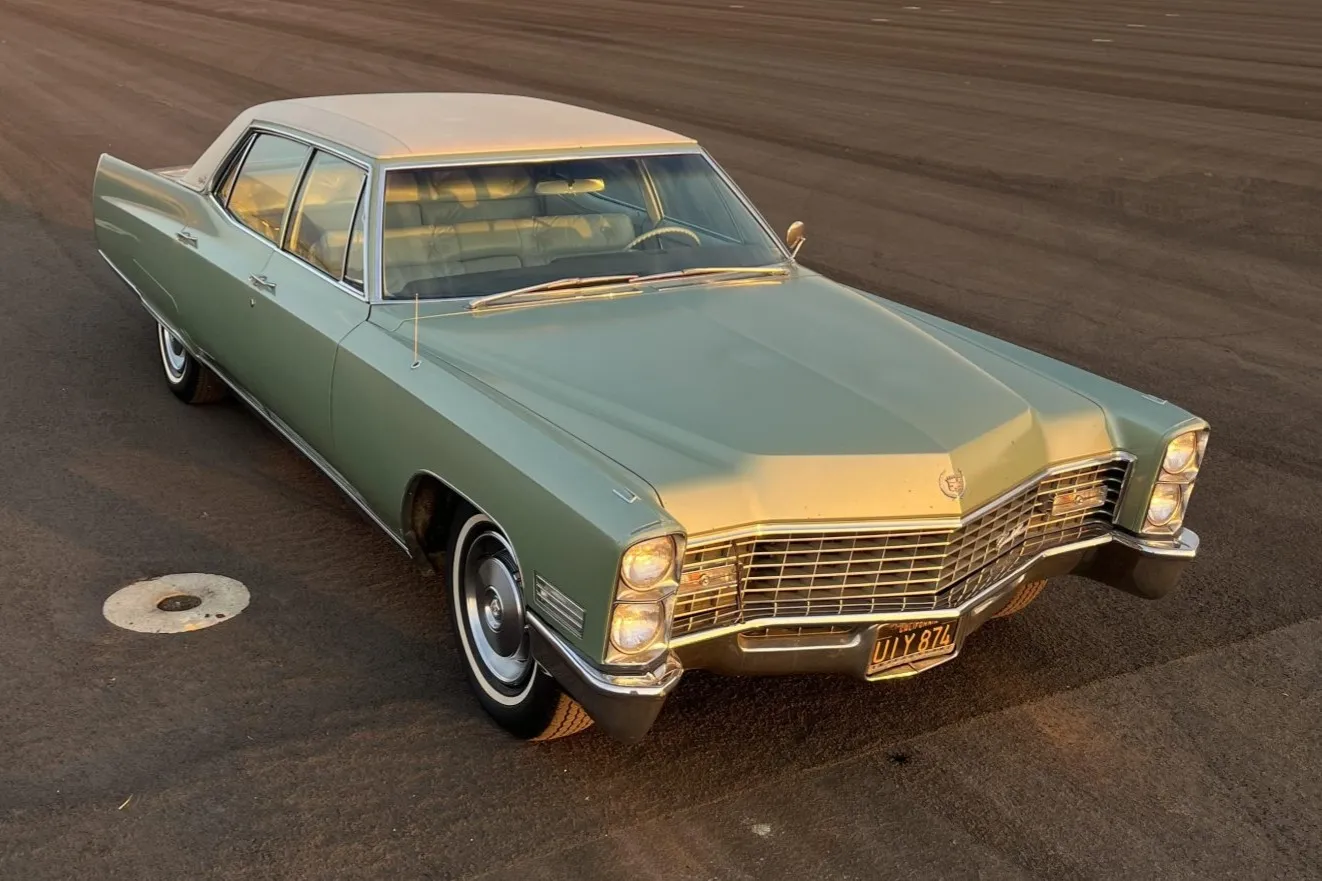
Cadillac’s position at the apex of American luxury in the 1960s created both an opportunity and an obligation to define what a luxury roofline should look like, and the 1967 Fleetwood Sixty Special Brougham met both demands with a formal vinyl hardtop design that became the decade’s most influential statement about what a premium American sedan was supposed to say from every angle.
This was not simply a roof covering. It was a deliberate design statement about the relationship between formal elegance and automotive prestige. Pillarless hardtop construction eliminated the B-pillars that would have interrupted the long, clean greenhouse profile, creating unobstructed window openings on all four sides that enhanced both the visual openness of the passenger compartment and the sense of airy space that Cadillac’s advertising consistently promoted.
Padded vinyl roof covering in black or white over the formal rear section became one of the most widely imitated luxury car design gestures of the decade, spawning thousands of aftermarket and factory applications across American luxury and near-luxury cars throughout the late 1960s and into the 1970s.
Cadillac’s designers positioned the vinyl coverage carefully, extending it to the B-pillar location where it created a visual break between the front and rear portions of the roofline that subtly referenced formal limousine design without actually being a limousine.
Rear window treatment on the Sixty Special Brougham used a slightly wrapped rear glass that maintained the formal character of the roofline while providing adequate rear visibility. Bright window surrounds added a jewelry-like quality to the roofline’s rear section that reinforced the overall impression of carefully executed, expensive design rather than production efficiency.
Surviving examples of the 1967 Cadillac Fleetwood Sixty Special Brougham in original condition are among the more sought-after American luxury collector cars from this era, and their roofline design remains one of the period’s most studied by automotive design historians and restoration specialists who want to understand how Cadillac’s peak design era communicated its values through form.
2. Lincoln’s Panoramic Hardtop on the 1961 Lincoln Continental Convertible Sedan
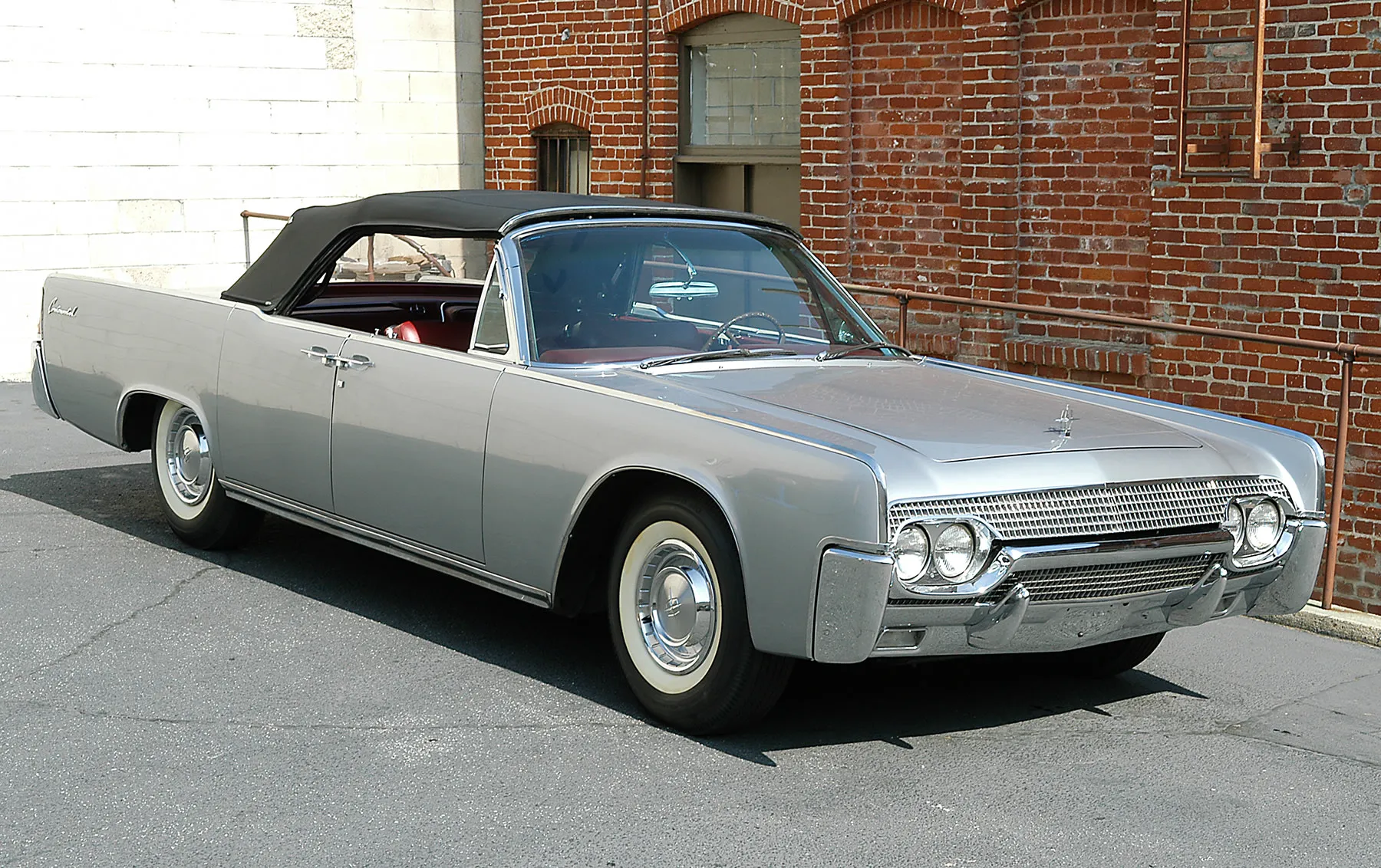
Elwood Engel’s design for the 1961 Lincoln Continental represented a complete departure from the baroque excess of late 1950s American luxury design, and its roofline became one of the most celebrated automotive design gestures of the 20th century.
Clean, horizontal, and architecturally precise, the Continental’s roofline reflected a European-influenced design discipline that was almost without precedent in American luxury cars of the period. Engel’s approach used a formal, nearly flat roofline profile that sat in deliberate visual tension with the car’s long, low body.
Thin pillars supporting a large, wraparound greenhouse created an impression of structural lightness that belied the Continental’s substantial size. Chrome-framed windows sat flush with the roofline surface in a treatment that eliminated the shadow lines and visual breaks that cluttered competing designs of the period.
Lincoln’s decision to offer the Continental in a four-door convertible configuration alongside the four-door sedan created a roofline story that was unique in American luxury car design. When the sedan’s roof was present, it read as architecturally modern and formally elegant.
When it was removed from the convertible, the remaining body structure revealed how carefully Engel had designed the beltline and window frame proportions to work both with and without the roof, which was a level of design integration that most convertible designs of the era did not achieve.
Ford’s quality investment in the 1961 Continental matched the design ambition of its roofline. Hand-fitted body panels and rigorous quality control produced a vehicle that felt as precise and well-made as it looked, which was essential for a roofline whose cleanliness depended on tight panel fits and accurate chrome trim alignment that sloppy manufacturing would have immediately compromised.
Also Read: Top 8 European Luxury Coupes That Dominated the 1980s Executive Market
3. Rolls-Royce’s Coachbuilt Fastback on the 1965 Rolls-Royce Silver Shadow Two-Door Coupe
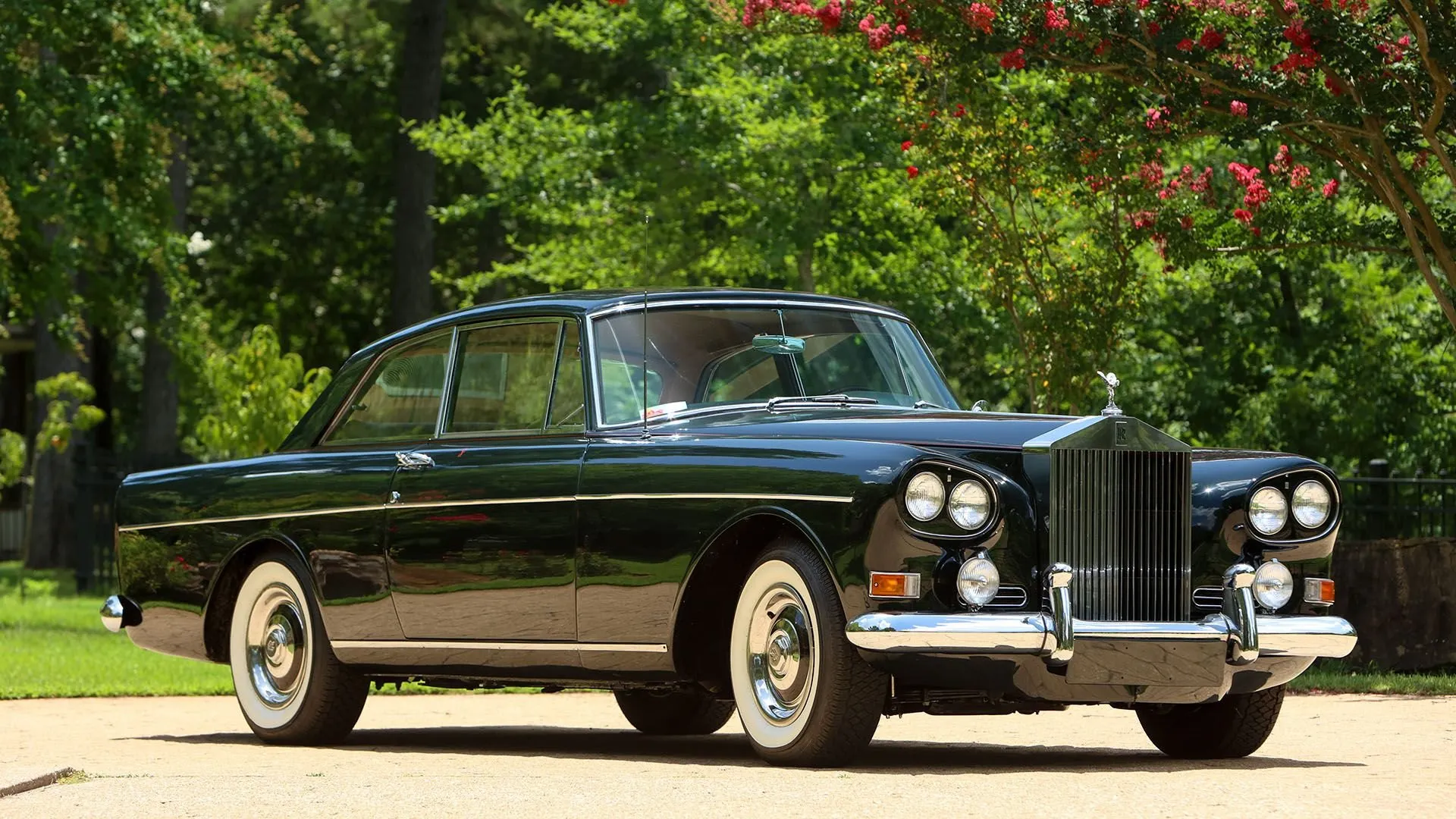
The 1965 Rolls-Royce Silver Shadow Two-Door Coupe represents a period of technical transition for Rolls-Royce, when the company adopted monocoque construction in place of its long-established separate chassis design.
This structural change allowed greater freedom in body shaping, and the collaboration with Mulliner Park Ward produced a two-door coupe with a fastback roofline that reflected both engineering progress and established coachbuilding craftsmanship.
The roofline of this coupe extends in a smooth and continuous curve from the windscreen to the rear section, forming a profile that would have been difficult to achieve with earlier structural layouts. This flowing design introduced a sense of motion into the vehicle’s appearance while maintaining the dignity associated with the brand.
The result is a balance between restrained luxury and a more expressive form, achieved without compromising the traditional expectations of Rolls-Royce clientele. Attention to glass proportion formed an essential part of the design process. The side windows were shaped to follow the taper of the roofline, allowing the structure to maintain visual continuity without restricting interior comfort.
Rear occupants benefited from sufficient light and visibility, while the design still provided a sense of privacy consistent with the expectations of high-end motoring. Achieving this balance required careful control of window size, angle, and integration with the surrounding bodywork.
Craftsmanship distinguished the coachbuilt approach from standard production methods. Each panel was shaped and assembled with a level of precision associated with hand-built construction. The junction between the roof and the body sides displays a refined finish, with smooth transitions that reflect the attention given to detail during assembly.
This standard of workmanship extended to the treatment of window frames and exterior trim, where alignment and fit were maintained to a very high degree. Surviving examples of these coupes are regarded as important representations of a transitional period in automotive design.
They demonstrate how a manufacturer could adopt modern engineering methods while preserving traditional craftsmanship. The roofline remains a defining feature of the vehicle, illustrating how structural innovation and artisanal skill can be combined to produce a cohesive and enduring design.
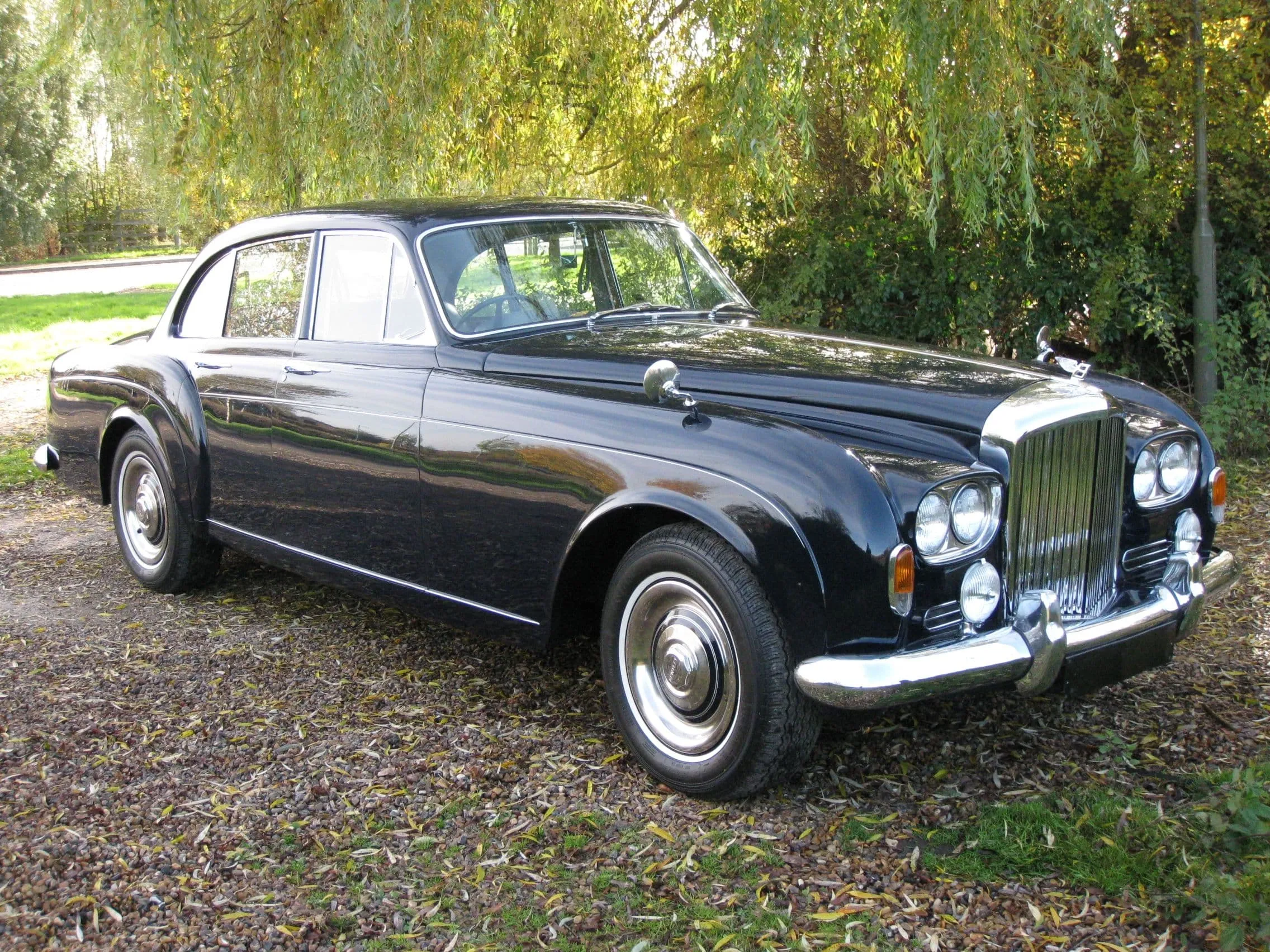
4. Bentley’s Continental S3 Two-Door Saloon Roofline and the 1965 Bentley S3 Continental Flying Spur
The 1965 Bentley S3 Continental Flying Spur reflects the design expertise of H.J. Mulliner, a firm recognised for its ability to produce refined bodywork for high-end British automobiles. Working within the dimensions of a four-door saloon, the designers addressed the challenge of maintaining visual harmony across an extended body length while ensuring passenger comfort and structural balance.
The roofline of the Flying Spur was shaped through careful control of curvature from the windscreen to the rear window. Rather than introducing abrupt transitions or flat sections, the designers created a gentle arc that maintained continuity across the entire upper structure.
This approach allowed the vehicle to present a unified appearance, avoiding the segmented look that affected many large saloons of the same period. Chrome detailing around the window frames was applied with precision. The width and placement of the trim were carefully measured to provide visual definition without overwhelming the surrounding surfaces.
Interior accommodation influenced the roof design in practical ways. Rear passengers were provided with generous headroom, achieved by maintaining sufficient roof height across the back section of the cabin. This was managed without altering the external proportions, as surrounding body panels were shaped to maintain a consistent visual flow. Occupants experienced a spacious environment that aligned with the expectations of luxury motoring.
Construction quality remained central to the identity of the Flying Spur. Each body was assembled with close attention to panel alignment and surface finish. The roof structure displayed consistent integration with the rest of the body, reflecting the level of care applied during manufacture. Precision in assembly ensured that visual lines remained uninterrupted from front to rear.
Examples that retain original components and documented history continue to attract strong interest among collectors. The roofline stands as a defining element of the design, representing a successful combination of proportion, craftsmanship, and engineering discipline within the British luxury automobile tradition.
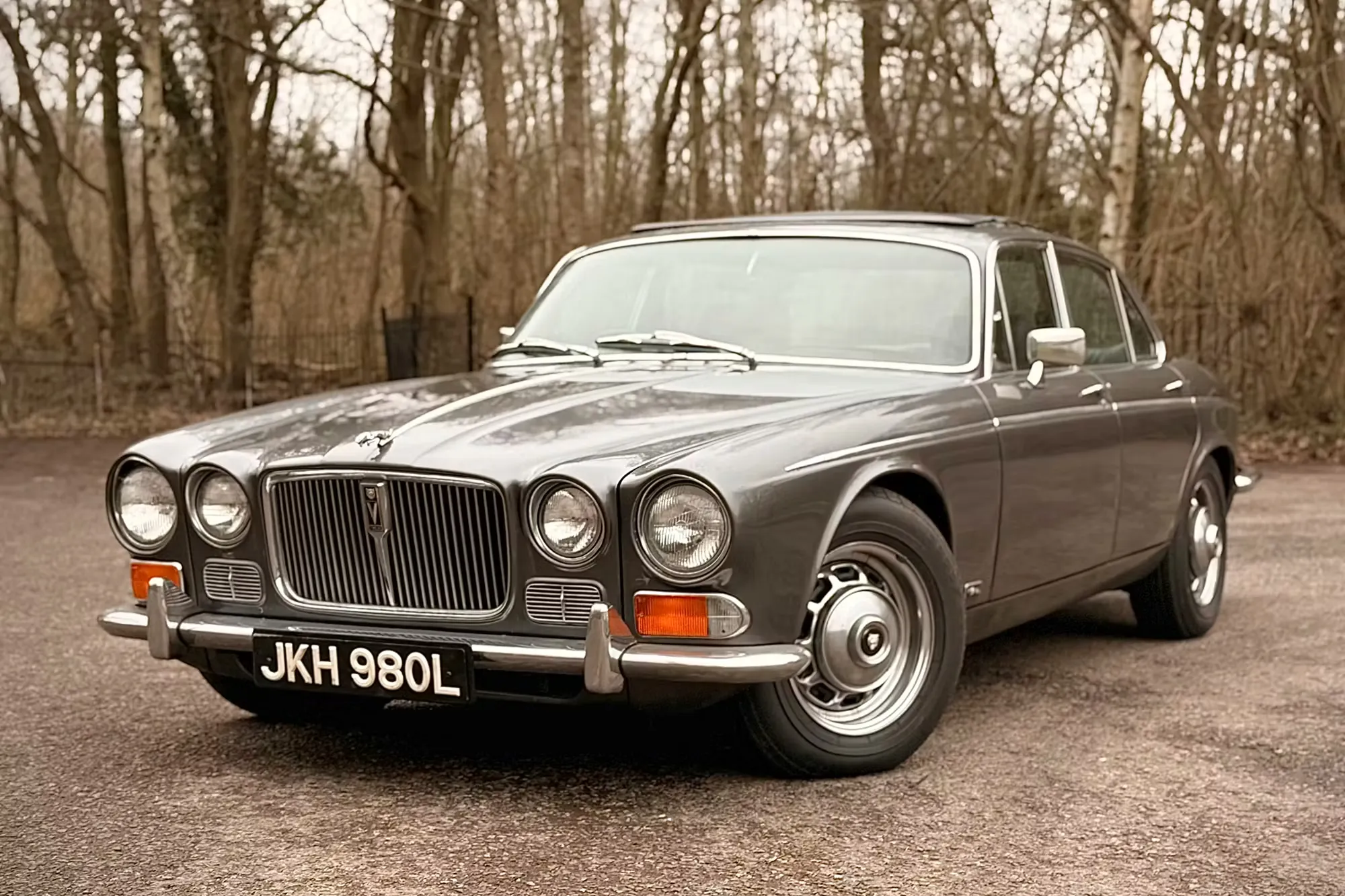
5. Jaguar’s XJ6 Series 1 Formal Roofline and the 1968 Jaguar XJ6 4.2 Series 1
Sir William Lyons maintained direct control over Jaguar’s body design for many years, and the 1968 XJ6 Series 1 stands as the final complete expression of his personal design direction. It arrived at a time when his experience had reached full maturity, supported by a production system capable of delivering refined detailing with consistency. The roofline of the XJ6 achieved a rare balance for a luxury saloon of its era, presenting a dignified four-door silhouette while retaining a sense of motion and restrained power within a single, continuous form.
A defining feature of the design was its relatively low roof height. Lyons deliberately reduced the vertical profile beyond what many competing manufacturers considered acceptable, placing emphasis on external proportions rather than maximising interior headroom. This decision resulted in a vehicle that appeared longer, sleeker, and more composed on the road.
The rear section of the roofline displayed careful attention to visual movement. A slight curvature at the C-pillar introduced a gentle forward thrust to the car’s stance, preventing the profile from appearing rigid when viewed from an angled perspective.
This subtle feature reflected Lyons’s long-standing design philosophy, where small adjustments in line and proportion contributed to a more dynamic presence without unnecessary ornamentation. Manufacturing execution at Jaguar’s Browns Lane facility played a vital role in preserving the integrity of this design.
At a time when production limitations often diluted stylistic intent, the XJ6 was produced with sufficient accuracy to reflect the original concept. Panel alignment, glass fitting, and roof contours were handled with a level of care that allowed the car to maintain its intended visual effect in everyday use.
Interest from collectors has remained strong, particularly for early Series 1 examples equipped with the 4.2-litre engine and manual transmission. Vehicles that retain their factory specifications attract attention not only for their mechanical character but also for their design purity.
The XJ6 established a template that influenced Jaguar saloons for many years, and its roofline continues to be regarded as a defining element of the brand’s identity during that period.
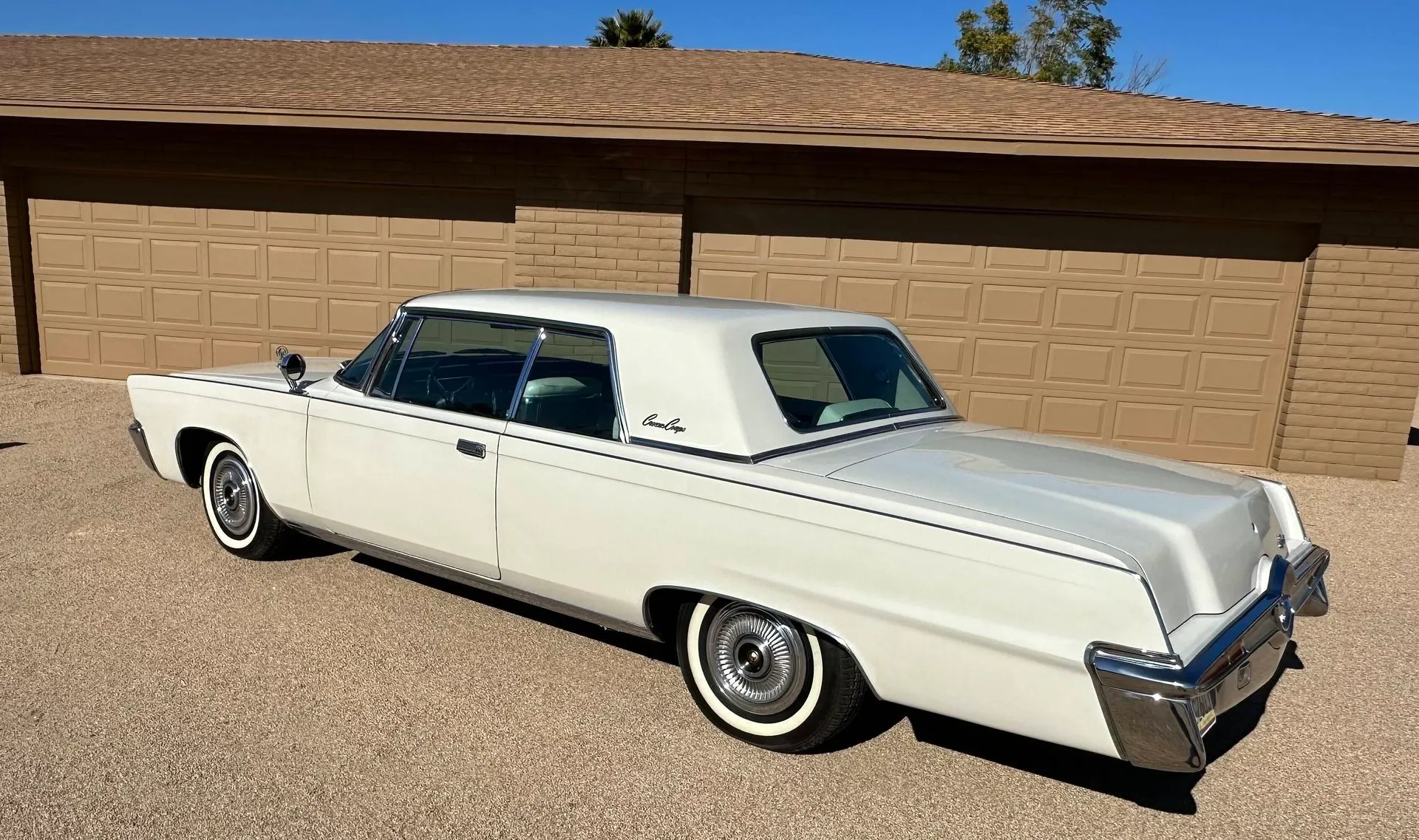
6. The Razor-Edge Formal Roofline of the 1966 Imperial Crown Coupe by Chrysler
During the 1960s, Chrysler positioned its Imperial division as a distinct luxury offering, aiming to compete directly with established American marques at the highest level of the market. The 1966 Imperial Crown Coupe emerged from this ambition with a design approach that emphasised discipline and precision.
Its roofline, often described as razor-edged, reflected a deliberate move toward a more structured and architectural form, drawing influence from European coachbuilding traditions that prioritised clarity and proportion.
Elwood Engel, who joined Chrysler after his work on the Lincoln Continental, introduced a restrained and methodical design language. This approach departed from the flowing curves that dominated American styling at the time.
Instead, the Crown Coupe featured sharply defined surfaces and clean intersections, giving the car a composed and authoritative presence. The roofline stood as the clearest expression of this philosophy, with flat planes and straight edges forming a cohesive and purposeful structure.
This approach appealed to buyers who valued a more formal expression of luxury, where solidity and presence were given priority over lightness or openness. Window detailing supported this structured theme. Chrome surrounds were applied with consistent thickness, maintaining visual order across the entire greenhouse.
The use of straight lines and measured proportions ensured that the window frames complemented the roofline rather than distracting from it. Despite the pronounced C-pillar, the rear window remained sufficiently large to provide acceptable visibility, demonstrating that practicality had not been ignored in pursuit of style.
Production volumes for the 1966 Imperial Crown Coupe were relatively limited when compared with other American cars of the period. As a result, well-preserved examples are less common in today’s collector market.
Those who appreciated the car at the time of its release were typically drawn to its disciplined appearance and its reference to European luxury standards. Present-day collectors often express similar views, recognising the car’s distinct character and the clarity of its design direction as defining attributes of its appeal.
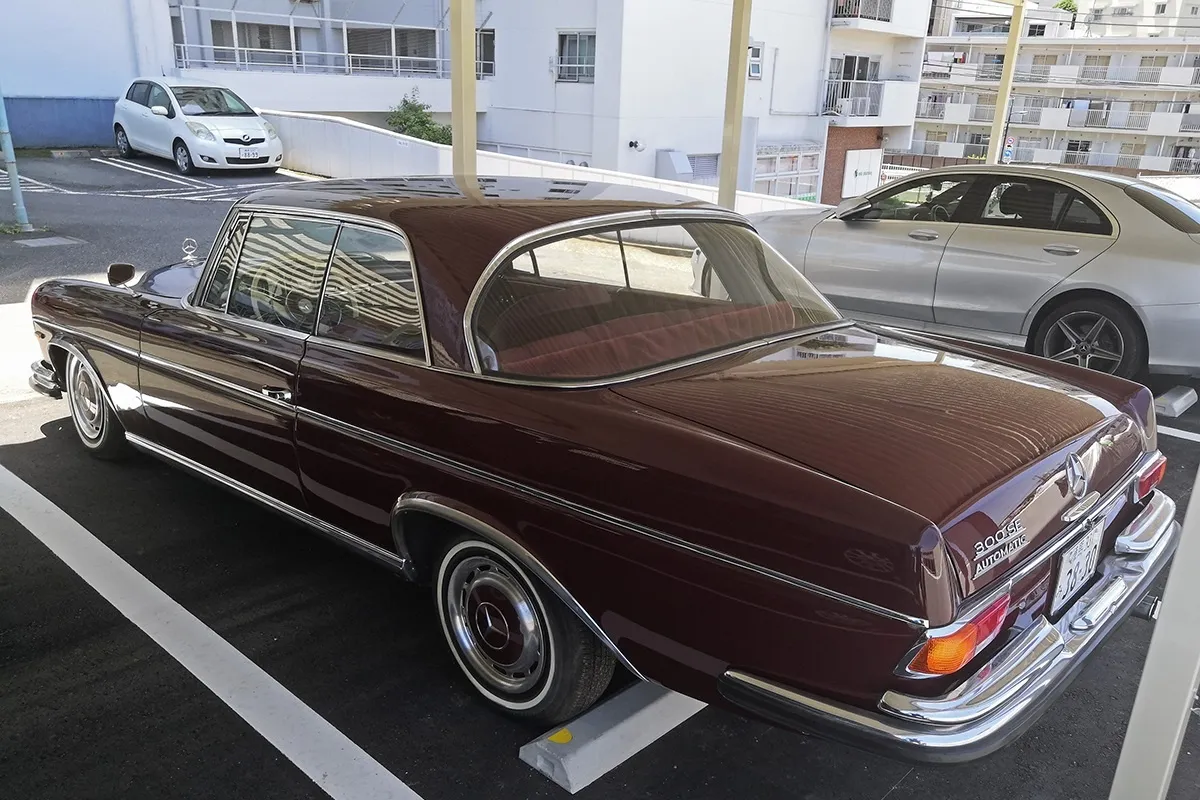
7. Mercedes-Benz’s Fintail Roofline on the 1965 Mercedes-Benz 300SE Lang (W112)
The 1965 Mercedes-Benz 300SE Lang (W112) represents a period when German automotive design combined disciplined engineering with careful attention to aerodynamic efficiency. The roofline developed under the direction of Friedrich Geiger reflects an early application of wind tunnel testing within the luxury sedan segment, resulting in a structure that balanced airflow management with formal design expectations.
Passenger accommodation played a central role in shaping the roof structure. The long wheelbase configuration required adequate headroom for rear occupants, many of whom were chauffeur-driven individuals of high social standing.
The roofline achieved this requirement through careful shaping rather than excessive height, thereby preserving proportional balance. Thin supporting pillars increased the glass surface area, allowing more natural light into the cabin and improving outward visibility. This design decision also reduced visual mass, giving the vehicle a lighter appearance despite its physical size.
Exterior detailing reinforced the disciplined design language. Chrome window surrounds were applied with restraint, following the curvature of the roof without interrupting its flow. Production at the Sindelfingen facility ensured precise alignment of these elements, supporting a consistent presentation across different units. The accuracy of assembly contributed to the perception of technical excellence associated with the model.
A distinctive technical feature of the W112 platform was its air suspension system. This system maintained a constant ride height regardless of passenger load or luggage weight. Maintaining this fixed relationship between the body and the road surface preserved the intended proportions of the roofline under varying conditions. Without such a system, changes in ride height would have altered the visual balance of the design.
Examples of the W112 300SE Lang remain highly regarded among collectors. Their continued appeal rests on a combination of engineering discipline, restrained styling, and structural integrity. The roofline stands as a clear representation of Mercedes-Benz design priorities during the mid-twentieth century, where function and form were developed together to achieve a coherent and enduring result.
8. Citroën DS’s Aerodynamic Fastback on the 1968 Citroën DS 21 Pallas
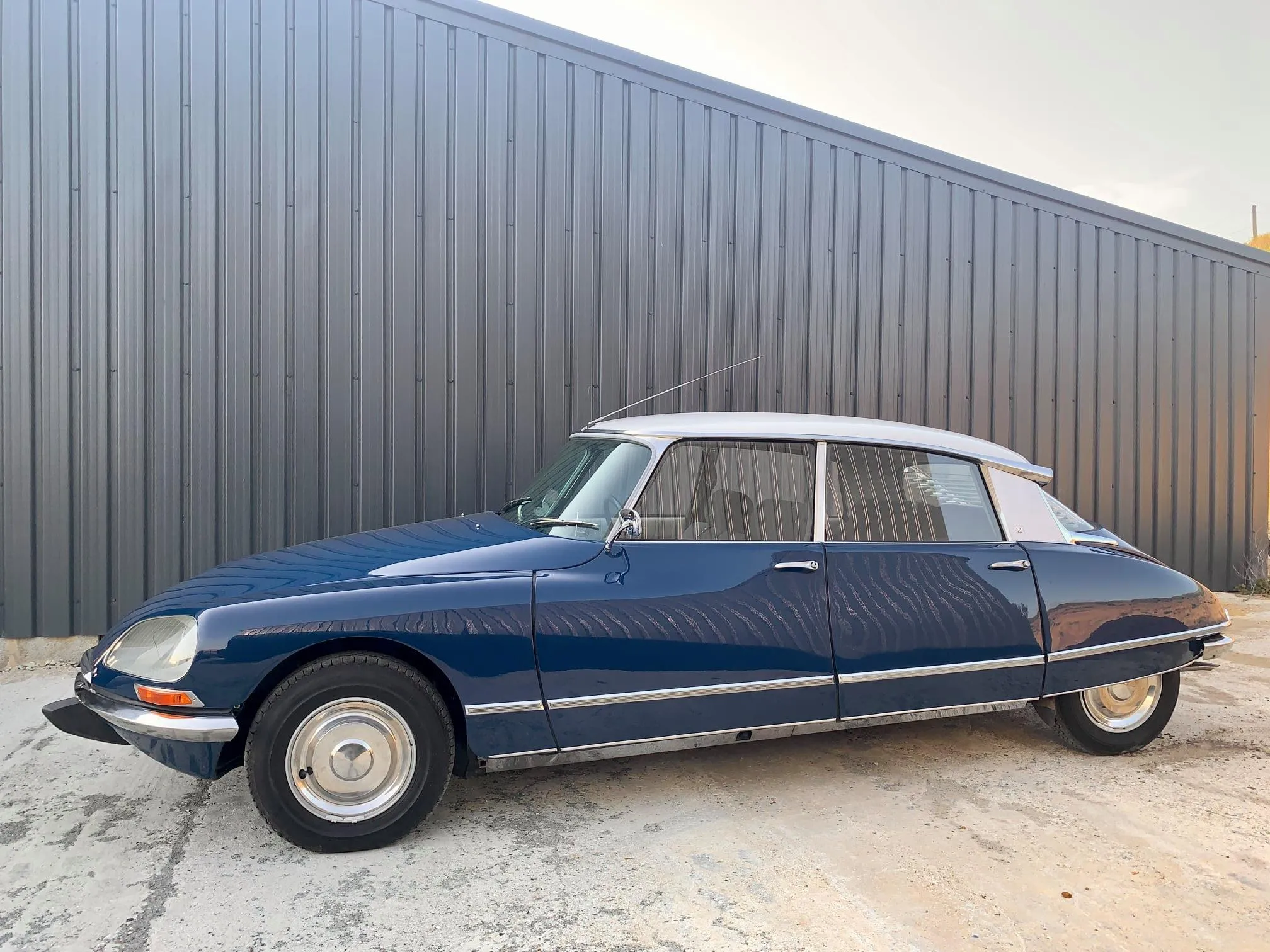
The 1968 Citroën DS 21 Pallas demonstrates a distinct approach to automotive design, guided by the work of Flaminio Bertoni and André Lefèbvre. Their design philosophy prioritised aerodynamic efficiency and structural unity, resulting in a roofline that departed from conventional European luxury styling of the period. The fastback profile extends in a continuous arc from the windscreen to the rear section, forming a smooth and uninterrupted surface.
This shape was informed by aerodynamic testing, which aimed to reduce drag while maintaining practical usability. The resulting form improved airflow across the vehicle’s body, contributing to efficiency and stability at higher speeds. At the same time, the visual identity of the vehicle remained distinctive, setting it apart from more traditional saloon designs.
Integration of the rear window into this flowing structure required careful engineering. The transition from the roof to the rear glass was executed without abrupt changes in angle, allowing the aerodynamic line to remain intact.
This design preserved rear visibility and ensured adequate illumination within the passenger compartment. The balance achieved between functional requirements and aerodynamic continuity reflects a high level of design discipline.
A defining mechanical feature of the DS 21 Pallas was its hydropneumatic suspension system. This system maintained a constant ride height regardless of load conditions, ensuring that the relationship between the body and the road remained unchanged.
The visual effect of the roofline depended on this consistency. When hydraulic pressure was lost and the vehicle settled downward, the intended proportions were immediately affected, demonstrating the reliance of the design on its suspension system.
Late 1960s examples of the DS 21 Pallas continue to attract collectors and restoration specialists. The vehicle’s roofline remains one of its most recognised attributes, combining aerodynamic efficiency with a distinctive structural form.
The work of Bertoni and Lefèbvre established a design direction that differed from prevailing conventions, producing a vehicle that continues to be studied for both its engineering approach and its visual execution.
9. Buick’s Opera Window Hardtop on the 1969 Buick Electra 225 Custom Sport Coupe
Buick’s position within GM’s luxury hierarchy gave its designers a specific challenge: produce a roofline that communicated luxury and prestige clearly enough to justify premium pricing over Oldsmobile and Pontiac while maintaining sufficient visual distinction from Cadillac’s designs to prevent buyer confusion between the two brands.
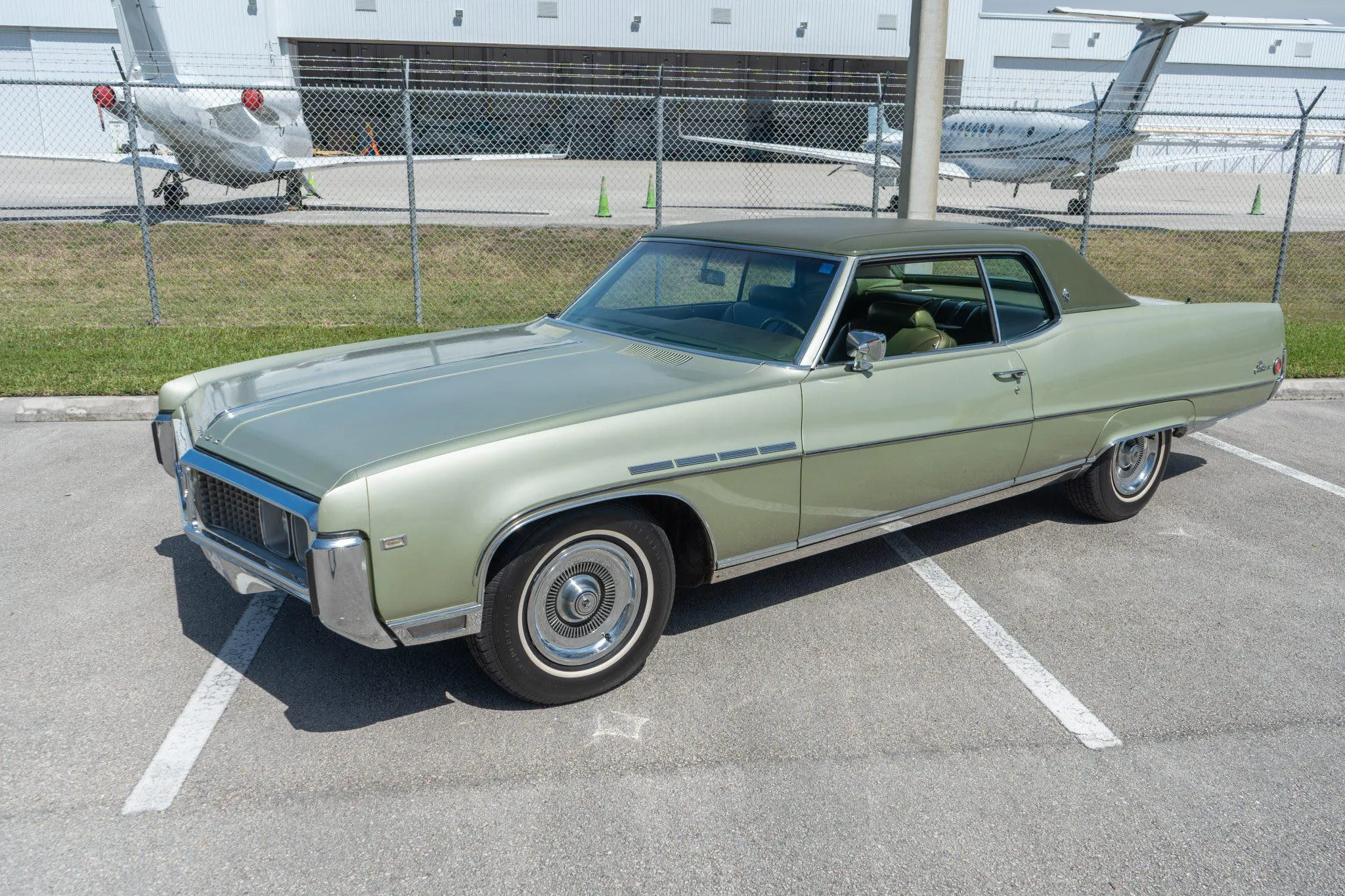
For the 1969 Electra 225 Custom Sport Coupe, Buick’s solution produced a formal hardtop roofline with opera window treatment that became one of the decade’s most influential luxury coupe design gestures. Opera windows, small fixed or sliding windows at the rear of a formal coupe roofline, created a visual reference to formal coach design that communicated luxury associations independent of the vehicle’s price or brand positioning.
Buick’s implementation of the Electra 225 Custom Sport Coupe used a small, oval opera window in the rear roof quarter panel that broke the solid surface of the formal C-pillar and created a visual accent that transformed the roofline from simply formal to actively ornamental.
Vinyl roof covering over the formal rear section of the roofline complemented the opera window in a way that positioned the Electra 225 as aspirationally close to Cadillac’s formal design vocabulary while maintaining Buick’s own visual identity through specific proportion choices and detail execution that differed from Cadillac’s equivalent treatments.
This design strategy was calculated and effective, creating a roofline that communicated luxury at the level Buick’s market position required. Buick’s long wheelbase gave the Electra 225’s roofline sufficient surface area to accommodate the formal rear treatment without the proportional compression that opera window and vinyl roof treatments produced on shorter coupes.
Designers had adequate longitudinal distance between the opera window and the front of the roofline to maintain visual balance, which was a proportional advantage that smaller coupes attempting similar roofline designs consistently lacked.
Also Read: 8 Luxury Classics That Are Surprisingly Affordable to Insure
10. Ferrari’s Pininfarina Berlinetta Roofline on the 1966 Ferrari 330 GTC
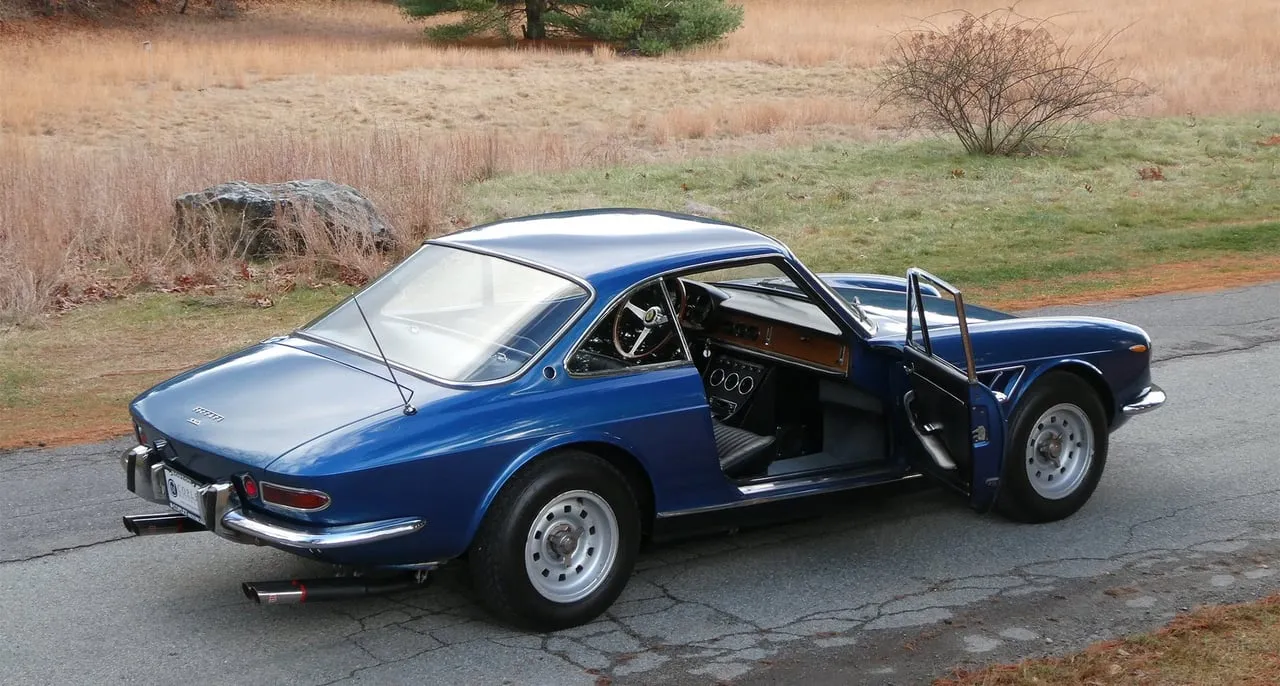
Pininfarina’s roofline for the 1966 Ferrari 330 GTC represented the Italian coachbuilder’s most refined expression of the grand tourer coupe form during the decade, creating a profile that synthesized aerodynamic efficiency, structural elegance, and the specific visual character that Ferrari demanded of its road cars in a roofline that remains one of the most copied and referenced in Italian coachbuilding history.
Sergio Pininfarina’s team worked from a design brief that required the 330 GTC to read as both a road car and a grand touring vehicle suitable for extended high-speed travel across Europe’s most demanding driving routes.
This dual requirement produced a roofline that was neither as dramatically low as a pure sports car nor as formally upright as a touring sedan, but instead achieved a specific intermediate character that communicated capability and luxury simultaneously.
Glass area management in the 330 GTC roofline balanced the desire for visibility and interior light against the structural requirements of a roofline that needed to be rigid enough for high-speed touring use and light enough to maintain the front-to-rear weight balance that Ferrari’s chassis engineers required for handling performance.
Pininfarina’s solution used precisely sized side windows and a rear screen of carefully determined dimensions that satisfied all these competing requirements without any element appearing compromised by the constraints placed on it.
Transitional surfaces between the roofline and the body panels below received the detailed attention that Pininfarina applied to every junction in their coachwork, with smooth, precisely controlled compound curves replacing the visible seam lines that production manufacturing produced at equivalent locations on less carefully executed designs.
Running a hand across the junction between the 330 GTC’s roof and its body sides at the C-pillar area produced a surface quality that Ferrari buyers of the period recognized as evidence of the handcrafted investment that justified their purchase.
Ferrari 330 GTC examples in original, unrestored, or correctly restored condition are among the most actively sought collector cars of their generation, with Pininfarina’s roofline design recognized as one of the primary reasons that this relatively unknown model has achieved the collector status that more famous contemporary Ferraris commanded decades earlier. Its roofline is not just beautiful in isolation.
It is beautiful in the specific way that only succeeds when a designer’s intention, a coachbuilder’s craft, and a manufacturer’s engineering combine with a complete mutual understanding of what the result needs to achieve.
