
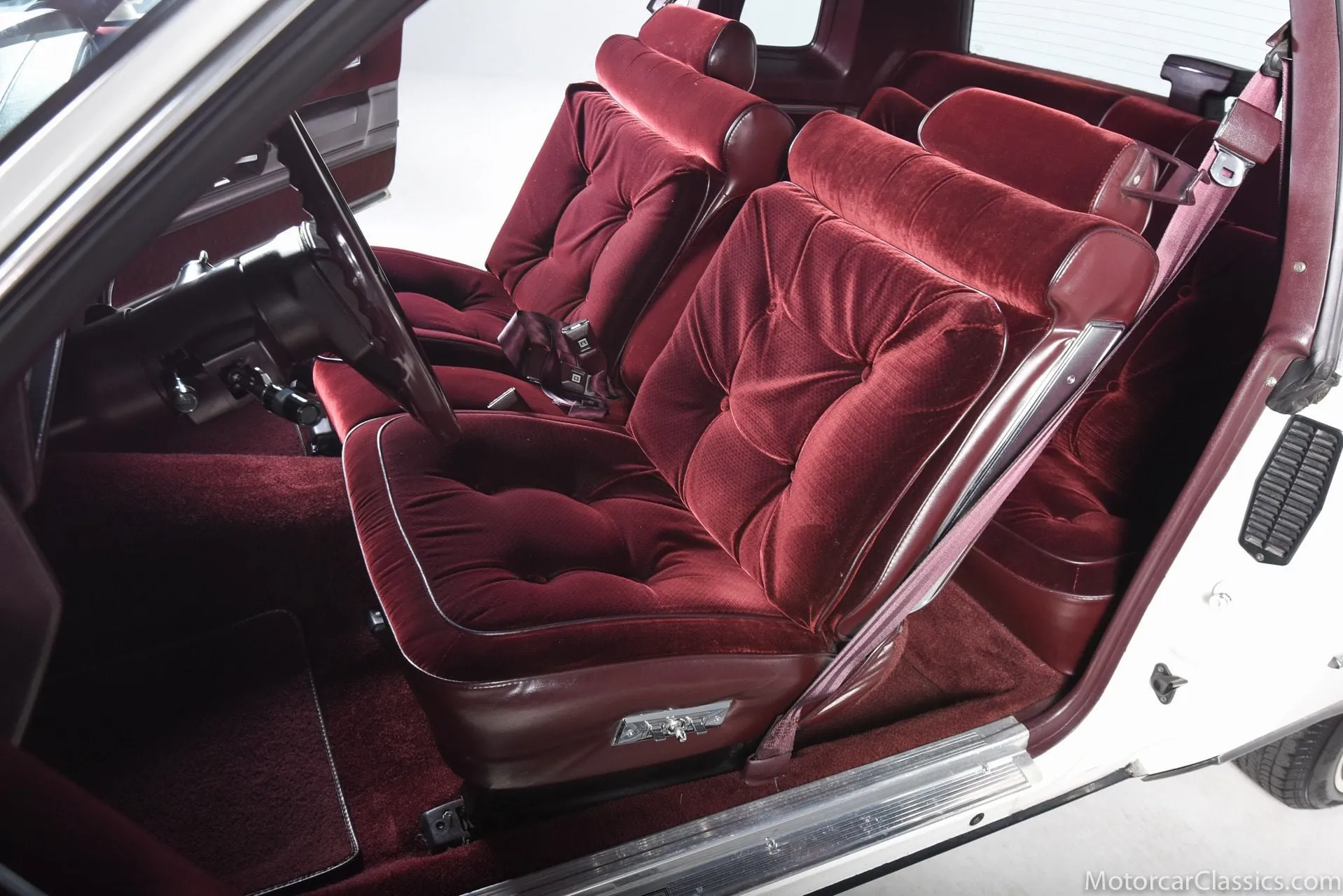
Slide into the front seat of a well-preserved 1980s American luxury car and something happens that modern interiors simply cannot replicate. Before you touch the steering wheel or notice the instrument cluster, you feel it: that soft, enveloping, almost absurdly comfortable embrace of velour upholstery wrapping around you like the automotive equivalent of a warm room on a cold evening. Nobody makes car interiors this way anymore, and that is genuinely their loss.
Velvet and velour interiors defined a specific era of automotive luxury thinking that prioritized tactile comfort above all other considerations. While European manufacturers were experimenting with leather and sport-trimmed bucket seats during the 1980s, American luxury brands and several ambitious import-focused manufacturers were going an entirely different direction.
Their answer to the question of what a truly comfortable car interior should feel like was soft, deeply cushioned, richly colored velour that covered every surface a passenger might contact and turned a long drive into something remarkably close to sitting in your best living room chair.
These interiors were not accidental. They were deliberate, expensive, and carefully considered design decisions made by interior teams who understood that their buyers wanted comfort first and sporting pretension last. Buyers of these vehicles had earned their success and wanted their cars to feel like rewards. Velour delivered that feeling with a directness that no leather seat, regardless of its quality, could quite match.
Looking back at these interiors today, there is something genuinely charming about how committed their designers were to pure, unapologetic luxury comfort. Color options alone were extraordinary: burgundy, midnight blue, saddle tan, pewter, and deep teal appeared across model ranges in combinations that today’s interior designers would never attempt and that somehow worked beautifully together.
This list covers ten of the most impressive velvet and velour interiors from the 1980s, examining what made each one special and why they still earn admiration from anyone lucky enough to experience a well-preserved example.
1. Cadillac Fleetwood Brougham (1985): Where American Luxury Reached Its Velour Peak
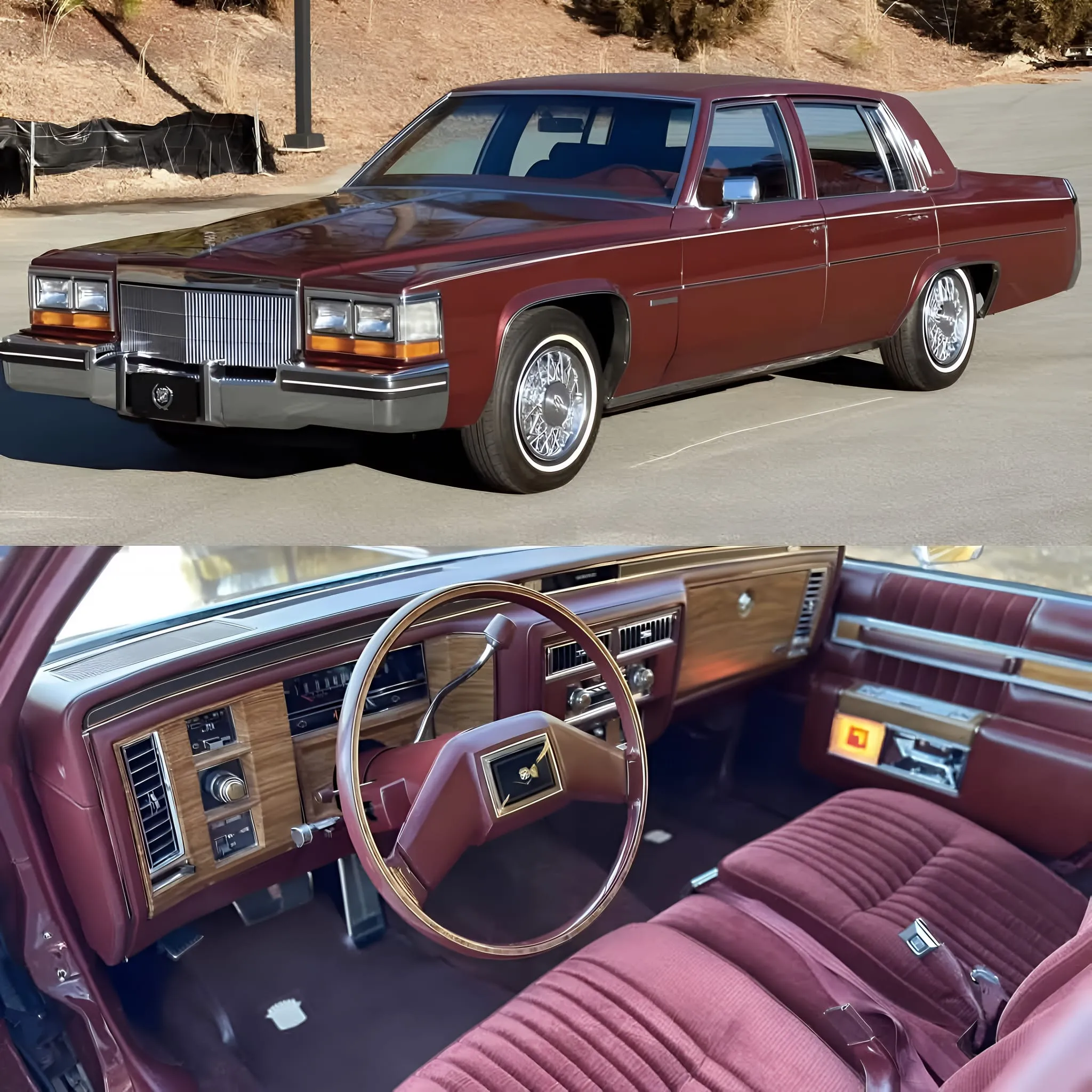
For many individuals who experienced motoring culture during the 1980s, the interior of the 1985 Cadillac Fleetwood Brougham remains a clear reference point for American luxury. The vehicle represented a period when comfort, visual richness, and material depth were treated as central priorities.
Its velour upholstery stood out as a defining feature, presenting a level of softness and visual fullness that few contemporaries could rival. The approach taken by Cadillac was deliberate, ensuring that the use of velour was not merely decorative but integral to the character of the entire cabin.
Cadillac offered this model with a carefully curated selection of velour colours, including Claret Red, Light Antelope, and Dark Blue. Each option was paired with coordinated finishes across the door panels, roof lining, and interior trim elements.
This attention to uniformity ensured that the cabin presented a cohesive appearance rather than a mixture of unrelated materials. The design team approached the interior as a single environment, where every surface contributed to a consistent visual and tactile experience.
Seat construction played a major role in defining the vehicle’s comfort. Beneath the velour surface lay deep layers of foam cushioning, engineered to absorb road irregularities and reduce fatigue during extended journeys. When combined with the car’s standard air suspension system, the seating arrangement contributed to a calm and stable ride quality.
The front seats were wide and accommodating, allowing occupants to sit comfortably without restriction. The split-bench layout provided an additional level of practicality, with a central armrest that enhanced relaxation without compromising space.
Attention to rear passenger comfort was equally evident. The rear seating area reflected a clear intention to provide a premium experience for occupants who might spend extended periods in the back. Generous legroom ensured ease of movement, while the cushioning matched the depth and softness of the front seats.
A fold-down centre armrest added convenience, incorporating features such as a vanity mirror and storage compartment. These elements reinforced the idea that the rear compartment was not secondary but essential to the vehicle’s luxury identity.
The treatment of the door panels demonstrated Cadillac’s commitment to continuity in material application. Velour extended beyond the seating surfaces to cover areas frequently touched by occupants, including the armrests and door pulls.
This eliminated the harsh transitions often found in less carefully designed interiors, where soft seating materials were paired with rigid surrounding surfaces. By maintaining the same material across multiple touchpoints, Cadillac ensured a consistent sensory experience throughout the cabin.
2. Lincoln Town Car Signature Series (1984): Ford’s Answer to Velour Done With Conviction
The 1984 Lincoln Town Car Signature Series represented Ford’s determined effort to compete directly within the upper tier of American luxury motoring. Lincoln approached interior design with a clear focus on refinement, ensuring that comfort and presentation were delivered with consistency.
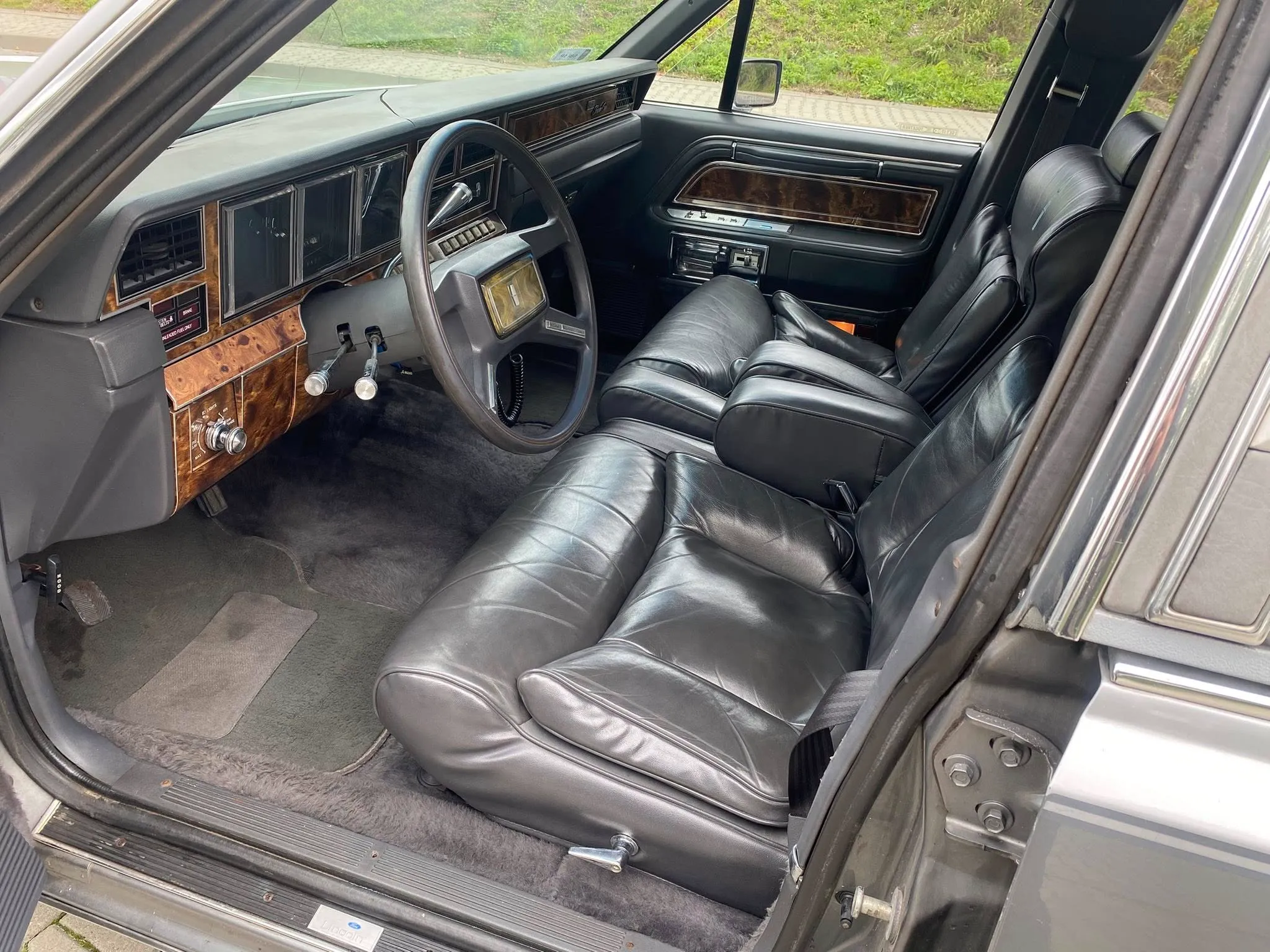
The use of velour upholstery in the Signature Series reflected a deliberate choice to provide a soft and welcoming cabin environment while maintaining a formal and composed aesthetic. Lincoln’s design philosophy for this model leaned toward restraint and order. Rather than relying solely on softness as a defining trait, the interior combined velour surfaces with carefully selected trim elements.
Woodgrain finishes, chrome instrument surrounds, and a well-proportioned steering wheel contributed to a setting that conveyed quiet assurance. The result was an interior that balanced warmth with structure, appealing to drivers who valued both comfort and disciplined presentation.
Colour selection for the velour interior was handled with careful consideration. Options such as Midnight Blue, Colonial White, Dark Red, and Taupe were developed to complement the texture and depth of the fabric. Each colour was tested to ensure that it maintained its visual quality under varying lighting conditions, whether in daylight or at night.
Lincoln placed strong emphasis on the direction and uniformity of the velour pile, recognising that consistency in this area was essential for a polished appearance. Achieving this standard required careful attention during manufacturing, particularly when applied across multiple interior surfaces.
Seating design in the Signature Series was supported by functional adjustments that enhanced driver comfort. A six-way power driver’s seat was provided as standard equipment, allowing for precise positioning in relation to the steering wheel and controls.
This adjustability ensured that drivers of different builds could achieve a suitable seating posture, reducing strain during extended journeys. The cushioning was engineered to provide adequate support while retaining the softness expected from velour upholstery.
Also Read: 5 Cars With Simple Interiors That Age Well vs 5 With Too Much Fragile Plastic
3. Oldsmobile 98 Regency Brougham (1983): General Motors’ Quiet Masterpiece of Velour Comfort
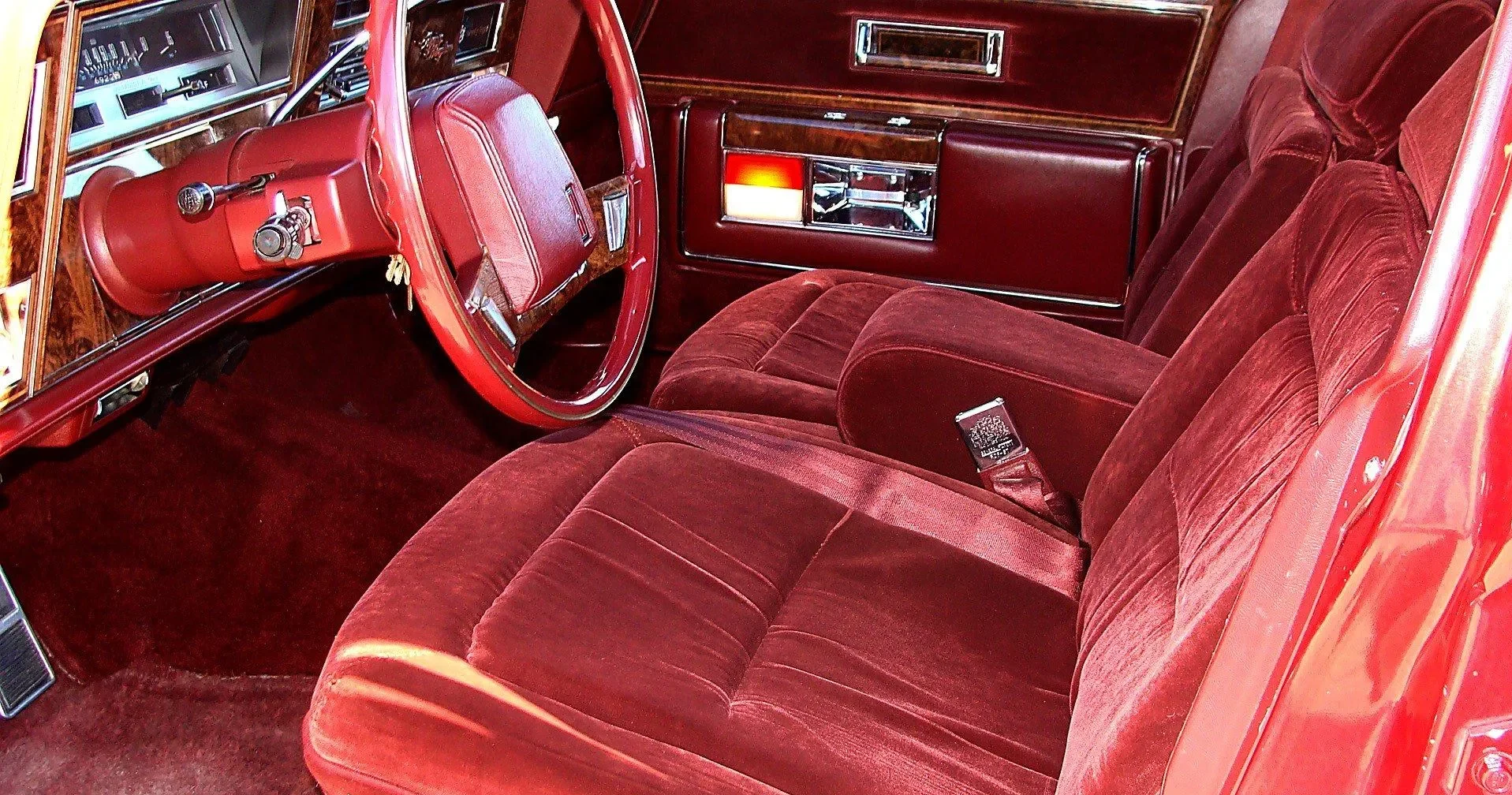
Among General Motors’ luxury offerings of the early 1980s, the Oldsmobile 98 Regency Brougham occupies a position that history has treated less generously than its actual quality deserves. Slightly less prestigious than the Cadillac Fleetwood in badge terms, the 98 Regency Brougham delivered interior quality that competed directly with its Cadillac platform-mate at a price that gave buyers genuine additional value, and its velour interior was among the finest upholstered environments available in any American vehicle of 1983.
Oldsmobile’s approach to the Regency Brougham velour interior reflected the division’s design philosophy of refined luxury without ostentation. Color choices ran to sophisticated combinations that included Antique Slate, Tobacco, and Regal Crimson, each selected to complement the Regency’s exterior color palette and to present velour’s texture with maximum visual richness.
Pile depth on Oldsmobile’s velour supplier specification was among the deepest available in American production vehicles of the period, contributing to a tactile softness that passengers noticed immediately upon entering the vehicle.
Seat cushioning in the 1983 Oldsmobile 98 Regency Brougham used multiple foam density layers beneath the velour surface, with a softer initial layer for immediate comfort contact and a firmer supporting layer beneath for postural support during extended driving.
This layered approach to foam construction was more sophisticated than the single-density foam used in many competing vehicles and produced sitting comfort that did not deteriorate over the course of long drives.
Headliner treatment in the Regency Brougham used a padded velour material that matched the seat surfaces, eliminating the visual downgrade that cloth or vinyl headliners created when surrounding velour seats with a lesser material above.
Looking up from a comfortable position in the 98 Regency Brougham presented a consistent visual environment that reinforced the interior’s premium character from every angle.
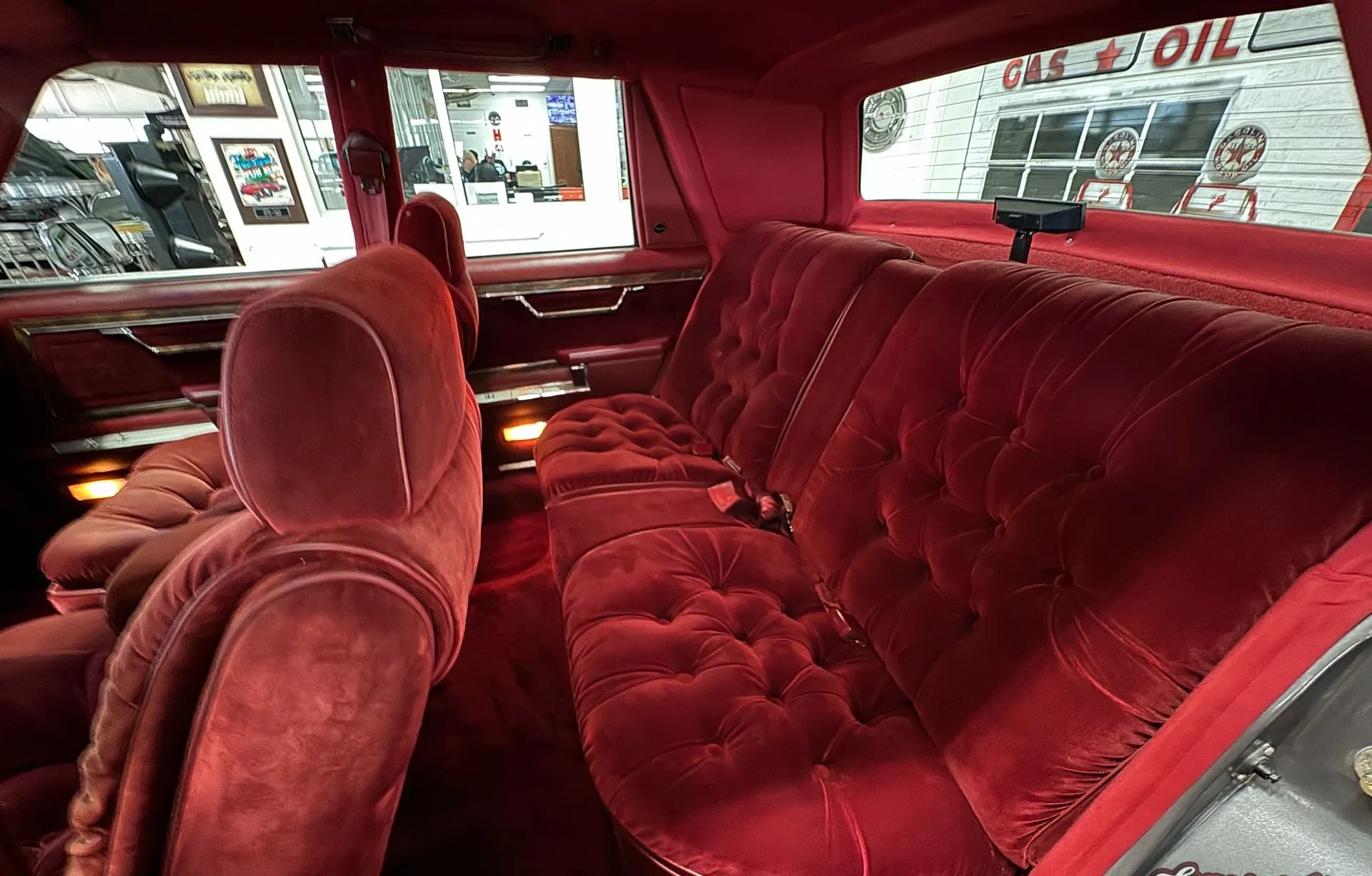
4. Chrysler Fifth Avenue (1983): Mopar’s Most Opulent Interior Moment of the Decade
Chrysler’s Fifth Avenue represented the company’s most committed effort to deliver genuine luxury interior quality during the difficult early 1980s period when Chrysler’s survival was not guaranteed and every product decision carried existential weight.
That the Fifth Avenue’s interior, with its distinctive velour seating and carefully coordinated trim, emerged from this period as a genuinely competitive luxury offering is a testament to how seriously Chrysler’s interior design team took their assignment.
Named for New York City’s most famous luxury shopping street, the Fifth Avenue was specifically designed to deliver a luxury experience that justified its name to buyers who were comparing it against Cadillac and Lincoln alternatives at similar price points.
Velour upholstery was central to this luxury argument, and Chrysler selected material and color combinations that projected warmth and quality without the visual heaviness that some 1980s velour interiors created through overly dark or overly saturated color choices.
Color offerings for the 1983 Chrysler Fifth Avenue velour interior included Doeskin, Burgundy, and Dark Blue combinations that sat within conservative ranges that Chrysler’s research indicated its target buyer preferred.
Each color was developed with specific pile characteristics that maximized the material’s visual richness under the lighting conditions typical of dealership showrooms and family garages where the vehicle would spend most of its time.
Seat width in the Fifth Avenue was generous even by the standards of American full-size cars, reflecting Chrysler’s understanding that its target buyer was a mature adult who valued physical comfort over the sporting seat contouring that import-focused buyers were beginning to request during this period.
Armrest height and padding were specifically calibrated for the resting arm position of an adult driving at highway speeds, a level of ergonomic attention that reflected genuine design research rather than styling intuition alone.
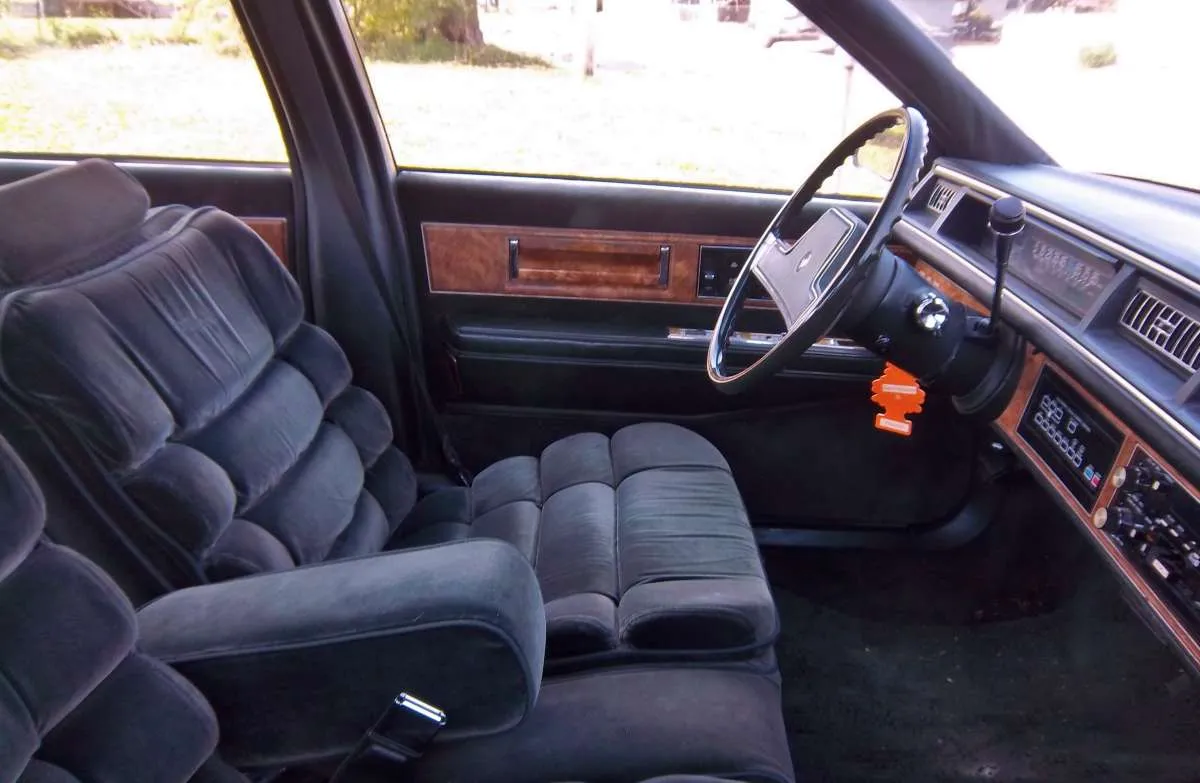
5. Buick Electra Park Avenue (1985): Buick’s Best Interior Decade Produced This Gem
During the 1980s, Buick occupied a carefully defined position within General Motors, situated between Oldsmobile and Cadillac. This placement required a thoughtful approach to interior design, as the brand had to deliver a sense of refinement that exceeded its lower-tier sibling while avoiding direct overlap with Cadillac’s highest offerings.
The 1985 Electra Park Avenue demonstrated how effectively Buick could meet this requirement, particularly through its velour interior, which combined comfort, material quality, and visual coordination in a well-judged manner.
The Park Avenue trim level received a distinct velour specification that set it apart from the standard Electra models. This was not a simple upgrade in appearance but a deliberate enhancement in material composition and construction.
Buick worked with suppliers to produce velour with a deeper pile and tighter weave, resulting in a fabric that offered both visual depth and a soft, inviting texture. These characteristics reinforced the premium identity of the Park Avenue without exceeding the boundaries set by Cadillac within the same corporate structure.
Interior colour schemes were developed with careful attention to detail. Options such as Doeskin, Slate, and Claret were not presented as isolated choices but as part of complete interior themes. Each colour extended across multiple surfaces, including seats, door panels, carpeting, and roof lining.
Buick’s design team ensured that these elements worked together harmoniously, paying close attention to subtle variations in tone. Even the finishes applied to instrument bezels and woodgrain accents were selected to complement the chosen interior palette, contributing to a unified and well-resolved cabin environment.
The quality of seat construction further supported the vehicle’s comfort credentials. The combination of supportive foam and carefully tailored velour surfaces provided a seating experience that balanced softness with adequate support.
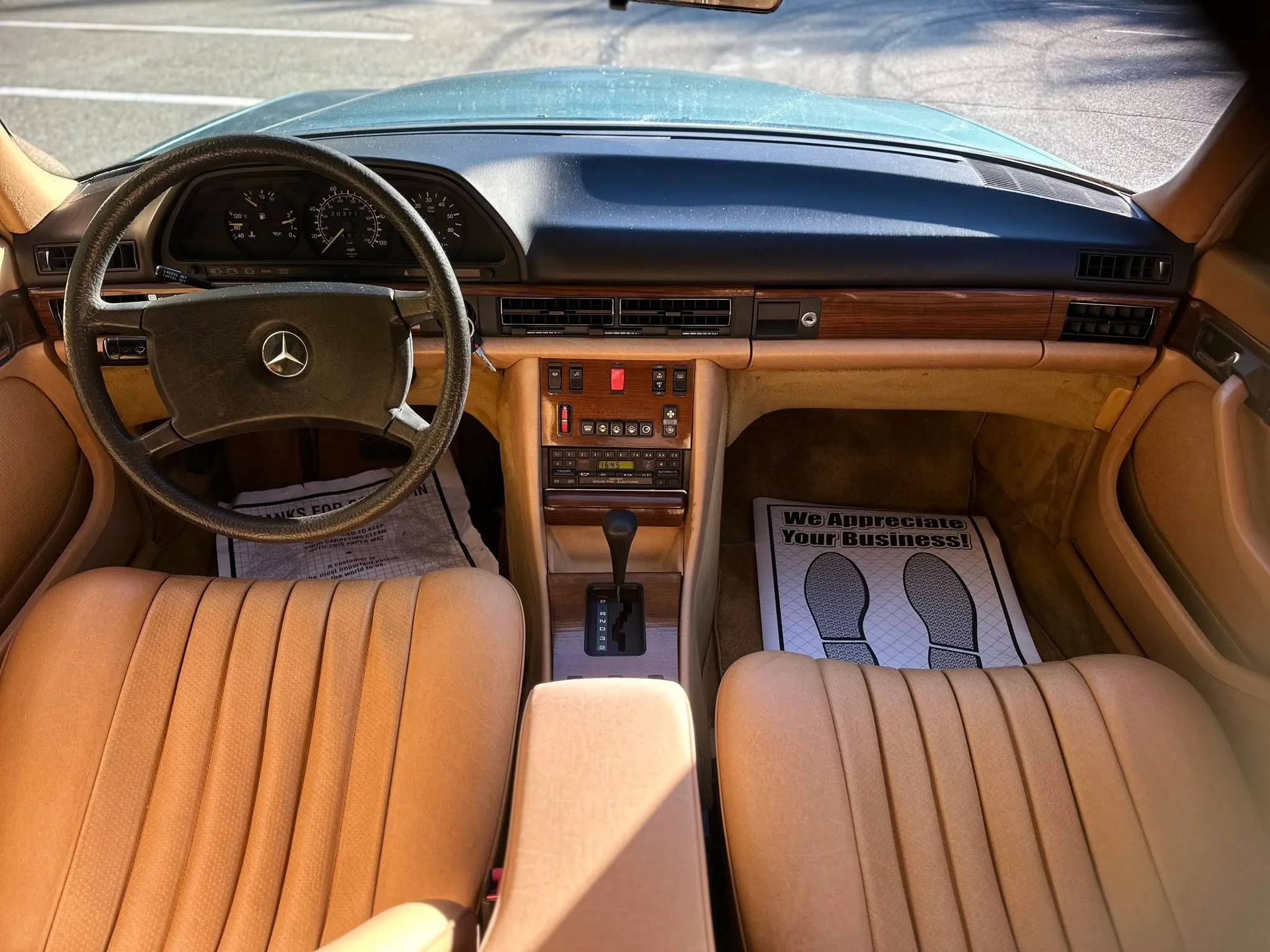
6. Mercedes-Benz 300SD Turbodiesel W126 (1981): European Luxury With Velour Done the German Way
In the early 1980s, European luxury vehicles were commonly associated with leather upholstery, particularly in models produced by Mercedes-Benz. The company had established a strong reputation for durable and finely finished leather interiors.
Yet, for buyers who preferred fabric, Mercedes-Benz offered velour as a factory option on its W126 series. The 1981 300SD Turbodiesel provides an excellent example of how this alternative material was executed with precision and long-term durability in mind.
Mercedes-Benz approached velour upholstery with the same technical discipline applied to its mechanical engineering. Fabric suppliers were required to meet strict standards concerning durability and stability. The material was engineered to resist stretching, maintain its structure under repeated use, and retain its texture without developing surface wear such as pilling.
These requirements ensured that the interior preserved its original appearance and comfort over many years of service. Colour selection for the W126 velour interior reflected a restrained and enduring design philosophy. Options such as Classic Blue, Pastel Green, and Beige were chosen for their ability to remain visually appealing across changing trends.
These colours were carefully matched with carpets and headliner materials that met the same durability standards, ensuring that all interior components aged consistently. The result was a cabin environment that retained its integrity even after extended use.
Attention to material application extended beyond the seats. Door panel inserts were trimmed in matching velour, ensuring visual continuity across the cabin. Additional surfaces, including pillar trims and roof lining, were finished with complementary materials that reinforced the interior’s cohesive appearance. This approach ensured that the use of fabric was not limited to a single area but integrated throughout the passenger compartment.
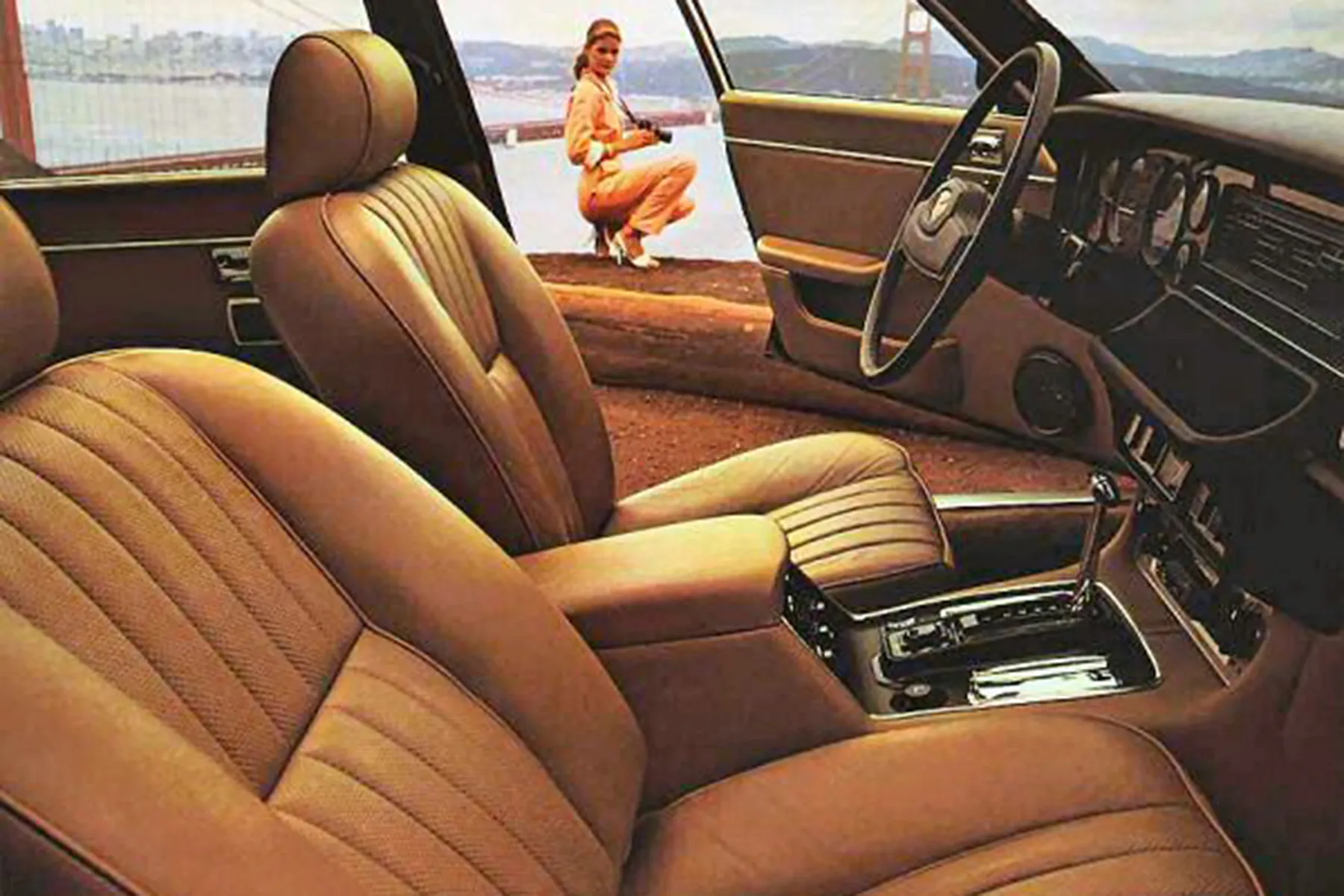
7. Jaguar XJ6 Series III (1984): British Reserve Meets Fabric Luxury in Unexpected Harmony
Jaguar’s XJ6 is most strongly associated with its leather and burled walnut interior specification, which became one of the most recognized luxury interior signatures in automotive history. What fewer people know is that Jaguar offered cloth interior options on Series III XJ6 models for buyers who preferred fabric, and the velour-like West of England cloth available on the 1984 XJ6 Series III produced an interior experience that combined Jaguar’s characteristic refinement with a tactile comfort that the leather option could not match.
West of England cloth, while technically distinct from the pile velour used in American luxury cars, shares velour’s defining characteristic: a soft, directional pile surface that communicates luxury through touch rather than visual impression alone.
Jaguar’s application of this material in the Series III XJ6 was executed with the attention to fit and finish that characterized the best work from Jaguar’s Browns Lane assembly facility, with consistent pile direction, precise panel alignment, and piping details that gave the cloth interior a tailored quality that matched the leather specification’s visual standard.
Color availability for the cloth interior option included Biscuit, Navy, and Doeskin, each selected to complement Jaguar’s exterior color palette for 1984 and to present the West of England cloth’s texture with maximum visual interest.
Biscuit cloth against walnut veneer trim panels created an interior warm color story that many buyers found more inviting than the cooler leather alternatives, and the cloth’s behavior in varying temperature conditions made it a practical choice for buyers in climates where leather’s seasonal temperature extremes were a relevant consideration.
Rear seat comfort in the XJ6 was a primary design priority, and the cloth upholstery specification applied the same material quality to rear seat surfaces that front seats received, creating a consistent luxury experience throughout the cabin rather than prioritizing the driver’s environment at the expense of passenger comfort.
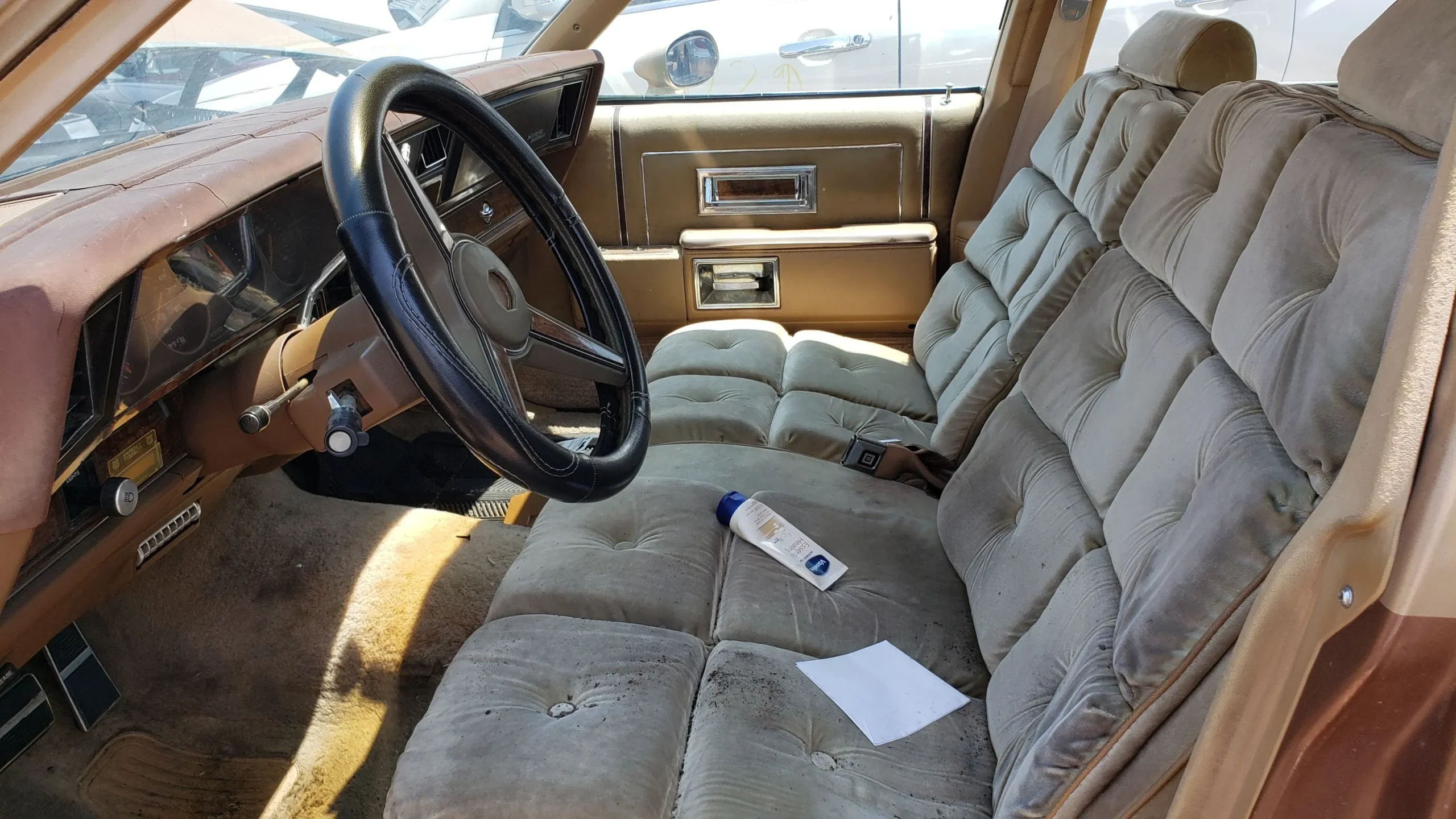
8. Pontiac Bonneville Brougham (1986): When General Motors’ Affordable Luxury Got Velour Right
Pontiac occupied a specific and interesting position within General Motors’ 1980s luxury hierarchy, offering vehicles that combined performance-oriented brand identity with genuine luxury content at price points below Buick and Oldsmobile’s premium offerings.
Among Pontiac’s luxury attempts of the decade, the 1986 Bonneville Brougham stands out for the quality of its velour interior relative to its price positioning, delivering comfort and material quality that buyers of more expensive alternatives were surprised to find in a Pontiac.
Bonneville Brougham velour was sourced from the same General Motors supplier network that served Buick and Oldsmobile, which meant that the material quality available in the Bonneville’s interior exceeded what buyers might have anticipated based on Pontiac’s brand positioning.
Pile depth and color saturation in the Bonneville Brougham velour matched Oldsmobile 98 specification in measurable terms, and the seat construction beneath the velour surface used foam density appropriate for long-distance comfort rather than the cost-optimized alternatives that entry-level trim lines used.
Color choices for the 1986 Pontiac Bonneville Brougham velour interior included Garnet Red, Slate Blue, and Sandstone, each developed with Pontiac’s interior design team to reflect the brand’s slightly sportier character within the luxury category.
These were not the conservative Doeskin and Antique Slate colors of Oldsmobile and Buick, but rather colors with slightly more visual energy that maintained warmth and richness while communicating Pontiac’s distinct personality within the GM family.
Brougham trim added specific interior content beyond the velour seat surfaces, including a Rallye instrument cluster with woodgrain accents, chrome interior door handles, and a center armrest with storage that gave the interior a coordinated appearance appropriate for a vehicle making a genuine luxury argument.
Buyers who drove the 1986 Bonneville Brougham against Oldsmobile 98 and Buick LeSabre alternatives consistently found the interior comparison closer than the price difference would have suggested.
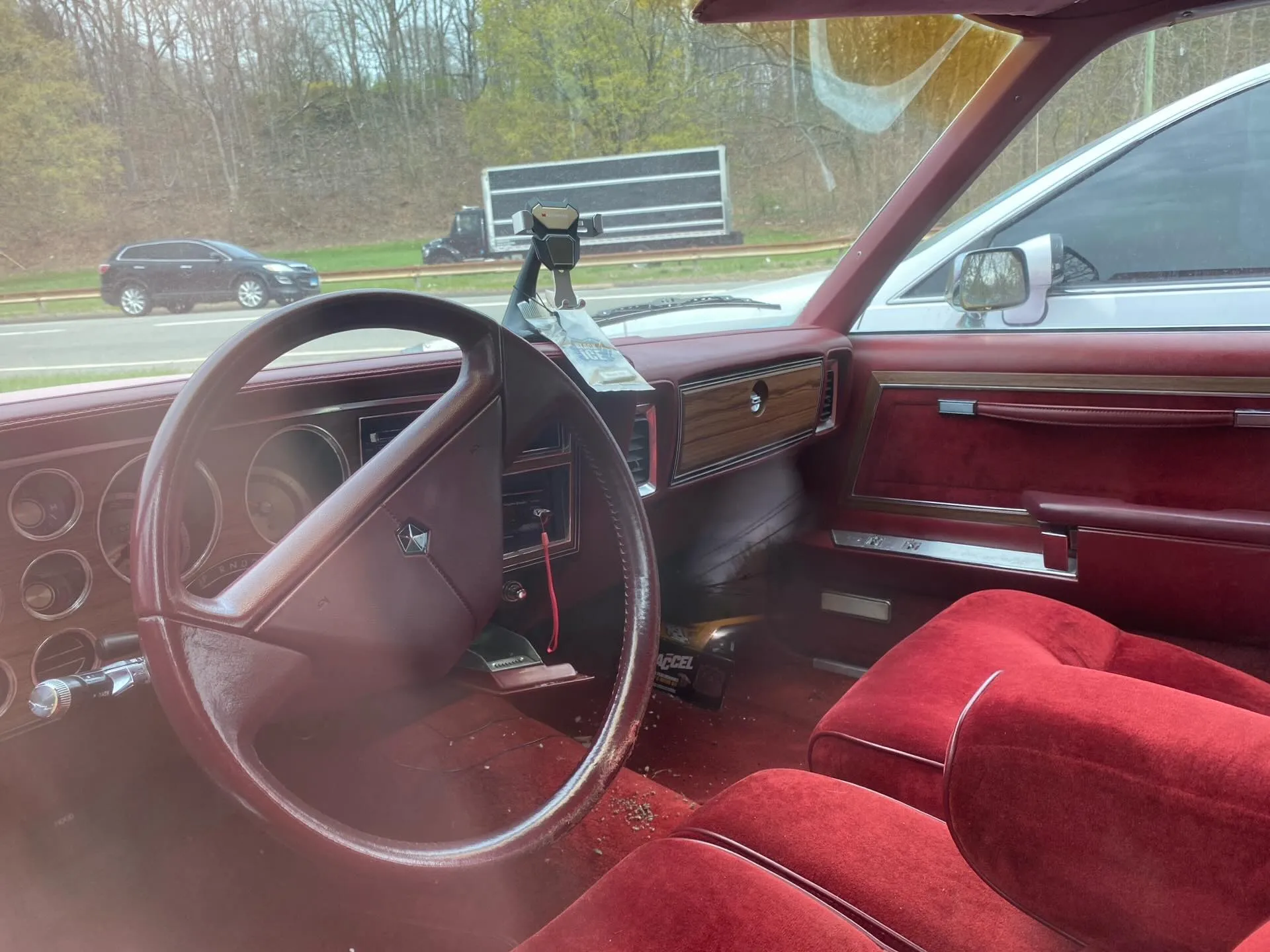
9. Dodge Diplomat SE (1987): Chrysler’s Workhorse Wearing Its Most Comfortable Clothes
The 1987 Dodge Diplomat SE rarely receives the same level of attention as larger American luxury saloons when discussions turn to interior comfort during the 1980s. Yet, in the SE specification, this model presented a velour interior that delivered a level of comfort capable of exceeding expectations.
Many buyers who encountered the vehicle without prior familiarity were often surprised by the quality of its cabin environment and the care invested in its design. The Diplomat was built on Chrysler’s M-body platform, which also supported the Plymouth Grand Fury and Chrysler Fifth Avenue. This platform retained a traditional rear-wheel-drive layout and a long wheelbase, features that contributed directly to interior spaciousness and ride stability.
The structural design provided a quiet cabin, allowing occupants to fully appreciate the softness and warmth of the velour upholstery without interference from excessive road vibration or noise. In such conditions, the advantages of velour seating became more evident, as the material could perform its role in delivering comfort without compromise.
Material selection for the Diplomat SE reflected its position as a higher trim level within the range. Chrysler sourced velour of a standard comparable to that used in more expensive models within its portfolio. The fabric featured a consistent pile depth and a smooth finish that enhanced both its appearance and tactile quality.
Colour options such as Cashmere, Claret, and Medium Blue were selected to highlight the richness of the material, while also aligning with the broader interior design language adopted by Chrysler during the period. Public perception of the Diplomat was influenced in part by its widespread use in law enforcement fleets, where vehicles were typically fitted with more utilitarian interiors.
These versions often featured vinyl seating and minimal trim, leading some observers to associate the model with basic functionality rather than comfort. The SE variant presented a very different experience. With its velour seating and upgraded interior features, it offered a level of refinement that placed it closer to traditional full-size American luxury vehicles.
Also Read: 5 Small Cars That Feel Big Inside vs 5 Big Cars with Cramped Interiors
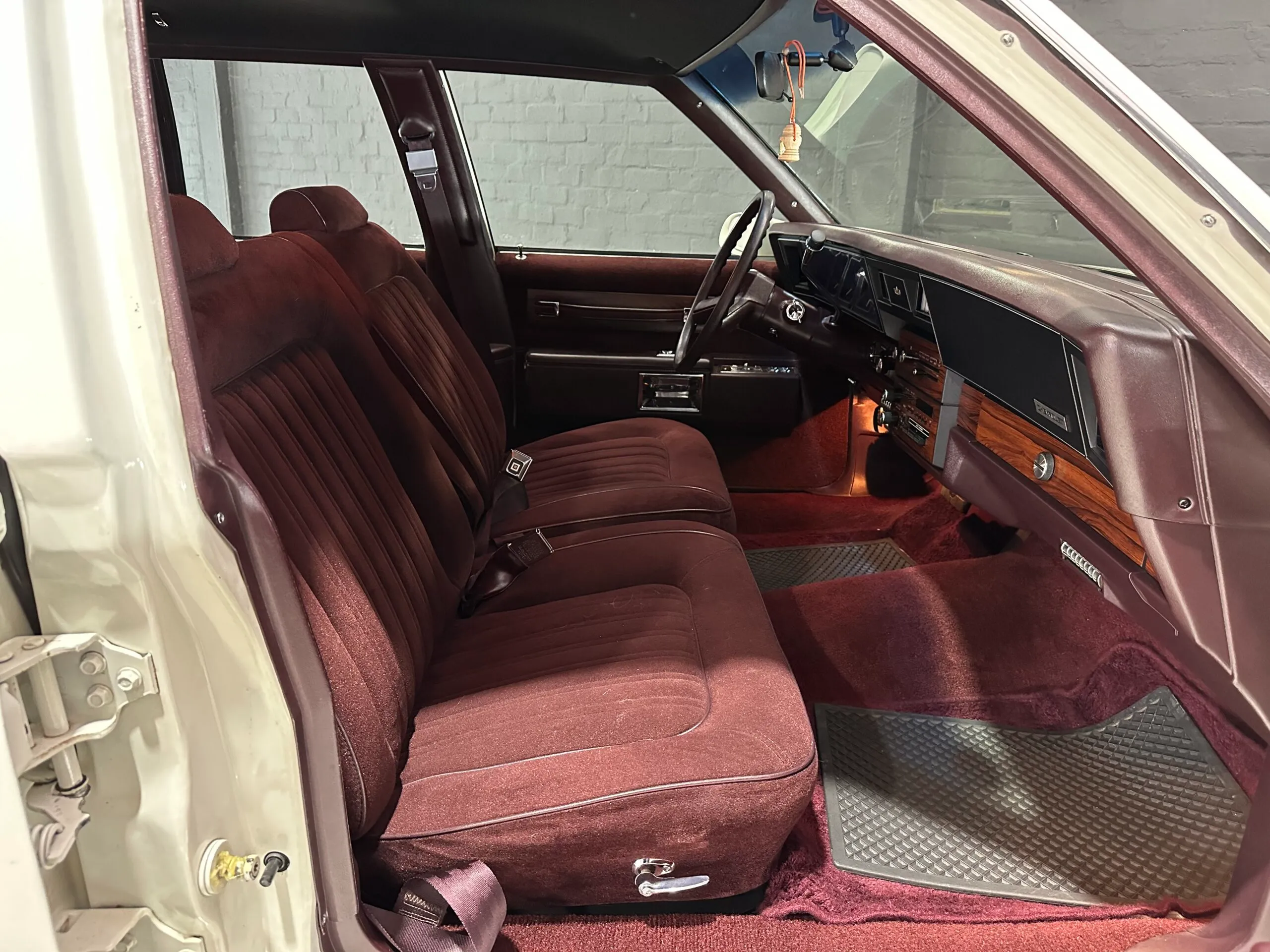
10. Chevrolet Caprice Classic Brougham LS (1989): The Final Expression of 1980s Velour Magnificence
The 1989 Chevrolet Caprice Classic Brougham LS represents a mature stage in the development of American velour interiors during the 1980s. By this time, manufacturers within General Motors had refined their approach to material sourcing, seat construction, and interior coordination through years of incremental improvement.
The Caprice Classic Brougham LS brought these elements together in a single model, offering a well-developed interpretation of velour-based comfort at a price accessible to a wider range of buyers. Velour used in this model was produced to a specification that balanced durability with softness.
Chevrolet’s interior design team had worked through multiple production cycles to achieve a fabric that maintained consistent quality across high manufacturing volumes. The pile depth, colour richness, and resistance to wear were carefully controlled, ensuring that each vehicle delivered a similar standard of finish. Achieving this level of consistency required close coordination with suppliers and strict quality control during production.
Interior colour schemes were selected to complement the exterior finishes offered for the model year. Options such as Saddle, Dark Claret, and Slate Blue were matched with corresponding trim elements, including carpets, door panels, and dashboard accents. This level of coordination contributed to a cohesive cabin appearance, reinforcing the vehicle’s positioning as a comfortable and well-appointed full-size saloon.
Seating design in the Brougham LS combined traditional bench layout with modern adjustability. The front seat featured a split-bench configuration with individually reclining sections, allowing occupants to benefit from both spacious seating and personal adjustment.
This arrangement provided flexibility while maintaining the wide seating surface associated with American cars of the period. In higher specification versions, additional features such as lumbar support and heating further enhanced comfort.
By the close of the decade, changes in market preference were beginning to influence interior design direction. Leather upholstery was becoming more widely favoured, and vehicle sizes were gradually reducing in response to fuel economy considerations.
Despite these developments, the Caprice Classic Brougham LS preserved the principles that had defined American velour interiors throughout the 1980s, placing strong emphasis on softness, space, and ease of use.
