
Television has always had a way of turning ordinary objects into lasting cultural icons, and few items have benefited from that spotlight quite like classic cars. A well-chosen vehicle can define a character, shape the tone of a show, and remain etched in memory long after the final episode airs.
Whether it is a crime-fighting machine, a quirky everyday ride, or a high-performance sports car, these vehicles often become as recognizable as the actors who drive them. What makes these cars so memorable is not just their design or performance. It is the role they play in storytelling. A car might represent freedom, power, humor, or even mystery.
Viewers begin to associate these traits with the vehicle itself, turning it into something far greater than a means of transportation. As time goes on, these cars take on lives of their own, appearing in reruns, merchandise, and even modern revivals.
Classic television cars also reflect the eras in which they appeared. From the bold styling of the 1960s to the tech-focused designs of the 1980s, each vehicle carries the spirit of its time. Yet, their appeal continues across generations, proving that a great design paired with a strong screen presence never loses its charm.
This list highlights ten of the most famous classic cars ever featured on television. Each one earned its place through a combination of design, personality, and unforgettable moments on screen. Let’s begin with a selection that continues to influence pop culture decades later.
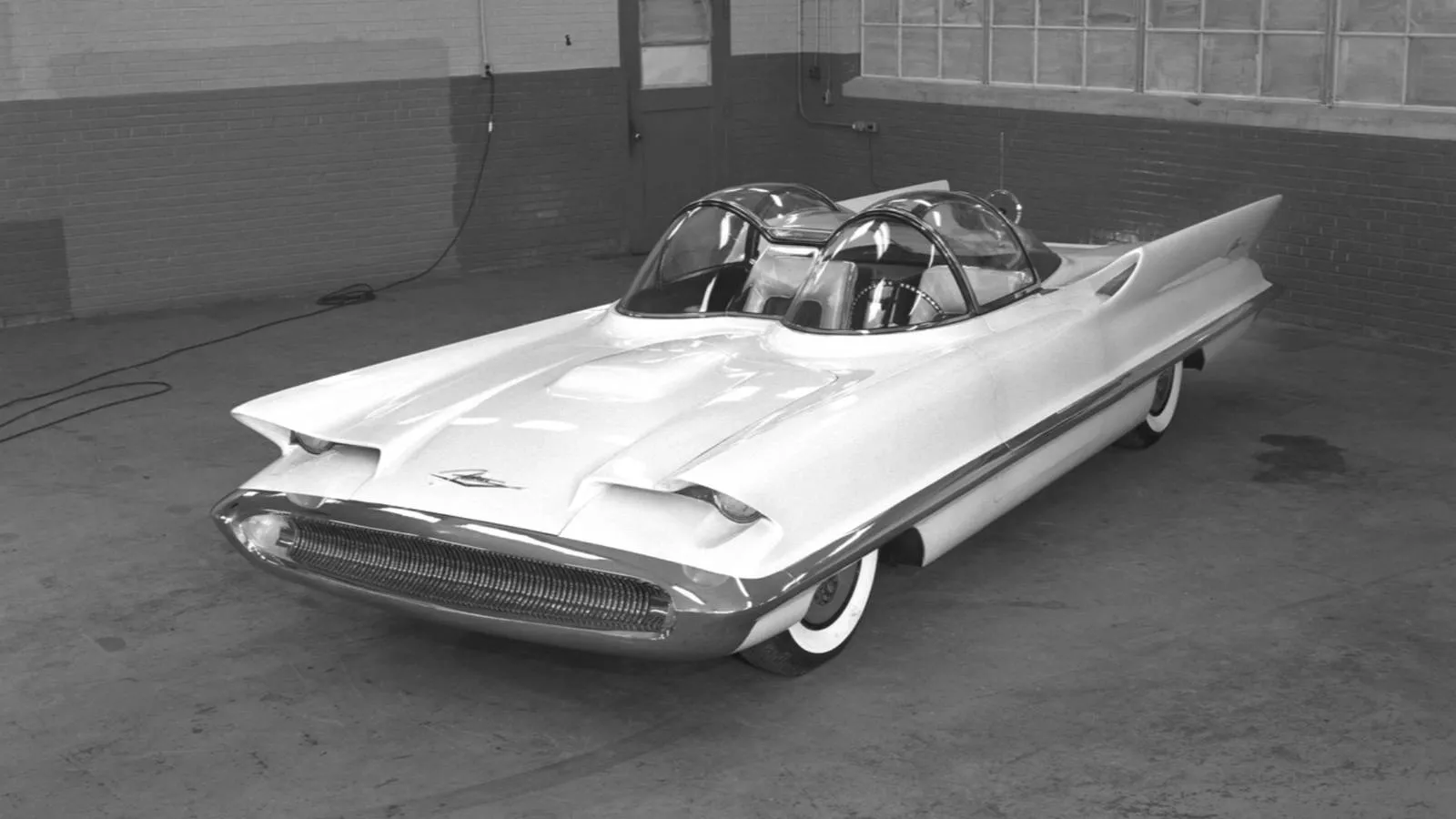
1. 1966 Batmobile (Lincoln Futura Concept) – Batman (1966 TV Series)
Estimated Price: $4 million – $5 million
Few vehicles in television history carry the same level of instant recognition as the 1966 Batmobile. Built from the Lincoln Futura concept car, this machine became the defining element of the original Batman television series.
Its bold lines, exaggerated fins, and jet-inspired styling set it apart from anything else on the road, making it clear from the very first appearance that this was no ordinary car. Unlike traditional vehicles of its time, the Batmobile was designed to reflect the personality of its owner.
Batman, as a character, required something dramatic and futuristic, and the car delivered exactly that. Painted in deep black with red accents, it looked both sleek and intimidating. The bubble-shaped windshield and unique body contours gave it a look that felt decades ahead of its era.
Step inside, and the Batmobile offered features that matched its striking exterior. The interior included various crime-fighting gadgets, labeled controls, and communication systems that enhanced its role as a mobile command center. While some of these features were purely fictional, they added depth to the show and helped viewers believe in the world being presented.
Driving scenes often placed the Batmobile at the center of the action. Whether racing through city streets or responding to emergencies, the car played an active role in the storyline. Its presence added excitement and reinforced Batman’s image as a prepared and capable hero.
Even decades later, the 1966 Batmobile remains one of the most celebrated television vehicles ever created. Replicas appear at car shows, conventions, and exhibitions around the globe. Its design continues to inspire modern interpretations, proving that its influence has not faded.
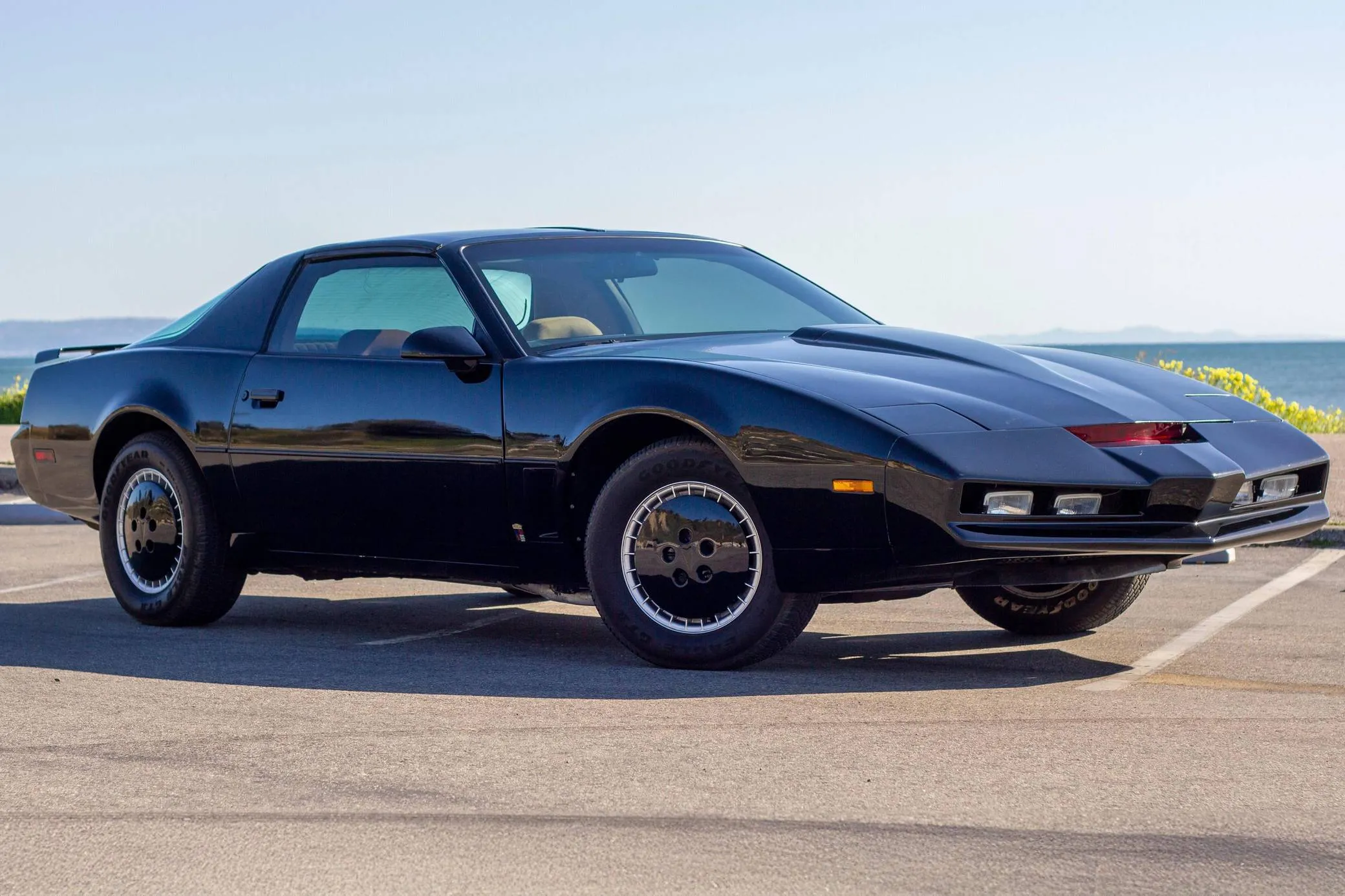
2. 1982 Pontiac Firebird Trans Am KITT – Knight Rider (1982-1986)
Estimated Price: $75,000 – $150,000
Sleek, intelligent, and packed with advanced features, the 1982 Pontiac Firebird Trans Am, known as KITT, became a defining symbol of 1980s television. More than just a car, KITT served as a partner to Michael Knight, offering assistance, protection, and even conversation throughout the series.
What made KITT stand out was its personality. Equipped with artificial intelligence, the car could speak, make decisions, and assist in complicated situations. This gave it a unique role, as it was not simply driven by the main character but actively contributed to the storyline. The interaction between man and machine added depth to the show and created a strong connection with viewers.
Visually, KITT was just as impressive. The glossy black finish gave it a clean and modern appearance, while the signature red scanning light on the front became its most recognizable feature. This small detail alone was enough to identify the car instantly, even in a quick scene.
Performance also played a major role in KITT’s appeal. The car could accelerate rapidly, withstand damage, and execute advanced maneuvers that seemed impossible for a standard vehicle. These capabilities allowed the show to deliver action-packed sequences that kept audiences engaged.
KITT’s legacy remains strong today. It represents a vision of the future where technology and transportation merge seamlessly. The car continues to appear in pop culture references, and its influence can be seen in modern automotive innovations.
Also Read: 10 Classic European Sedans Known for Exceptional Highway Comfort
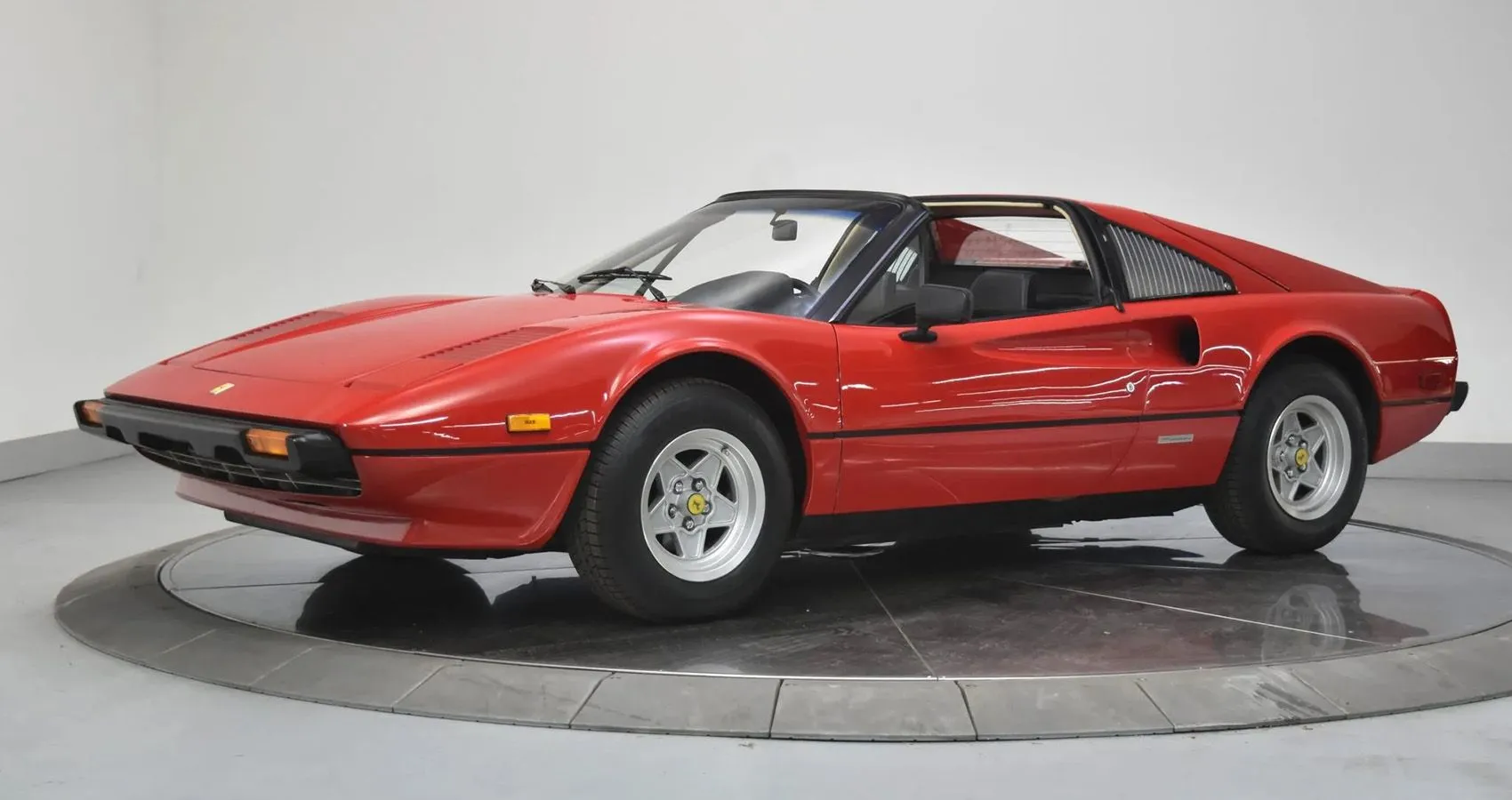
3. 1979 Ferrari 308 GTS – Magnum, P.I. (1980-1988)
Estimated Price: $80,000 – $120,000
Among the most distinguished automobiles ever featured in American television drama, the 1979 Ferrari 308 GTS occupies a position of particular prestige. Its appearance in Magnum, P.I., a series that ran for eight successful seasons, introduced this remarkable Italian sports car to millions of viewers who had previously encountered it only through motoring publications.
Presented in its characteristic Rosso Corsa finish, the vehicle carried an immediate visual authority that no other car on the market could reasonably challenge. Thomas Magnum’s use of the Ferrari as his primary mode of transport was a deliberate creative decision that communicated a great deal about the character’s personality and aspirations.
Unlike television heroes who drove purpose-built or heavily modified vehicles, Magnum operated a production sports car of genuine pedigree, which lent the series an air of authenticity that audiences responded to with considerable enthusiasm. Every sequence in which the vehicle appeared reinforced the production’s commitment to visual quality.
Hawaii provided a setting of extraordinary scenic richness, and the Ferrari responded to this environment with appropriate elegance. Coastal roads, palm-lined highways, and the warm light characteristic of the Pacific Islands all contributed to a visual presentation that placed the vehicle in its most flattering possible context. Viewers understood instinctively that this was a car designed for exactly such conditions.
A particular source of gentle comedy throughout the series was the fact that the Ferrari belonged to the unseen Robin Masters rather than to Magnum himself. His recurring obligation to justify his use of the vehicle introduced a domestic tension that humanised the character considerably and gave the car a dramatic function beyond its visual contribution.
Decades after the final broadcast, the Ferrari 308 GTS retains its cultural standing. Car enthusiasts continue to regard its television association as one of the most distinguished in the medium’s history.
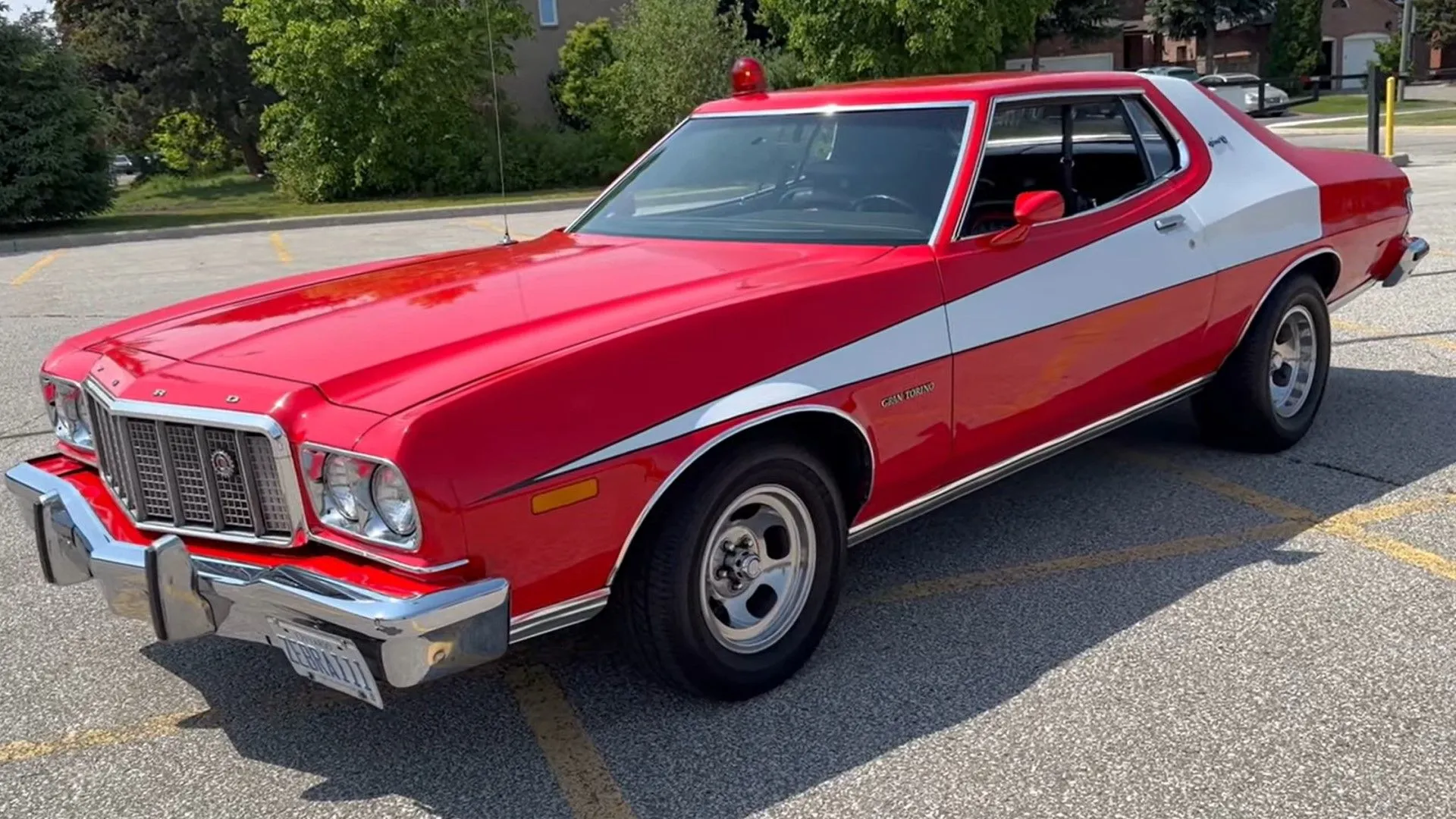
4. 1974 Ford Gran Torino – Starsky and Hutch (1975-1979)
Estimated Price: $25,000 – $60,000
American television in the late 1970s introduced several memorable vehicles, yet the 1974 Ford Gran Torino from Starsky and Hutch reached a level of recognition that secured its place among the most iconic cars ever seen on screen.
Its bright red finish, combined with a sweeping white stripe along the body, created a look so distinctive that viewers could identify it instantly without any verbal reference. The decision to feature this model was carefully considered by the production team. Its strong proportions, broad stance, and fastback design conveyed power and motion even when the car was not in action.
These qualities proved valuable during the show’s many chase scenes, where the vehicle was subjected to demanding driving conditions on real California roads. Throughout filming, it delivered a consistent performance that matched the intensity of the series.
David Starsky’s clear attachment to the car added depth to the show. Rather than treating it as a simple tool, he showed a sense of pride and personal connection that resonated with viewers. This relationship gave the Gran Torino a more meaningful presence, turning it into an active part of the story rather than a background element.
Kenneth Hutchinson’s more reserved attitude toward the vehicle created an interesting dynamic. The difference in opinion between the two characters allowed the writers to introduce moments of tension and humor, adding another layer to their partnership while remaining true to their personalities.
After the series ended, the Gran Torino continued to attract attention. It appeared regularly at car shows and enthusiast events, where admirers celebrated its design and television legacy. Replicas built by dedicated collectors remain popular, demonstrating that the car’s visual impact has endured well beyond its original time on television.
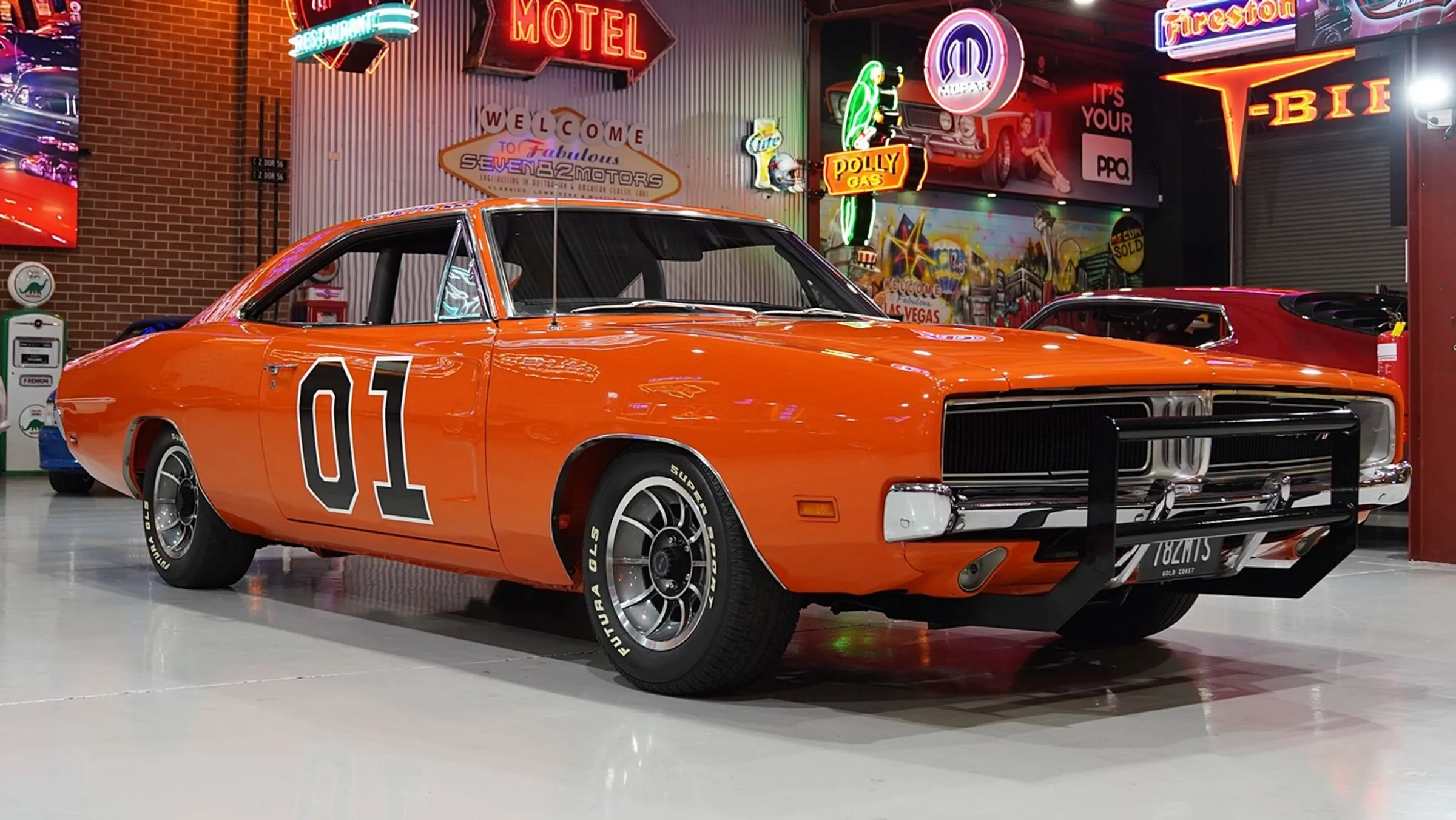
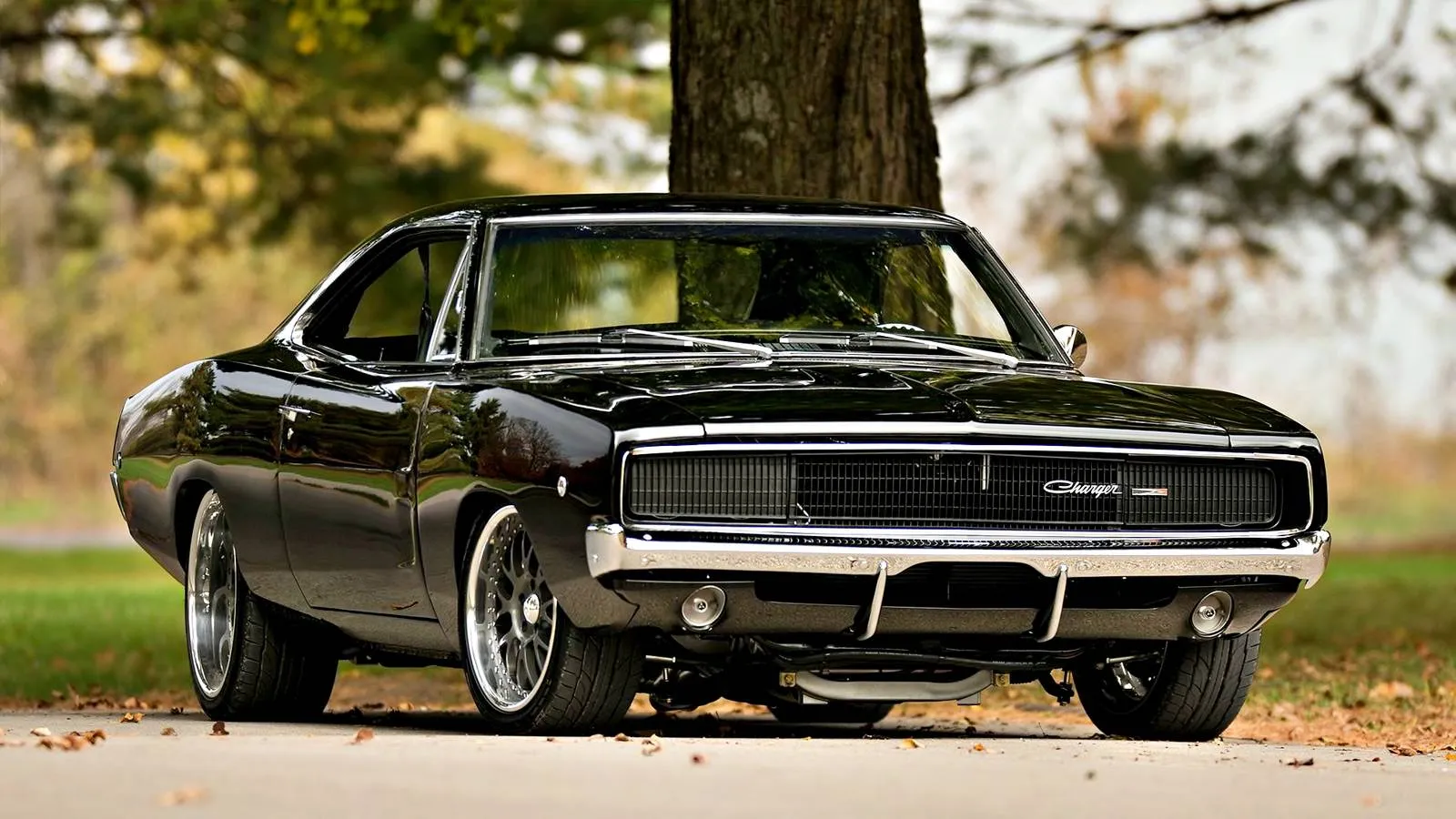
5. 1969 Dodge Charger “General Lee” – The Dukes of Hazzard (1979-1985)
Estimated Price: $150,000 – $300,000
Within the broader catalogue of American television automobiles, the 1969 Dodge Charger known as the General Lee occupies a position of remarkable prominence. Featured throughout the six-season run of The Dukes of Hazzard, this vehicle brought the performance capabilities of one of America’s most respected muscle cars to a weekly audience of extraordinary size.
Its distinctive Hemi Orange paintwork and bold numerical identification ensured recognition so immediate that it required neither introduction nor explanation from one episode to the next. Chrysler’s B-body platform, upon which the 1969 Charger was constructed, provided a mechanical foundation of considerable strength and durability, qualities that the production demanded given the vehicle’s constant exposure to performance conditions.
Stunt coordinators employed the car in sequences of escalating ambition throughout the series, and the footage produced during these sessions contributed some of the most technically accomplished practical stunt work in the history of American television drama.
Jump sequences became the General Lee’s most celebrated contribution to the series. Carefully engineered to achieve both visual spectacle and consistent repeatability, these moments defined the show’s action identity more thoroughly than any other single element.
Viewers who recall The Dukes of Hazzard with affection frequently cite these sequences as their most vivid memory of the production. Beyond its performance contributions, the Charger carried a strong visual personality derived from its period styling.
Sleek greenhouse proportions, a wide body stance, and the long bonnet characteristic of American muscle car design from the late 1960s gave the vehicle a commanding presence that the production’s cinematographers framed with evident appreciation.
Its enduring cultural reputation rests on a combination of mechanical authenticity, visual boldness, and consistent dramatic contribution that few television vehicles in any era have matched with equivalent conviction.
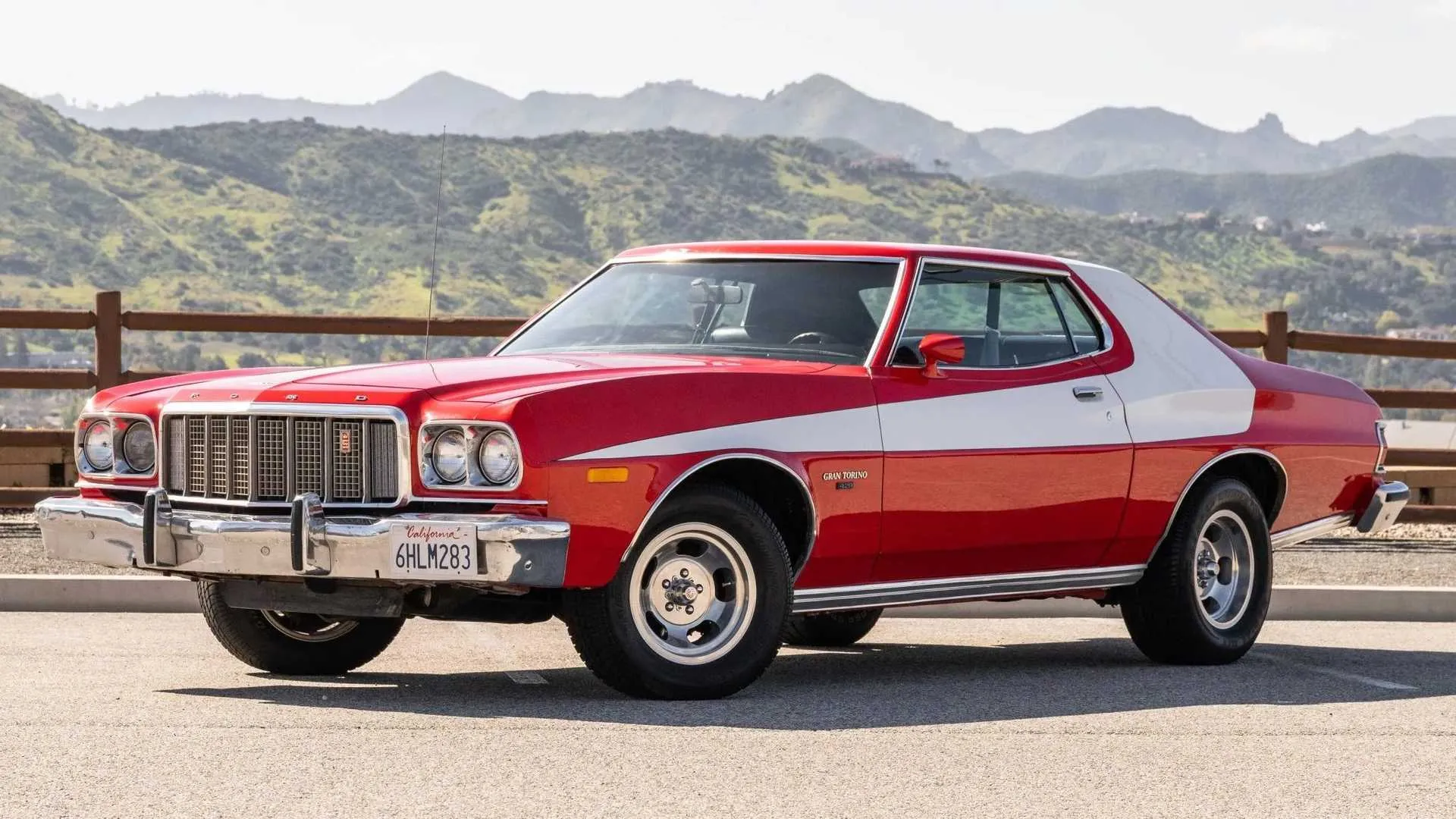
6. 1975 Ford Gran Torino “Striped Tomato” – Starsky and Hutch (Alternate Hero Car Legacy)
Estimated Price: $30,000 – $70,000
Recognition of the Ford Gran Torino often centers on its main role in Starsky and Hutch, yet the 1975 version, widely referred to as the “Striped Tomato,” deserves attention for its continued cultural influence. While closely related to the earlier model, this version refined the visual identity that made the car so memorable. With its bright red paint and bold white side stripe, it carried a presence that turned heads both on screen and off.
Unlike many television cars that relied on futuristic styling or advanced features, the Gran Torino embraced a straightforward approach. Its muscular stance and long hood projected strength without unnecessary embellishment. This simplicity made it appealing to viewers who appreciated a car that looked powerful yet attainable.
It felt grounded, as though it could exist beyond the television set in everyday life. Scenes featuring the Gran Torino often relied on raw driving action rather than special effects. Tire squeals, tight cornering, and high-speed pursuits created an atmosphere that felt immediate and engaging.
The car became a dependable partner in every chase, reinforcing the bond between the characters and their vehicle. This relationship added authenticity to the show, making each sequence feel more believable. Interior details were not heavily emphasized, yet the car’s layout supported the demands of police work within the story.
Space, visibility, and durability all played a part in shaping its role. The focus remained on function, ensuring that the vehicle could handle the intensity of each situation. Cultural impact followed naturally. Enthusiasts began recreating the design, with replicas appearing at events across the United States.
The “Striped Tomato” became a nickname that carried weight, symbolizing a certain era of television action. Even today, it stands as a reminder of how a simple design can leave a lasting impression when paired with strong storytelling.
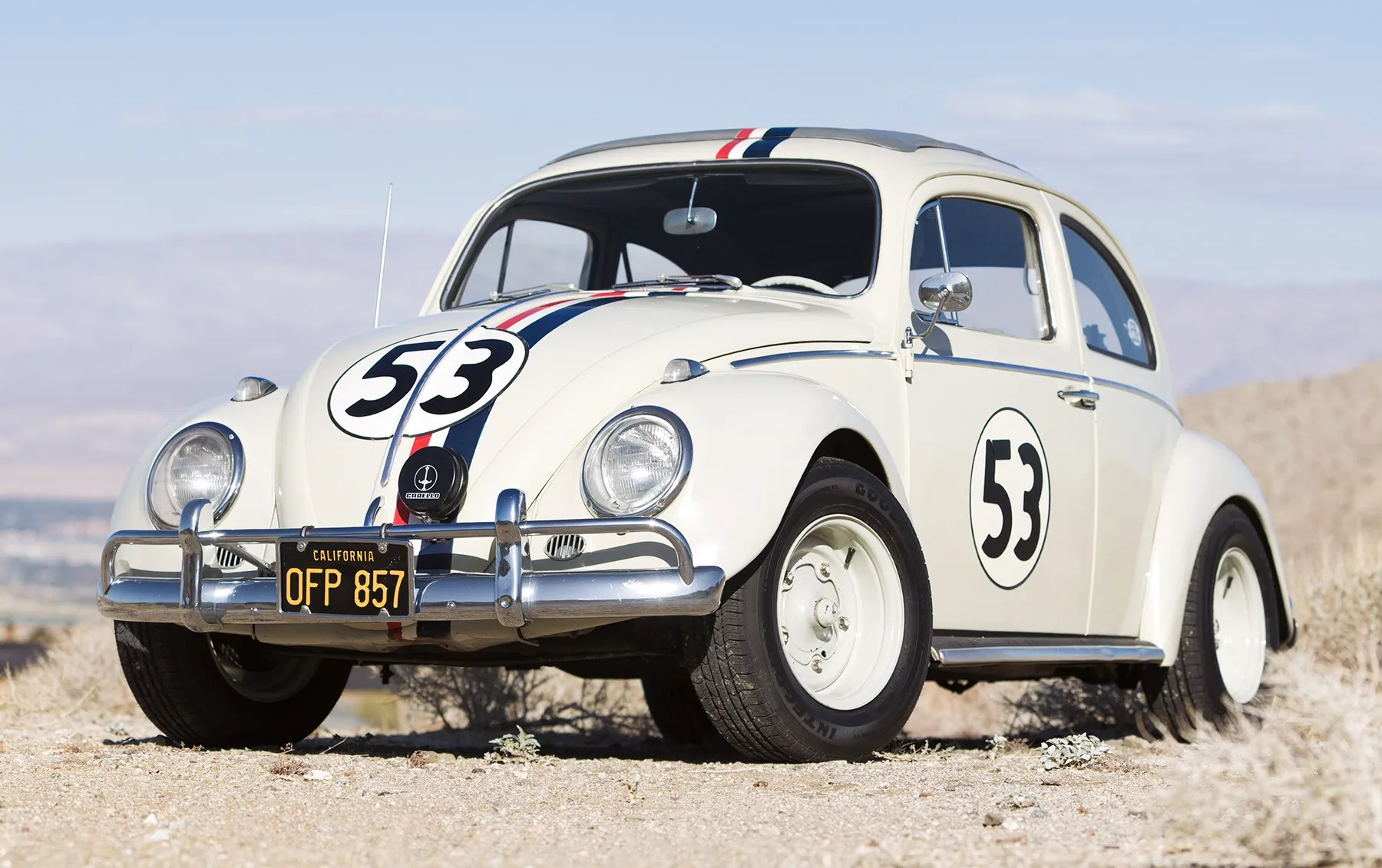
7. 1963 Volkswagen Beetle “Herbie” – Herbie the Love Bug (TV Appearances and Specials)
Estimated Price: $20,000 – $50,000
Charm takes center stage with the 1963 Volkswagen Beetle known as Herbie, a car that brought personality and humor to television audiences through various specials and appearances. Unlike traditional performance-focused vehicles, Herbie relied on character rather than speed alone. This small, rounded car carried a sense of warmth that made it instantly appealing to viewers of all ages.
What set Herbie apart was its ability to behave as though it had a mind of its own. Doors would open without assistance, the engine would respond to emotion, and the car would often act independently to help its driver. These traits transformed the Beetle into a character rather than a simple prop. Viewers connected with it in a way that felt personal, almost as if it were a living companion.
Visually, Herbie maintained a clean and simple design. The white paint, racing stripes, and number 53 created an identity that was easy to recognize. This consistency allowed the car to stand out without relying on dramatic styling. Its approachable appearance made it relatable, reinforcing the idea that even an ordinary-looking vehicle could hold extraordinary qualities.
Television appearances highlighted Herbie’s playful nature. Whether participating in races or assisting in comedic situations, the car brought a sense of lighthearted energy to each scene. These moments balanced action with humor, ensuring that the vehicle remained engaging throughout its screen time.
Legacy continues to follow Herbie across generations. The character has appeared in various forms, maintaining its place in popular culture. For many viewers, it represents a different kind of automotive appeal, one based on personality, charm, and emotional connection rather than performance alone.
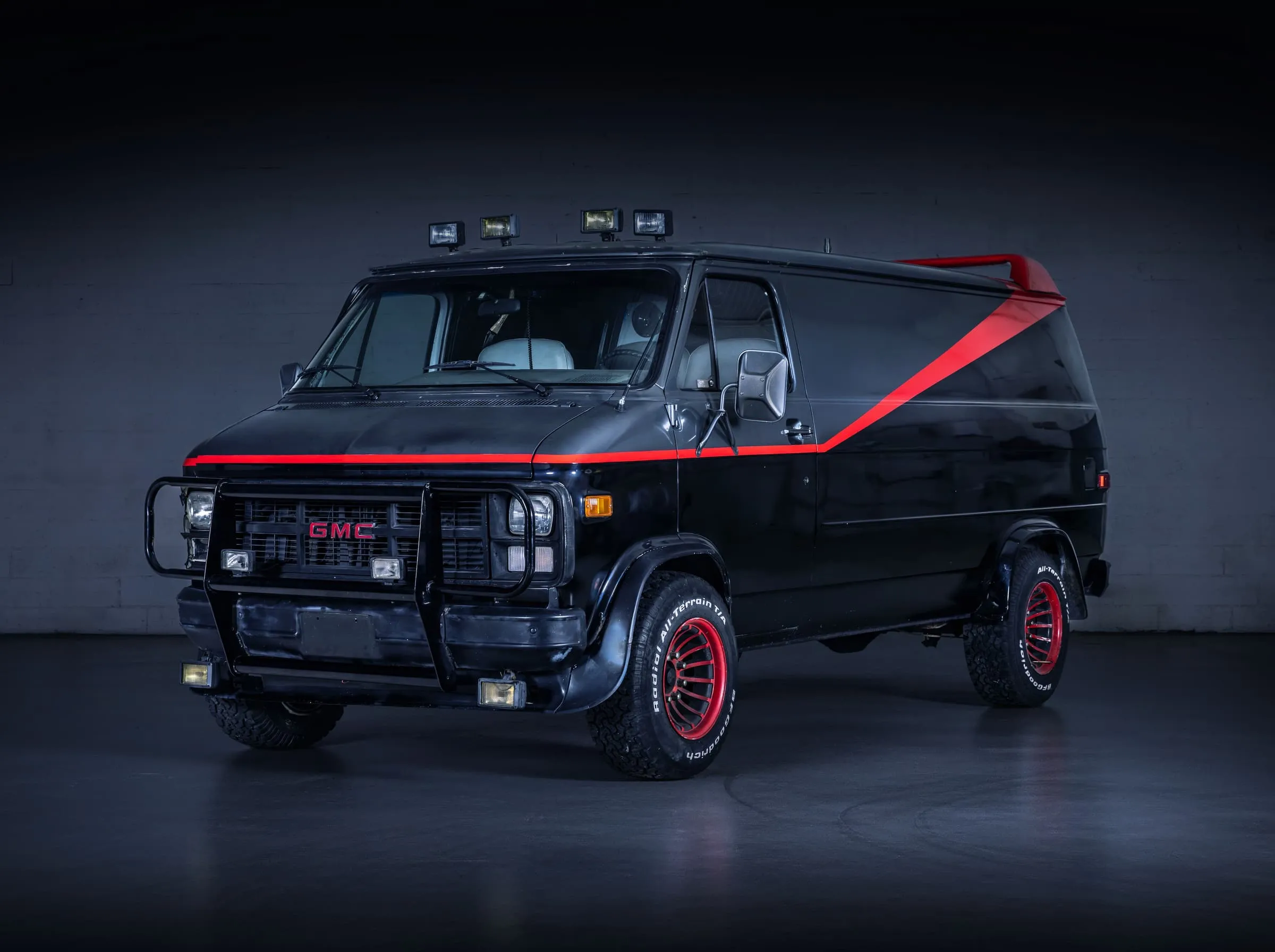
8. 1983 GMC Vandura – The A-Team (1983-1987)
Estimated Price: $15,000 – $40,000
Power and presence define the 1983 GMC Vandura used by the A-Team. While not a traditional car, this van earned its place through sheer impact. Painted in black with a bold red stripe, it projected confidence and readiness for action in every appearance.
Unlike smaller vehicles, the Vandura offered space that allowed it to serve multiple purposes. It functioned as transportation, a mobile workshop, and a strategic base for the team. This versatility made it central to the show’s identity, as many operations began or ended within its walls.
Action scenes often showcased the van’s durability. It could handle rough road, withstand damage, and keep moving under pressure. These qualities reinforced its role as a dependable asset for the team. Viewers came to expect that no matter the situation, the Vandura would be ready.
Interior modifications added to its appeal. Equipment, tools, and custom features transformed the van into a highly functional unit. This setup reflected the skills of the characters, particularly their ability to improvise and adapt.
Public response to the Vandura has remained strong. Replicas continue to appear at conventions and gatherings, where enthusiasts celebrate their bold design. The van stands as proof that a vehicle does not need to be sleek or fast to leave a lasting mark. Strength, reliability, and presence can be just as memorable.
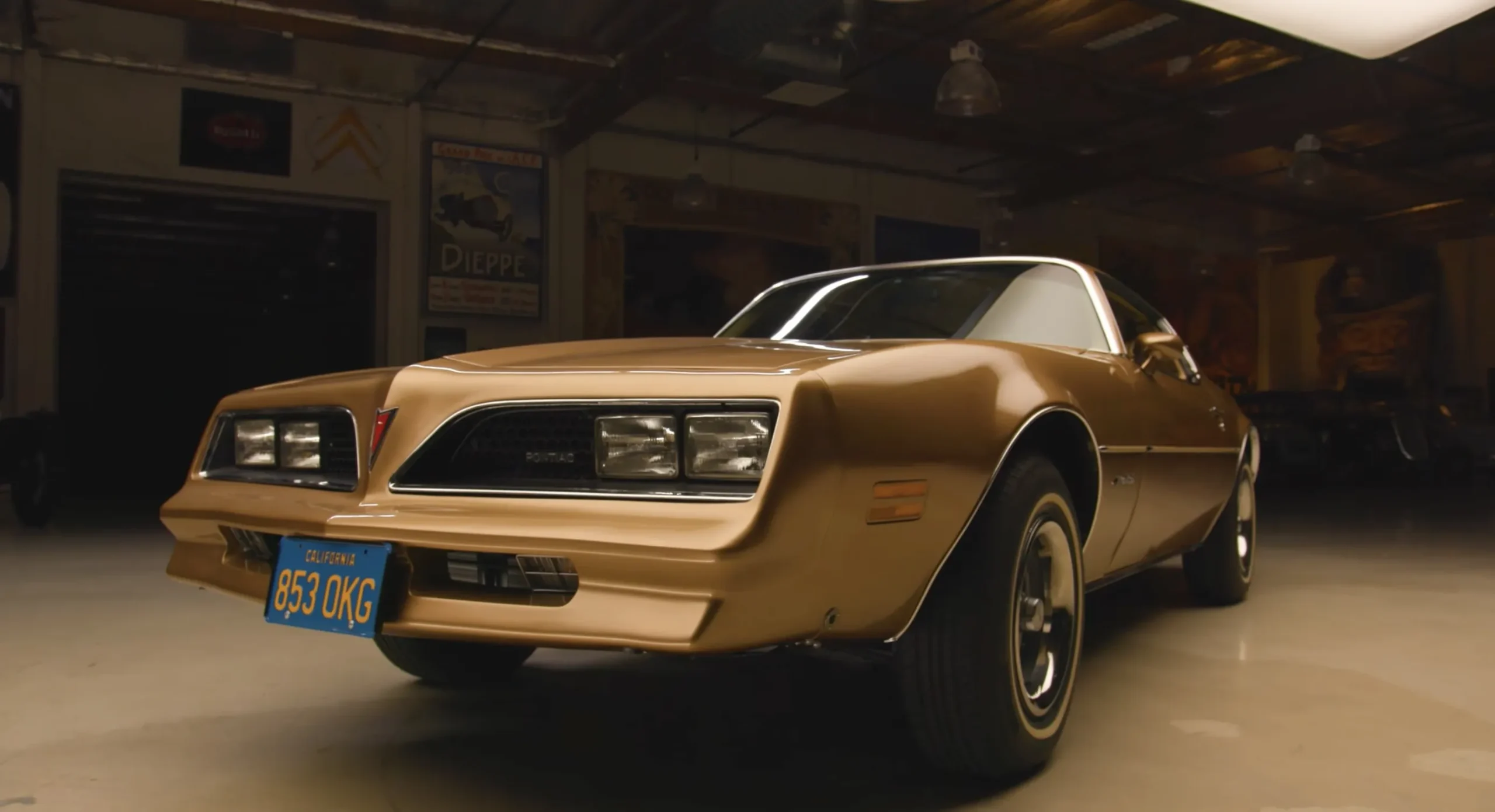
9. 1977 Pontiac Firebird Trans Am – The Rockford Files (1974-1980)
Estimated Price: $40,000 – $90,000
American detective drama of the 1970s produced several vehicles worthy of serious attention, yet the 1977 Pontiac Firebird Trans Am featured in The Rockford Files distinguished itself through qualities that separated it from the more extravagant automobiles that populated the decade’s television productions.
Where other series selected vehicles designed to announce themselves through visual excess, the producers of The Rockford Files made the considered decision to pair their protagonist with a car whose appeal rested on genuine performance capability rather than theatrical presentation.
Jim Rockford, as written by Stephen J. Cannell and Roy Huggins, was a private investigator of modest means and considerable practical intelligence. A vehicle of ostentatious character would have contradicted everything the character represented.
The Trans Am, with its purposeful body styling and responsive performance characteristics, complemented Rockford’s professional disposition with precision that reflected thoughtful casting of the automobile as much as of the actor who drove it.
Driving sequences throughout the series made productive use of the Firebird’s genuine dynamic abilities. Controlled slides executed at moderate speed, rapid directional changes through urban environments, and confident high-speed pursuit footage all contributed to a presentation that communicated competence rather than recklessness. These sequences were filmed with the evident understanding that authentic vehicle behaviour served the production more convincingly than theatrical excess.
General Motors’ F-body platform provided the mechanical foundation for the Trans Am’s performance, and the 6.6-litre V8 engine available in the 1977 specification delivered the power necessary to support the production’s action requirements without modification beyond what the studio’s stunt coordinators deemed appropriate.
Decades following the conclusion of the series, the Firebird Trans Am retains its association with a particular standard of purposeful, intelligent American television drama that the 1970s produced with admirable frequency.
Also Read: Top 10 Practical Classic Cars From the 1970s That Make Great Daily Drivers
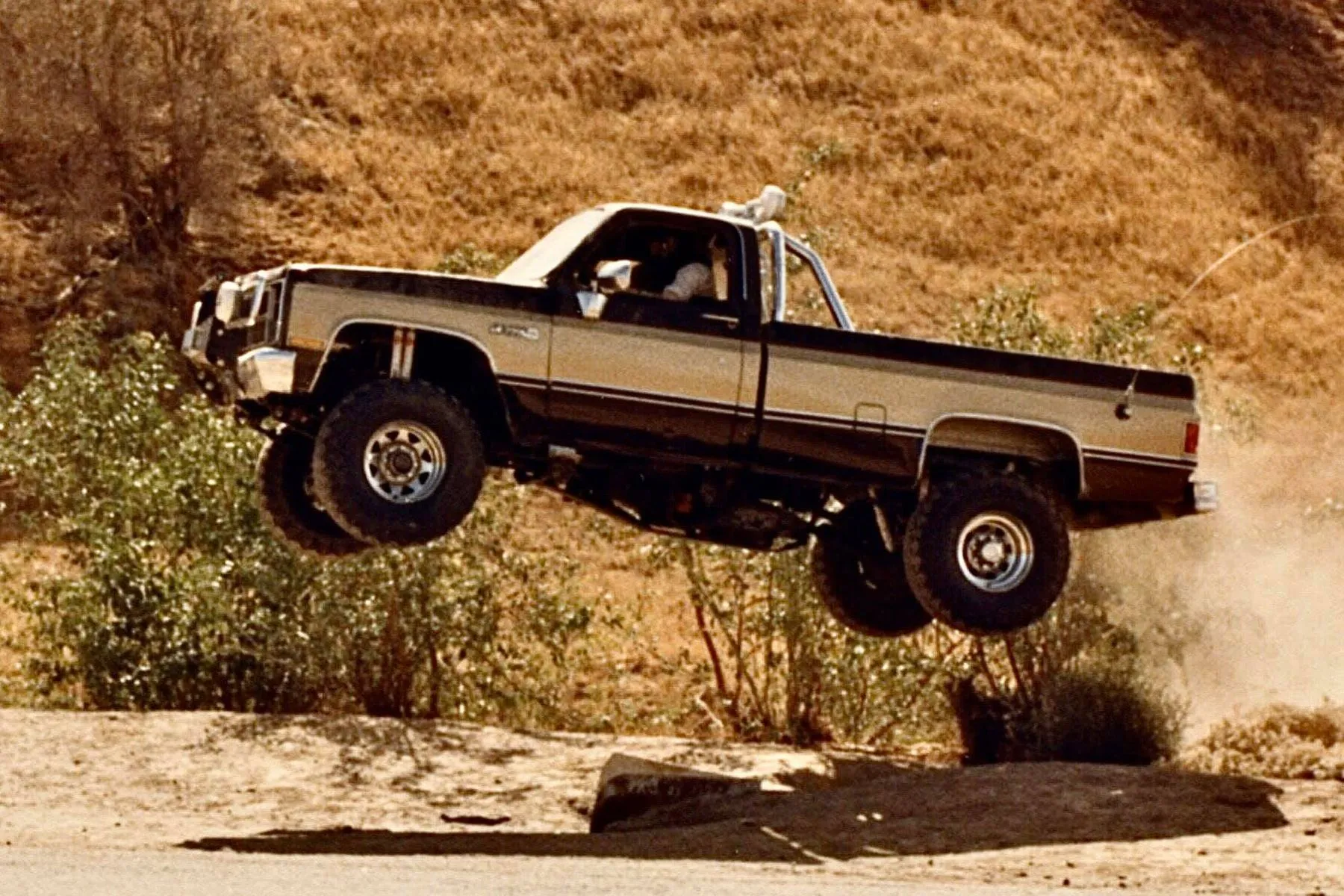
10. 1971 Chevrolet C-10 Pickup – The Fall Guy (1981-1986)
Estimated Price: $25,000 – $80,000
Among the various categories of automobiles that American television drama has employed to establish character and support action, the working pickup truck holds a position of particular cultural authenticity. Few examples within this category achieved the sustained public recognition that the 1971 Chevrolet C-10 Pickup earned during its five-season association with The Fall Guy, a series whose central premise of professional stunt performance demanded a vehicle of proven mechanical robustness rather than fashionable styling.
Colt Seavers, the protagonist portrayed by Lee Majors, operated as a bounty hunter who supplemented his income through stunt work in the film and television industry. This dual professional identity required a vehicle capable of genuine physical demands, and the C-10’s body-on-frame construction, high ground clearance, and durable drivetrain configuration met those requirements with appropriate consistency throughout the production run.
No reasonable substitution from the era’s available vehicles would have served the character’s established circumstances with equal credibility. Chevrolet’s C-series pickup of this generation represented American light truck engineering at a particularly confident moment in its development.
Construction standards were robust, mechanical systems were broadly understood by independent technicians across the country, and the vehicle’s proportions communicated honest working utility without the stylistic affectation that later generations of pickup trucks would increasingly adopt as buyer demographics changed.
Production designers dressed the C-10 with sufficient period-appropriate detail to establish its working character without imposing modifications that would have undermined its authenticity. This restraint reflected sound creative judgment, as the truck’s natural presence required no enhancement to communicate what the producers intended.
Automotive enthusiasts who participated in the culture of American television during the early 1980s continue to regard the C-10 with genuine affection, recognising in it a vehicle selected for the integrity of its contribution to honest, straightforward storytelling rather than for its capacity to draw attention independently of the production it served.
