
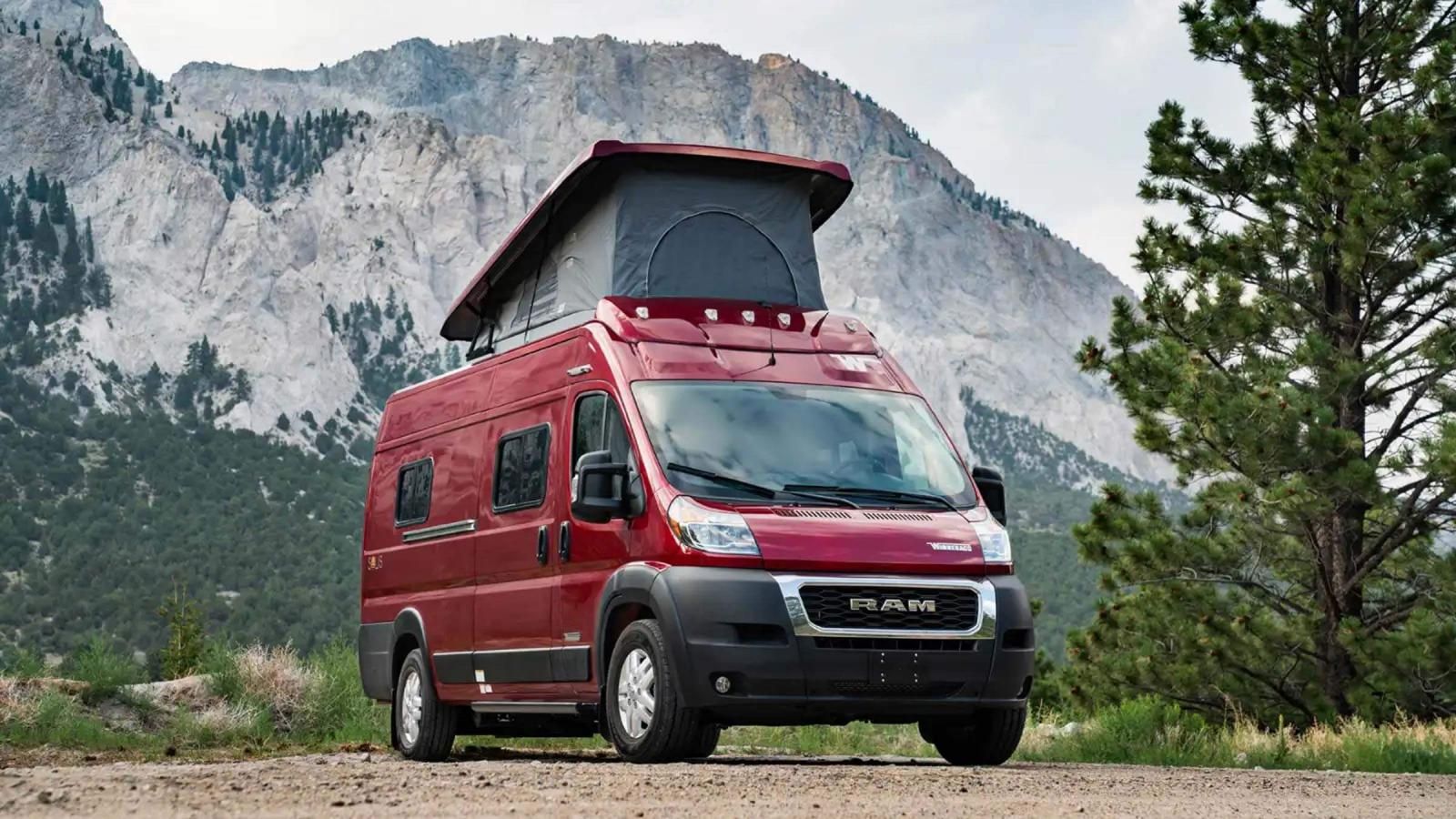
The rise of the digital nomad lifestyle has transformed the way people work, travel, and live. No longer confined to coffee shops or co-working spaces, a new breed of location-independent professionals is taking to the open road laptops powered, monitors glowing, and video calls streaming from the middle of nowhere. At the heart of this mobile revolution is one critical piece of infrastructure: the battery inverter system.
A massive battery inverter setup typically combining lithium iron phosphate (LiFePO4) battery banks with high-wattage pure sine wave inverters allows digital nomads to run laptops, monitors, routers, lighting, refrigerators, and even espresso machines entirely off-grid.
The right vehicle transforms from a simple mode of transport into a fully functional mobile office capable of sustaining days or even weeks without external power.
But not every vehicle is built equal when it comes to supporting serious electrical loads. Roof space for solar panels, floor space for battery banks, structural integrity for heavy installations, and adequate ventilation for thermal management all play critical roles.
Whether you’re a solo freelancer, a remote software engineer, or a content creator with power-hungry equipment, choosing the right vehicle is the single most important decision you’ll make on your nomadic journey. Here are the ten best vehicles purpose-suited for carrying massive battery inverter systems.
1. Mercedes-Benz Sprinter Van
When digital nomads and professional van converters speak about the gold standard of mobile living, the Mercedes-Benz Sprinter almost always tops the conversation.
It has earned that reputation through decades of proven reliability, a towering cargo space that accommodates serious electrical infrastructure, and an aftermarket support ecosystem that is unmatched in the industry.
The Sprinter’s most significant advantage for battery inverter builds is sheer interior volume. Available in multiple roof heights standard, high, and super-high and multiple wheelbase lengths, the Sprinter gives builders the flexibility to install battery banks of extraordinary capacity without sacrificing living space.
A typical serious build might include 400 to 800 amp-hours of lithium iron phosphate batteries paired with a 3,000 to 5,000-watt pure sine wave inverter, comfortably tucked beneath a raised bed platform or within dedicated cabinetry.
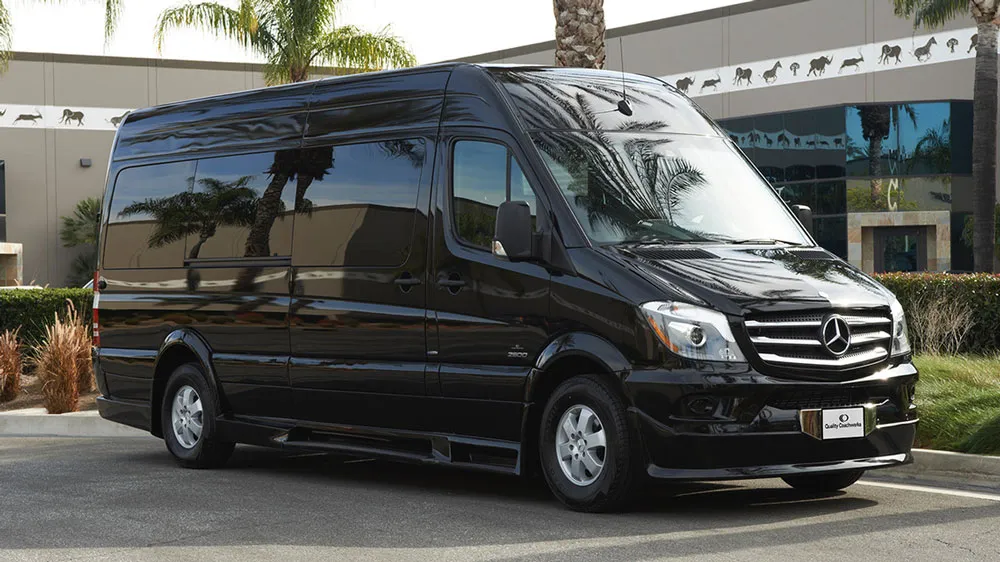
The Sprinter’s flat roof area, particularly on high-roofprovides generous real estate for solar panel arrays. Digital nomads commonly install 600 to 1,200 watts of flexible or rigid solar panels, feeding a quality MPPT charge controller that can replenish a large battery bank during daylight hours.
Combined with alternator charging through a DC-to-DC charger and occasional shore power hookups, most Sprinter builds achieve genuine energy independence for five to seven consecutive days of full professional workloads.
From a structural standpoint, the Sprinter’s steel body and reinforced floor accept the weight of heavy lithium battery banks without issue. Builders typically bolt battery boxes directly to the vehicle frame for maximum security, an important consideration when traveling over rough terrain.
The Sprinter’s high payload rating often between 2,500 and 3,500 pounds depending on configuration means even the heaviest electrical builds remain within safe operating limits.
The Mercedes eSprinter, the fully electric variant, presents an interesting and evolving option for nomads in urban environments, though its fixed battery system limits the customization that makes the diesel Sprinter so popular for off-grid builds.
Maintenance is perhaps the Sprinter’s most cited drawback. Mercedes dealerships vary widely in quality and availability across rural America, and the Sprinter’s turbodiesel engine requires attentive care.
However, a well-maintained Sprinter with a professionally built electrical system represents perhaps the most capable, reliable, and socially accepted digital nomad vehicle on the market.
The investment typically $40,000 to $150,000 depending on build quality reflects a serious commitment to the lifestyle, and the vehicle delivers accordingly.
2. Ford Transit
The Ford Transit has rapidly closed the gap on the Sprinter’s dominance and, in many practical respects, has surpassed it as the preferred choice for North American digital nomads.
Introduced in its current full-size form in 2015, the Transit offers an exceptional combination of cargo space, domestic serviceability, build-friendliness, and value that few competitors can match.
One of the Transit’s most compelling advantages is its dealer network. With Ford dealerships in virtually every city and town across North America, getting service, parts, or warranty work done on the road is dramatically simpler than with the Mercedes Sprinter.
For nomads who cover tens of thousands of miles annually across varied terrain, this accessibility to service is not a minor convenience it is a meaningful risk management factor.
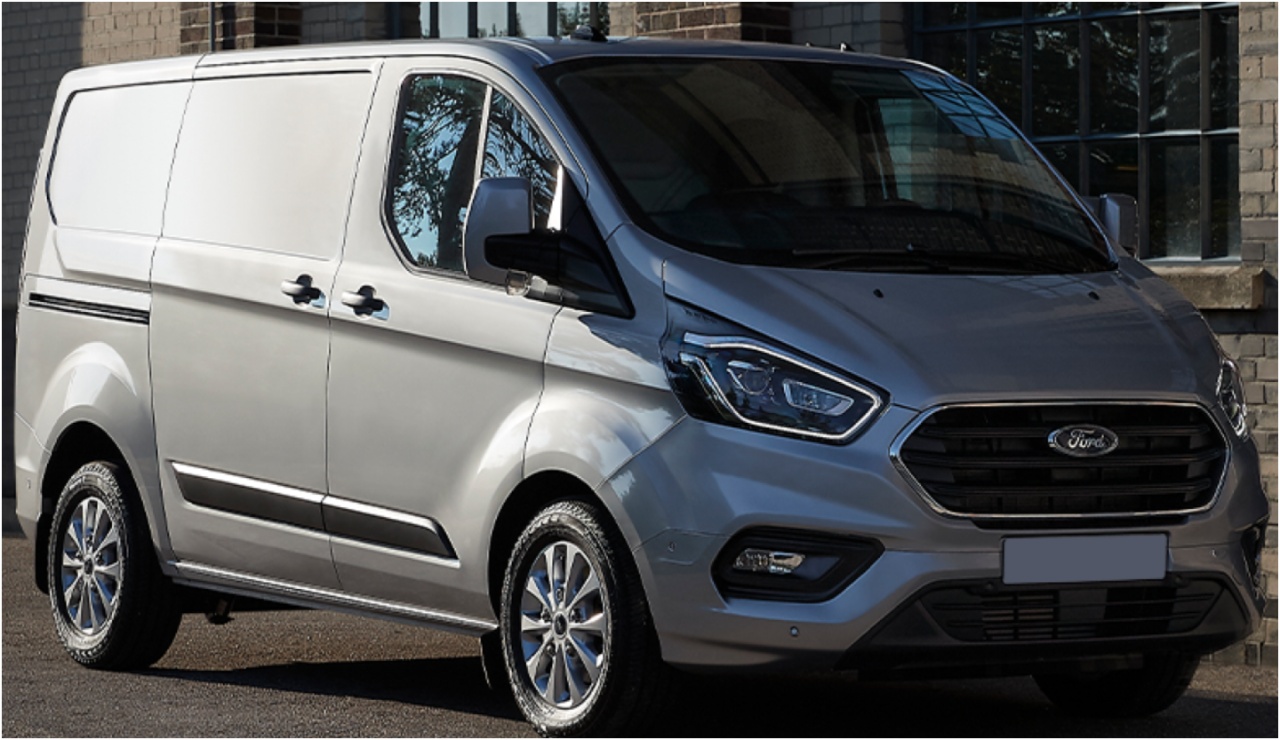
In terms of interior dimensions, the Transit’s high-roof extended cargo variant offers impressive headroom and floor length, easily accommodating full-size battery inverter systems.
Nomads typically build out Transit vans with 200 to 600 amp-hours of LiFePO4 batteries, with inverter systems ranging from 2,000 to 4,000 watts. The Transit’s roof, while slightly more curved than the Sprinter’s, still supports robust solar installations using low-profile mounting systems, and 400 to 800 watts of solar is common on well-executed Transit builds.
The Transit also benefits from a passionate and highly active conversion community. Platforms like YouTube, Reddit’s r/vandwellers, and dedicated forums are populated with detailed Transit build guides, electrical schematics, and troubleshooting resources. This community knowledge base dramatically lowers the barrier to entry for first-time builders.
Ford’s EcoBoost gasoline engines and turbodiesel options both have proven track records for reliability, and the Transit’s suspension handles the added weight of electrical systems well when properly supported with weight distribution upgrades.
For the digital nomad who wants a serious mobile office platform without the premium price tag or service anxiety of a European van, the Ford Transit is a superb and practical choice that consistently delivers.
3. Ram ProMaster
The Ram ProMaster occupies a unique niche in the digital nomad vehicle conversation. Built on a front-wheel-drive platform derived from the Fiat Ducato one of Europe’s most popular commercial vans the ProMaster brings a distinctive set of advantages that make it particularly compelling for builders prioritizing interior space and budget efficiency.
The ProMaster’s standout feature is its extraordinarily low floor height. Because it uses a front-wheel-drive configuration, there is no rear differential or driveshaft tunnel running through the cargo area.
This flat, uninterrupted floor makes installation of battery banks and cabinetry significantly cleaner and more efficient. Builders gain usable space that competitors with rear-wheel or all-wheel-drive layouts simply cannot offer, and the resulting battery installations tend to be neater and better organized.
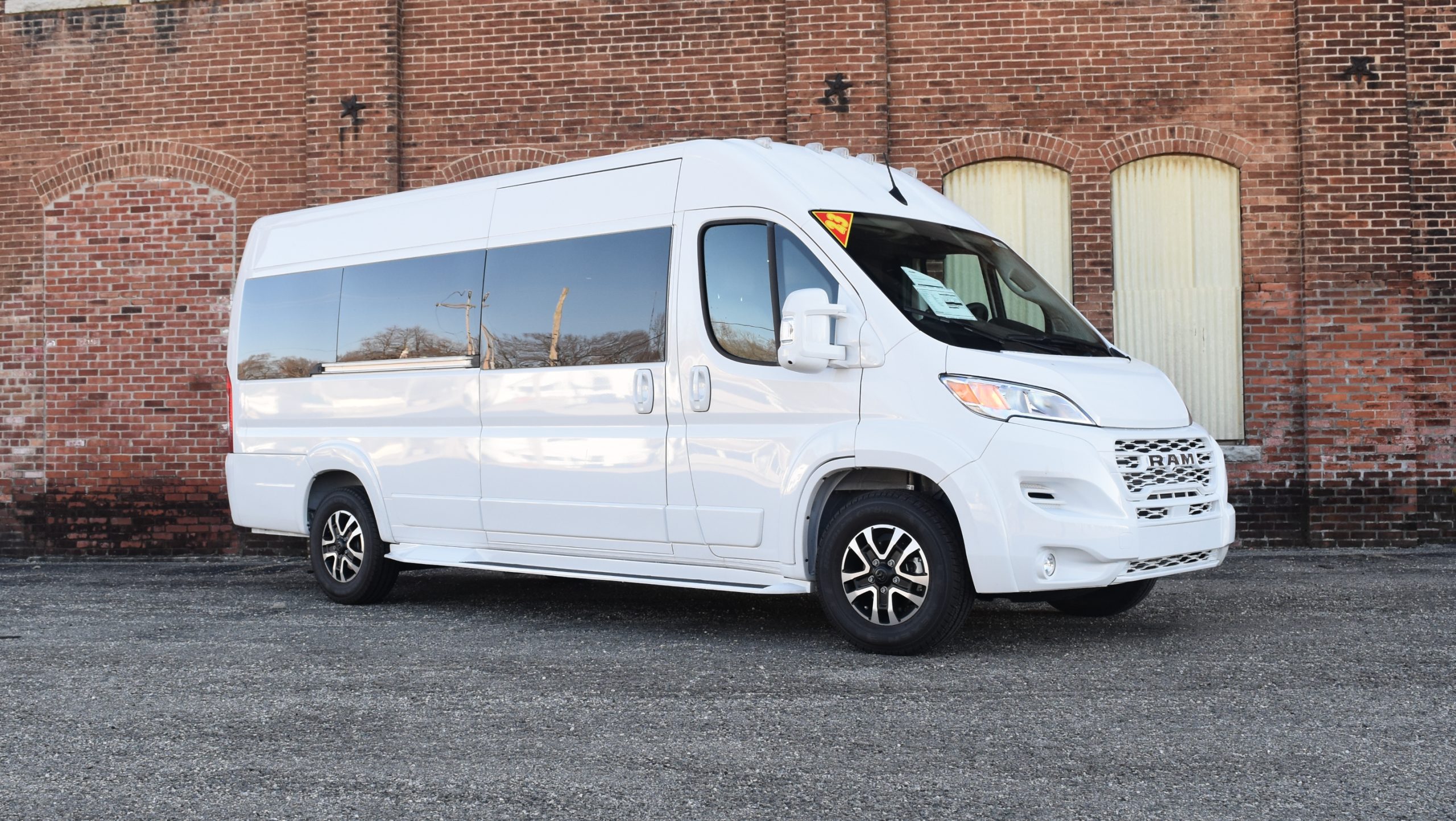
For serious electrical builds, the ProMaster’s flat floor means a battery bank can run the full width and length of a custom-built platform, maximizing capacity.
Nomads regularly install 300 to 600 amp-hours of lithium iron phosphate batteries in ProMaster builds, paired with 2,000 to 3,000-watt pure sine wave inverters from brands like Victron Energy or Renogy. The roof, available in high-roof configuration, offers adequate space for 400 to 600 watts of solar panels using appropriate curved mounting solutions.
The ProMaster’s lower purchase price compared to Sprinter and Transit models makes it an attractive option for nomads working within tighter budgets who still want substantial electrical capability.
Used ProMaster vans in reasonable condition can often be sourced at prices that leave significant budget remaining for the electrical build itself. Serviceability through Ram and Dodge dealerships is generally accessible across the United States, though the ProMaster’s Fiat-derived components mean some parts can occasionally be harder to source in remote areas.
The Ram ProMaster is an underrated but genuinely excellent platform for digital nomads who want a clean, spacious, and budget-friendly base for a powerful battery inverter system.
4. Toyota HiAce (International Markets)
For digital nomads operating in Australia, Southeast Asia, Africa, East Africa, South America, and other international markets, the Toyota HiAce is arguably the most logical and battle-tested choice available.
Toyota’s legendary mechanical reliability, combined with the HiAce’s near-universal parts availability across developing markets, makes it the preferred foundation for serious off-grid mobile office builds outside North America.
The HiAce’s long-wheelbase panel van configuration offers a respectable cargo area that, while smaller than the Sprinter or Transit, is entirely sufficient for a focused digital nomad electrical build.
Experienced builders in markets like Australia and New Zealand regularly install 200 to 400 amp-hours of lithium batteries paired with 2,000 to 3,000-watt inverters in HiAce conversions, producing reliable systems capable of sustaining full professional workloads through multiple cloudy days.
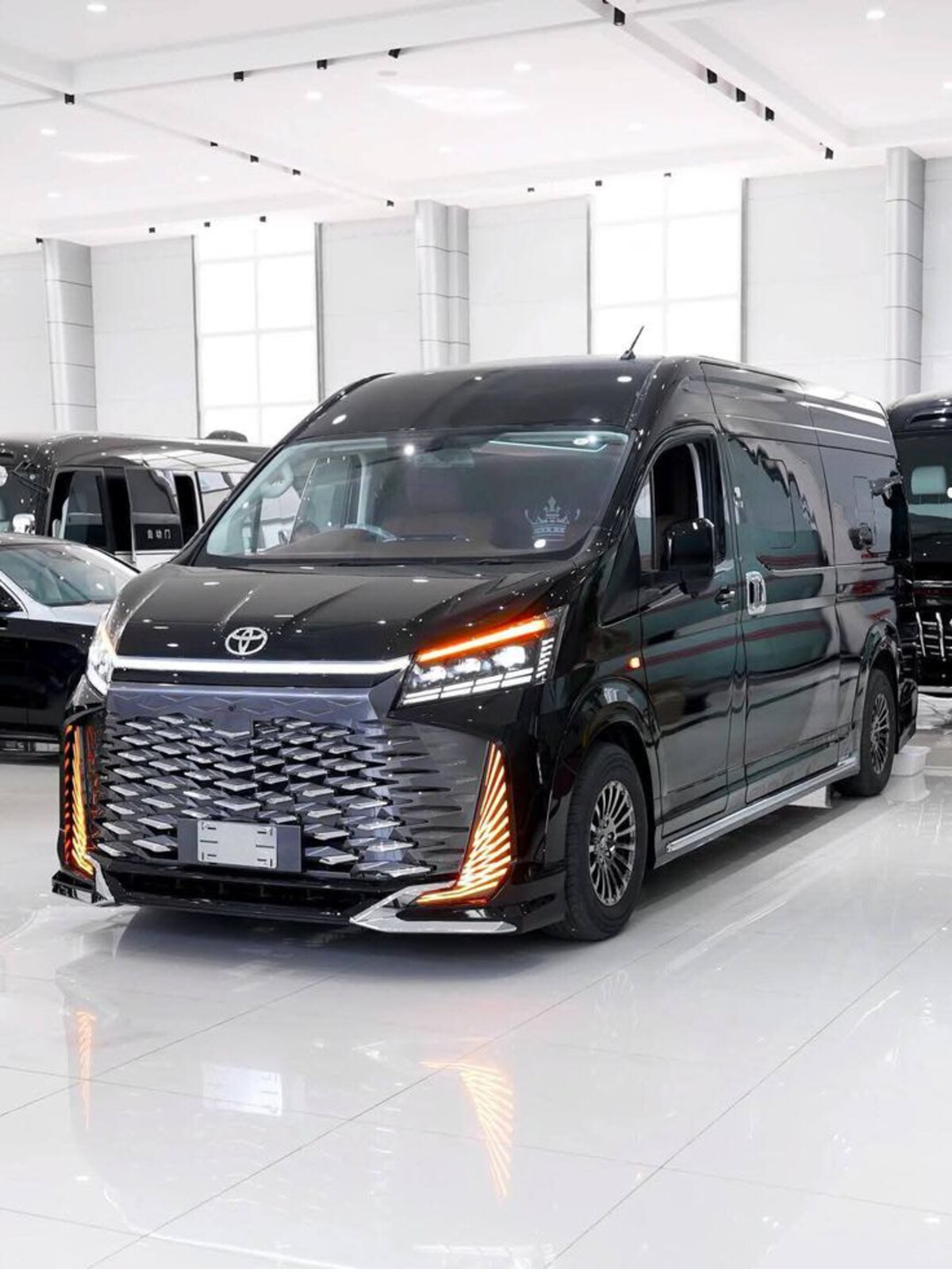
What truly sets the HiAce apart is its mechanical reputation. Toyota’s turbodiesel engines particularly the proven 1KD-FTV and 1GD-FTV units are renowned for extraordinary longevity with basic maintenance.
In markets where breakdown assistance is hours away and spare parts availability is everything, a HiAce with a fault is dramatically easier to diagnose and repair than a Mercedes Sprinter with a fault. This reliability factor alone makes the HiAce the professional’s choice for serious international overland travel combined with digital work.
The HiAce community in Australia in particular has developed sophisticated solar and battery conversion guides, and specialist companies in cities like Melbourne, Sydney, and Brisbane offer high-quality HiAce-specific conversion services.
For the nomad who works across borders and needs a vehicle that will be understood, serviced, and respected in virtually any country on earth, the Toyota HiAce is an exceptional and deeply practical choice.
Also Read: 8 Tips for Finding Local Classic Car Meets in Your Area
5. Storyteller Overland MODE
For digital nomads who prefer to skip the complex DIY conversion process and arrive at the trailhead or remote campsite with a professionally engineered mobile office ready to deploy, the Storyteller Overland MODE represents one of the most thoughtfully executed factory conversion products on the market.
Built on the Ford Transit platform, the MODE comes with a pre-installed electrical system designed specifically for power-hungry users. Standard configurations include substantial lithium battery banks typically in the 200 to 300 amp-hour range with optional upgrades pushing capacity significantly higher.
The inverter systems installed by Storyteller are pure sine wave units capable of handling sensitive electronics, and the entire electrical architecture is managed through an intuitive monitoring interface accessible via smartphone.
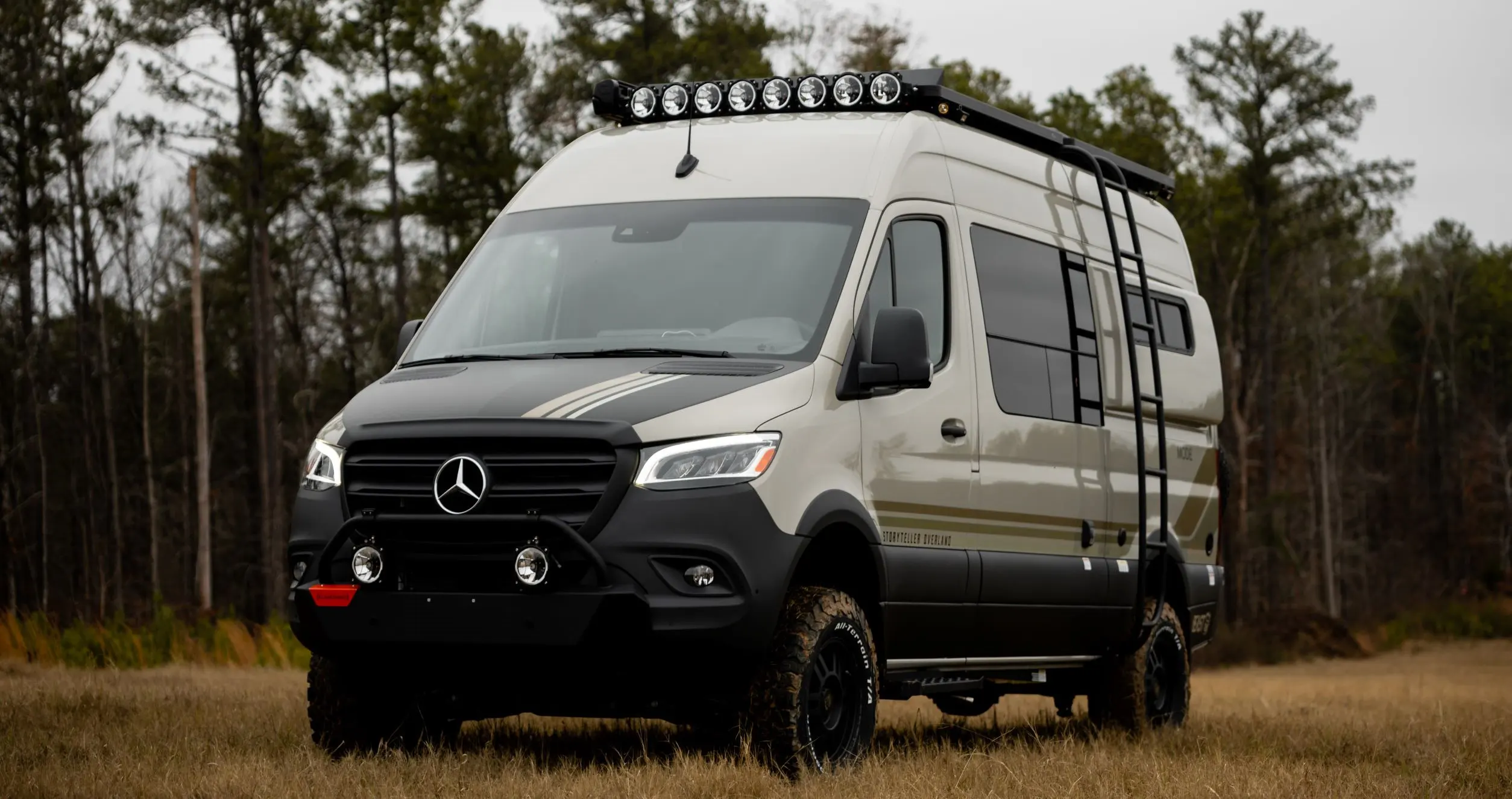
What Storyteller has achieved with the MODE is the integration of off-road capability with serious electrical infrastructure. The vehicle rides on a lifted suspension with all-terrain tires, making remote access dramatically easier for nomads who want to park in genuinely isolated locations where solar harvesting is unobstructed and neighbor noise is nonexistent. The roof rack system is engineered to support 200 to 400 watts of solar panels without compromising structural integrity.
For the professional who bills at a high hourly rate and cannot afford weeks of build time, troubleshooting, and iteration, the Storyteller MODE offers a compelling value proposition: pay a premium upfront, but arrive with a proven, warrantied, and professionally integrated system. The customer support network and build quality consistency are measurably superior to most DIY builds attempted by first-time converters.
6. Winnebago Travato
The Winnebago Travato occupies a fascinating position in the digital nomad vehicle world. Built on the Ram ProMaster platform, it blends the accessibility of a factory-built Class B motorhome with electrical systems sophisticated enough to support serious remote work without modification.
Recent Travato models particularly the Travato 59GL and 59G variants come equipped from the factory with Volta Power Systems lithium battery banks ranging from 200 to over 400 amp-hours, paired with inverter-charger units that can cleanly power sensitive electronics including laptops, monitors, routers, and video production equipment.
The factory integration means all components are matched, tested, and warrantied as a system a significant advantage over piecemeal DIY builds where component compatibility issues can create costly and frustrating problems.
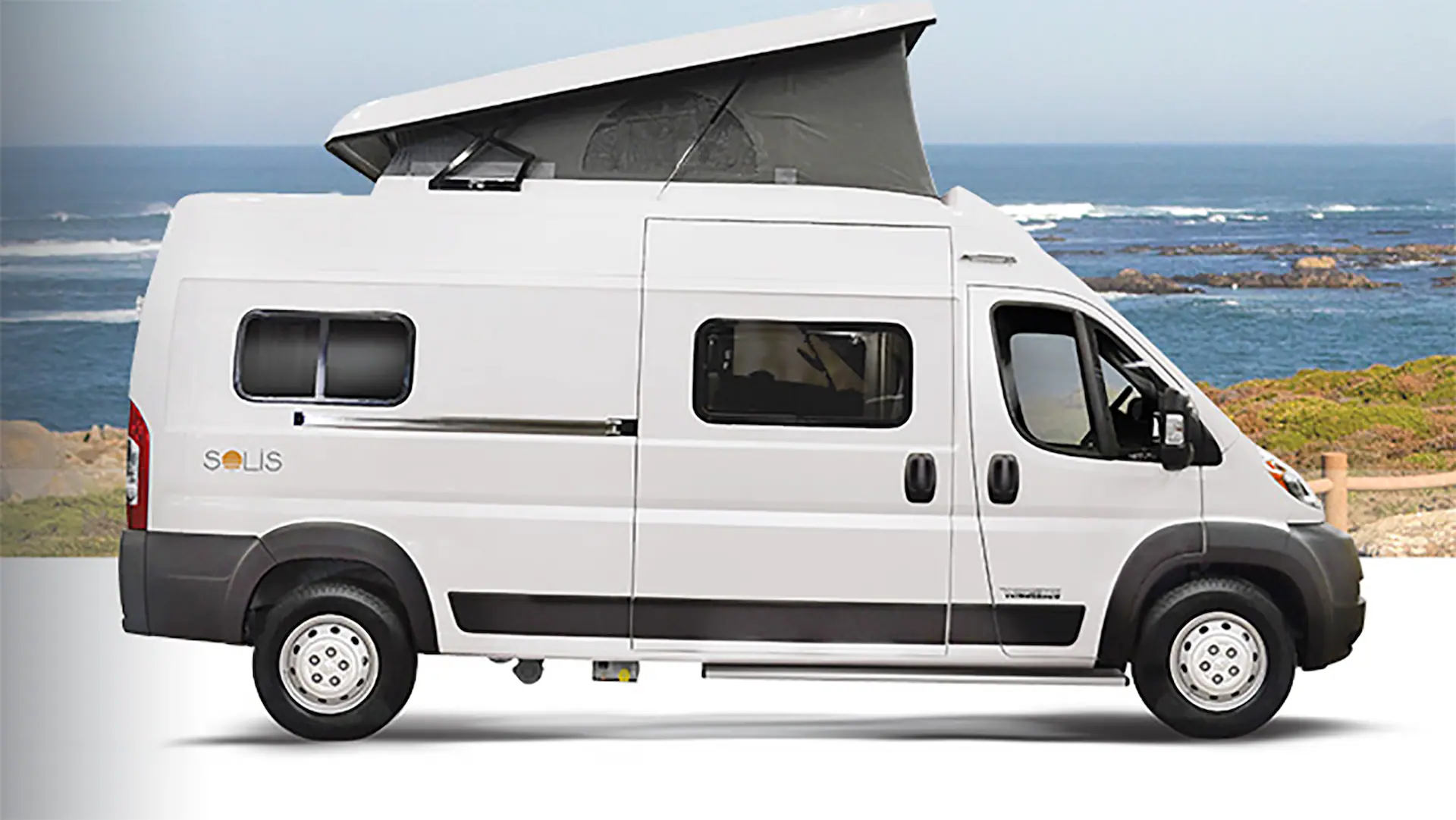
The Travato’s compact footprint approximately 21 feet in length makes it far more maneuverable than larger Class C or Class A motorhomes, allowing nomads to access urban parking, campgrounds with size restrictions, and remote dispersed camping sites that larger rigs cannot reach.
This flexibility is enormously valuable for the working nomad whose office location needs change frequently. For nomads who want to expand electrical capacity, the Travato’s roof readily accepts additional solar panels, and the existing electrical architecture is designed with expandability in mind.
Many Travato owners upgrade to 600 or more amp-hours of battery capacity, transforming an already capable vehicle into a genuinely exceptional mobile office power plant. Combined with Winnebago’s dealership network and customer support, the Travato is a polished and professional choice.
7. Earthroamer XV-LTS
At the extreme end of the digital nomad vehicle spectrum sits the Earthroamer XV-LTS a purpose-built, expedition-grade mobile command center that makes conventional van builds look modest by comparison.
Built on the Ford F-550 Super Duty platform, the Earthroamer is engineered for professionals who require uncompromising reliability, extreme off-road capability, and electrical systems capable of sustaining full business operations indefinitely.
The XV-LTS comes standard with a factory-installed solar and battery system that is, by any measure, extraordinary. Battery capacity typically starts at 630 amp-hours of lithium and is configurable up to 1,260 amp-hours or more, paired with a solar array generating 800 to over 1,400 watts from roof-mounted panels.
The inverter system supports household-level power loads, meaning the Earthroamer owner can run multiple computers, professional video editing workstations, satellite internet terminals, and climate control simultaneously without concern.
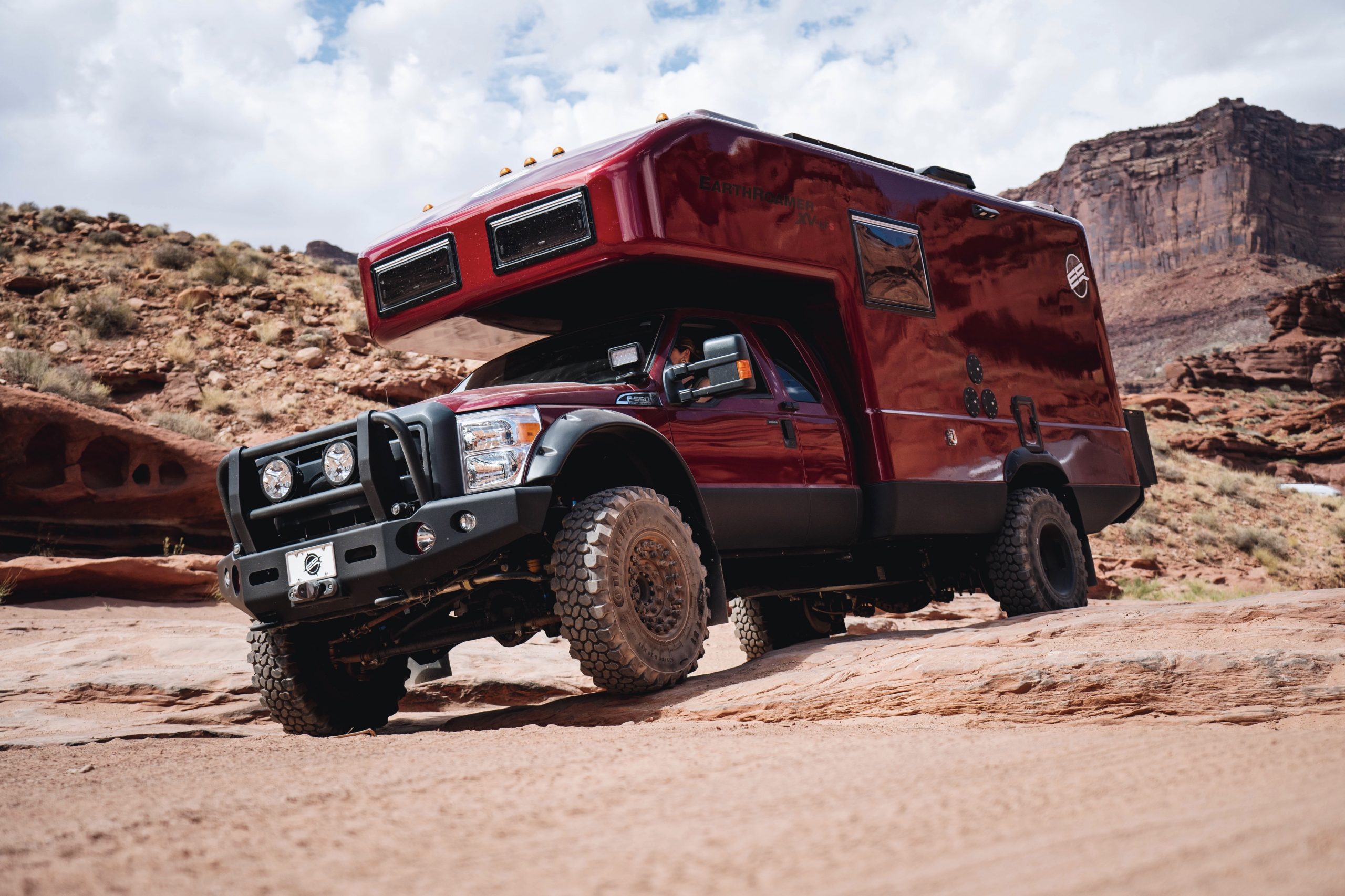
The vehicle’s construction a fiberglass composite body bonded to a custom steel frame is designed to withstand extreme environmental conditions: desert heat, arctic cold, river crossings, and extended rock crawling.
For the nomad whose work takes them to genuinely remote and harsh environments, the Earthroamer provides a level of confidence and capability that no van conversion can replicate.
The price point starting around $500,000 and rising depending on configuration places the Earthroamer firmly in the professional and luxury market.
But for the right buyer, typically a high-earning professional or established entrepreneur who treats their mobile office as a business investment, the Earthroamer XV-LTS represents the pinnacle of what a digital nomad vehicle can be.
8. Toyota Land Cruiser 79 Series with Canopy
The Toyota Land Cruiser 79 Series with a custom aluminum or steel canopy system represents a different philosophy of digital nomad vehicle one that prioritizes mechanical simplicity, off-road supremacy, and modular electrical expandability over interior living comfort. Popular across Australia, Africa, and the Middle East, this configuration is the working professional’s choice for genuinely remote operation.
The 79 Series tray-back or dual-cab platform accepts custom canopies fabricated by specialist companies, and within these canopies, owners install sophisticated battery and inverter systems that would rival dedicated van builds.
Systems of 200 to 500 amp-hours of lithium iron phosphate batteries paired with 2,000 to 3,500-watt inverters are common, fed by rooftop solar arrays of 300 to 600 watts mounted to the canopy roof.

The Land Cruiser 70 Series platform’s legendary reliability the turbodiesel V8 engine is known to reach 500,000 kilometers with basic maintenance means the electrical system is the most likely failure point, not the vehicle itself.
This reliability is transformative for nomads who operate far from service infrastructure. The vehicle’s mechanical simplicity also means that basic repairs can be performed with standard tools by anyone with moderate mechanical competence.
For digital nomads who prioritize access to truly remote locations over interior comfort, and who are willing to invest in high-quality canopy fabrication and electrical components, the Land Cruiser 79 Series is arguably the most capable and reliable foundation available at any price point.
9. Airstream Interstate 24GT
The Airstream Interstate 24GT brings the iconic Airstream brand’s commitment to quality and design aesthetics to the Class B motorhome category, built on the Mercedes-Benz Sprinter platform and finished to a standard that genuinely impresses both in appearance and functionality.
For digital nomads who conduct client meetings via video, produce content requiring professional visual backgrounds, or simply value the psychological benefit of working in a beautiful and well-organized environment, the Interstate 24GT’s interior design quality is genuinely meaningful. The vehicle does not look or feel like a working vehicle it looks and feels like a premium mobile studio.
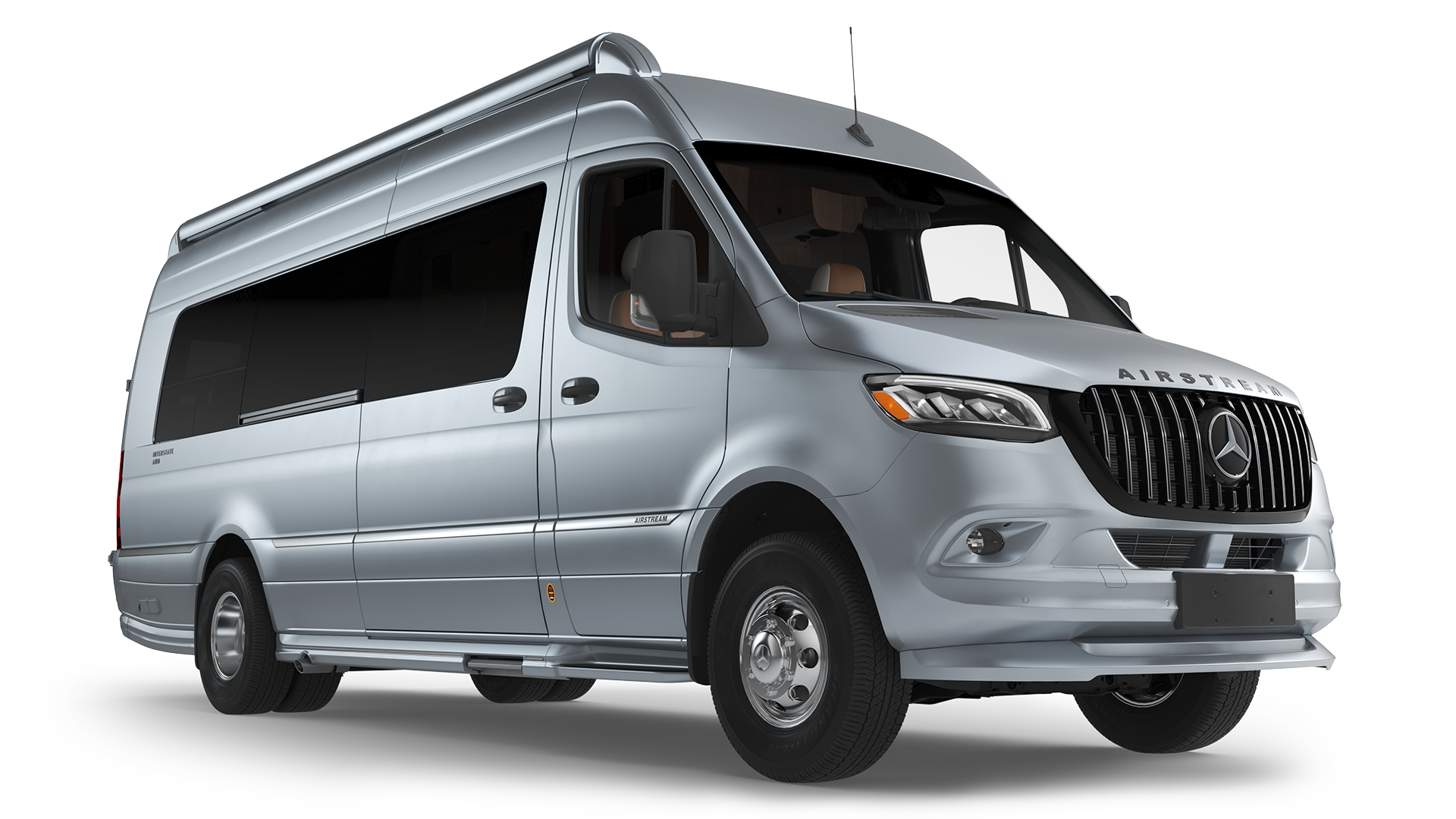
The Interstate’s electrical system, while not as large as dedicated van builds at the factory level, provides a solid foundation for expansion. Factory lithium battery installations of 100 to 200 amp-hours can be supplemented by rooftop solar additions and secondary battery banks, and the Sprinter platform’s well-understood electrical architecture makes professional upgrades straightforward.
The 24GT’s specific appeal to professional nomads lies in the balance it strikes between living quality, electrical capability, and professional presentation.
Arriving at a client’s office or a co-working space in an Airstream Interstate communicates a level of intentionality and investment in the lifestyle that resonates differently than a plain white cargo van. For nomads in industries where first impressions matter, this is not a trivial consideration.
10. Custom Skoolie (School Bus Conversion)
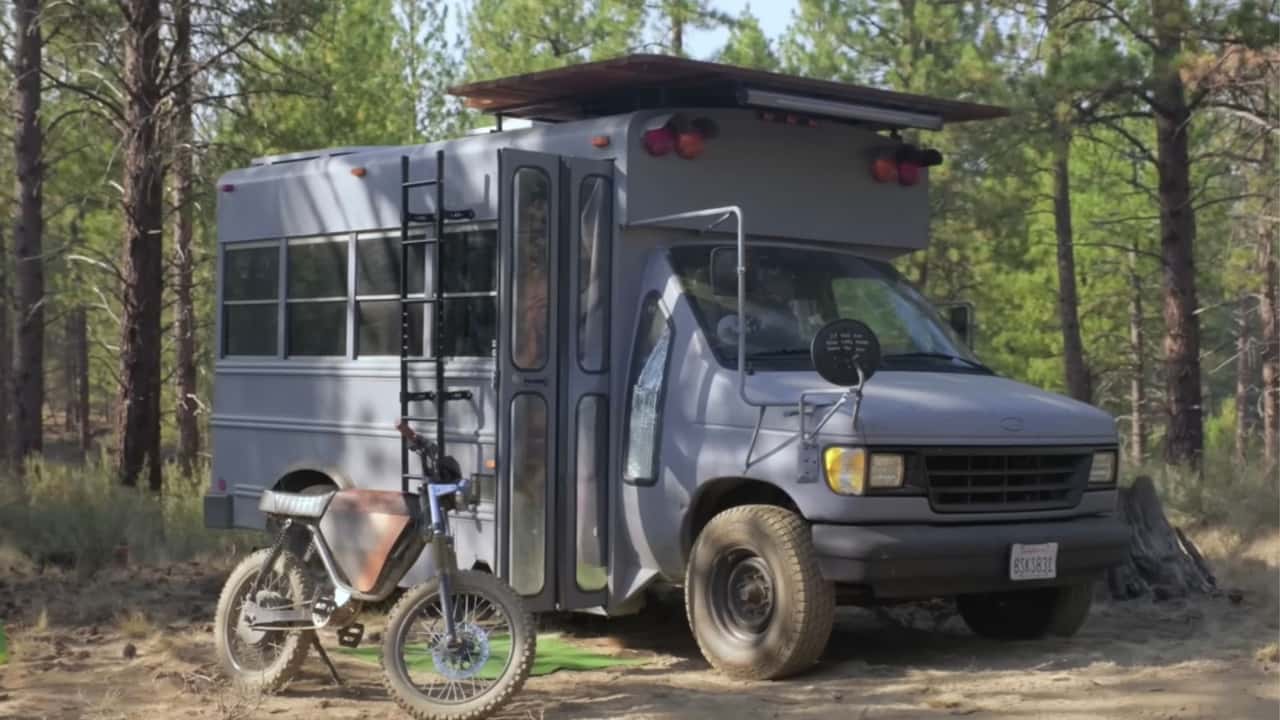
No list of digital nomad vehicles would be complete without acknowledging the Skoolie the converted school bus which has evolved from a counterculture curiosity into a serious and highly practical platform for nomads who prioritize maximum space, maximum electrical capacity, and maximum creative freedom over conventional aesthetics.
A full-size school bus conversion typically a 35 to 40-foot conventional school bus offers more usable interior space than virtually any van or motorhome at a fraction of the cost.
The structural steel frames of school buses are engineered to withstand decades of hard use, and the flat roofs of most bus models provide extraordinary solar panel real estate, commonly supporting 1,000 to 2,000 watts of solar generation capacity.
Battery systems in serious Skoolie builds routinely reach 400 to 800 amp-hours of lithium iron phosphate capacity, paired with 3,000 to 6,000-watt pure sine wave inverters.
This level of electrical capacity supports not just standard digital nomad equipment but full professional content production setups: camera equipment charging banks, podcast studios with dedicated audio interfaces, desktop workstations, and even small server racks for developers who need local computing power.
The cost equation is compelling. A school bus can often be purchased for $3,000 to $15,000, leaving substantial budget for a professional-grade electrical build.
The total investment bus plus high-quality electrical system plus basic living amenities frequently totals less than a factory Class B motorhome with inferior electrical capacity. The trade-offs are real: maneuverability is limited, fuel economy is poor, and parking in urban areas requires planning.
But for the digital nomad who has committed fully to stationary or slow-travel nomadism spending weeks or months in each location rather than driving daily the Skoolie offers an unmatched combination of space, power, and affordability that makes every other vehicle on this list seem genuinely cramped by comparison. It is the mobile studio, the home, and the power station all in one and for the right nomad, there is simply nothing better.
Also Read: Top 10 Most Reliable Japanese Sedans From the 1970s Era
