
Braking performance is often overlooked in discussions about high-performance vehicles, yet it is just as important as acceleration and top speed, especially in emergency situations.
The ability to stop quickly and consistently can be the difference between maintaining control and having an accident. Modern performance cars combine advanced braking hardware, high-grip tires, aerodynamic design, and sophisticated electronic systems to achieve record-short stopping distances.
This article, “10 Vehicles With the Shortest Stopping Distances in Emergency Situations”, highlights cars that excel in controlled deceleration. From track-focused supercars to finely tuned performance coupes, each vehicle demonstrates engineering designed for extreme braking.
Innovations such as carbon-ceramic brakes, brake-by-wire systems, adaptive suspension, and tire-specific compounds all contribute to reducing stopping distance while maintaining stability. These cars are proof that the science of stopping is just as thrilling and complex as the art of going fast.
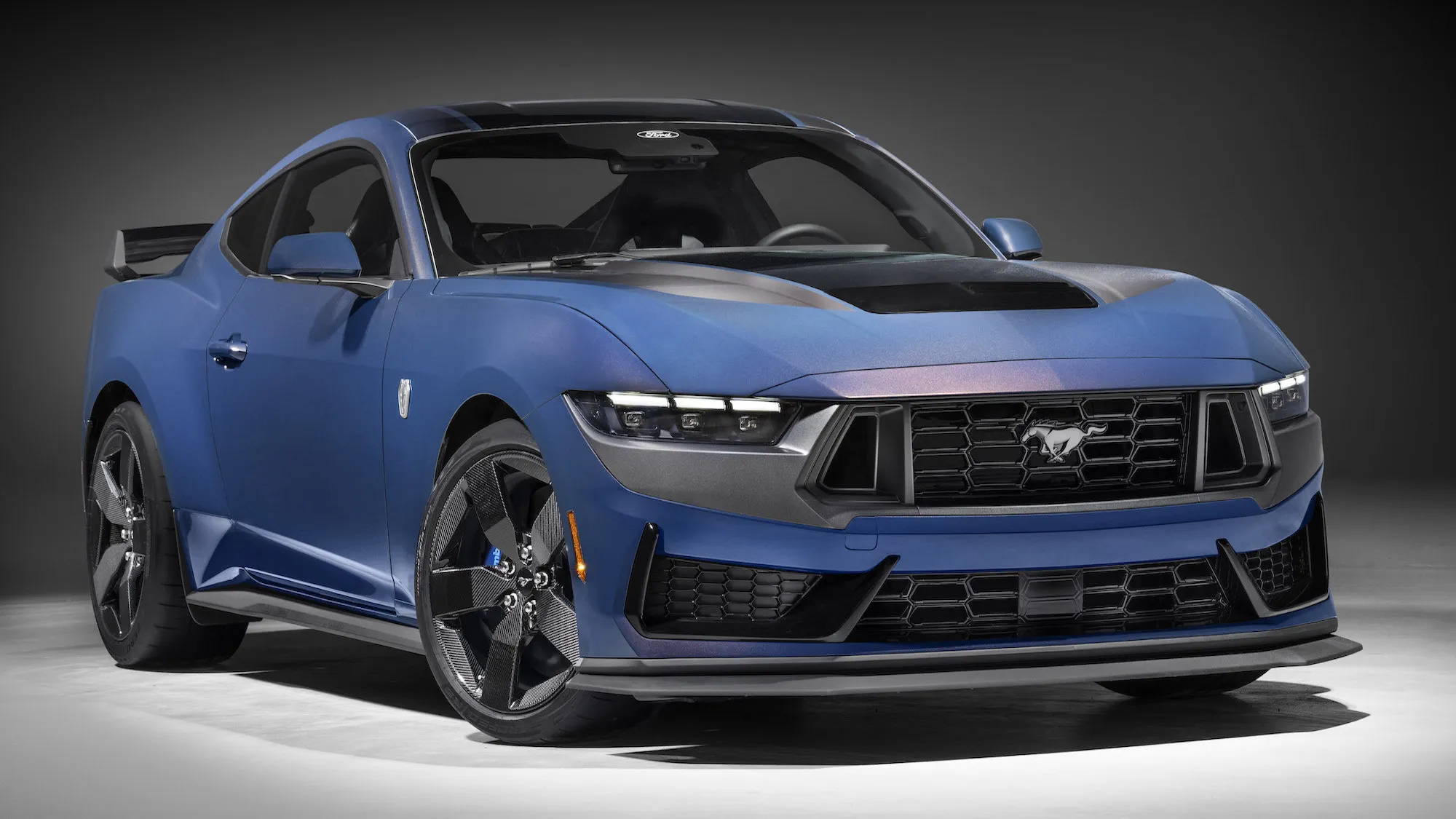
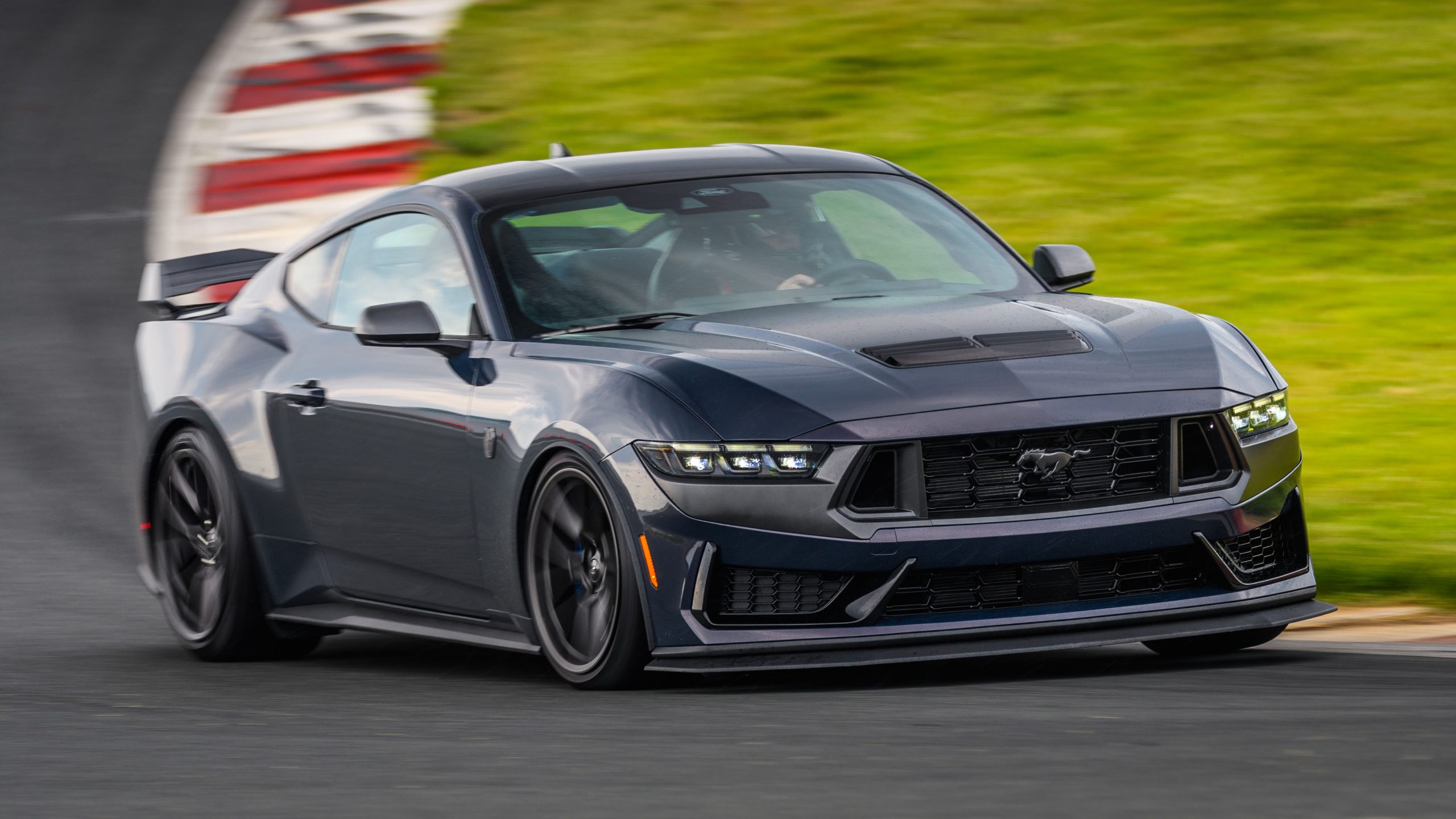
1. Ford Mustang Dark Horse: Redefining Braking Performance
The 2024 Ford Mustang Dark Horse has set a new benchmark for front-engine performance cars, achieving a record 60-0 mph stopping distance of just 86 feet, making it the best-braking production vehicle ever tested by MotorTrend. This remarkable performance allows it to rival and even surpass elite European supercars like the Porsche 911 GT2 RS and the Dodge Viper ACR in pure stopping power.
The Dark Horse’s braking prowess stems from a combination of advanced hardware and finely tuned electronics. At its core are massive Brembo six-piston front brakes paired with 15.4-inch two-piece rotors.
These brakes, engineered to withstand high heat, deliver extreme stopping force while remaining stable under maximum deceleration. Complementing this system is Ford’s brake-by-wire technology, which ensures precise pedal feel and predictable brake application, suitable for both track and street driving.
Performance-oriented tires and suspension also play a critical role. Equipped with Pirelli P Zero Trofeo RS tires through the optional Handling Package, the Dark Horse achieves exceptional mechanical grip, generating over 1.1 g of lateral traction.
The MagneRide damping system monitors and adjusts suspension settings in real time, minimizing front-end dive during heavy braking and keeping the tires fully engaged with the road. The track-focused chassis further enhances stability, maintaining composure during sudden stops and aggressive maneuvers.
Beyond braking, the Dark Horse packs a naturally aspirated 5.0L Coyote V8, producing 500 hp and 418 lb-ft of torque. It accelerates from 0-60 mph in 3.7 seconds with the 10-speed automatic or 4.1 seconds with the 6-speed Tremec manual. The optional Handling Package adds stiffer springs, larger sway bars, and a high-downforce rear wing with a Gurney flap, further improving track performance.
Inside, the cabin features a 12.4-inch digital cluster and a 13.2-inch touchscreen with Unreal Engine 3D graphics, though some reviewers noted occasional sluggishness and a lack of tactile climate controls.
Priced between $60,000–$65,000, the Mustang Dark Horse offers “supercar-style” performance at a fraction of the cost, combining record-breaking braking, high horsepower, and track-ready handling into a compelling package for enthusiasts.
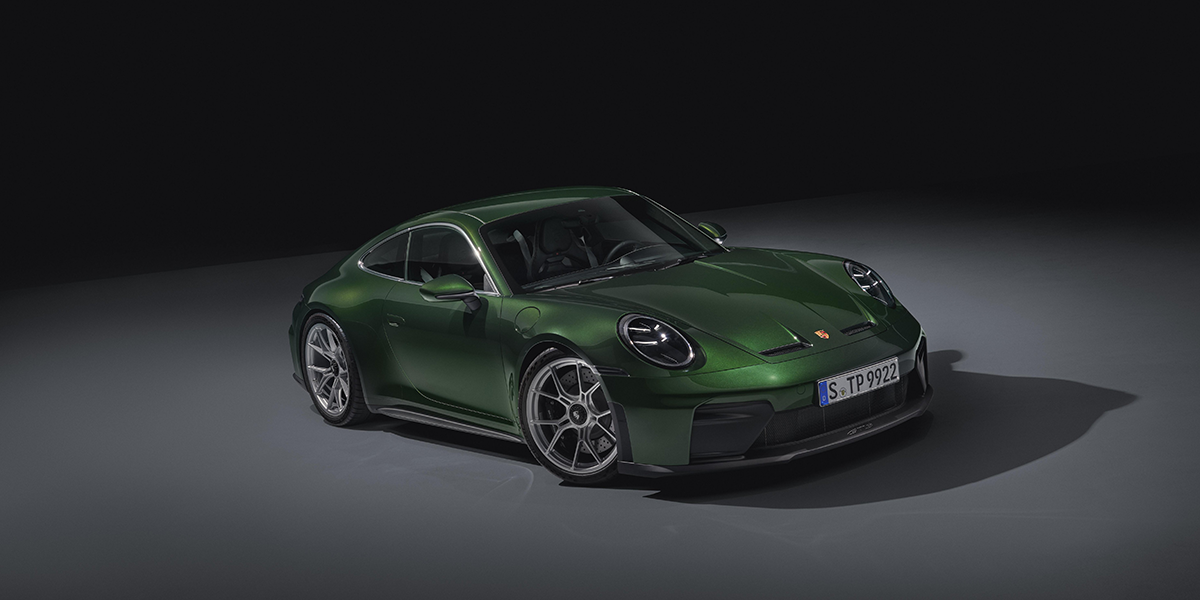
2. 2025 Porsche 911 GT3 Touring: Precision Braking and Balanced Performance
The 2025 Porsche 911 GT3 Touring matches the Ford Mustang Dark Horse with a record 60-0 mph stopping distance of 86 feet while maintaining a more understated design. Unlike track-focused GT3 variants, the Touring does not rely on large rear wings or aggressive splitters.
Instead, it uses Porsche’s rear-engine weight distribution, advanced ABS software, and finely tuned chassis dynamics to maximize traction and stability during heavy braking. Carbon-ceramic brakes, anti-dive suspension, and high-grip 20/21-inch staggered tires allow the car to stop quickly while remaining stable and controllable on normal roads.
Lightweight construction enhances the GT3 Touring’s performance. With a curb weight under 3,200 lbs, the car incorporates magnesium wheels, a lightweight lithium-ion battery, and carbon-fiber components to reduce inertia, allowing faster deceleration.
The front double-wishbone suspension minimizes forward pitch under braking, keeping the tires fully planted. Even without a fixed rear wing, the Touring maintains aerodynamic stability through a retractable spoiler and refined underbody airflow.
The GT3 Touring also excels in acceleration and handling. Its naturally aspirated 4.0L flat-six engine produces 502 hp and 331 lb-ft of torque. The manual-equipped Touring reaches 0-60 mph in 3.4 seconds and completes the quarter-mile in 11.5 seconds at 125 mph.
Michelin Pilot Sport Cup 2R tires deliver exceptional cornering performance, achieving a 1.21 g average on the skidpad and a figure-eight lap time of 21.6 seconds, tying the McLaren 765LT Spyder while surpassing its average lateral g. The precise manual gearbox and well-positioned pedals allow drivers to fully exploit the car’s performance.
Despite its track-level capabilities, the GT3 Touring remains usable on the street and handles predictably even in wet conditions. Comfort compromises include a stiff suspension, reduced sound insulation, and a high price. Our test car cost $262,430, including options like the GPS-enabled nose lift system.
The 911 GT3 Touring demonstrates that a sports car can deliver extreme braking and handling while remaining balanced and driver-friendly. Its combination of precision stopping, lightweight engineering, and lateral grip makes it one of the most capable and engaging high-performance vehicles on the road today.
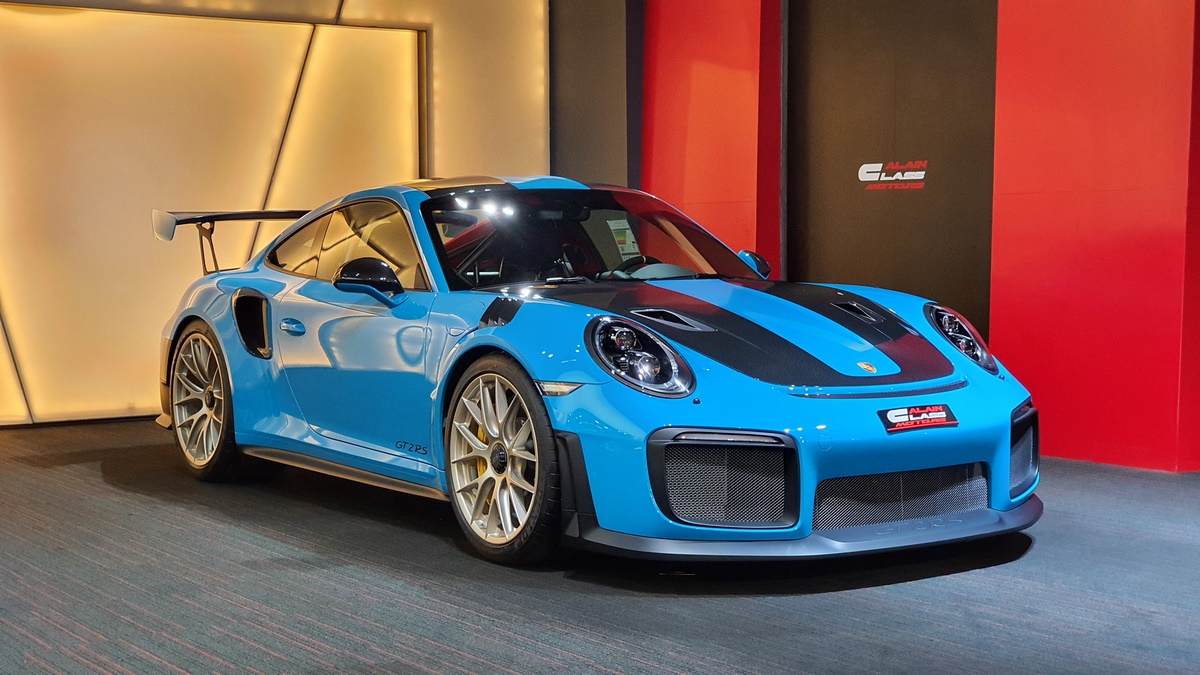
3. 2018 Porsche 911 GT2 RS Weissach: Extreme Braking and Track Dominance
The 2018 Porsche 911 GT2 RS Weissach is widely recognized as one of the most capable braking machines ever produced, achieving a 60-0 mph stopping distance of 87 feet. This performance is the result of an uncompromising combination of advanced braking technology, lightweight engineering, aerodynamic downforce, and high mechanical grip.
Equipped with massive carbon-ceramic rotors and Michelin Pilot Sport Cup 2 R tires, the Weissach package further reduces unsprung weight with magnesium wheels and carbon-fiber components, enhancing suspension responsiveness and allowing the car to brake more effectively.
The GT2 RS’s braking system is engineered for extreme conditions. Large carbon-ceramic rotors and calipers handle repeated high-speed stops without fade, while NACA air intakes provide optimal cooling. Tuned ABS and Porsche Stability Management systems deliver precise brake pressure management, allowing drivers to brake later and harder without losing control.
The rear-engine layout contributes to exceptional rear-axle traction, keeping the tires loaded during deceleration. Aerodynamic aids, including a large rear wing and front spoiler, generate significant downforce that presses the tires into the road, further improving grip and stability.
Lightweight construction plays a crucial role in the GT2 RS’s stopping and handling capabilities. With a curb weight of 3,355 pounds and a 37/63 front-to-rear weight distribution, the Weissach package reduces mass by 40 pounds, decreasing inertia and improving brake responsiveness. The car’s rear tires are exceptionally wide, providing a large contact patch that translates brake force into rapid deceleration.
Performance extends beyond braking. The 3.8-liter twin-turbo flat-six engine produces 690 hp and 553 lb-ft of torque, propelling the car from 0-60 mph in 2.6 seconds and completing the quarter-mile in 10.3 seconds at 139.3 mph.
Lateral grip is also impressive, with a 1.17 g average on the skidpad and a 21.9-second figure-eight lap time at 1.03 g average, placing it among the fastest cars tested on both straight-line and handling metrics.
Priced from $294,250 and reaching $345,300 as tested, the GT2 RS Weissach delivers a supercar experience that combines world-class braking, aerodynamics, and track-focused engineering.
Its combination of lightweight design, advanced brakes, high downforce, and rear-engine traction makes it one of the most precise and capable performance cars available, capable of record-setting performance on the road and the track.
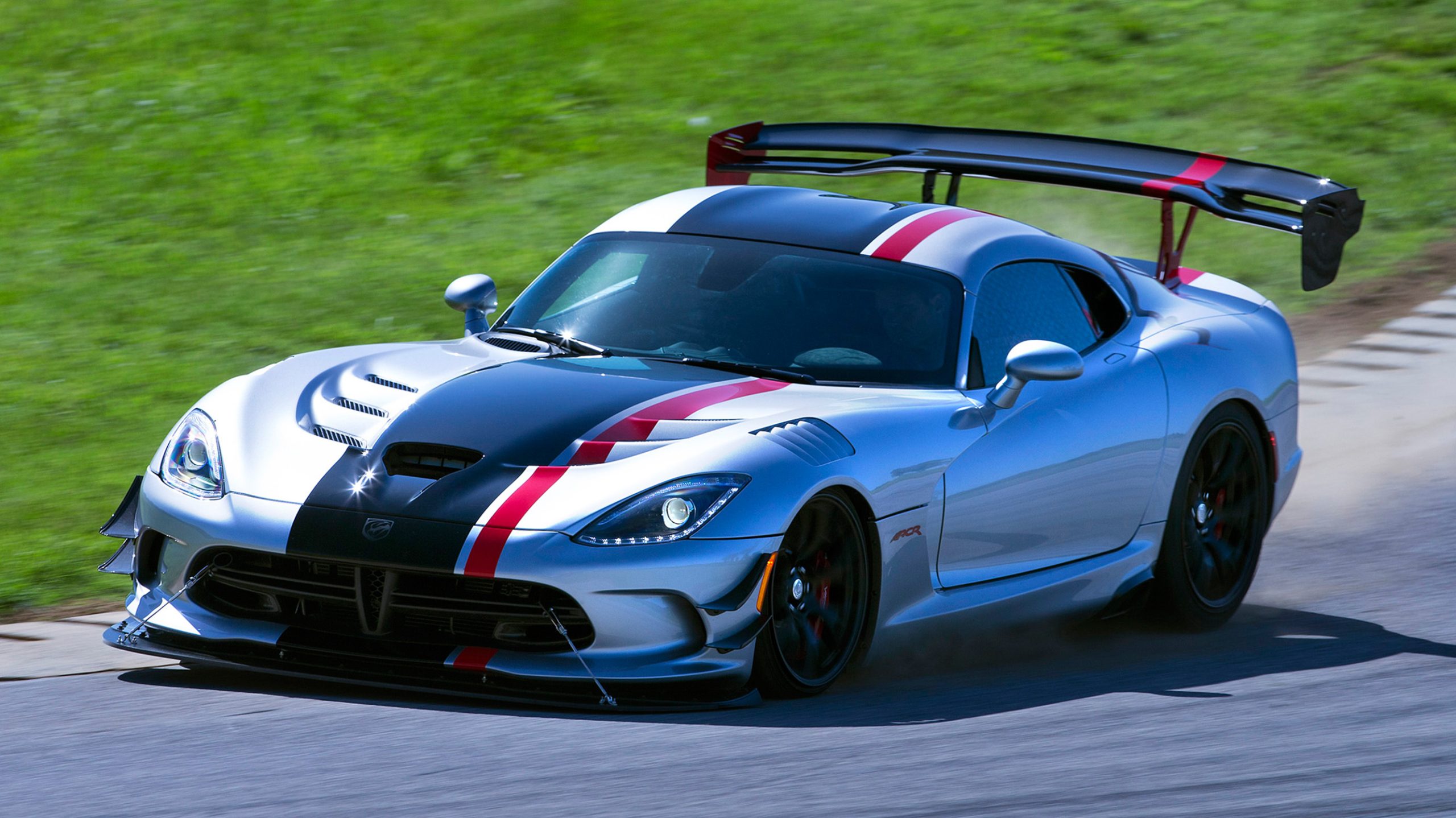
4. 2016 Dodge Viper ACR: Raw Braking Power and Track-Focused Precision
The 2016 Dodge Viper ACR is a track-oriented supercar that achieves a 60-0 mph stopping distance of 87 feet. Its performance is rooted in a combination of brute mechanical force, high-grip tires, and extreme aerodynamic downforce.
Unlike modern supercars that rely on brake-by-wire systems, the Viper ACR provides a direct pedal feel, allowing skilled drivers to threshold brake with precision. The car’s design prioritizes maximum deceleration and handling over straight-line speed, making it one of the most capable braking production vehicles ever.
The ACR features Brembo Carbon Ceramic Matrix brakes with 15.4-inch front and 14.2-inch rear rotors, paired with six-piston front and four-piston rear calipers. These lightweight components reduce unsprung mass, improving suspension responsiveness and tire contact.
High-performance Kumho Ecsta V720 tires were specifically developed for the ACR to provide maximum grip, allowing ABS and stability control systems to operate at peak efficiency. The optional Extreme Aero Package generates up to 2,000 pounds of downforce at high speed, pressing the car into the pavement to increase traction during braking and cornering.
Aerodynamic enhancements include a large adjustable rear wing, front splitter, dive-plane moustaches, fender vents, and a rear diffuser. These elements combine to improve stability and grip while creating drag that slightly reduces top-end speed.
The coil-over suspension is highly adjustable, with stiffer springs and height-adjustable perches, allowing drivers to fine-tune handling and maintain composure through high-speed corners.
The Viper ACR is powered by an 8.4-liter V10 engine producing 645 hp and 600 lb-ft of torque. While the car is not the fastest Viper in a straight line due to downforce-induced drag, it excels around tracks, allowing drivers to brake later and carry more speed through corners. The car’s behavior is predictable when handled correctly, rewarding skilled driving with confidence and precision.
Priced at $122,490, the Dodge Viper ACR is essentially a race car for the road. Its combination of massive brakes, grippy tires, extreme downforce, and mechanical simplicity delivers an engaging and visceral driving experience. It is designed for drivers who prioritize track performance and braking capability over everyday comfort or top speed, making it one of the most formidable braking machines of its era.
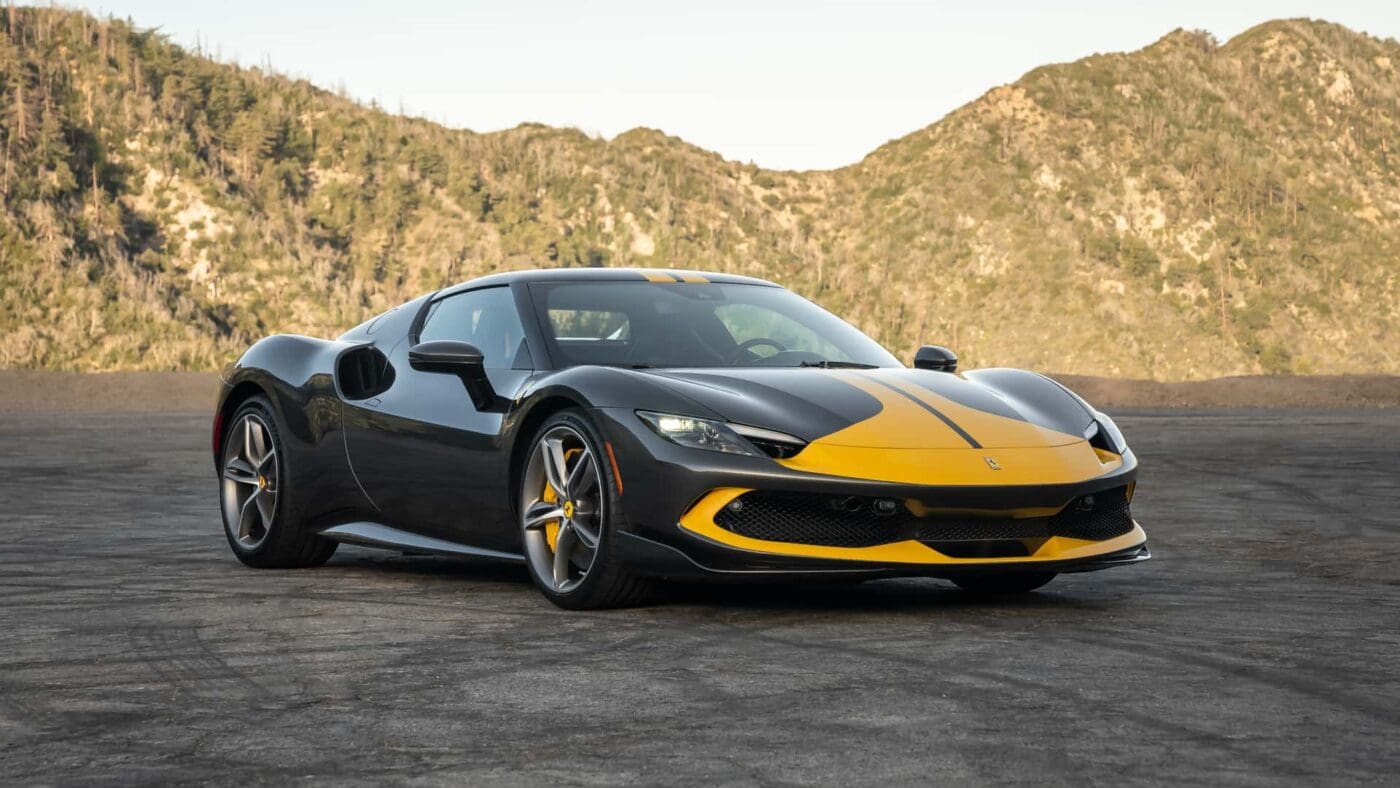
5. 2023 Ferrari 296 GTB Assetto Fiorano: Hybrid Braking Precision and Extreme Performance
The 2023 Ferrari 296 GTB Assetto Fiorano delivers exceptional braking performance, achieving a 60-0 mph stopping distance of just 88 feet. This capability is driven by advanced brake-by-wire technology, Ferrari’s ABS Evo controller, and a sophisticated six-way chassis dynamic sensor that precisely manages grip at each wheel.
Together, these systems allow the car to apply maximum braking force without wheel lockup, ensuring stable and consistent deceleration even in demanding conditions.
A key advantage of the 296 GTB is its seamless integration of regenerative and traditional friction braking. The hybrid system blends energy recovery from the electric motor with carbon-ceramic brakes, providing immediate response and strong fade resistance. Although the pedal feel can seem less tactile than traditional systems, the braking performance remains highly effective and predictable.
The Assetto Fiorano package enhances this capability with weight reduction and track-focused upgrades. By removing approximately 33 pounds through carbon-fiber components and lighter materials, the car reduces inertia, improving braking efficiency.
Multimatic dampers minimize pitch and dive under heavy deceleration, keeping the tire contact patches firmly planted. Active aerodynamics, including a rear spoiler inspired by the LaFerrari, generate significant downforce at speed, further increasing stability and grip.
Performance extends well beyond braking. The hybrid powertrain combines a twin-turbo V6 with an electric motor to produce a total of 818 hp, enabling a 0-60 mph time of 2.3 seconds and a 9.6-second quarter-mile at nearly 150 mph.
Despite being rear-wheel drive, it ranks among the quickest production cars ever tested. The car also excels in dynamic tests, achieving a 21.7-second figure-eight lap time and 1.15 g of lateral grip, demonstrating strong all-around capability.
While the 296 GTB is highly advanced, it is not without compromises. The brake-by-wire system can feel less intuitive, and regenerative braking behavior may vary in everyday driving. The infotainment interface and hybrid system calibration also present minor usability challenges. However, these drawbacks are secondary to its performance.
The Ferrari 296 GTB Assetto Fiorano showcases how hybrid technology, advanced electronics, and lightweight engineering can deliver elite braking and performance, making it one of the most capable modern supercars.
Also read: 5 Cars With Simple Interiors That Age Well vs 5 With Too Much Fragile Plastic
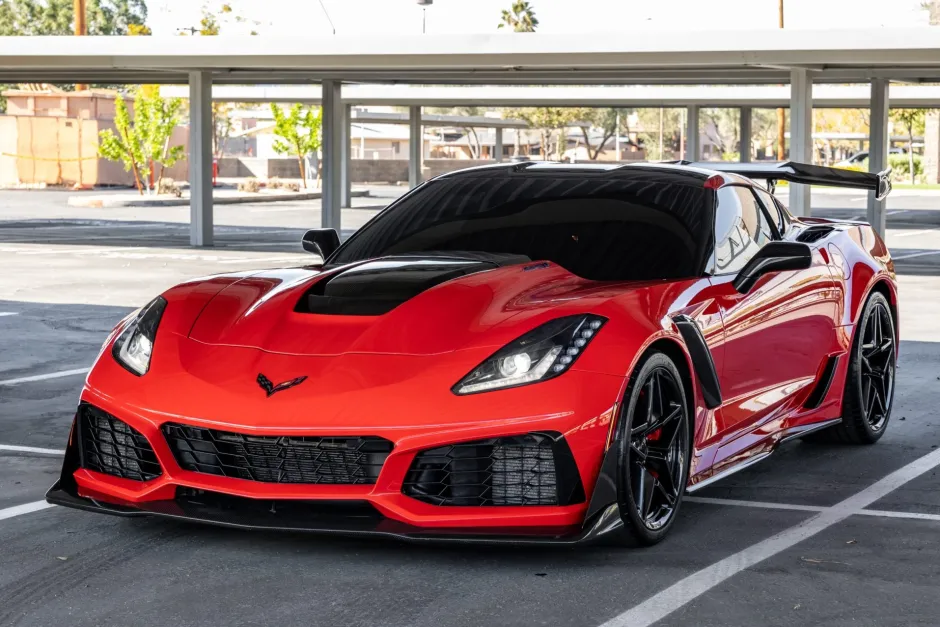
6. 2019 Chevrolet Corvette ZR1 ZTK: Aerodynamic Grip and Consistent Braking Power
The 2019 Chevrolet Corvette ZR1 equipped with the ZTK Performance Package delivers exceptional braking performance, achieving a 60-0 mph stopping distance of approximately 88 feet.
This places it among the best-braking production cars, thanks to a combination of advanced brake technology, extreme tire grip, and significant aerodynamic downforce. The ZTK package enhances the already potent ZR1 by focusing on track-ready components that improve both stopping capability and high-speed stability.
At the core of its braking performance are massive Brembo carbon-ceramic brakes, featuring large rotors and multi-piston calipers designed to resist fade under intense heat.
The ZTK setup includes 10-piston front and 6-piston rear calipers with specialized friction materials, ensuring consistent stopping power even after repeated high-speed braking. This allows the ZR1 to maintain short and reliable stopping distances in demanding conditions.
Tire grip is another critical factor. The ZTK package equips the car with Michelin Pilot Sport Cup 2 tires, which provide near-slick levels of traction. This high level of mechanical grip allows the braking system to operate at maximum efficiency before triggering ABS intervention.
Complementing this is Chevrolet’s Magnetic Ride Control and finely tuned ABS system, which keep the chassis stable and prevent excessive dive during hard braking.
Aerodynamics play a major role in the ZR1’s performance. The ZTK package adds a large adjustable rear wing, front splitter with endplates, and a flat underbody, generating substantial downforce.
At high speeds, this downforce increases the tire contact with the road, improving both braking and cornering stability. However, the added drag slightly reduces top speed, reflecting the car’s focus on track performance rather than outright speed.
Powered by a supercharged 6.2-liter V8 producing 755 hp and 715 lb-ft of torque, the ZR1 accelerates from 0-60 mph in around 3.0 seconds and completes the quarter-mile in about 10.8 seconds. While it can be challenging to fully exploit its power due to its aggressive nature, it excels on real racetracks where its braking and stability shine.
The Corvette ZR1 ZTK represents the peak of front-engine Corvette performance, combining powerful brakes, aerodynamic grip, and track-focused engineering into a formidable and highly capable machine.
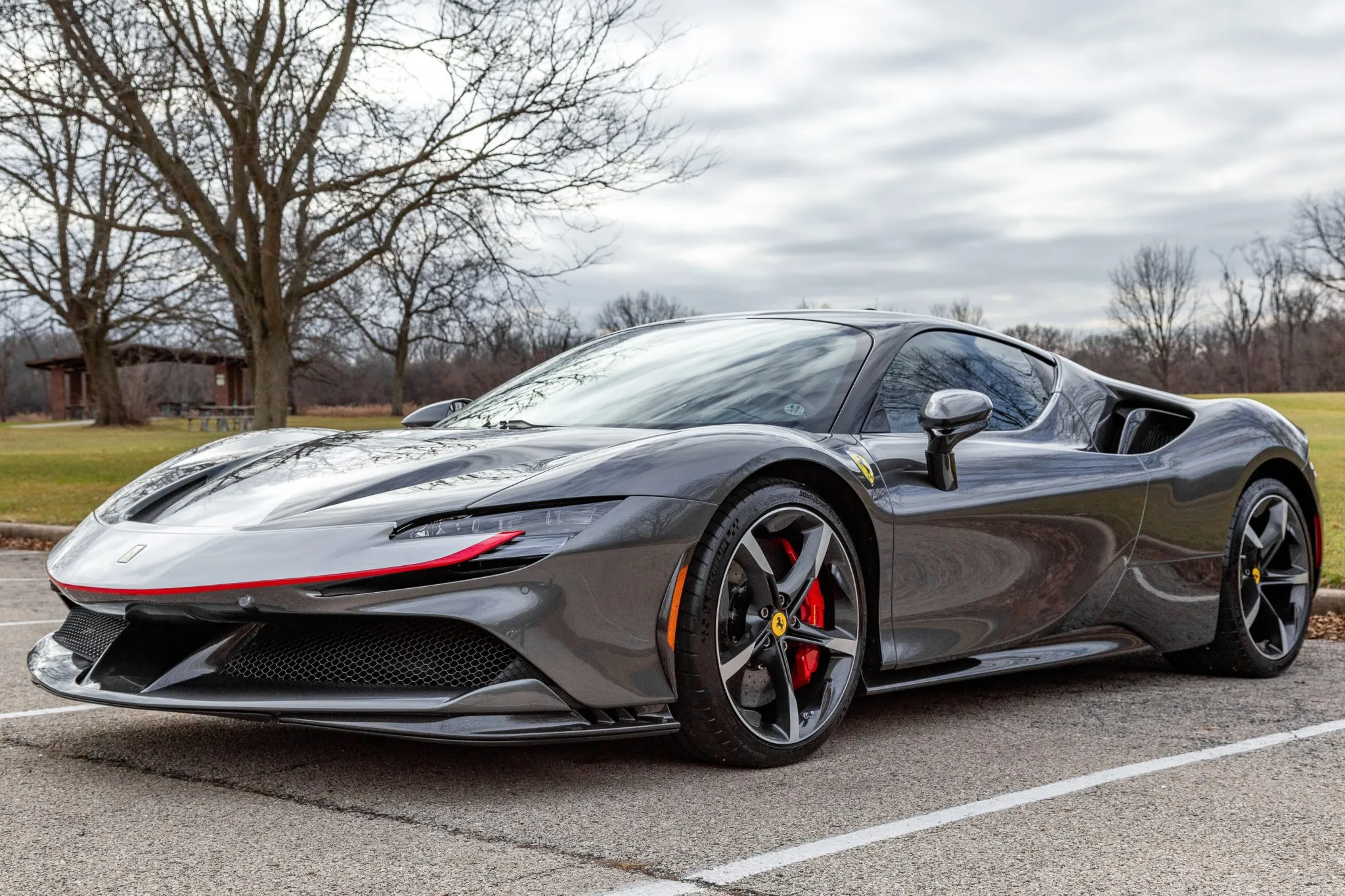
7. 2021 Ferrari SF90 Stradale Assetto Fiorano: Hybrid Power and Intelligent Braking
The 2021 Ferrari SF90 Stradale Assetto Fiorano stands as one of the most advanced braking performers among modern supercars, achieving a 60-0 mph stopping distance of 90 feet. Despite its relatively high weight due to a hybrid system with three electric motors and a battery pack, the car delivers exceptional deceleration through a sophisticated brake-by-wire system.
This setup electronically controls braking force, seamlessly blending regenerative braking from the electric motors with traditional carbon-ceramic brakes to maximize stopping efficiency and consistency.
A major contributor to its performance is Ferrari’s advanced electronic control system, which continuously calculates the optimal balance between regenerative and hydraulic braking.
This ensures maximum deceleration while maintaining stability and preventing wheel lock. Unlike earlier systems, the SF90’s brake pedal offers a natural and responsive feel, allowing drivers to modulate braking force with confidence even under extreme conditions.
The Assetto Fiorano package enhances braking capability through weight reduction and track-focused upgrades. Approximately 66 pounds are shed using carbon-fiber components and titanium springs, reducing inertia and improving responsiveness.
Fixed-rate Multimatic dampers help control pitch and minimize front-end dive during heavy braking, ensuring that all four tires remain firmly planted. High-performance Michelin Pilot Sport Cup 2 R tires provide exceptional grip, allowing the braking system to operate at peak effectiveness.
Aerodynamics also plays a critical role. The SF90 generates significant downforce through active and passive systems, including a rear “shut-off Gurney” spoiler and optimized airflow management. This downforce presses the car into the road at high speeds, increasing tire traction and stability during deceleration.
Beyond braking, the SF90 delivers extraordinary performance. Its hybrid powertrain produces 986 hp, enabling a 0-60 mph time of just 2.1 seconds and a quarter-mile run of 9.6 seconds. It remains one of the quickest production cars ever tested, combining immense power with advanced control systems that make it surprisingly accessible to drive at high speeds.
The SF90 Stradale Assetto Fiorano demonstrates how hybrid technology, advanced electronics, and aerodynamic engineering can work together to achieve elite braking and performance, making it one of the most technologically sophisticated and capable supercars available.
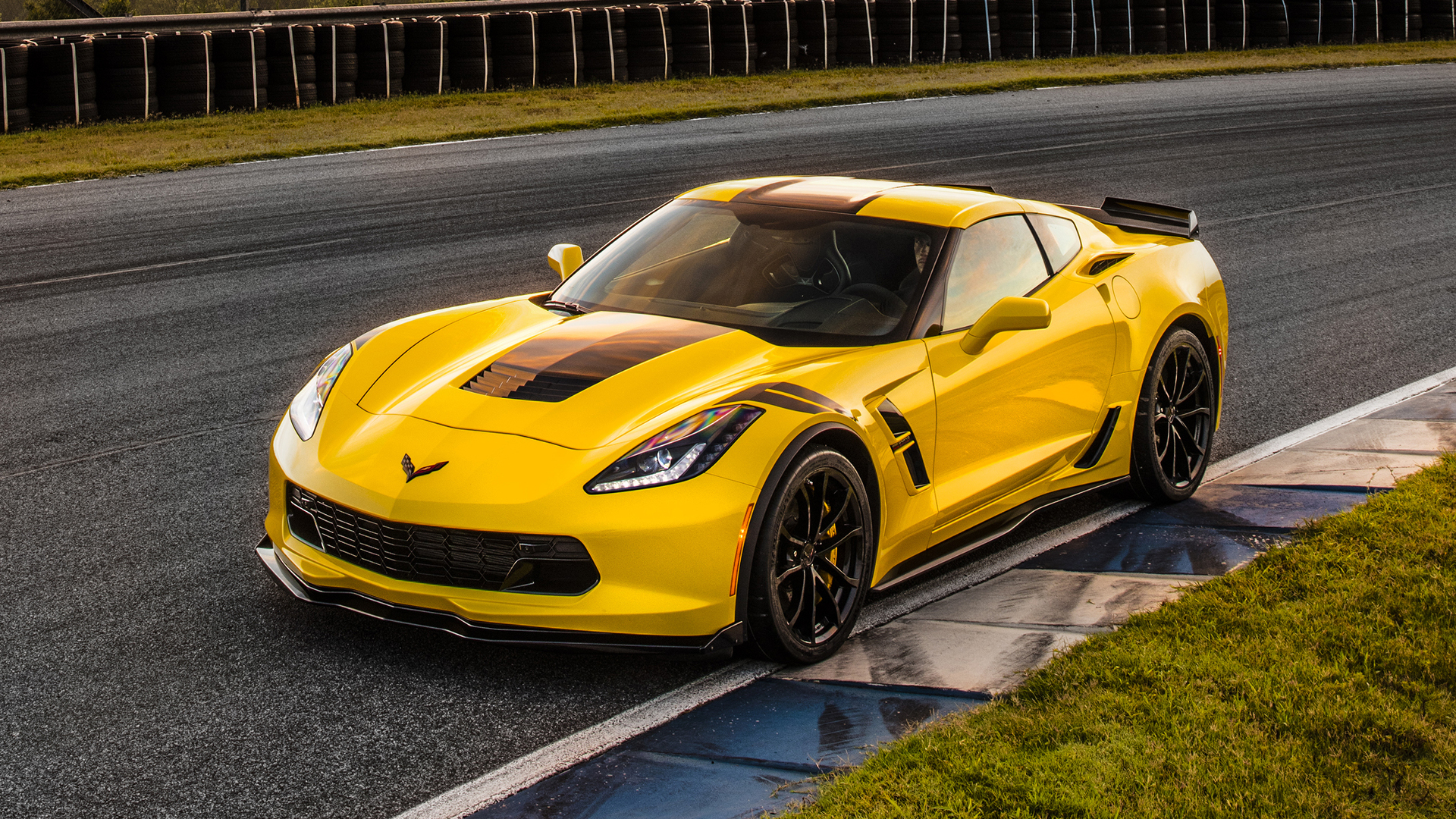
8. 2017 Chevrolet Corvette Grand Sport: Precision Balance and Strong Braking Capability
The 2017 Chevrolet Corvette Grand Sport is often considered the ideal balance within the Corvette lineup, combining the wide-body grip of the Z06 with the lighter, naturally aspirated setup of the Stingray.
This combination allows it to achieve an impressive 60-0 mph stopping distance of 90 feet, placing it among the best-braking production cars. Its performance comes from a careful blend of braking hardware, tire grip, and well-managed weight distribution rather than relying on extreme power alone.
A major contributor to its stopping capability is the optional Z07 Performance Package. This upgrade includes carbon-ceramic Brembo brakes with large rotors and high-performance calipers designed to handle intense heat without fading.
These brakes provide immense clamping force, enabling rapid deceleration even during repeated high-speed stops. The system is powerful enough to exceed tire grip limits if not for the precisely calibrated ABS, which ensures controlled and stable braking.
The Grand Sport also benefits from exceptional tire performance. It uses Michelin Pilot Sport Cup 2 tires, which offer high levels of traction and allow the braking system to operate at peak effectiveness.
Its wide-body design accommodates larger tires, creating a broader contact patch that improves both braking and cornering grip. Combined with a curb weight under 3,500 pounds, the car has less mass to slow down, which enhances braking efficiency and responsiveness.
Suspension technology further supports its performance. Magnetic Ride Control continuously adjusts damping to maintain stability under heavy braking. This system reduces excessive front-end dive and ensures consistent tire contact with the road, helping the car remain composed during sudden stops or aggressive driving situations.
In addition to braking, the Grand Sport delivers strong performance in acceleration and handling. Its 6.2-liter V8 produces 460 hp and 465 lb-ft of torque, enabling a 0-60 mph time between 3.6 and 3.9 seconds. It also achieves up to 1.18 g of lateral grip and a 22.3-second figure-eight lap time, demonstrating its capability as a well-rounded performance machine.
The Corvette Grand Sport stands out by offering high-level braking and handling without the added complexity or cost of more extreme variants. Its combination of proven hardware, excellent grip, and balanced engineering makes it a compelling choice for enthusiasts seeking track-capable performance in a more accessible package.
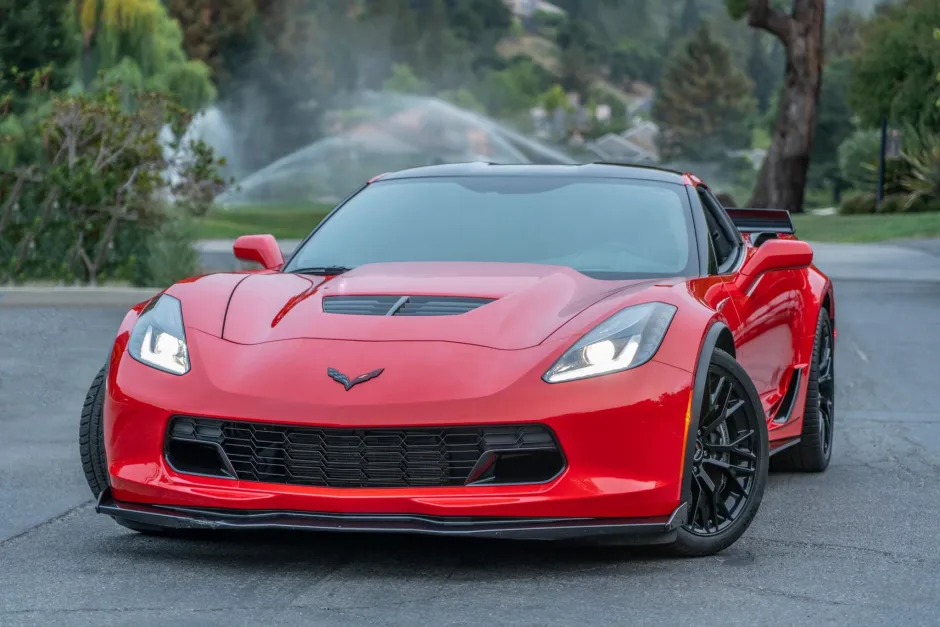
9. 2015 Chevrolet Corvette Z06 Z07: Precision Braking and Track-Focused Engineering
The 2015 Chevrolet Corvette Z06 equipped with the Z07 Performance Package delivers an exceptional 60–0 mph stopping distance of just 90 feet, placing it among the top-performing production cars in braking performance.
This capability is the result of a carefully engineered combination of high-performance braking components, track-focused tires, and advanced chassis control systems designed to maximize stability under extreme deceleration.
At the core of its braking performance are massive Brembo carbon-ceramic rotors, measuring 15.5 inches in the front and 15.3 inches in the rear. These brakes provide immense clamping force while resisting heat buildup and brake fade, even during repeated high-speed stops.
Paired with these are Michelin Pilot Sport Cup 2 tires, which offer near race-level grip. Their sticky compound allows the car to translate braking force directly into road contact, enabling rapid deceleration without overwhelming traction.
The Z06’s Magnetic Ride Control suspension plays a crucial role during hard braking. It reacts almost instantly by stiffening the front dampers, reducing forward weight transfer, and preventing excessive nose dive.
This keeps the chassis more balanced, ensuring all four tires maintain optimal contact with the road surface. As a result, both front and rear brakes contribute effectively to stopping power. The Performance Traction Management system further enhances stability by precisely controlling brake intervention and traction in demanding conditions.
Beyond braking, the Z06 remains a formidable performance car. Its 650-horsepower supercharged V-8 enables a 0–60 mph sprint in 3.2 seconds and a quarter-mile time of 11.2 seconds. Handling is equally strong, with lateral grip reaching 1.17 g and figure-eight lap times in the low 22-second range. The car feels balanced and predictable, allowing drivers to push confidently through corners with manageable oversteer.
The optional eight-speed automatic transmission adds convenience and delivers quick shifts, though it may not feel as sharp as some dual-clutch systems. On track, it performs consistently and supports the car’s high-speed capabilities.
While minor issues like heat buildup during extended track use and slight transmission delays exist, the Z06 Z07 stands out as a highly capable machine. Its braking performance highlights the effectiveness of integrating advanced components into a cohesive, track-ready system.
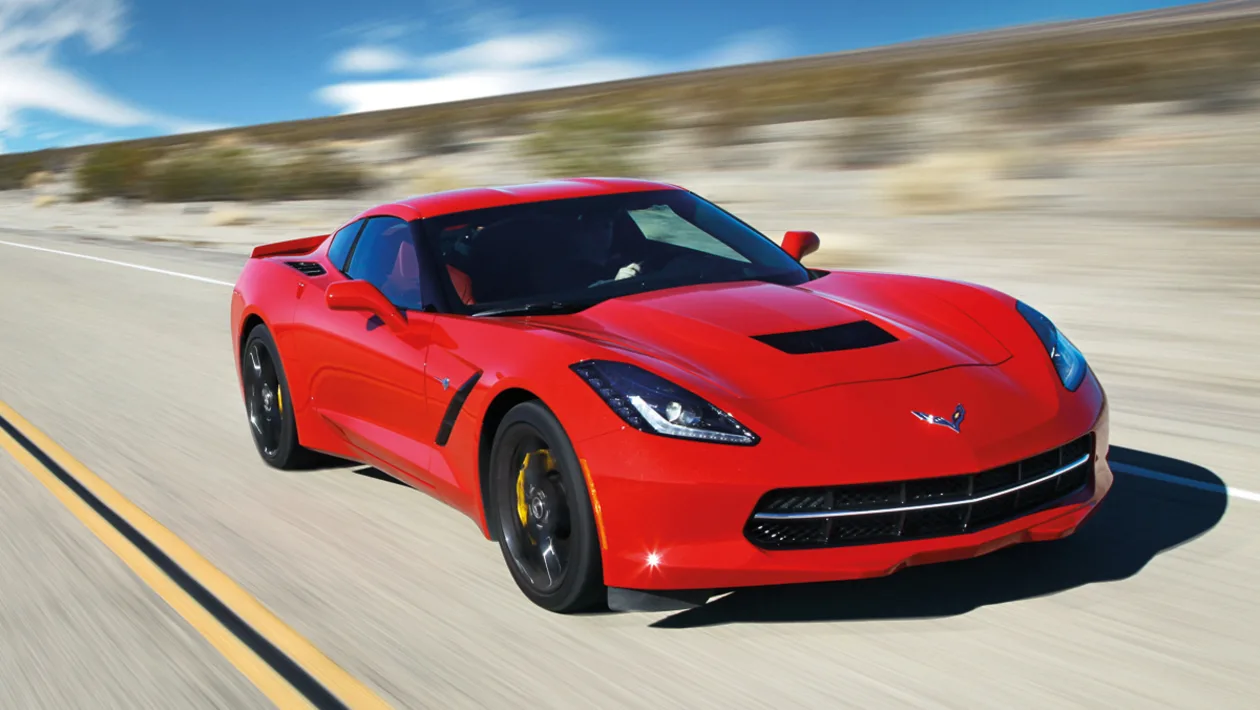
10. 2014 Chevrolet Corvette Stingray Z51: Precision Engineering Behind a 90-Foot Stop
The 2014 Chevrolet Corvette Stingray Z51 stands out as a high-performance sports car capable of achieving an impressive 60–0 mph stopping distance of around 90 feet under ideal conditions. Even as an earlier model in the C7 generation, it demonstrates how thoughtful engineering and balanced design can produce elite braking performance without relying on extreme track-only components.
The Z51 Performance Package transforms the standard Stingray into a more track-focused machine by enhancing braking hardware, chassis dynamics, and tire capability.
A major contributor to this stopping power is the upgraded braking system included in the Z51 package. Larger slotted rotors, measuring 13.6 inches in the front and 13.3 inches in the rear, increase the surface area available for braking. This allows for a stronger and more consistent stopping force.
The addition of Brembo four-piston calipers provides firm, predictable brake feel and improved clamping strength. Cooling is also addressed through functional brake ducts that channel air directly to the braking components, reducing heat buildup and minimizing brake fade during repeated hard stops.
Equally important are the specially developed Michelin Pilot Super Sport run-flat tires. These tires were engineered specifically for the C7 platform and deliver exceptional grip despite not being full racing compounds. Their ability to maintain strong traction under heavy braking enables the car to translate braking force efficiently to the road surface, which is essential for short stopping distances.
The Stingray Z51 also benefits from advanced chassis and electronic systems. Its rigid aluminum frame ensures that suspension components operate effectively under stress, maintaining optimal tire contact with the road.
The electronic limited-slip differential works in tandem with the stability control system to balance the car during aggressive deceleration. Optional Magnetic Ride Control further enhances stability by adjusting damping in real time, helping manage weight transfer and reducing front-end dive.
Aerodynamics also plays a subtle but important role. The Z51 package includes a functional aero setup that increases downforce at speed, keeping the car planted and stable during braking.
Together, these elements create a cohesive system where braking performance is not defined by a single component but by the integration of hardware, software, and design.
The vehicles featured here illustrate that elite braking is a result of precision engineering and the integration of multiple systems. Exceptional stopping power requires not just big brakes, but a combination of tire grip, chassis balance, electronic controls, and aerodynamic stability.
From the record-breaking Mustang Dark Horse to Porsche, Ferrari, and Corvette models, each car demonstrates how technology and design create superior deceleration performance.
These innovations allow drivers to respond confidently in emergencies while maintaining control and stability. Ultimately, these vehicles show that high-performance cars can combine speed, power, and safety, delivering an experience that is both thrilling and secure in extreme driving conditions.
Also read: Top 10 Cars with Most Iconic Headlight Covers and Bezels From the 1960s
