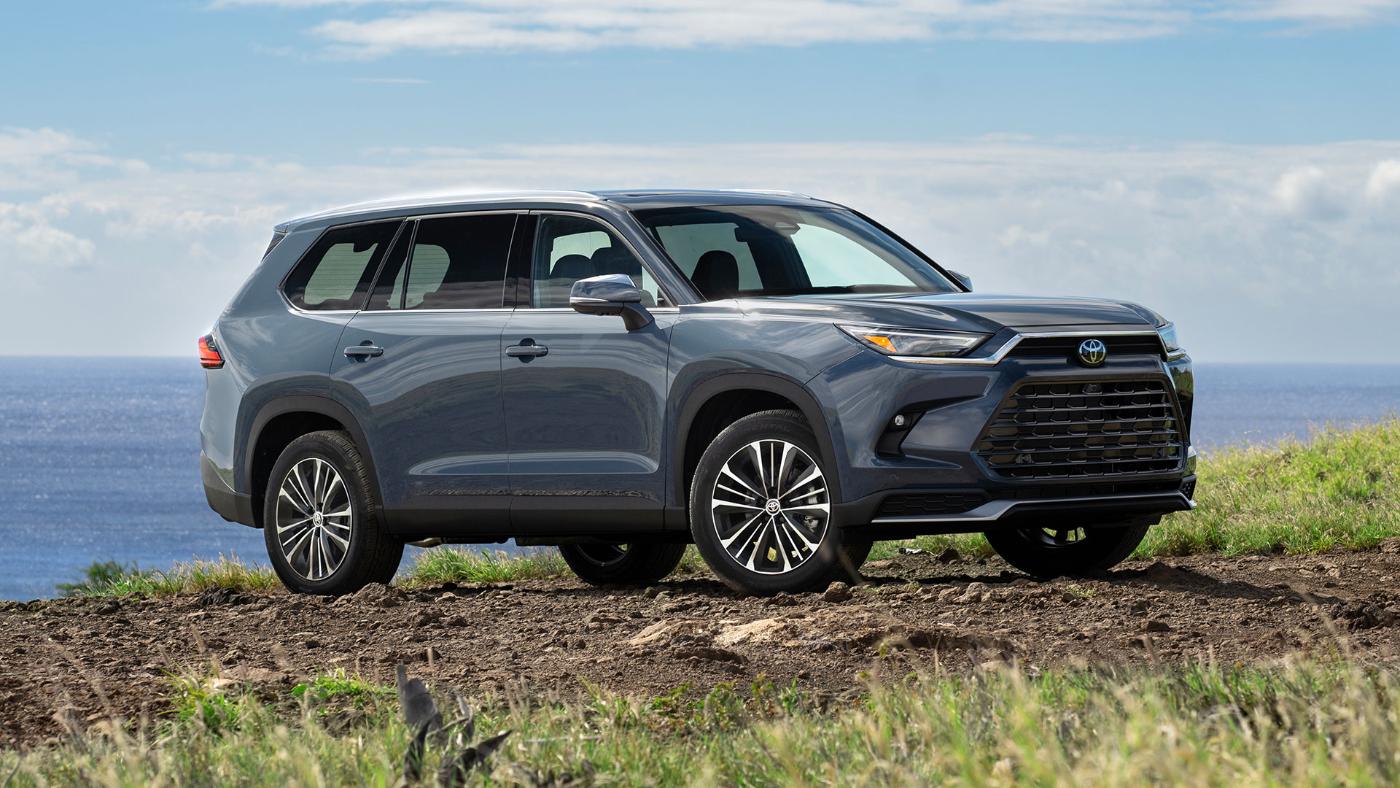
Toyota is accelerating its U.S. electrification strategy with a fresh $1 billion investment split between Kentucky and Indiana, signaling plans for a second domestically built electric vehicle beyond the upcoming three-row Highlander EV. The move is part of a broader $10 billion commitment to American manufacturing over the next five years, underscoring Toyota’s shift toward expanding its battery-electric lineup in the region.
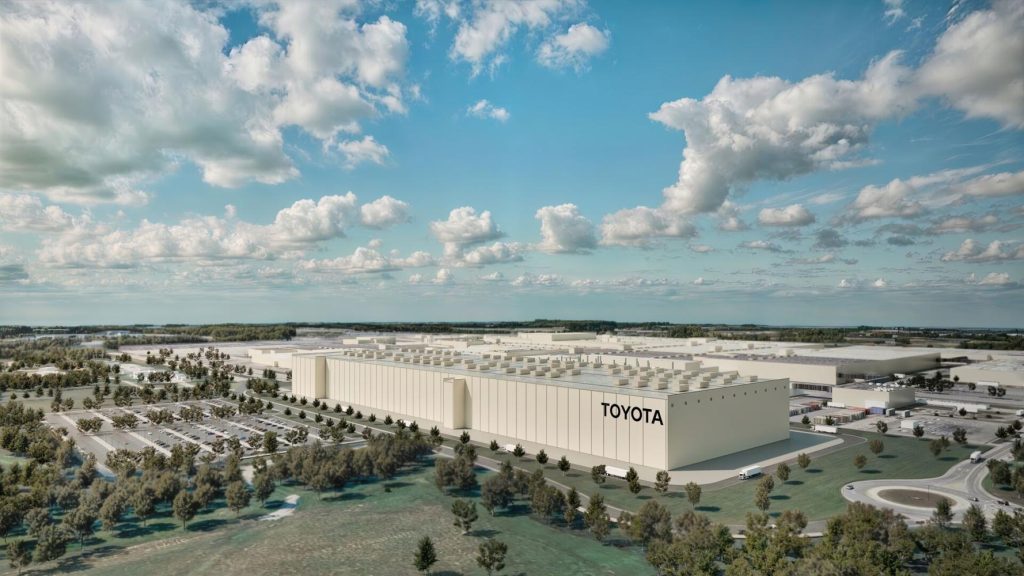
Of the newly announced funding, $800 million will be directed toward Toyota’s Kentucky facility, where the company is preparing production lines for its next battery electric vehicle.
The remaining $200 million will support operations in Indiana, specifically to boost output of the Grand Highlander, one of Toyota’s strongest-selling SUVs. Production of the Grand Highlander will be consolidated across the plant, joining the Sienna minivan on the east side, while continuing alongside the Lexus TX on the west side.
Toyota confirmed that the Kentucky investment will “further Toyota’s multi-pathway approach to electrification by preparing the plant for its second battery electric vehicle,” while also increasing production capacity for high-volume models like the RAV4 and Camry. However, the automaker stopped short of revealing details about the new EV.
The first U.S.-built EV from Toyota’s Kentucky plant will be the three-row Highlander battery-electric model, expected to arrive later this year as a 2027 model. Beyond that, speculation remains open regarding the identity of the second EV.
A prior report from Nikkei suggested Toyota could be planning two new electric SUVs to replace the outgoing Lexus ES at the facility. While Toyota declined to confirm those claims, it acknowledged that production strategies are continually under review.
Industry sources cited in the report indicated that the upcoming EVs could draw inspiration from established nameplates such as the RAV4 and Land Cruiser. An electric RAV4 would slot naturally into Toyota’s growing EV portfolio, bridging the gap between compact and midsize offerings.
Meanwhile, an electrified Land Cruiser, potentially influenced by the Land Cruiser Se concept, could position Toyota in the premium off-road EV segment, competing with vehicles like the Ford Bronco, Jeep Wrangler, and Land Rover Defender.
Another possibility is that Toyota may use the Kentucky plant to build Subaru’s upcoming three-row electric SUV, given the companies’ ongoing partnership. However, such a move would complicate Toyota’s messaging around its “second EV” announcement.
Toyota’s renewed EV push contrasts with several competitors, including Ford, GM, and Stellantis, which have recently moderated their electric vehicle plans in the U.S. market.
In 2026 alone, Toyota has already launched multiple electric SUVs, including the bZ4X, C-HR EV, and bZ Woodland, with the Grand Highlander EV set to join soon. Together, these models cover a broad spectrum of SUV segments, from compact crossovers to full-size family vehicles.
As Toyota continues to expand its EV footprint, the addition of a second U.S.-built electric model will be a key milestone. Whether it takes the form of a RAV4 EV, a Land Cruiser EV, or an entirely new product, the investment signals a more aggressive approach to electrification from a company that has historically favored a diversified, multi-pathway strategy.