
Automotive design has always balanced creativity with practicality, but nowhere is that tension more visible than in door mechanisms.
While conventional front-hinged doors became the industry standard for reasons of safety, cost, and ease of use, several manufacturers experimented with alternative designs, often to solve packaging challenges or to make a bold stylistic statement.
During the mid-20th century, particularly from the 1950s through the 1970s, automakers briefly explored unconventional door systems that pushed the boundaries of what a production car could look and feel like.
Some were rooted in engineering logic, others in show-car theatrics, but most shared one outcome: they never became mainstream. High production costs, regulatory concerns, and real-world usability issues ultimately limited their adoption.
The following eight door mechanisms represent some of the most inventive, and short-lived, solutions ever fitted to vintage cars. Each offers insight into an era when experimentation was not only tolerated but encouraged.
1. Suicide Doors (Rear-Hinged Doors)
Suicide doors, more formally known as rear-hinged doors, represent one of the most distinctive and controversial door mechanisms in automotive history.
Widely used from the 1920s through the early 1960s, particularly on American luxury sedans, they reached their most recognizable form on vehicles like the Lincoln Continental.
During this period, automakers were focused on maximizing passenger accessibility and interior openness, and rear-hinged doors provided a functional solution that conventional front-hinged designs could not match.
From an engineering standpoint, these vehicles typically followed a traditional body-on-frame layout with front-engine, rear-wheel-drive configurations.
Large displacement V8 engines, often paired with automatic transmissions, powered these cars, emphasizing smooth, effortless cruising rather than performance.
The door mechanism itself was relatively simple in concept but required reinforced hinges mounted at the rear edge of the door and a robust latching system at the front.
This configuration allowed the door to swing open in the opposite direction of travel, creating a wide, unobstructed entry space, particularly beneficial for rear-seat passengers.
Design-wise, suicide doors contributed to a sense of ceremony and luxury. When both front and rear doors were opened together, often referred to as a “center-opening” layout, the absence of a fixed B-pillar on some models created a pillarless hardtop effect.
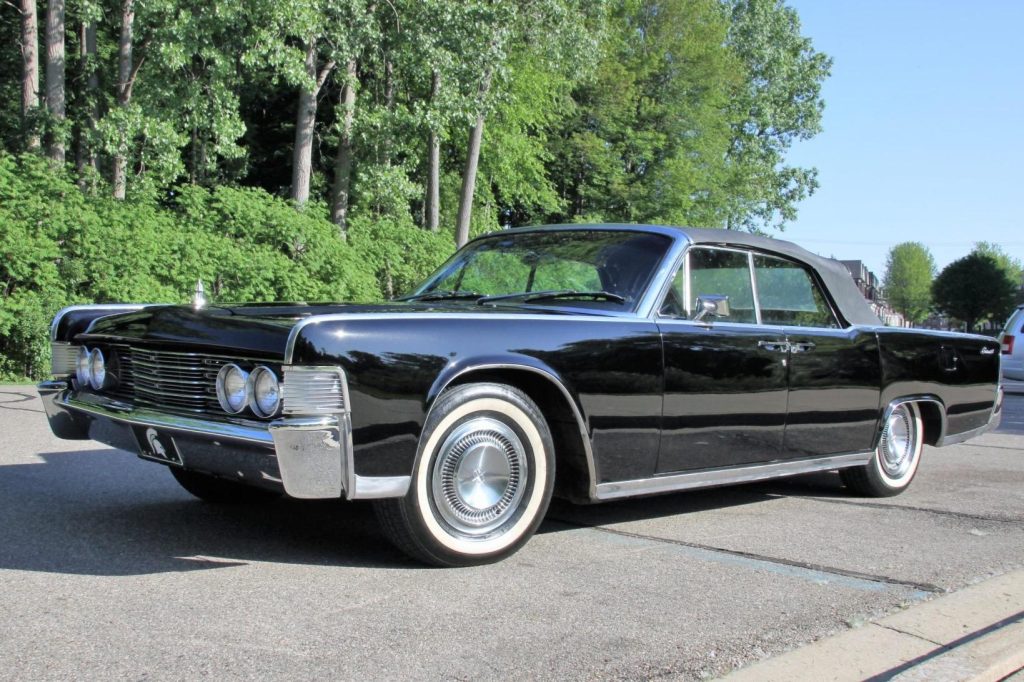
This not only improved ingress and egress but also enhanced the visual drama of the vehicle, aligning with the premium positioning of brands that adopted the design. The layout was especially advantageous for formal sedans and chauffeur-driven cars, where ease of rear-seat access was a priority.
Despite these benefits, the mechanism carried inherent risks that ultimately led to its decline. Because the doors opened against the direction of airflow, a latch failure at speed could result in the door being forced open violently rather than pushed closed.
This safety concern, combined with evolving automotive regulations and increasing highway speeds, made rear-hinged doors less viable for mainstream production by the late 1960s.
Historically, suicide doors occupy a unique position as both a practical innovation and a design statement.
They reflect an era when automotive engineering was less constrained by standardized safety requirements and more open to experimentation in form and function. Their disappearance from the mainstream underscores the industry’s shift toward safety, cost efficiency, and structural rigidity.
As part of this list, suicide doors exemplify a mechanism that was once relatively common but ultimately abandoned due to real-world limitations. Their combination of elegance, usability, and inherent risk makes them a defining example of why certain automotive innovations, despite their appeal, never achieved lasting mainstream adoption.
2. Gullwing Doors
Gullwing doors remain one of the most iconic and technically distinctive door mechanisms ever applied to a production automobile, most famously associated with the Mercedes-Benz 300SL of the mid-1950s.
Introduced in 1954, the 300SL emerged from Mercedes-Benz’s postwar racing program, and its unconventional door design was not merely a stylistic flourish but a direct response to engineering constraints.
The car’s lightweight tubular spaceframe chassis featured unusually high side sills for structural rigidity, making conventional side-hinged doors impractical. The solution was to hinge the doors at the roofline, allowing them to open upward in a wing-like motion.
Rhe 300SL was advanced for its time, powered by a fuel-injected inline-six engine mounted at a steep angle to lower the hood profile. Paired with a rear-wheel-drive layout and a four-speed manual transmission, the car was designed for high-speed touring and competition-derived performance.
The gullwing door system itself relied on robust roof-mounted hinges and counterbalance mechanisms to manage the weight of the doors, which were relatively lightweight but required precise engineering to operate smoothly and securely.
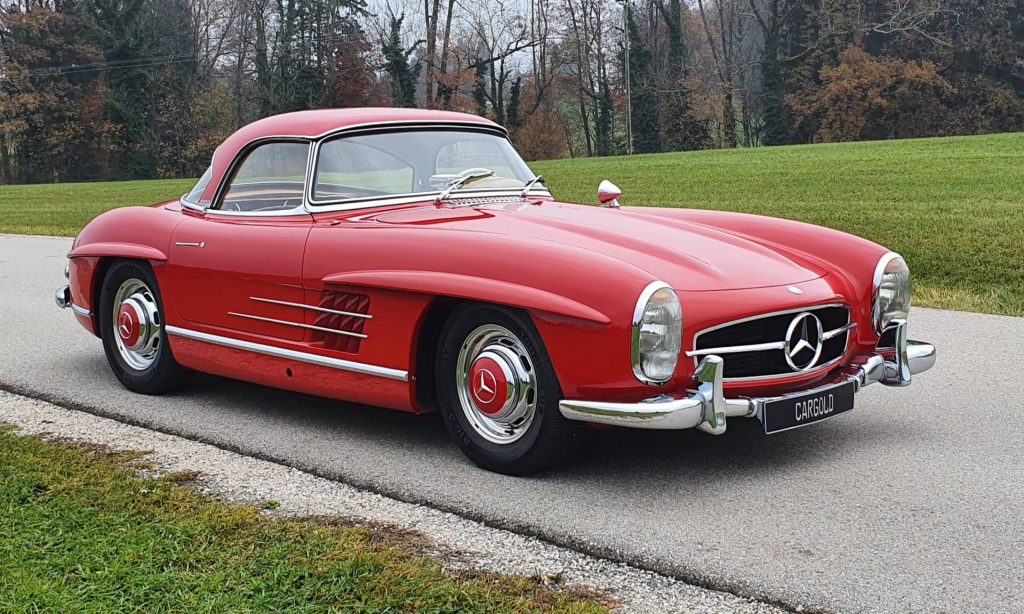
From a design perspective, gullwing doors created a dramatic visual identity that set the 300SL apart from its contemporaries.
When opened, the doors transformed the car into a sculptural object, reinforcing its connection to aviation and motorsport.
The design also had practical implications, allowing access over the high sills that defined the chassis.
However, usability was compromised in certain scenarios. Entry and exit required a specific technique, particularly due to the fixed steering wheel and elevated sill height, and operating the doors in tight spaces or low-clearance environments could be challenging.
Safety and practicality ultimately limited the broader adoption of gullwing doors. In rollover situations, conventional egress could be obstructed, and while later adaptations included removable steering wheels or emergency release mechanisms, these solutions added complexity.
Additionally, the cost and engineering precision required to implement such a system made it impractical for mass-market vehicles.
Historically, gullwing doors represent a convergence of necessity and innovation, born from racing-derived engineering rather than purely aesthetic ambition. Their rarity and association with a single, highly influential model cement their status as a symbol of mid-century automotive ingenuity.
Within the context of this list, they exemplify a door mechanism that achieved iconic status yet remained confined to niche applications, never transitioning into widespread mainstream use despite their enduring appeal.
3. Sliding Doors (Pre-Minivan Era)
Sliding doors are commonly associated with modern minivans, but their origins in passenger cars trace back to far more experimental applications in the early 1950s. One of the most notable examples is the Kaiser Darrin, a fiberglass-bodied roadster that employed a unique pocket-style sliding door system.
Unlike conventional doors that swing outward, the Darrin’s doors slid forward into the front fenders, disappearing almost entirely within the bodywork. This design was not simply stylistic, it was a packaging solution intended to address space constraints and enhance the car’s clean, uninterrupted profile.
From an engineering standpoint, the Kaiser Darrin followed a relatively conventional mechanical layout for its time, featuring a front-engine, rear-wheel-drive configuration powered by an inline-six engine paired with a manual transmission. The innovation was concentrated in the body and access system.
The sliding doors operated on a track-and-roller mechanism, requiring precise alignment and structural reinforcement within the fenders to accommodate the door cavities. This added complexity to both manufacturing and long-term maintenance, as the system was sensitive to wear, debris, and misalignment.
Design-wise, the absence of outward-swinging doors allowed for a lower, sleeker silhouette, aligning with the Darrin’s sports car aspirations. It also offered a practical advantage in tight parking environments, where traditional doors might be difficult to open fully. However, this benefit came with trade-offs.
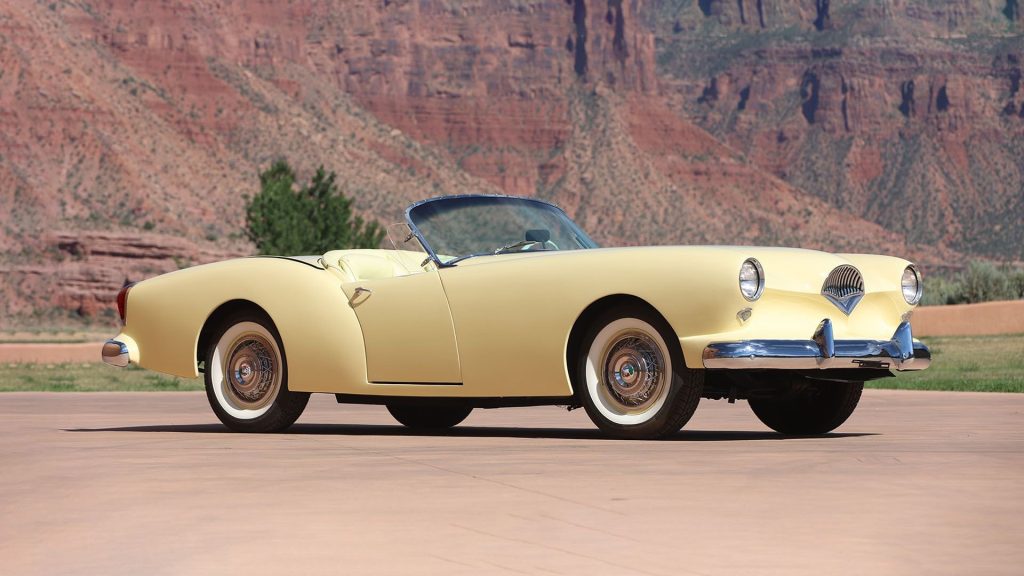
The mechanism was relatively heavy for its size, and the limited space within the fender restricted door thickness, which in turn affected structural rigidity and sealing. Weatherproofing was a persistent challenge, as ensuring a tight seal along a sliding interface proved more difficult than with hinged doors.
The historical significance of pre-minivan sliding doors lies in their experimental nature. They represent a period when automakers were willing to explore unconventional solutions to design and usability challenges, often without the benefit of modern materials or precision manufacturing techniques.
While the concept would later find success in commercial and family-oriented vehicles, early implementations like the Kaiser Darrin highlighted the limitations of the technology in a passenger car context.
Ultimately, sliding doors from this era fit squarely within the theme of mechanisms that never went mainstream because they introduced more complexity than benefit.
Despite their ingenuity and visual distinctiveness, issues related to durability, sealing, and cost prevented widespread adoption. Their legacy persists not in direct lineage, but as an early exploration of an idea that would only become viable decades later under very different engineering conditions.
4. Canopy Doors (Bubble Tops)
Canopy doors, often referred to as “bubble tops,” represent one of the most unconventional approaches to vehicle entry ever attempted in production automobiles.
Inspired directly by aircraft cockpit design, this mechanism replaces traditional side doors with a single-piece canopy that lifts upward, typically hinging from the front or side.
One of the most recognizable applications of this concept appeared on the Messerschmitt KR200 in the 1950s, a vehicle born out of postwar constraints and aviation engineering heritage.
Developed in Germany during a period of economic recovery, the KR200 was designed as an ultra-lightweight, highly efficient mode of transportation.
Its engineering reflected this purpose: a rear-mounted single-cylinder two-stroke engine driving the rear wheel, minimalistic chassis construction, and tandem seating to reduce width and drag.
The canopy door was not merely stylistic, it was integral to the vehicle’s compact packaging. By eliminating conventional side doors, designers were able to maintain structural simplicity while maximizing interior space within an extremely narrow footprint.
The canopy itself was typically constructed from lightweight acrylic or plexiglass, providing a panoramic field of vision that reinforced its aircraft-inspired aesthetic.
When opened, the entire upper section of the cabin lifted away, allowing occupants to step into the vehicle rather than slide in laterally. This design created a dramatic visual effect and aligned with the futuristic optimism of the era, where automotive and aviation design frequently overlapped.
However, the same characteristics that made canopy doors visually striking also introduced significant practical limitations. Entry and exit could be cumbersome, particularly in confined spaces where the canopy required vertical clearance.
Weather protection was another concern, as sealing a large, single-piece opening against rain and wind proved challenging with the materials and manufacturing tolerances of the time. Additionally, in the event of a rollover or accident, the lack of alternative exit points raised safety concerns.
From a broader historical perspective, canopy doors illustrate how early automotive designers experimented with radical solutions to packaging and efficiency challenges.
While effective in niche applications like microcars, the concept did not scale to larger, more conventional vehicles due to its inherent compromises in usability, safety, and structural integrity.
Within the context of this list, canopy doors exemplify a mechanism that prioritized innovation and visual impact over practicality. Despite their futuristic appeal and clear conceptual logic, they remained confined to limited-production vehicles and experimental designs, never achieving mainstream adoption in the automotive industry.
5. Scissor Doors (Early Concepts)
Scissor doors, now closely associated with modern supercars, originated in experimental form during the late 1960s and early 1970s, most notably on concept vehicles like the Alfa Romeo Carabo.
Designed by Marcello Gandini at Bertone, the Carabo was a radical departure from conventional automotive design, introducing not only a wedge-shaped body but also a vertically opening door system hinged near the base of the A-pillar.
This mechanism allowed the doors to pivot upward in a controlled arc, creating a dramatic, space-efficient entry method that would later influence high-performance car design.
From an engineering standpoint, the Carabo was built on the chassis of the Alfa Romeo 33 Stradale, featuring a mid-mounted V8 engine and a rear-wheel-drive layout.

This configuration emphasized performance and low center of gravity, but it also introduced packaging challenges. The low roofline and wide sills made traditional doors less practical, particularly in tight spaces. Scissor doors addressed this by requiring minimal lateral clearance, making them functionally advantageous in addition to visually striking.
The door mechanism itself relied on a reinforced hinge system capable of supporting the door’s weight while maintaining precise alignment during movement.
Early implementations required careful balancing and structural reinforcement to ensure stability, as materials and manufacturing techniques of the era were not yet optimized for such complex motion.
Gas struts or spring-assisted mechanisms were often incorporated to aid lifting, though these systems added further complexity.
Visually, scissor doors became a defining feature of the Carabo’s futuristic identity. When opened, they transformed the vehicle into a dynamic, sculptural form, reinforcing the concept car’s role as a showcase of forward-thinking design.
The vertical motion also aligned with the era’s fascination with aerospace-inspired aesthetics, positioning the car as a symbol of technological progress.
Despite their advantages, scissor doors did not transition into mainstream production during this period.
The complexity of the hinge mechanism, combined with higher manufacturing costs and concerns about durability, made them impractical for mass-market vehicles. Additionally, early designs raised questions about usability and safety, particularly in scenarios where door operation might be restricted or obstructed.
Historically, scissor doors represent a convergence of design ambition and engineering experimentation. While they would later be refined and adopted in limited-production supercars, their early concept applications highlight the challenges of translating bold ideas into practical solutions.
Within the context of this list, they exemplify a mechanism that captured attention and influenced future design language but remained outside the mainstream due to cost, complexity, and limited real-world practicality.
6. Dihedral Doors
Dihedral doors, often referred to as butterfly doors, represent a more complex evolution of upward-opening door mechanisms, combining elements of both gullwing and scissor designs.
Emerging primarily in late-1960s and 1970s concept cars, these doors pivot outward and upward along a multi-axis hinge, creating a sweeping motion that enhances both visual drama and accessibility.
Early explorations of this concept appeared in advanced design studies from Italian coachbuilders, particularly in prototypes associated with marques like Lancia Stratos Zero, where radical packaging and styling demanded unconventional entry solutions.
From an engineering perspective, vehicles featuring dihedral doors were typically mid-engine, rear-wheel-drive layouts, emphasizing low profiles and aerodynamic efficiency.
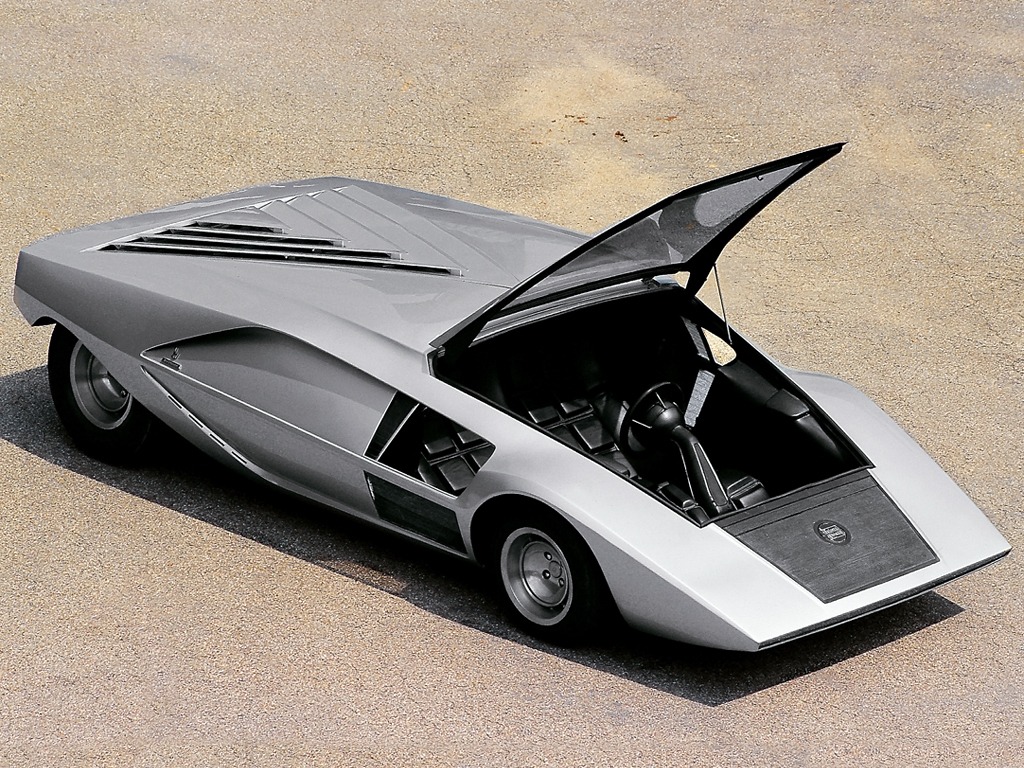
The Stratos Zero, for instance, was built around a compact chassis with a mid-mounted V4 engine, allowing for an extremely low roofline that rendered traditional door mechanisms impractical. Dihedral doors addressed this constraint by enabling entry without requiring large side openings, preserving structural rigidity while accommodating the car’s extreme proportions.
The mechanism itself is considerably more complex than standard hinged doors. It requires a precisely engineered hinge assembly capable of guiding the door through a combined outward and upward trajectory.
This motion reduces the lateral space needed to open the door while also improving clearance over high sills. However, achieving this balance demands tight tolerances and durable components, particularly given the stresses placed on the hinge during operation.
Design-wise, dihedral doors contribute significantly to a vehicle’s visual identity. When opened, they create a dynamic, wing-like effect that emphasizes the car’s futuristic intent.
This was particularly important in concept vehicles, where visual impact and innovation were prioritized over practicality. The doors also offered a partial solution to the ingress challenges posed by low, wedge-shaped bodies, allowing occupants to step over wide sills more easily than with conventional designs.
Despite their advantages, dihedral doors never achieved mainstream adoption. The complexity of the mechanism increased production costs and introduced potential reliability concerns, particularly with the materials and manufacturing techniques available at the time. Additionally, sealing, alignment, and long-term durability presented ongoing challenges, making the system less suitable for mass-market vehicles.
Historically, dihedral doors illustrate a period of intense experimentation in automotive design, where engineers and designers pushed boundaries to explore new forms and functions.
Within the context of this list, they exemplify a mechanism that successfully addressed specific design challenges while simultaneously introducing new complications. Their limited production use underscores why, despite their visual appeal and technical ingenuity, they remained confined to concept cars and niche applications rather than becoming a mainstream solution.
7. Front-Hinged Clamshell Entry (Full Front Opening)
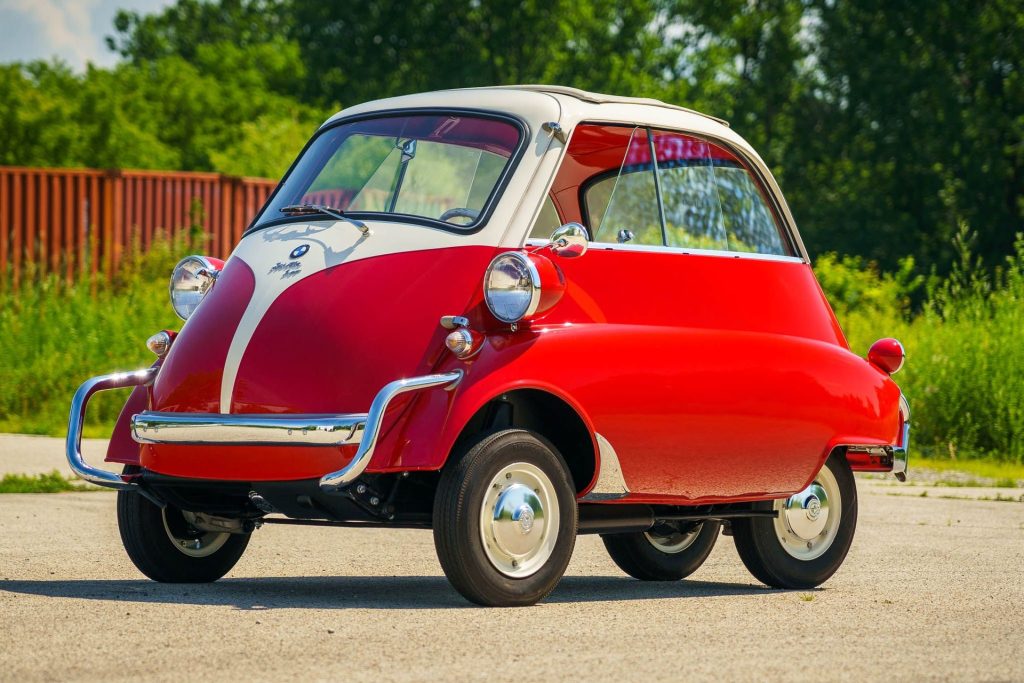
Front-hinged clamshell entry systems represent one of the most unconventional approaches to vehicle access ever put into production, most notably seen in microcars like the BMW Isetta.
Developed in postwar Europe during a period defined by material shortages and urban congestion, the Isetta was engineered as an ultra-compact, highly efficient vehicle. Its defining feature, a single front-opening door that incorporated much of the car’s frontal structure, was not merely a design novelty but a direct response to extreme packaging constraints.
From an engineering standpoint, the Isetta employed a rear-mounted single-cylinder engine driving the rear wheels, allowing the front of the vehicle to remain free of drivetrain components. This layout made it possible to hinge the entire front fascia outward as a single unit.
The steering column was mounted to the door itself via a flexible joint, so when the door opened, the steering wheel moved with it, creating a clear and unobstructed entry path. This configuration maximized interior accessibility within a vehicle that was barely wider than a motorcycle.
The clamshell mechanism required a robust hinge system at the side or front edge of the body, along with precise sealing to maintain structural integrity and weather protection.
Given the simplicity of the vehicle’s construction, the system was relatively straightforward, but it demanded careful alignment to ensure smooth operation. The absence of conventional side doors also contributed to the car’s structural rigidity, an important consideration given its compact dimensions.
Visually and functionally, the design was highly distinctive. Opening the entire front of the car created a theatrical, almost appliance-like interaction that set it apart from traditional automobiles.
It also allowed occupants to step directly into the cabin rather than slide in from the side, which was particularly useful in tight urban environments where lateral space was limited.
Despite these advantages, the concept carried inherent limitations that prevented broader adoption. The most significant concern was safety.
In the event of a frontal collision, the primary entry point was also the primary impact zone, raising obvious risks. Additionally, the unconventional entry method required users to adapt to a non-intuitive access pattern, which could be inconvenient in everyday use.
8. Double-Hinged or Articulated Doors
Some vintage concept cars experimented with double-hinged or articulated door systems, allowing doors to move in multiple directions. These mechanisms were often designed to improve access in confined spaces or to create a dramatic visual effect.
While innovative, they were mechanically complex and difficult to manufacture reliably. Maintenance concerns and production costs made them unsuitable for mass-market vehicles.
As a result, these designs remained largely experimental, serving more as demonstrations of engineering capability than practical solutions.
The history of automotive design is filled with ideas that challenged convention but failed to achieve widespread adoption. Unique door mechanisms are a clear example of this pattern.
While each of these designs offered distinct advantages, whether in accessibility, aesthetics, or packaging, they also introduced trade-offs that limited their practicality.
Standard front-hinged doors ultimately prevailed because they provided the best balance of safety, cost, and usability. However, the experimental designs of the vintage era continue to influence modern automotive engineering, particularly in niche and high-performance segments.
These unconventional doors serve as reminders of a period when automakers were willing to explore bold ideas, even if they never became mainstream.