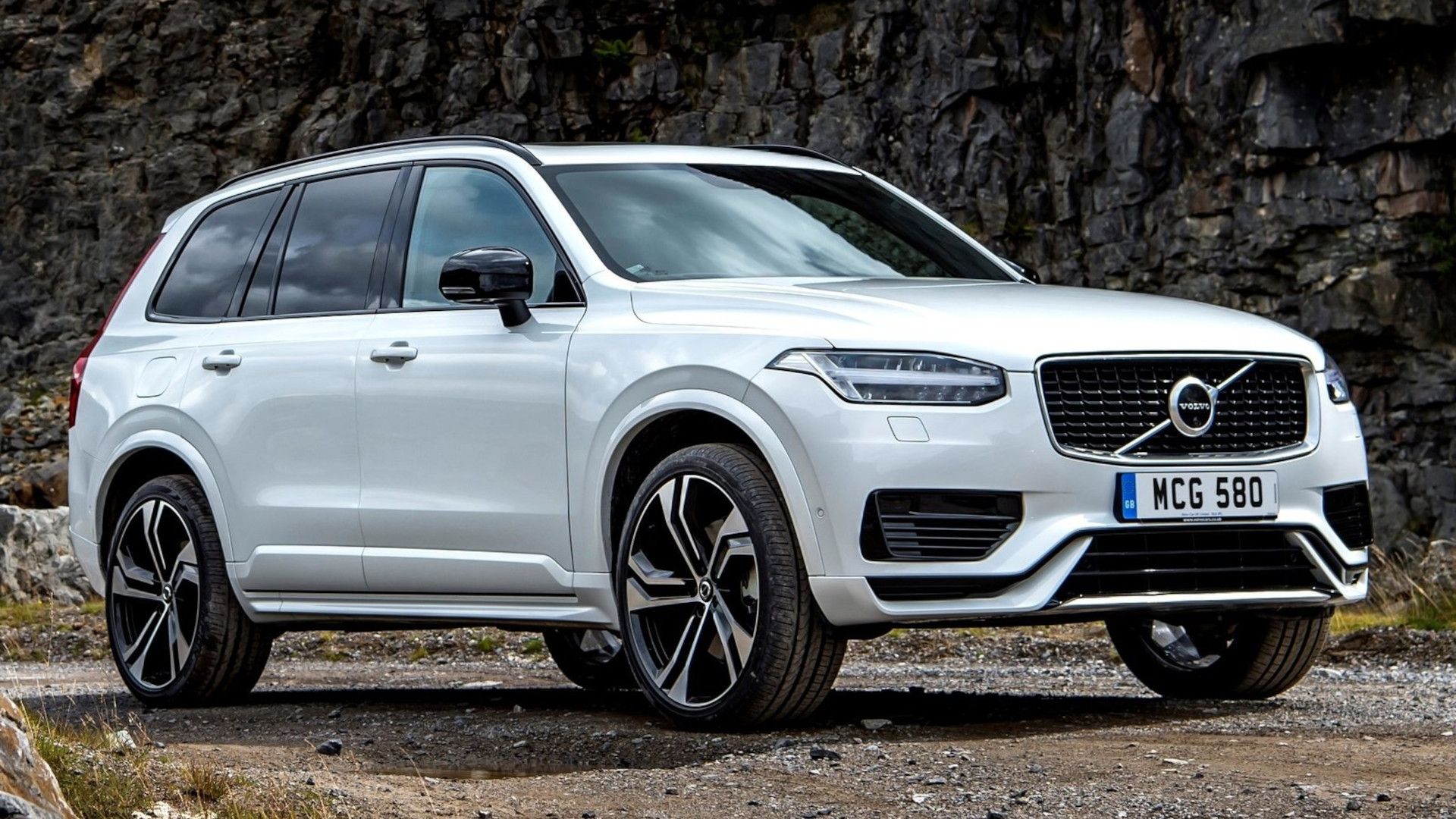
High ground clearance is often associated with off road capability, rough road confidence, and the ability to handle poor infrastructure without stress. However, one common concern buyers have is whether a taller vehicle automatically means compromised highway stability.
In reality, modern engineering has shown that height and stability can coexist when the right suspension tuning, chassis balance, and weight distribution are used.
Many early SUVs developed a reputation for body roll and vague handling at highway speeds. This was largely due to ladder frame construction, soft suspension setups, and steering systems designed more for durability than precision.
Today, manufacturers use advanced suspension geometry, electronic stability systems, and carefully tuned dampers to ensure tall vehicles remain composed even at high speeds.
The real secret is not just ground clearance itself but how the rest of the vehicle is engineered around it. A wide track width, low center of gravity relative to vehicle height, well calibrated shock absorbers, and rigid body structures all play an important role.
Vehicles that get this balance right feel planted rather than floaty, even when cruising at highway speeds.
Another factor that separates stable high clearance vehicles from unstable ones is suspension philosophy. Some SUVs are designed primarily for comfort, which can create a soft floating sensation.
Others are tuned to reduce vertical movement and improve directional confidence. The best examples manage to combine both, giving a controlled ride without making the vehicle feel harsh.
Tire choice and wheelbase length also matter more than most people realize. A longer wheelbase generally improves straight line stability, while properly selected tire profiles can reduce unwanted movement.
This is why some tall crossovers feel more secure on highways than certain older, shorter SUVs despite similar ground clearance numbers.
Buyers today do not necessarily want hardcore off road machines. Many want vehicles that can clear bad roads, speed breakers, and rural routes while still feeling predictable during daily highway commutes.
This has pushed manufacturers to design SUVs and crossovers that behave more like sedans at speed while still offering the height advantages people want.
This list focuses on vehicles that prove you do not have to sacrifice confidence at speed just to gain extra ride height. Each one takes a slightly different engineering approach to solving the same problem.
Some rely on sophisticated suspension systems, others depend on excellent chassis rigidity, while a few achieve stability through smart weight distribution.
Instead of repeating the same reasons, each vehicle here stands out for a different technical or design philosophy. Some prioritize structural strength, some focus on suspension intelligence, and others succeed because of decades of refinement in platform engineering.
If you want a vehicle that lets you enjoy broken roads without worrying about highway nervousness, these examples show how the right design choices can deliver both advantages without compromise.
Also Read: 5 Heavy Duty Transmissions Found in Half Ton Trucks vs 5 That Feel Weak
1. Subaru Outback
The Subaru Outback represents a very different philosophy compared to traditional tall SUVs. Instead of simply lifting a conventional SUV design, Subaru built the Outback on a car derived platform and then engineered additional clearance into a structure that was already known for stability.
One major reason the Outback feels secure at speed is the boxer engine layout. Because the engine cylinders sit horizontally rather than vertically, the engine mass sits lower in the chassis. This naturally reduces the center of gravity compared to many similarly tall vehicles.
This design decision changes how the vehicle behaves in corners and during sudden lane changes. Rather than feeling top heavy, the Outback tends to feel neutral and predictable. Drivers often describe the experience as closer to a lifted wagon than a traditional SUV.
Another important factor is Subaru’s symmetrical all wheel drive system. Unlike reactive systems that only send power when slip is detected, this setup constantly distributes power. The result is a more balanced feel during acceleration and improved composure when changing lanes at highway speeds.
The suspension tuning also deserves attention. Subaru did not simply increase ride height. Engineers adjusted spring rates, damper response, and anti roll bar stiffness to compensate for the extra height. This prevents the excessive leaning sensation that many tall vehicles suffer from.
Wheelbase length also contributes to confidence. The Outback has proportions that favor stability rather than tight urban maneuvering. This longer footprint helps reduce pitching motions and improves straight line tracking during long highway drives.
Aerodynamics is another overlooked strength. The shape is closer to an estate car than a boxy SUV. Less aerodynamic drag and lift means fewer corrections are needed by the driver at speed, especially during crosswinds.
What makes the Outback particularly interesting is how it achieves its personality without trying to feel sporty. Instead, it feels secure in a quiet and reassuring way. There is no aggressive character here, just consistent predictability.
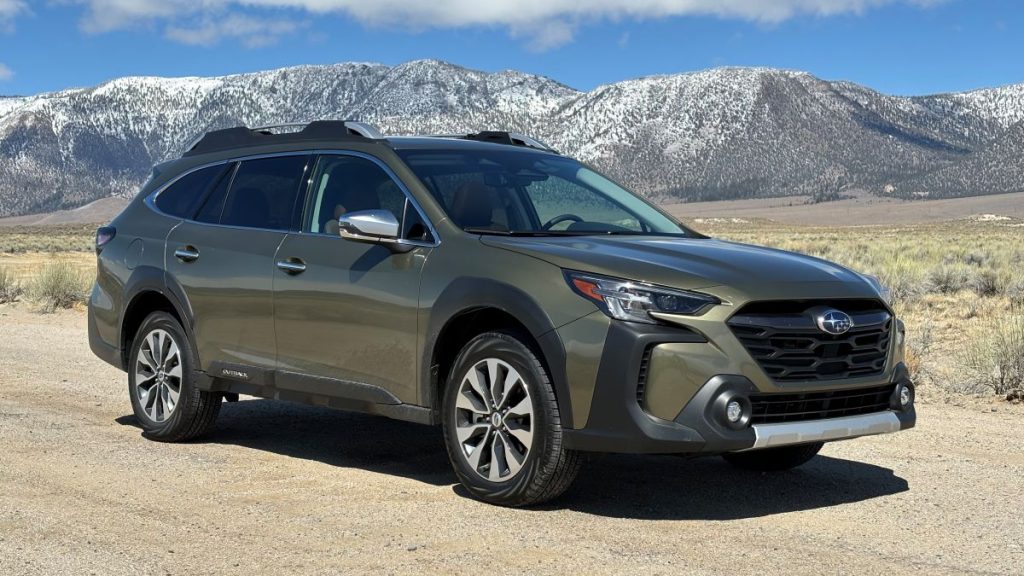
Drivers who frequently transition between rough secondary roads and expressways often appreciate this balance. The car does not punish you with stiffness but also does not reward you with nervous behavior. It simply maintains composure regardless of the surface.
This approach shows that stability is not always about stiffness or performance tuning. Sometimes it is about intelligent architecture decisions made long before suspension tuning even begins.
2. Volvo XC90
The Volvo XC90 takes a completely different route to achieve the same result. Rather than relying on low engine placement like Subaru, Volvo focuses heavily on structural rigidity and electronic driving aids to make its tall SUV feel controlled.
The XC90 sits quite high compared to many luxury SUVs, yet it rarely feels unsettled. A large reason for this comes from Volvo’s SPA platform, which was designed from the beginning to support both safety and stability. High strength steel and strategic reinforcement points reduce chassis flex significantly.
When a body structure resists twisting forces, the suspension can do its job more accurately. This leads to more consistent tire contact with the road, which translates directly into better highway confidence.
Volvo also approaches stability through driver assistance calibration. The steering weighting changes naturally with speed, becoming firmer as velocity increases. This prevents the light steering sensation that sometimes makes tall vehicles feel vague on highways.
Air suspension, when equipped, adds another dimension. At highway speeds the vehicle can slightly lower itself, improving airflow and subtly improving stability. This automatic adjustment helps reduce the typical disadvantages of a tall stance.
Noise isolation also plays a psychological role. Because the cabin remains calm and insulated, the driver feels more in control. Sudden movements feel less dramatic when the environment remains quiet and controlled.
Another interesting strength is how Volvo manages weight distribution despite a large body. Careful placement of heavy components such as batteries and safety structures helps maintain balance between the front and rear sections.
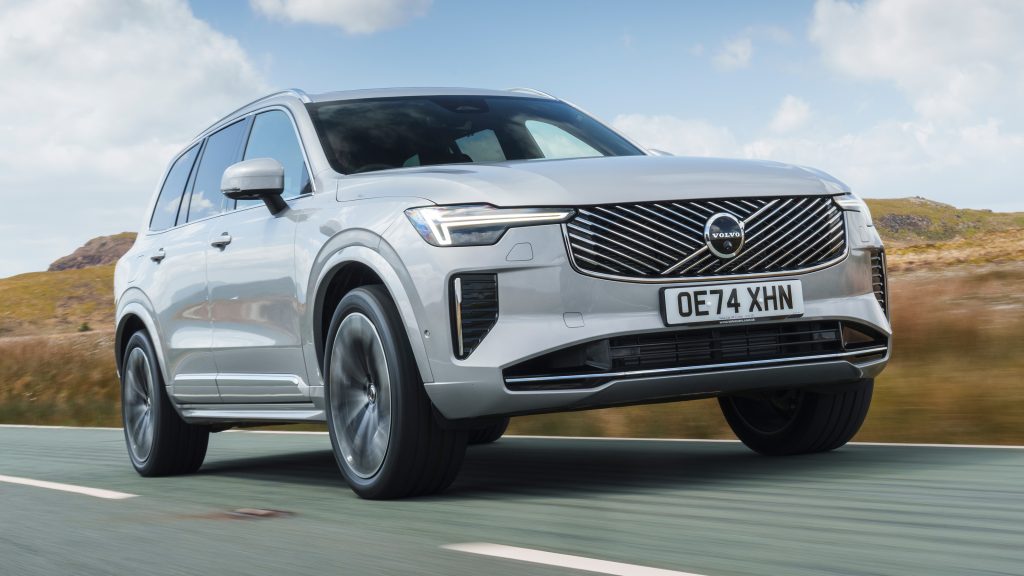
Unlike some SUVs that try to hide their size, the XC90 embraces it but manages it intelligently. It feels substantial rather than bulky. There is a sense of deliberate movement rather than softness.
Long distance drivers often note how fatigue is reduced because constant steering corrections are not necessary. The SUV tracks straight and remains composed even when the road surface changes.
This shows another way stability can be achieved. Instead of focusing on mechanical layout alone, the XC90 demonstrates how structural engineering, electronics, and suspension technology together can make a tall vehicle behave with confidence.
3. Toyota Land Cruiser
There is a reason the Toyota Land Cruiser has maintained a reputation for stability despite being one of the tallest and most capable SUVs ever built. Its secret does not come from softness or luxury tuning alone, but from decades of refinement focused on making a heavy duty vehicle behave predictably in all conditions.
Unlike crossover based SUVs, the Land Cruiser uses a body on frame construction. On paper this might sound like a disadvantage for highway behavior. In practice, Toyota engineered the frame to be exceptionally rigid, reducing the unwanted vibrations and flex that used to affect older truck based SUVs.
Weight plays a surprising role here. The Land Cruiser is heavy, and while that may hurt fuel economy, it actually helps highway composure. A heavier vehicle tends to feel more planted because it is less affected by minor road imperfections and crosswinds.
Toyota also invested heavily in suspension control rather than simply focusing on articulation. Systems such as kinetic dynamic suspension control help manage how the vehicle behaves depending on road conditions. This allows flexibility off road while maintaining discipline on paved surfaces.
Another detail that improves the driving experience is steering calibration. The steering is intentionally designed to feel progressive rather than sharp. This reduces sudden reactions and gives the driver a sense of control during long distance travel.
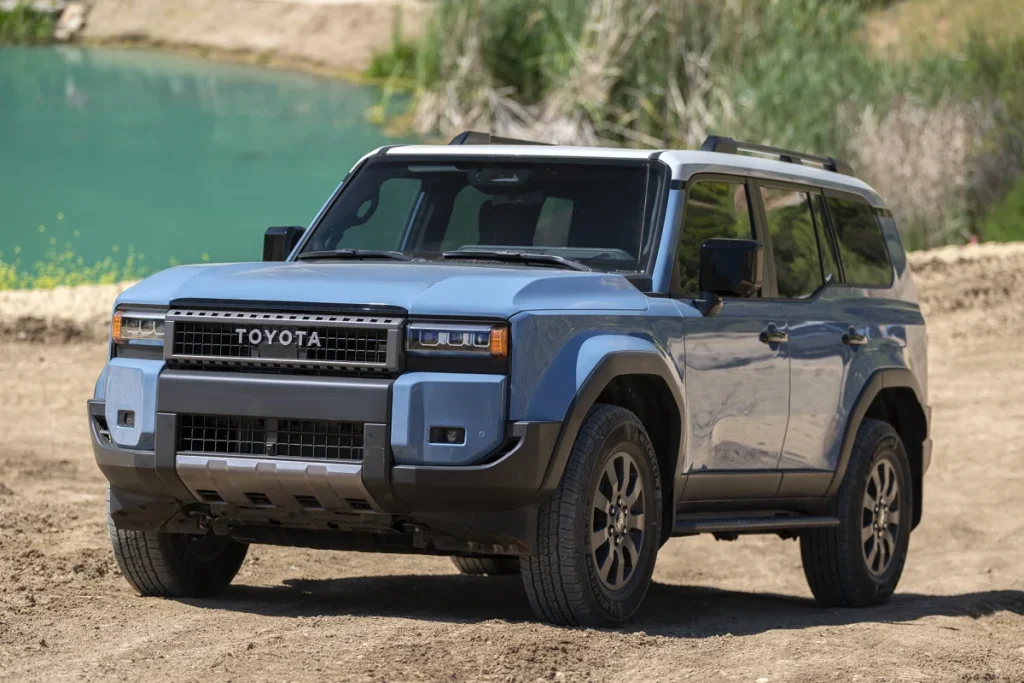
High speed ride quality is also helped by careful damper tuning. Instead of allowing excessive vertical bounce, the suspension settles quickly after encountering bumps. This makes the vehicle feel controlled instead of floaty.
What makes the Land Cruiser particularly impressive is how it handles uneven highways. Many tall SUVs begin to feel unsettled when surfaces become inconsistent. The Land Cruiser tends to smooth these imperfections rather than reacting dramatically to them.
Toyota engineers also paid attention to track width. A wide stance relative to its height helps reduce side to side movement. This simple but important proportion is one of the reasons it feels secure despite its off road focus.
There is also a psychological aspect to how the vehicle communicates with the driver. Controls feel solid. Brakes respond progressively. The vehicle gives constant feedback that it is operating well within its limits.
Interestingly, the Land Cruiser does not try to disguise its character. You are always aware you are driving something substantial. Yet instead of feeling intimidating, it feels trustworthy.
This trust factor comes from consistency. Whether the vehicle is loaded with passengers, luggage, or driven empty, its behavior changes very little. That consistency is often what drivers interpret as stability.
Long distance travelers often choose the Land Cruiser not because it feels sporty but because it feels dependable at speed. It encourages relaxed driving rather than constant correction.
The biggest lesson from the Land Cruiser is that stability does not always require a low stance. Sometimes it comes from over engineering components so the vehicle always feels within its comfort zone.
4. BMW X5
If the Land Cruiser represents durability focused stability, the BMW X5 represents precision focused stability. BMW approached the challenge from the opposite direction by making a tall vehicle drive with the discipline of a performance sedan.
The foundation of this character begins with chassis philosophy. BMW designs the X5 with a strong focus on 50:50 weight distribution. This balance allows the vehicle to feel neutral rather than front heavy, which is common in many SUVs.
The suspension does not aim to isolate the driver completely. Instead, it maintains a connection with the road. This does not mean the ride is harsh. It means movements are controlled and intentional rather than soft and delayed.
One thing that stands out immediately when driving the X5 on highways is directional accuracy. Once placed in a lane, the vehicle tends to stay there without requiring constant input. This is a hallmark of good chassis tuning.
BMW also uses adaptive dampers that constantly adjust based on speed and surface conditions. At higher speeds the system firms slightly to reduce body movement. At lower speeds it relaxes to preserve comfort.
An important but often ignored factor is seating position relative to the center of gravity. BMW positions the driver in a way that reduces the sensation of height. You sit high enough for visibility but not so high that movements feel exaggerated.
Brake feel also contributes to perceived stability. The X5 uses strong and consistent braking response that makes speed management feel effortless. When a vehicle slows down in a predictable way, driver confidence naturally increases.
Another interesting aspect is how BMW manages body roll. Instead of eliminating it completely, the company controls how quickly it happens. Gradual roll feels natural to drivers, while sudden roll creates discomfort. This subtle difference changes the entire experience.
Tire selection also plays a role. BMW typically equips the X5 with performance oriented tires that prioritize grip and stability. Combined with the suspension geometry, this improves lane change confidence.
Even the transmission programming contributes to the experience. Smooth and timely gear changes prevent the weight shifts that can sometimes make tall vehicles feel unsettled during acceleration.
The X5 also benefits from excellent torsional rigidity. When the body remains stiff, suspension inputs remain precise. This allows the vehicle to respond exactly as intended instead of reacting unpredictably.

Owners often describe the X5 as a vehicle that shrinks around you as you drive. Despite its size and clearance, it stops feeling large after some time behind the wheel. That is usually the highest compliment a tall performance SUV can receive.
This BMW demonstrates that stability can come from dynamic engineering rather than just structural strength. By focusing on balance, response, and driver connection, it proves that height does not have to mean compromise.
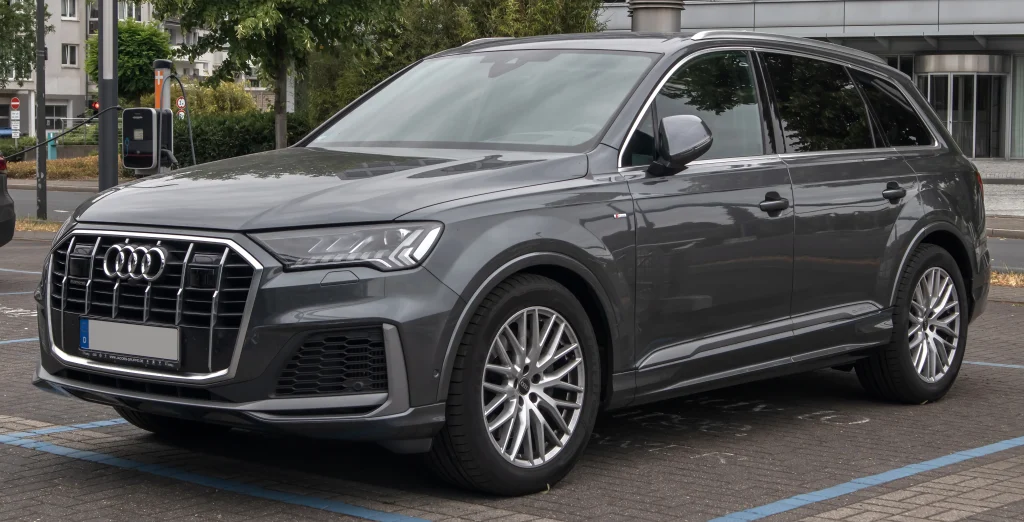
5. Audi Q7
The Audi Q7 approaches the challenge of combining high ground clearance with highway stability from a perspective rooted in refinement and intelligent predictability.
Rather than emphasizing toughness or sportiness alone, Audi focused on creating a vehicle that feels balanced in everyday use, especially during long distance travel where stability matters most.
One of the most important reasons the Q7 feels stable is its MLB platform architecture, which is shared with several performance oriented luxury vehicles.
This platform was designed with a strong focus on reducing unwanted body movement while maintaining comfort, which gives the Q7 a composed personality even though it sits relatively high off the ground.
Audi also paid serious attention to weight management. Extensive use of aluminum in the structure helps reduce overall mass compared to older luxury SUVs of similar size. Less weight above the suspension line helps reduce the top heavy sensation that drivers often associate with tall vehicles.
Another strength comes from how Audi tuned the steering response. Instead of making the steering overly light for comfort, the company programmed it to gradually firm up as speeds increase. This gives the driver a subtle but constant sense of control when cruising on highways.
Quattro all wheel drive also contributes significantly to confidence. The system constantly manages traction distribution rather than reacting after slip occurs. This helps the vehicle maintain stability during fast lane changes and during wet highway driving conditions.
What makes the Q7 different from some performance focused SUVs is its smoothness of response. Inputs such as steering, throttle, and braking feel synchronized rather than abrupt. This coordination helps prevent the small balance disturbances that can sometimes make tall vehicles feel nervous.
Audi also invested heavily in vibration control. Engine mounts, suspension bushings, and subframe connections are designed to absorb unwanted movement before it reaches the cabin. This creates a sensation of solidity that improves driver trust at speed.
Another subtle but important factor is how the Q7 manages pitch movement. During acceleration and braking, the vehicle avoids excessive forward or backward dipping. This gives passengers a sense that the vehicle is moving as one solid piece rather than shifting its weight dramatically.
High speed comfort also benefits from aerodynamic efficiency. Despite its size, the Q7 cuts through air smoothly. Reduced drag and lift forces help the vehicle maintain straight line confidence without feeling affected by wind disturbances.
Interior design even plays an indirect role. A well insulated and ergonomically designed cabin helps the driver remain relaxed. When a driver feels relaxed, they naturally make smoother inputs, which further improves the perception of stability.
Audi also focused on making stability feel effortless rather than noticeable. There is no dramatic sportiness or heavy handed stiffness. Instead, the Q7 quietly maintains its composure in a way that many drivers may not even consciously notice.
This understated confidence is often what separates well engineered luxury SUVs from average ones. Instead of constantly reminding you of their capabilities, they simply behave correctly in the background.
The Q7 proves that stability can also come from refinement. Careful coordination of materials, electronics, suspension behavior, and drivetrain response can make a tall vehicle feel calm and trustworthy without needing aggressive tuning.
Taken together, these five vehicles demonstrate that high ground clearance does not automatically lead to unstable highway behavior. When engineering decisions are made carefully, height can become an advantage rather than a compromise.
Different manufacturers solve this challenge in different ways. Some rely on low engine placement, others on structural strength, and some on advanced suspension technology. What connects them is a clear focus on balance.
For buyers, the lesson is simple. Ground clearance alone does not define how a vehicle will feel at speed. The real difference comes from how intelligently the entire vehicle is designed around that height.
Choosing the right model means you can enjoy the confidence of clearing rough roads while still enjoying calm and predictable highway journeys.
Choosing a vehicle with high ground clearance often comes with the fear that extra height may reduce confidence at highway speeds.
However, modern vehicle engineering has shown that stability depends far more on chassis design, suspension tuning, and weight balance than just ride height alone.
The right combination of these factors allows some vehicles to remain planted and predictable even while offering excellent clearance.
The five vehicles discussed demonstrate that there is no single formula for achieving this balance. Each manufacturer solved the stability challenge using a different engineering philosophy.
This shows that stability is not about copying one design method but about how well the entire vehicle is developed as a complete system.
The Subaru Outback proves that a smart mechanical layout can make a major difference. Its low mounted boxer engine and balanced all wheel drive system help offset the disadvantages of added height. The result is a vehicle that feels more like a planted wagon than a tall SUV during highway driving.
The Volvo XC90 shows how structural strength and electronic intelligence can work together. Its rigid platform and carefully calibrated steering assistance help maintain control without making the ride feel stiff. This approach highlights how safety focused engineering can also improve driving confidence.
Toyota’s Land Cruiser demonstrates that durability focused engineering can also produce stability. Its strong frame, wide stance, and carefully controlled suspension behavior allow it to remain composed despite its serious off road capability. It shows that even traditional SUV designs can feel secure when properly refined.
The BMW X5 takes a performance oriented route by focusing on balance and driver connection. With near ideal weight distribution and adaptive suspension behavior, it shows that a tall SUV can still deliver precise and controlled highway manners. Its character proves that stability can also come from dynamic tuning rather than just structural strength.
The Audi Q7 highlights refinement as a stability tool. Careful material choices, smooth control responses, and excellent vibration management all contribute to a calm driving experience. This demonstrates that stability is sometimes about reducing drama rather than increasing stiffness.
An important takeaway from all these vehicles is that proportions matter. Wheelbase length, track width, and weight distribution often matter more than just the clearance number. Vehicles designed with these factors in mind naturally behave better at speed.
Another key lesson is that suspension tuning determines personality. A poorly tuned tall vehicle may feel soft and uncontrolled, while a well tuned one feels confident and predictable. This difference is usually the result of careful engineering rather than just expensive components.
Drivers should also remember that stability is partly about consistency. Vehicles that react in predictable ways reduce driver fatigue and increase confidence during long trips. This consistency is often what separates well engineered SUVs from average ones.
Ultimately, these examples show that high ground clearance and highway stability are not opposites. When manufacturers focus on intelligent design, it is possible to enjoy both rough road capability and relaxed high speed driving in the same vehicle.
For buyers, the smartest approach is to look beyond clearance figures and focus on overall engineering quality. A well designed vehicle will always feel more stable than one that simply sits higher without proper development.
Also Read: 5 Ford EcoBoost Engines Built for the Long Haul vs 5 That Struggle With Heat