
The 1980s were a decade defined by audacious creativity, technological experimentation, and a fascination with the future. In the automotive world, this spirit was most vividly expressed through dashboard design.
Carmakers were no longer content with simple analog gauges; they explored digital readouts, touchscreen interfaces, voice alerts, and futuristic layouts that turned the cockpit into a high-tech playground.
From the aircraft-inspired instrument clusters of the Subaru XT Alcyone to the fully digital, spaceship-like displays of the Aston Martin Lagonda, dashboards became bold statements of style, innovation, and driver engagement. European, Japanese, and American brands alike embraced this era of retro-futurism, mixing tactile controls with neon-lit graphics, CRT monitors, and early onboard computers.
The decade’s interiors were immersive, sometimes eccentric, and always experimental. These designs captured the optimism and imagination of the time, creating cars that felt as much like interactive machines as they did transportation. The following ten dashboards remain iconic examples of 1980s automotive vision that we fondly miss today.
1. 1982 Aston Martin Lagonda: A Bold Leap into Retro-Futurism
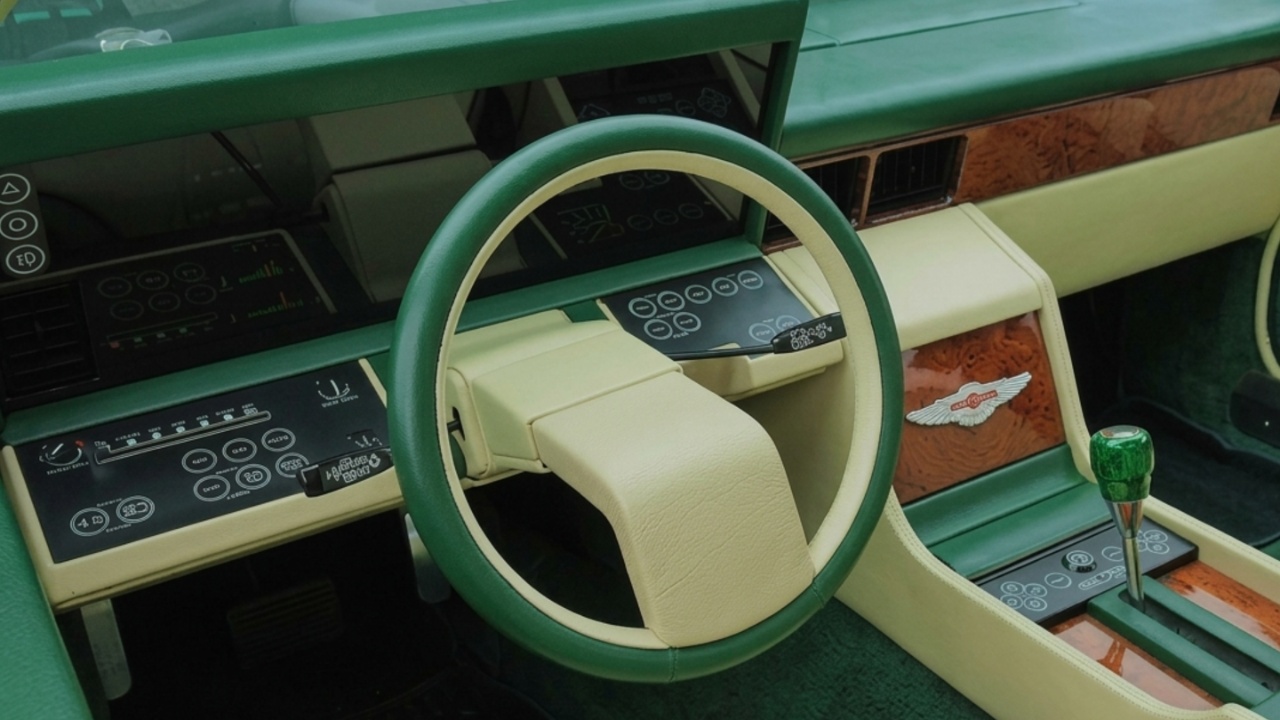
The 1982 Aston Martin Lagonda is remembered as one of the most daring and futuristic car interiors of the 1980s. Its dashboard replaced traditional analog gauges with a fully digital system featuring vacuum-fluorescent displays and, later, CRT screens.
This made the Lagonda the first production car to offer a complete digital instrument cluster, displaying speed, fuel levels, and trip information through glowing green readouts. The layout was inspired by aircraft cockpits, including technology originally intended for the McDonnell Douglas F-15 Eagle. The result was a cockpit that felt more like a spaceship than a conventional car interior.
One of the most distinctive features of the Lagonda was its touch-sensitive controls. More than 40 flat, illuminated pads controlled functions from air conditioning to headlights and power windows, replacing traditional knobs and switches.
This allowed the center console to remain clean and minimal while providing advanced functionality. The single-spoke steering wheel gave drivers an unobstructed view of the digital display and added to the futuristic feel of the cabin.
Despite its innovative design, the electronics were prone to failure. Early Series 2 models were notoriously unreliable, and the development of the digital system cost four times the budget of the rest of the car.
Despite these challenges, the Lagonda maintained a high level of luxury with hand-stitched Connolly leather, plush Wilton carpeting, and polished walnut trim. The combination of advanced technology and traditional luxury created a retro-futuristic cabin that was unmatched in the 1980s.
Today, the Lagonda dashboard is remembered for its audacity and visionary design rather than its reliability. Modern digital dashboards prioritize usability and simplicity, while the Lagonda embraced experimental design and bold aesthetics.
Its combination of technology, luxury, and futuristic styling makes the 1982 Aston Martin Lagonda an iconic symbol of 1980s ambition and a remarkable example of automotive retro-futurism.
2. 1985 Subaru XT Alcyone: A Futuristic Cockpit of the 1980s
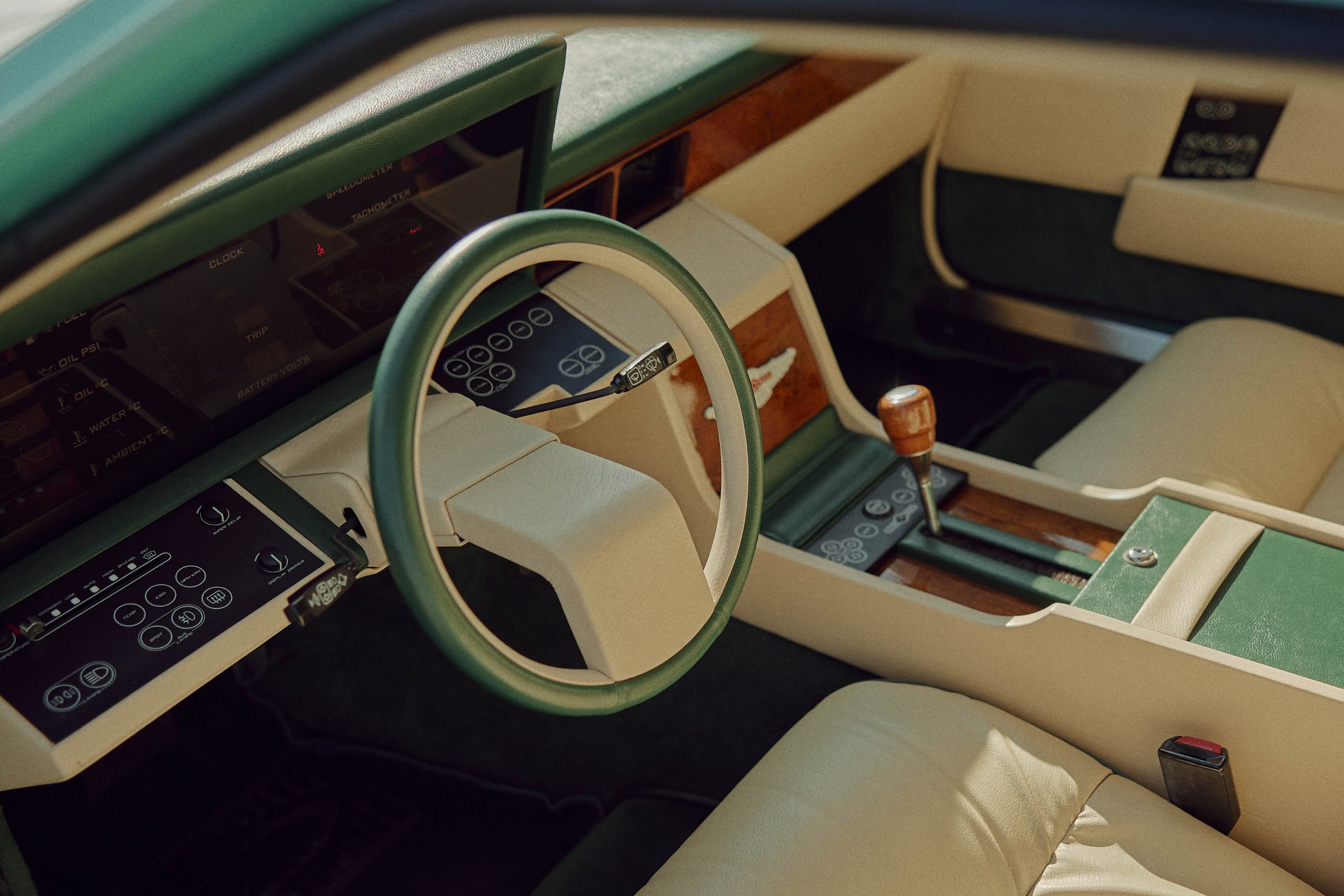
The 1985 Subaru XT Alcyone, known in the U.S. as the XT Turbo, featured one of the most imaginative interiors of the 1980s, designed to mimic an aircraft cockpit. Its standout element was a 3D digital instrument cluster that displayed a glowing orange representation of the car traveling toward a vanishing-perspective horizon.
Flanking this display were dynamic “pavements” that moved in sync with the engine’s revs, creating an arcade-like, futuristic effect. The dashboard was complemented by two wing-like control pods positioned behind an asymmetrical, L-shaped steering wheel. These pods brought nearly every essential function within fingertip reach, reinforcing the jet-fighter-inspired design and emphasizing driver engagement.
The XT’s interior reflected Subaru’s aviation heritage through its cockpit-inspired ergonomics. Controls were positioned to follow the driver’s natural hand movements, while the instrument cluster tilted with the steering wheel to maintain a clear line of sight.
The three-dimensional dash displayed revs and turbo boost as glowing towers alongside the virtual road, creating an “Atari-style” visual effect that was unlike anything else in production cars of the era.
Additional features reinforced the futuristic experience. The steering wheel was asymmetrical, allowing unobstructed views of the digital display. The shift lever resembled a joystick, enhancing the airplane-like feel.
Satellite pods housed up to 18 controls for lights, wipers, and HVAC, while rare factory options like air suspension toggles further added to the high-tech impression. Even the cabin materials and styling celebrated the 1980s aesthetic, with bold graphics and unconventional design choices that made the interior feel playful yet advanced.
Although some criticized the use of cheap plastics and unconventional ergonomics, the Subaru XT Alcyone dashboard remains an icon of 1980s automotive experimentation. Its combination of aviation-inspired design, pioneering digital graphics, and driver-focused controls made it a daring statement in an era of futuristic optimism.
Today, the XT’s interior stands out in sharp contrast to modern minimalist screens, offering a reminder of a time when automakers boldly merged technology, style, and imagination to create a truly memorable driving experience.
3. 1984 Chevrolet Corvette (C4): America’s First Digital Sports Car Dashboard
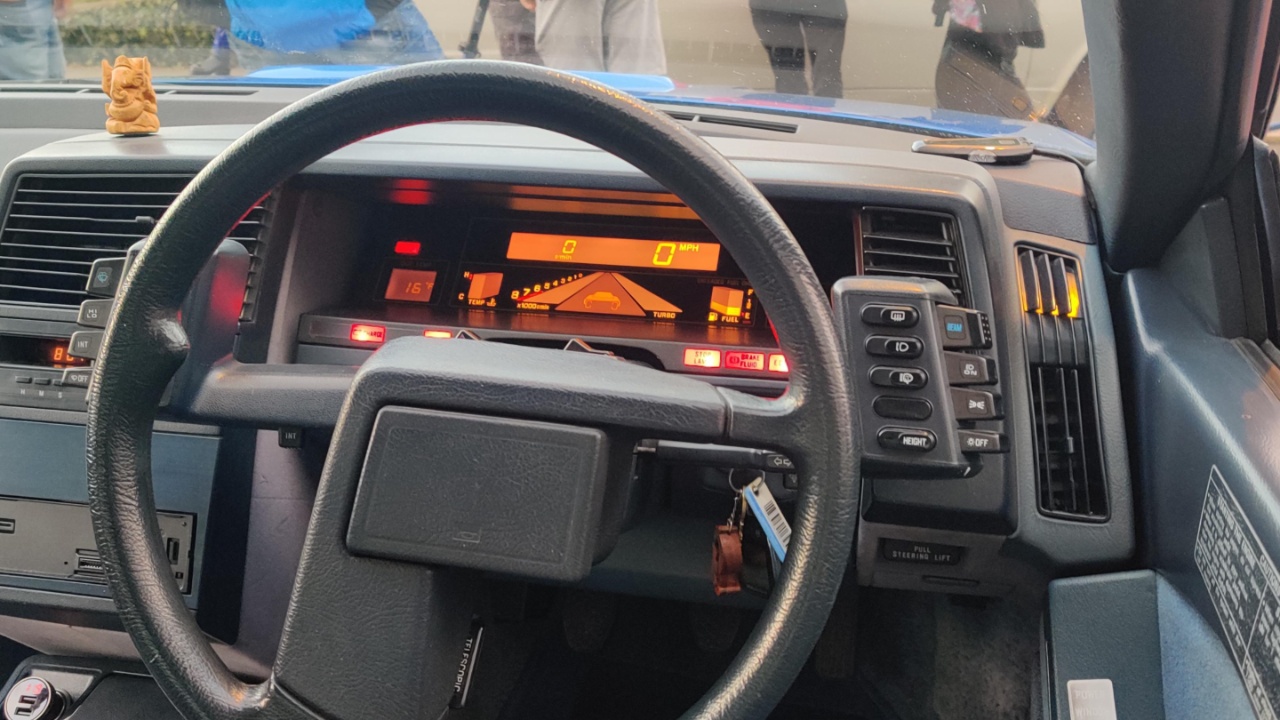
The 1984 Chevrolet Corvette (C4) marked a bold technological leap for America’s iconic sports car. Its most striking feature was a fully digital dashboard, replacing all analog gauges with a trio of liquid-crystal displays (LCD). These vibrant green, yellow, and red graphics offered a high-contrast, “Atari-style” presentation of speed, RPM, fuel, and other vital engine information.
The centerpiece was the Driver Information Center, which allowed the driver to cycle through metrics such as engine temperature, voltage, and fuel economy using tactile buttons. While the electronics were prone to glare and occasional failure, the digital dash perfectly captured the tech-focused optimism of the mid-1980s.
The interior was designed around a driver-focused philosophy. The cockpit-style layout emphasized ergonomics and accessibility, with digital readouts providing instant, computer-driven feedback.
The futuristic dashboard was complemented by the passenger-side “breadbox,” a rounded pad added to meet emerging federal safety standards. The combination of glowing LCDs, tactile buttons, and distinctive 1980s styling gave the Corvette a “synthwave” or “Tron-like” aesthetic, creating a sense of being inside a video game or sci-fi film.
Beyond its dashboard, the 1984 Corvette featured a complete redesign with superior aerodynamics, a clamshell hood, and a drag coefficient of 0.34. The car was powered by a 5.7-liter Cross-Fire Injection V8 producing 205 horsepower and 290 lb-ft of torque, paired with the unique Doug Nash 4+3 transmission.
Suspension improvements offered world-class handling for the era, though the Z51 performance package gave a famously stiff ride, earning the nickname “Bone Crusher.” Top speed exceeded 140 mph, with acceleration from zero to sixty in under seven seconds.
While the C4’s early electronics were temperamental and some interior plastics rattled, the model remains an iconic symbol of 1980s innovation. Its digital dashboard, driver-focused cockpit, and bold, futuristic design set it apart from contemporaries and remain celebrated today for their audacious vision.
The 1984 Chevrolet Corvette C4 combined high-tech flair, American sports car performance, and retro-futuristic aesthetics, establishing a benchmark for digital instrumentation in production vehicles and leaving a lasting legacy in automotive history.
4. 1982 Lancia Orca Concept: Pioneering Ergonomics and Digital Futurism
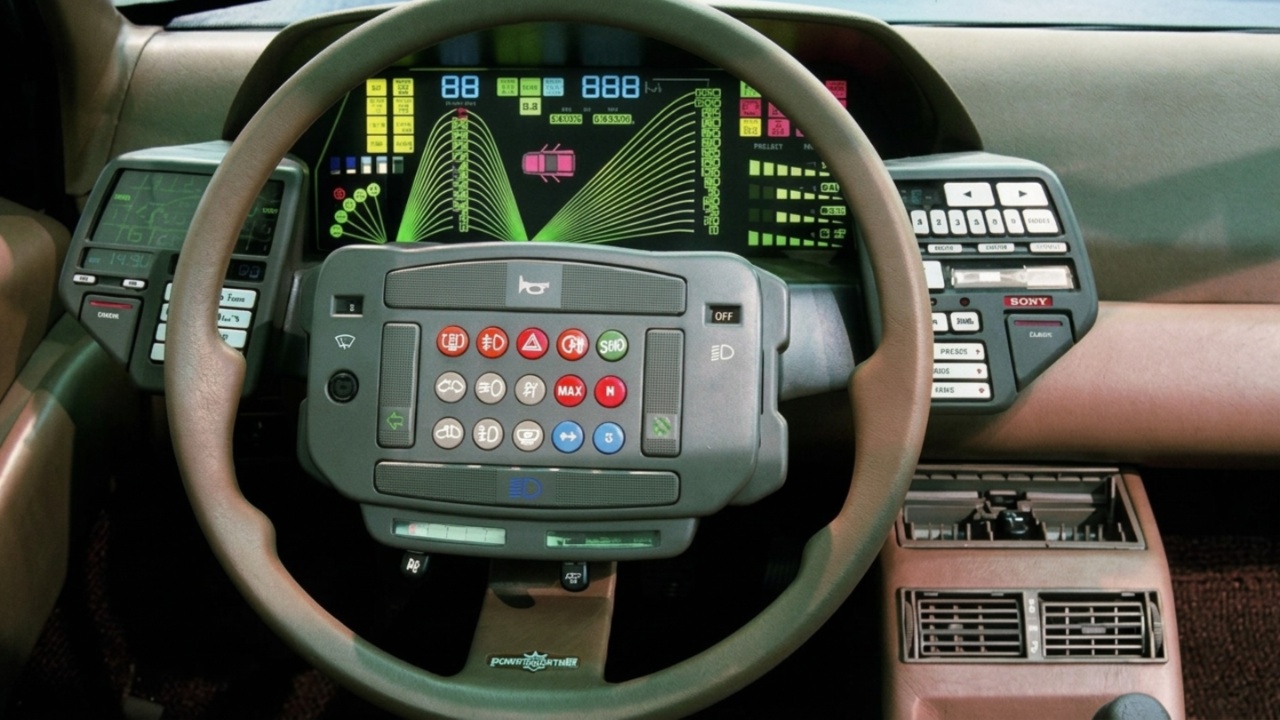
The 1982 Lancia Orca Concept, designed by Giorgetto Giugiaro’s Italdesign, pushed the boundaries of dashboard design with an emphasis on ergonomics, digital technology, and futuristic aesthetics. Its interior was built around a fixed-hub steering wheel packed with a large array of control buttons that did not rotate with the wheel.
This allowed the driver to operate essential functions such as the radio, wipers, and lights without removing hands from the wheel, anticipating the steering-wheel-mounted controls now common in modern vehicles. The steering system relied on ultrasound impulses, representing a remarkable technological innovation for 1982.
Behind the wheel, the Orca featured a pixelated, digital dashboard that resembled the heads-up displays found in fighter jets. The display presented information in a vibrant, “Tron-like” format, giving the cockpit a video game-inspired aesthetic that perfectly captured the experimental and optimistic design spirit of the 1980s.
The dashboard’s design emphasized functionality and driver engagement, while the cabin maintained a minimalist, high-tech aesthetic that combined simplicity with avant-garde style.
The Orca also showcased advanced integration of controls, with nearly every secondary function accessible directly from the steering hub. This “button-heavy” approach created a futuristic, immersive driving experience that prioritized efficiency and convenience, setting the stage for the digital and touchscreen interfaces seen in contemporary vehicles.
The interior was also designed to complement the concept car’s aerodynamic profile, which featured a 0.245 drag coefficient, merging performance considerations with technological innovation.
Although the Orca remained a concept and was never mass-produced, its dashboard is remembered as a pioneering example of 1980s automotive experimentation. It forecasted modern trends in digital displays, steering-wheel controls, and ergonomic layouts while embracing a bold, unapologetically futuristic style.
The combination of advanced electronics, ergonomics, and retro-futuristic design makes the 1982 Lancia Orca Concept a key milestone in the evolution of car interiors, representing a time when designers were unafraid to merge technology and imagination to create a cockpit that looked and functioned like a vehicle from the future.
Also read: 5 Cars With Simple Interiors That Age Well vs 5 With Too Much Fragile Plastic
5. 1986 Buick Riviera: The First Production Touchscreen Dashboard
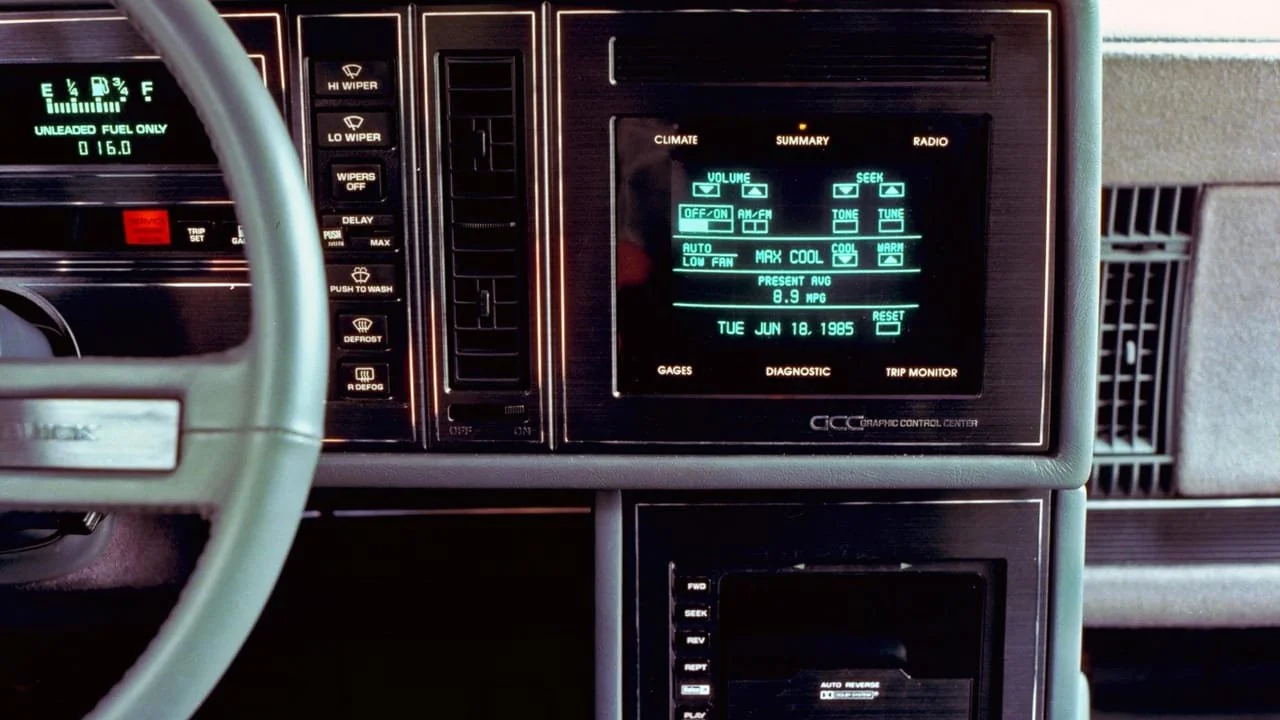
The 1986 Buick Riviera was a groundbreaking vehicle in automotive technology, introducing the industry’s first production touchscreen called the Graphic Control Center, or GCC. This 9-inch green-and-black cathode-ray tube display allowed drivers to control the radio, climate settings, and monitor trip diagnostics using only finger taps.
The system also provided audible “beep” feedback to confirm selections. While touchscreen infotainment is now common, the Riviera’s CRT dashboard was a bold step forward, bringing advanced digital control to a production car long before it became standard.
The GCC consolidated over 100 functions into a single interface. Drivers could adjust heating and air conditioning, operate the stereo, including a graphic equalizer, and access detailed diagnostic information on brakes, the electrical system, and the powertrain.
The system was designed to start warming up when the driver pulled the door handle, so it was ready immediately. It also included a hidden service mode that allowed technicians to modify engine parameters, as well as a basic navigation aid that enabled users to input distances and track estimated travel time.
The dashboard’s design reinforced its futuristic reputation. Amber and green text, virtual sliders, and touchscreen buttons gave the cabin a space-age look similar to science fiction films and television of the 1980s. By replacing nearly all analog controls, the Riviera created a fully digital interface that stood out from other cars of the era.
Despite its innovation, the touchscreen had mixed reviews. Many drivers found it confusing or distracting, and the system was prone to electrical failures, including issues with the central power supply and fuses. Buick returned to traditional buttons in 1987. Today, the 1986 Riviera is celebrated as a key milestone in automotive design and a direct precursor to modern infotainment systems used in vehicles like Tesla.
The 1986 Buick Riviera combined advanced electronics, comprehensive vehicle controls, and a bold retro-futuristic style. Its Graphic Control Center demonstrated the potential of touchscreen technology, integrated diagnostics, and digital interfaces, establishing a new standard for innovation in car interiors and making it one of the most iconic dashboards of the 1980s.
6. 1984 Nissan 300ZX (Z31): Neon-Lit Digital Innovation
The 1984 Nissan 300ZX (Z31) offered one of the most distinctive and futuristic dashboards of the 1980s, combining high-tech functionality with a playful, retro-futuristic aesthetic.
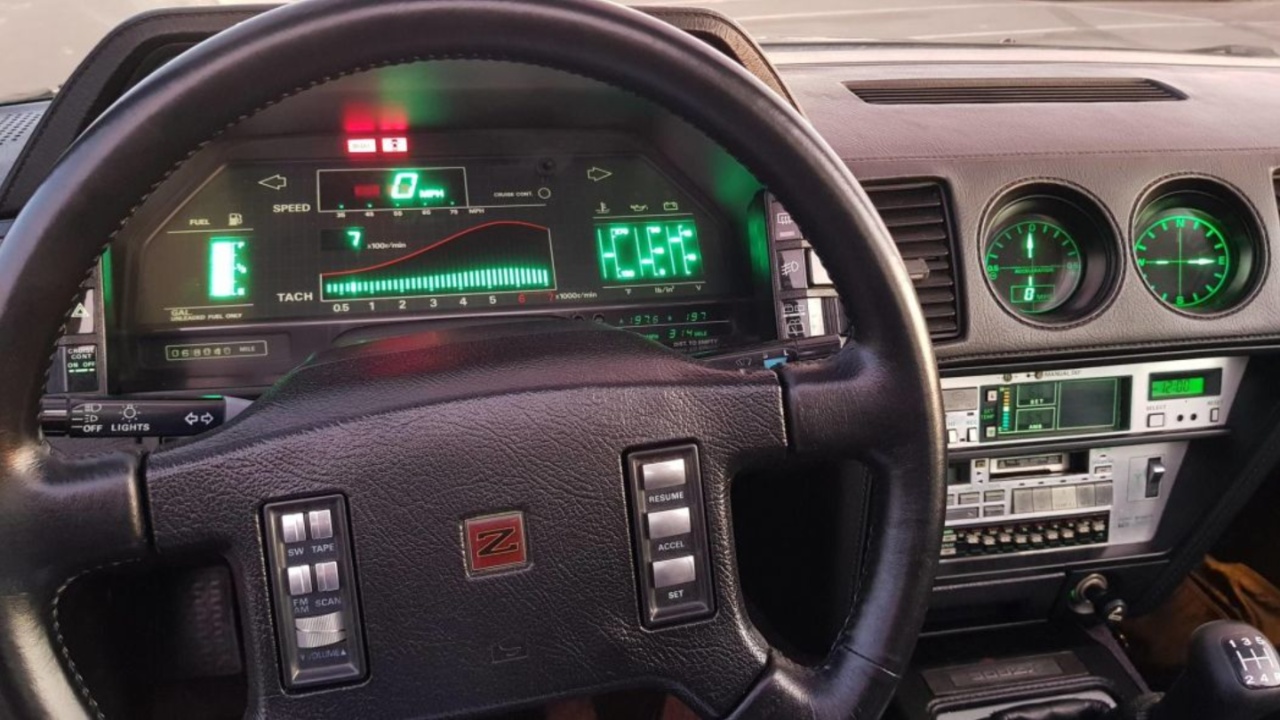
Its optional digital instrument cluster featured a neon-green grid-patterned tachometer that “climbed” as the turbo spooled, alongside a digital speedometer and fuel gauge that glowed like a calculator display. The dashboard created a spaceship-like cockpit, immersing the driver in a high-tech, arcade-inspired environment that emphasized both performance information and visual impact.
One of the Z31’s most memorable innovations was its electronic voice warning system. A synthesized female voice politely alerted the driver to situations such as leaving the lights on or a door being ajar.
This early integration of artificial intelligence added personality and practicality to the driving experience. Certain 50th Anniversary models expanded on this futuristic theme with digital readouts for G-forces, average fuel economy, and a compass, demonstrating Nissan’s commitment to experimental technology.
The dashboard layout prioritized driver ergonomics. The instruments were angled toward the driver, creating a “fighter jet” feel, while physical control pods on either side of the cluster allowed easy access to lights, wipers, and other essential functions without removing hands from the steering wheel.
This approach combined convenience, safety, and high-tech style. The 50th Anniversary edition even included “Bodysonic” speakers built into the seats, providing a tactile, immersive audio experience synchronized with the music.
Visually and functionally, the 300ZX Z31 dashboard embraced the era’s optimism and fascination with technology. Its neon digital displays, arcade-like graphics, and unique voice alerts created a sense of personality and excitement that is largely absent in today’s minimalist, touchscreen-heavy interiors.
The combination of performance-focused instrumentation, driver-centric ergonomics, and futuristic design made the Z31 cockpit both practical and highly engaging.
Today, the 1984 Nissan 300ZX (Z31) dashboard is celebrated as an iconic symbol of 1980s automotive experimentation. Its unapologetically bold use of digital technology, immersive displays, and innovative features exemplifies the decade’s forward-thinking spirit, leaving a lasting impression on collectors and enthusiasts who value both style and functional innovation in car interiors.
7. 1980 Lancia Trevi: The Swiss Cheese Dashboard
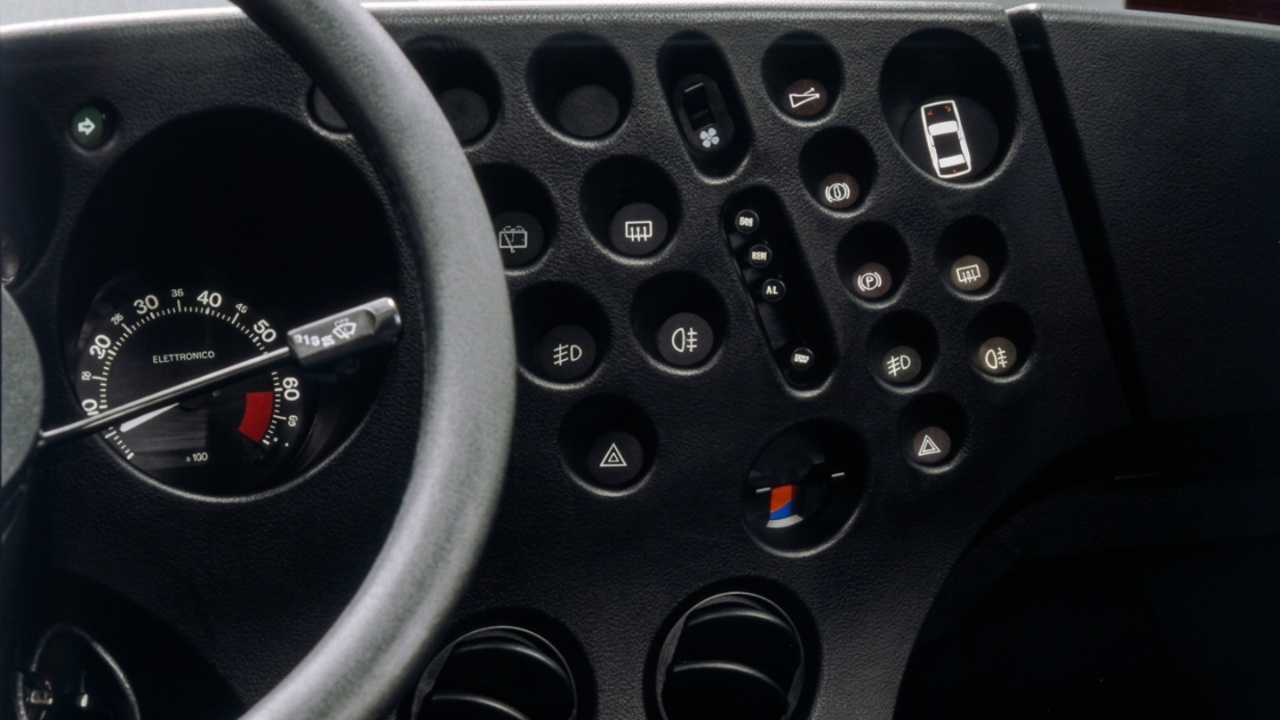
The 1980 Lancia Trevi featured one of the most radical and distinctive dashboards of the 1980s, designed by Italian architect Mario Bellini. Famously nicknamed the “Swiss Cheese,” the dashboard abandoned conventional flat surfaces in favor of a deeply recessed layout filled with dozens of circular pods.
Each pod housed a switch, dial, or indicator light, creating a tactile, highly organized environment while reducing glare. The design prioritized structural form and ergonomic grouping over traditional aesthetics, giving the interior a bold, futuristic character.
The dashboard’s unique approach was highly polarizing at the time. Critics often described it as confusing or overstyled, comparing it to a “dust nest” or a spaceship control panel from Star Trek or Star Wars. Despite this, the Trevi’s interior is now celebrated for its creative audacity and architectural sophistication.
The design seamlessly integrated the dashboard into the rest of the cabin, with recessed gauges angled toward the driver and controls positioned for maximum accessibility. Air vents were set directly into the door panels, and switches were centralized in ergonomic pods, reinforcing the sense of a unified, functional space.
The “Swiss Cheese” layout consisted of over 29 circular cutouts, each serving a functional purpose. The driver had immediate access to a digital rev counter, indicators for oil pressure, coolant temperature, brake fluid, and brake pad wear.
Hidden features, such as ashtrays and a digital roof clock, added to the interior’s unusual charm. The entire design was a clear statement against the bland and uniform dashboards common in other sedans of the era.
Although its unconventional appearance drew criticism, the Lancia Trevi dashboard demonstrated the peak of Italian design experimentation in the early 1980s. It blended functionality, ergonomics, and architectural form into a cohesive, if eccentric, package.
Today, the Trevi is remembered not for its exterior, which was a conventional three-box sedan, but for its interior, which remains a standout example of daring design. Its combination of recessed pods, structural geometry, and playful, futuristic styling makes the 1980 Lancia Trevi dashboard one of the most iconic and “wonderfully weird” interiors in automotive history.
8. 1985 Citroën BX Digit: French Retro-Futuristic Innovation
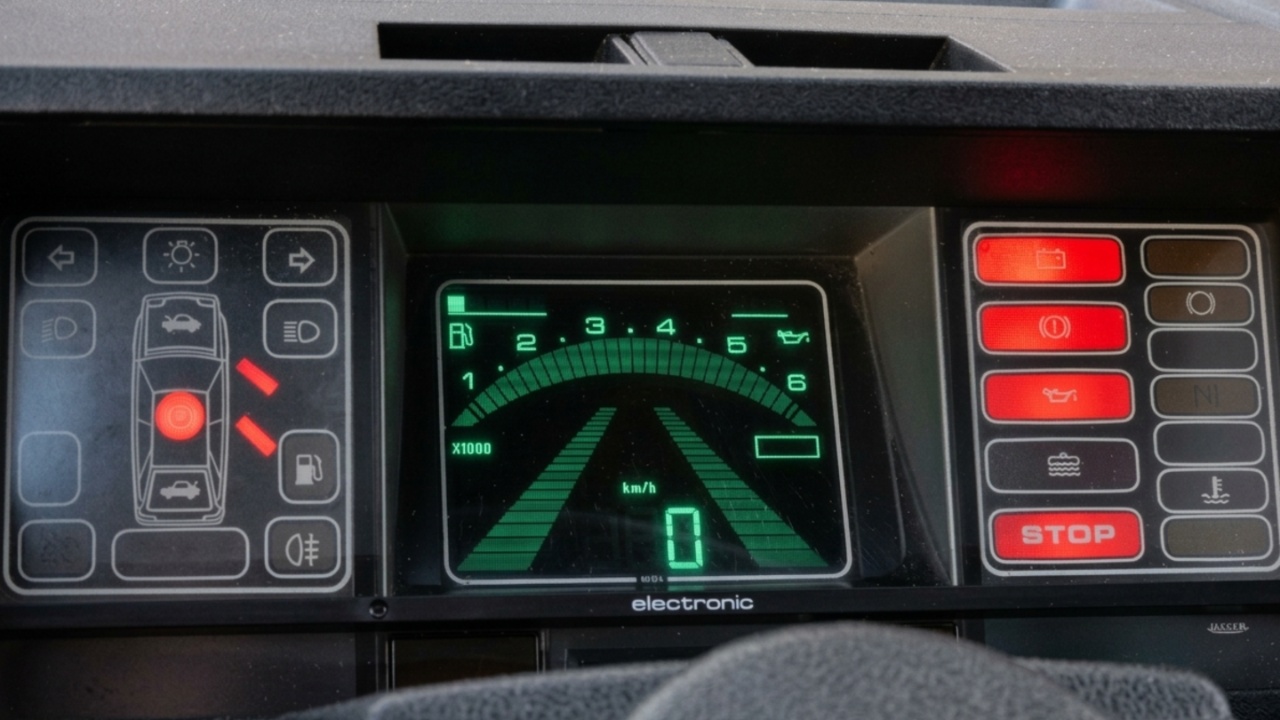
The 1985 Citroën BX Digit was a bold statement in 1980s automotive design, highlighting the brand’s fascination with digital technology and futuristic styling. A limited-edition variant of the BX 19 GT, it replaced traditional analog dials with vacuum-fluorescent displays.
The dashboard included a central digital speedometer, a semi-circular tachometer, and a range of diagnostic readouts for fuel, oil, and alerts such as doors or the hood being open. The green-on-black digital graphics created a cockpit-like environment that made driving feel like operating a high-tech spaceship.
Driver ergonomics were a key focus. The single-spoke steering wheel provided an unobstructed view of the instruments, while satellite-style control stalks allowed operation of lights, wipers, and the horn without removing hands from the wheel.
Buttons on the console controlled trip functions, warning light tests, and the clock, integrating digital features directly into the driver’s reach. A built-in on-board computer offered advanced trip information, enhancing interactivity and making the BX Digit a forward-thinking example of driver-centric design.
The dashboard’s style captured the era’s “retro-futuristic” aesthetic. Its glowing digital displays and curved tachometer resembled sci-fi film and television control panels. The combination of digital instrumentation, satellite controls, and advanced electronics created a playful yet sophisticated cabin, transforming a conventional family car into a high-tech experience.
The Citroën BX Digit is remembered as an iconic 1980s dashboard because it demonstrated a willingness to experiment with both form and function. With only 3,000 to 4,000 units produced, it became a rare and highly sought-after collector’s item. Its cabin design foreshadowed modern digital dashboards while maintaining a distinctive, expressive personality that modern minimalist interiors often lack.
The Digit showed that a mid-size European car could deliver a fully immersive, futuristic driving experience decades before touchscreen infotainment systems became common, blending technology, style, and ergonomics in a way that was both playful and visionary.
9. 1988 BMW 5 Series (E34): The Benchmark of Driver-Centric Design
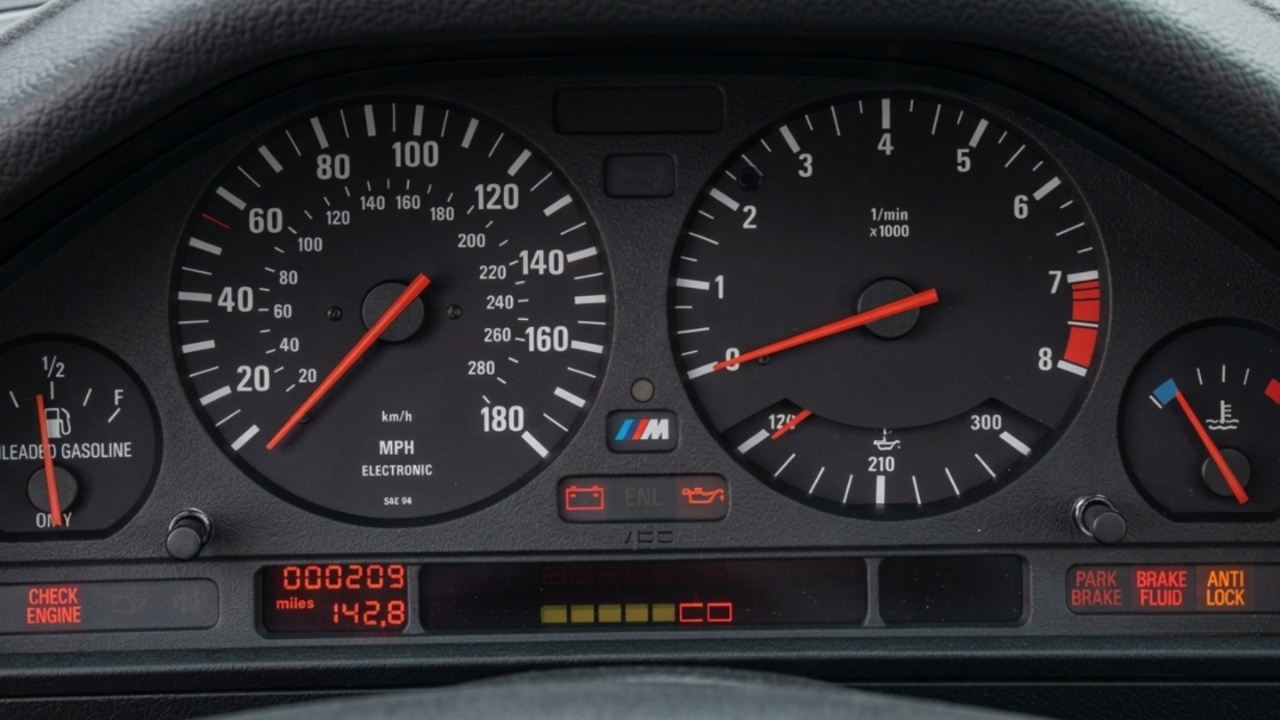
The 1988 BMW 5 Series (E34) dashboard is celebrated as one of the most iconic interiors of the 1980s because it emphasized a pure, driver-focused experience. While other manufacturers explored flashy digital displays, BMW perfected a cockpit-oriented analog layout that prioritized ergonomics, visibility, and tactile quality.
The dashboard and center console were slightly angled toward the driver, creating an intimate, cockpit-like feel that reinforced control and engagement. This approach became a standard for luxury sports sedans and influenced BMW interiors for nearly three decades.
The driver-centric design was central to the E34’s appeal. The trapezoidal instrument cluster positioned all critical gauges, including speed, RPM, fuel, and coolant levels, directly in the driver’s line of sight.
Orange backlighting was chosen for its legibility and low eye strain at night. The “Check Control” system provided early monitoring of vehicle functions without requiring attention-diverting digital interfaces, combining thoughtful technology with analog clarity.
Functional simplicity and quality materials defined the dashboard. The interior avoided excessive chrome, relying on high-quality plastics and optional wood trim that provided a tactile, durable feel. Controls for HVAC, audio, and the optional onboard computer were logically grouped and positioned for easy reach, allowing drivers to operate the vehicle efficiently without distraction.
Designed by Claus Luthe and Ercole Spada, the E34 interior bridged the geometric style of the 1980s with emerging luxury standards of the 1990s. The M5 variant added specialized features, such as red gauge needles and an oil temperature gauge, to enhance the performance-focused experience. Compared with today’s screen-heavy cabins, the E34 is admired for its clarity, driver orientation, and material quality.
Common issues include failing digital displays, service light malfunctions, and occasional fragile trim, but these minor drawbacks do not diminish the dashboard’s reputation. Enthusiasts value the E34 for providing a functional, high-quality, and engaging driving environment where the driver remains the focus.
The 1988 BMW 5 Series dashboard stands as a benchmark for ergonomics, analog clarity, and timeless design that continues to influence driver-focused interiors today.
10. 1982–1986 Knight Industries Two Thousand (K.I.T.T.): The Ultimate 1980s Tech Dashboard
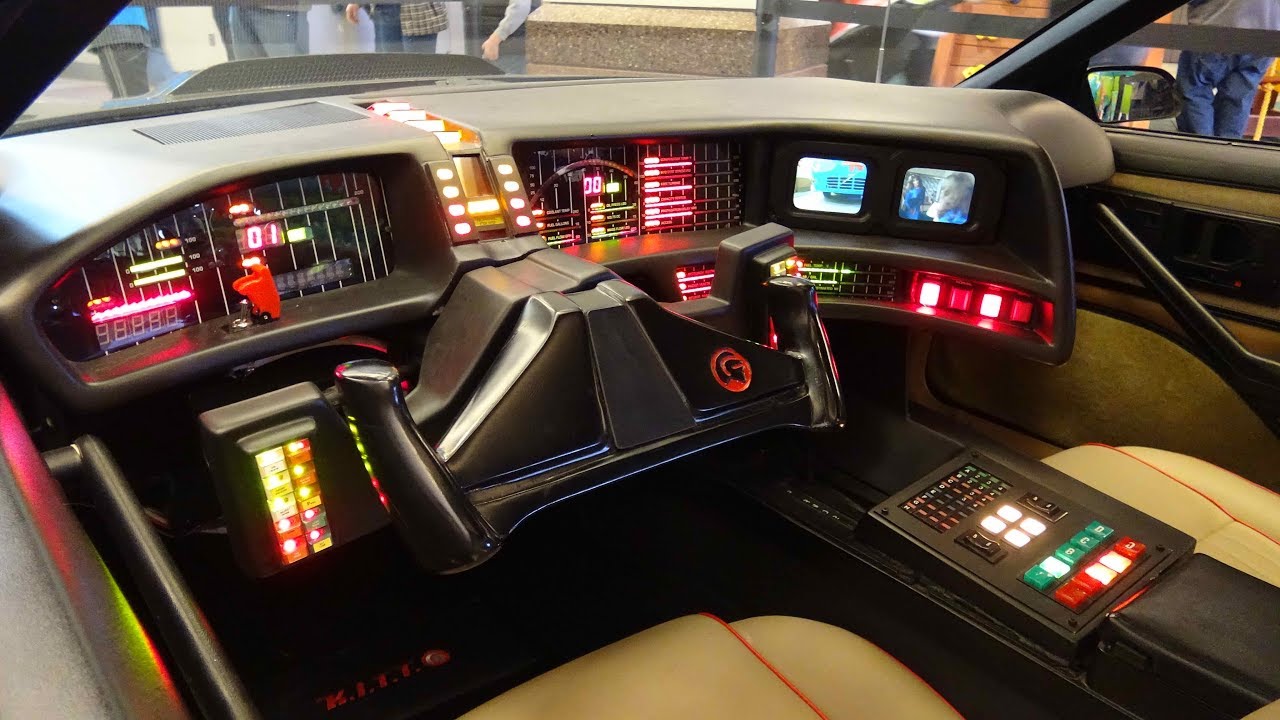
The Knight Industries Two Thousand, or K.I.T.T., from the TV series Knight Rider, is one of the most iconic dashboard designs of the 1980s. Based on a modified Pontiac Firebird Trans Am, it combined dual CRT monitors, hundreds of backlit buttons, and a pulsating “voice box” to create the ultimate high-tech fantasy cockpit.
For viewers and car enthusiasts, K.I.T.T. represented the car of the future, blending analog tactile control with futuristic digital visualization in a way that would influence automotive designers for decades.
K.I.T.T.’s dashboard is remembered for its retro-futuristic aesthetic. Rows of glowing LEDs, bar-graph displays, and small CRT screens created a visually rich, arcade-like environment.
Unlike the flat, menu-driven screens of modern vehicles, its design offered tangible interaction, giving the driver a real sense of control over complex systems. The dashboard wrapped around the driver to form a true cockpit, emphasizing engagement and immersion rather than minimalism.
Functionality pushed the limits of imagination for the era. K.I.T.T. featured a talking AI voice, predicting modern voice-controlled infotainment systems by decades. The dashboard displayed complex data, including chemical analysis, lie detection, and advanced diagnostics.
It also included buttons to activate autonomous driving, turbo boost, grappling hooks, and ejector seats, blending entertainment with futuristic technology. The front-mounted red scanner light, known as the Anamorphic Equalizer, acted as the AI’s visual signature, making the car feel alive and giving it a memorable sci-fi personality.
The dashboard exemplified playful, optimistic 1980s design. Every button and screen was designed to feel interactive and fun, reflecting a time when automotive technology was imagined as exciting and adventurous rather than purely functional.
While some modern vehicles, such as Teslas, have adopted elements of AI interaction and touchscreen controls, none capture the tactile, visually chaotic, and imaginative spirit of K.I.T.T.
K.I.T.T.’s interior remains a beloved cultural and design icon. Its combination of aircraft-style layout, glowing displays, voice alerts, and high-tech gadgetry cemented its place in automotive history as a benchmark of creativity and retro-futurism. Even as a fictional dashboard, it continues to inspire enthusiasts, designers, and replica builders, reminding the world of the bold and playful optimism of 1980s automotive imagination.
Looking back at these ten dashboards, it is clear that the 1980s were a period of fearless experimentation in car interiors. Designers balanced technology, ergonomics, and aesthetic daring to craft cockpits that were engaging, playful, and visually striking.
From the tactile, neon-lit displays of the Nissan 300ZX to the “Swiss Cheese” innovation of the Lancia Trevi, each interior pushed the boundaries of what a dashboard could be. Even fictional creations like K.I.T.T. inspired real-world design and embodied the era’s sense of wonder.
Modern dashboards, dominated by touchscreens and minimalism, often prioritize efficiency over personality. In contrast, these 1980s interiors celebrated interaction, immersion, and imaginative flair. They remind us of a time when automakers were unafraid to create bold, futuristic environments for drivers.
Revisiting these designs offers not only nostalgia but also inspiration, showcasing a golden age of dashboard creativity that continues to influence automotive design today.
Also read: Top 10 Cars That Still Avoid Subscription Features in 2026
