
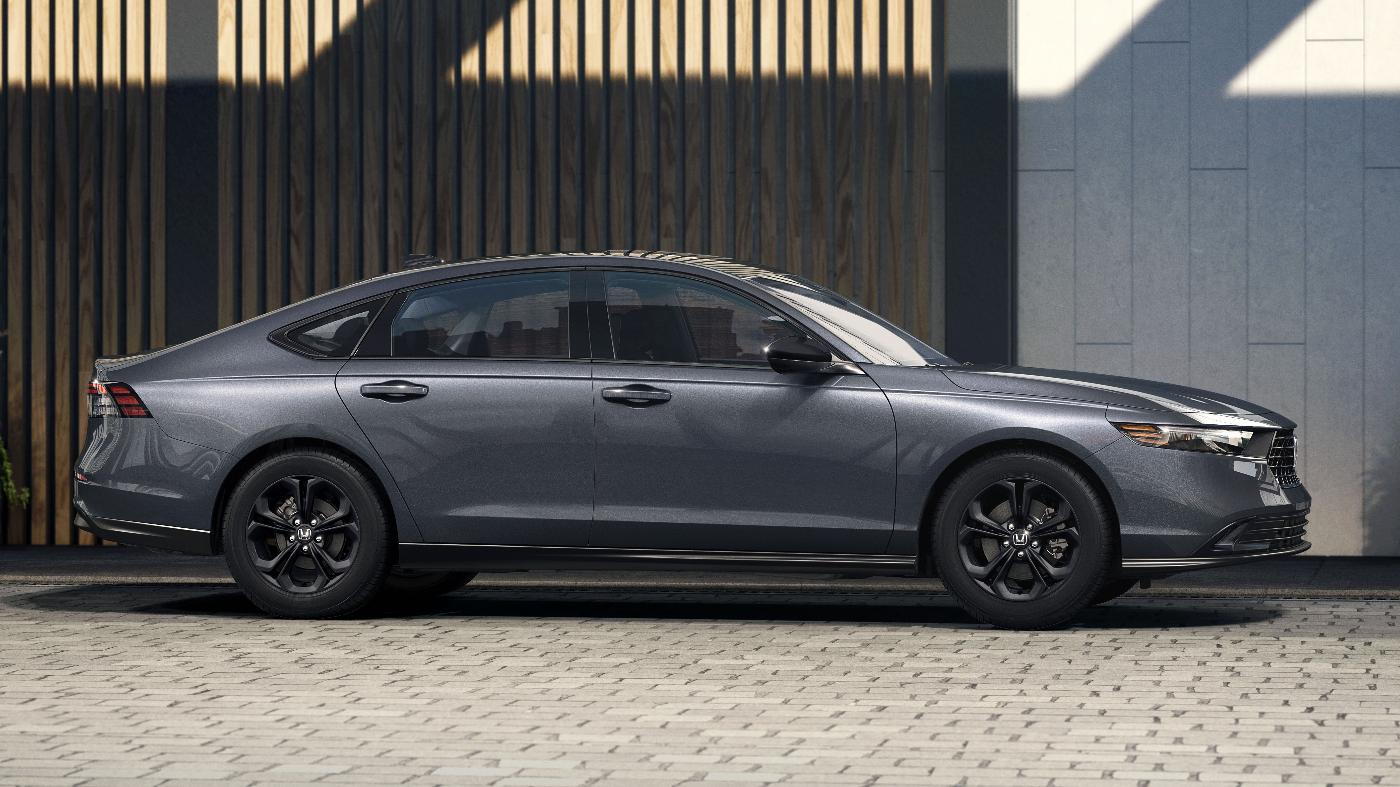
Modern car design has increasingly shifted toward efficiency, weight reduction, and packaging optimization. One of the most noticeable casualties of this trend is the traditional spare tire.
Many automakers now replace it with a tire repair kit, typically a sealant and compressor setup, to save space and improve fuel economy. However, this trade-off comes with real-world limitations, especially for drivers who frequently travel long distances or through areas with limited roadside assistance.
For U.S. drivers, where road trips and highway commuting are common, the presence or absence of a spare tire can significantly impact peace of mind. Below are five modern cars that still include a spare tire, followed by five that rely solely on a repair kit.
5 Modern Cars With Spare Tires
The humble spare tire has quietly become one of the rarest features in modern vehicles. Once considered essential, it’s now increasingly absent as automakers prioritize weight reduction, fuel efficiency, and packaging space.
In fact, a significant portion of newer vehicles no longer include a spare at all, relying instead on tire repair kits or run-flat tires, solutions that are often less practical in real-world puncture scenarios.
Despite this shift, some manufacturers still recognize the value of a physical backup. Whether it’s a compact “donut” spare or a full-size wheel, having one can make a critical difference, especially on long road trips, in remote areas, or during emergencies where roadside assistance isn’t immediately available. Vehicles that retain spare tires tend to prioritize practicality, reliability, and driver peace of mind over marginal efficiency gains.
In this article, we highlight five modern cars that still come equipped with spare tires. These models stand out in an industry trend moving in the opposite direction, offering a level of preparedness that many drivers still consider non-negotiable.
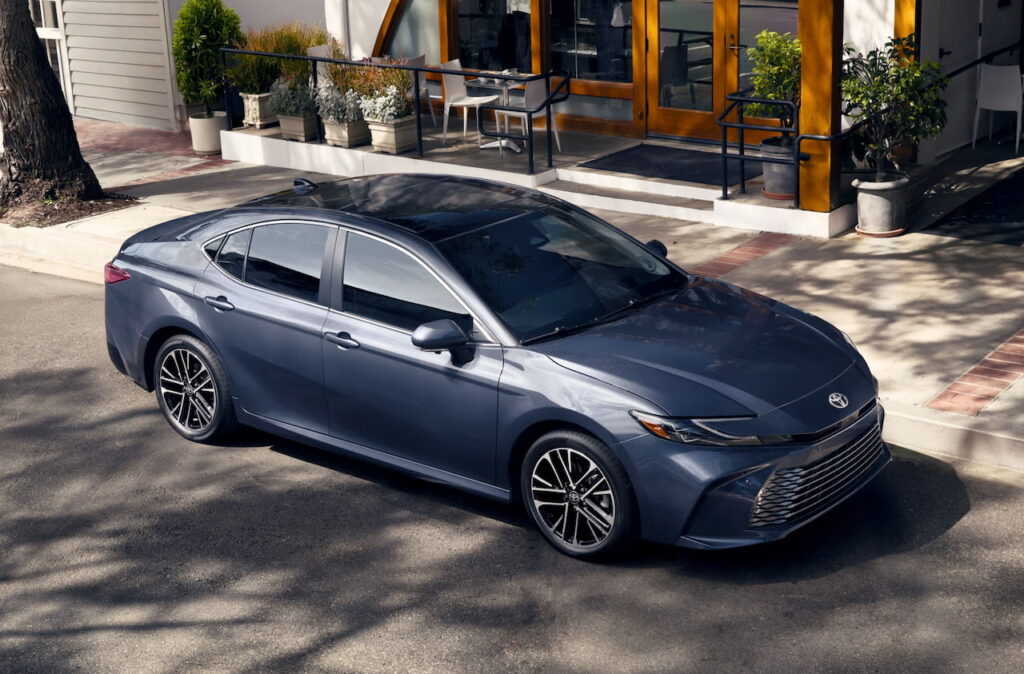
Toyota Camry
The Toyota Camry stands out as one of the few modern midsize sedans that still commonly includes a spare tire, making it a practical choice in an era where many manufacturers have shifted to repair kits. As a core product from Toyota, the Camry prioritizes reliability and real-world usability, and retaining a spare tire aligns with that philosophy.
In most recent model years, the Camry offers either a temporary spare tire (space-saver) or, in some trims and markets, a full-size spare, depending on configuration. The spare is neatly stored beneath the trunk floor, ensuring it does not compromise cargo space during normal use. This traditional setup provides a level of security that many newer vehicles no longer offer.
The inclusion of a spare tire is particularly valuable for drivers who travel long distances or drive in areas where roadside assistance may not be immediately available.
Unlike tire repair kits, which are limited in effectiveness and often unusable in cases of sidewall damage or severe punctures, a spare tire allows drivers to quickly replace a damaged tire and continue driving. This reduces downtime and eliminates dependence on towing services in many situations.
Another advantage is ease of use. The Camry’s spare tire setup includes the necessary tools, such as a jack and lug wrench, making it straightforward for drivers to perform a tire change. The process is familiar and does not rely on sealants or compressors, which can sometimes be messy or ineffective.
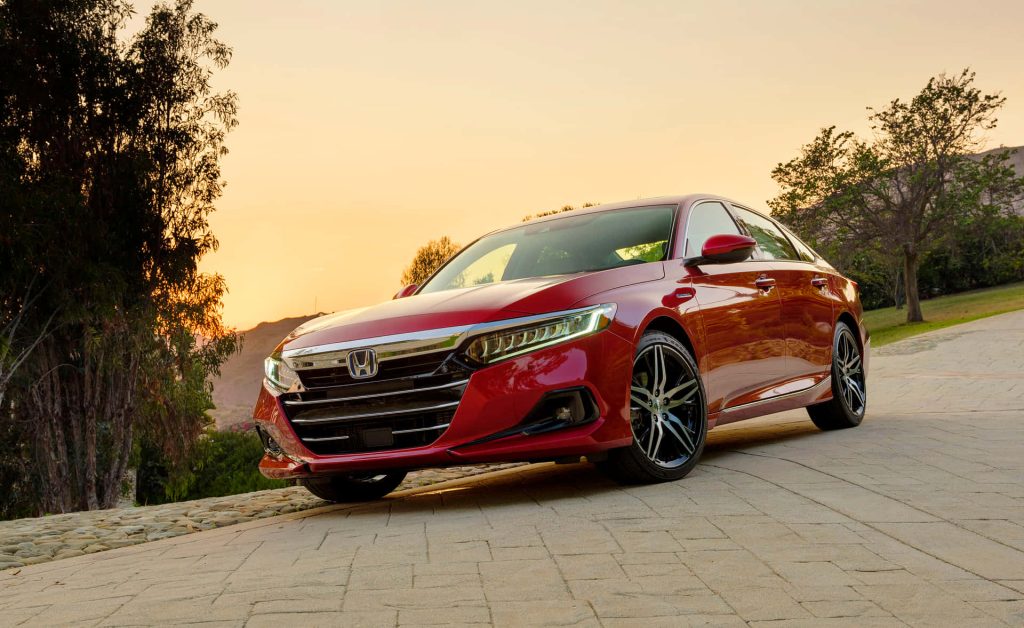
Honda Accord
The Honda Accord remains one of the few modern midsize sedans that still offers a spare tire in many configurations, making it a practical choice for drivers who value preparedness over minimal weight savings. As a flagship sedan from Honda, the Accord balances efficiency, comfort, and real-world usability, retaining a spare tire is part of that approach.
In most gasoline-powered trims, the Accord typically includes a compact temporary spare tire stored beneath the trunk floor. This space-efficient design preserves cargo capacity while ensuring that drivers have a reliable backup in case of a puncture. The spare is accompanied by essential tools such as a jack and lug wrench, allowing for straightforward roadside replacement.
This feature is increasingly important as many competitors have transitioned to tire repair kits, which have clear limitations. Repair kits are generally effective only for small tread punctures and are useless in situations involving sidewall damage, blowouts, or severe tire failure. In contrast, the Accord’s spare tire provides a complete and immediate solution, enabling drivers to continue their journey without waiting for assistance.
The Accord’s low ride height and sedan layout also make tire changes relatively manageable compared to larger vehicles. The process is familiar and does not require specialized knowledge, which adds to its practicality for everyday users. For commuters, families, and long-distance drivers, this reliability can be a significant advantage.
Subaru Outback
The Subaru Outback is one of the few modern crossovers that continues to offer a spare tire as standard equipment, reinforcing its reputation as a practical, adventure-ready vehicle. Designed for versatility and off-road capability, the Outback from Subaru prioritizes real-world usability over marginal efficiency gains, making the inclusion of a spare tire a logical choice.
Unlike many vehicles that have transitioned to repair kits, the Outback typically includes a full-size or temporary spare tire, depending on trim and market.
The spare is stored beneath the rear cargo floor, preserving the usability of the trunk while keeping the tire easily accessible when needed. This setup is especially valuable for drivers who frequently travel on rough roads, gravel, or remote terrain where tire damage is more likely.

The Outback’s positioning as an outdoor-oriented vehicle makes a spare tire almost essential. Repair kits are limited in capability and often ineffective for sidewall damage or larger punctures, situations that are more common in off-road or rural driving conditions. A spare tire, on the other hand, provides a reliable, immediate solution, allowing drivers to continue their journey without relying on external assistance.
Another advantage is the Outback’s higher ride height and accessible design, which make changing a tire relatively manageable compared to lower sedans. Subaru includes the necessary tools, such as a jack and wrench, ensuring that drivers are fully equipped to handle a tire change in the field. This aligns with the brand’s focus on self-sufficiency and all-terrain capability.
The inclusion of a spare does come with minor trade-offs, such as a slight increase in weight and a small reduction in underfloor storage flexibility. However, Subaru has managed these compromises effectively, maintaining strong cargo practicality while still offering this critical feature.
In real-world use, the spare tire contributes significantly to driver confidence, particularly for those who venture beyond urban environments. Whether on long road trips, camping excursions, or daily commutes in areas with poor road conditions, having a spare ensures that unexpected tire issues do not become major disruptions.
It’s also worth noting that, unlike some hybrid or electric vehicles that eliminate the spare due to packaging constraints, the Outback retains a traditional layout that accommodates it without compromise.
Toyota RAV4
The Toyota RAV4 typically comes equipped with a spare tire, especially in gas-powered and non-hybrid trims.
As one of the best-selling SUVs in the U.S., the RAV4 balances efficiency with practicality. Including a spare ensures drivers are prepared for unexpected tire failures during daily commutes or longer trips.
The Toyota RAV4 remains one of the few compact SUVs that still offers a spare tire in many configurations, making it a practical and user-focused choice in a segment increasingly shifting toward repair kits. As a cornerstone model from Toyota, the RAV4 emphasizes reliability and everyday usability, both of which are reinforced by retaining a spare.
In most gasoline-powered trims, the RAV4 typically includes a temporary spare tire stored beneath the rear cargo floor. This design keeps the spare out of sight while preserving usable trunk space for luggage and daily items. The setup also includes essential tools, allowing drivers to perform a tire change without needing external assistance.

The value of a spare tire becomes clear in real-world situations. Unlike tire repair kits, which are limited to small punctures, a spare tire can handle a wide range of tire failures, including blowouts and sidewall damage. This is particularly important for SUV buyers, who may drive on rough roads, construction zones, or long highway routes where immediate help is not always available.
The RAV4’s ride height and SUV proportions also make it relatively easy to change a tire compared to lower vehicles. The process is straightforward and familiar, which adds to its practicality for everyday drivers. For families and long-distance travelers, this feature provides an added layer of reliability.
However, availability varies depending on the powertrain. Hybrid and plug-in hybrid (RAV4 Prime) models often do not include a spare tire, as the battery pack occupies the underfloor storage space. Instead, these versions typically come with a repair kit. This reflects a broader industry trend, where electrification introduces packaging constraints that limit traditional features like spare tires.
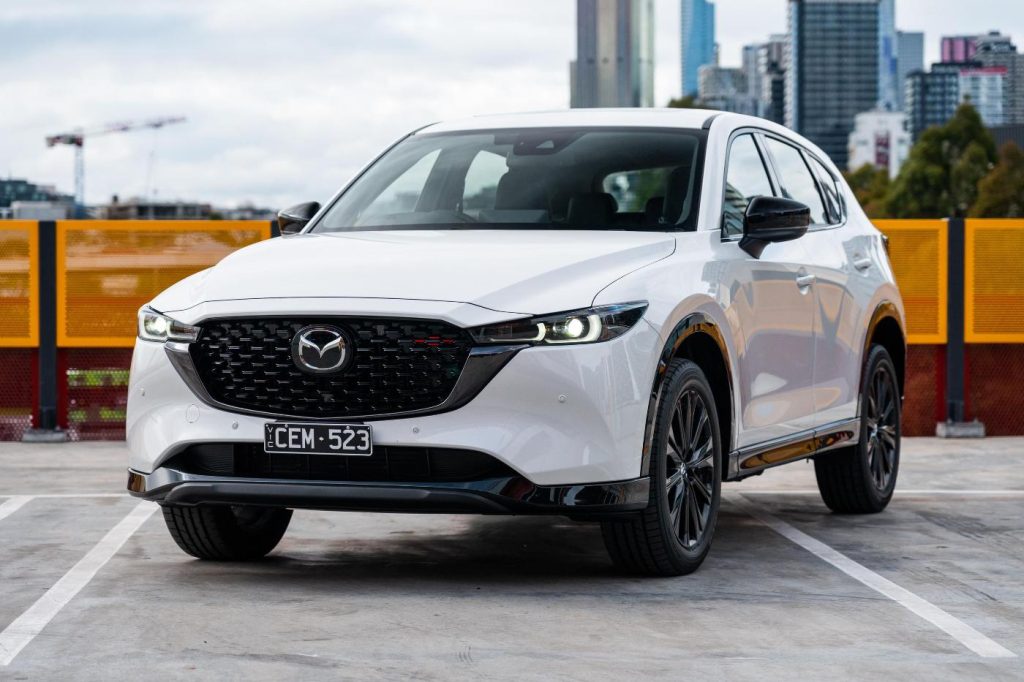
Mazda CX-5
The Mazda CX-5 is one of the few compact SUVs that continues to offer a spare tire in most non-hybrid configurations, making it a practical choice in a segment where many rivals have shifted to tire repair kits. As part of Mazda’s focus on balancing driving dynamics with real-world usability, the inclusion of a spare tire reinforces the CX-5’s everyday practicality.
In most trims, the CX-5 is equipped with a compact temporary spare tire, stored neatly beneath the rear cargo floor. This underfloor placement ensures that cargo space remains largely unaffected while keeping the spare easily accessible when needed. Mazda also includes the necessary tools, such as a jack and lug wrench, allowing drivers to perform a tire change without relying on external assistance.
The advantage of having a spare tire is significant in real-world scenarios. Unlike repair kits, which are limited to sealing small punctures in the tread, a spare tire provides a complete solution for a wider range of tire damage, including blowouts and sidewall failures. This is particularly useful for SUV owners who may encounter rough roads, construction zones, or long highway drives where immediate help may not be available.
The CX-5’s moderate ride height further enhances usability. Compared to low-slung sedans, accessing and replacing a tire is more manageable, making roadside changes less physically demanding. This aligns with the CX-5’s positioning as a practical yet refined daily driver.
5 Modern Cars That Only Give You a Repair Kit
The disappearance of the spare tire has become one of the most noticeable, and controversial, changes in modern vehicles. Today, a large percentage of new cars no longer include any form of spare, replacing it with a compact tire repair kit instead.
In many cases, these kits consist of a sealant canister and an air compressor designed to temporarily patch small punctures and get the vehicle moving again.
Automakers have largely made this shift to reduce weight, save space, and improve fuel efficiency. Eliminating a spare tire can cut dozens of pounds from a vehicle while freeing up room for batteries, cargo, or additional features—especially in compact cars and electric vehicles. At the same time, repair kits are cheaper to include, making them an attractive cost-saving measure for manufacturers.
In this article, we highlight five modern cars that only come equipped with a repair kit instead of a spare tire. These models reflect a growing industry trend, where efficiency and packaging take priority over traditional roadside preparedness.
Tesla Model 3
The Tesla Model 3 represents a modern shift in automotive design, and one of the clearest examples of this is its lack of a spare tire. Unlike traditional sedans, the Model 3 from Tesla relies on a tire repair kit and roadside assistance rather than providing a physical spare wheel.
The primary reason for this decision is packaging efficiency. Electric vehicles require large battery packs, and in the Model 3, the battery is mounted under the floor of the vehicle. This layout improves handling and interior space but eliminates the traditional underfloor storage area where a spare tire would normally be placed. Tesla instead uses that space to maximize cabin room and maintain a low center of gravity.

In place of a spare, the Model 3 includes a tire repair kit, which typically consists of a sealant and air compressor. While this solution saves weight and contributes to improved range, it comes with limitations. Repair kits are only effective for small punctures in the tread area and cannot fix more serious damage such as sidewall cuts or blowouts. In those cases, drivers must rely on towing or mobile service.
BMW 3 Series
The BMW 3 Series reflects a broader shift in modern automotive design by eliminating the traditional spare tire in favor of run-flat tire technology. As a core model from BMW, the 3 Series prioritizes performance, weight reduction, and packaging efficiency, decisions that directly influence its approach to tire failure solutions.
Instead of including a spare, most modern 3 Series models come equipped with run-flat tires (RFTs). These tires are designed with reinforced sidewalls that allow the vehicle to continue driving for a limited distance, typically up to 50 miles (80 km), at reduced speeds after a puncture. This eliminates the immediate need to stop and replace a tire on the roadside.

The absence of a spare tire allows BMW to optimize trunk space and reduce vehicle weight. Without the need for a spare wheel well, the cargo area remains more flexible and spacious. Additionally, removing the spare contributes to improved fuel efficiency and handling, aligning with BMW’s focus on driving dynamics.
Mercedes-Benz C-Class
The Mercedes-Benz C-Class follows the modern industry trend of eliminating the traditional spare tire, relying instead on alternative solutions such as run-flat tires or tire repair kits. As a compact luxury sedan from Mercedes-Benz, the C-Class prioritizes refinement, efficiency, and packaging optimization, factors that directly influence this design decision.
In most recent model years, the C-Class is equipped with run-flat tires (RFTs). These tires feature reinforced sidewalls that allow the vehicle to continue driving for a limited distance, typically around 50 miles (80 km), after a puncture. This gives drivers enough range to reach a repair facility without needing to stop and change a tire on the roadside.
The absence of a spare tire provides several advantages. First, it allows Mercedes-Benz to maximize trunk space and improve weight distribution, contributing to better fuel efficiency and handling. In a segment where comfort and driving dynamics are key selling points, reducing unnecessary weight aligns with the vehicle’s engineering goals.
However, this approach comes with notable trade-offs. Run-flat tires tend to be more expensive to replace and can deliver a firmer ride compared to conventional tires due to their stiffer construction. Additionally, not all punctures are manageable, severe damage or sidewall failure can still leave the vehicle immobile, requiring roadside assistance.
Hyundai Elantra
The Hyundai Elantra reflects the ongoing transition in the compact sedan segment, where spare tire availability depends heavily on trim and configuration. As a high-volume model from Hyundai Motor Group, the Elantra balances affordability, efficiency, and practicality, but like many modern vehicles, it does not universally include a spare tire.
In many recent model years, base and mid-level trims of the Elantra often include a temporary spare tire stored beneath the trunk floor. This setup mirrors traditional designs, with the spare neatly integrated into the cargo area along with a jack and basic tools. For drivers who prioritize reliability and self-sufficiency, this configuration offers a clear advantage over repair-only solutions.
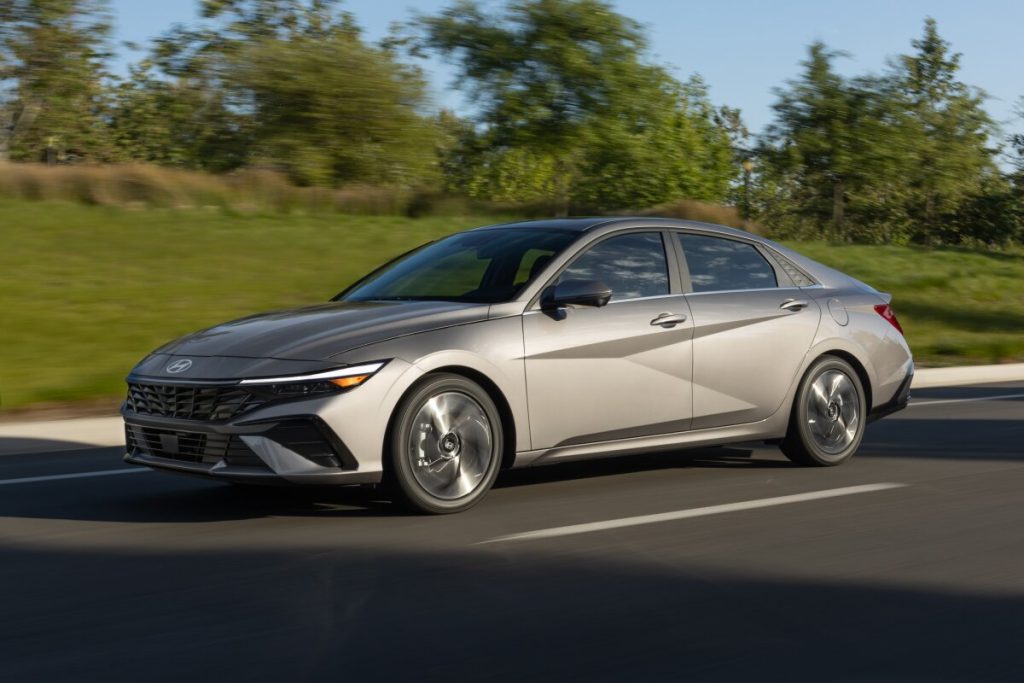
However, higher trims and hybrid versions frequently replace the spare tire with a tire repair kit. This change is primarily driven by packaging constraints, particularly in hybrid models where battery placement occupies underfloor space, as well as efforts to reduce vehicle weight and improve fuel efficiency. As a result, the availability of a spare tire in the Elantra is not consistent across the lineup.
Kia K5
The Kia K5 reflects the modern midsize sedan approach, where spare tire availability varies by trim and configuration rather than being standard across the lineup. As a key model from Kia, the K5 prioritizes styling, efficiency, and interior packaging—factors that influence its approach to tire backup solutions.
In many standard gasoline trims, the K5 may still include a temporary spare tire stored beneath the trunk floor. This setup mirrors traditional sedan design, keeping the spare hidden while preserving usable cargo space. When equipped, it provides a clear advantage in real-world usability, allowing drivers to quickly replace a damaged tire and continue driving without relying on roadside assistance.
However, higher trims and certain configurations often replace the spare tire with a tire mobility kit (TMK). This typically includes a sealant and air compressor designed to temporarily fix minor punctures. The shift toward repair kits is driven by weight reduction and efficiency goals, as well as the need to optimize interior and trunk packaging.

The difference between these two approaches is significant. A spare tire offers a complete and reliable solution for a wide range of tire failures, including blowouts and sidewall damage. In contrast, a repair kit is limited in capability and may not work in more severe situations, leaving the driver dependent on towing or external assistance.
From a usability standpoint, the K5’s sedan layout makes accessing the spare, when equipped, straightforward and familiar. The trunk design allows easy access to the underfloor compartment, and the included tools make tire changes manageable even for less experienced drivers.
The K5’s design philosophy reflects broader industry trends. Automakers increasingly remove spare tires to reduce vehicle weight, improve fuel efficiency, and meet emissions targets. While this offers measurable benefits, it comes at the cost of reduced self-sufficiency in the event of a tire failure.
For buyers, the key consideration is trim selection. Choosing a version of the K5 that includes a spare tire can significantly improve practicality and peace of mind, particularly for those who frequently travel long distances or drive in areas with limited roadside support.
The shift from spare tires to repair kits reflects broader automotive trends focused on efficiency and packaging. However, it introduces a clear trade-off between convenience and preparedness.
Vehicles that retain a spare tire offer greater independence and reliability, particularly for long-distance drivers or those in rural areas. In contrast, cars equipped only with repair kits rely more heavily on roadside assistance and are less capable in the event of serious tire damage.
For buyers, the decision comes down to usage. If you prioritize convenience and peace of mind, a spare tire remains a valuable feature. If efficiency and modern design are more important, a repair kit may be sufficient, but with limitations that are worth understanding before making a purchase.
