

Modern cars are increasingly equipped with keyless entry and smart technology, yet traditional metal keys remain a standard feature in many vehicles. These keys provide security, reliability, and simplicity that electronic systems cannot always guarantee. Unlike keyless fobs, mechanical keys are immune to relay attacks, software glitches, and dead batteries.
They offer tactile feedback that gives drivers a clear sense of control and reduces confusion. Metal keys are also cost-effective to produce, easy to replace or duplicate, and durable under extreme environmental conditions.
For manufacturers, mechanical keys reduce reliance on complex electronics and microchips, helping to maintain production efficiency during supply shortages. By combining practical reliability, physical authentication, and long-term durability, traditional metal keys continue to serve as an essential tool for drivers and automakers who prioritize safety, convenience, and dependable access over purely digital solutions.
1. Superior Security of Traditional Metal Keys Against Relay Attacks
Modern keyless entry systems, while convenient, are vulnerable to “relay attacks,” a sophisticated method where thieves steal a vehicle without ever touching the owner’s key fob.
This attack uses two devices: one near the house to capture the key fob’s signal, and another near the car to relay it, tricking the vehicle into unlocking and starting as if the owner is present. Such attacks can be executed in under a minute, posing a serious risk for keyless cars.
Traditional metal keys, however, are immune to this type of theft. Unlike keyless fobs, physical keys do not broadcast radio signals, so there is nothing for thieves to intercept or amplify. To steal a car with a metal key, an intruder must physically possess the key or attempt labor-intensive methods such as hotwiring, which are difficult on modern vehicles equipped with immobilizer chips.
The advantages of metal keys include immunity to signal boosting, prevention of silent or “invisible” entry, and reliability independent of battery life, software, or firmware. They also eliminate “passive” theft scenarios, where a car can be tricked into believing the key is nearby.
While lacking the convenience of keyless systems, traditional keys offer a foolproof defense against the fastest-growing car theft method. For owners of luxury or high-risk vehicles, the enhanced security and peace of mind provided by metal keys remain compelling reasons to retain this time-tested technology.
2. Significant Manufacturing Cost Reduction with Traditional Keys
Cost efficiency is a major concern in the automotive industry, especially for entry-level and economy vehicles. Installing a keyless start system is not simple; it requires multiple low-frequency antennas, a complex Electronic Control Unit (ECU) to manage authentication, specialized wiring, and software to coordinate these components. These requirements significantly increase manufacturing costs.
Using traditional metal keys with mechanical ignition cylinders allows manufacturers to save hundreds of dollars per vehicle. When production is scaled across hundreds of thousands of units, such as base-trim subcompacts or fleet vehicles, these savings become substantial.
Lower production costs help manufacturers offer more affordable vehicles to a wider range of consumers. Mechanical key systems are also standardized, which reduces the need for continuous research and development, software updates, and complex testing required for electronic systems.
Traditional keys provide additional cost benefits over a vehicle’s lifetime. They are inexpensive to replace, highly durable, and reliable. They do not depend on batteries, software, or signal strength, which reduces maintenance and the risk of unexpected failures. Mechanical keys also simplify supply chains, avoiding production delays caused by shortages of electronic components or microchips.
Other advantages include resistance to extreme temperatures and water damage, as well as predictable performance. While keyless systems offer convenience, traditional metal keys remain a low-cost, durable, and dependable alternative. For manufacturers and consumers looking to reduce both production and ownership costs, traditional keys continue to be an effective and practical solution.
3. Mitigating Global Semiconductor Shortages with Traditional Keys
The global semiconductor shortage that began in 2020 exposed the fragility of modern automotive supply chains. Smart keys and keyless entry systems rely heavily on microchips, not only in the fob but also in the vehicle’s modules that communicate with it. When chip supplies are limited, manufacturers face production delays or must find alternative solutions.
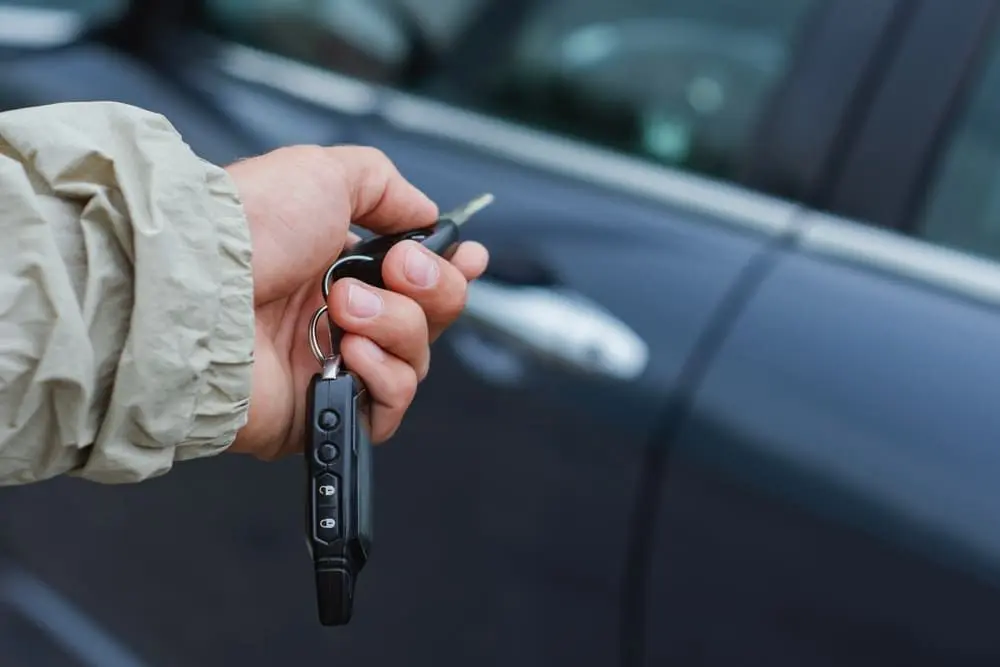
To address this, companies like Toyota and Lexus began shipping some vehicles with one smart key and one traditional mechanical key. This approach allowed production to continue despite microchip scarcity. Vehicles designed for mechanical keys bypass the need for multiple high-demand semiconductors, making production more resilient to global economic shifts and trade disruptions.
Mechanical keys provide several practical advantages in this context. They do not require microchips, transponders, or electronic modules to function, eliminating dependency on fragile supply chains.
This helps manufacturers maintain production timelines and allocate limited chips to higher-priority systems, such as engine management or advanced safety features. In some cases, automakers deliver vehicles with a mechanical key as a temporary solution, retrofitting a second electronic key when chip supplies stabilize.
Beyond supply chain considerations, traditional keys offer long-term reliability. They are immune to dead batteries, software glitches, and connectivity issues that can affect smart keys.
By using mechanical keys either as a primary solution or as a backup, manufacturers ensure that vehicles remain functional under technological or supply constraints. This practical approach demonstrates why traditional keys continue to play a role in modern cars, providing both operational reliability and resilience against semiconductor shortages.
4. Zero Battery Dependency and Reliability of Traditional Keys
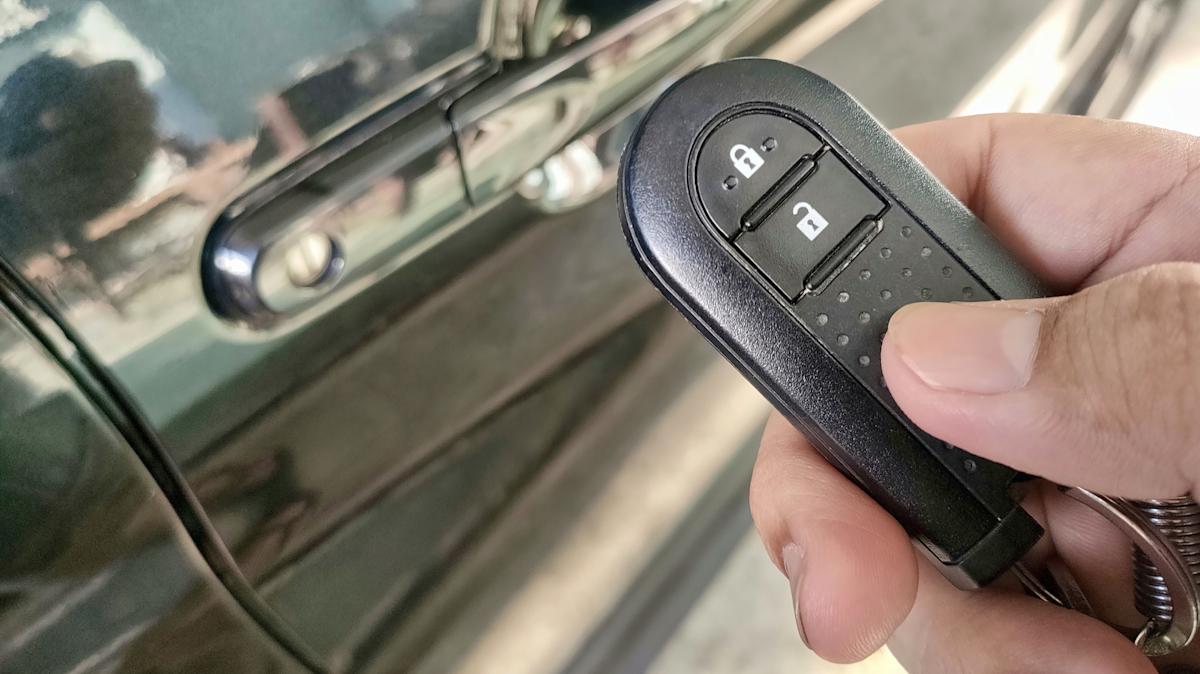
A common failure point in modern smart keys is the CR2032 button cell battery. These batteries typically last two to four years but often die at inconvenient times, such as during a storm, late at night, or in remote areas.
While keyless cars provide emergency backup options, many drivers find them confusing and stressful. Traditional metal keys, in contrast, are purely mechanical and require no electricity to operate. They remain fully functional even after years of storage, with no risk of deprogramming or electronic failure.
The mechanical connection between a metal key and the ignition cylinder ensures unmatched reliability. Traditional keys are immune to software glitches, signal interference from nearby cell towers, and failures caused by dead batteries. For drivers in rural areas or those who rely on vehicles for emergency services, this consistent “uptime” is essential.
The advantages of traditional keys include zero battery dependency, fail-safe operation, and immunity to environmental damage such as water, heat, or cold. They are highly durable, often lasting the lifetime of a vehicle, and offer a physical, tangible method of access that many owners find more secure and reassuring than wireless alternatives.
Additionally, metal keys are cost-effective and simple to replace, avoiding the high expenses associated with programming or replacing smart key fobs. Even in vehicles equipped with keyless entry, manufacturers often include a hidden mechanical key as a backup, underscoring the value of reliability. For these reasons, traditional keys remain a preferred solution in modern vehicles where consistent operation and peace of mind are priorities.
Also read: 5 Cars That Handle 200,000 Miles Gracefully vs 5 That Fall Apart
5. Durability in Extreme Environments
Modern smart keys are essentially small computers housed in plastic cases, which makes them highly sensitive to environmental stress. Exposure to water, extreme heat, or freezing temperatures can easily damage the internal circuitry. This fragility is a major concern for vehicles used in off-road, construction, or fleet applications, where reliability is critical.
Traditional metal keys, by comparison, are extremely durable. Made from high-strength alloys such as brass or nickel-silver, they can withstand heat, sub-zero cold, heavy moisture, and physical impacts without losing functionality.
Dropping a metal key, stepping on it, or covering it in mud does not prevent it from unlocking or starting a vehicle. This makes metal keys especially valuable for work trucks, adventure vehicles, and fleet vans designed to operate in harsh conditions.
The advantages of metal keys include immunity to extreme temperatures, water, and humidity, no dependency on batteries, and resistance to physical wear and tear. They are also unaffected by electronic interference such as signal jamming or relay attacks, which pose risks to keyless systems.
For drivers in rural, maritime, or remote areas, or those who rely on vehicles for work, mechanical keys provide unmatched reliability. Even as keyless systems become more common, including a traditional key as a primary option or as a hidden backup ensures that a vehicle can always be accessed when electronic systems fail.
The ruggedness and dependable performance of metal keys make them essential for situations where electronic devices may be compromised.
6. Affordable Replacement and Duplication of Traditional Keys
One of the most significant advantages of traditional metal keys is their low cost for replacement and duplication. Losing a modern smart key can be expensive, with replacement costs ranging from $200 to $600.
This price includes the FOB hardware, emergency blade cutting, and labor to pair the key with the vehicle’s computer, often requiring a visit to a licensed dealership. The reliance on dealerships for replacement gives manufacturers a virtual monopoly and can be frustrating for owners.
Traditional metal keys, including those with basic transponder chips, are far more consumer-friendly. Standard mechanical keys can be duplicated at most hardware stores or locksmiths for under $20 for older styles and around $50 to $100 for keys with simple chip programming.
This accessibility allows vehicle owners to seek competitive pricing and avoid expensive dealership fees. Families with multiple drivers or people prone to misplacing keys benefit from the ease and affordability of creating spares.
The advantages of traditional keys include drastically lower costs, straightforward duplication, and the absence of electronic programming. Mechanical keys function through the physical alignment of pins and tumblers, requiring no connection to the car’s computer. They also serve as a reliable emergency backup in case a smart key fails due to dead batteries, water damage, or electronic malfunction.
Traditional keys are ideal for shared vehicles, where creating affordable extra keys is simple, reducing the stress and financial burden of losing high-tech keys. Their durability, low maintenance, and cost efficiency make them an attractive option for budget-conscious consumers.
While keyless systems dominate, many manufacturers still include or exclusively use traditional keys to offer a practical, reliable, and inexpensive solution for vehicle access, ensuring convenience without the high costs associated with electronic fobs.
7. Intuitive Simplicity and Human-Centered Design
As vehicles become more computerized, many drivers experience “feature fatigue” with complex systems like push-button starts. It can be difficult to tell whether the engine has started or is in “Accessory” mode. In hybrid or electric vehicles, the lack of engine noise can make this even more confusing.
Traditional metal keys provide clear tactile and auditory feedback. Drivers feel the mechanical resistance when turning the key, and the positions Off, Acc, On, and Start are physically distinct. This creates a direct sense of control and certainty about the vehicle’s operation.
The simplicity of a mechanical key reduces cognitive load and eliminates guesswork. Drivers know the car is off when the key is removed. For older drivers or those less comfortable with technology, a mechanical key is a familiar and reliable interface.
There is psychological comfort in performing a physical action to lock, unlock, or start a car. In a time when touchscreens and electronic buttons are replacing physical controls, the traditional key remains one of the few purely tactile interfaces in vehicles.
Mechanical keys offer practical advantages, including zero learning curve, tactile feedback, and dependable operation under all conditions. They do not require batteries, are not affected by signal interference, and resist extreme temperatures, moisture, and physical impacts. They are durable, often lasting the life of the vehicle, and inexpensive to replace at local locksmiths or hardware stores.
For entry-level cars, fleet vehicles, and rugged or commercial applications, the intuitive simplicity of a mechanical key outweighs the convenience of electronic systems. Traditional keys provide predictable performance, reduce frustration, and offer a human-centered interface.
Automakers continue to include or prioritize mechanical keys to maintain these practical benefits and ensure a consistent, reliable experience that modern keyless systems cannot always guarantee.

8. Physical Authentication and Failsafe Security
In a digital world, traditional metal keys provide a reliable analog fallback that ensures vehicle access under any circumstances. Unlike software-based keyless systems, mechanical keys require physical manipulation, making them much harder for criminals to bypass.
If a car experiences a total electrical failure, such as a blown fuse, short circuit, or dead 12V battery, keyless systems may fail to unlock the doors. Vehicles designed with a traditional keyhole are inherently prepared for these situations, offering a permanent, non-electronic method to access the car.
Metal keys also serve as a deterrent against high-tech theft. Relay attacks, which amplify a key fob’s signal to unlock and start a car remotely, are ineffective against mechanical keys.
Physical possession of the key is required, and forced entry is noisy and time-consuming, making vehicles with traditional keys less appealing targets for thieves. Research shows that up to 97 percent of keyless cars are vulnerable to relay attacks, highlighting the security advantage of mechanical systems.
Mechanical keys provide immediate, tangible feedback when inserted and turned, giving drivers a clear sense of control. They operate without batteries and are immune to software glitches, radio interference, or hacking. This makes them a reliable failsafe in extreme conditions, including heat, cold, or moisture, where electronic fobs may malfunction.
Traditional keys are also cost-effective and low-maintenance. They are durable, often outlasting the vehicle itself, and can be duplicated easily and cheaply at hardware stores or locksmiths. Their simplicity, reliability, and physical security make them ideal for users seeking a dependable and low-risk solution.
Even in the age of digital keyless systems, metal keys remain the ultimate failsafe, offering both security and peace of mind for drivers who prioritize tangible, reliable access to their vehicles.
Traditional metal keys continue to play a vital role in modern vehicles despite the rise of keyless systems. They provide physical security, resist relay attacks, and operate without batteries or software. Their durability ensures consistent performance in extreme conditions, and their tactile feedback gives drivers clear control.
Metal keys are affordable, easy to duplicate, and provide a dependable backup when electronic systems fail. For families, fleet operators, and adventure enthusiasts, mechanical keys deliver peace of mind and reliable access to vehicles. Even as technology advances, the practical benefits of metal keys, including reliability, cost-effectiveness, and failsafe operation, ensure their continued relevance.
The ongoing use of traditional keys demonstrates that simplicity, security, and human-centered design remain essential in automotive design, proving that mechanical keys still serve an important function in modern car ownership.
Also read: 10 Reasons Why Your EV Battery Range Drops Suddenly in Winter
