
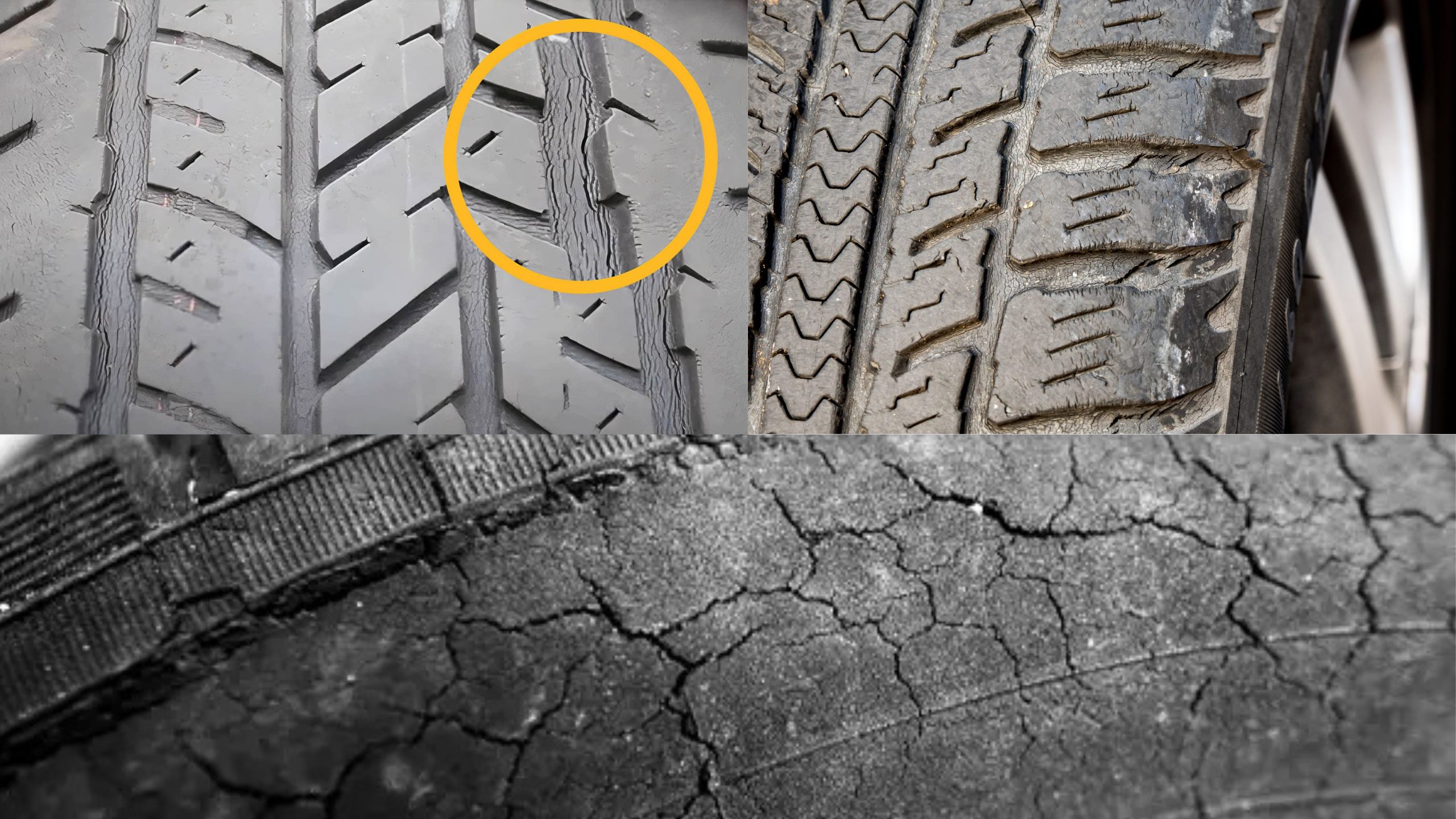
Most drivers check their tires by looking at the tread depth. They press a coin into the grooves and feel satisfied if the rubber looks thick enough.
But this approach misses a critical truth about tire safety. Tires age from the inside out. The rubber compounds break down slowly, even when the tire sits in a garage untouched.
A tire can have perfectly deep tread and still be dangerously old. The chemical structure of rubber degrades over time due to heat, oxygen, and UV exposure. This process happens whether you drive the tire or not. In fact, a spare tire stored in a trunk can age faster than a tire actively used on the road.
Tire manufacturers and safety organizations widely agree that tires older than six to ten years should be replaced.
This is true regardless of how they look on the surface. The danger is not always visible to the naked eye. Internal cracking, chemical breakdown, and structural fatigue can all happen silently.
Knowing the real signs of tire aging can save your life. It can prevent blowouts on highways and loss of vehicle control. This guide walks you through ten specific indicators that your tires are too old, even when the tread still looks deep and the rubber feels firm.
1. Sidewall Cracking (Dry Rot)
One of the earliest and most telling signs of an aging tire is cracking along the sidewall. These cracks appear as thin lines running across or along the rubber surface. They may look minor at first glance, but they signal serious internal degradation.
Rubber is made with chemical compounds called antioxidants and antiozonants. These compounds fight off the natural breakdown caused by oxygen and ozone in the air. Over time, these protective chemicals get depleted. Once they are gone, the rubber begins to harden and crack.
The sidewall is one of the most structurally important parts of a tire. It flexes with every rotation and supports the entire weight of your vehicle. When sidewall cracks appear, that structural integrity is already compromised.
You might notice these cracks are very thin at first. Do not dismiss them because they look shallow. Even hairline cracks can indicate that the rubber has lost significant elasticity. A tire that cannot flex properly is a tire heading toward failure.
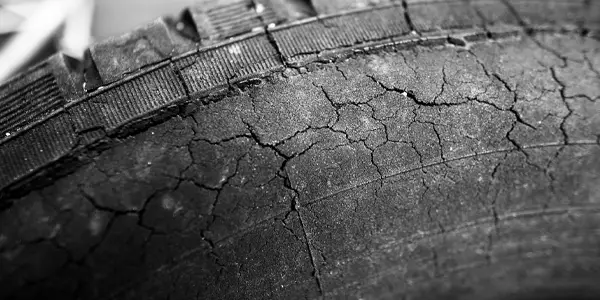
Heat accelerates sidewall cracking dramatically. If you live in a hot climate or park your car in direct sunlight regularly, your tires will develop dry rot faster. The UV rays from sunlight attack the rubber compounds aggressively. This is why tires in desert climates often show cracking well before tires in cooler regions.
Sidewall cracks are different from tread wear. Tread wear is predictable and measurable. Sidewall cracking is a chemical process that depends on environment, storage, and age. You cannot reverse it once it starts. The only solution is replacement.
Check your sidewalls every month by crouching beside each tire. Run your fingers along the surface and look for lines, grooves, or raised sections. Pay attention to the area near the rim as well. Cracks near the bead area, where the tire meets the wheel, are especially dangerous. They can cause sudden air loss without warning.
Even a tire with eight millimeters of tread depth can be dangerously cracked along the sidewall. Never let the tread reading make you ignore the sidewall condition. These are two completely separate indicators of tire health. Always check both together.
2. Tread Cracking Between the Grooves
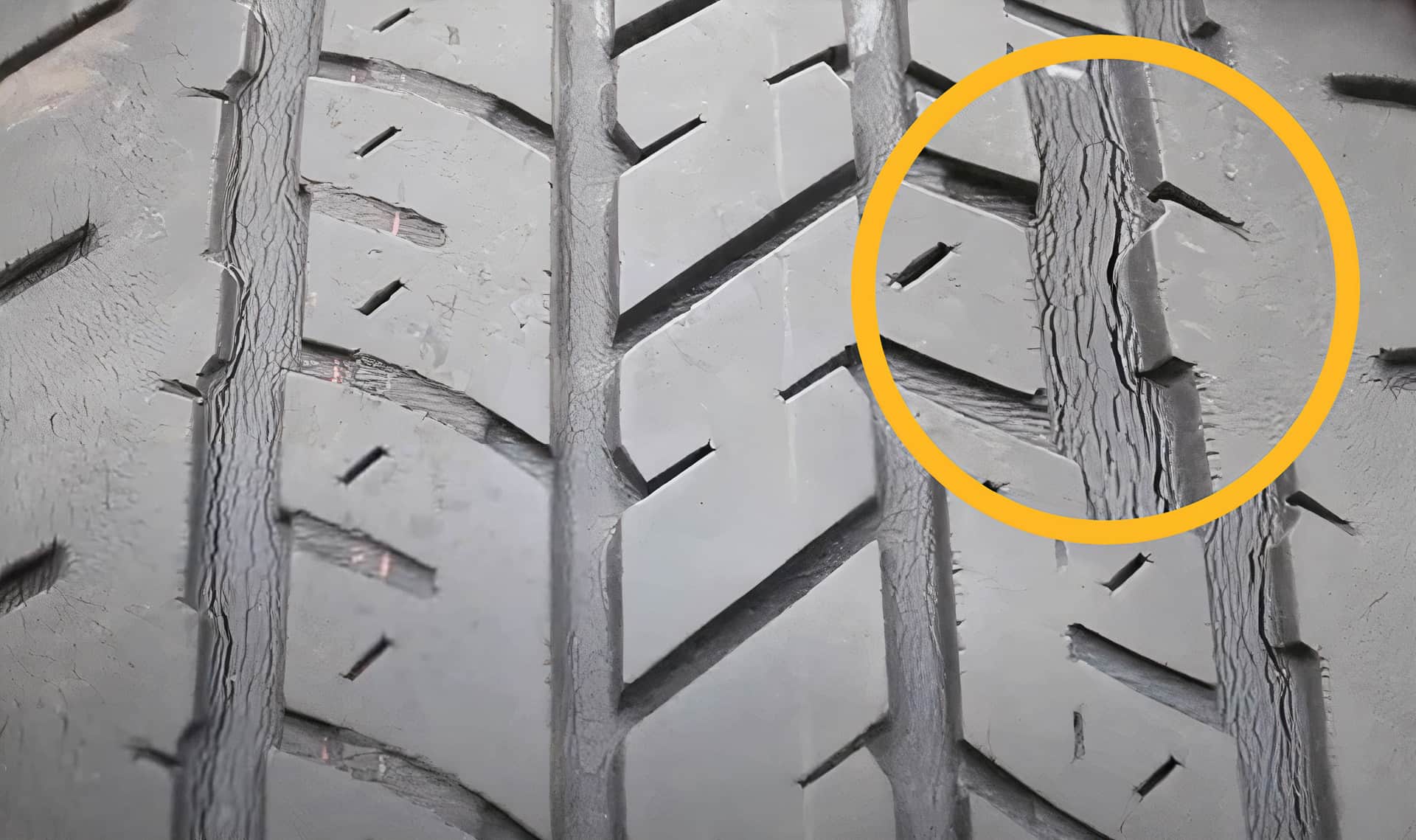
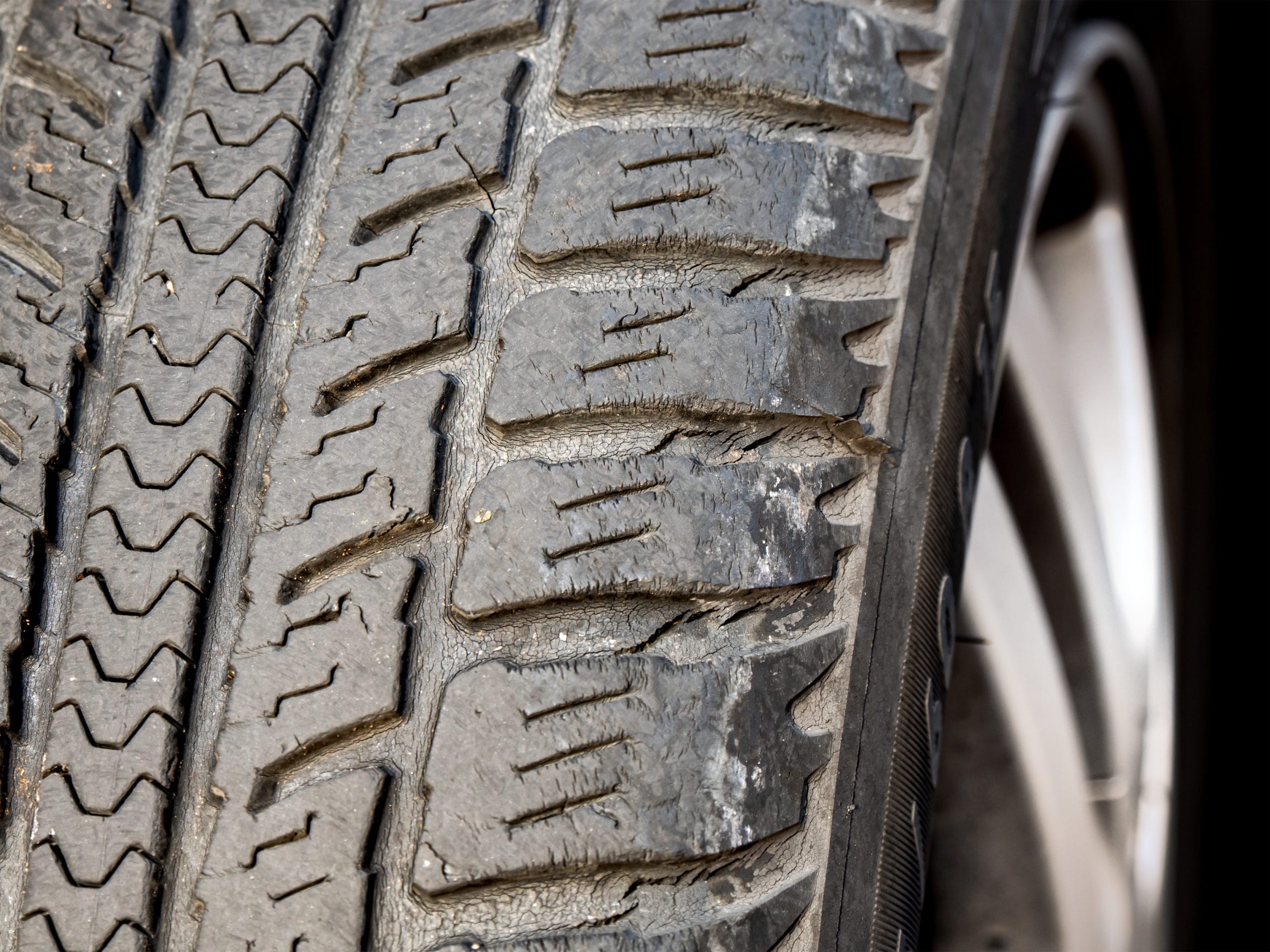
Sidewall cracking gets most of the attention, but cracking within the tread itself is equally alarming. These cracks appear in the flat sections between the tread grooves. They are easy to miss because drivers rarely inspect this area closely.
The tread area of a tire endures enormous physical stress. It contacts the road surface thousands of times per mile. It heats up during driving and cools down when parked. This constant thermal cycling weakens the rubber over time. Cracks develop in the areas that flex most frequently.
When you see cracks between tread blocks, the rubber has lost its elasticity. Elastic rubber stretches and returns to shape. Brittle rubber cracks when it cannot return to its original form. This distinction is the difference between a functioning tire and a failing one.
These cracks can penetrate deep into the tire structure. On the surface, they may look like shallow cosmetic lines. But beneath the surface, they can extend into the steel belts and nylon cords that hold the tire together. Once those internal structures are compromised, blowout risk increases sharply.
Water penetration is another danger of tread cracking. Rainwater and road chemicals can seep into the cracks. This moisture reaches the metal cords inside the tire. The cords then begin to rust and corrode from within. A rusting tire cord is a tire waiting to fail catastrophically.
Temperature changes make tread cracking worse over time. Cold winters cause rubber to contract. Hot summers cause it to expand. Years of this expansion and contraction cycle leave the rubber fatigued and fragile. Even a tire that has never been overloaded or underinflated will crack from age alone.
Inspect the tread area by looking down into the grooves with a flashlight. Move the flashlight at an angle to reveal any surface irregularities. If you see lines running perpendicular to the grooves, those are age cracks. They are a clear sign that the rubber chemistry has broken down beyond safe limits.
Replace a tire immediately if you notice tread cracking, regardless of remaining depth. A tire with seven millimeters of tread and visible cracking is more dangerous than a tire with three millimeters of smooth, elastic rubber. The physical structure of the tire matters more than the groove depth alone.
3. Bulges or Bubbles on the Tire Surface
A bulge or bubble on the tire surface is one of the most urgent warning signs you will ever see. It appears as a raised, rounded lump pushing outward from the sidewall or tread area. This is not a minor cosmetic issue. It is a structural emergency.
Tires are constructed in layers. The outer rubber sits over internal fabric cords and steel belts. These internal structures hold the air pressure and give the tire its shape. When these internal layers separate or break, the air pressure pushes the outer rubber outward. This creates the visible bulge.
Age is a primary cause of internal layer separation. As the bonding compounds within the tire break down, the layers lose their adhesion. A pothole hit or a curb strike can trigger the final separation. But old tires are far more susceptible to this kind of failure than new ones.
A bulge means the tire is on the verge of a blowout. The thinned-out rubber at the bulge point cannot withstand normal air pressure for long. Driving on a bulging tire at highway speed is extremely dangerous. The blowout can happen suddenly and without further warning.
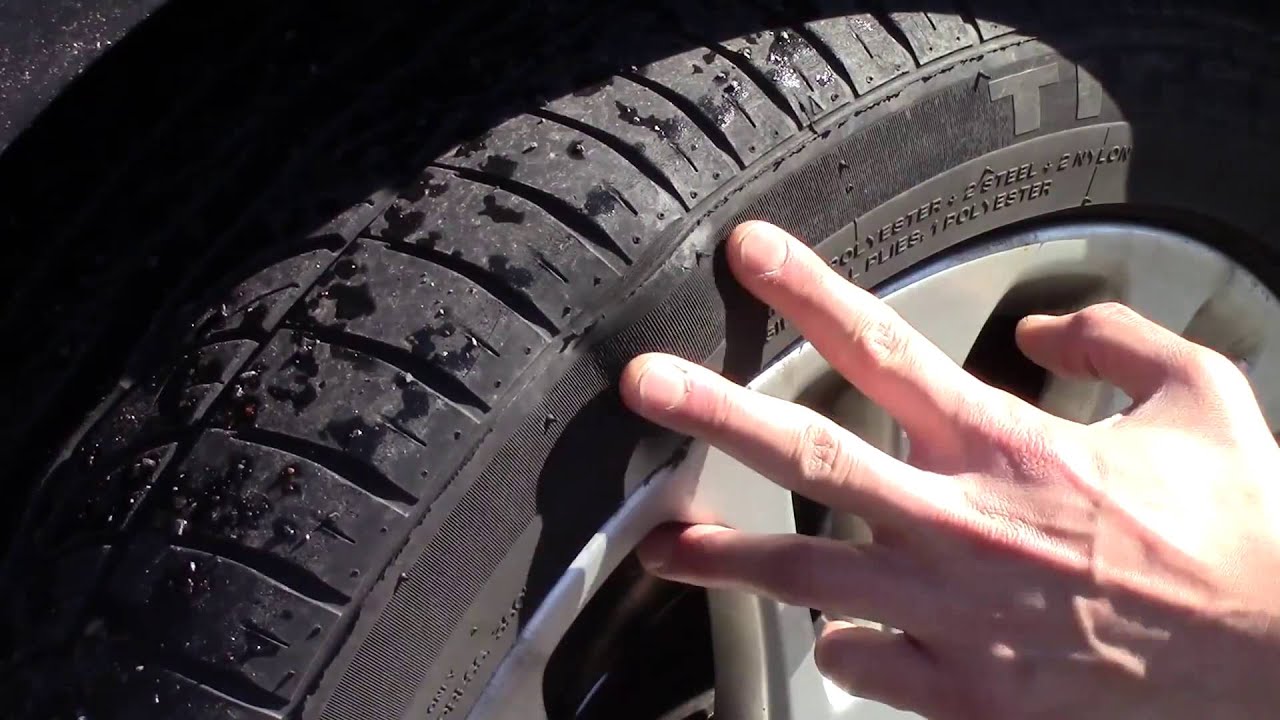
You might notice a bulge after hitting a bump or pothole. But in aged tires, bulges can also appear gradually. The internal structure weakens slowly over months or years. One day you look at the tire and notice a lump that was not there before. This gradual appearance makes it easy to dismiss, but it should never be ignored.
Run your hand along the sidewall when tires are cold and the car is parked. Feel for any raised sections or uneven surfaces. Visually inspect the tires by walking around your vehicle before driving. This thirty-second habit can catch a dangerous bulge before it becomes a roadway emergency.
Even a small bulge the size of a golf ball represents a critical failure point. The bulge will grow with heat and pressure during driving. What starts as a small lump in the morning can become a blowout by afternoon after the tire heats up. Do not drive on a bulging tire under any circumstances.
Replace both tires on the same axle when you replace a bulging tire. This maintains balanced handling and prevents the vehicle from pulling to one side. A new tire paired with an old, weakened tire creates uneven braking and cornering forces. Safety requires matched tires across each axle.
4. Vibration or Unusual Handling Feel
Older tires often develop internal structural problems that show up as vibrations while driving. You might notice a humming, shaking, or wobbling sensation through the steering wheel. These feelings can be subtle at first. They tend to worsen gradually as tire age increases.
Internal belt separation is a common cause of vibration in aged tires. The steel belts inside the tire shift position when the bonding material fails. This creates an imbalanced rotation. The tire no longer spins in a perfect circle, and the resulting wobble travels up through the suspension into the cabin.
Many drivers assume vibration is caused by wheel balancing issues. They take the car for a balance and rotation, feel brief improvement, and think the problem is solved. But if the root cause is internal tire degradation, the vibration returns quickly. The balance weights cannot correct a tire that is structurally failing.
Handling changes are also a key indicator. You might notice the car feels less responsive when turning. It might pull slightly to one side on a straight road. The vehicle may feel floaty or disconnected from the road surface. These sensations indicate that the tire is no longer gripping and flexing as it should.

Aged rubber loses its grip properties even when the tread pattern looks intact. The silica and carbon compounds that create traction break down over time. A tire from eight years ago might have the same groove depth as a new tire but produce dramatically less grip in wet or emergency braking conditions.
Pay attention to how your car feels after a long highway drive. Heat builds up in the tires during extended driving. Aged tires behave worse when hot. If the vibration or instability increases after thirty minutes of highway driving, the tires are likely suffering from heat-related degradation. This is a clear sign of age-related failure.
Ask a trusted mechanic to test drive your vehicle if you are unsure about handling feel. A professional driver can detect subtle vibrations and handling anomalies that regular drivers might have grown accustomed to over time. Fresh eyes and experienced hands catch what familiarity hides. Never normalize unusual road feel.
Also Read: 12 Used Cars With Simple Electrical Layouts for Easy Repairs
5. The DOT Code Shows the Tire Is Over Six Years Old
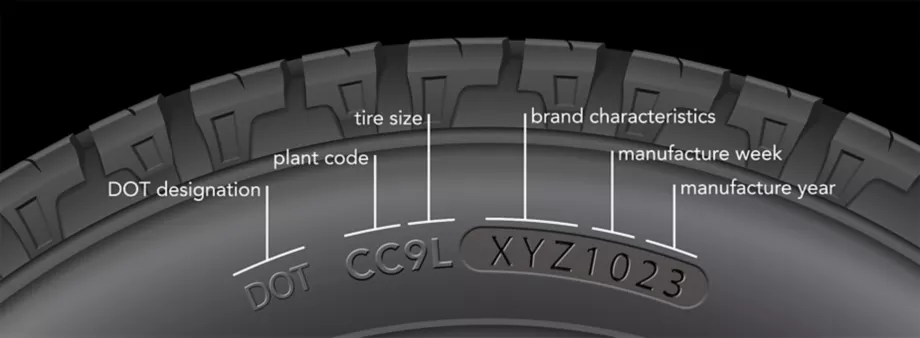
Every tire sold has a DOT code molded into the sidewall. This code contains essential information about where and when the tire was manufactured. Reading this code tells you the exact age of your tire. Age, not appearance, is often the most reliable safety indicator.
The DOT code ends with a four-digit number. The first two digits represent the week of manufacture. The last two digits represent the year. A tire marked with 2419 was made in the 24th week of 2019. This simple number tells you everything about how old your tires are.
Most tire manufacturers recommend replacement after six years from the manufacture date. This applies even if the tire has never been mounted on a vehicle. The chemical aging process begins at the moment of production. Sitting in a warehouse or garage does not pause this process.
Many drivers buy tires that have already been sitting in a shop for one or two years. This means a tire purchased as new may already be two years old before it ever touches the road. Always check the DOT code when buying tires. Refuse any tire that was manufactured more than two years before the purchase date.
The six-year recommendation is a conservative guideline. Some manufacturers and safety agencies allow up to ten years as the absolute maximum. But six years is the safer threshold, especially in hot climates where heat accelerates aging. Six-year-old tires in Arizona age faster than six-year-old tires in Minnesota.
Check your spare tire’s DOT code today. Most drivers never inspect the spare because it never gets used. But a spare stored in the trunk or mounted under the vehicle is constantly exposed to heat, moisture, and vibration. A spare tire older than six years should be replaced even if it looks brand new and holds air perfectly.
Keep a written record of your tire manufacture dates and installation dates. Review these dates annually when you rotate your tires. This simple habit prevents you from unknowingly driving on aged rubber. Knowledge of your tire’s age is one of the most powerful safety tools available to any driver.
6. Fading or Discoloration of the Rubber
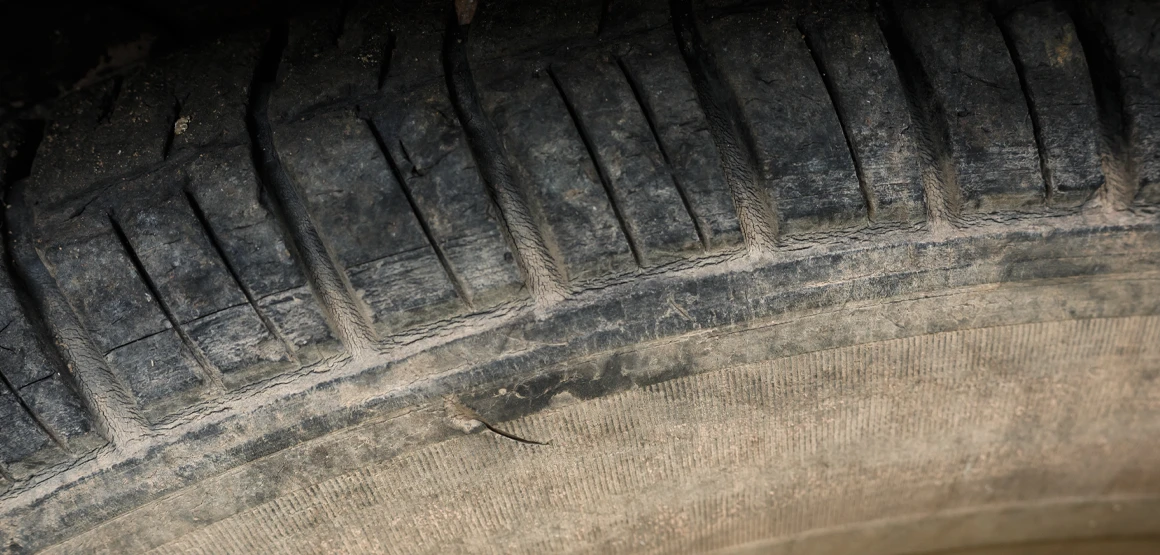
New tires are deep black in color. This rich black comes from carbon black, a compound mixed into rubber to protect it from UV damage and increase durability. As a tire ages, the carbon black becomes less effective. The tire surface begins to fade, turning grayish or brownish.
This color change is more than cosmetic. It is a visual signal that the protective compounds in the rubber have depleted. A faded tire is a tire that has lost a layer of its chemical defense. The underlying rubber is now more vulnerable to heat, UV rays, and ozone damage.
Discoloration often appears first on the sidewall. The sidewall gets direct sun exposure when the vehicle is parked. Over months and years of UV bombardment, the protective surface layer breaks down. The gray or brown tint you see is the rubber beginning its final stages of oxidation.
Some drivers apply tire dressing products to restore the black color. These products make the tire look new but offer no structural protection. In fact, some silicone-based dressings can dry out the rubber further. A shiny black tire is not a safe tire if the rubber has aged beyond its limits.
Compare your current tires to a photograph of new tires. Notice the depth of color and the slight sheen on fresh rubber. Aged tires look matte and dull by comparison. They may also feel harder and less pliable when you press them with your thumb. This hardness is evidence of rubber that has lost its flexibility.
Discoloration combined with any other sign on this list demands immediate action. A faded sidewall with hairline cracks is a tire in its final stage of usable life. Do not wait for a failure to take action. Prevention is always safer and cheaper than dealing with a blowout emergency on a busy road.
7. Hardened Rubber Feel
Healthy tire rubber has a slight give when you press it firmly with your thumb. It feels dense but not rigid. Old rubber, by contrast, feels almost like hard plastic. This hardening is one of the clearest physical signs of advanced tire aging.
The rubber compounds in a tire include plasticizers that maintain flexibility. These chemicals evaporate slowly over time. As they leave the rubber matrix, the tire becomes stiffer. A stiff tire cannot deform and recover properly under road loads. This reduces grip, increases braking distance, and raises blowout risk.
To test rubber hardness, press your thumbnail firmly into the sidewall. Fresh rubber will show a slight impression for a moment. Old rubber will resist without any give at all. This is a rough but useful test you can perform without any special tools.
Hardened rubber is particularly dangerous in cold weather. Cold temperatures make rubber even stiffer. A tire that is borderline on hardness in summer becomes dangerously inflexible in winter. Cold, hard rubber loses traction on wet and icy roads far more rapidly than fresh rubber.
You may also notice that hardened tires produce a harsher ride quality. The tire cannot absorb road imperfections as efficiently as it once did. Every bump feels sharper. The cabin noise level increases. These comfort changes reflect the mechanical changes happening inside the rubber structure.
Tire hardness testing is a standard part of professional inspections. Mechanics use a durometer tool to measure rubber hardness precisely. If you request a full tire inspection, ask for a hardness reading. This objective measurement removes all guesswork from the aging assessment process.
8. Uneven Wear Patterns Despite Proper Inflation
Uneven tire wear usually points to alignment or inflation problems. But in older tires, uneven wear can develop even when inflation is correct and alignment is perfect. This happens because the internal structure of an aged tire has weakened unevenly. Different sections of the tire degrade at different rates.
Flat spots are a common form of age-related uneven wear. They develop when a tire sits in one position for extended periods. Old rubber loses its ability to recover from sustained compression. The flat spot remains even after the car is driven again. You will feel it as a rhythmic thump or vibration at low speeds.
Center wear can also indicate an aging issue beyond simple overinflation. When the rubber compounds on the outer tread edges degrade faster than the center, the pattern becomes uneven.
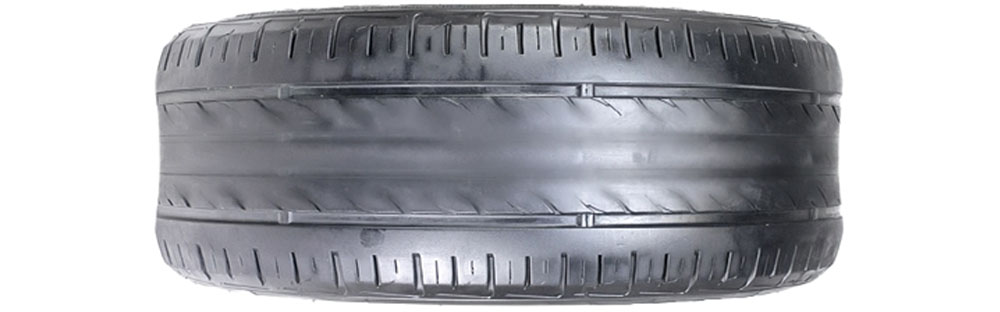
This happens because the edges experience more flexing and more heat than the center during cornering. Aged rubber fails first where the stress is highest.
Irregular scalloping or cupping across the tread surface is another age-related wear pattern. It appears as a series of shallow cups or dips around the tire circumference. Cupping happens when the tire bounces excessively due to weakened internal structure. This bouncing creates uneven contact pressure against the road.
Look at all four tires and compare their wear patterns. Healthy tires on a well-maintained vehicle should wear evenly and symmetrically. Any tire that shows significantly different or irregular wear compared to its partner should be investigated immediately. The irregular pattern is telling you that something internal has changed.
9. Tire Has Been Repaired Multiple Times
A tire with multiple repairs has a compromised structure. Each repair adds a patch or plug to the tire body. Each patch changes how the tire flexes and distributes stress. Multiple repairs on an already aging tire create a patchwork of weak points throughout the structure.
Industry safety guidelines allow only one repair per tire in the tread area. The repair must be within a specific size limit and must not be in the shoulder or sidewall. Any tire with more than one repair, or with a repair outside of the approved zone, should be considered unsafe and replaced.
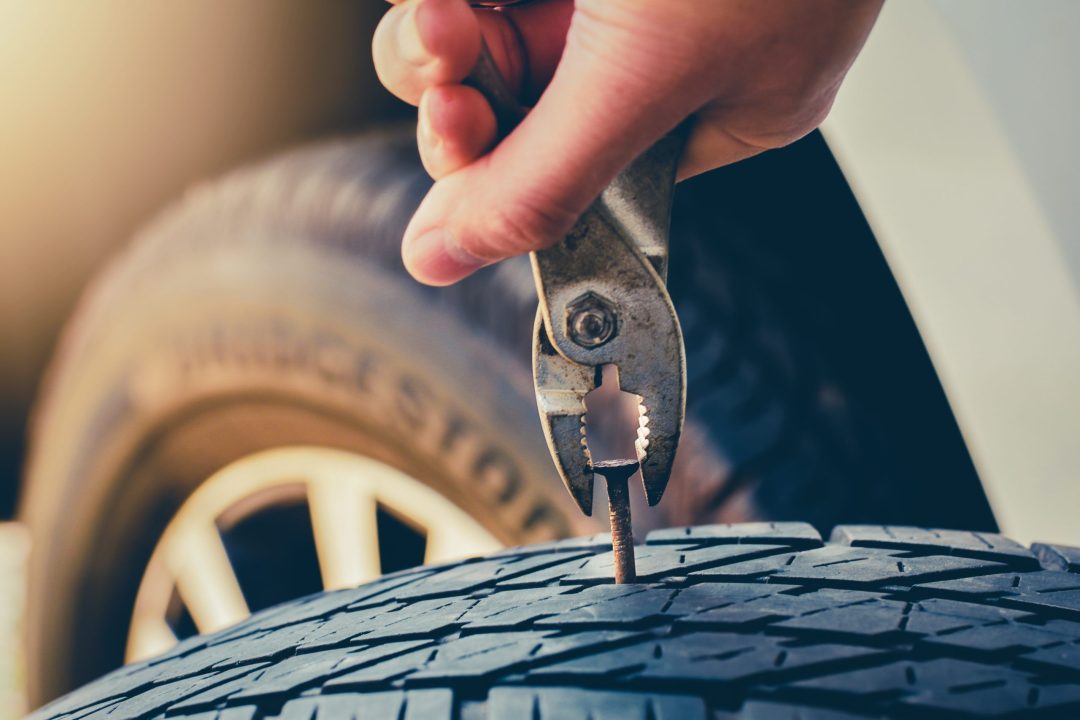
Old tires that have been repaired multiple times often develop leaks around the old repairs. The bonding material used in patches also ages and degrades. A patch that held well for three years may begin to leak as the surrounding rubber ages and pulls away from the repair site.
Consider the full history of each tire if you can trace it. A tire purchased used or inherited with a used vehicle may have repair history you cannot verify. In these cases, age becomes even more critical. An unverified repair on a six-year-old tire is a compelling reason for immediate replacement.
10. The Tires Came With a Used Vehicle
Buying a used vehicle is one of the most common ways drivers inherit dangerously old tires. The previous owner may not have tracked tire age at all. The tires might look perfectly fine, have deep tread, and show no obvious defects. But their manufacture date could make them already overdue for replacement.
Always check the DOT code on every tire when you purchase a used vehicle. Do this before you drive the car off the lot or out of a private seller’s driveway. This single step can reveal tires that are seven, eight, or even ten years old. Knowing the age immediately arms you with the information needed to make a safe decision.
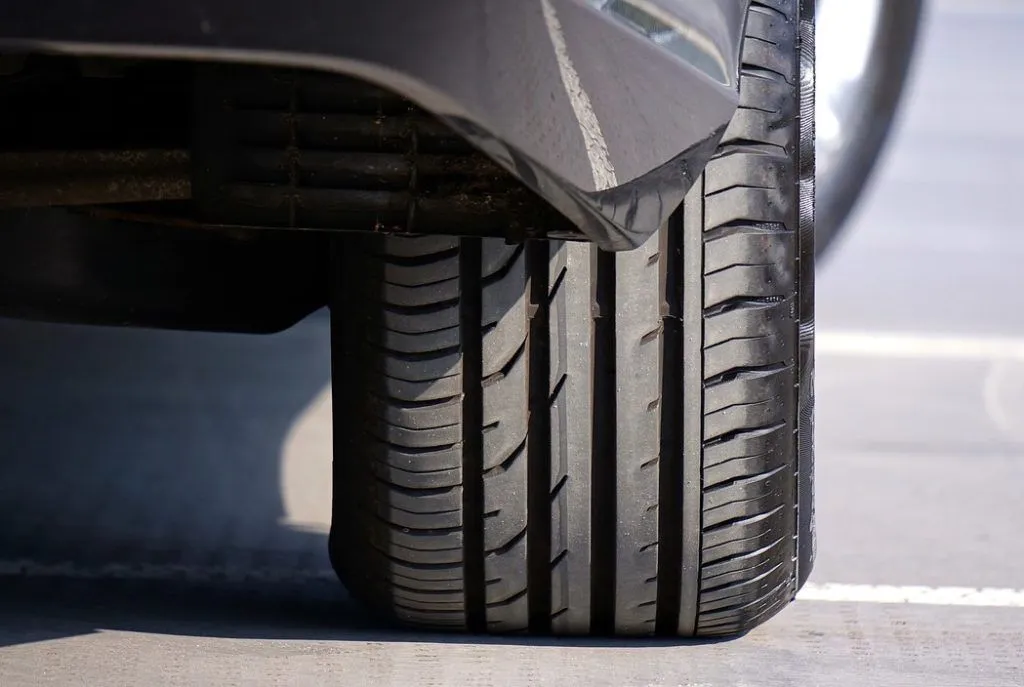
Dealerships do not always replace tires before selling used vehicles. They clean them, apply tire dressing to make them look shiny, and present the vehicle as road-ready. A visual inspection by an untrained buyer will not catch age-related tire degradation. You need the DOT code, not just your eyes.
Budget for tire replacement as part of your used vehicle purchase. If the tires are over five years old, negotiate a price reduction that accounts for the cost of four new tires. Or ask the dealer to replace them as a condition of sale. This is a reasonable request that any safety-conscious seller should accept.
Also Read: 8 Signs Your Turbocharger Wastegate Is Sticking and Draining Power
