
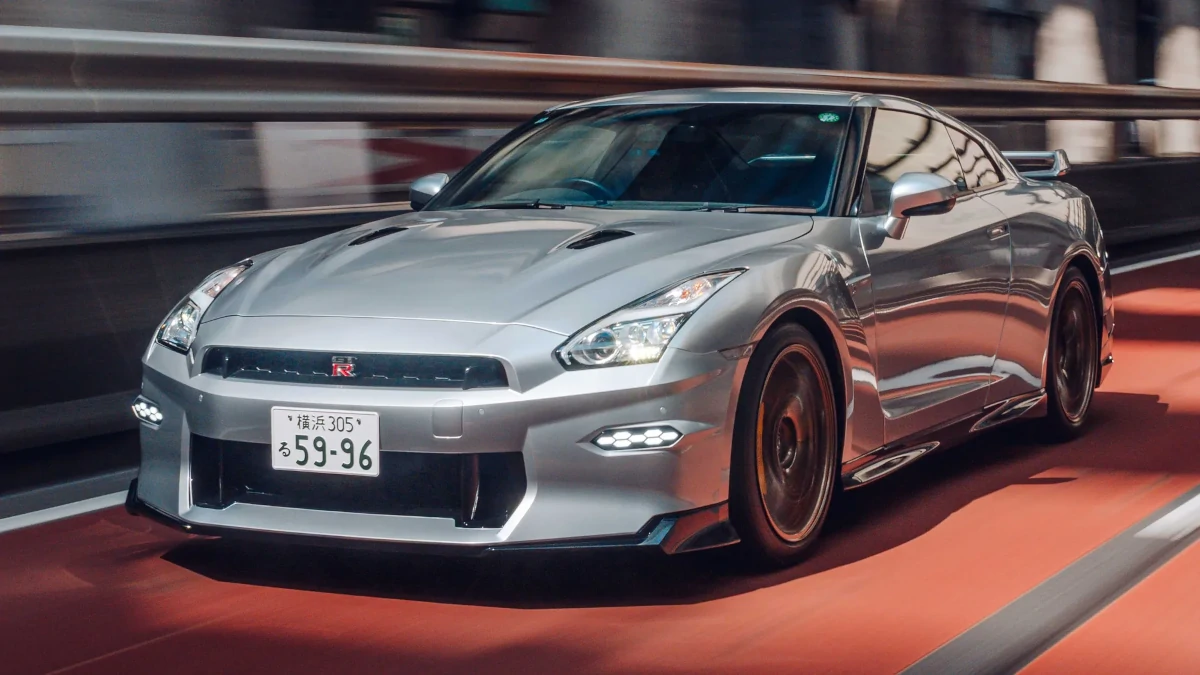
The next-generation Nissan GT-R is still in development, but its arrival is taking longer than many initially expected.
While earlier signals hinted at a fully electric evolution, new updates from Nissan Motor Corporation suggest a more balanced approach, one that blends electrification with the model’s established performance DNA.
The GT-R remains a core part of Nissan’s identity, and the upcoming R36 generation will continue that legacy. However, it will not be a purely internal combustion sports car, nor will it transition entirely into an EV.
Instead, Nissan is pursuing a hybridized direction that aims to preserve performance while adapting to modern requirements.
Speaking at the 2026 New York Auto Show, Ponz Pandikuthira, Senior Vice President and Chief Planning Officer for Nissan North America, confirmed that the GT-R is firmly part of the company’s future.
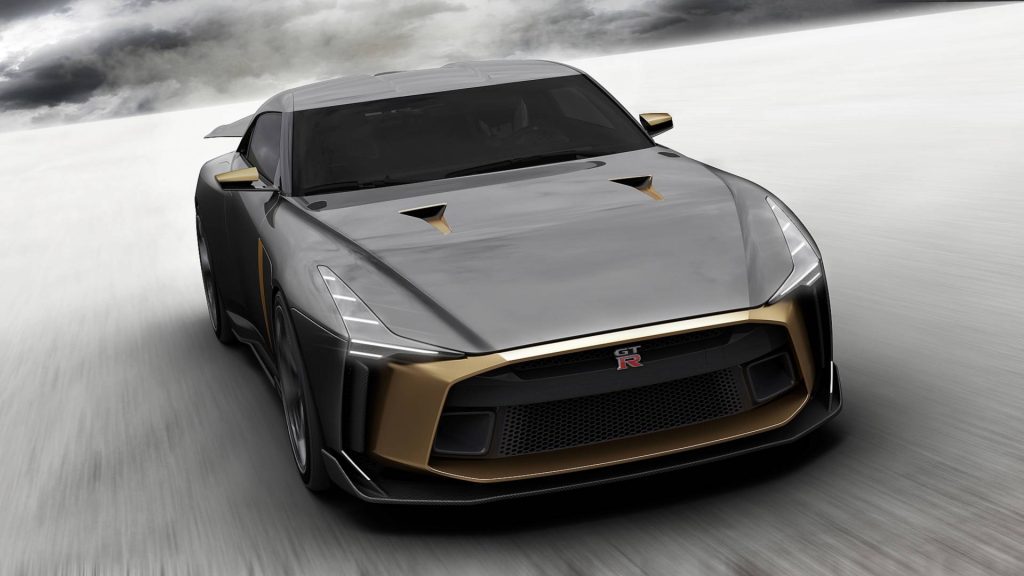
The statement reinforces that the R36 is not in question, it is actively being developed. However, the timeline has been extended due to the complexity of integrating electrification without compromising the car’s performance benchmarks.
Pandikuthira clarified that electrification will play a role in the next GT-R, but not as a regulatory checkbox. Instead, Nissan is focused on ensuring the system enhances performance capabilities rather than diluting them.
“We do know it’s going to need some level of electrification. And it can’t just be electrification for the sake of electrification.
It still needs to be a capable performer – Nürburgring, multiple laps, hold lap timing records. And that balance is what’s actually delaying the introduction of the next generation,” Pandikuthira added.
Development work is already underway in Japan, with a dedicated engineering team leading the project. While an exact launch date has not been finalized, Nissan has indicated that more concrete updates could emerge within the next few years.
“So it’s not an if, it’s only a when,” Pandikuthira said.
“If everything goes the way we want, I’d like to see it by ’28. You should at least hear some very concrete news from us,” he added.
Although specific technical details remain undisclosed, expectations point toward an evolution of the existing VR38 twin-turbocharged 3.8-liter V6 engine.
This powertrain has been central to the GT-R’s identity since the R35 generation, earning recognition for its durability, tuning potential, and high-performance capabilities.
The VR38’s closed-deck aluminum block design provides the structural rigidity needed to handle substantial power outputs. Additionally, each engine is hand-assembled by Nissan’s Takumi master technicians, a detail that has become synonymous with the GT-R’s engineering philosophy.
For the R36, Nissan is likely to integrate hybrid technology with this proven engine platform. This approach would allow the automaker to meet tightening global emissions standards while maintaining the performance characteristics expected from a GT-R.
While some enthusiasts anticipated a complete shift to a fully electric platform, Nissan’s strategy indicates continuity rather than reinvention.
The next GT-R may evolve technologically, but it is being developed to retain the defining traits that have made it one of the most recognizable performance cars in the industry.
