
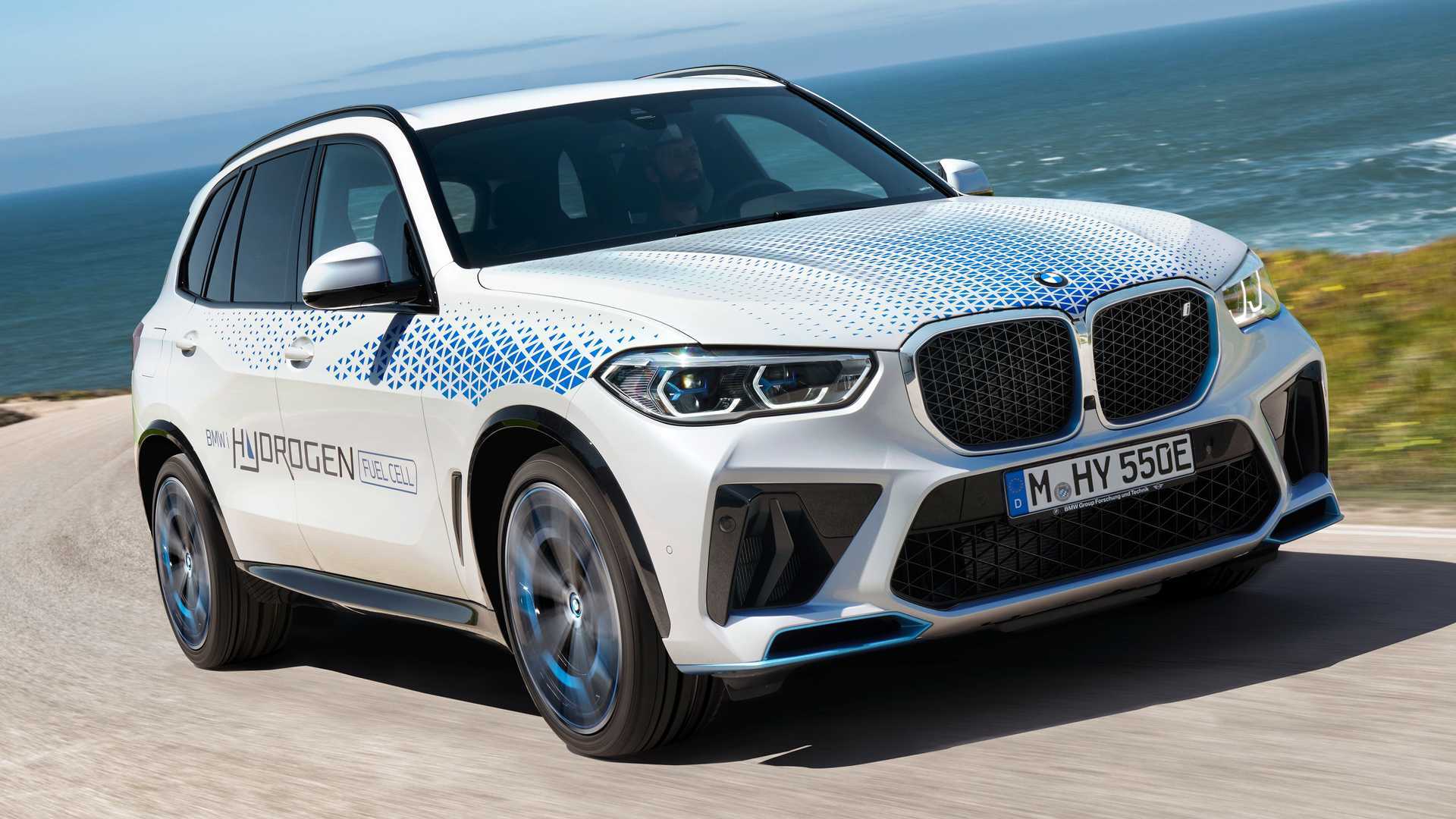
BMW is continuing to push hydrogen fuel-cell technology forward with a major update to its experimental SUV, the BMW iX5 Hydrogen. The latest iteration introduces a redesigned storage system and a notable increase in driving range, signaling that the company is taking hydrogen more seriously as a long-term complement to battery electric vehicles.
At the center of this development is an entirely new approach to hydrogen storage. Instead of relying on traditional cylindrical tanks, BMW has engineered a flat, modular tank system composed of multiple carbon-fiber reinforced units.
These tanks are arranged beneath the vehicle floor and operate together as a single integrated system at pressures of around 700 bar. This configuration allows the iX5 Hydrogen to store approximately 7 kilograms of hydrogen without intruding on passenger or cargo space.
This shift in design is more than a packaging improvement. It addresses one of the key technical challenges that has limited hydrogen vehicles for years: inefficient use of space. By flattening the tanks and integrating them into the vehicle architecture, BMW achieves a layout comparable to its next-generation battery packs.
As a result, the hydrogen system can be incorporated into existing vehicle platforms without requiring extensive redesign, which has clear implications for manufacturing flexibility and cost control.
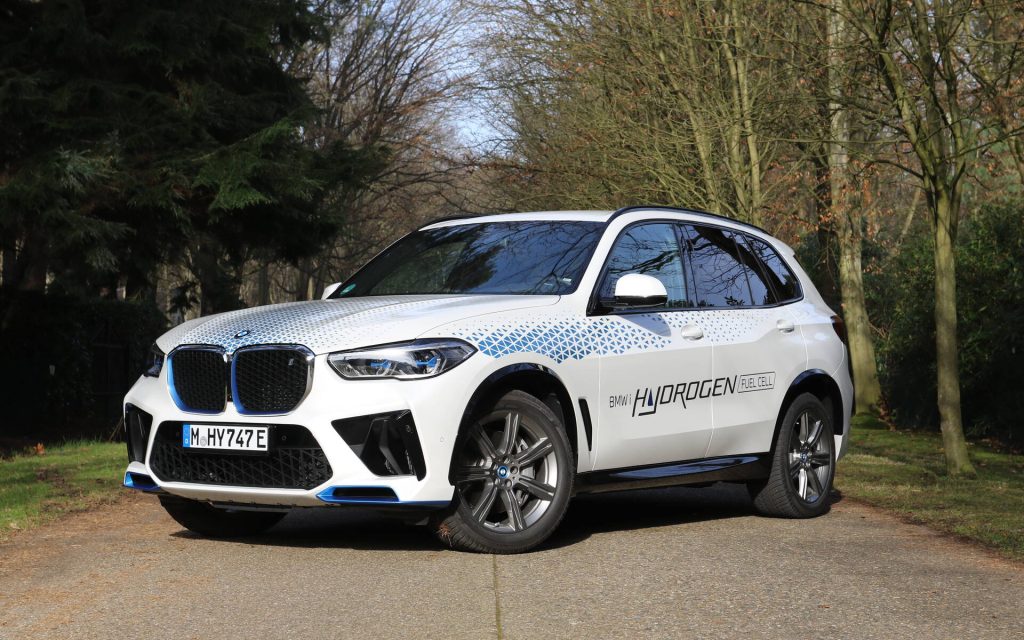
The improved storage efficiency directly contributes to the iX5 Hydrogen’s increased range. BMW now estimates a maximum driving distance of up to 750 kilometers on a full tank.
This places the vehicle in direct competition with long-range electric SUVs and even traditional internal combustion models in terms of usable distance. For drivers, this means fewer stops and a driving experience that aligns more closely with conventional expectations.
Refueling remains one of hydrogen’s strongest advantages. The iX5 Hydrogen can be refilled in just a few minutes, offering a level of convenience that battery electric vehicles still struggle to match, particularly in regions where fast-charging infrastructure is limited or inconsistent. However, this benefit is tied closely to the availability of hydrogen fueling stations, which remains a significant constraint in most markets.
From a performance standpoint, the vehicle uses a hybridized system that combines a fuel cell stack with a high-voltage battery. The fuel cell generates electricity, while the battery acts as a buffer to handle peak power demands and improve responsiveness. This setup allows the vehicle to deliver smoother acceleration and better overall efficiency compared to earlier generations of fuel-cell vehicles.
BMW’s broader strategy is not to replace electric vehicles with hydrogen, but to develop both technologies in parallel. Hydrogen is being positioned as a solution for scenarios where fast refueling and long range are critical, such as long-distance travel or heavier vehicle segments.
The company is targeting a potential production timeline toward the end of the decade, depending largely on how infrastructure and hydrogen production evolve.
In its current form, the iX5 Hydrogen represents a meaningful technical step forward. The flat tank system, combined with improved range and practical packaging, demonstrates that many of hydrogen’s historical limitations can be addressed through engineering. The remaining challenges are less about the vehicle itself and more about the ecosystem required to support it.
