
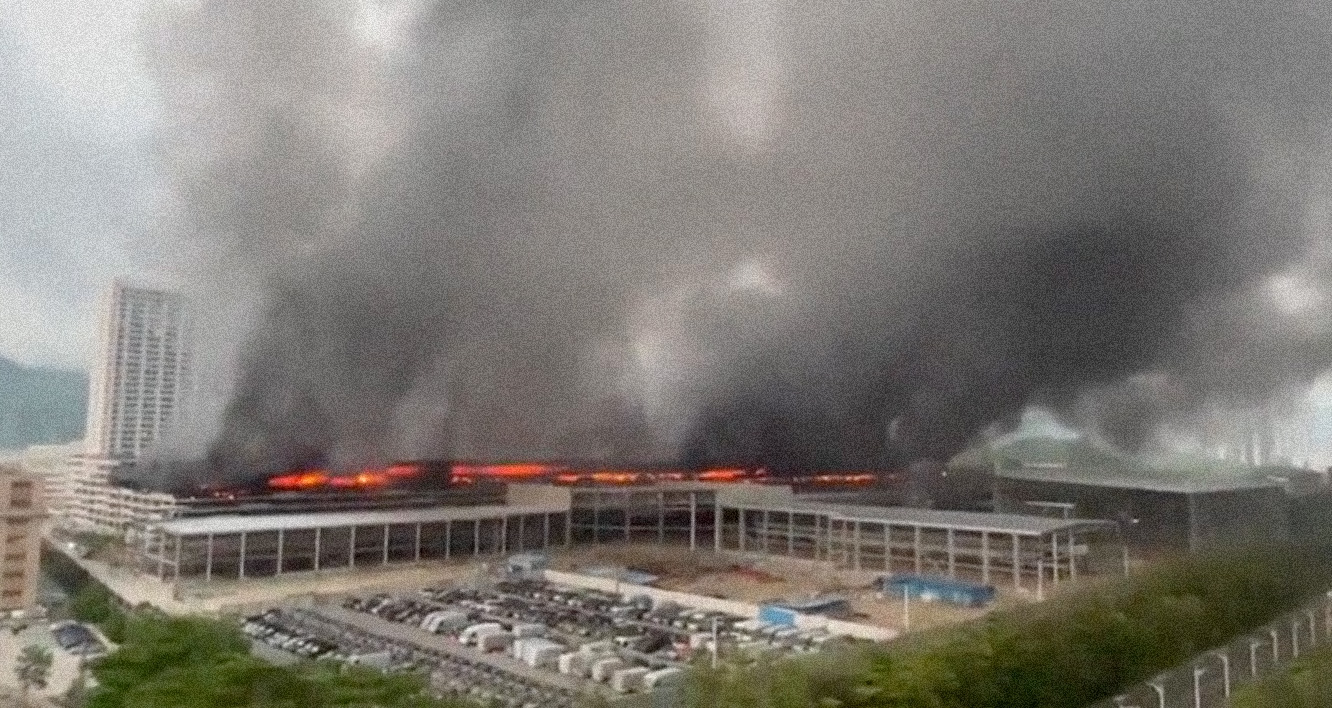
BYD Auto recently experienced a fire at one of its facilities in Shenzhen, an incident that quickly drew attention due to ongoing concerns surrounding electric vehicle safety.
Early reactions, fueled by images of heavy smoke, led to speculation about battery-related failures. However, subsequent findings indicate that the fire was not caused by EV batteries or high-voltage systems.
The fire occurred in a multi-level parking structure within the company’s industrial complex. This area was not part of active manufacturing operations but was used for storing test and scrapped vehicles.
The incident was contained without reported injuries, and initial assessments suggest the cause was linked to construction-related factors rather than vehicle components.
This distinction is critical. Electric vehicle fires are frequently and quickly associated with battery faults, even when evidence does not support that end.
In this case, the absence of battery involvement highlights how easily assumptions can form around EV-related incidents, particularly in the early stages of reporting.
The situation also reflects a broader challenge in public perception. Electric vehicles remain under heightened scrutiny compared to internal combustion engine vehicles, especially regarding fire risk.
While EV fires do occur, they are relatively rare and often involve external factors rather than inherent battery defects. Nonetheless, the visibility of such incidents tends to amplify concerns beyond what the data supports.

BYD’s battery technology has been positioned as a safety-focused design, particularly with its lithium iron phosphate-based systems, which are engineered to reduce the likelihood of thermal runaway.
The current incident does not appear to contradict those claims, as no evidence points to a failure within the battery architecture.
From an operational standpoint, the impact on BYD appears limited. There have been no reports of disruptions to production lines or broader system failures. However, reputational effects are more difficult to quantify.
As BYD continues to expand in global markets, particularly in regions where consumer trust in emerging EV brands is still developing, incidents like this can influence perception regardless of the underlying cause.
The event also highlights a recurring issue in the automotive sector: the gap between technical reality and public interpretation.
Fires involving EV-related infrastructure are often assumed to originate from the vehicles themselves, even when other factors are responsible. This tendency reinforces existing skepticism and complicates efforts to communicate accurate risk assessments.
Ultimately, the Shenzhen fire serves as a reminder that not all EV-related incidents are created equal. In this case, there is no indication of a systemic safety issue or product defect.
Instead, the incident underscores the importance of distinguishing between correlation and causation, particularly in an industry undergoing rapid technological transition.
As electric vehicles become more prevalent, maintaining clarity around such events will be essential. Accurate understanding, rather than assumption, will play a key role in shaping public confidence in the next generation of automotive technology.
