
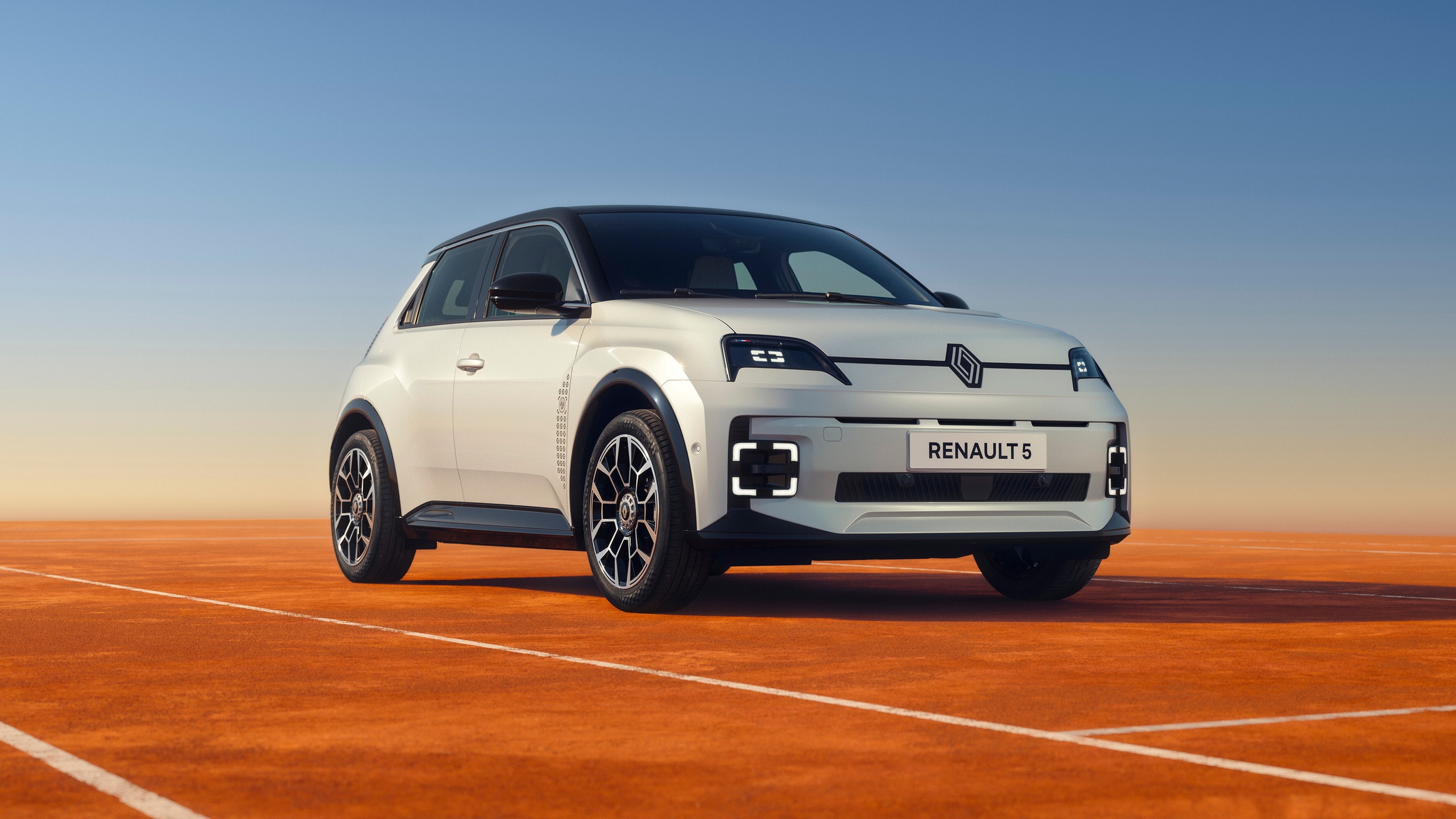
Renault has introduced a new special edition of its upcoming electric crossover, the Renault 4 Roland-Garros E-Tech Electric, combining heritage-inspired design with modern technology and a clear link to one of the world’s most recognizable tennis events. The model serves as a preview of a production variant expected to arrive later in 2026.
Developed in collaboration with Roland-Garros, the vehicle reflects Renault’s ongoing partnership with the Paris-based tournament. This association is not new, but the latest special edition deepens the connection by integrating visual and thematic cues directly into the car’s design. The public debut is scheduled to take place at the tournament itself, positioning the vehicle in front of a global audience.
The exterior design follows what Renault describes as a sport-chic approach. A clean white body finish is paired with contrasting black elements along the roofline and pillars, creating a sharper, more defined profile.
Subtle detailing across the bodywork references the clay courts of Roland-Garros, including accents in warm, earthy tones. Branded touches are integrated carefully rather than prominently, maintaining a restrained aesthetic that aligns with the Renault 4’s minimalist identity.
This model builds on the broader revival of the Renault 4 nameplate, which is being reimagined as a compact electric crossover. While the original Renault 4 was known for its simplicity and practicality, the new version shifts toward a lifestyle-oriented interpretation. The Roland-Garros edition reinforces that positioning by emphasizing design, materials, and experience over purely utilitarian considerations.
Inside, the cabin reflects a similar balance between sustainability and refinement. Upholstery is constructed using recycled textiles, a choice that aligns with Renault’s wider environmental targets.
The materials are designed to mimic the texture of athletic apparel, subtly tying the interior theme back to the world of tennis. Light tones dominate the cabin, complemented by contrasting stitching and embossed branding elements that add depth without overwhelming the design.

One of the more notable additions is the integration of an augmented reality feature through Renault’s mobile ecosystem. Users can interact with a digital version of the car, placing it in real-world environments using a smartphone.
This allows potential buyers to explore design details, experiment with configurations, and visualize the vehicle outside of a showroom setting. The feature reflects a broader industry shift toward digital engagement as automakers look to enhance the pre-purchase experience.
The show car is based on a variant that includes a full-length retractable canvas roof, offering an open-air driving option that distinguishes it from conventional compact crossovers. While it is not yet confirmed whether this feature will be standard or optional in the final production model, it signals Renault’s intent to position the vehicle as more than a purely urban commuter.
Technical specifications for the Roland-Garros edition have not been finalized, but it is expected to align with the wider Renault 4 E-Tech Electric lineup.
That would place it within the competitive small EV segment, likely offering a balance between range, efficiency, and affordability suitable for city-focused use. The platform itself is part of Renault’s broader electrification strategy, which also includes models like the Renault 5 E-Tech.
Beyond the vehicle itself, Renault’s presence at Roland-Garros extends to a wider showcase of electric mobility. The company continues to use the event as a platform to demonstrate its transition toward electrified transport, including the deployment of EV fleets and the introduction of new models tied to recognizable cultural moments.
The Renault 4 Roland-Garros E-Tech Electric ultimately represents a convergence of brand heritage, sport, and technology. Rather than focusing solely on specifications, Renault is emphasizing identity and user experience, aiming to differentiate its electric offerings in an increasingly crowded market.
The production version, expected later this year, will determine how much of this concept translates into a commercially available model, but the direction is clearly defined.
