
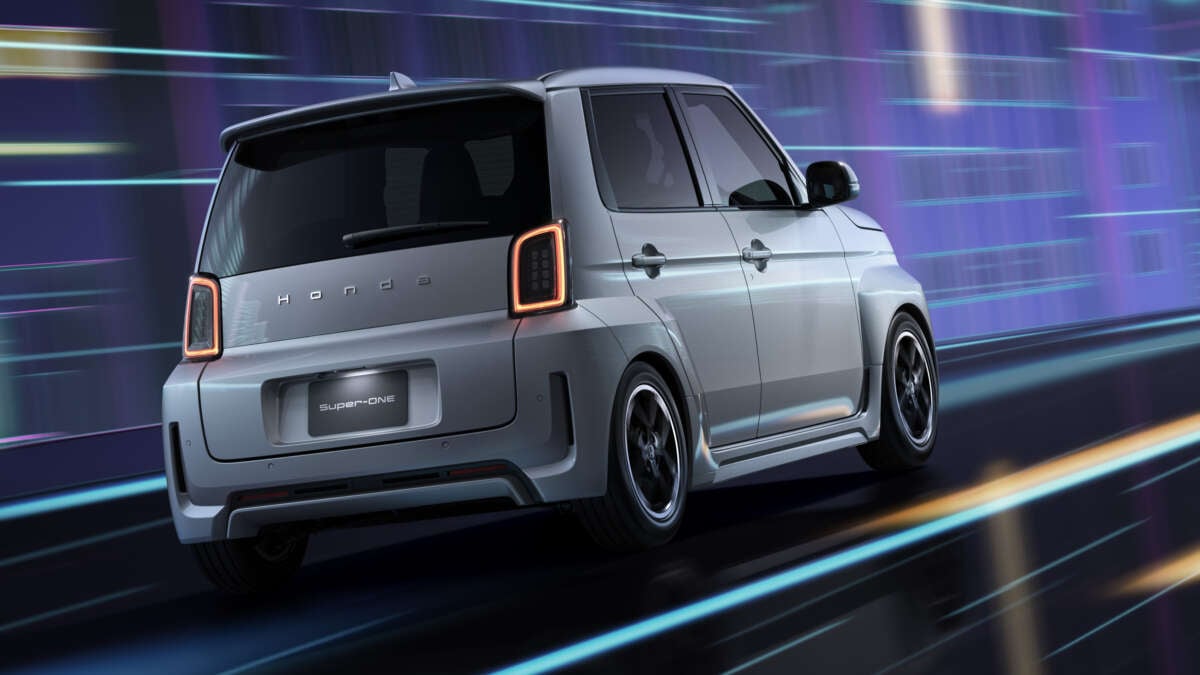
Honda’s compact electric hatchback has been reworked by Mugen, introducing a comprehensive styling and chassis upgrade package for the Honda Super-One. The result is visually aggressive and more driver-focused in presentation, but mechanically unchanged, with output still capped at 94 horsepower.
The Super-One has already positioned itself as a retro-inspired entry in the small EV segment, drawing on design cues from Honda’s earlier city cars. Its appeal lies in simplicity, compact dimensions, and approachable electric performance.
Mugen’s intervention does not alter that formula at a fundamental level. Instead, it amplifies the visual identity and perceived performance of the vehicle through a series of targeted modifications.
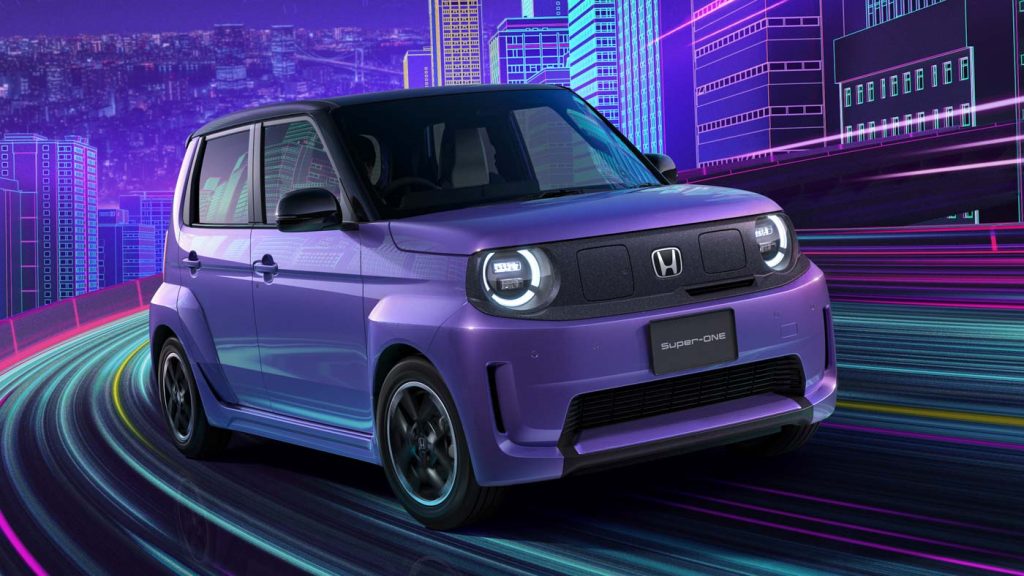
At the front, the changes are immediately apparent. A deeper chin spoiler extends the lower edge of the bumper, while a vented hood introduces a more technical appearance.
The front fenders are widened with functional-looking extensions, giving the car a broader stance. These elements collectively shift the Super-One’s proportions, making it appear lower and more planted despite its unchanged footprint.
Along the sides, Mugen adds sculpted side skirts and a set of 16-inch forged aluminum wheels. These wheels not only contribute to the aesthetic but also reduce unsprung weight compared to standard units.
The rear continues the theme with an additional spoiler and a revised bumper insert, reinforcing the car’s sport-oriented look. Subtle branding elements, including decals and mirror caps, complete the exterior package without overwhelming the base design.
The suspension has also been revised to support the more aggressive stance. Mugen equips the Honda Super-One with performance dampers developed in collaboration with Yamaha, paired with a lowered ride height.
These adjustments are intended to improve handling response and reduce body movement during cornering. While the changes enhance dynamics to a degree, they remain within the limits imposed by the stock powertrain.
Inside, the upgrades focus on driver interaction and material quality. The most significant addition is a set of Mugen-branded Recaro seats, designed to provide increased lateral support.
A revised steering wheel offers improved grip and a more direct connection to the car’s inputs. Additional trim elements, including carbon-style accents, scuff plates, and floor mats, create a more cohesive performance-oriented cabin environment.
Despite these extensive changes, the electric drivetrain remains untouched. The Super-One continues to produce 94 horsepower in its Boost mode, with no enhancements to acceleration or top speed. Mugen has not introduced any modifications to the motor, battery, or control software. This means that, in practical terms, the vehicle’s straight-line performance is identical to the standard model.
Honda has attempted to compensate for this limitation with software-based features aimed at increasing driver engagement. Systems such as Active Sound Control and simulated gear shifts are designed to mimic aspects of internal combustion driving.
By introducing artificial sound feedback and staged torque delivery, the car creates a more familiar driving sensation, even though its performance metrics remain unchanged.
The absence of powertrain tuning reflects a broader industry constraint. Electric vehicles present unique challenges for aftermarket modification, as their systems are more integrated and less accessible than traditional engines. For companies like Mugen, this shifts the focus toward areas such as aerodynamics, suspension tuning, and interior experience.
The Honda Super-One Mugen package is expected to launch in Japan around May 2026, although pricing and full availability details have yet to be confirmed. It remains possible that future developments could include performance upgrades, but for now, the emphasis is clearly on design and driving feel rather than outright speed.
In its current form, the Mugen-enhanced Super-One illustrates a transitional phase in performance tuning. It delivers a stronger visual identity and sharper handling characteristics, but stops short of redefining the car’s capabilities. The result is a vehicle that looks significantly faster than it is, highlighting the evolving role of tuning in the electric era.
