The challenge of urban for commercial delivery has reached a critical juncture in the 2026 American market. As e-commerce continues its relentless expansion into every residential ZIP code, the friction between high-capacity logistics and tight city streets has never been more apparent.
This article provides a comprehensive analysis of five vehicles that are currently revolutionizing the efficiency of the last-mile delivery sector in the United States, contrasted against five popular high-capacity vehicles that possess some of the most significant and dangerous blind spots in the modern automotive industry.
The of urban logistics has shifted toward specialized platforms that prioritize maneuverability, ease of entry, and sustainable energy consumption.
In cities like New York, San Francisco, and Chicago, the traditional box truck is being replaced by sleeker, tech-integrated vans that offer a smaller physical footprint without sacrificing the vertical cargo space necessary for parcel distribution.
5 Superior Vehicles for Urban Delivery in the USA
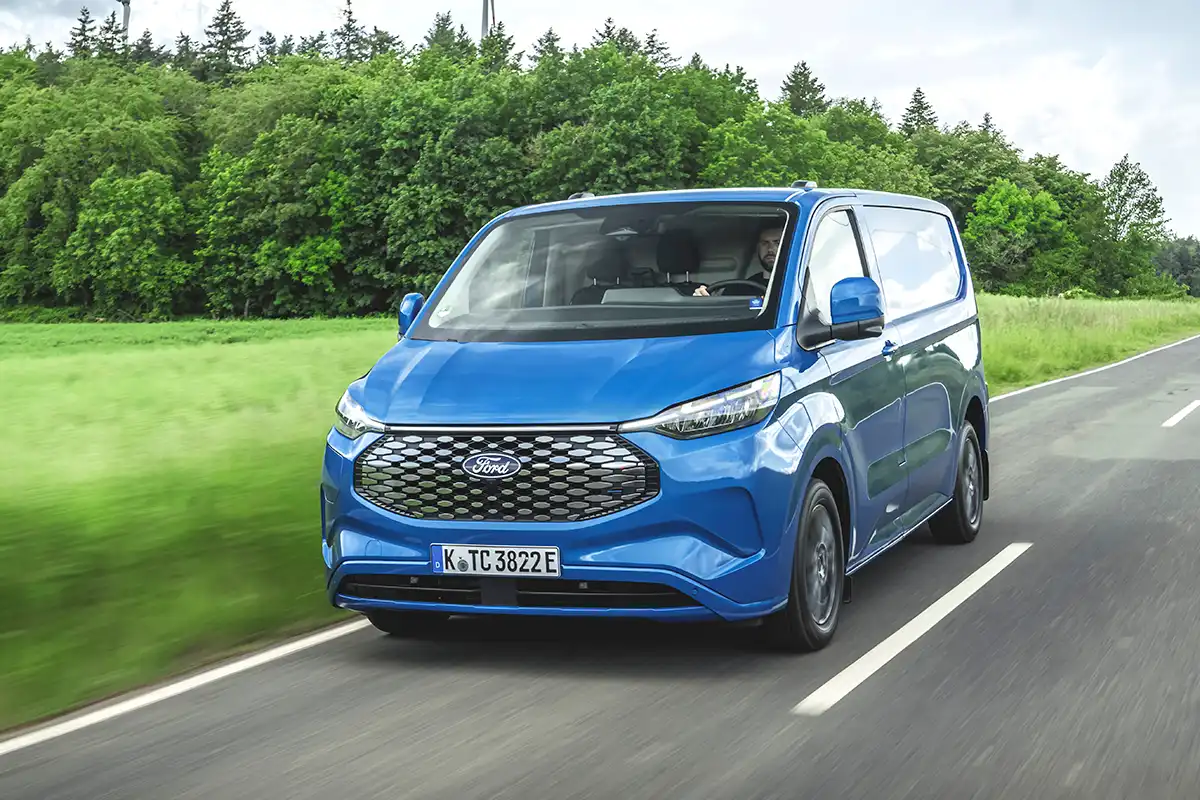
1. Ford E-Transit
The Ford E-Transit has solidified its position as the gold standard for electric urban delivery in the United States. Its success is rooted in its familiarity; by utilizing the same chassis dimensions as the world-renowned internal combustion Transit, Ford has allowed fleet managers to transition to electric power without needing to redesign their shelving or upfitting packages.
For the 2026 model year, the E-Transit features an enhanced battery cooling system and a standard heat pump, ensuring that range remains predictable even during harsh Midwestern winters or humid Southern summers.
Its electric powertrain provides the instant torque necessary for frequent stop-and-go maneuvers in heavy traffic, while the lack of engine noise significantly reduces the noise pollution footprint of early-morning deliveries in residential neighborhoods.
The vehicle excels in urban environments due to its tight turning radius and specialized driver assistance features. The 2026 iteration includes a 360-degree camera system that is essential for squeezing into curbside spots that are often occupied by poorly parked bicycles or discarded construction materials.
Furthermore, Ford Pro’s telematics software allows dispatchers to monitor state-of-charge and route efficiency in real time, preventing the “range anxiety” that formerly plagued early adopters of electric fleets.
With multiple roof heights and wheelbase lengths available, the E-Transit remains the most versatile tool for businesses ranging from independent florists to national courier services.
The low floor height of the E-Transit is a vital ergonomic feature for delivery drivers who may exit and enter the vehicle hundreds of times per shift. Reducing the vertical climb into the cargo area minimizes repetitive strain injuries and speeds up the delivery process significantly.
In the 2026 model, Ford has also optimized the sliding side door mechanism to be more silent and less prone to mechanical failure under high-cycle use.
This focus on the “human factor” of delivery makes the E-Transit not just a machine for moving goods, but a workspace designed for the physical realities of the American delivery professional.
Safety in the E-Transit is augmented by the latest Ford Co-Pilot360 technology, which includes pre-collision assist with automatic emergency braking. This is particularly relevant in urban centers where pedestrians often step off curbs unexpectedly or delivery robots share the sidewalk.
The vehicle’s regenerative braking also serves a dual purpose: it extends the driving range and provides a smoother deceleration curve that protects fragile cargo from shifting during sudden stops. By balancing cargo volume with a nimble frame, the E-Transit proves that a full-size van can still thrive in the most cramped city corridors.
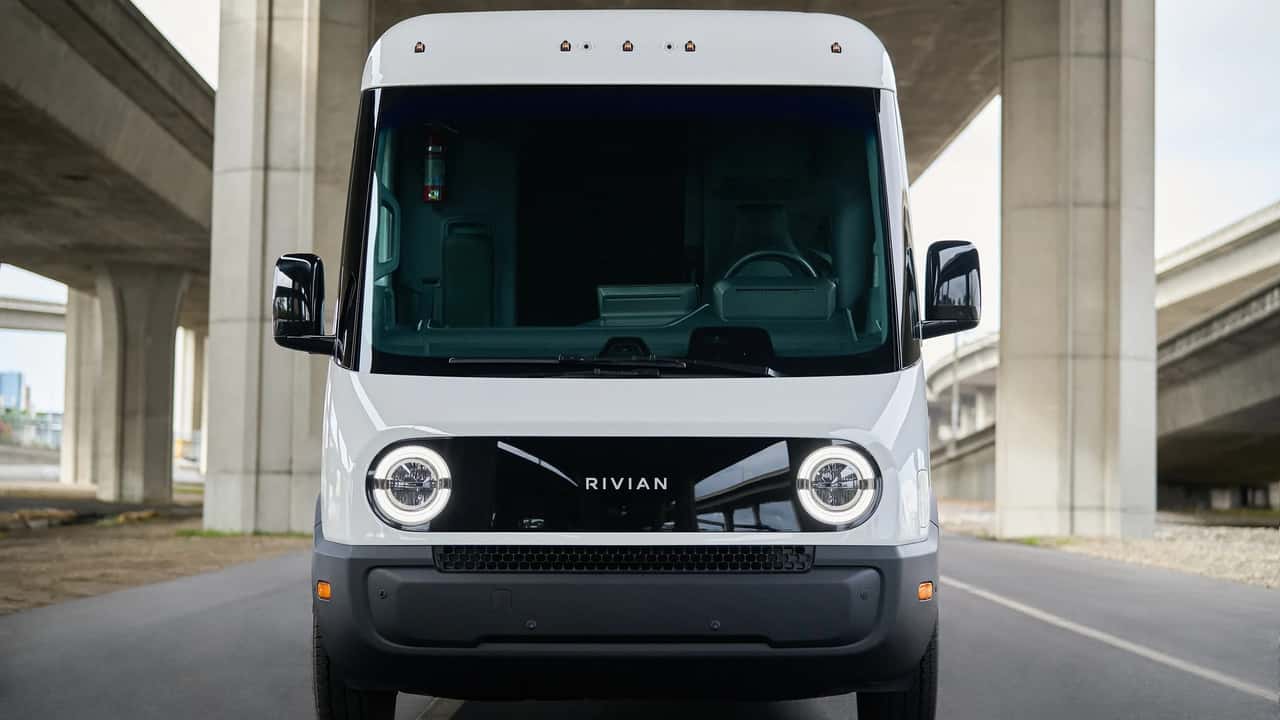
2. Rivian Commercial Van (RCV)
Originally developed exclusively for Amazon, the Rivian Commercial Van (RCV) is now a powerhouse in the broader commercial market, and it represents a radical departure from traditional van architecture.
Unlike vehicles adapted from passenger platforms, the RCV was designed from the “inside out” with the delivery driver’s workflow as the primary directive.
The cabin is remarkably spacious, featuring a flat floor that allows the driver to stand up fully and move directly from the driver’s seat into the cargo area without exiting the vehicle.
This “walk-through” design is a massive efficiency booster in urban settings where every second saved in the loading zone translates to higher route profitability.
The RCV’s exterior design is characterized by its large, friendly headlights and an expansive windshield that offers some of the best forward visibility in the commercial segment. This is crucial for streets filled with children, pets, and cyclists.
The vehicle is equipped with a suite of proprietary sensors and software that integrate directly with delivery routing apps, providing the driver with a seamless digital interface for their entire workday.
In the 2026 version, Rivian has introduced a more rugged suspension variant to better handle the potholes and degraded pavement common in aging American city centers.
One of the standout features of the RCV is its automated rear roll-up door. In a typical urban delivery scenario, a driver might have their hands full with heavy boxes; the RCV can be programmed to open the rear door automatically as the driver approaches, then close and lock it as they walk away.
This level of automation not only improves the speed of service but also enhances the security of the cargo in high-traffic areas where opportunistic theft is a concern. The cargo area itself is lined with high-durability, recycled materials designed to withstand the abrasive nature of moving pallets and plastic totes.
From a performance standpoint, the RCV’s dual-motor setup provides exceptional traction on slippery city streets, which is a common challenge during winter in cities like Boston or Seattle. The low center of gravity provided by the floor-mounted battery pack makes the van feel incredibly stable, even when fully loaded with cargo.
This stability is a key safety factor when performing evasive maneuvers or the sharp, off-camber turns found in many historic residential districts. Rivian’s software-first approach also means the vehicle receives over-the-air updates that can improve everything from braking performance to the sensitivity of its blind-spot monitors.
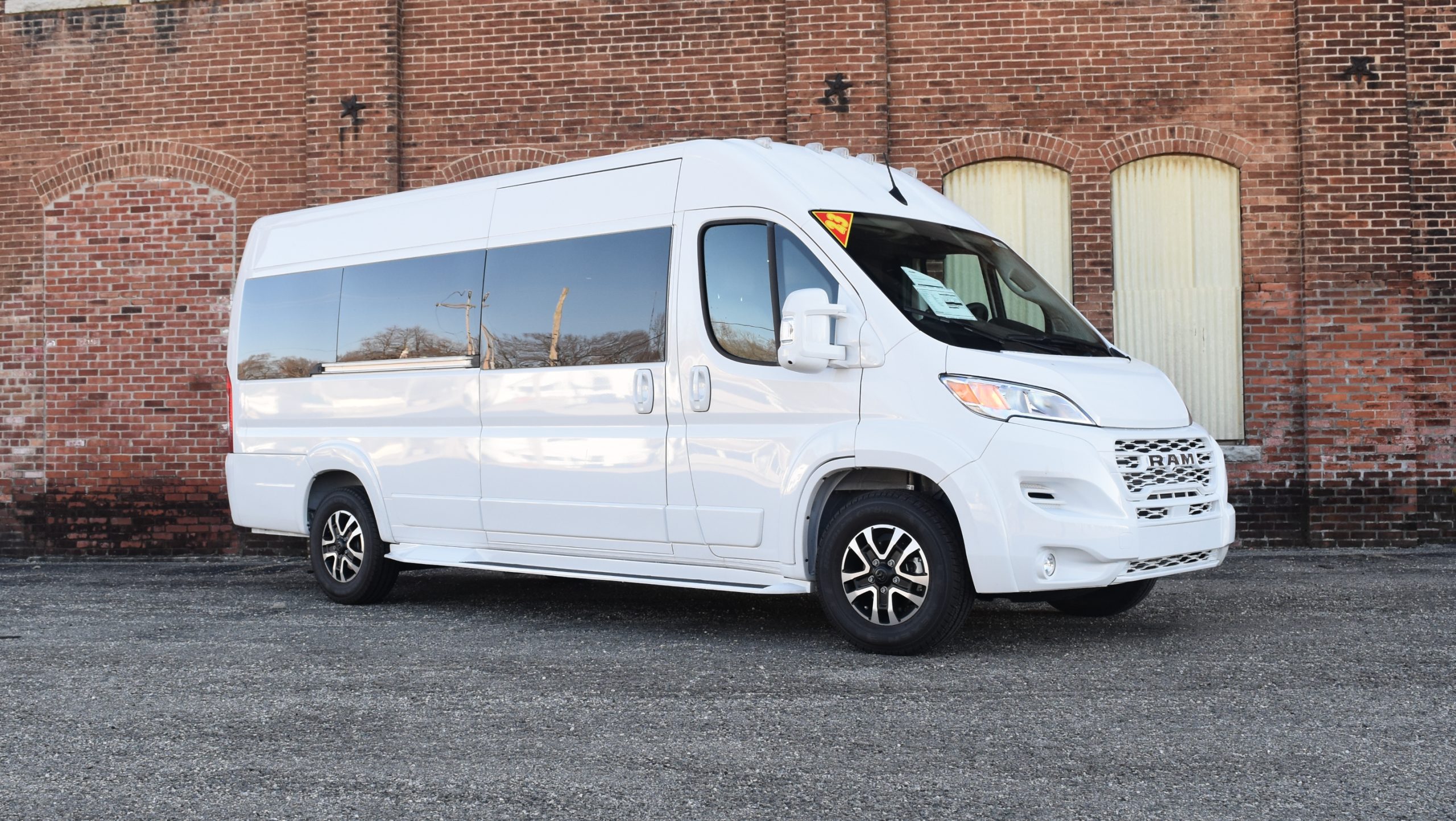
3. Ram ProMaster EV
The Ram ProMaster EV is a formidable competitor in the urban delivery space, specifically because it retains the front-wheel-drive architecture that has long made the ProMaster a favorite among upfitters.
By placing the electric motors and drive components at the front, Ram has been able to maintain a remarkably low step-in height and a completely flat cargo floor.
For urban delivery, this low floor is a massive advantage, allowing for taller items to be stood upright while keeping the vehicle height low enough to clear most standard parking garages and low-hanging bridge underpasses in older cities.
The 2026 ProMaster EV features a modular battery system that allows businesses to choose between different range capacities based on their specific route needs. A florist doing local deliveries might opt for a lighter battery to maximize payload, while a regional courier might choose the extended-range version.
This flexibility is paired with a redesigned interior that includes a “mobile office” center console, featuring wireless charging and a high-resolution touchscreen that supports a variety of fleet management applications. The steering is light and precise, making it easier to the 90-degree turns and narrow alleyways of downtown business districts.
Safety remains a top priority in the 2026 model, which introduces an “Active Drive Assist” system. This technology helps the driver stay centered in their lane and maintains a safe following distance, reducing the mental fatigue associated with long hours in heavy traffic.
Additionally, the ProMaster EV is equipped with a digital rearview mirror that uses a high-definition camera to provide a clear view behind the vehicle, even if the cargo area is completely filled with boxes. This solves one of the most persistent visibility issues in traditional cargo vans.
Ram has also focused on the durability of the ProMaster EV’s exterior. The 2026 model features high-impact plastic cladding on the lower body panels and around the wheel wells. urban delivery, minor scrapes against curbs or loading docks are almost inevitable; this cladding is designed to be easily and cheaply replaced, keeping the fleet looking professional without the need for expensive bodywork.
The wide-opening rear doors can swing out 260 degrees, allowing them to fold flat against the sides of the van, which is a vital feature when working in tight spaces where open doors could otherwise block traffic.
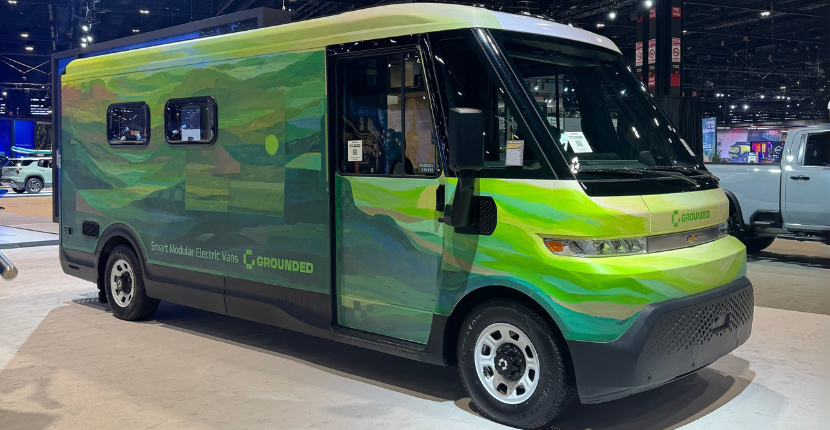
4. Chevrolet BrightDrop 400
The Chevrolet BrightDrop 400 (formerly a standalone brand under GM) is a purpose-built electric van designed for high-volume urban parcel delivery. Its primary innovation is the integration with the “Trace” e-cart system, motorized pallets that can be loaded directly onto the van.
This ecosystem is designed to reduce the physical labor required to move heavy loads from the vehicle to the customer’s door. The BrightDrop 400 itself is a medium-sized van that strikes an ideal balance between cargo capacity and urban agility, filling the gap for routes that are too large for a small van but too congested for a full-size truck.
The 2026 BrightDrop 400 features an ultra-low step-in height and a wide-opening sliding door that is optimized for frequent exits. The interior cabin is minimalist and focused on safety, featuring a large digital display that provides a “birds-eye view” of the vehicle at all times.
This is especially helpful in the 2026 model, which has been updated with more sensitive proximity sensors to detect pedestrians or cyclists who might be lingering in the van’s immediate vicinity. The vehicle’s turning circle is surprisingly tight for its size, allowing it to perform U-turns on standard city streets with ease.
Built on GM’s Ultium battery platform, the BrightDrop 400 offers impressive range and power. The 2026 model benefits from a more efficient electric motor that provides smoother acceleration, which is critical for protecting cargo during the hundreds of starts and stops a driver makes every day.
The regenerative braking system has also been refined to allow for “one-pedal driving” in most urban scenarios, which significantly reduces wear on the mechanical brake pads and makes the driving experience less taxing in heavy traffic.
The BrightDrop software suite is another major selling point. It provides fleet managers with detailed analytics on everything from energy usage to driver behavior.
For the 2026 model year, the software has been upgraded to include predictive maintenance alerts, which can identify a potential component failure before it actually happens. This proactive approach to maintenance is essential for delivery companies that operate on razor-thin margins and cannot afford unexpected downtime.
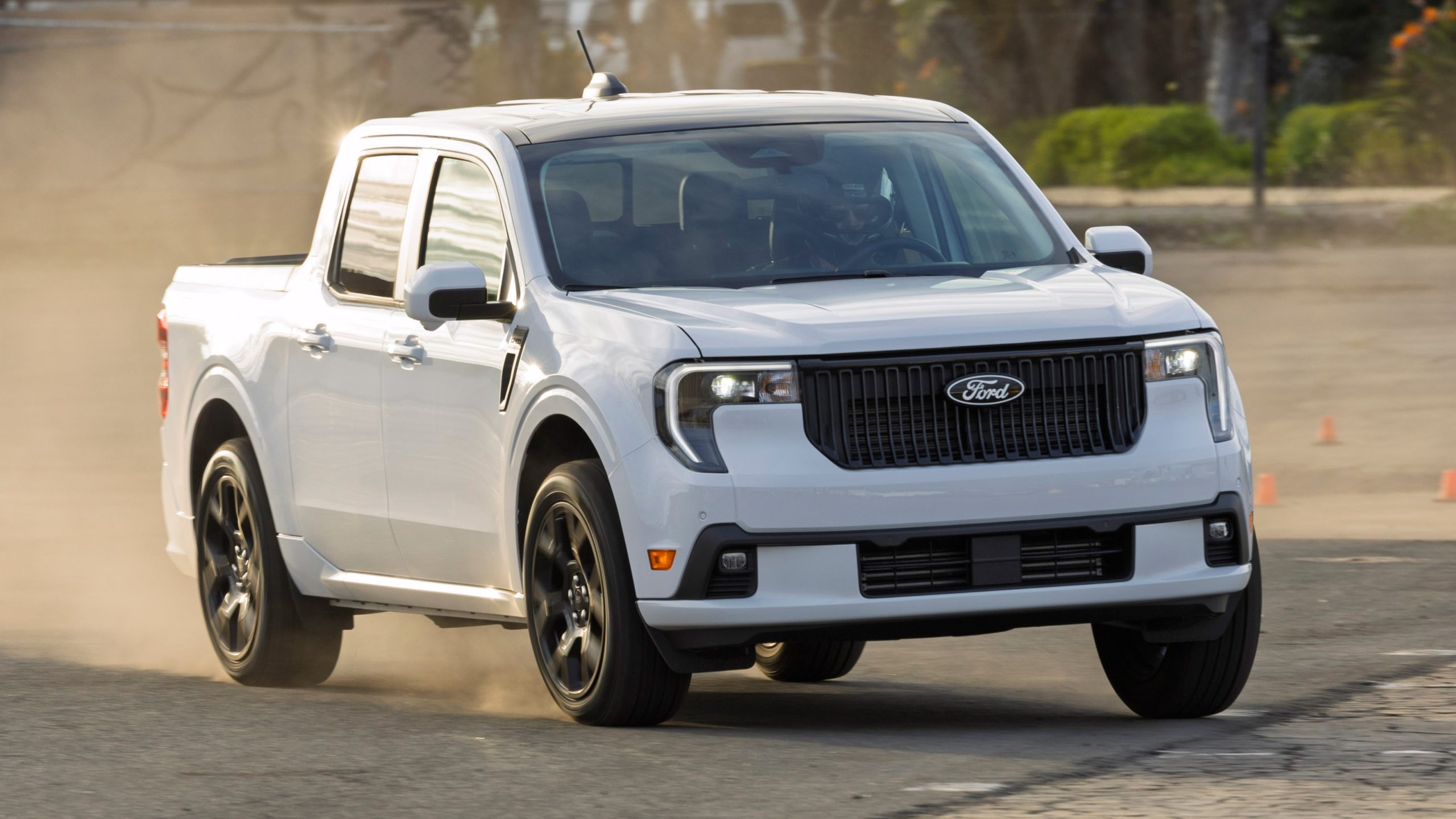
5. Ford Maverick
While often thought of as a lifestyle vehicle, the 2026 Ford Maverick has become a “sleeper hit” for light-duty urban delivery and service fleets across the USA. Its compact dimensions make it the only pickup truck that can truly feel at home in a dense city environment.
For businesses like mobile locksmiths, HVAC technicians, or small-parcel couriers who don’t need the massive volume of a van, the Maverick offers a more fuel-efficient and easier-to-park alternative.
The 2026 model continues to offer a highly efficient hybrid powertrain as the standard option, delivering exceptional city MPG that is unmatched by any other truck in the American market.
The Maverick’s “FLEXBED” system is a key feature for urban delivery. It allows owners to customize the bed with 2x4s and 2x6s to create tiered storage or specialized racks, making it easy to organize tools and small packages.
For 2026, Ford has introduced a new factory-installed bed cap option that is specifically designed for security, featuring heavy-duty locks and integrated lighting. This turns the Maverick into a secure, compact delivery vehicle that can slip into standard parallel parking spots where a Transit or ProMaster would never fit.
Inside, the Maverick is designed for utility and durability. The seats are upholstered in easy-to-clean materials, and the cabin features numerous storage cubbies for clipboards, tablets, and handheld scanners.
The 2026 model includes an upgraded 12-inch infotainment screen with wireless connectivity, making it easy for drivers to follow GPS directions without fumbling with their phones. The low cowl height and large windows provide excellent outward visibility, which is a major safety advantage when around pedestrians and urban obstacles.
The Maverick’s payload and towing capacities are surprisingly robust for its size. In 2026, the Maverick Tremor package has been refined to offer a slightly more composed ride on broken city pavement, while the available all-wheel-drive system ensures that delivery routes can be completed even during unexpected snowstorms.
The truck’s low tailgate height makes loading and unloading heavy items much easier on the back than in a traditional full-size pickup.
5 Vehicles with Significant Blind Spots in the USA
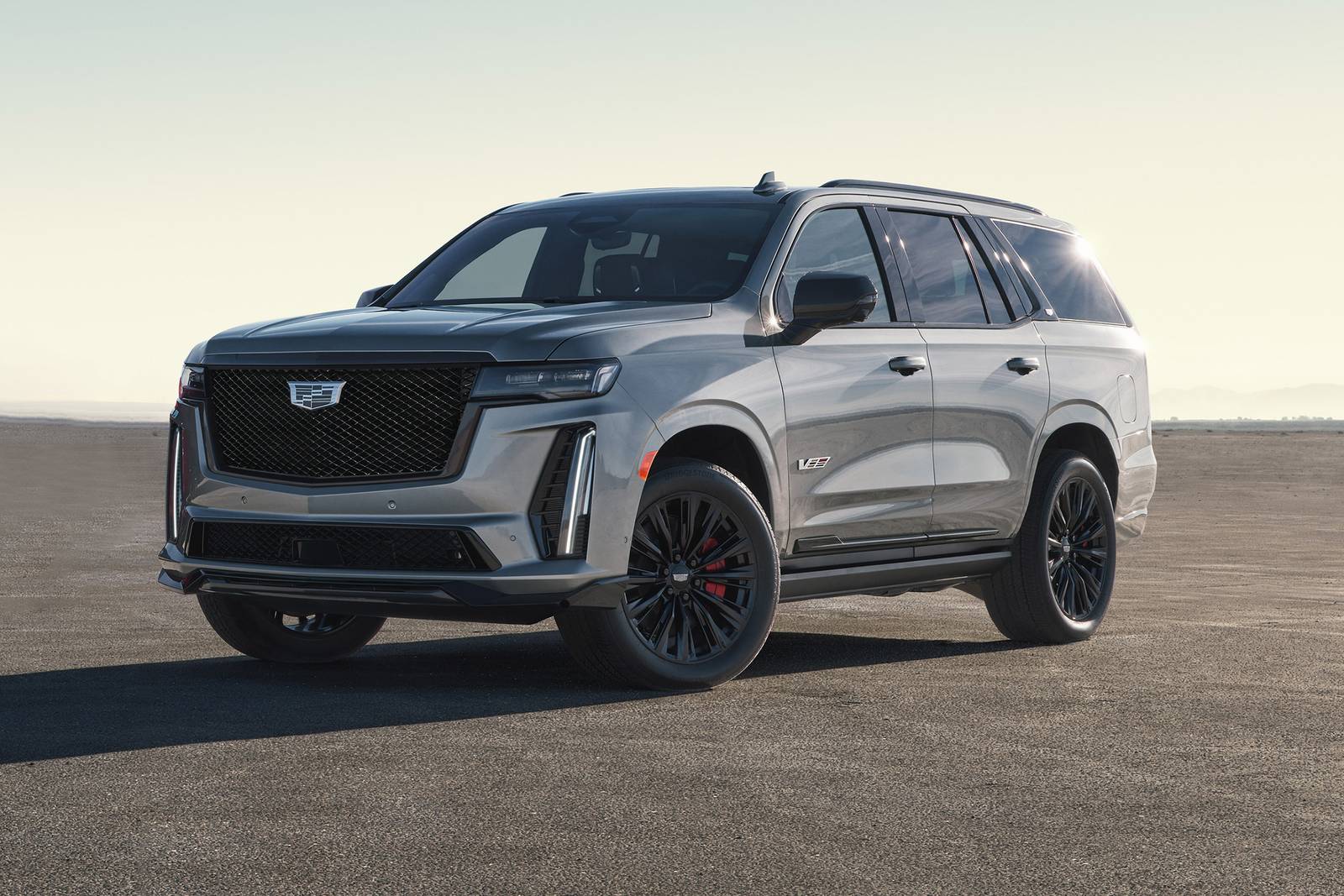
1. Cadillac Escalade
The 2026 Cadillac Escalade remains the pinnacle of American luxury and scale, but its sheer size creates a fortress-like environment that severely limits the driver’s awareness of their immediate surroundings. The most prominent issue is the extraordinarily high front hood line.
From the driver’s seat, it is nearly impossible to see a small child or a low-profile object within ten feet of the front bumper. This “front blind zone” has become a point of contention among safety advocates, as it significantly increases the risk of low-speed accidents in driveways and crosswalks.
Beyond the front-end visibility, the Escalade’s thick A-pillars, the structural supports on either side of the windshield, create large blind spots that can easily hide an entire car at a four-way stop. While the 2026 model is equipped with a vast array of cameras and sensors to mitigate these issues, electronic aids are not a perfect substitute for direct line-of-sight.
The reliance on digital screens can sometimes lead to “sensor fatigue,” where a driver becomes desensitized to the various beeps and warnings provided by the vehicle’s safety systems.
The rear visibility of the Escalade is equally challenging. The massive D-pillars at the very back of the vehicle, combined with the headrests of the third-row seats, make the traditional rearview mirror almost useless for seeing objects close to the ground.
Although Cadillac provides a high-definition camera mirror, the perspective it offers can be disorienting for some drivers, particularly when judging distances during a reverse maneuver. In a crowded urban setting, where pedestrians often walk behind vehicles unexpectedly, this lack of direct rear visibility is a major liability.
Side-view blind spots are also exacerbated by the vehicle’s length. Even with the large side mirrors and blind-spot monitoring systems, the Escalade’s sheer bulk means that there is a significant area alongside the rear half of the vehicle where smaller cars or motorcycles can disappear.
In heavy highway traffic, changing lanes in an Escalade requires a level of caution and technological assistance that highlights the inherent flaws in its gargantuan design.
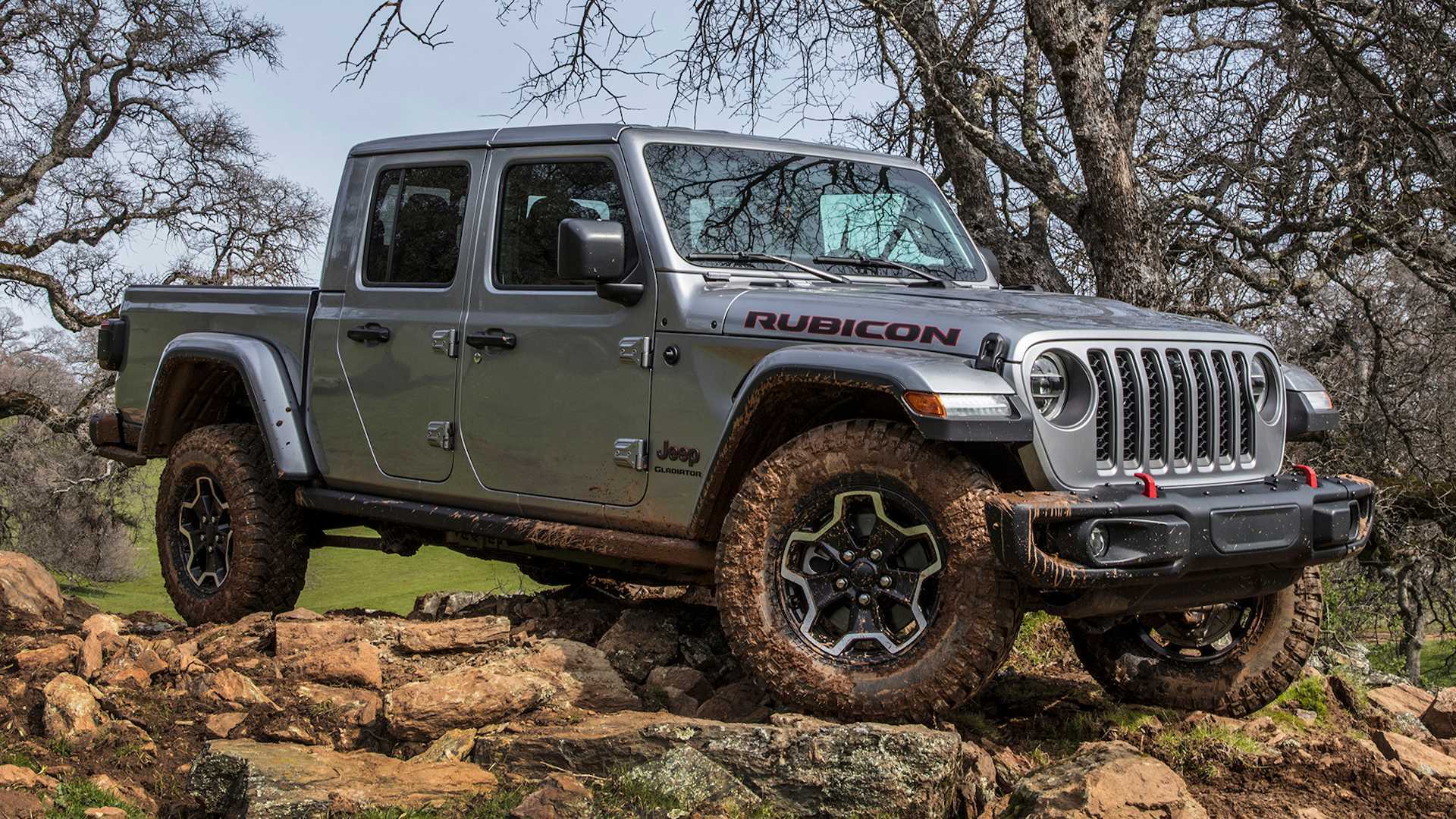
2. Jeep Gladiator
The Jeep Gladiator is a unique vehicle that combines the off-road prowess of the Wrangler with the utility of a pickup truck. However, this hybrid design results in several visibility “dead zones” that make it a challenge to drive in urban environments.
The primary culprit is the small, upright windshield and the high dashboard, which together create a narrow vertical field of view. When stopped at a traffic light, a Gladiator driver often has to lean forward and look up just to see when the light turns green.
The rear visibility in the Gladiator is particularly poor due to the combination of the rear window size and the truck bed. If the bed is loaded with equipment, or even if a large spare tire is mounted on the back, the view directly behind the truck is almost non-existent.
The 2026 model includes a standard backup camera, but the camera is located on the tailgate, which can be obscured by dirt or mud if the truck has been used off-road. This makes reversing in tight city parking garages a stressful experience.
Side visibility is hindered by the Gladiator’s thick B-pillars and the design of its removable doors. When the doors are on, the structural frames are quite chunky, creating a blind spot exactly where a driver needs to look when checking for traffic at a merge point.
While the “open-air” experience of taking the doors off solves this problem, most Gladiator owners in the USA drive with the doors on for the vast majority of the year, meaning they must contend with these structural blind spots on a daily basis.
The Gladiator’s length is another factor that complicates visibility. As a midsize truck with a relatively long wheelbase, it has a large “swept area” during turns.
Because the driver sits so far forward relative to the rear wheels, it is difficult to judge exactly where the rear corner of the vehicle is during a tight maneuver. This often leads to “curb rash” on the wheels or, more seriously, minor collisions with low-lying bollards or parked motorcycles that are hidden below the beltline of the truck.
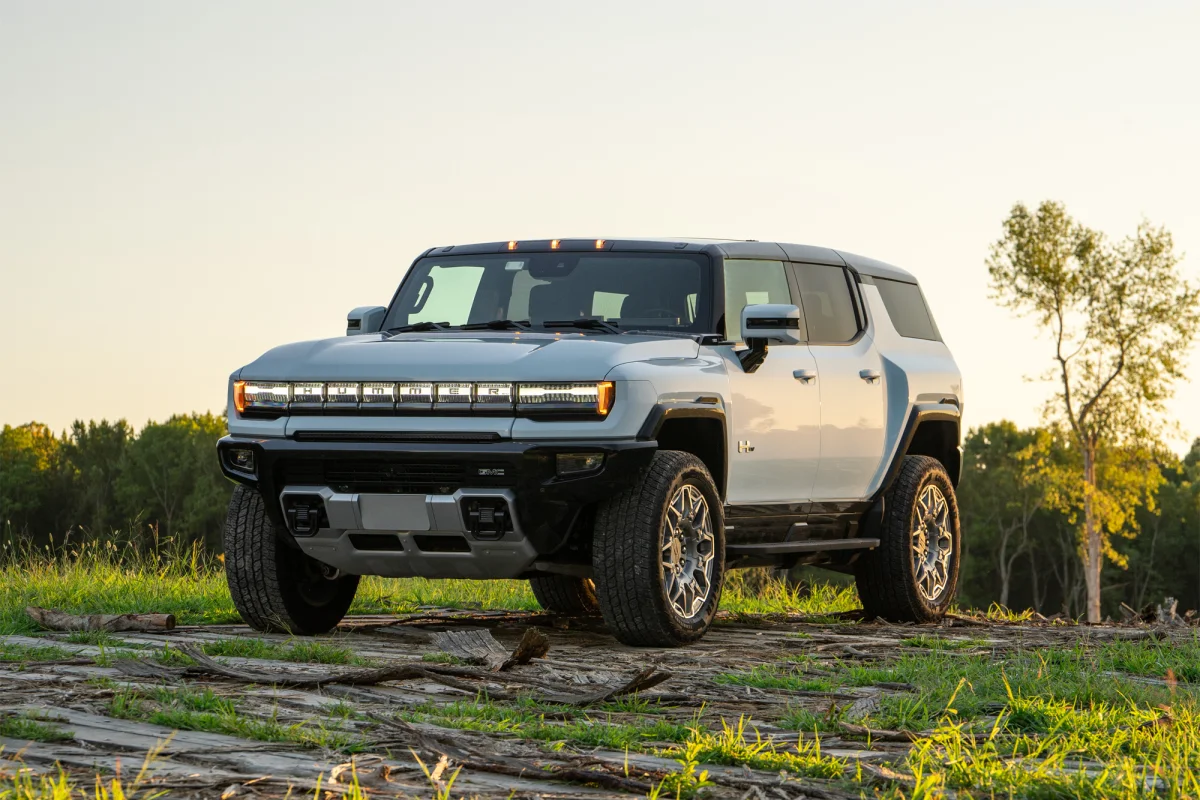
3. GMC Hummer EV SUV
The GMC Hummer EV SUV is a technological marvel, but it is also a prime example of “visibility by camera” rather than by design. The vehicle’s hood is exceptionally high and flat, creating a front blind spot that is among the largest in the industry.
Because the Hummer is also incredibly wide, the driver feels distanced from the edges of the vehicle, making it difficult to gauge exactly how much space is available on either side when driving through narrow city streets or construction zones.
The rear of the Hummer EV SUV is dominated by a massive full-size spare tire mounted on the tailgate. This tire blocks nearly 50 percent of the rear window’s viewable area.
While GMC provides a sophisticated rear-camera mirror to bypass this obstacle, the transition between looking at the side mirrors and the digital rear mirror can be jarring for the driver’s eyes. In an emergency situation where split-second awareness is required, this reliance on digital screens over glass can be a critical disadvantage.
Furthermore, the Hummer’s roofline is relatively low compared to its beltline, resulting in side windows that are narrow and vertically constrained.
This creates a “bunker-like” feeling inside the cabin. While this may feel secure to the occupants, it limits the driver’s ability to see traffic that is positioned slightly above or below them, such as a tall bus or a low-slung sports car.
The 2026 Hummer EV SUV attempts to solve this with a “Surround Vision” system that provides up to 18 different camera views, but managing these views while driving can be a major cognitive load.
The Hummer’s “CrabWalk” feature, while helpful for maneuverability, also introduces a unique visibility challenge. When the vehicle moves diagonally, the driver’s traditional sense of where the blind spots are is disrupted. Looking over the shoulder in the direction of travel might reveal only the thick C-pillar or the spare tire, rather than the path of the vehicle.
This requires the driver to place immense trust in the vehicle’s ultrasonic sensors, which can sometimes be triggered by steam, heavy rain, or even tall weeds, leading to false alarms.
4. Tesla Cybertruck
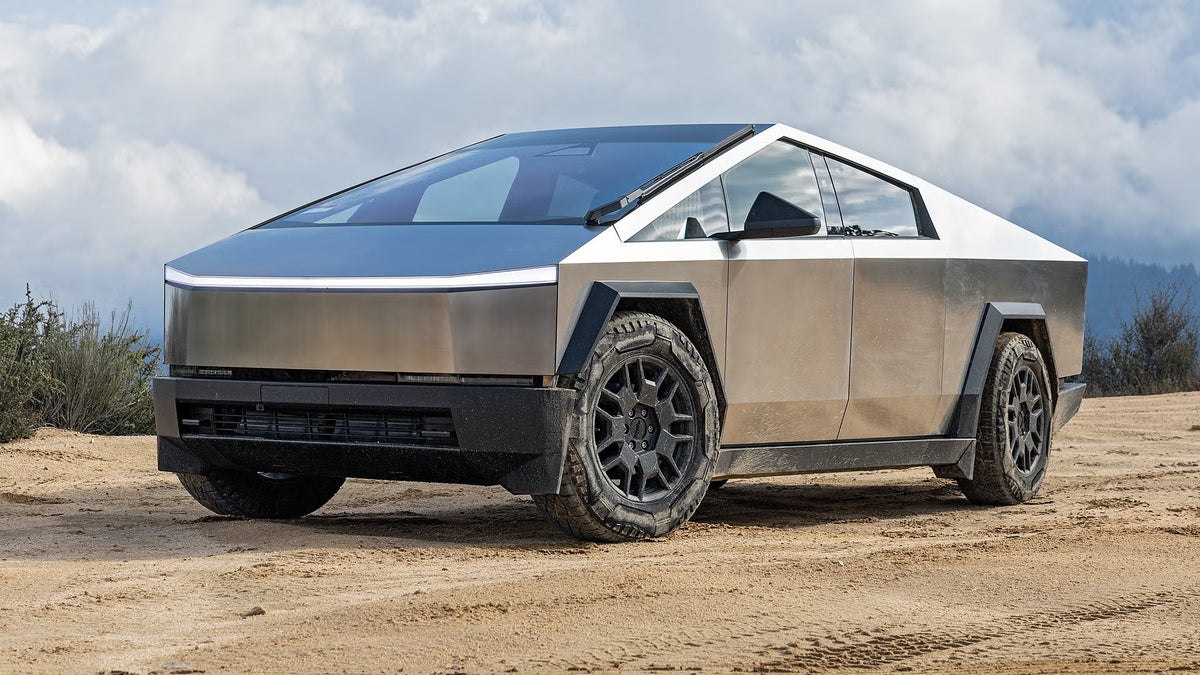
The Tesla Cybertruck is perhaps the most debated vehicle of the decade, and its unique stainless-steel “exoskeleton” design creates visibility issues unlike anything else on the road. The most significant problem is the massive, sloping A-pillars that extend from the front of the vehicle all the way to the peak of the roof.
These pillars are incredibly thick and are positioned at an angle that can completely obscure a pedestrian or a small vehicle at a typical city intersection. Drivers have frequently reported having to “peek” around the pillars to ensure the path is clear.
The rear visibility in the Cybertruck is essentially non-existent when the motorized tonneau cover is closed. Because the rear window is small and the bed sides are high and angular, there is no direct line-of-sight to the rear of the truck.
Tesla’s solution is a constant video feed on the central touchscreen, but this requires the driver to look away from the road ahead to see what is behind them. For the 2026 model, Tesla has updated the software to improve the frame rate and clarity of this rear feed, but the fundamental ergonomic issue remains.
Side visibility is also compromised by the Cybertruck’s high, sharp-edged “vault” sides. Unlike traditional trucks where the bed sits lower than the cab windows, the Cybertruck’s body panels rise to meet the roofline, creating a massive metal wall where a driver would normally look over their shoulder to check a blind spot.
Even with the cameras, the lack of “peripheral glass” makes the Cybertruck feel much more enclosed than its competitors, which can be unsettling in fast-moving urban traffic.
The 2026 Cybertruck also lacks traditional physical side mirrors in some early concept versions, though US regulations have largely required them to be present. Even with mirrors, the sharp angles of the body cause reflections and shadows that can make it difficult to distinguish between a vehicle in a blind spot and the truck’s own bodywork.
The steer-by-wire system, while making the truck feel agile, does not solve the problem of not being able to see where the front “corners” of the triangular body actually end.
5. Toyota 4Runner
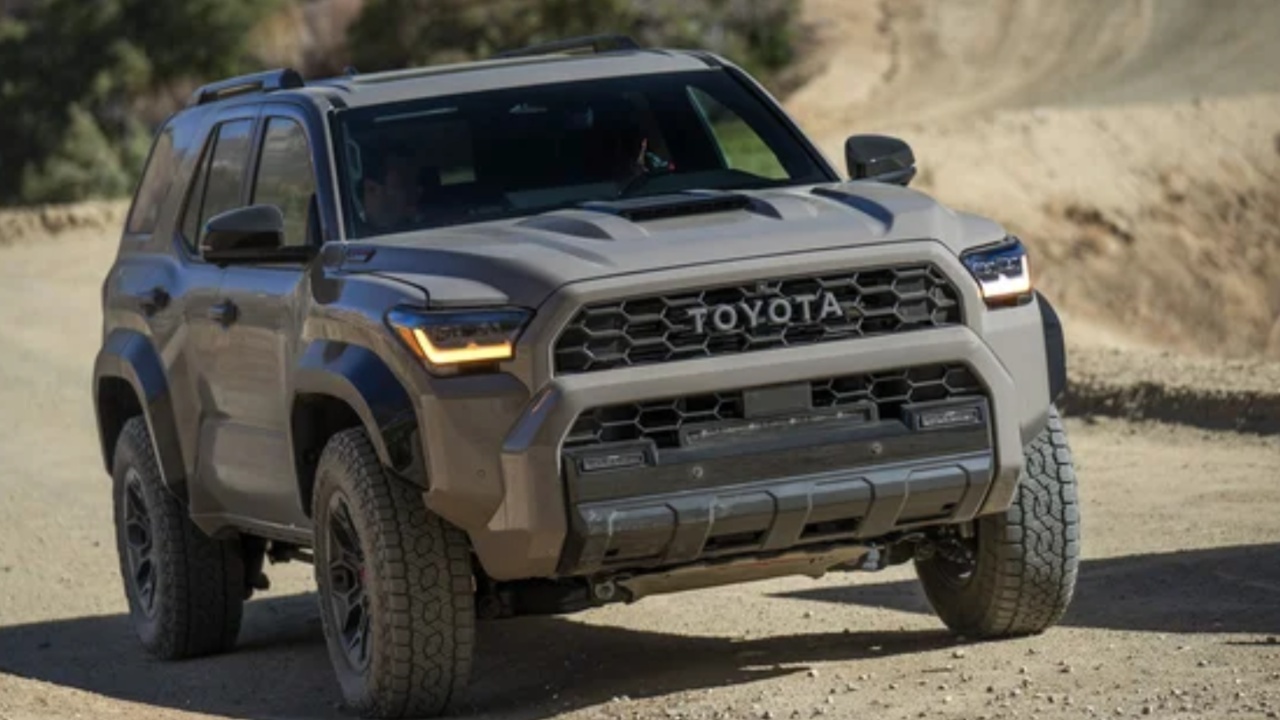
The 2026 Toyota 4Runner is a brand-new generation of the legendary off-roader, but its commitment to a rugged, “boxy” aesthetic has preserved some significant visibility challenges. To maintain the classic 4Runner look, Toyota has kept the beltline high and the roof pillars thick, particularly the C-pillar located behind the rear doors.
This creates a substantial blind spot when merging onto a highway or backing out of a driveway. While the 2026 model introduces a much-needed suite of modern safety tech, the physical geometry of the vehicle remains a hurdle.
Forward visibility in the new 4Runner is impacted by the bulky hood design, which is intended to give the truck a muscular appearance. While this looks great in marketing photos, it obscures the ground directly in front of the vehicle, making it difficult to see low obstacles like parking curbs or small pets.
Toyota has countered this with a Multi-Terrain Monitor system in higher trims, which uses cameras to “see through” the hood, but for many buyers of the more affordable trims, this front blind zone is a daily reality.
The 4Runner’s rear visibility is also complicated by its signature power-sliding rear window. While this is a favorite feature among fans, the mechanism required to move the glass up and down necessitates a very thick rear tailgate frame.
When combined with the large headrests of the second and third rows, the view through the rear glass is significantly fragmented. In the 2026 model, the addition of more robust safety structures in the roof has only served to make the pillars even wider, further encroaching on the glass area.
Side visibility is another area of concern, especially in the 2026 4Runner’s “TRD Pro” and “Trailhunter” trims, which often feature roof racks and snorkels. These accessories can add further visual clutter to the driver’s field of view.
When checking a blind spot over the left shoulder, a driver might find their view partially blocked by the thick B-pillar or the frame of the snorkel. In an urban environment where things move quickly, these small obstructions can add up to a significant safety risk.