
The Range Rover has long been considered the pinnacle of SUV luxury and design. It carries an aura of British aristocracy that few vehicles can match on any road, whether it’s a gravel country lane or a gleaming city boulevard. Its bold proportions, flush door handles, and floating roof have set the benchmark for what a premium SUV should look like for over five decades.
Yet the automotive world never stops evolving. Designers from rival brands have been studying, refining, and in some cases surpassing what Land Rover’s finest has achieved. A handful of SUVs have emerged that genuinely challenge the Range Rover’s visual supremacy, vehicles that stop traffic with equal or greater authority.
At the same time, not every luxury SUV lives up to its lofty price tag when parked beside a Range Rover. Some carry design compromises, fussy details, or a presence that simply cannot compete with Land Rover’s masterpiece. The gap between an aspirational design and a truly commanding one becomes brutally obvious in a side-by-side comparison.
This list takes an honest look at both ends of the spectrum. We celebrate five SUVs that have genuinely out-designed the Range Rover, and we shine a light on five that, for all their engineering merit, fall visually short. Beauty is subjective, but presence is something you either have or you don’t.
5 SUVs That Look Better Than a Range Rover
These SUVs stand out with bold design, premium proportions, and distinctive styling that can rival or even surpass the presence of a Range Rover. Models like the Bentley Bentayga and Rolls-Royce Cullinan deliver unmatched road presence with ultra-luxury detailing and commanding silhouettes.
Others like the Lamborghini Urus and BMW XM bring aggressive, modern styling that feels more dramatic and eye-catching. Even options like the Genesis GV80 offer elegant, high-end design that punches above its price, proving style isn’t limited to one badge.
1. Rolls-Royce Cullinan
The Rolls-Royce Cullinan exists in a design category entirely its own. It doesn’t merely compete with the Range Rover; it renders the comparison almost philosophical. Where the Range Rover speaks in the clipped accent of British countryside elegance, the Cullinan addresses you in the deep, resonant baritone of a grand opera.
The Cullinan’s silhouette is unmistakably Rolls-Royce. Its nearly vertical rear glass and three-box shape give it a gravitas that no other SUV can claim. Every panel is vast, smooth, and jewel-like in its precision, as if carved from a single immense ingot of aluminium.
The famous Pantheon grille stands tall and proud on the Cullinan’s face. It is framed by LED headlights that glow with the cold confidence of someone who has never once questioned their worth. The chrome work is applied with the measured hand of a jeweller rather than the enthusiasm of a marketing team.
At the rear, the split tailgate opens with balletic precision to reveal an opulently upholstered loading space. The twin circular taillights are signature Rolls-Royce, glowing like embers in a Mayfair drawing room. No other SUV has figured out how to make a rear end look simultaneously formal and relaxed.
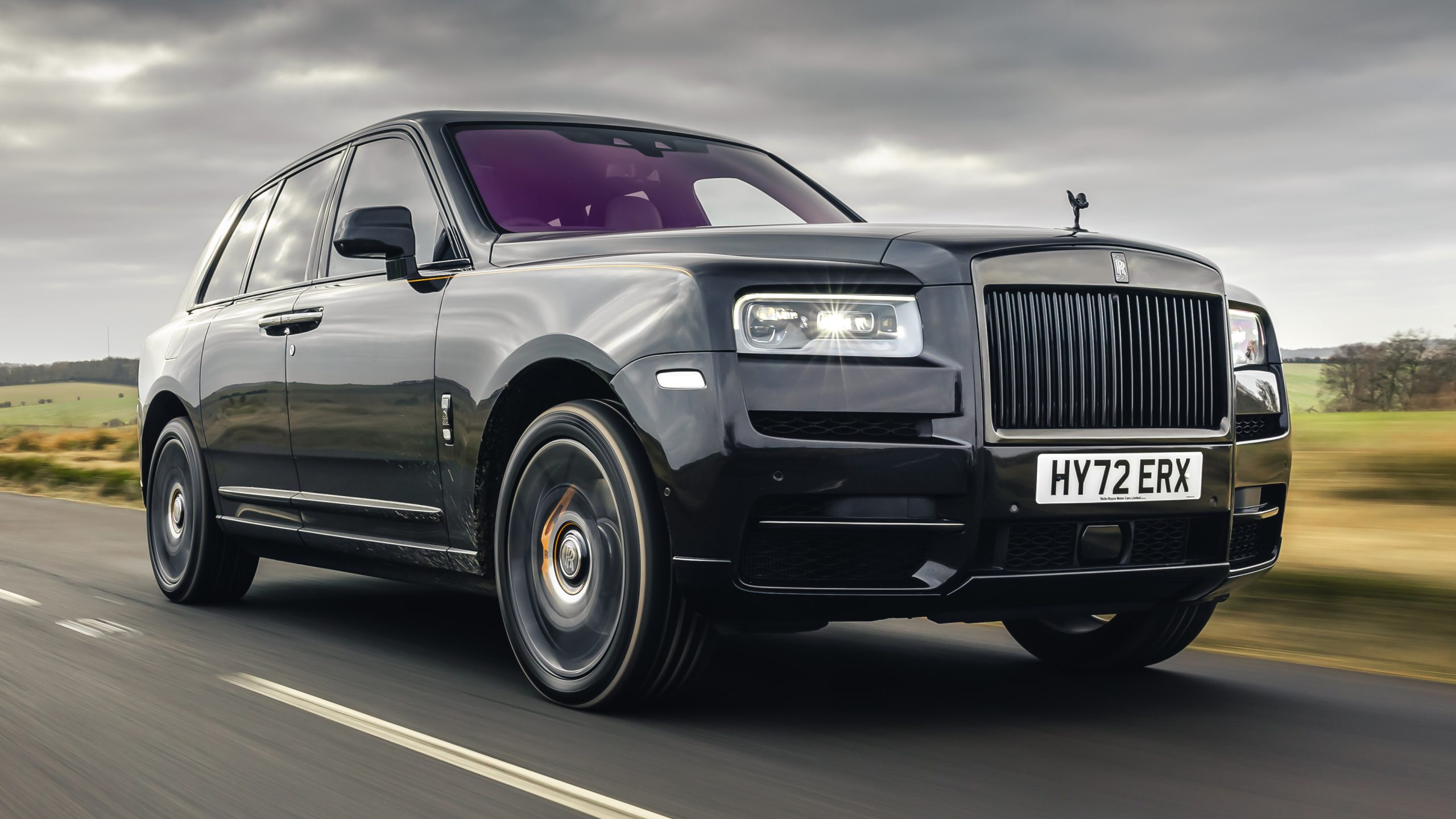
The wheel arches are perfectly proportioned against the vast body. The Cullinan sits on wheels that look more like decorative art than functional rubber. Every spoke is polished to a degree that makes Range Rover’s alloys look like they came from a very nice accessory catalogue.
Ground clearance is generous without making the vehicle look tall and awkward. It floats above the road with a composure that the Range Rover, for all its talent, occasionally fails to project at certain angles. The Cullinan doesn’t just look expensive, it looks inevitable.
Colour options from Rolls-Royce’s Bespoke programme raise the Cullinan further. A deep Andalucian White or a Darkest Tungsten with a contrasting roof gives it a two-tone sophistication that the Range Rover’s SV variants struggle to match. The Cullinan is not just a better-looking SUV than the Range Rover; it is arguably the most visually commanding production SUV ever built.
2. Bentley Bentayga
When Bentley finally entered the SUV market, traditionalists feared the worst. What arrived instead was the Bentayga, a vehicle that has since undergone a facelift so transformative that it now rivals anything on four wheels for sheer design authority. The original Bentayga was a polarising machine, but the revised model is a different story entirely.
The refreshed Bentayga’s front end is a masterpiece of controlled aggression. The oval grille sits lower and wider, flanked by split headlights that give the face an expression of focused intensity. The upper daytime running lights sit high in the bumper like a pair of raised eyebrows on a man who has heard an interesting argument.
Bentley’s famed knurled detailing appears throughout the exterior trim. This hand-finished texture catches light differently at every angle, turning what could be a simple piece of brightwork into something that rewards close inspection. The Range Rover, by comparison, uses smoother surfaces that can read as clinical rather than crafted.
The Bentayga’s profile features a long bonnet and a swept roofline that gives the SUV something the Range Rover lacks: genuine motion even when standing still. The rear haunches are muscular without being aggressive. They suggest power in the way a well-cut suit suggests wealth, without ever having to announce it.
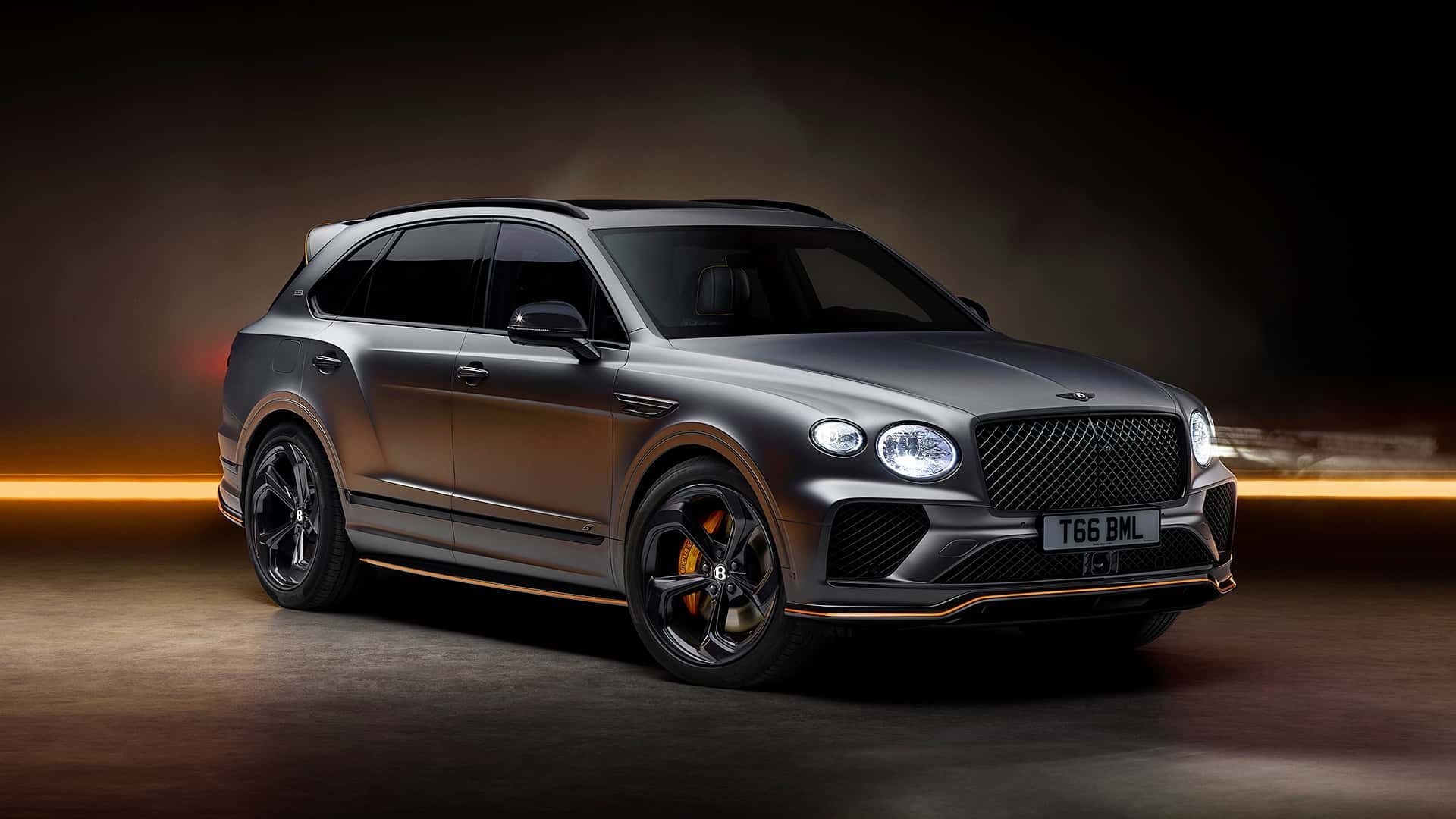
At the rear, the large oval taillights echo the grille with intelligent consistency. The wide horizontal tail lamp graphic creates a visual width that makes the Bentayga look even more planted. The standard chrome finisher below the rear bumper is applied with just enough restraint to feel like a finishing touch rather than an afterthought.
The interior’s quality famously exceeds the Range Rover’s, but that’s a different conversation. From the outside, the Bentayga presents a face that is more resolved, more purposeful, and more distinguished than the Range Rover’s in its current generation. It is a vehicle that demands to be stared at, and rewards every second of that attention.
3. Lamborghini Urus Performante
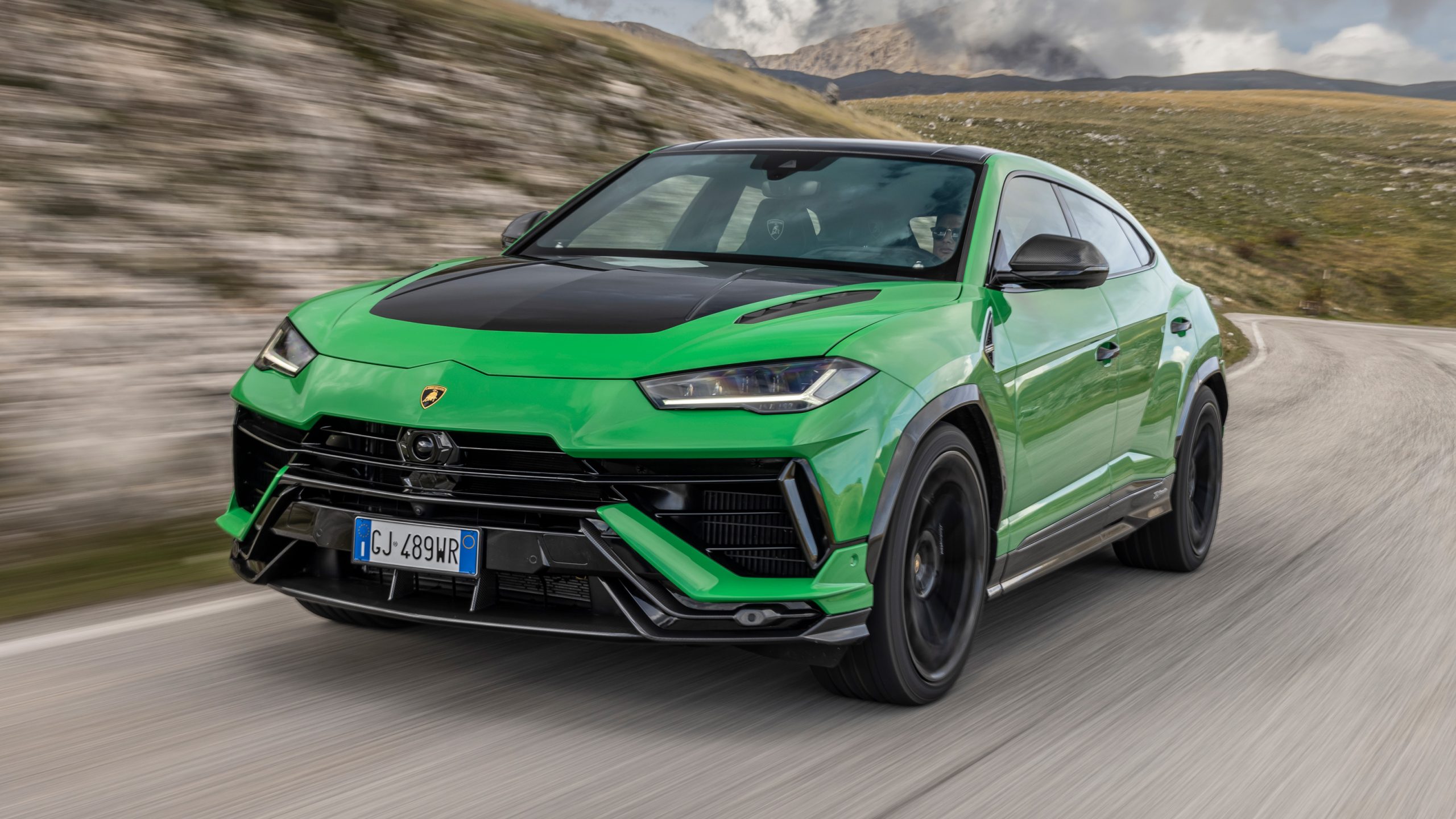
The Lamborghini Urus Performante is what happens when a brand that has spent decades designing literal supercars turns its attention to a family-sized SUV. The result is a vehicle that makes the Range Rover look almost conservative, and in the context of SUV design, conservative can be a dangerous quality.
The Urus Performante’s front bumper is a study in calculated theatricality. Massive air intakes dominate the lower face. The Y-shaped daytime running lights are a direct quotation from Lamborghini’s sports car vocabulary. Nothing about the face apologises for its existence it announces it, loudly and repeatedly.
The hexagonal body surfacing draws directly from the Aventador and Huracán. Every panel break, every crease, every air vent has been placed with the intent of creating visual drama. Where the Range Rover achieves presence through restraint, the Urus achieves it through a kind of magnificent excess that somehow never tips into vulgarity.
The Performante-specific body kit adds a front splitter, side sills, and a rear diffuser that serve aerodynamic function while simultaneously making the vehicle look like it’s already moving at 80mph when parked. The standard Urus is dramatic; the Performante is cinematic. The carbon fibre detailing throughout is not decorative, it reads as structural, purposeful, and expensive.
The rear three-quarter view is where the Urus truly distances itself from the Range Rover. The wide rear haunches flare dramatically over the wheels. The horizontal tail lamp graphic spans the full width of the vehicle. The integrated roof spoiler and the deep rear diffuser give it a visual completeness that makes the Range Rover look, for a moment, slightly undercooked.
Ground clearance on the Urus is tighter than a traditional Range Rover, giving it a lower, more athletic stance. This suits the Performante’s character perfectly. It sits like a coiled spring, whereas the Range Rover sits like a distinguished gentleman on a very fine chair. Both postures have their admirers, but only one makes pedestrians stop mid-conversation.
4. Mercedes-Benz G63 AMG
The Mercedes-Benz G-Class is the only vehicle on this list that has been in continuous production longer than the Range Rover, and in the G63 AMG form, it has evolved into something that surpasses the British icon on pure visual terms. The G63 does not follow trends; it has spent so many decades ignoring them that it has become one itself.
The G63’s boxy silhouette is a visual provocation. Every panel is flat, every corner is sharp, and the effect is of a vehicle that has no interest in the aerodynamic fashions that have made most modern SUVs look like slightly swollen hatchbacks. Against this architectural rigidity, the Range Rover’s rounded surfaces can look almost timid.
The prominent exterior door hinges on the G63 are deliberately kept from the original military specification. They serve no functional purpose in a modern luxury vehicle; they exist purely to remind onlookers that this design predates the computer simulation era of car design. This authenticity is enormously compelling. The Range Rover’s design, however excellent, feels calculated by comparison.
The G63’s front features a wide flat bonnet with visible panel gaps that, on any lesser vehicle, would be considered flaws. Here they read as virtues.
The round headlights in their squared housings create an expression of absolute directness. There is no graphic trickery here, no attempt to look athletic or futuristic, just an honest face that has earned the right to look exactly as it pleases.
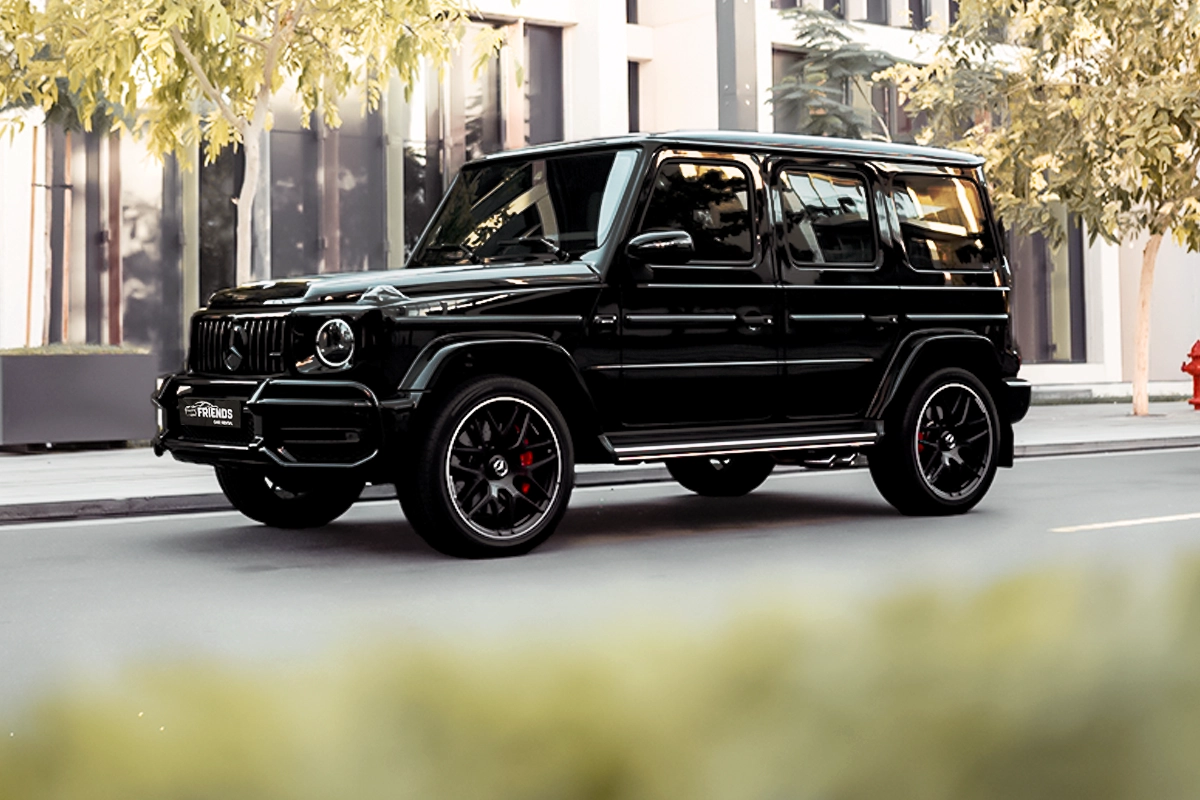
The rear spare wheel mounted externally is another masterstroke. It transforms a practical necessity into a signature design detail. The boxy taillights, the horizontal chrome bars, and the purposeful exhaust tips complete a rear end that is unmistakably and defiantly itself. The Range Rover’s clean rear looks elegant; the G63’s looks historic.
The biturbo V8 soundtrack is part of the G63’s visual story; the sound matches the look. A vehicle that looks this fierce and sounds this brutal occupies a different psychological space than the Range Rover. Next to a G63 AMG in Obsidian Black, a Range Rover can occasionally look like a very expensive taxi.
Also Read: 9 SUVs With Floor Mats That Trap Snow And Mud Well
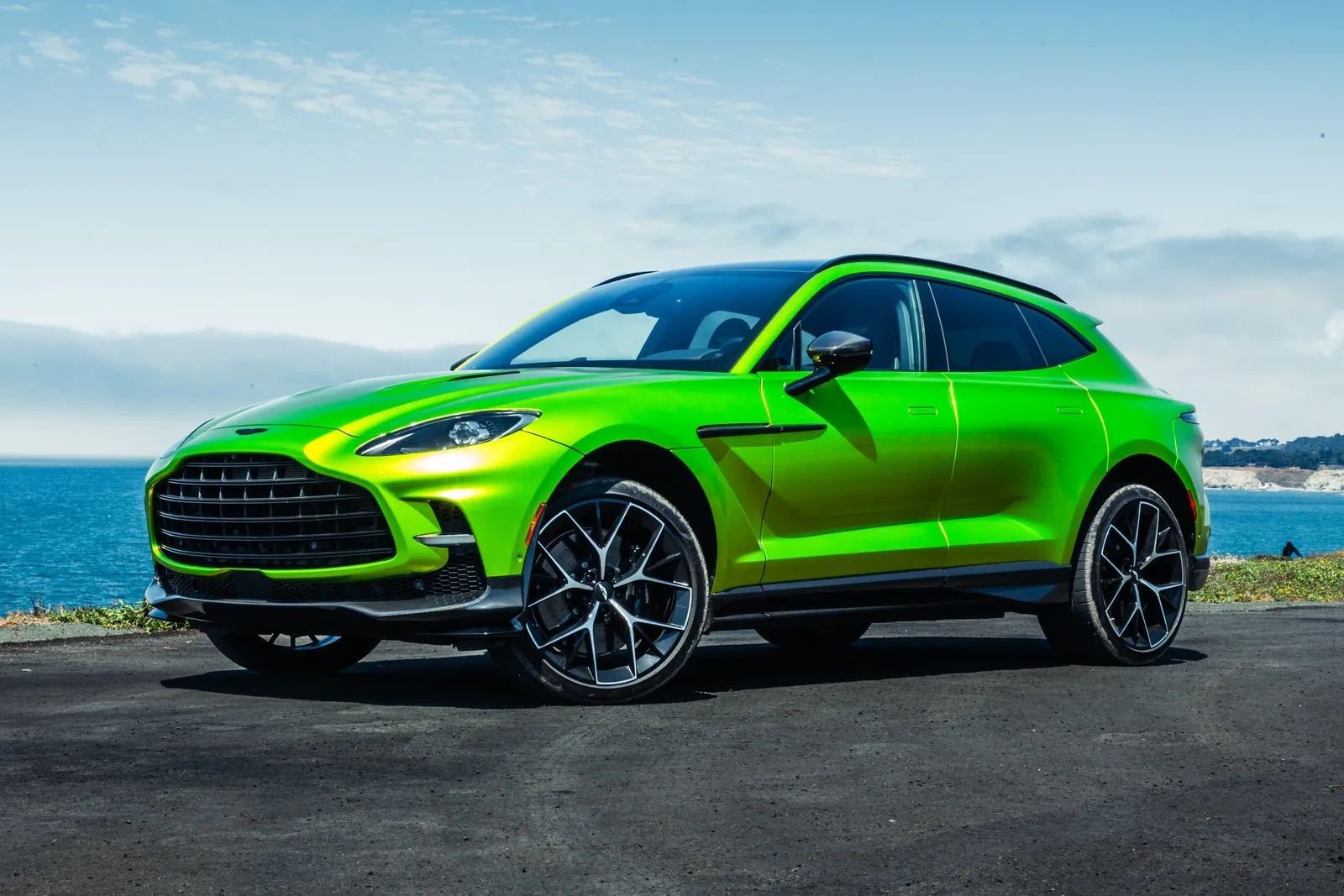
5. Aston Martin DBX707
Aston Martin built a beautiful SUV and then made it even more beautiful. The DBX707 is not merely a performance upgrade; it is a visual refinement that raises the already handsome DBX into a genuine automotive sculpture. Where others in this segment have prioritised muscle, Aston Martin has prioritised elegance, and the result is an SUV that makes the Range Rover look slightly municipal by comparison.
The DBX707’s front end features Aston Martin’s signature wide grille with a satin chrome surround. The headlights are narrow, aggressive, and give the face a predatory focus that the Range Rover’s broader, more affable expression cannot match. The bonnet features a central power dome, a detail that speaks directly to the sports car heritage every other brand merely implies.
The profile of the DBX707 is where its superiority over the Range Rover becomes most apparent. The long bonnet, the swept A-pillar, and the fastback roofline give the DBX707 a dynamic tension in silhouette that the Range Rover’s upright greenhouse simply cannot achieve. It looks like it wants to move. The Range Rover looks like it is at complete peace with wherever it happens to be.
The side sills on the 707 are significantly more pronounced than the standard DBX. They visually lower the car and give it a planted, purposeful stance. The contrasting roof available in black creates a visual drama along the roofline that draws the eye from front to rear in one satisfying sweep. No unnecessary crease breaks the flow.
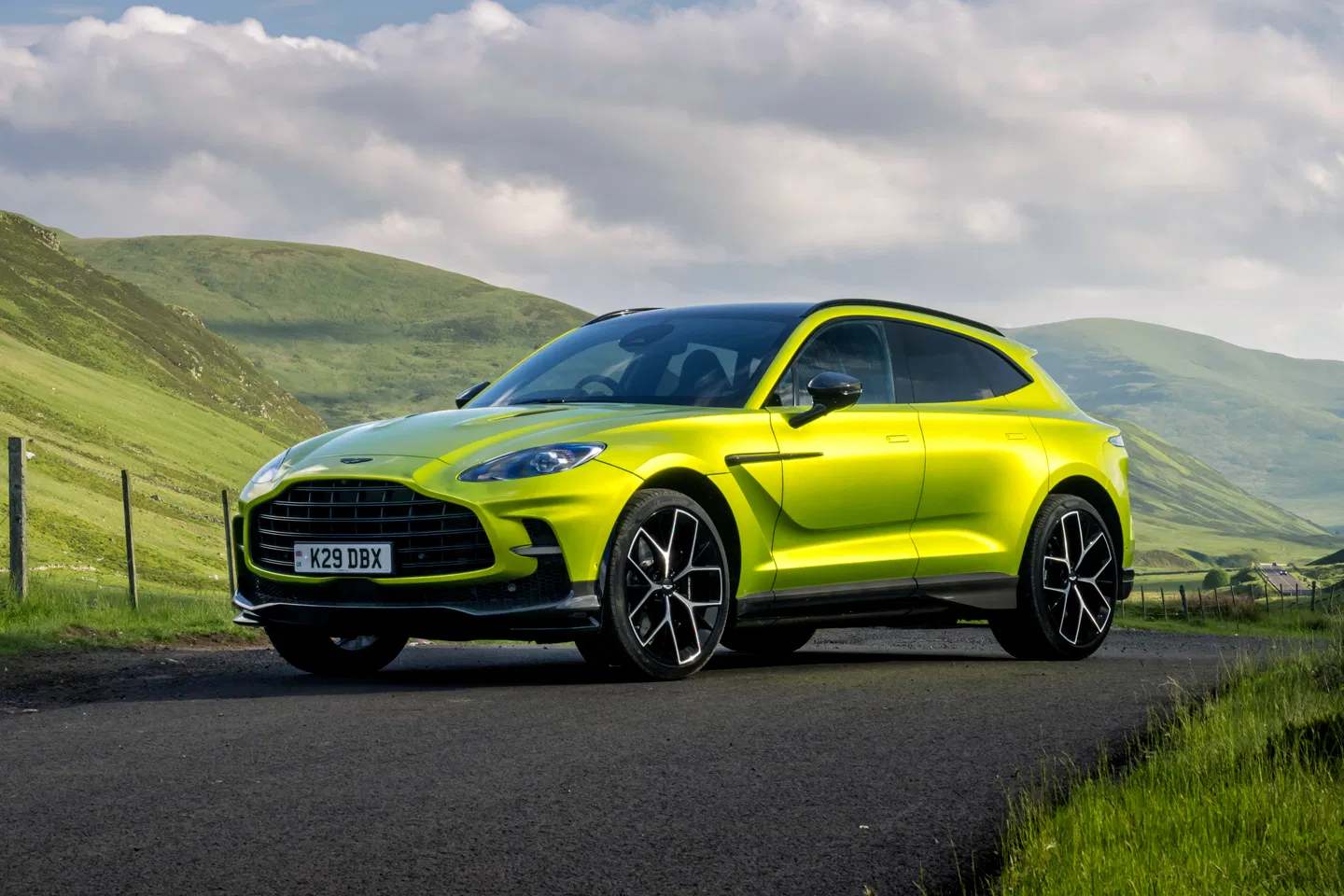
The rear diffuser on the DBX707 is the single best piece of exterior design on any luxury SUV currently on sale. It integrates twin exhausts, horizontal aerodynamic fins, and a rear bumper lower section into one cohesive unit that manages to look both technical and elegant simultaneously. The Range Rover’s rear, clean as it is, offers nothing to match this level of visual engineering.
The DBX707 is available in Aston Martin’s legendary colour palette: Iridescent Emerald, Lunar White, or the devastating Podium Pink, each applied over a body so well proportioned that colour becomes almost secondary to form. This is an SUV that has genuinely done the one thing most rivals only attempt: it looks like a sports car that hasn’t forgotten to be an SUV.
5 SUVs That Look Cheap Next to a Range Rover
These SUVs often fall short in design refinement, proportions, or material perception, making them feel less premium when compared side-by-side with a Range Rover. Vehicles like the Mitsubishi Outlander and Chevrolet Traverse focus more on practicality than standout design, resulting in a more basic visual presence.
Others, such as the Nissan Rogue or Toyota Rush, may offer good value, but their styling and detailing can appear simpler and less refined. Compared to the clean lines, strong stance, and premium finish of a Range Rover, these models can feel noticeably less upscale in design impression.
1. Cadillac Escalade
The Cadillac Escalade is enormous, expensive, and deeply respected in its home market. It is also, when parked alongside a Range Rover, a masterclass in how not to translate scale into sophistication. The Escalade suffers from a fundamental design problem it confuses size with substance, and the Range Rover exposes this confusion mercilessly.
The Escalade’s front end features a large chromed grille that stretches across the full width of the bumper. On paper, this sounds commanding. In practice, the chrome application feels indiscriminate; it is applied everywhere without consideration for how it interacts with the surrounding surfaces. The Range Rover’s sparing use of bright work makes each piece feel intentional; the Escalade’s approach makes each piece feel like it came from a very large parts catalogue.
The LED lighting signature, while technically impressive, is busy in a way that reads as decorative rather than structural. The vertical light bars and the C-shaped daytime running lights attempt to create a distinctive face, but the composition lacks the unified calm of the Range Rover’s horizontal lighting graphic. It looks like a face assembled from impressive individual components rather than designed as a whole.
The Escalade’s profile is dominated by its sheer length and height, but the surfacing between the wheel arches does little with this canvas. The flanks are relatively flat with minimal sculptural interest. The Range Rover uses subtle character lines and precision panel gaps to suggest quality in the metalwork itself. The Escalade’s sides tell you nothing beyond the information that the vehicle is very large.
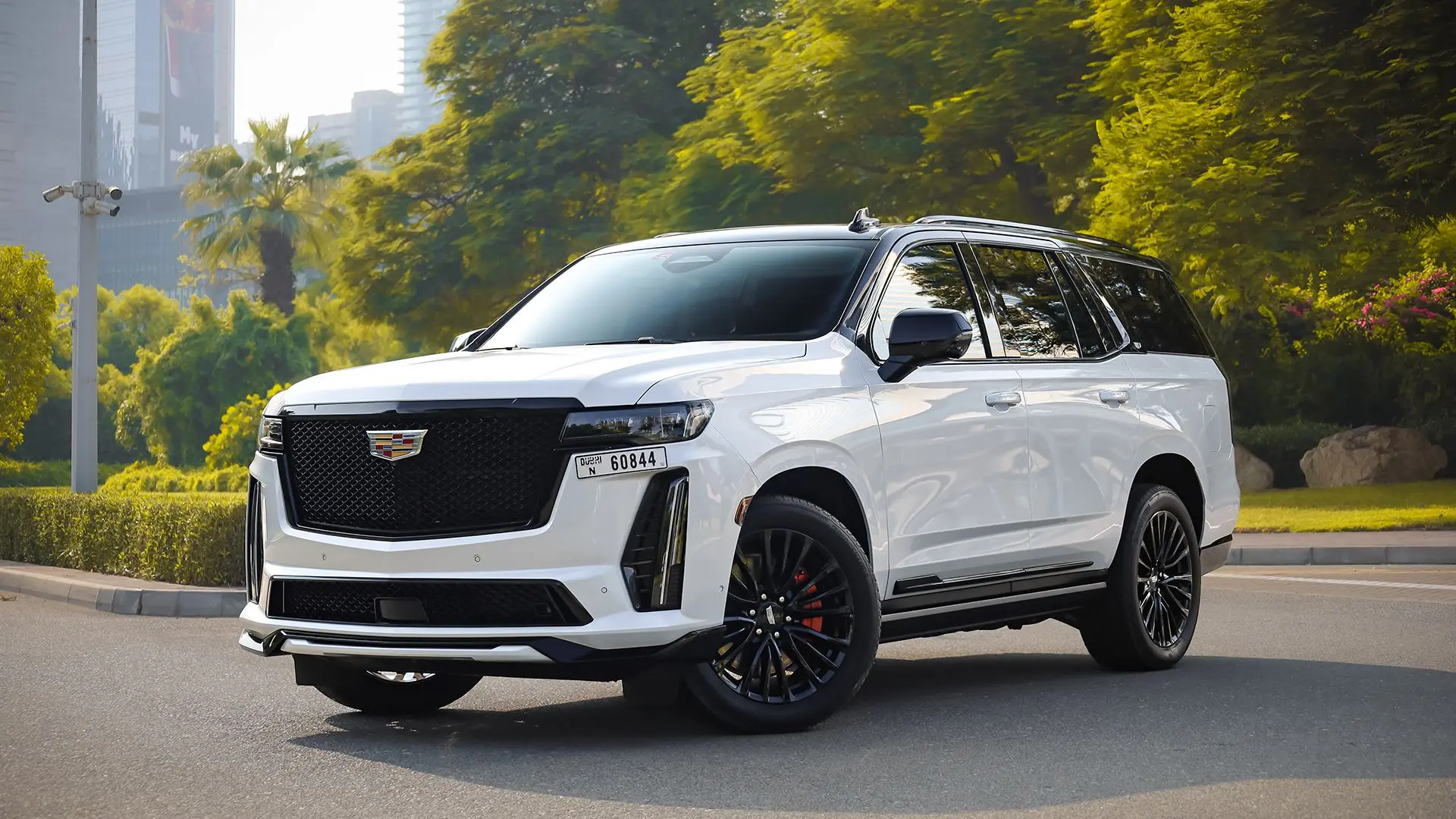
The chrome window surrounds and door handles add further visual weight to a vehicle that already carries considerable mass. The Range Rover achieves luxury through simplification, flush door handles, and frameless windows, while the Escalade achieves it through addition. The result, alongside a Range Rover, is that the Cadillac looks decorated while the British vehicle looks designed.
The rear of the Escalade, with its large vertical taillights and chrome horizontal bar, is functional and recognisable. It is not, however, elegant. The Range Rover’s clean rear surfacing, with its slim horizontal tail lamps and restrained bumper, demonstrates how much more powerful restraint is than declaration when it comes to projecting genuine luxury.
2. Lincoln Navigator
The Lincoln Navigator is America’s answer to the Range Rover, a full-size luxury SUV aimed squarely at the same market of wealthy buyers who want comfort and presence in equal measure. It is, in many ways, an excellent vehicle. But next to a Range Rover, the Navigator’s design reveals itself as a series of good intentions that never quite coalesce into something genuinely distinguished.
The Navigator’s front features the brand’s signature “Continental” grille, a wide horizontal expanse of chrome mesh framed by slender LED headlights. The concept is sound, and the execution is competent. But competent is precisely the problem. The Range Rover’s face communicates a quiet certainty; the Navigator’s communicates a very loud effort. The chrome grille is too large, too shiny, and too prominent relative to the rest of the face.
Lincoln has recently redesigned the Navigator with more attention to surface quality, and the improvements are real. The flanks are cleaner than before, with a single long character line running from the front to the rear wheel arch. However, this line is drawn with insufficient conviction; it fades rather than resolves, whereas the Range Rover’s body lines are executed with the kind of precision that makes you want to run your finger along them.
The Navigator’s vertical C-pillars create a large greenhouse that, in certain colours, can make the vehicle look like a very expensive airport shuttle. The Range Rover’s floating roof design, achieved through blacked-out pillars, creates a far more dynamic roofline from the same basic body architecture. Lincoln has not yet found a solution to this problem.
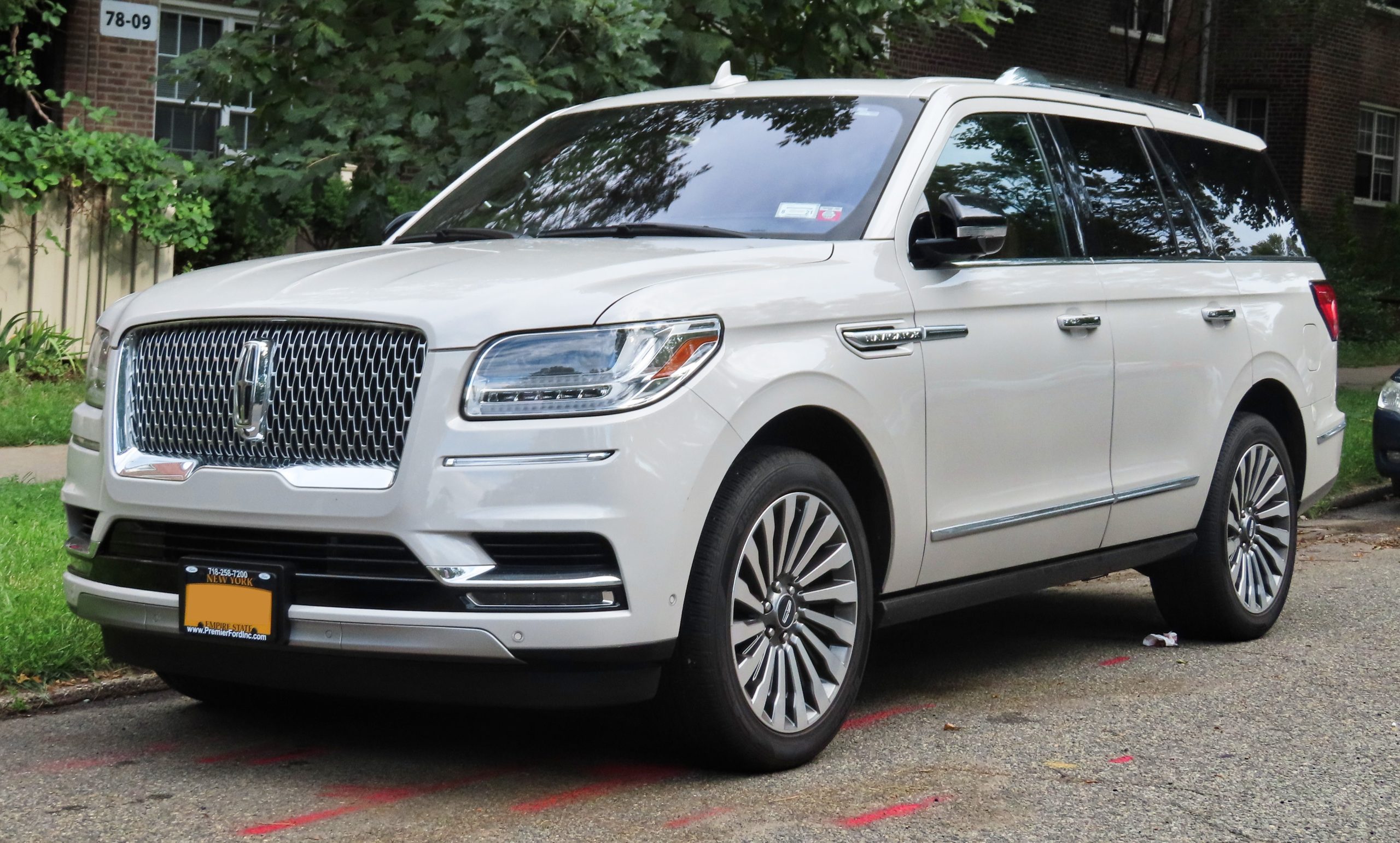
The rear of the Navigator features large L-shaped taillights that are pleasant and distinctive but lack the architectural quality of the Range Rover’s lamp signature.
The bumper below is heavily moulded with plastic elements that, under direct lighting, read as cheap against the painted surfaces above. The Range Rover’s rear bumper treatment is more integrated and more convincing as a single designed object.
Interior quality on the Navigator is genuinely impressive, and its long-wheelbase variant offers extraordinary rear passenger space. But a vehicle must earn its presence from outside before it earns entry, and the Navigator has not yet learned the Range Rover’s most important lesson that in luxury design, what you leave out matters as much as what you put in.
3. Jeep Grand Wagoneer
The Jeep Grand Wagoneer represents one of the most significant comeback stories in American automotive history. After decades of absence, the Wagoneer nameplate returned on a vehicle priced to compete with European luxury SUVs. The Grand Wagoneer is spacious, technologically advanced, and genuinely premium inside. Outside, however, it struggles enormously next to a Range Rover.
The front end of the Grand Wagoneer features Jeep’s traditional seven-slot grille rendered in a premium format wider, with chrome surrounds and integrated lighting. The execution is faithful to the heritage, but heritage and luxury do not automatically coexist. The grille, for all its brand authenticity, reads as truck-derived rather than purpose-designed for a luxury application, which is precisely what it is.
The headlights flanking the grille are complex multiple LED elements arranged in a layered graphic that attempts to suggest depth and sophistication. The attempt is visible, and the visibility of effort is the enemy of effortless luxury. The Range Rover’s headlights look like they were always going to be exactly that shape. The Grand Wagoneer’s look like they were worked out by committee, then revised twice.
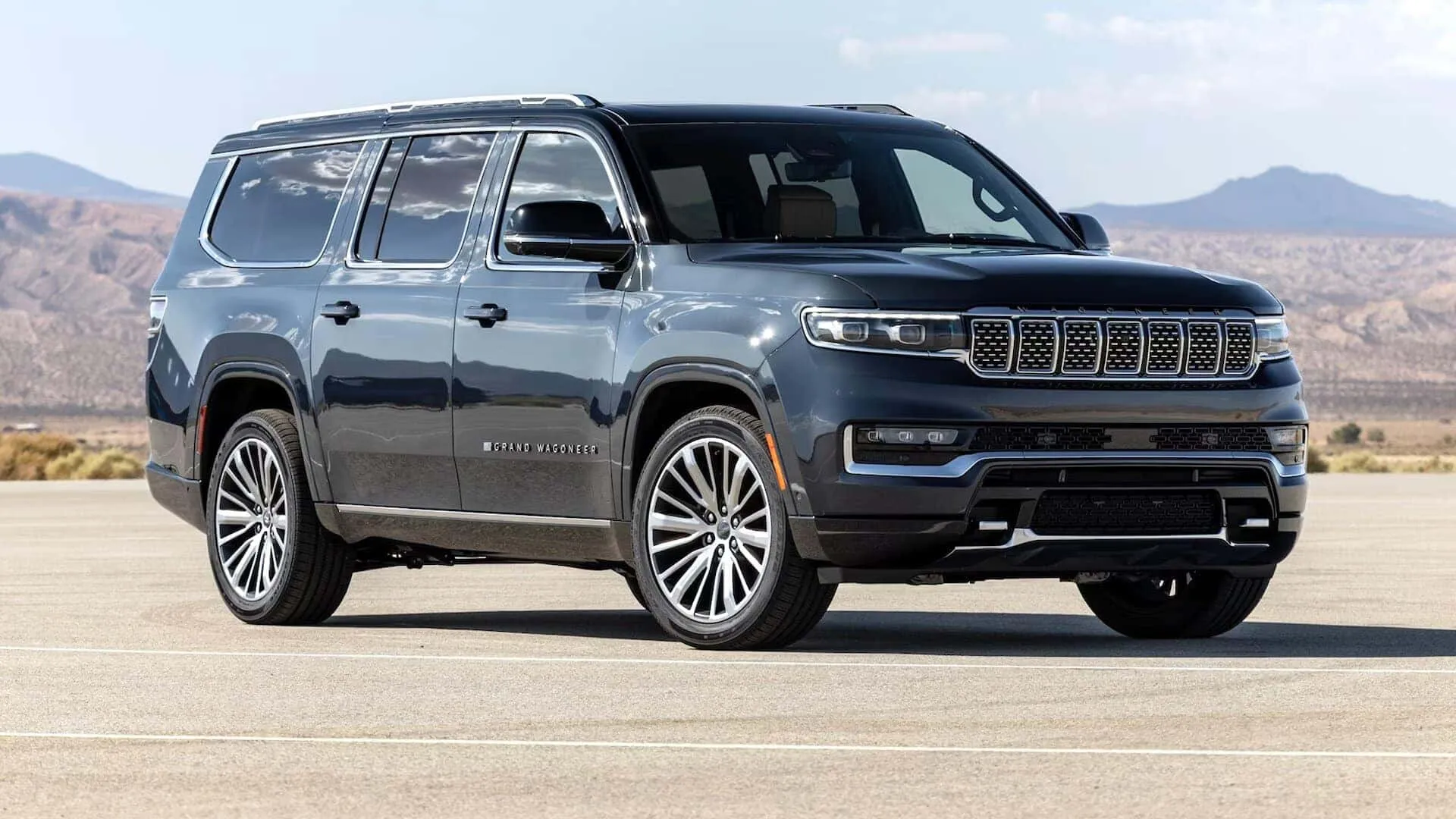
The Wagoneer’s profile suffers from the same challenge that affects all American large SUVs: it is, fundamentally, a body-on-frame truck wearing luxury clothing. The high bonnet line, the significant overhang front and rear, and the relatively upright greenhouse are honest reflections of the vehicle’s underlying architecture. But the Range Rover is also, in its own way, a truck, and yet it never looks like one. That is the genius of Land Rover’s design team, and the challenge the Wagoneer has not yet solved.
The wood appliqué exterior trim on some Grand Wagoneer variants is an interesting nod to the original 1984 model’s wood side panels. As a piece of nostalgia, it is charming. As a contemporary luxury design choice, parked beside a Range Rover, it reads as quaint. The Range Rover has no need to reference its past because its present is sufficient.
The rear of the Grand Wagoneer is perhaps its strongest angle. The horizontal LED tail lamp graphic is wide and purposeful. But the black plastic lower bumper, visible from most viewing angles, introduces a visual discontinuity that undermines the elegance of everything above it. The Range Rover’s lower body treatments are seamlessly integrated. The Wagoneer’s feel resolved from 10 feet but questioned from 3.
4. BMW X7
The BMW X7 is technically accomplished, supremely well-built, and sits near the top of the full-size luxury SUV hierarchy. In almost any other company, it would be considered a design success. Parked beside a Range Rover, however, the X7 reveals a design philosophy that prioritises differentiation over refinement, and the Range Rover quietly demolishes it.
The X7’s kidney grille grew with each generation until the current model’s grilles became the defining conversation about the vehicle. Large is not the problem. Unresolved proportion is the problem. The grilles are tall and wide in a way that makes the lower bumper area feel compressed, and the upper bonnet feel disconnected. The Range Rover’s grille is also prominent, but it sits within the face as though it always belonged there.
The headlights on the current X7 have a distinctive split configuration, with a thin daytime running light sitting above the main beam cluster. The concept is original and has been widely replicated. But the execution creates a face that reads as busy rather than powerful. The lower halves of the headlights, positioned deep in the bumper, create the impression of a vehicle squinting, which is not the expression one hopes for in a flagship luxury SUV.
The X7’s flanks are competently executed but somewhat anonymous. The surface modelling is smooth and technically precise, but it lacks the drama of the Range Rover’s subtle shoulder line and the architectural quality of its doors. In profile, the X7 looks like a very large, very well-made car. The Range Rover looks like a statement.
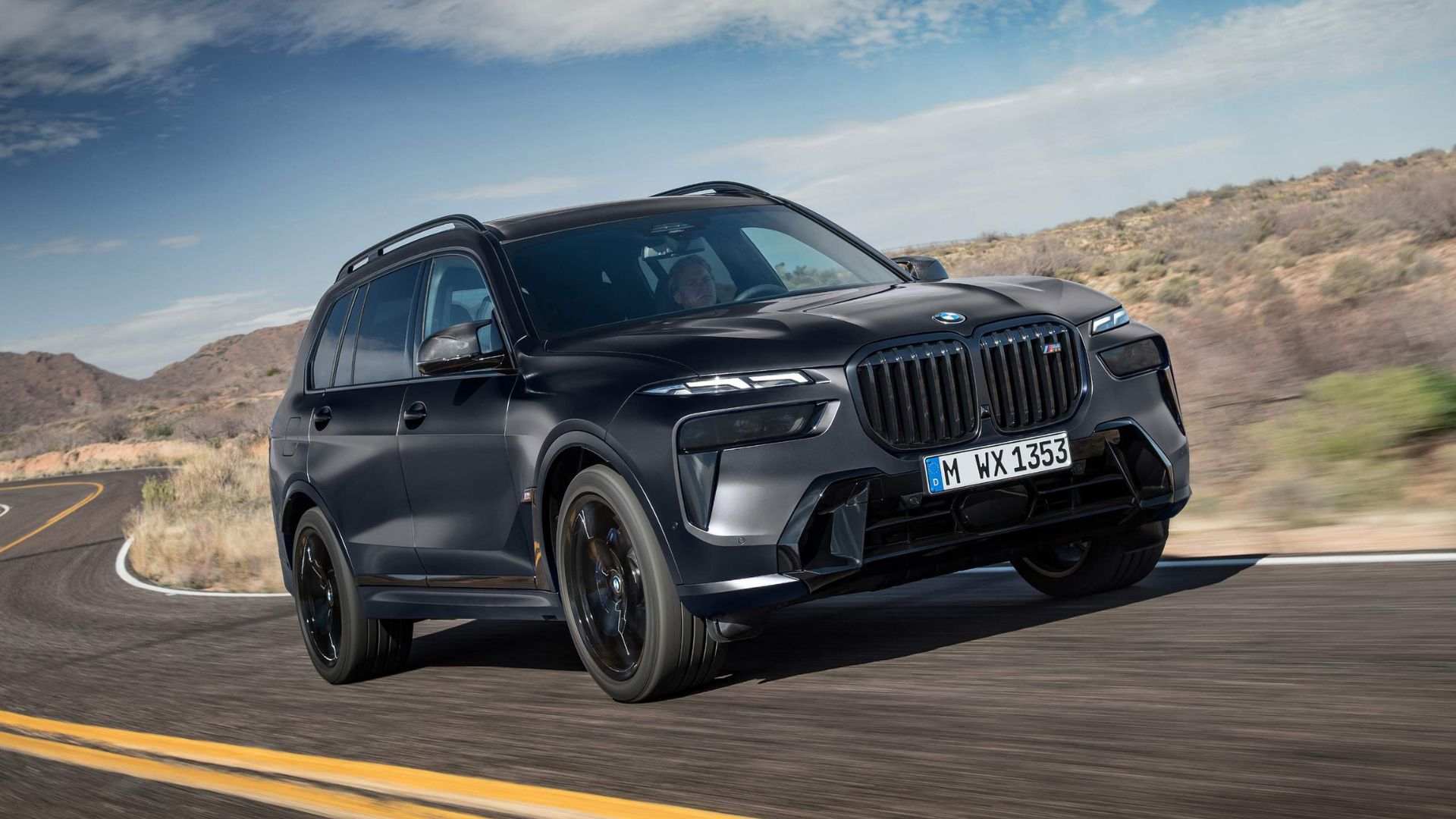
The X7’s roofline addresses practicality admirably but sacrifices elegance in doing so. The upright rear three-quarters, necessary for the vehicle’s third-row seating, give the X7 a silhouette that is reminiscent of a minivan from certain angles.
The Range Rover somehow accommodates a similarly practical body shape without ever triggering this association, a testament to how decisive Land Rover’s designers have been with every detail.
BMW’s interior quality is, if anything, superior to the Range Rover’s in terms of reliability and technology execution. But the exterior design of the X7 is a vehicle that is trying very hard, and trying hard is visible.
The Range Rover does not appear to try at all. It just is. And next to something that simply and completely is what it claims to be, trying hard will always look somewhat desperate.
5. Infiniti QX80
The Infiniti QX80 occupies a peculiar position in the luxury SUV market. It has the size of a flagship, the price of a near-flagship, and the visual impact of a vehicle that has not been comprehensively redesigned since a period when its design language was more current than it is today. Next to a Range Rover, the QX80 is a vehicle that time has visited unkindly.
The QX80’s front end features a large double-arch grille that is bold in intent but dated in execution. The chrome treatment, which once read as opulent, now reads as the kind of shiny that precedes tarnish. The headlight design, with its somewhat familiar LED graphic, was interesting when it was introduced, but has not aged with the authority of the Range Rover’s more timeless treatment.
The bonnet pressing on the QX80 features prominent centre ridges that run from the windscreen to the leading edge. This technique was widely used by many manufacturers in the early 2010s as a way to add visual interest to large, flat surfaces. The Range Rover’s bonnet uses more subtle surfacing that allows the form to read cleanly at a distance. The QX80’s ridges, by contrast, draw the eye to themselves rather than to the vehicle as a whole.
The profile of the QX80 is where the vehicle’s age shows most clearly. The greenhouse, the tumblehome of the doors, and the character lines all reflect a period of Japanese design that was perfectly valid at the time but has since been superseded by more architecturally resolved alternatives. The Range Rover’s profile has been updated with each generation to maintain its relevance. The QX80 feels as though it has been watching those updates from a distance.
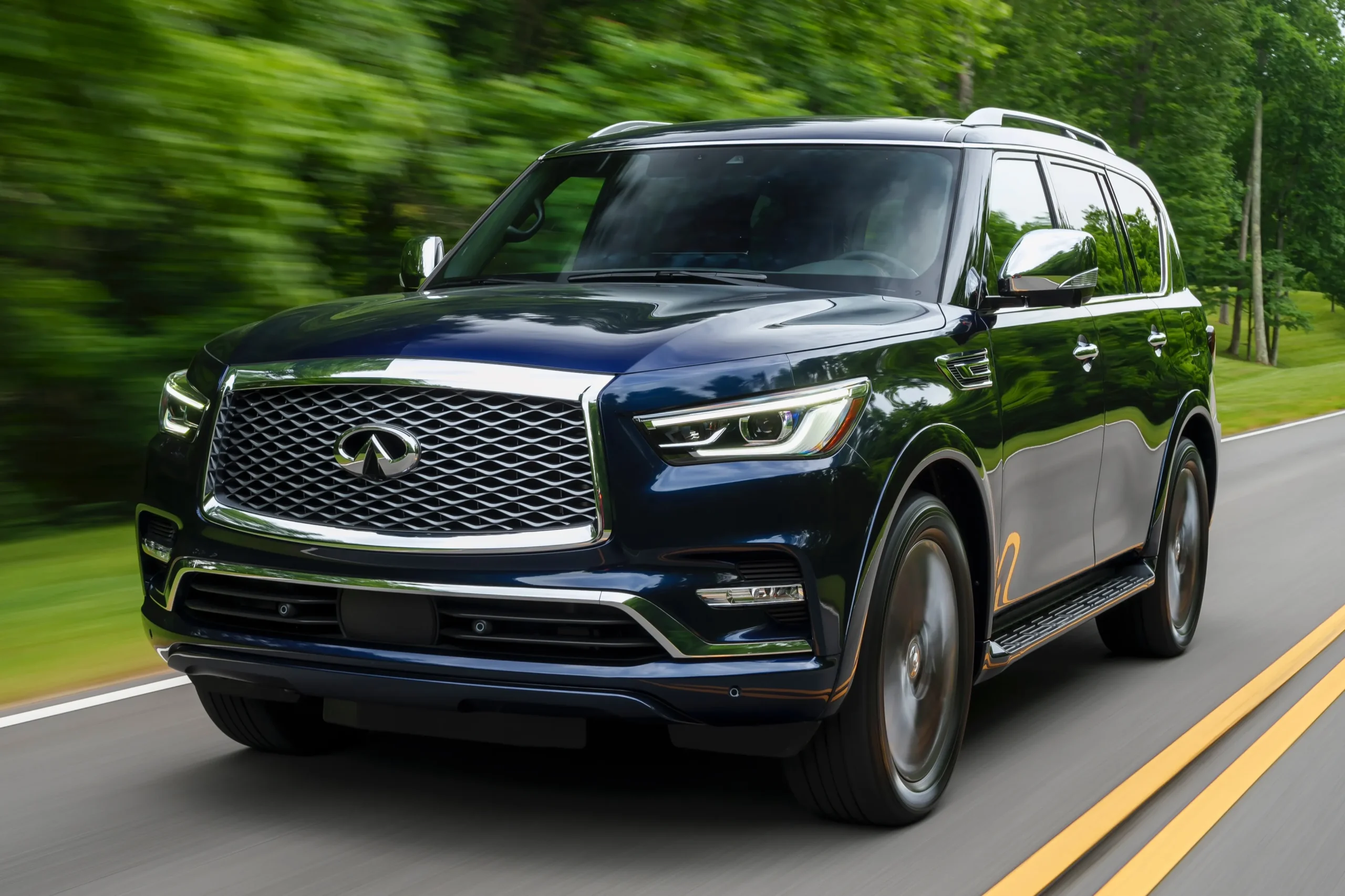
The rear of the QX80 features L-shaped taillights that are recognisable but no longer distinctive. The bumper features significant plastic cladding in a contrasting finish that breaks the visual unity of the rear.
The exhaust pipes, visible but not integrated, sit below the bumper as though they were fitted during a final assembly stage that occurred separately from the design process. The Range Rover’s exhaust tips are considered elements of the rear composition.
The QX80 has recently received interior upgrades that bring it closer to contemporary standards. But the outside remains a reminder that in the luxury segment, standing still is a form of regression. The Range Rover has evolved. The QX80 has endured. And endurance, while admirable in a machine, is not the same as timelessness in a design.
Also Read: 8 Cars With Backup Cameras That Stay Clear In The Rain
