
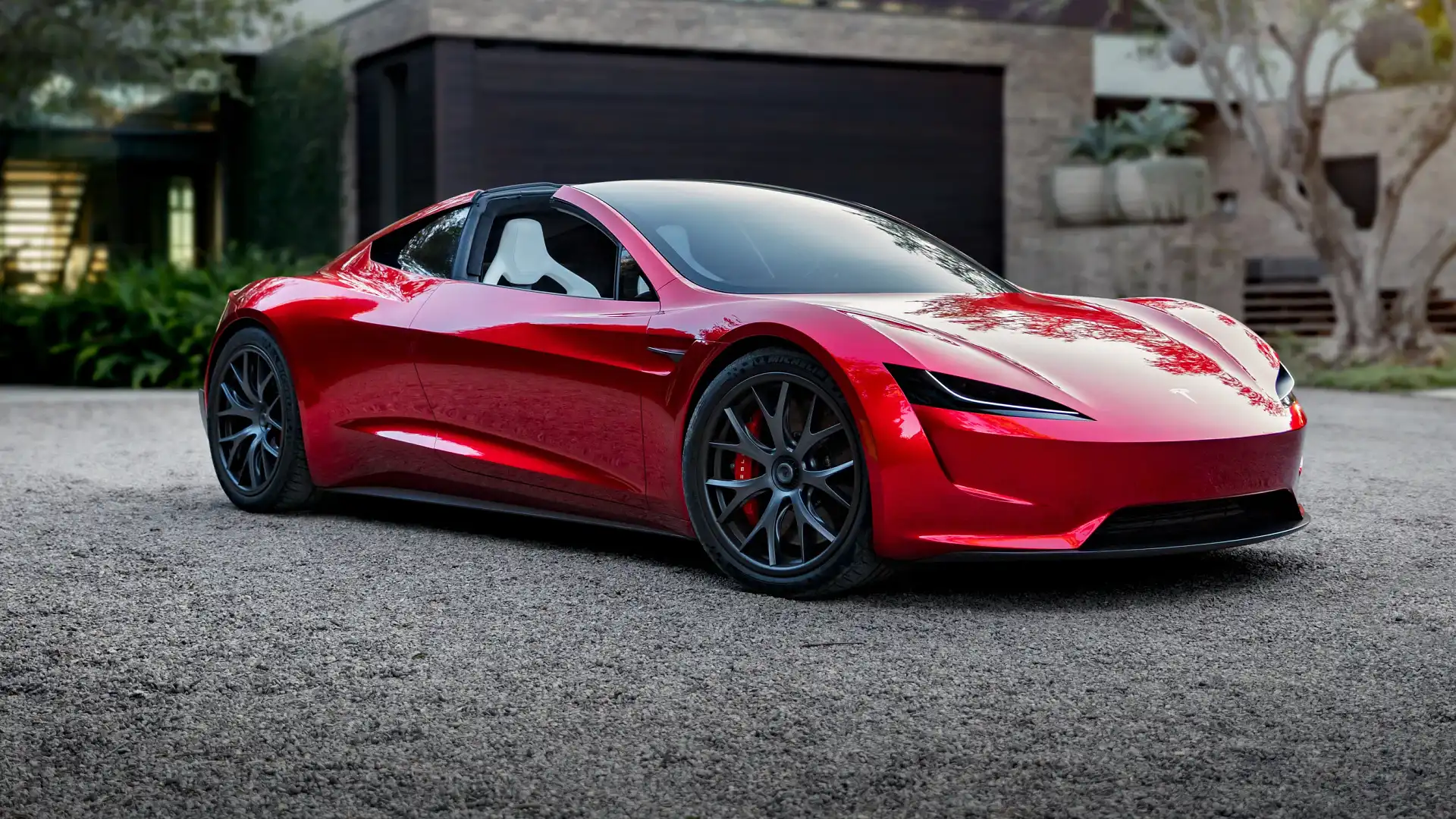
Tesla chief executive Elon Musk has once again stated that the much-anticipated next-generation Roadster will be revealed before the end of the month. This announcement arrives nearly nine years after the original prototype made its debut in November 2017. While the statement has generated fresh attention, it also revives a long history of missed timelines and repeated assurances that have yet to translate into a production vehicle.
The second-generation Roadster first appeared during Tesla’s Semi launch event in 2017, where it was introduced as an electric supercar with bold specifications. Musk indicated that production would begin in 2020, presenting performance figures that captured widespread interest.
These included acceleration from 0 to 60 miles per hour in 1.9 seconds, a driving range of approximately 620 miles from a 200 kWh battery, a top speed exceeding 250 miles per hour, and a starting price of $200,000. Reservations opened almost immediately, requiring deposits of $50,000 for standard orders and $250,000 for the initial Founders Series models. Thousands of buyers committed funds in anticipation of receiving their vehicles within a few years.
At the time, the Roadster was positioned as a statement product, intended not only to push the limits of electric vehicle performance but also to reinforce Tesla’s image as a leader in innovation. The excitement generated by the reveal was considerable, as the specifications suggested a vehicle capable of outperforming many established supercars. For many early supporters, placing a deposit was seen as an opportunity to be part of a technological milestone.
However, as the years passed, the absence of tangible progress began to reshape expectations. What initially appeared to be an ambitious but achievable timeline gradually became a prolonged waiting period. Enthusiasm among early reservation holders gave way to cautious optimism, and in some cases, open frustration. The Roadster shifted from being an imminent product to a distant promise, repeatedly referenced but never realised.
Years of Delays and Changing Commitments
What followed instead was a prolonged period of shifting timelines. In mid-2020, Musk suggested that the Roadster would arrive within 12 to 18 months. By early 2021, that estimate moved to 2022, then to 2023 later that same year. During Tesla’s shareholder meeting in 2023, the target moved again to 2024. Early in 2024, Musk stated that the production version would be revealed before the end of the year, with deliveries expected in early 2025.
That plan also changed. By late 2024, Tesla acknowledged further delays, pointing to a production window between 2025 and 2026. The following year brought yet another revision, with Musk indicating that production might not begin until 2027 or even 2028. This placed the project as much as eight years behind its original schedule.
These repeated changes have drawn attention not only because of their frequency but also because of their consistency. Each new timeline arrived with confidence, only to be revised at a later date. For observers, this pattern has raised questions about project management, internal priorities, and the challenges associated with bringing such an ambitious vehicle to market.
At a shareholder meeting in November 2025, Musk mentioned that a demonstration of the Roadster would take place on April 1, 2026, a date widely associated with jokes. He openly remarked that the choice allowed room for humour if expectations were not met. While the comment may have been made lightly, it underscored the uncertainty surrounding the project.
Later developments brought a slight adjustment in tone. In March 2026, Musk referred to the upcoming event as an “unveil” rather than a demonstration, stating that it would occur toward the end of April and would present something entirely different from earlier versions. This move in wording suggested a renewed attempt to present the Roadster as a concrete product rather than a concept, although details remained limited.
The extended timeline has also had implications for those who placed early deposits. Individuals who committed funds in 2017 have now waited close to a decade without receiving their vehicles. For many, this has transformed what was initially an exciting purchase decision into a prolonged financial commitment with uncertain outcomes.
Also Read: Tesla Increases Giga Berlin Production Amid Ongoing Utilization Gap
Progress Signs, Rising Expectations, and Market Pressure
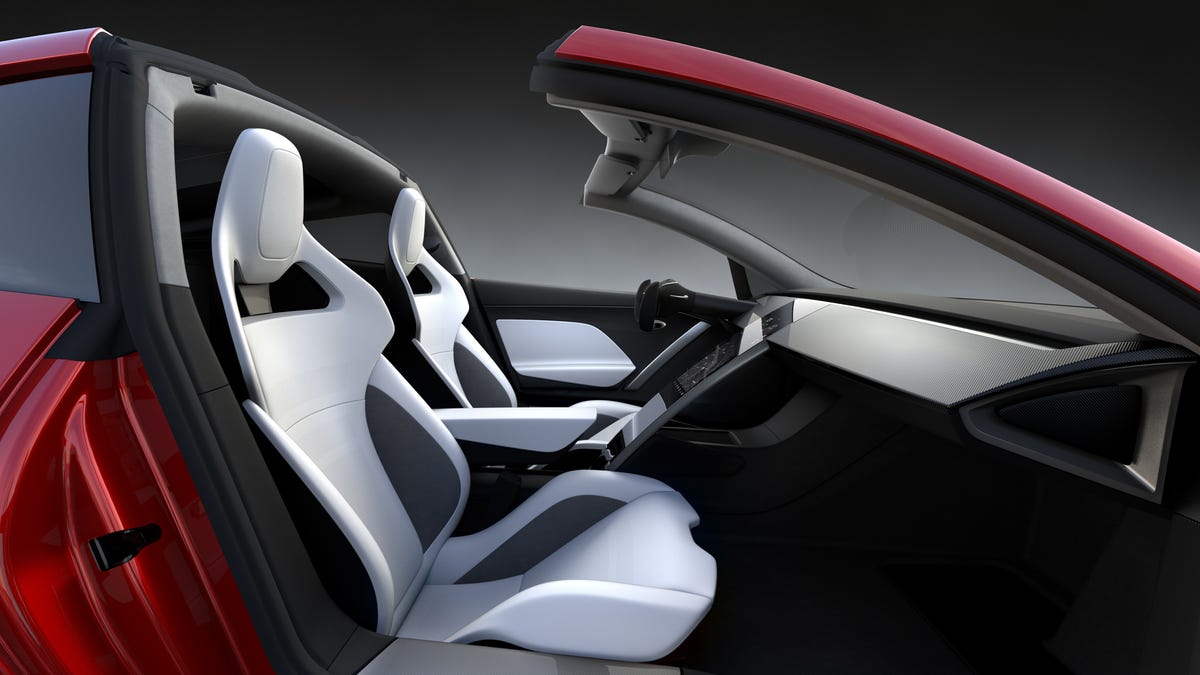
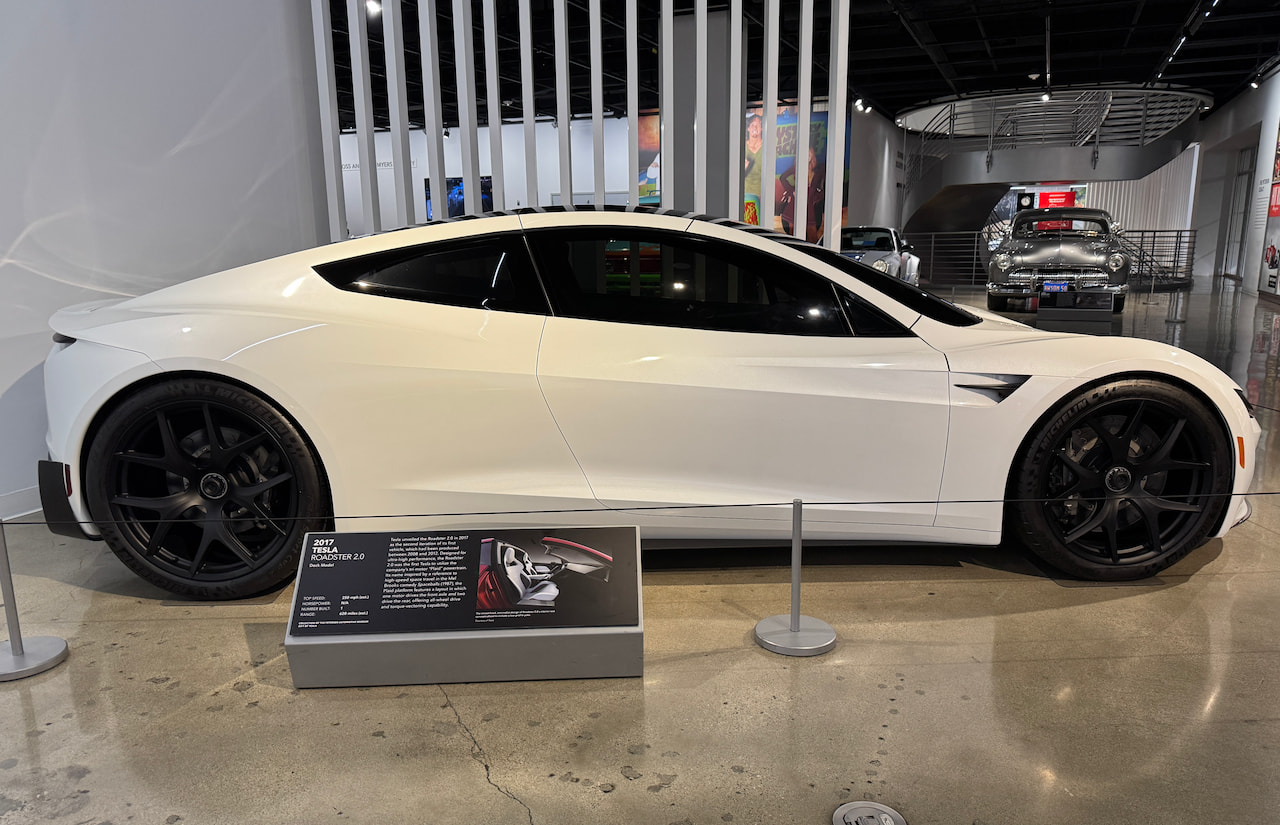
There have been a few indications that development work is progressing. Tesla submitted trademark applications in early 2026, including one that featured an updated silhouette of the vehicle, showing a more streamlined design with a revised roofline. Patent filings have also been made for a one-piece composite seat structure.
In addition, a job listing from late 2025 sought a manufacturing engineer for the Roadster programme, focusing on battery production equipment. While such developments suggest ongoing work, they also indicate that the project remains at an early stage in terms of manufacturing readiness.
Performance targets associated with the Roadster have continued to develop. In 2024, Musk stated that the aim for the production version included acceleration from 0 to 60 miles per hour in less than one second. Another feature frequently mentioned is the optional “SpaceX package,” which is said to involve small cold-air thrusters designed to enhance acceleration, braking, and cornering. Whether these features will appear in the final production model remains uncertain.
As these claims have played out, expectations surrounding the Roadster have also increased. What began as an already ambitious performance target has gradually expanded into territory that challenges conventional engineering limits. This has contributed to both excitement and scepticism, as observers question whether such specifications can be achieved in a practical, road-legal vehicle.
For those who placed deposits, the delays have created understandable frustration. Some individuals have had funds tied up for close to a decade without receiving a vehicle. This became widely discussed in 2025 when OpenAI chief executive Sam Altman attempted to cancel his reservation, only to find that Tesla’s contact channel for the Roadster programme was inactive. The matter gained public attention before a refund was reportedly processed.
Meanwhile, other manufacturers have moved forward with high-performance electric vehicles. Models such as the Rimac Nevera have already reached customers, while newer entrants from Chinese automakers have set performance benchmarks in real-world testing. These developments highlight the pace at which the electric vehicle segment has advanced during the Roadster’s absence.
Against this backdrop, the Roadster faces increased pressure to justify both its delay and its evolving claims. It is no longer entering an empty space but rather a competitive environment where performance, technology, and delivery timelines are already being demonstrated by existing products.
Despite repeated assurances, the project has yet to produce a production-ready vehicle. Even if a reveal takes place soon, the stated production timeline suggests that early reservation holders may wait up to ten years before taking delivery. As expectations have grown alongside delays, the Roadster has come to represent both ambition and uncertainty. Whether Tesla can meet its latest promise remains to be seen.
Also read: 5 Electric Vehicles That Fit Dense Neighborhoods vs 5 That Don’t
