
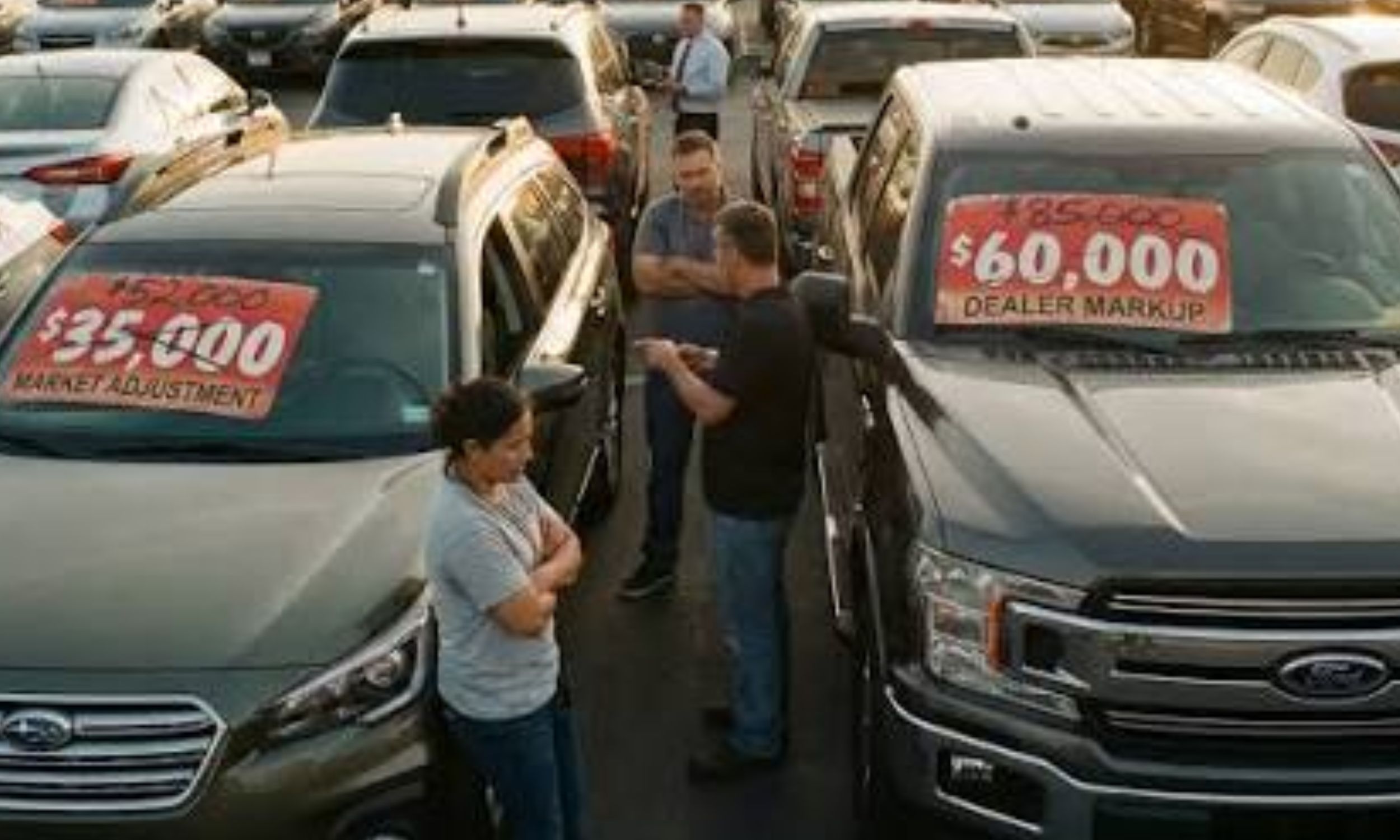
Many car buyers notice that a dealer becomes much more willing to negotiate after a vehicle has remained in the showroom or on the lot for several weeks. That change in attitude is rarely about building a friendship with the customer. The real reason is that every extra day the vehicle remains unsold adds to the dealer’s running costs.
Few people realize that each parked vehicle continues to generate expenses even when nobody is showing interest in buying it. Dealers still have to cover interest charges on financed inventory, insurance premiums, storage expenses, and depreciation. Those costs continue to rise each day, whether the vehicle is driven for a test drive or remains in the same parking space. This is why pricing decisions often change as inventory stays longer than expected.
Understanding this business reality gives buyers a stronger position during negotiations. A vehicle that has spent months on the lot may become a candidate for deeper discounts because the dealer wants to reduce mounting expenses. Timing can make a real difference, especially when older inventory needs to make room for incoming stock.
Many sales representatives create urgency by saying a vehicle must be sold immediately. While that statement can sound like a marketing strategy, there are plenty of occasions when it reflects the dealership’s financial situation. Knowing how inventory costs affect dealer profits helps buyers recognize when there is genuine room for negotiation and increases the chances of securing a better deal without unnecessary pressure.
Floor Plan Financing and Interest Charges
Almost no dealership pays cash for its inventory outright. Instead, most rely on something called floor plan financing, a specialized line of credit used to purchase vehicles from manufacturers or auctions before they’ve been sold to an actual customer. That financing isn’t free, and the interest on it accumulates daily, whether the car sells in a week or sits untouched for months.
Here’s how it works in practice. A lender fronts the dealership the money to acquire a vehicle, and the dealership pays interest on that borrowed amount until the car sells and the loan gets paid off. Interest rates on floor plan financing typically track closely with broader lending rates, meaning periods of higher interest rates directly translate into higher daily holding costs across an entire dealership’s inventory.
Do the math across a full lot, and the numbers get serious fast. A dealership carrying hundreds of vehicles, each accruing interest daily, can rack up tens of thousands of dollars in financing costs during a single month, regardless of how many actual sales happen. That’s money leaving the business before a single vehicle changes hands with a customer.
This explains a pattern many shoppers notice without fully understanding why. Cars sitting on a lot for sixty, ninety, or more days often come with unusually aggressive discounts compared to fresher arrivals. Dealers aren’t necessarily losing enthusiasm for that particular model; they’re responding directly to accumulating interest charges eating into their margin the longer that vehicle remains unsold. Every additional day adds another line to a bill the dealership eventually has to settle, sold or not.
Understanding this dynamic gives buyers real leverage. A vehicle that’s been sitting for an extended period represents genuine pressure on the dealer’s finances, and negotiating around that reality tactfully can lead to a considerably better deal than chasing something fresh off the truck.
Insurance and Risk Coverage Expenses
Vehicles parked on a lot aren’t immune to damage just because nobody’s driving them yet. Hailstorms, vandalism, theft, and accidental fender-benders during test drives, all represent real financial exposure, and dealerships carry insurance specifically to cover these possibilities across their entire inventory.
That coverage isn’t a flat annual fee divorced from inventory size. Premiums scale directly with how many vehicles a dealership holds and how long they remain on the books, meaning larger, slower-moving inventories cost more to insure than lean, fast-turning ones. Every additional car sitting unsold represents additional risk exposure, and insurers price that risk accordingly.
Weather-related claims deserve particular attention here. Dealerships located in regions prone to severe hail, flooding, or wind damage often face steeper premiums specifically because open-air storage lots leave vehicles vulnerable to sudden, costly, widespread damage. A single hailstorm rolling through a dealership’s outdoor lot can generate repair costs across dozens of vehicles simultaneously, a scenario insurers factor heavily into premium calculations for that region.
Theft and vandalism add another layer of concern, particularly for dealerships without secured, monitored storage facilities. Higher-value vehicles, luxury models, or anything particularly attractive to opportunistic criminals often carry higher coverage costs specifically because of elevated theft risk while parked unsold and accessible.
None of this insurance spending generates revenue on its own. It’s purely defensive, protecting against worst-case scenarios that would otherwise cost the dealership considerably more than the premiums themselves. Still, every day a vehicle remains unsold means another day that protective coverage is actively costing money without any corresponding sale to offset it.
Multiply that daily expense across an entire inventory, and insurance quietly becomes one of the more substantial line items behind the scenes of running a dealership.
Also Read: What It Costs Dealers to Prep a New Car Before Delivery

Physical Storage and Lot Maintenance Costs
Real estate isn’t free, and dealership lots represent some genuinely valuable property, particularly in busy commercial corridors where land and rental costs run high. Every parking space occupied by an unsold vehicle represents opportunity cost, space that could theoretically house faster-moving inventory instead.
Beyond simple square footage, physical upkeep adds its own recurring expense. Lots require regular cleaning, landscaping, snow removal in colder climates, and lighting maintenance to keep the property presentable and secure around the clock. Security systems, cameras, and sometimes dedicated overnight staff further add to the baseline cost of simply keeping a lot operational, regardless of how many vehicles actually sell on a given day.
Vehicles themselves require ongoing physical attention too. Cars sitting outdoors accumulate dust, pollen, and grime that need regular washing to maintain a presentable appearance for potential buyers. Batteries left unused for weeks can drain, requiring periodic charging or replacement to keep vehicles ready for test drives without embarrassing dead-battery moments in front of customers.
Tire maintenance matters more than most shoppers realize too. Vehicles parked in the same position for extended periods can develop flat spots on tires, a genuine issue for cars sitting unsold for months at a time. Dealerships sometimes need to periodically move inventory around the lot simply to prevent this kind of cosmetic and functional degradation.
Climate-controlled indoor storage, common for luxury or specialty inventory, pushes these costs even higher, since heating, cooling, and enhanced security all carry premium price tags compared to standard outdoor lots. Every one of these expenses continues accumulating daily, entirely independent of sales activity, making physical storage a quiet but genuinely substantial component of total holding costs across any dealership’s operation.
Depreciation While Sitting Unsold
Cars start losing value the moment they arrive at a dealership, regardless of whether a single mile gets added to the odometer. Model year transitions represent one of the biggest depreciation triggers in this entire equation, since a vehicle labeled as last year’s model instantly becomes less desirable next to a freshly arrived current-year equivalent, even if the two are mechanically identical.
Technology and feature updates compound this problem further. When a manufacturer refreshes infotainment software, adds new safety features, or updates styling for an upcoming model year, existing unsold inventory from the previous cycle becomes comparatively less attractive, forcing dealers to discount simply to remain competitive against newer arrivals on the same lot.
Market changes outside anyone’s direct control add another layer of unpredictability. Fuel price spikes can suddenly make larger, less efficient vehicles harder to sell. Changing consumer preferences, economic uncertainty, or new competing models entering the market can all quietly erode a vehicle’s perceived value while it sits waiting for the right buyer to walk through the door.
Electric vehicles face a particularly steep version of this challenge given how quickly battery technology and range figures continue improving year over year. An EV sitting unsold for several months can find itself competing against a newer model boasting meaningfully better range or charging speed, making the older inventory considerably harder to move without aggressive pricing adjustments.
This is precisely why dealerships push hard to sell vehicles quickly rather than letting them sit indefinitely. Every month of delay chips away at resale value, meaning a car sitting unsold isn’t simply costing money through financing and storage, it’s also quietly becoming worth less every single day it remains parked on the lot.
Marketing and Reconditioning Expenses
Getting a car ready for sale, and keeping it visible to potential buyers, costs real money that continues accumulating the longer a vehicle sits unsold. Reconditioning alone can involve detailing, minor paint touch-ups, mechanical inspections, and replacing worn components, especially common on trade-in vehicles that need work before hitting the used lot.
Photography and online listing maintenance represent another recurring cost most shoppers never consider. High-quality photos, video walkarounds, and detailed listings require staff time and sometimes professional photography services, all of which need periodic updating the longer a vehicle remains listed without selling.
Digital advertising adds up quickly too. Dealerships often pay to feature specific vehicles more prominently on search platforms and marketplace listings, essentially paying for continued visibility the longer a car struggles to attract buyer interest. A vehicle that sells within its first two weeks barely touches this budget. One sitting for three months can accumulate considerably higher advertising spend trying to generate the attention it failed to attract early on.
Staff time factors into this equation as well, even if it’s harder to quantify precisely. Sales personnel spend time answering inquiries, arranging test drives, and following up with interested shoppers, hours that represent real labor costs regardless of whether that particular effort finally converts into a sale.
Combine all these ongoing expenses, and reconditioning plus marketing costs form a steady drain that grows the longer inventory sits unsold. Dealerships aiming for efficient turnover aren’t simply chasing sales targets for their own sake, they’re actively trying to minimize this accumulating expense that offers diminishing returns the longer any single vehicle lingers without finding a buyer.
Also Read: Does Dealer Paint Protection Do Anything? Explained
Why Dealers Push Aging Inventory So Hard
Add together financing interest, insurance premiums, storage costs, depreciation, and marketing spend, and it becomes obvious why dealerships get noticeably more aggressive discounting vehicles that have been sitting for extended periods. Every additional day represents another accumulation of these combined expenses, quietly eating into whatever profit margin originally existed on that particular vehicle.
Industry practice generally treats sixty days as an important milestone, marking the point when a vehicle is viewed as aging inventory rather than a recent arrival. Once it passes ninety days, dealers often become genuinely eager to sell because the accumulating holding costs have often reduced much of the profit margin that existed when the vehicle first reached the lot.
This urgency explains those seemingly desperate end-of-month or end-of-quarter sales pushes that many shoppers notice but don’t fully understand. Dealerships often have real financial incentives, sometimes tied to manufacturer bonuses for meeting sales targets, sometimes simply tied to reducing floor plan interest exposure, to clear out aging inventory before it becomes an even bigger financial drain.
Auctions represent the last resort for inventory that simply won’t move through normal retail channels. Vehicles sent to auction typically sell for considerably less than retail pricing, meaning dealers generally prefer avoiding this outcome whenever possible, favoring aggressive in-house discounting instead as a way to recover more value than an auction sale would provide.
For buyers, understanding this system creates genuine opportunity. A vehicle sitting well past that sixty or ninety-day mark represents a dealer under real financial pressure, not simply a slow-moving car nobody wants. Approaching that situation with polite, informed negotiation often uncovers considerably more flexibility than shopping brand-new arrivals still fresh on the lot.
