
The Ford Mustang is not just a car. It is a living, breathing piece of American culture that has refused to stay off the screen since the very day it was born.
From the moment Ford introduced this iconic pony car to the world in April 1964, it wasted no time becoming a television star. Over the decades, the Mustang has roared, glided, and sped its way through sitcoms, crime dramas, action series, and rebooted franchises.
It has been the vehicle of undercover cops, free-spirited women, crime-fighting angels, and even an artificial intelligence. No other car in history has been used as deliberately, as cleverly, and as repeatedly by television producers to tell a story.
Sometimes it was pure product placement. Sometimes it was pure passion. But every single time a Mustang showed up on a TV set, it brought with it a certain electricity that no other automobile could match. The Mustang became a character in its own right.
It carried stories, shaped identities, and turned ordinary TV moments into unforgettable ones. This is the story of ten times the Mustang crashed on the small screen and left audiences absolutely stunned.
1. Hazel (1964), The Very First TV Mustang, One Day Before the World Knew It Existed
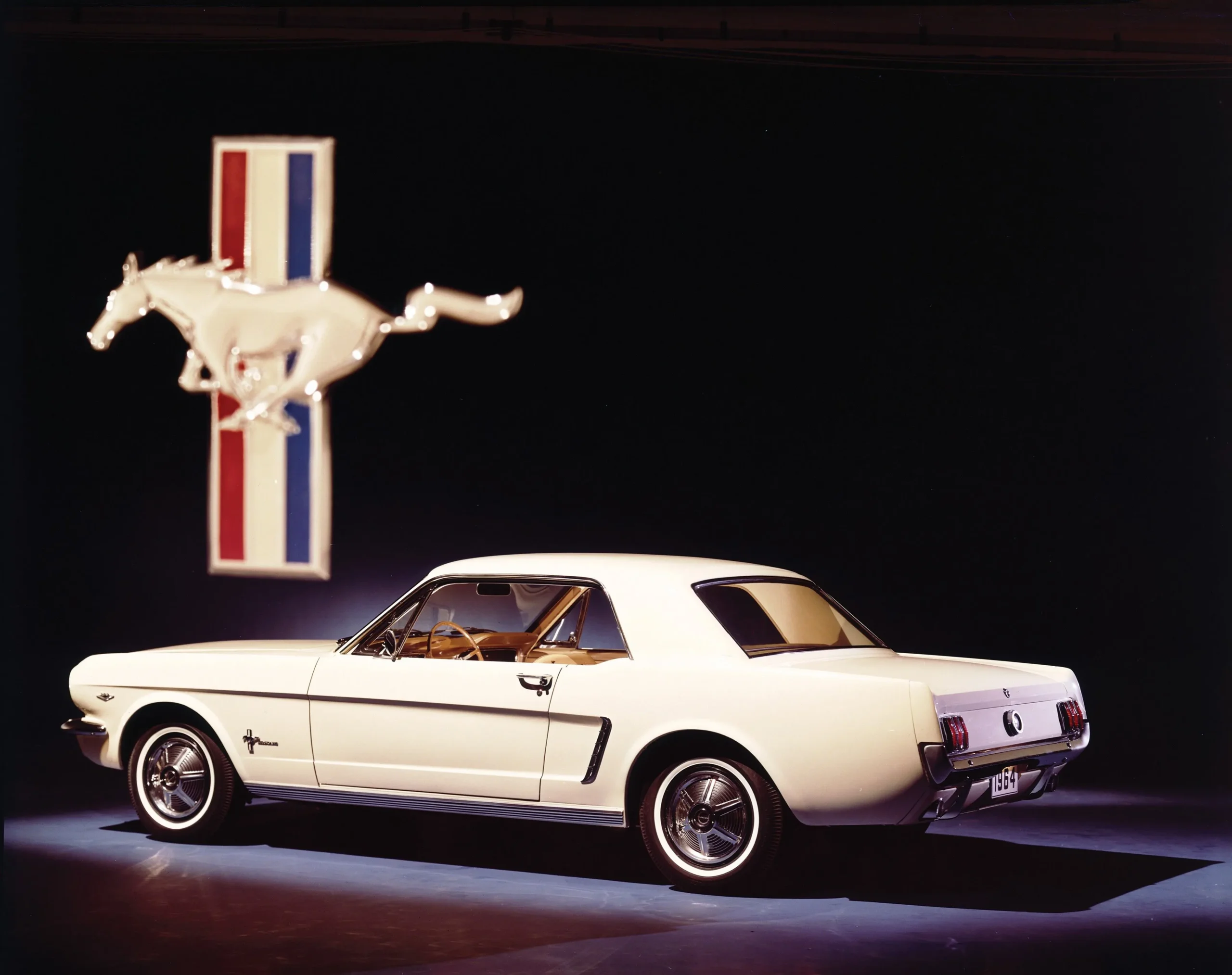
This is where it all began, and it happened in the most audacious way imaginable. On April 16, 1964, just one day before Ford officially revealed the Mustang to the world at the New York World’s Fair, the CBS sitcom Hazel aired an episode titled “Let’s Get Away From It All.”
The Baxter family, along with their bossy, beloved maid Hazel Burke, climbed into a brand-new red Ford Mustang coupe and headed out to dinner. America had not yet been officially introduced to the Mustang, and here it was, rolling across their television screens the night before.
| Feature | Specification |
|---|---|
| Engine | 170 cu in (2.8L) Inline-6 (base) / 260 cu in (4.3L) V8 (optional) |
| Horsepower | 101 hp (Inline-6) / 164 hp (V8) |
| Torque | 156 lb-ft (Inline-6) / 258 lb-ft (V8) |
| Length | 181.6 inches |
| Width | 68.2 inches |
This was no accident. Ford was a sponsor of the show and had carefully engineered this moment as part of a massive promotional campaign. The episode featured a special opening credit sequence showing Hazel driving the Mustang out of the driveway, a sequence that aired only in that single episode.
It was a masterstroke of early product placement, and it worked perfectly. By the time Ford’s press conference happened the following morning, millions of Americans already had a warm, familiar feeling about the Mustang.
The appearance of Hazel predated even the Mustang’s movie debut in Goldfinger by five months. That means the small screen, not the silver screen, was the true birthplace of the Mustang’s pop culture legend. It was a crazy, calculated, and brilliant move that set the tone for everything that followed.
2. Charlie’s Angels (1976), The Mustang That Launched a Sales Frenzy
When Charlie’s Angels debuted in 1976, it instantly became one of the most-watched shows on American television. Three glamorous, fearless women fighting crime while looking incredible, it was television gold. But among the many things viewers noticed, none stood out quite like Farrah Fawcett’s car.
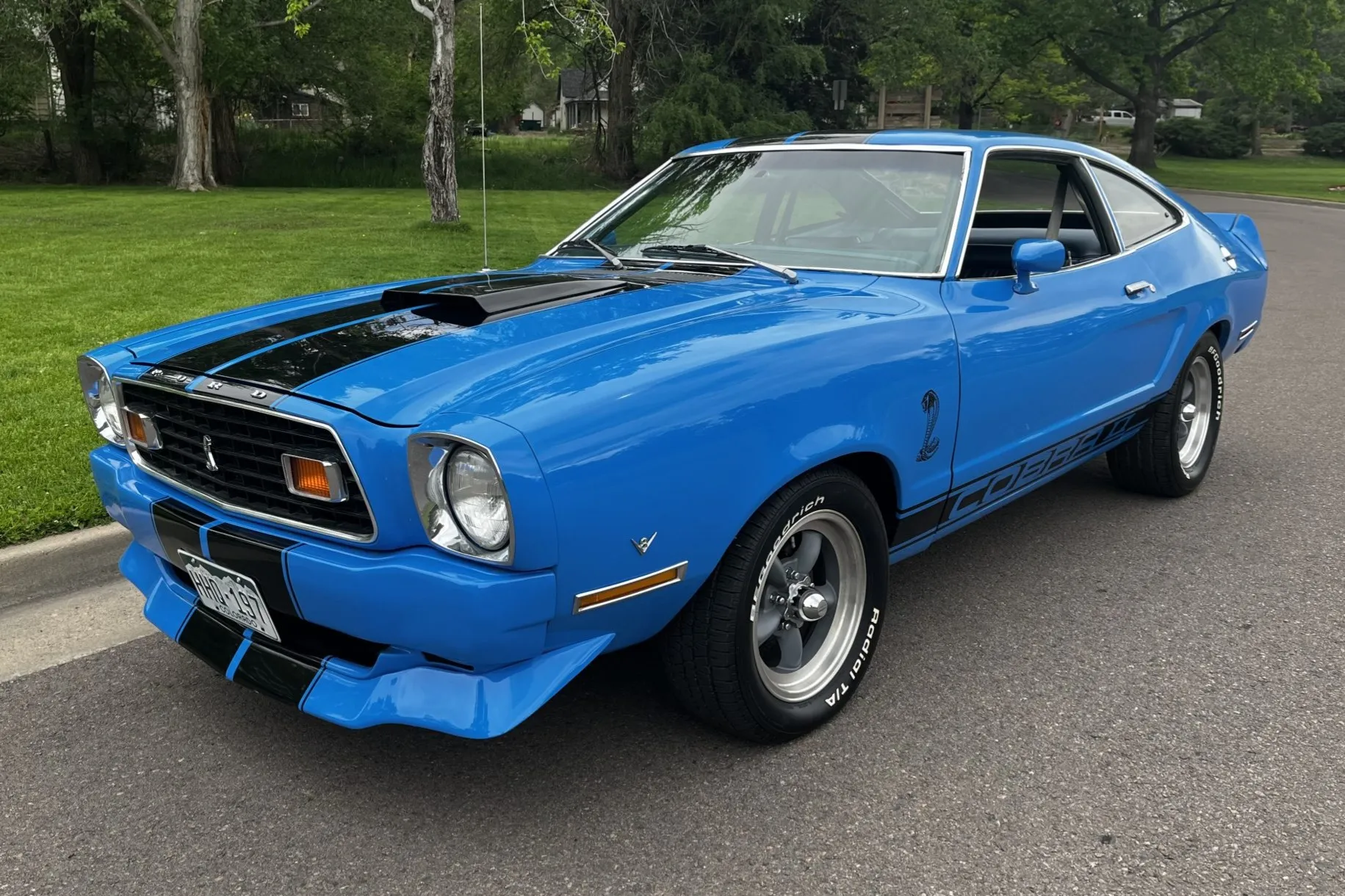
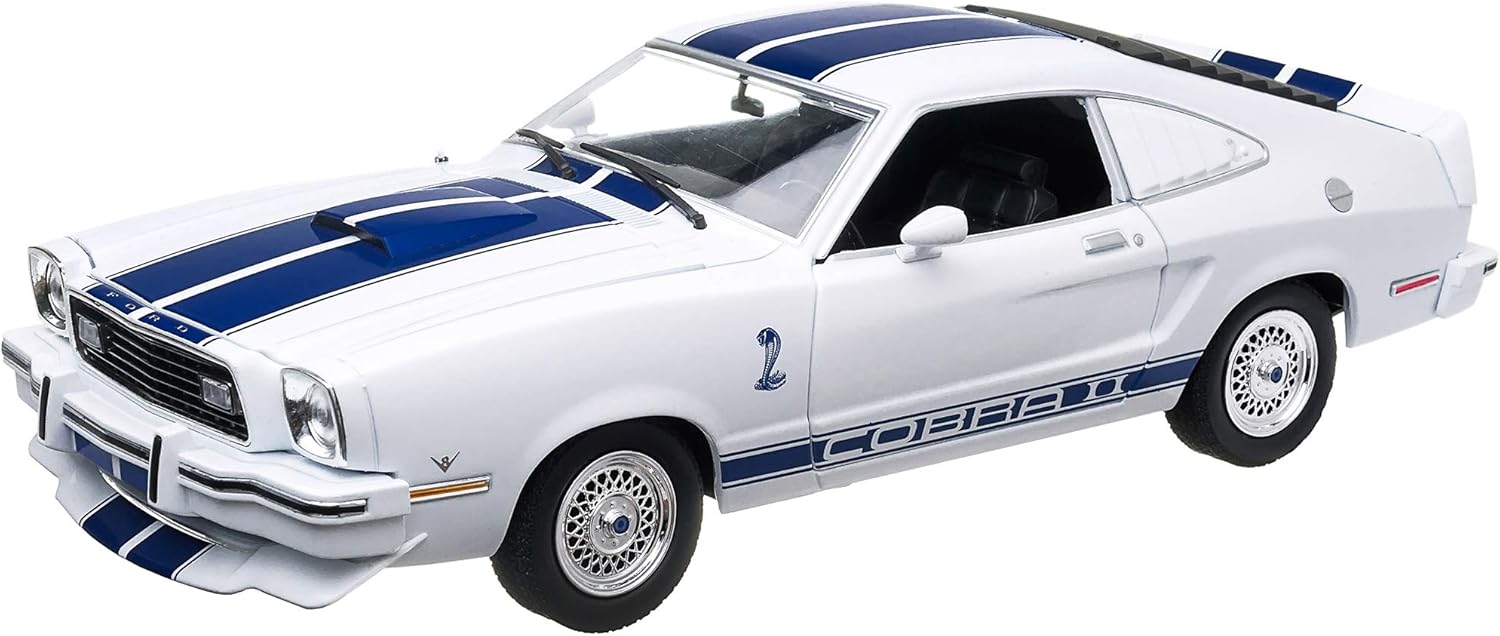
Jill Munroe, played by Farrah Fawcett, drove a white 1976 Ford Mustang Cobra II. The car was impossible to miss. It wore a bold blue racing stripe across its roofline and hood, with quarter window louvers, a front air dam, a rear spoiler, and a prominent hood scoop.
It was as sleek and daring as the character who drove it. The Cobra II became inseparable from Fawcett’s iconic feathered hair and mile-wide smile in the pop culture imagination.
| Feature | Specification |
|---|---|
| Engine | 2.3L (140 cu in) Inline-4 (base) / 2.8L V6 (optional) |
| Horsepower | 88 hp (Inline-4) / 103 hp (V6) |
| Torque | 116 lb-ft (Inline-4) / 149 lb-ft (V6) |
| Length | 175 inches |
| Width | 70.2 inches |
The effect on real-world sales was absolutely staggering. Ford had originally planned to sell around 4,000 to 5,000 Cobra II appearance packages that year.
After the show aired, demand exploded, and Ford ended up selling more than 25,000 Cobra II packages in 1976 alone, more than five times the original target.
That is the power of a television placement done right. When Fawcett left after Season 1, Cheryl Ladd took over and kept driving the famous Cobra II. The car appeared in virtually every episode of the show’s run from 1976 to 1981.
The Charlie’s Angels Mustang remains the most commercially impactful TV car placement in Ford history. No other television appearance sold more cars.
3. The Mary Tyler Moore Show (1970–1977), Two Mustangs, One Legendary Opening Credits
The Mary Tyler Moore Show was one of the most groundbreaking sitcoms of the 1970s. It followed Mary Richards, a single, independent woman making her way, and it redefined what it meant to be a modern woman on television.
At the center of Mary Richards’ identity was her car and not just one Mustang, but two. In the early seasons, Mary is shown driving a white 1970 Ford Mustang coupe.
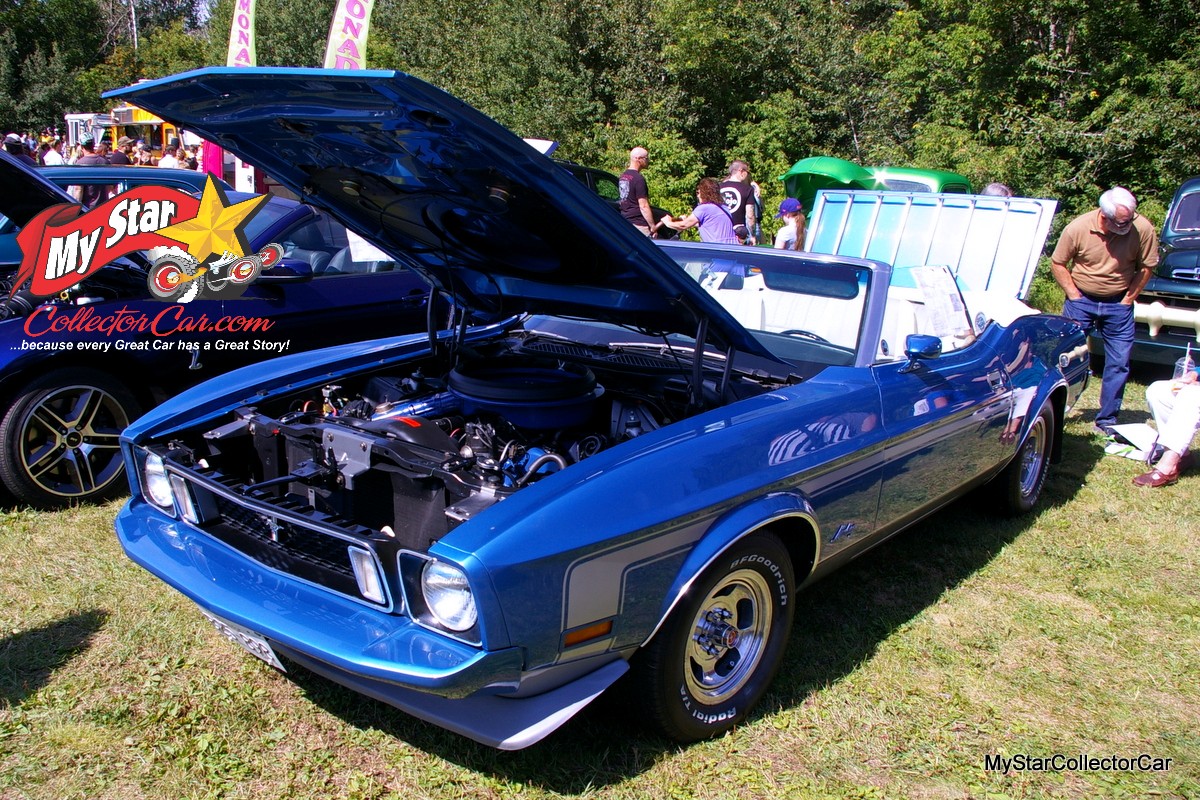
The coupe appeared in the show’s iconic opening credit sequence, one of the most famous in television history. Then, from 1973 onward, the show upgraded Mary’s ride to a 1973 Ford Mustang convertible.
| Feature | Specification |
|---|---|
| Engine | 351 cu in (5.8L) V8 Cobra Jet |
| Horsepower | 266 hp |
| Torque | 301 lb-ft |
| Length | 189.5 inches |
| Width | 74.1 inches |
From 1973 to the end of the show’s run in 1977, the opening credits featured Mary washing her convertible Mustang while wearing the number 10 jersey of Minnesota Vikings quarterback Fran Tarkenton. It was an endearing, warm, and perfectly characterful moment.
The Mustang in Mary Tyler Moore was not just transportation. It was a symbol of Mary Richards’ independence, ambition, and refusal to be boxed in.
At a time when women on television were still largely defined by their domestic roles, Mary Richards owning and proudly driving a sporty Mustang convertible was quietly radical.
The 1973 Mustang convertible she drove was powered by a 351 cubic inch small block V8 with a Ram Air Cobra Jet option, making it far more capable than its gentle TV image suggested.
4. 21 Jump Street (1987), Johnny Depp and the Fastback That Made Him a Star
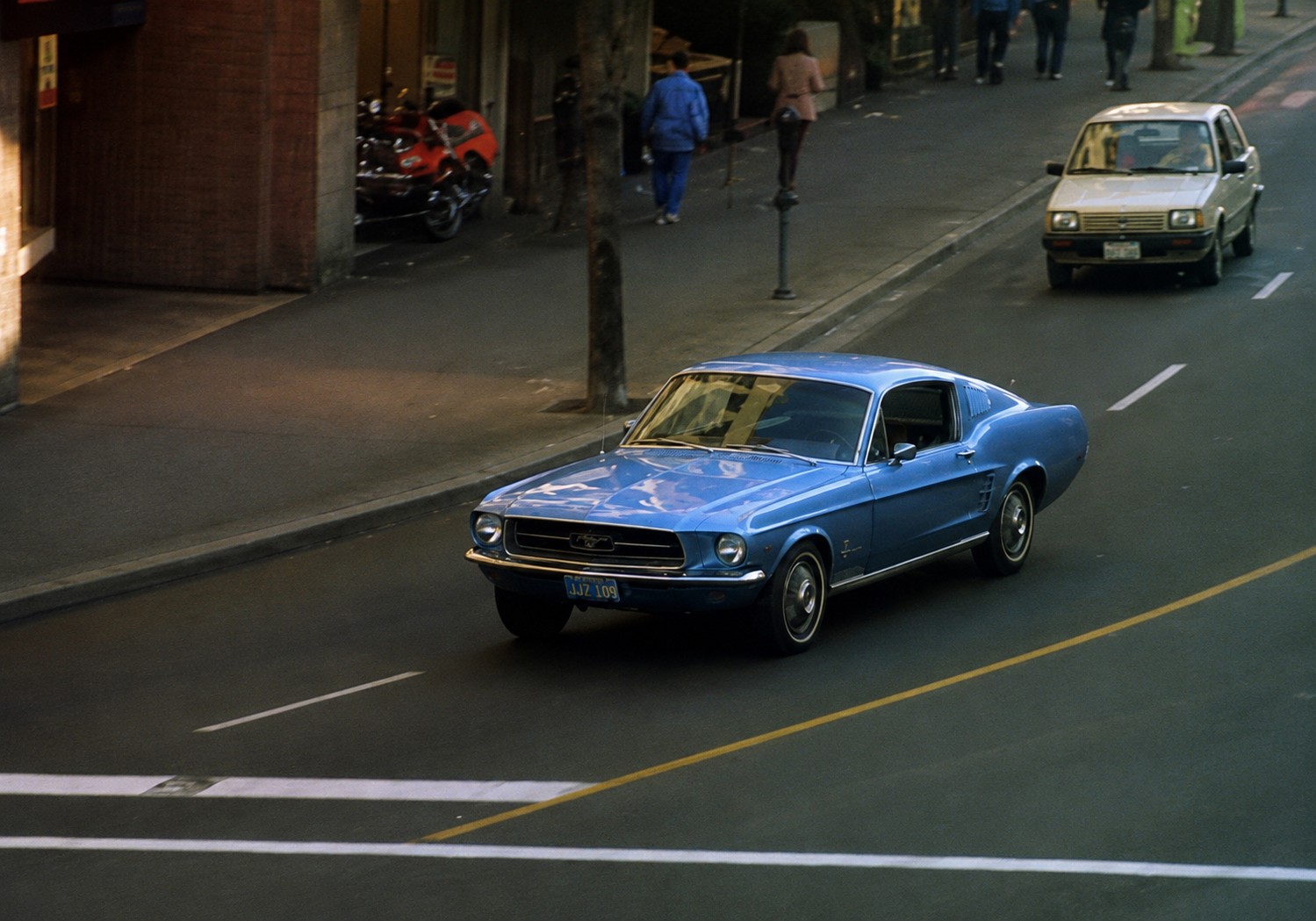
Before Johnny Depp was Jack Sparrow, before he was Edward Scissorhands, before he was a global movie icon, he was Officer Tom Hanson on 21 Jump Street. And Officer Tom Hanson drove a 1968 Ford Mustang fastback.
The show premiered on the newly launched Fox network in April 1987 and immediately became a hit. It was a gritty, youthful crime drama about young-looking undercover police officers infiltrating high schools and gangs.
The blue 1968 Mustang fastback that Depp’s character drove was given an emotionally resonant backstory. Tom Hanson inherited the Mustang from his father, a police officer who had been killed in the line of duty.
The car was not just a prop, it was a piece of his character’s soul. The Mustang represented loyalty, sacrifice, and the heavy burden of following in a hero’s footsteps. It added real dramatic weight to every scene it appeared in.
| Feature | Specification |
|---|---|
| Engine | 390 cu in (6.4L) FE V8 (GT option) |
| Horsepower | 325 hp |
| Torque | 427 lb-ft |
| Length | 183.6 inches |
| Width | 70.9 inches |
Automotive historians later noted that the car, while appearing mostly stock, was missing its corner lights, a distinguishing feature that Mustangs first wore in 1968.
This gave the car a slightly mysterious look, making many viewers mistake it for a 1967 model. The fastback body style was perfectly suited to the show’s edgy, street-level aesthetic. The car was as cool and conflicted as the character who owned it.
Also Read: 10 Cars Most Frequently Listed as Lease Returns in 2026
5. Get Smart (1966–1970), Maxwell Smart’s Secret Weapon on Four Wheels
Get Smart was one of the cleverest comedy series of the 1960s. The show starred Don Adams as Maxwell Smart, Agent 86, a bumbling but somehow effective secret agent working for the intelligence agency CONTROL.
The show was a brilliant parody of spy thrillers, particularly the James Bond franchise, and it filled every episode with gadgets, villains, and absurd chase sequences.
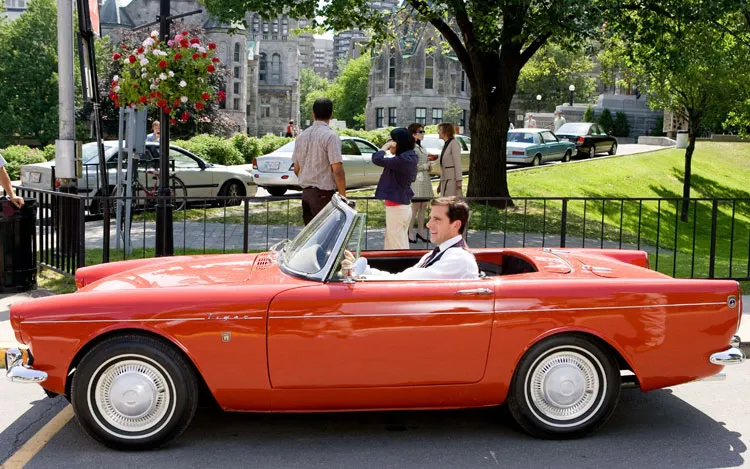
What made Smart’s transportation especially memorable was that it was a convertible, a 1968 Shelby Mustang GT500. This was not the government-issue sedan you might expect a spy agency to assign.
| Feature | Specification |
|---|---|
| Engine | 428 cu in (7.0L) Cobra Jet V8 |
| Horsepower | 360 hp (factory rated) |
| Torque | 420 lb-ft |
| Length | 186.6 inches |
| Width | 70.9 inches |
Instead, Agent 86 cruised around in one of the most powerful, most stylish American cars of its era. The contrast between Smart’s constant incompetence and the raw, serious muscle of the Shelby Mustang made for perfect visual comedy. The car looked like it belonged to James Bond, while the man driving it absolutely did not.
The Shelby GT500 was the most capable Mustang available in 1968. Shelby American modified these cars with wider bodywork, upgraded suspension, and the fearsome 428 Cobra Jet V8 engine.
Seeing it in the hands of the clueless-but-charming Maxwell Smart gave the car a comedic edge it never had in any other context. The show ran for five seasons, and the Mustang remained a consistently funny and genuinely striking visual element throughout.
6. Knight Rider 2008, KITT Becomes a Mustang, and the Internet Goes Wild
When NBC announced it was rebooting the legendary 1980s series Knight Rider, the automotive world held its breath. The original show was built entirely around KITT, the Knight Industries Two Thousand, a supercharged 1982 Pontiac Firebird Trans Am with artificial intelligence. That car was a cultural icon. Replacing it was always going to be controversial.
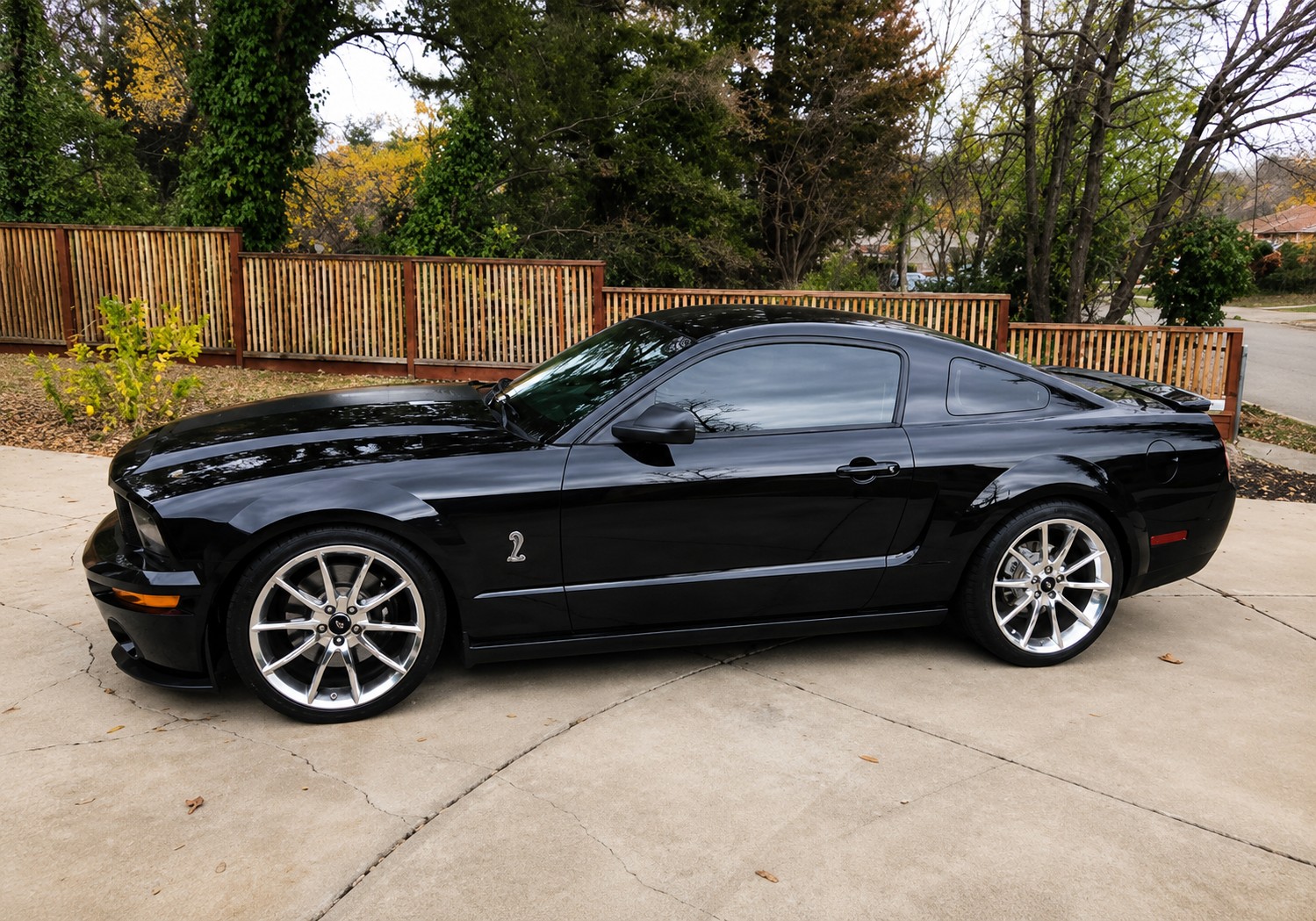
The producers made the boldest possible choice. The new KITT, the Knight Industries Three Thousand, would be a 2008 Ford Shelby GT500KR Mustang.
Black, menacing, and modern, the new KITT appeared first in a two-hour TV movie pilot in February 2008 and then in the full series that followed. Val Kilmer provided the voice of the new KITT, giving it a smooth, almost dangerous quality that matched the Mustang’s aggressive styling.
| Feature | Specification |
|---|---|
| Engine | 5.4L (330 cu in) Supercharged V8 |
| Horsepower | 540 hp |
| Torque | 510 lb-ft |
| Length | 187.6 inches |
| Width | 73.9 inches |
The internet’s reaction was immediate and divided. Mustang fans were ecstatic. Pontiac loyalists mourned. But nobody could deny that the GT500KR was a staggering piece of machinery.
It featured a 5.4-liter supercharged V8 producing 540 horsepower, making it one of the most powerful production Mustangs ever built at that time.
The show used multiple cars built for production, with the hero cars featuring full KITT body treatments, including the iconic scanning red light bar on the front. The car was built by Cinema Vehicle Services specifically for the series.
7. Team Knight Rider (1997), A Convertible GT Joins the Next Generation
Before the 2008 reboot, there was another attempt to revive the Knight Rider concept in the form of Team Knight Rider, which aired on syndication in 1997.
The premise expanded the original concept from one car to a whole team of advanced vehicles, each with its own artificial intelligence and unique personality. Among these vehicles was a 1997 Ford Mustang GT Convertible.
The Mustang in Team Knight Rider was assigned to Trek Sanders, a tech expert and hacker on the team. His car, named Domino, was a red convertible packed with fictional advanced technology.
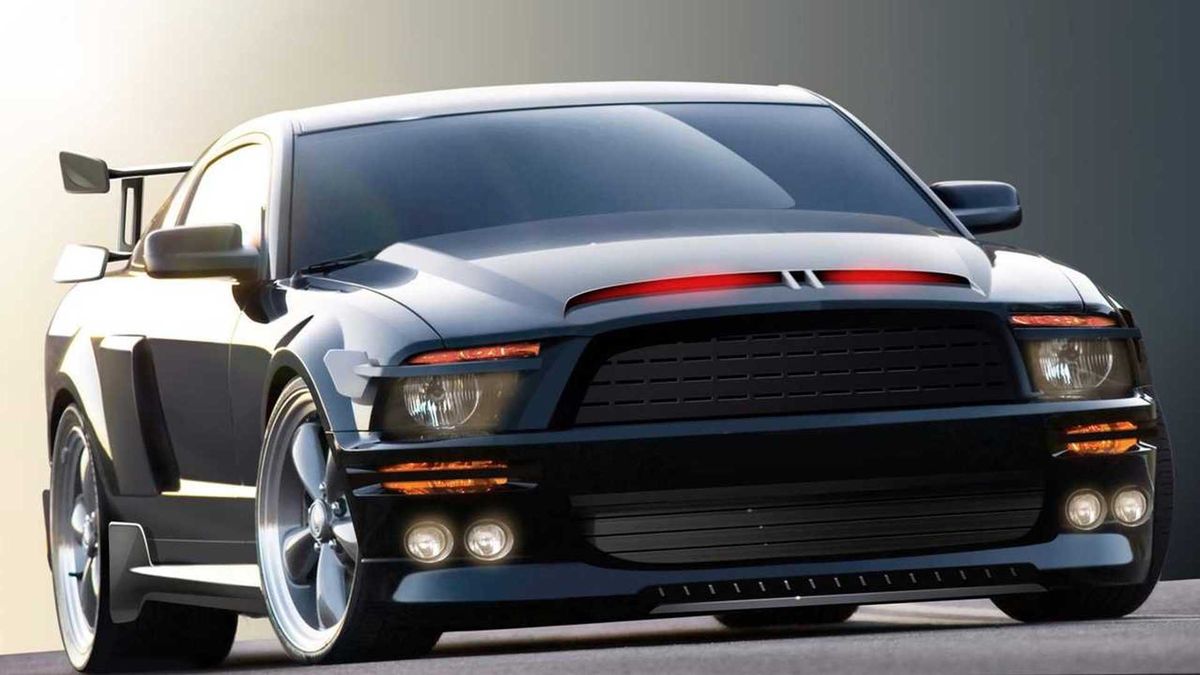
The choice of a Mustang GT Convertible was deliberate, it provided a sportier, more open-air personality compared to the heavier vehicles on the team. Domino was portrayed as playful, witty, and occasionally unpredictable, personality traits that matched the free-spirited nature of a convertible Mustang perfectly.
The show only ran for one season of 22 episodes, but it introduced a new generation of young viewers to both the Knight Rider universe and the Ford Mustang.
The 1997 GT convertible was powered by a 4.6-liter V8 engine and offered a driving experience that felt genuinely exciting, even as TV muscle cars go. The Mustang GT was the clear standout among Team Knight Rider’s vehicle lineup.
| Feature | Specification |
|---|---|
| Engine | 4.6L (281 cu in) SOHC V8 |
| Horsepower | 215 hp |
| Torque | 285 lb-ft |
| Length | 181.5 inches |
| Width | 71.8 inches |
8. Malcolm in the Middle (2000s), A Red Convertible That Nearly Destroyed the Neighborhood
Malcolm in the Middle was a wildly popular Fox sitcom about a chaotic, dysfunctional, but deeply funny family going through suburban life. The show was known for its brilliant physical comedy, clever writing, and increasingly insane situations.
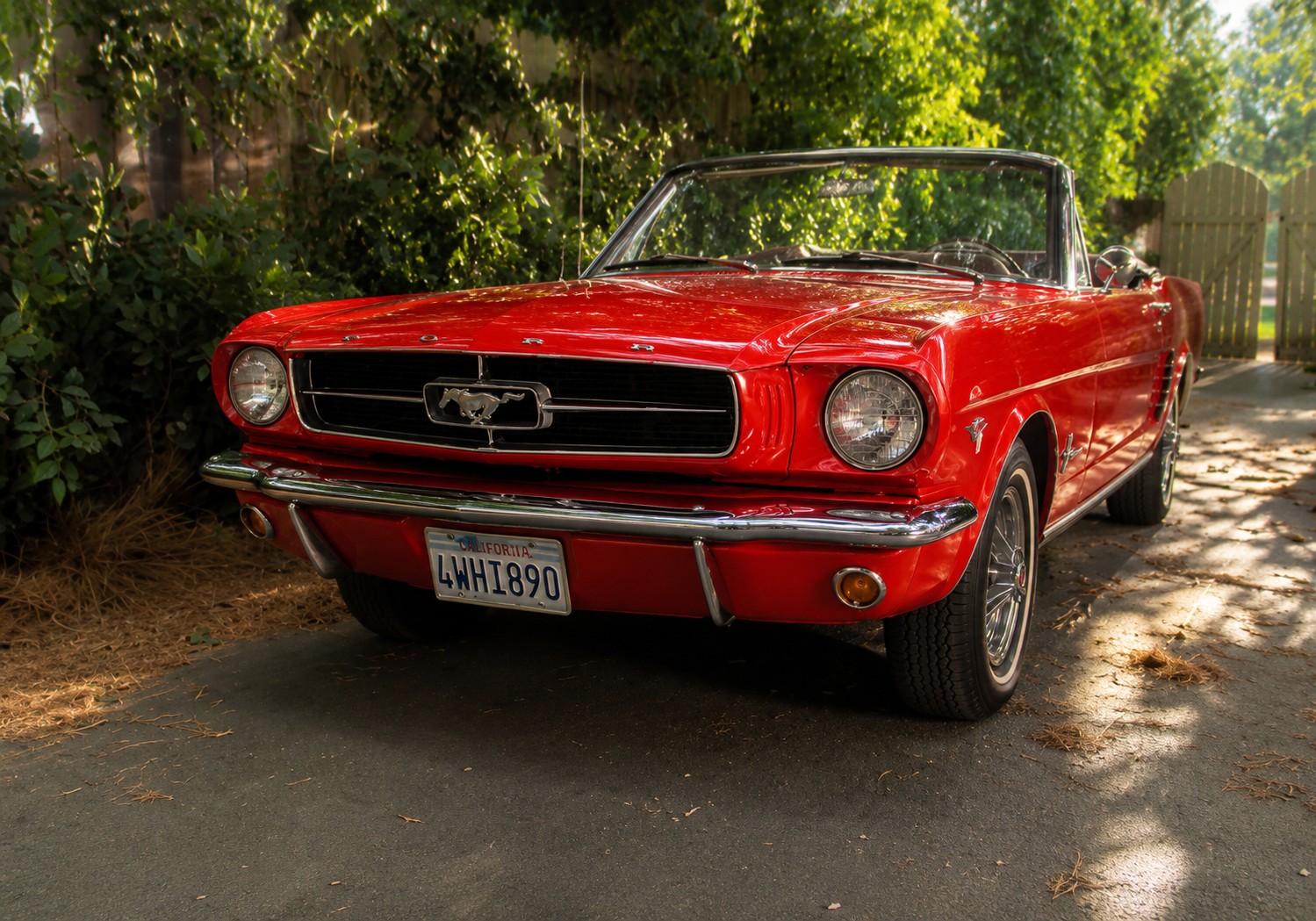
And few situations were as brilliantly insane as the episode involving Aunt Susan’s 1965 Ford Mustang convertible. Lois’s estranged sister, Susan, shows up with a stunning red 1965 Mustang convertible and offers it to the boys.
The car drives everyone absolutely mad with desire. Reese, desperate to drive it and look cool in front of his peers, comes up with the most spectacularly reckless plan imaginable. He has the car towed to the top of a hill and rides it down the slope with no engine running and presumably limited braking.
| Feature | Specification |
|---|---|
| Engine | 289 cu in (4.7L) V8 (Hi-Po option) |
| Horsepower | 225 hp (standard V8) / 271 hp (Hi-Po) |
| Torque | 305 lb-ft |
| Length | 181.6 inches |
| Width | 68.2 inches |
What follows is the kind of suburban catastrophe the show was built on, with the Mustang becoming the center of pure, glorious mayhem. The red 1965 Mustang convertible was the perfect prop for this storyline. It looked beautiful, desirable, and slightly dangerous, exactly the kind of object that would make a teenage boy lose all rational judgment.
The car’s classic styling made it stand out against the bland suburban backdrop of the show, making every scene it appeared in feel raised and slightly unreal. The 1965 model year was one of the most iconic of the entire first generation, with crisp lines and a timeless elegance.
9. Stumptown (2019), A Fox Body Mustang Goes Full Dukes of Hazzard
When ABC’s Stumptown premiered in September 2019, car enthusiasts immediately took notice. The show starred Cobie Smulders as Dex Parios, a tough, irreverent private investigator working the streets of Portland, Oregon.
Dex was not the type to drive something sensible. She needed something with attitude, with history, and with just enough mechanical instability to reflect her own chaotic personality.
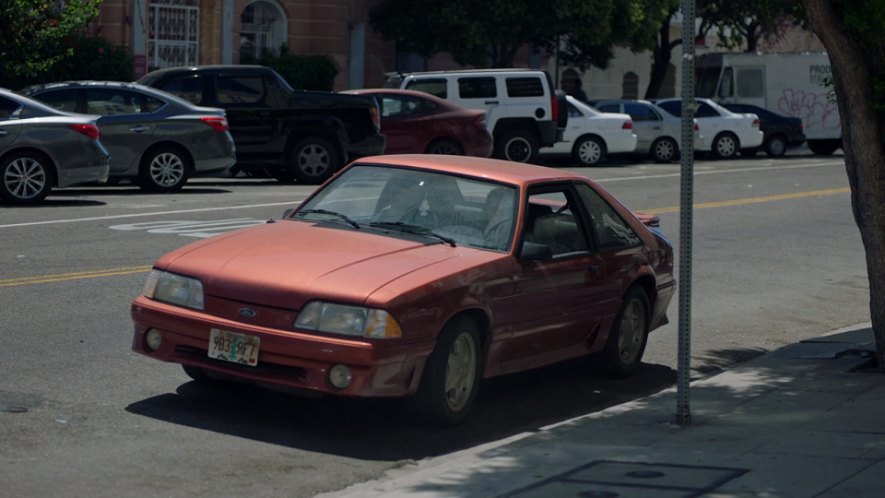
The producers gave her a Fox-body Ford Mustang, one of the classic 1979–1993 era muscle cars that defined an entire generation of American automotive culture.
| Feature | Specification |
|---|---|
| Engine | 5.0L (302 cu in) HO V8 |
| Horsepower | 225 hp |
| Torque | 300 lb-ft |
| Length | 179.6 inches |
| Width | 69.1 inches |
In the very first episode of the series, the car went absolutely berserk in a sequence that fans immediately described as the show going full Dukes of Hazzard. The Mustang launched, slid, and crashed its way through the Portland streets in a way that established both the car’s personality and Dex’s complete disregard for conventional driving.
Fox-body Mustang enthusiasts online erupted with excitement. The show brought the Fox body, often overlooked in favor of earlier classic Mustangs, back into mainstream pop culture conversation.
The car’s boxy, angular 1980s styling gave it a gritty, street-level authenticity that fit Stumptown’s Portland setting perfectly. The first episode set an aggressive, anarchic tone for the series, and the Mustang was right at the center of it. The show was renewed for a second season before being ultimately cancelled in 2020.
10. Jake 2.0 (2003), A Mach 1 Driven by a Legend Coming Out of Retirement
Jake 2.0 was a short-lived but genuinely creative sci-fi series that aired on UPN in 2003. It followed Jake Foley, a tech worker who accidentally acquires nanite technology and becomes a superhuman government agent.
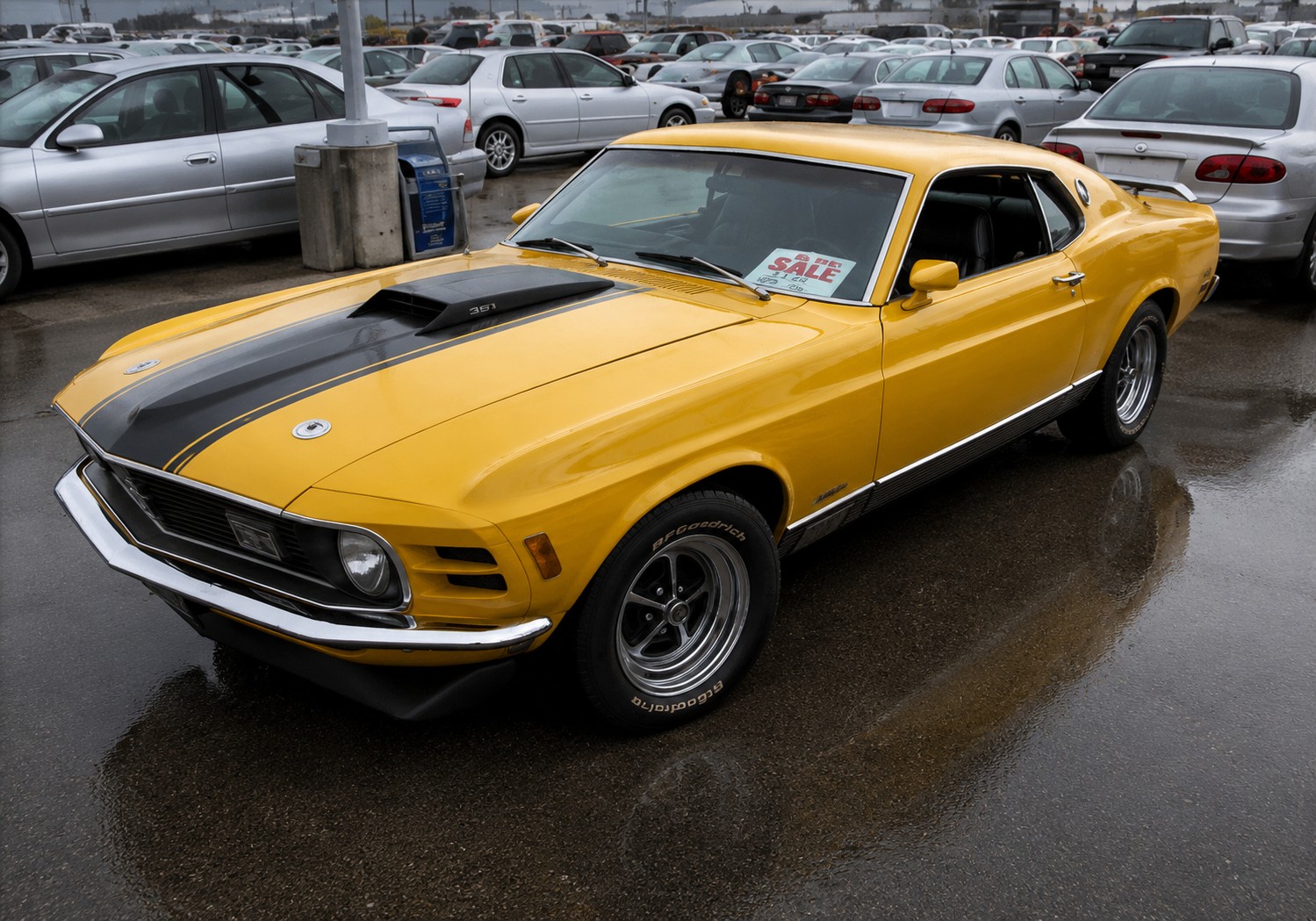
The show was clever, fast-paced, and filled with action sequences that punched well above its budget. But among its most memorable elements was a car, a brilliant yellow-orange 1970 Ford Mustang Mach 1.
The Mach 1 belonged not to the protagonist but to the legendary spy Richard Fox, played by Lee Majors, himself an icon from the original Six Million Dollar Man era.
Fox was a retired agent coaxed back into service. His choice of car said everything about his character, a man who did things the old, powerful American way.
| Feature | Specification |
|---|---|
| Engine | 428 cu in (7.0L) Super Cobra Jet V8 |
| Horsepower | 335 hp (factory-rated) |
| Torque | 440 lb-ft |
| Length | 187.4 inches |
| Width | 71.3 inches |
The aggressive yellow-orange Mach 1 was visually arresting in every scene it appeared in. It contrasted perfectly with the sleek, digital, futuristic technology that defined the rest of the show.
The 1970 Mustang Mach 1 was one of the most aggressively styled Mustangs of the entire first generation. It featured a distinctive flat-black hood, integrated front spoiler, side scoops, and the legendary Shaker hood scoop on higher-spec models.
The car was available with the fearsome 428 Super Cobra Jet V8, making it one of the fastest production cars of its era. Seeing this muscle-era icon driven by a returning television legend in a futuristic spy show was exactly the kind of insane, wonderful television moment that makes the Mustang’s screen history so endlessly fascinating.
Also Read: 10 SUVs Where Dealers Make Most Money On Your Purchase
