
The American automobile has always been more than just a machine. It is a symbol of freedom, industrial pride, and national identity. For over a century, Detroit automakers built that identity on the promise of durability, power, and reliability.
Families trusted these vehicles with their lives. Workers built entire careers around assembling them. Communities rose and fell alongside their fortunes.
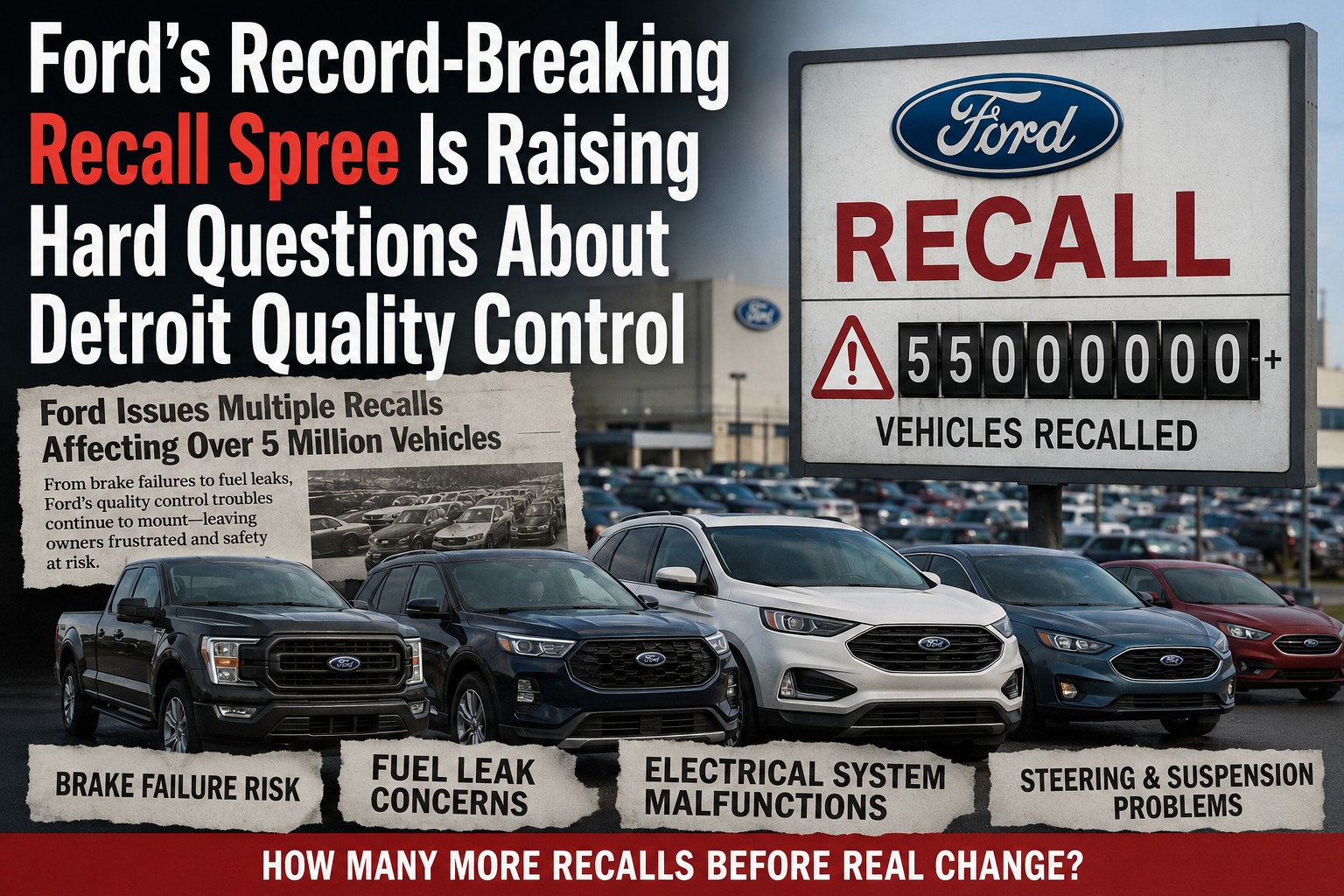
That promise is now under unprecedented pressure. Ford Motor Company, one of the most iconic names in automotive history, closed 2025 with a staggering 152 safety recall notices, nearly doubling the previous all-time record of 77, which General Motors set back in 2014.
The numbers are not just a corporate embarrassment. They represent millions of drivers who bought vehicles in good faith, only to receive notices about faulty brakes, fire risks, software failures, and parts that could detach at highway speeds.
What makes this moment particularly significant is the breadth of the crisis. The problems are not confined to one model, one factory, or one component.
They cut across Ford’s entire lineup from its celebrated F-Series trucks to its electric Mustang Mach-E, from family SUVs to compact hybrids. The recalls span mechanical failures and digital glitches alike.
That breadth raises a question that goes beyond Ford itself: Is this a company-specific crisis, or is it a warning sign about the deeper state of American automotive manufacturing?
The Scale of the Problem: Numbers That Cannot Be Ignored
The statistics surrounding Ford’s recall situation are difficult to contextualize because nothing quite compares to them. In the first half of 2025 alone, Ford had already issued more recalls than any automaker had ever issued in a full calendar year.
By mid-year, the company accounted for roughly 39% of all vehicle safety recalls filed with the National Highway Traffic Safety Administration across the entire industry. GM issued 16 recalls in that same period. Honda issued 14. Ford issued 94, and the year was only halfway done.
The issues logged across those recalls were not minor inconveniences. Among the most serious was a recall involving over one million vehicles due to rear-view camera software failures. Another involved a potential power brake booster failure affecting hundreds of thousands of vehicles.
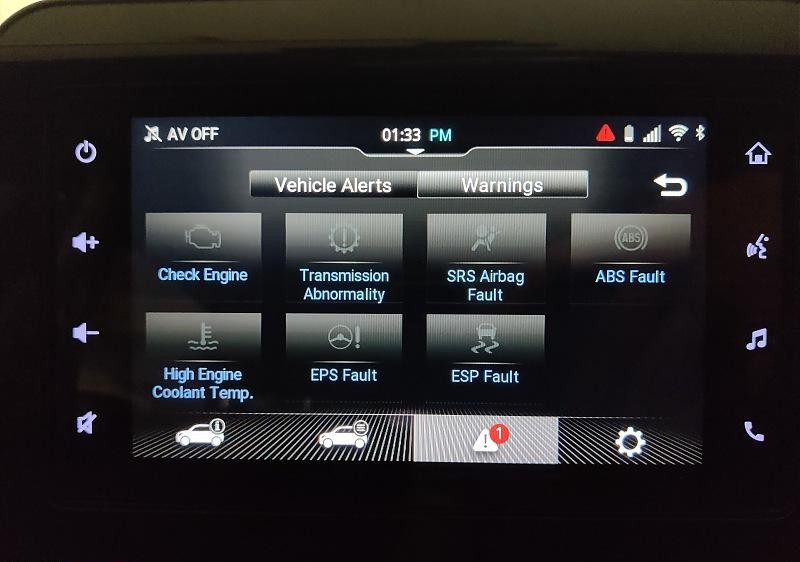
There were recalls tied to cracked fuel injectors, faulty parking modules that created rollaway risks, electrical shorts with potential to spark fires, and instrument panel components that could detach while driving. The variety of failures spanning hardware, software, electrical systems, and structural components suggests the problem is systemic rather than isolated.
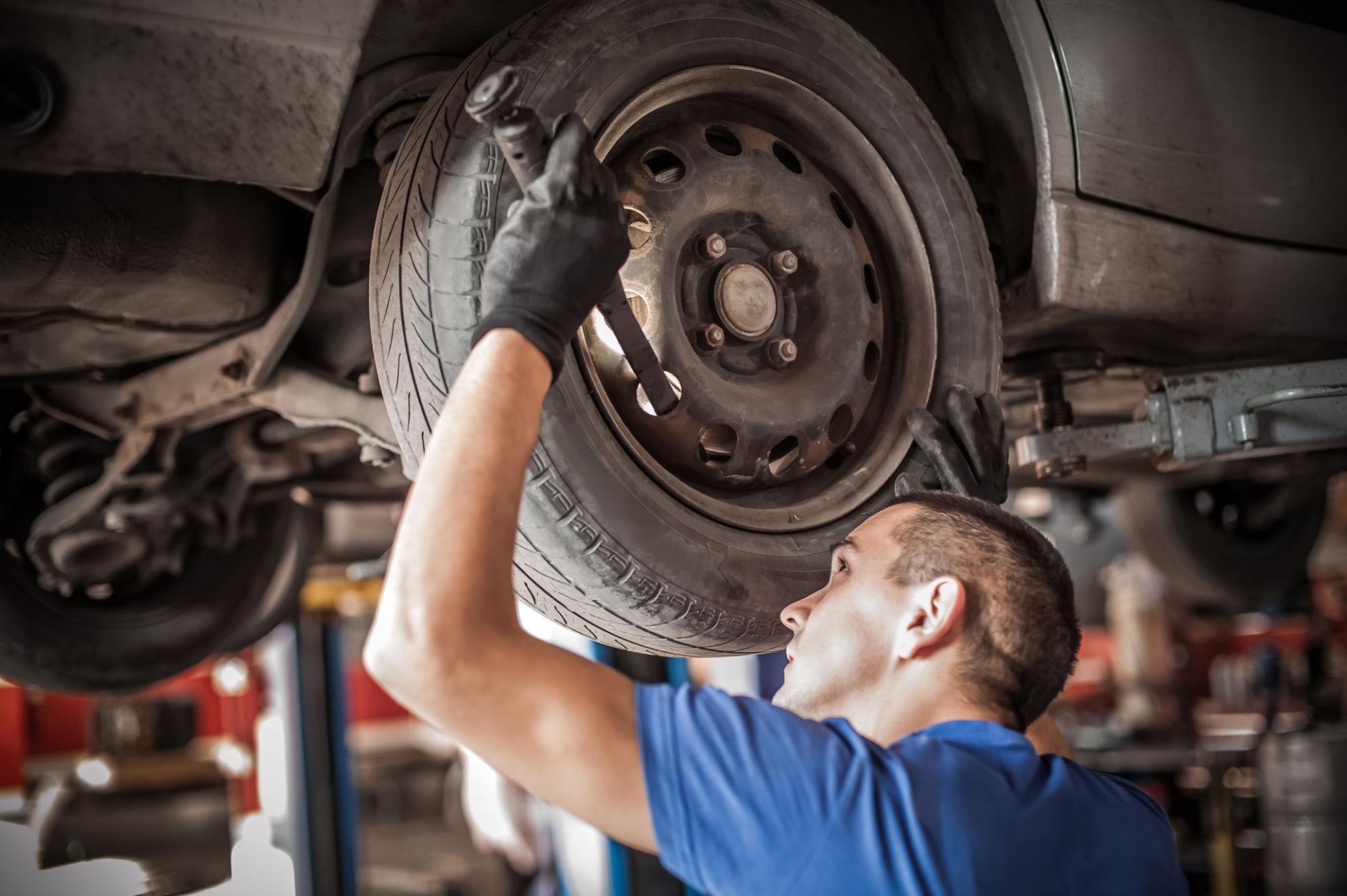
The financial damage has compounded the reputational harm. Warranty costs surged to $6 billion in 2024, a 22% increase driven heavily by recall-related repairs. Ford’s net debt climbed to levels well above industry benchmarks, straining the company’s ability to invest in the future.
A fine of $165 million was levied by the NHTSA for failing to act promptly on defective backup cameras affecting over 600,000 vehicles, the second-largest penalty in the agency’s history.
That fine was not just about the defect itself. It was about Ford’s pace of response, which raises questions about corporate culture and accountability at the highest levels.
Long-term projections paint an equally troubling picture. Independent vehicle research found that certain Ford and Lincoln models are projected to face dozens of recalls over their lifetime, one model as many as 92, compared to an industry median of under four. These are not numbers that can be dismissed as the cost of doing business.
Consumer Trust and the Human Cost of Failure
Statistics tell part of the story. The human experience tells the rest. Every recall notice that lands in a mailbox represents a moment of doubt, a driver wondering whether their vehicle is truly safe, whether they made the right purchase decision, and whether the brand they trusted actually deserves that trust.
Ford’s Net Promoter Score, a standard measure of consumer loyalty, fell to 32 in 2025, well below the automotive industry average of 41. That gap matters. It reflects real consumers choosing to recommend competitors to friends and family.
It reflects households deciding not to return to the same brand for their next purchase. Brand loyalty in the automobile industry takes generations to build and can collapse with remarkable speed when safety concerns pile up.
The dealership experience has deteriorated alongside consumer sentiment. Service departments have been overwhelmed with recall repair appointments, disrupting normal operations and creating backlogs.
Some new vehicles have sat undeliverable on dealer lots, unable to be handed over to waiting customers until recall fixes were completed. Dealers invest heavily in their business and their brand relationships.
Being placed in the position of managing customer frustration over problems they did not create is an unfair burden, and it quietly erodes the trust that holds the entire retail network together.
The competitive consequences are equally serious. Japanese automakers like Toyota and Honda have spent decades cultivating reputations for reliability. South Korean brands have significantly closed the quality gap over the past two decades.
Chinese automakers are now moving aggressively into global EV markets with leaner manufacturing processes and significant technology investment.
Ford’s CEO has publicly acknowledged that the company is losing ground in the electric vehicle segment to competitors who are building both better and faster. Against that backdrop, a recall crisis of this magnitude is not just bad press, it is a competitive vulnerability that rivals will exploit.
The psychological dimension deserves acknowledgment as well. A vehicle is not a household appliance that can be quietly returned or replaced. It is a major financial commitment.
It carries children to school. It sits in driveways and represents years of payments. When that vehicle becomes a source of anxiety rather than confidence, the emotional impact is real and lasting. Ford’s recall volume has created exactly that kind of anxiety for millions of American families.
Ford’s Defense, Detroit’s Reckoning, and the Road Ahead
Ford’s leadership has not retreated from the criticism. Instead, the company has mounted a direct argument: high recall numbers, in their view, reflect accountability rather than failure.
The automaker has more than doubled its internal safety and quality team over the past two years. It has expanded stress testing across powertrains, steering systems, and braking components.
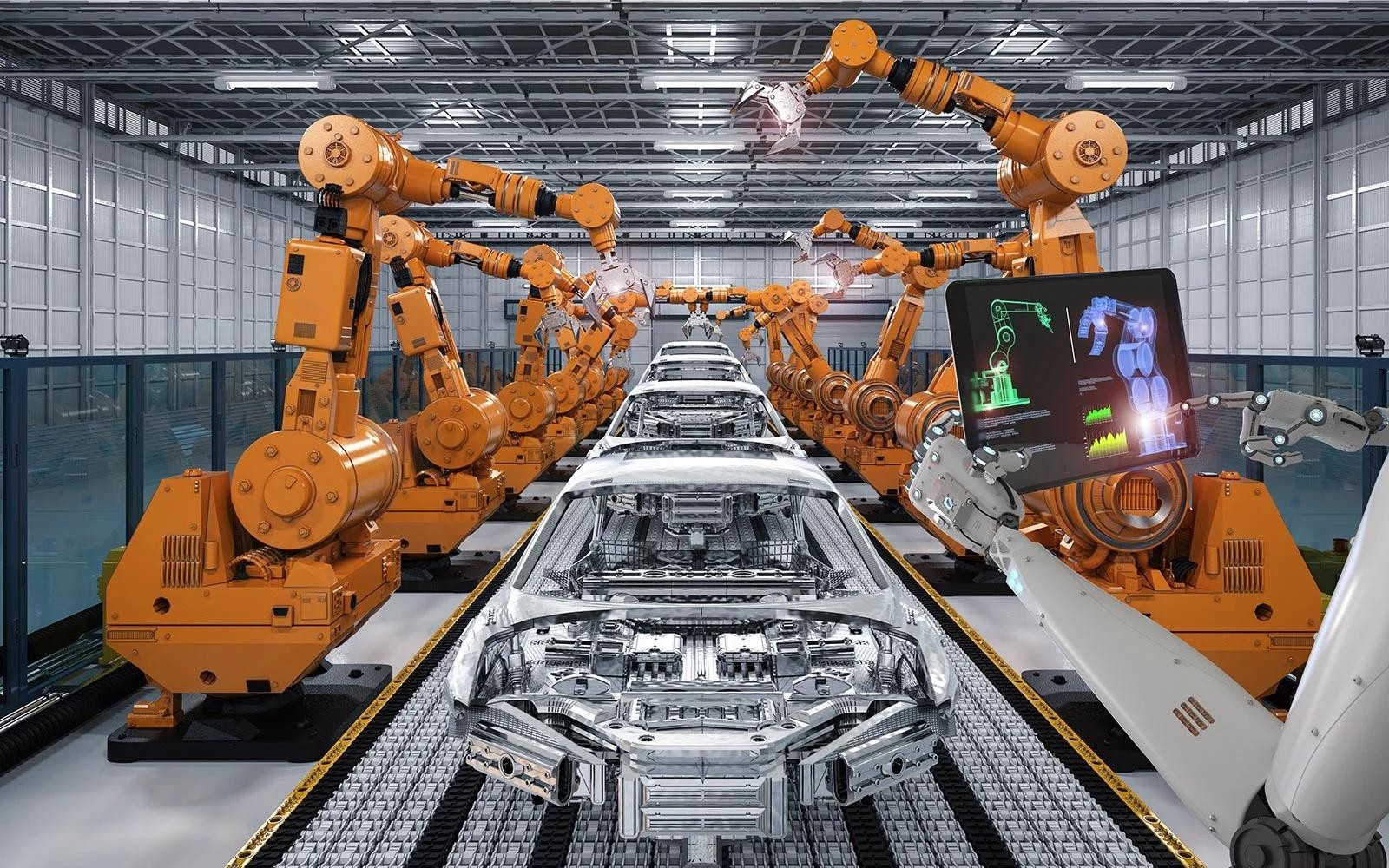
It has implemented artificial intelligence tools to detect manufacturing defects earlier in the production cycle. It has appointed new quality leadership and pledged to test critical systems to the point of failure before vehicles reach consumers.
There is a reasonable case to be made here. A significant share of the 2025 recalls involved vehicles designed and engineered before the current leadership team took the helm in late 2020.
Cleaning up old problems while simultaneously trying to build better new vehicles is a genuine challenge, and some credit is owed for the willingness to identify and address legacy defects rather than waiting for consumer complaints to force the issue.
Warranty costs did decline modestly in 2025, but measurably, making Ford the only major automaker to achieve that reduction in that year. Rankings in several consumer quality surveys improved.
Internal data suggests newer vehicles rolling off assembly lines are performing better than older models. These are not fabricated numbers, and they point toward real, if incomplete, progress.
But the counterargument is equally compelling. The volume and variety of defects that have surfaced cannot be entirely explained by a more aggressive internal auditing process.
Software integration failures, in particular, point to a deeper structural challenge. The automotive industry has undergone a rapid transformation from mechanical manufacturing to software-driven product development, and that transition has exposed serious gaps in how traditional automakers manage complexity. Ford has been caught in that gap, and so, to varying degrees, has the rest of Detroit.
The broader question hanging over this moment is not just about Ford. It is about whether American automobile manufacturing has the institutional discipline, the engineering culture, and the long-term commitment to match the quality standards that global competitors have demonstrated consistently.
Pointing to improved internal metrics is encouraging. Delivering sustained, measurable improvement on vehicles that consumers actually drive every day is what ultimately matters.
Detroit’s credibility and Ford’s survival as a dominant force in the global market depend on whether the promises being made in earnings calls and press releases translate into vehicles that simply work, reliably and safely, year after year.
That bar is not unreasonably high. It is the minimum that any customer deserves when they hand over their trust and their money. Right now, Ford has significant ground left to cover before it can honestly claim to have met it.
Also Read: Every New EV Ranked by True 5-Year Cost of Ownership
