
Concept cars have always served as the automotive industry’s imagination playground. Manufacturers use them to test futuristic styling, advanced engineering ideas, and technologies that often seem impossible during their debut years.
Many concept cars appear at auto shows packed with dramatic features that attract attention but never reach production. Yet some ideas once considered unrealistic eventually become ordinary parts of modern vehicles.
Throughout automotive history, concept cars predicted numerous innovations long before consumers accepted them. Touchscreen dashboards, digital instrument clusters, adaptive headlights, self-parking systems, and even electric drivetrains appeared in concept form decades before mass production caught up.
Designers and engineers often use these experimental vehicles to measure public reaction while quietly preparing technology for future development.
The gap between concept and reality can sometimes take decades. Early autonomous driving concepts from the 1950s looked absurdly futuristic at the time, but many modern vehicles now contain partial self-driving capabilities.
Similarly, aerodynamic active body panels, giant infotainment displays, and biometric driver systems once felt like science fiction before becoming increasingly common on production models.
Not every futuristic feature survives the transition. Some concepts remain too expensive, too complicated, or too impractical for mass-market use.
Others require advances in computing power, battery technology, or manufacturing techniques before becoming realistic for everyday drivers. When these barriers finally disappear, the automotive world often adopts ideas that originally appeared impossible.
Another fascinating aspect of concept-car technology involves how dramatically public opinion changes. Features once mocked for looking strange or unnecessary eventually become expected by buyers. Many drivers today rely on systems that would have sounded outrageous only twenty years ago.
This article looks at eight concept-car features that finally became real production technologies. Each section focuses on a vehicle closely associated with introducing or popularizing a once-futuristic innovation that later entered mainstream automotive design.
Some of these ideas transformed safety and convenience, while others completely changed how people interact with vehicles. Together, they demonstrate how concept cars often provide an early view into the future, long before that future arrives on public roads.
Also Read: 10 Cars With Production Runs Under 5,000 Units
1. Digital Dashboard Displays: Aston Martin Lagonda Concept
When Aston Martin introduced the Lagonda concept during the 1970s, one of its most shocking features was the fully digital dashboard.
At a time when most cars still used traditional analog gauges with mechanical needles, the Lagonda attempted to replace them with futuristic electronic displays that looked more like aircraft instrumentation than automotive controls.
The idea felt incredibly advanced for its era. Drivers were suddenly presented with glowing digital readouts instead of familiar circular speedometers and tachometers. Touch-sensitive controls and electronic instrumentation gave the interior a science-fiction atmosphere unlike anything else available at the time.
Initially, the technology struggled badly. Early digital systems were expensive, unreliable, and difficult to manufacture consistently. Electronics during the late 1970s simply were not advanced enough to support the ambitious vision Aston Martin wanted to deliver.
Owners frequently experienced glitches, display failures, and maintenance nightmares that damaged the car’s reputation.
Despite those issues, the concept itself proved remarkably forward-thinking. The Lagonda demonstrated that vehicle interiors would eventually shift toward digital information displays rather than purely mechanical gauges.
Over time, improvements in computing power, display quality, and electronic reliability allowed manufacturers to revisit the idea successfully.
Today, fully digital instrument clusters exist across nearly every automotive segment. Luxury sedans, electric vehicles, sports cars, and even economy hatchbacks now use configurable screens capable of displaying navigation maps, performance data, driver-assistance information, and entertainment controls directly in front of the driver.
Modern systems from Audi, Mercedes-Benz, BMW, and Tesla owe part of their existence to early experimental efforts like the Lagonda’s dashboard. While the original execution arrived too early for available technology, the concept accurately predicted the direction automotive interiors would eventually take.
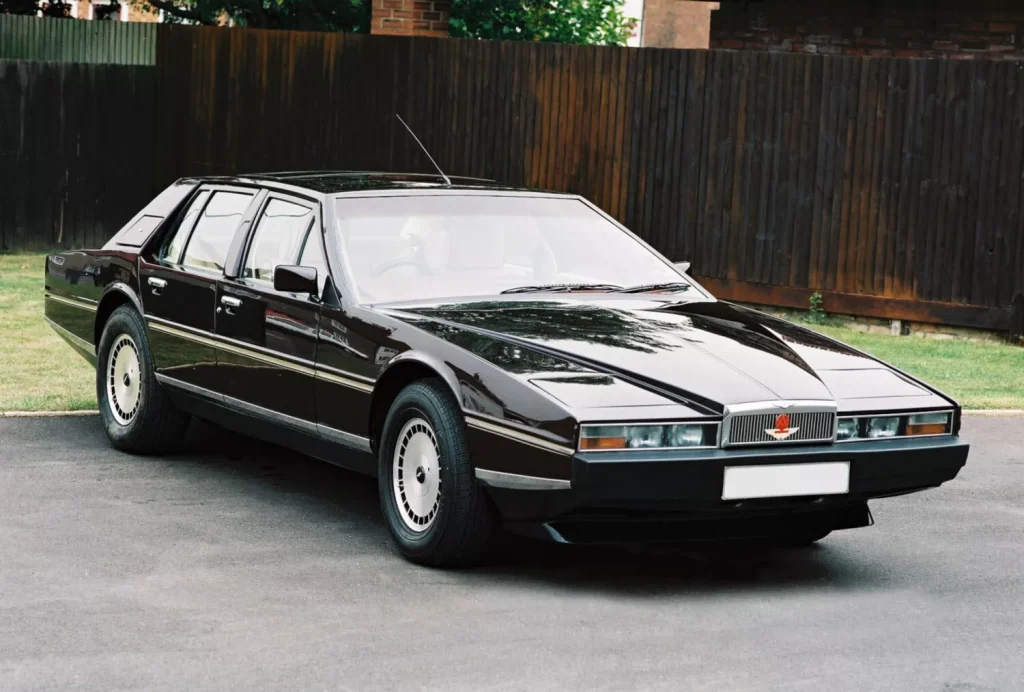
The Lagonda itself became famous partly because of its willingness to embrace futuristic ideas without compromise. Many people considered the car excessive and strange when new, but history proved that its vision of digital automotive interfaces was decades ahead of mainstream adoption.
What once looked impossibly futuristic inside the Lagonda now appears completely normal in modern vehicles filled with giant screens and customizable digital displays replacing traditional mechanical instrumentation.
- Engine: 5.3L V8
- Torque: 299 lb-ft
- Horsepower: 280 HP
- Length/Width: 207 inches / 71 inches
2. Self-Parking Technology: Toyota Fine-X Concept
During the early 2000s, autonomous parking technology sounded like something reserved strictly for futuristic concept vehicles.
Toyota introduced the Fine-X concept with radical mobility ideas, including advanced automated parking systems capable of maneuvering the vehicle with minimal driver input. At the time, many people treated the feature as an entertaining gimmick rather than a realistic transportation technology.
The Fine-X concept focused heavily on maneuverability and urban convenience. Its design included advanced steering systems and electronic controls intended to simplify driving in crowded cities.
Among the most fascinating features was the vehicle’s ability to guide itself into parking spaces using sensors and computerized steering assistance.
Back then, parking remained a frustrating task for many drivers, especially in tight urban spaces. Toyota recognized that automation could reduce stress and improve safety during low-speed maneuvers. The challenge involved making sensors, cameras, and computing systems accurate enough for real-world reliability.
Early versions of self-parking technology entering production vehicles during the late 2000s worked relatively slowly and cautiously. Drivers remained skeptical because trusting a car to steer itself felt unnatural. Yet the systems improved rapidly as camera quality, radar sensors, and software processing advanced.
Today, self-parking systems appear in everything from luxury sedans to mainstream family crossovers. Modern vehicles can parallel park, reverse into tight spaces, and even exit parking spots automatically while the driver supervises from inside or outside the car.
The Fine-X concept deserves attention because it anticipated a major shift in how vehicles interact with drivers during everyday tasks. Instead of focusing purely on speed or styling, Toyota recognized that convenience technology would become a major selling point for future vehicles.
Self-parking systems also helped pave the way for broader autonomous driving development. The sensors and software used for parking assistance contributed to technologies now supporting lane keeping, collision avoidance, and semi-autonomous highway driving.
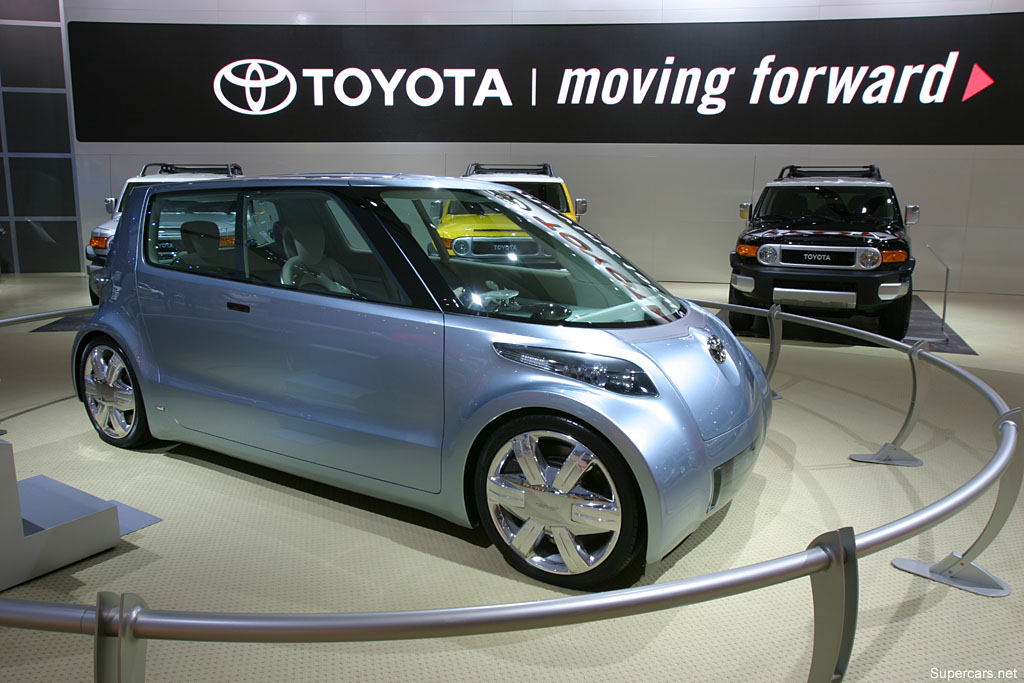
What once appeared futuristic on the Fine-X concept has quietly become a common feature many drivers now use regularly without much thought. The concept demonstrated how even small automated conveniences could eventually transform daily driving experiences once technology matured enough for mainstream production.
- Engine: Hydrogen Fuel Cell Electric
- Torque: 516 lb-ft
- Horsepower: 134 HP
- Length/Width: 148 inches / 74 inches
3. Camera-Based Side Mirrors: Audi e-tron Concept
For decades, traditional side mirrors remained one of the few automotive components that barely changed. Concept cars frequently experimented with futuristic camera systems replacing bulky mirrors, but most people assumed the idea would remain unrealistic because of regulations, cost, and reliability concerns.
Audi changed that perception with the e-tron concept and later production vehicles that finally brought digital side mirrors into reality.
The idea behind camera-based mirrors sounded simple in theory. Small exterior cameras would replace conventional mirror housings and transmit live video feeds to interior displays mounted near the doors.
Removing traditional mirrors offered several advantages, especially for electric vehicles, where aerodynamic efficiency plays a major role in maximizing driving range.
Audi recognized that reducing wind resistance could improve performance and efficiency noticeably. Conventional mirrors create airflow turbulence and wind noise at highway speeds. Compact camera pods dramatically reduced drag while giving the vehicle a cleaner, futuristic appearance.
When the technology first appeared on the e-tron concept, many drivers questioned whether digital displays could replace the instinctive familiarity of normal mirrors. Looking at interior screens instead of reflective glass required adjustment, and some people worried about visibility during rain, snow, or bright sunlight.
Audi invested heavily in refining the system before introducing it on production versions of the e-tron SUV in certain global markets. High-resolution displays, low-light optimization, and aerodynamic camera housings helped make the technology more practical for daily driving.
The digital mirrors also unlocked new functionality impossible with conventional glass. Camera systems could automatically adjust brightness at night, widen viewing angles during lane changes, and reduce glare from headlights behind the vehicle. Some systems even included dynamic guidance lines for parking and maneuvering assistance.
Although regulations prevented widespread adoption in certain countries initially, camera-based mirrors gradually gained approval as authorities became more comfortable with the technology. Other manufacturers soon began experimenting with similar systems on concept and production vehicles.
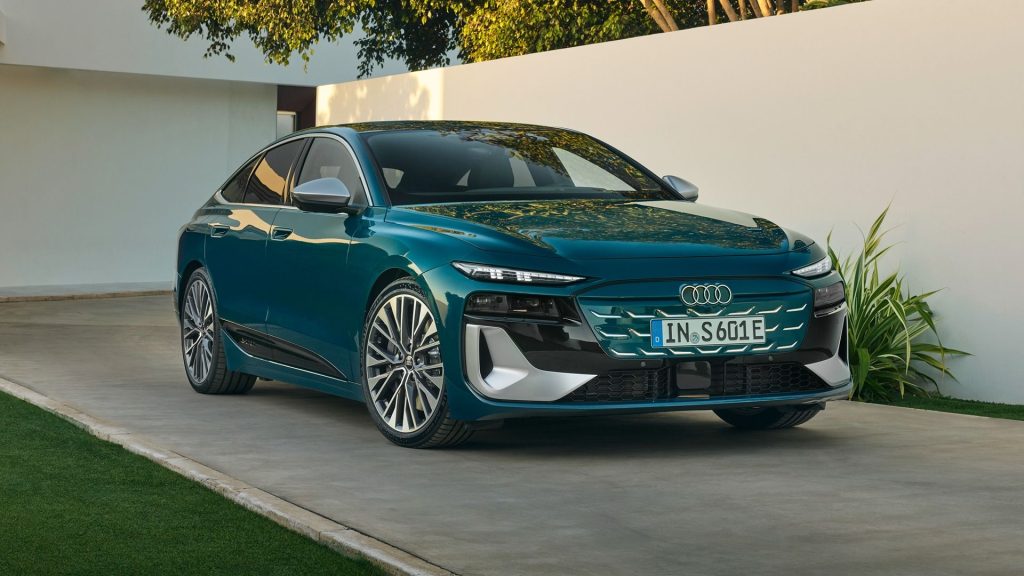
The e-tron concept demonstrated how a feature once considered pure science fiction could eventually become viable through advances in display quality, sensor technology, and software processing. What started as an aerodynamic experiment evolved into a legitimate alternative to one of the oldest components in automotive history.
Digital mirror technology still feels futuristic today, but Audi proved that replacing traditional side mirrors with cameras was no longer just an auto-show fantasy. It became a real production feature capable of changing how drivers interact with their surroundings.
- Engine: Dual Electric Motors
- Torque: 490 lb-ft
- Horsepower: 402 HP
- Length/Width: 193 inches / 76.3 inches
4. Augmented Reality Head-Up Displays: Mercedes-Benz F 015 Luxury in Motion Concept
Mercedes-Benz introduced the F 015 Luxury in Motion concept as a vision of autonomous luxury transportation, and one of its most groundbreaking features involved advanced augmented reality head-up display technology.
Instead of showing only simple speed information on the windshield, the system projected interactive navigation graphics, warnings, and visual guidance directly into the driver’s field of view.
At the time, the idea looked astonishingly futuristic. Traditional head-up displays already existed in limited form, usually displaying speed or cruise-control data near the windshield base. The F015 concept expanded the idea dramatically by integrating digital overlays with real-world surroundings.
For example, navigation arrows could appear directly on the road ahead instead of forcing drivers to glance down at a dashboard screen.
Hazard warnings could highlight obstacles visually, while lane guidance systems could project boundaries onto the windshield itself. Mercedes envisioned a future where digital information blended seamlessly with the physical driving environment.
The technology required major advancements in graphics processing, sensors, cameras, and display projection systems before becoming practical for production vehicles.
Early augmented reality concepts struggled with brightness, alignment accuracy, and processing speed. Automotive engineers needed systems capable of functioning reliably in changing weather conditions and varying sunlight levels.
As computing power improved, manufacturers gradually introduced simplified augmented reality displays into luxury vehicles. Mercedes-Benz itself later launched production systems capable of projecting navigation guidance and road information directly into the driver’s viewing area. Other manufacturers soon followed with similar technologies.
One major advantage involves reducing distraction. Drivers no longer need to repeatedly look away from the road toward dashboard screens for navigation or warning information.
By placing critical visuals directly within the driver’s natural line of sight, augmented reality displays improve situational awareness while making modern infotainment systems safer to use.
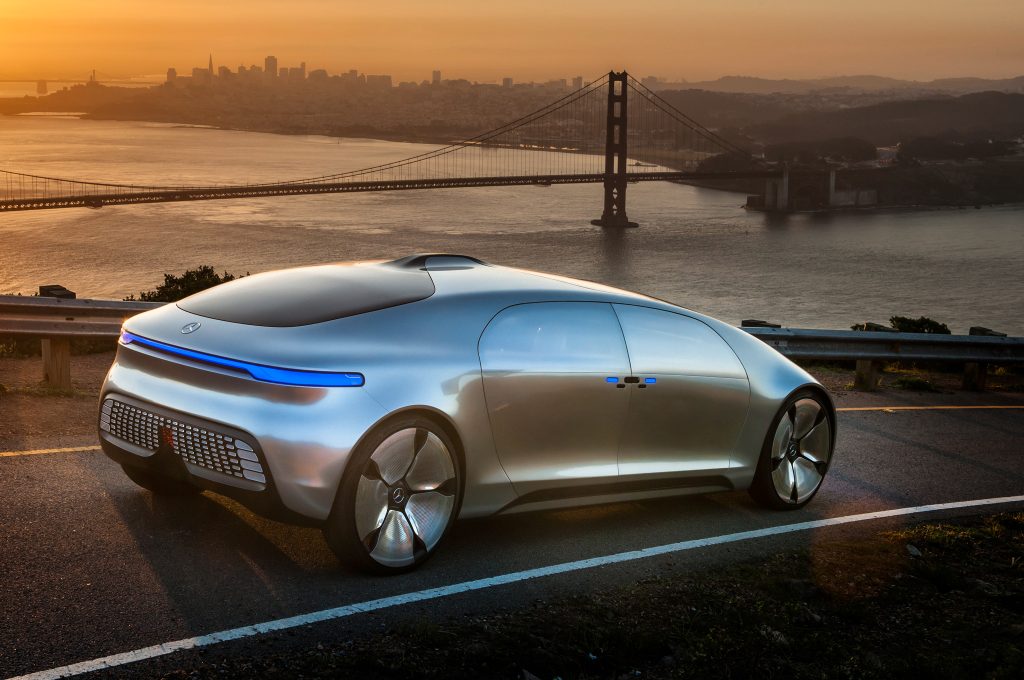
The F 015 concept helped show the automotive industry that future vehicle interfaces would involve far more than physical buttons and gauges. Information could become immersive, interactive, and visually integrated into the driving experience itself.
Today, augmented reality displays remain most common in premium vehicles, but the technology continues to expand rapidly.
Features once limited to futuristic concept cars now appear in real production sedans and SUVs, proving Mercedes-Benz accurately predicted one of the next major steps in automotive human-machine interaction.
- Engine: Hydrogen Fuel Cell Electric
- Torque: 737 lb-ft
- Horsepower: 268 HP
- Length/Width: 205 inches / 79 inches
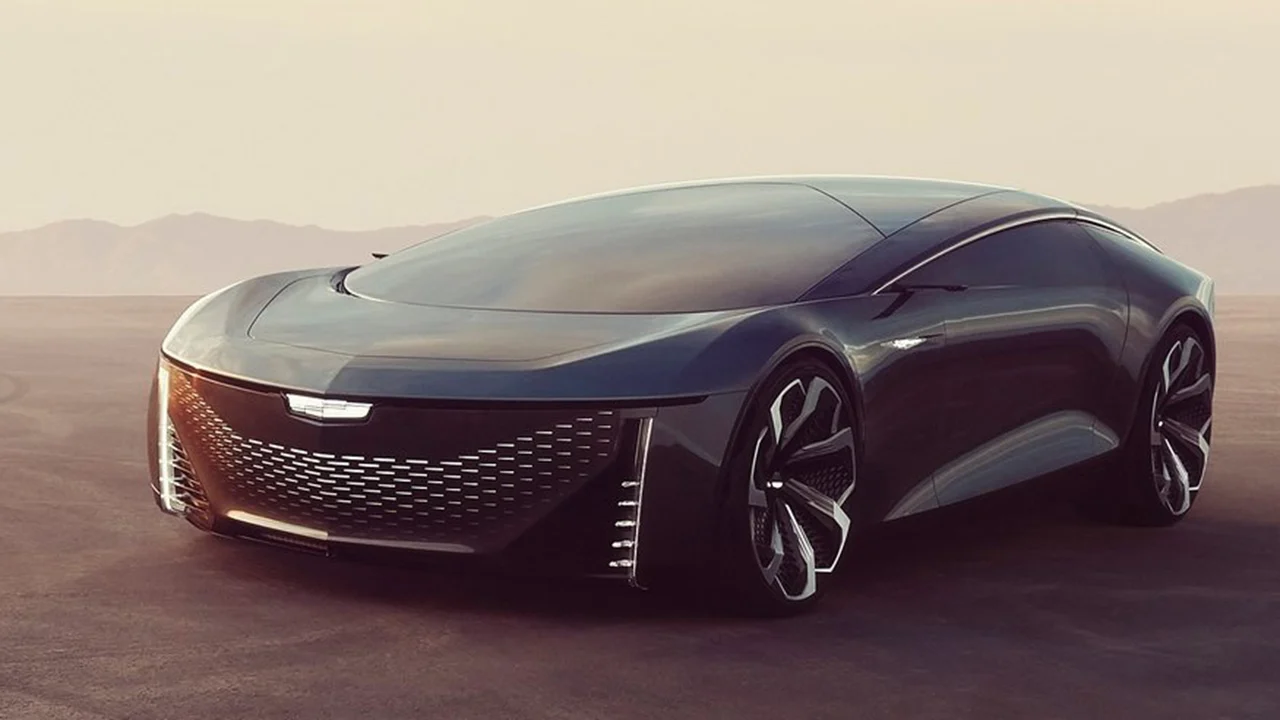
5. Biometric Driver Recognition: Cadillac InnerSpace Concept
The Cadillac InnerSpace concept represented one of General Motors’ boldest visions of future luxury transportation. Instead of focusing purely on horsepower or aggressive styling, the concept concentrated heavily on personalized digital interaction between vehicle and occupant.
One of its most fascinating ideas involved biometric driver recognition technology capable of identifying users automatically through physical characteristics and behavioral data.
When Cadillac first showcased these concepts, many people viewed them as overly futuristic. The idea of a vehicle recognizing its driver through facial scans, fingerprints, or eye tracking sounded more like advanced consumer electronics than traditional automotive engineering. Yet modern vehicles gradually moved in exactly that direction.
The InnerSpace concept imagined a world where drivers would no longer rely solely on physical keys or key fobs. Instead, the vehicle could automatically recognize who entered the cabin and instantly load personalized settings.
Seat position, climate control preferences, lighting themes, navigation history, entertainment choices, and driving modes could all adjust automatically without manual input.
Biometric systems also promised improved security. Fingerprint authentication and facial recognition made unauthorized access more difficult compared to traditional keys or passcodes.
Manufacturers recognized that connected vehicles storing personal information would eventually require stronger identity verification systems similar to smartphones and computers.
Cadillac’s concept helped push the idea that future vehicles would function more like intelligent digital environments rather than simple transportation machines. Occupants would interact with cars through voice, gesture, and biometric identity rather than relying entirely on physical switches and mechanical controls.
Production vehicles slowly began adopting pieces of this technology. Genesis introduced fingerprint startup systems, while several luxury brands experimented with facial recognition and driver-monitoring cameras capable of identifying occupants automatically.
Some vehicles can now load driver profiles instantly using smartphones combined with biometric confirmation.
The technology also supports advanced safety systems. Driver-monitoring cameras can detect fatigue, distraction, and medical emergencies while simultaneously recognizing individual users. This combination of personalization and safety reflects exactly the type of intelligent cabin environment concept designers predicted years earlier.
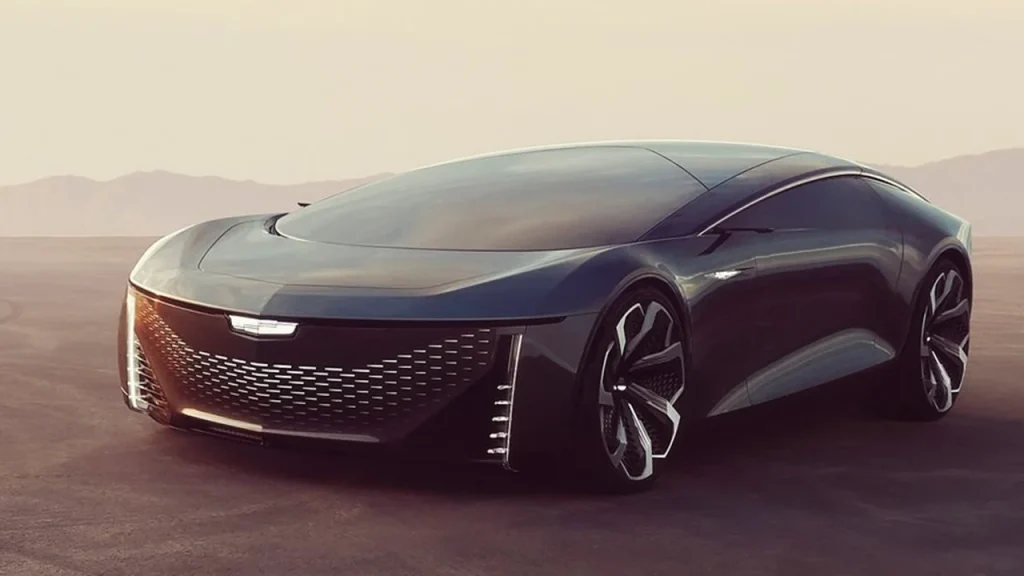
The InnerSpace concept demonstrated how dramatically automotive interiors were evolving beyond traditional dashboards and controls. Vehicles increasingly treat occupants as digital users whose identities and preferences become central to the driving experience itself.
What once seemed like an unrealistic luxury fantasy has steadily become part of real production technology. Biometric driver recognition now exists not as science fiction but as an emerging standard for connected and highly personalized modern vehicles.
- Engine: Dual Electric Motors
- Torque: 650 lb-ft
- Horsepower: 500 HP
- Length/Width: 197 inches / 81 inches
6. Transparent Pillars and Camera Visibility Systems: Volvo Concept 26
One of the biggest visibility problems in automotive design has always involved blind spots created by roof pillars. As safety regulations demanded stronger structures, pillars became thicker and stronger, but visibility suffered.
Volvo attempted to solve this problem through futuristic visibility technology showcased in concepts like the Concept 26, where cameras and digital displays created the illusion of transparent pillars.
The concept sounded extraordinary when first introduced. Cameras mounted outside the vehicle captured surrounding views and projected them onto interior display surfaces aligned with structural pillars.
To the driver, it appeared as though the pillar itself had become transparent, dramatically reducing blind spots during turns, lane changes, and city driving.
Volvo developed the idea with safety as the central goal. The company has long focused on accident prevention, and reducing blind spots represented a natural extension of that philosophy.
Traditional mirrors and warning lights could only provide limited assistance compared to actually restoring visual awareness around the vehicle.
At the time, display technology and camera processing remained major obstacles. Systems needed extremely low latency because even tiny delays between real-world movement and displayed images could disorient drivers. Engineers also needed displays bright enough to remain visible under direct sunlight while preserving accurate depth perception.
As technology improved, manufacturers began implementing partial versions of the idea in production vehicles. Modern blind-spot cameras, surround-view systems, and digital rearview mirrors now provide visibility angles impossible with conventional mirrors alone. Some vehicles even project side-camera views directly into instrument displays during turns.
The broader principle behind transparent pillar concepts also influenced advanced driver-assistance systems. Vehicles increasingly use sensors and cameras to compensate for human visibility limitations, helping drivers detect obstacles hidden from direct sight.
Volvo’s concept highlighted an important shift in automotive design thinking. Instead of accepting physical visibility limitations as unavoidable, manufacturers began treating digital augmentation as a legitimate solution to structural safety compromises.
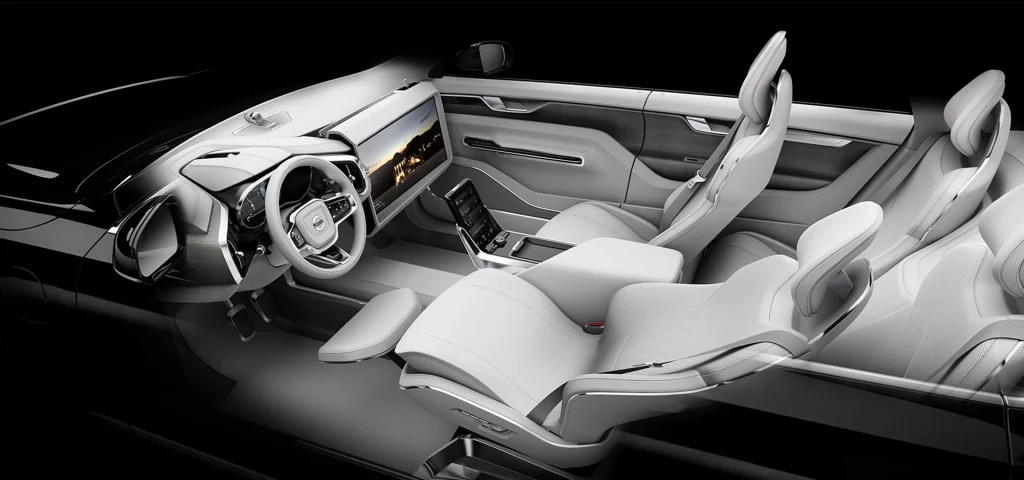
Although fully transparent pillars remain rare in production vehicles, the underlying technology has become a reality. Modern cars increasingly blend cameras, displays, and sensor data to expand driver awareness far beyond what mirrors and windows alone could provide.
The Concept 26 showed that the future of vehicle safety would involve not only stronger structures but also smarter methods of helping drivers see through the limitations created by those very structures.
- Engine: Hybrid Electric Powertrain
- Torque: 472 lb-ft
- Horsepower: 400 HP
- Length/Width: 196 inches / 79 inches
7. Fully Connected Smartphone Integration: Chrysler Portal Concept
When manufacturers first began discussing deep smartphone integration inside vehicles, many people assumed the technology would remain limited to luxury concept cars filled with experimental gadgets.
Chrysler challenged that assumption with the Portal concept, a futuristic family-focused vehicle designed around constant digital connectivity and seamless interaction between personal devices and the car itself.
The Portal concept treated smartphones as essential components of the driving experience rather than optional accessories. Instead of relying mainly on built-in vehicle controls, the concept allowed occupants to connect phones directly to nearly every aspect of cabin operation.
Navigation, entertainment, climate settings, communication, and personalized profiles all revolved around synchronized digital ecosystems.
At the time, this level of integration felt highly futuristic because most production vehicles still relied on relatively basic infotainment systems with limited app support. Drivers frequently struggled with outdated interfaces, slow navigation software, and poor compatibility between vehicles and personal devices.
Chrysler recognized that consumer expectations were changing rapidly. Smartphones had already transformed how people communicated, consumed media, and interacted with technology daily.
Automakers realized future buyers would expect vehicles to function with the same seamless connectivity as modern consumer electronics.
The Portal concept envisioned a cabin where multiple occupants could connect devices simultaneously while sharing media, navigation data, and personalized settings across screens throughout the interior. Voice recognition and cloud-based services also played major roles in the vehicle’s functionality.
Eventually, many of these once-futuristic ideas became normal production features. Apple CarPlay, Android Auto, wireless phone mirroring, app-based vehicle controls, cloud navigation, and smartphone-based digital keys now exist across nearly every automotive segment.
Some vehicles can even receive over-the-air software updates similar to smartphones themselves. The Portal concept helped highlight a major industry transition. Vehicles were no longer isolated mechanical machines operating independently from digital life. Instead, they became connected devices integrated directly into broader personal technology ecosystems.
Modern drivers now expect instant phone pairing, wireless charging, app synchronization, and voice assistant support as standard conveniences rather than futuristic luxuries. That shift happened far faster than many people predicted during the concept-car era.
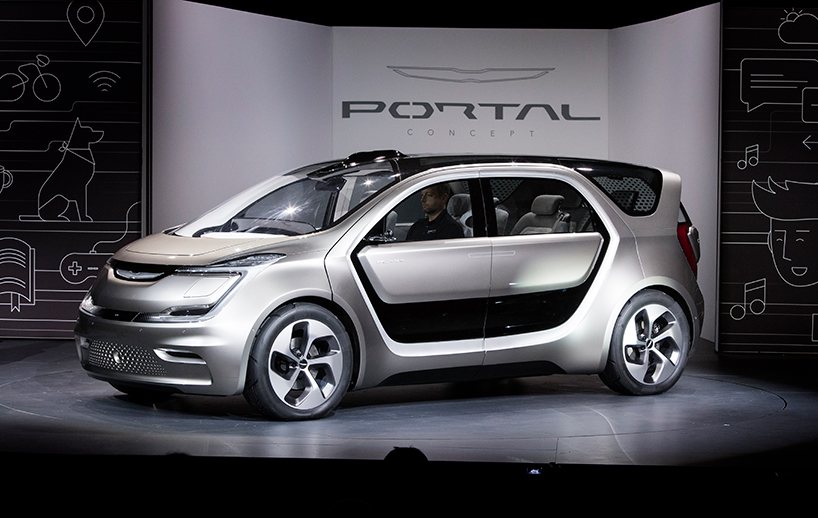
The Chrysler Portal demonstrated how quickly automotive technology would merge with consumer electronics culture. Features once considered futuristic show-car experiments became everyday expectations within only a few years, fundamentally changing how drivers and passengers interact with modern vehicles.
- Engine: Electric Motor
- Torque: 350 lb-ft
- Horsepower: 268 HP
- Length/Width: 191 inches / 79 inches
8. Autonomous Highway Driving: General Motors Firebird III Concept
Long before modern autonomous driving systems existed, General Motors introduced the Firebird III concept during the 1950s as a radical vision of future transportation.
The jet-inspired concept featured one of the earliest serious proposals for automated highway driving, decades before computers and sensors became advanced enough to make the idea realistic.
At the time, the concept looked almost unbelievable. The Firebird III imagined vehicles capable of communicating with electronically controlled highways, allowing drivers to relax while automated systems handled steering and navigation.
Many people considered the idea pure science fiction because automotive technology during the 1950s remained almost entirely mechanical.
General Motors believed future roads would eventually incorporate embedded guidance systems that interacted directly with vehicles. Instead of relying only on human control, cars could maintain lane position, regulate speed, and avoid collisions automatically through electronic assistance.
Although the original infrastructure vision never materialized exactly as planned, the broader concept of autonomous highway driving eventually became a reality through different technological approaches.
Modern vehicles now use cameras, radar, lidar, GPS mapping, and artificial intelligence rather than specially wired roads to achieve partial self-driving capability.
The Firebird III helped establish the idea that reducing driver workload during highway travel represented a major future goal for the automotive industry.
Decades later, systems such as adaptive cruise control, lane-centering assistance, automated braking, and hands-free highway driving now appear in production vehicles from numerous manufacturers.
Technology companies and automakers continue investing billions into increasingly advanced autonomous systems. While fully self-driving vehicles remain under development, partial automation has already transformed long-distance driving significantly compared to earlier decades.
The Firebird III also influenced public imagination. Its futuristic styling and autonomous ambitions helped shape how generations envisioned the future of transportation. Many concept-car ideas disappear quietly, but autonomous driving became one of the few futuristic dreams the industry pursued continuously for more than half a century.
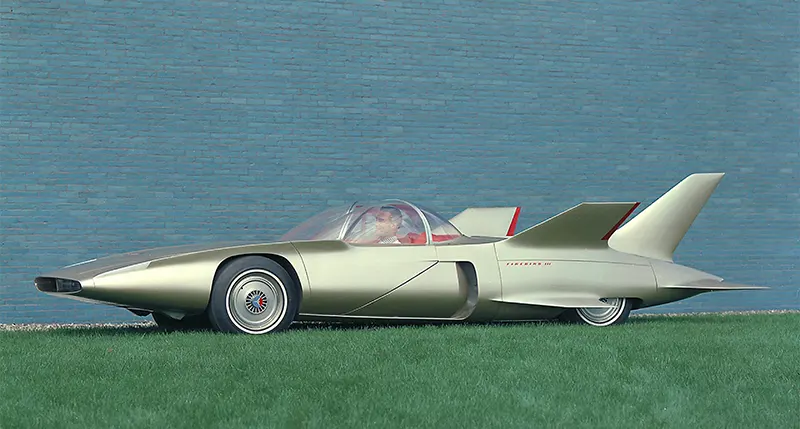
Today, drivers can purchase vehicles capable of steering, braking, accelerating, changing lanes, and monitoring surroundings automatically under certain conditions. That reality would have sounded astonishing during the 1950s when the Firebird III first introduced the possibility.
The concept proved remarkably prophetic. Even though the technology evolved differently from what General Motors originally imagined, the central vision of automated highway transportation eventually became part of real-world automotive engineering.
- Engine: Gas Turbine Engine
- Torque: 370 lb-ft
- Horsepower: 225 HP
- Length/Width: 225 inches / 77 inches
Also Read: 10 Sedans That Drive Better Than They Look
