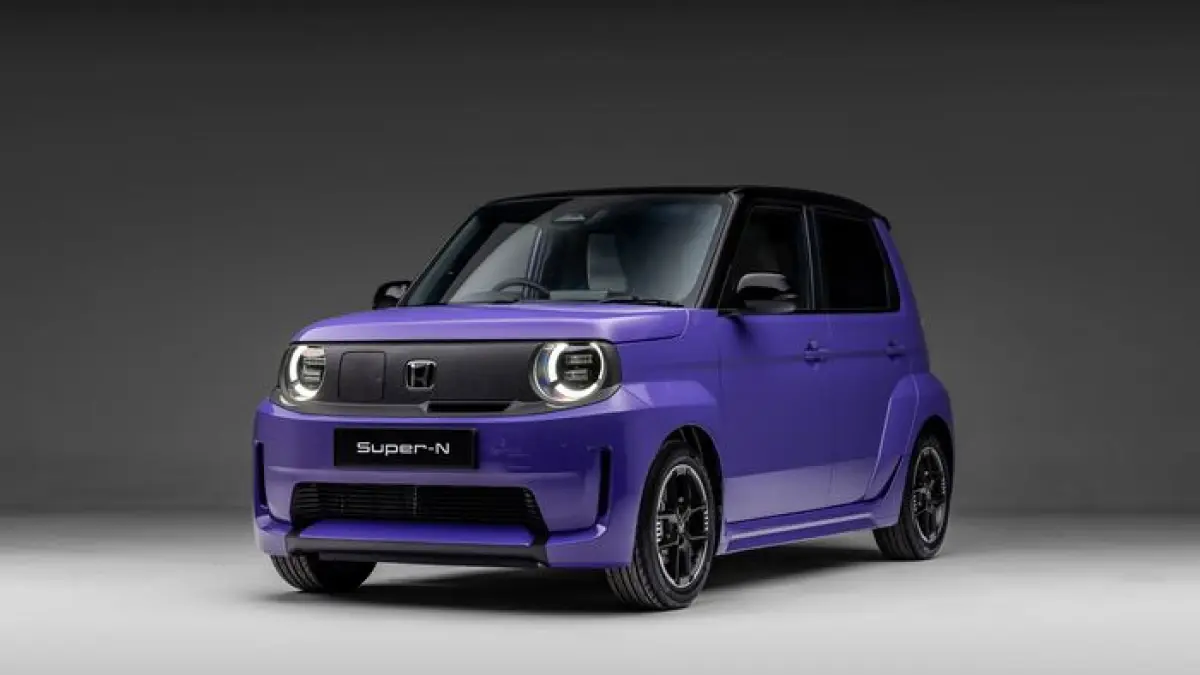
Honda has officially introduced one of its most unusual electric vehicles in recent years, revealing the compact Super One during the week of May 25, 2026. The retro-inspired EV hot hatch combines tiny dimensions, old-school styling cues, and electric power in a package that looks unlike almost anything else currently on the market.
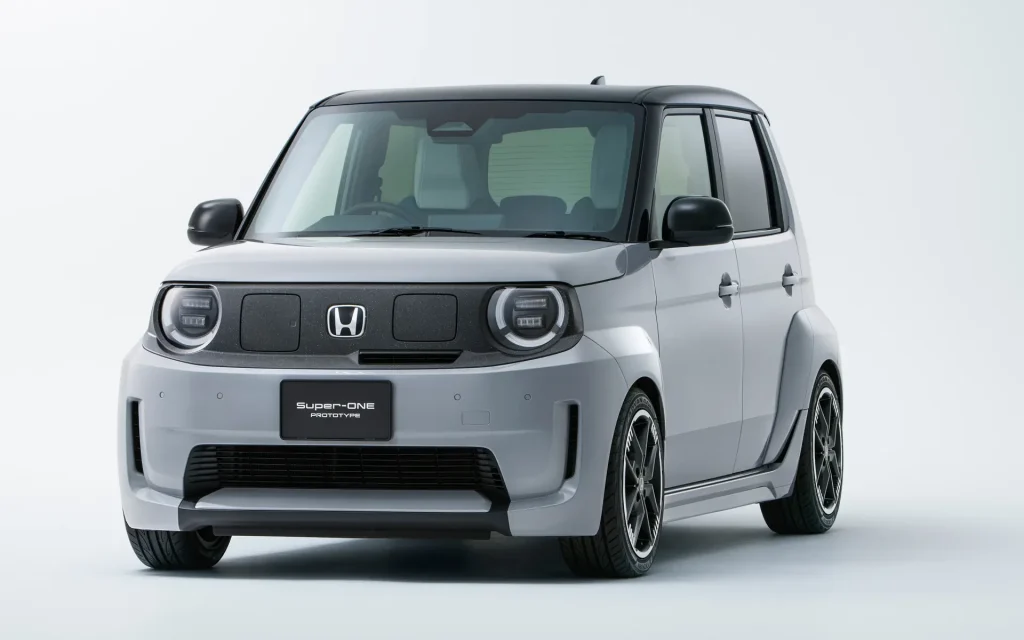
At first glance, the Super One resembles a miniature SUV blended with a classic hatchback from the 1980s. Its boxy shape, upright windshield, circular lighting elements, and squared wheel arches immediately separate it from the sleek aerodynamic styling dominating most modern EVs.
Honda appears to be intentionally leaning into nostalgia while also targeting younger urban buyers who want personality instead of futuristic minimalism.
Despite its playful appearance, the Super One represents a serious piece of Honda’s expanding global EV strategy.
The Japanese automaker confirmed that while the vehicle was initially developed for the domestic Japanese market, export plans are already being prepared for regions including the United Kingdom, Australia, and parts of Asia.
That decision signals Honda’s belief that small, lifestyle-oriented EVs could become increasingly important in crowded cities where large electric crossovers often feel excessive.
The Super One also arrives during a period when many automakers are rethinking how electric cars should look and feel.
After years of aggressively futuristic EV designs, manufacturers are discovering that buyers often respond more emotionally to retro-inspired styling. Honda seems eager to capitalize on that trend.
Also Read: 8 Cars That Are Nearly Impossible to Steal
Small Dimensions, Big Personality
Technically classified as a kei-inspired electric hatchback in Japan, the Super One is intentionally compact. Measuring just under 3.4 meters in length, the vehicle was designed primarily for dense urban environments where parking space is limited, and maneuverability matters more than outright speed.
Its proportions create an appearance somewhere between a tiny crossover and a classic rally hatchback. Short overhangs, chunky cladding, upright glass, and simple geometric lines give the EV a rugged personality despite its small footprint.
Honda designers reportedly drew inspiration from several older models, including compact utility vehicles and city cars from the company’s past. The result feels refreshingly different compared to the smooth curved surfaces common throughout the current EV market.
Even the interior avoids excessive futuristic experimentation. The dashboard uses physical controls alongside digital displays, while large windows and thin pillars improve outward visibility. Cabin materials focus on practicality and durability rather than luxury, reinforcing the Super One’s intended role as an affordable everyday electric vehicle.
Honda executives described the car as an “urban adventure EV” aimed at drivers who want practicality without sacrificing individuality.
That description may sound heavily marketing-driven, but the vehicle’s design genuinely stands apart from many anonymous-looking compact EVs currently entering global markets.
Performance Focuses on City Driving Rather Than Speed
Unlike high-powered electric hot hatches arriving from European performance brands, the Super One takes a far more modest approach mechanically.
The Japanese market version produces just 63 horsepower, aligning with kei car regulations and urban-focused efficiency goals. While that figure sounds tiny by modern standards, Honda says the lightweight platform and instant electric torque still provide lively low-speed responsiveness in city environments.
The company has not positioned the Super One as a straight-line performance machine. Instead, Honda emphasizes agility, compact dimensions, and ease of driving in congested areas.
That strategy reflects changing realities in many global markets. In cities across Japan, Europe, and parts of Asia, consumers increasingly prioritize efficiency, practicality, and affordability over maximum horsepower.
Larger EVs continue growing more expensive, heavier, and more difficult to maneuver in crowded urban settings. Compact electric cars like the Super One aim to provide an alternative.
The vehicle reportedly uses a relatively small battery pack designed to balance range with reduced weight and lower costs. Honda estimates urban range figures sufficient for daily commuting and short regional trips, though official international specifications have not yet been finalized.
Charging times are expected to remain competitive for the segment, particularly because smaller battery capacity allows faster replenishment compared to large luxury EVs.
Interestingly, Honda also hinted that higher-powered export variants could eventually appear for overseas markets where kei regulations do not apply. While no performance version has been confirmed officially, industry analysts believe a stronger dual motor setup could become possible if the model gains popularity internationally.
That possibility has already sparked speculation among enthusiasts who see potential for a tiny, retro-inspired, electric, rally-style hatchback.
Honda Bets on Emotion as EV Competition Intensifies
The Super One enters an increasingly crowded electric vehicle market where many brands are struggling to differentiate themselves. Early EV competition focused heavily on battery range and acceleration numbers, but automakers are now realizing emotional appeal matters just as much.
Honda’s new hatchback appears designed specifically around that idea. Rather than chasing extreme performance or futuristic luxury, the company created something intentionally charming and approachable. The retro styling gives the car immediate character, while its compact size makes it feel more playful than intimidating.
That could prove especially important for younger buyers entering the EV market for the first time. Affordability also remains a key factor.
While Honda has not announced full international pricing yet, reports suggest the company wants the Super One positioned below larger mainstream EV crossovers. Achieving that target could help Honda compete in markets where consumers remain hesitant about high EV prices.
The vehicle also reflects broader shifts happening across the automotive industry. After years of focusing heavily on large electric SUVs, manufacturers are gradually returning attention to smaller city-oriented EVs.
Congestion, fuel costs, environmental regulations, and parking limitations continue pushing urban buyers toward compact transportation solutions.
Retro-inspired design has become another growing trend. Models such as the Fiat 500e, Renault 5 EV, and Volkswagen ID. Buzz has shown that nostalgia can generate strong consumer interest in electric vehicles. Honda’s Super One now joins that movement with its own distinctly Japanese interpretation.
At the same time, the car highlights how differently global automakers are approaching electrification.
Some brands continue emphasizing massive horsepower figures and luxury positioning, while others are attempting to make EV ownership feel simpler and less intimidating. Honda clearly believes there is room for smaller, more affordable electric cars that focus on personality rather than pure specifications.
Whether the Super One succeeds internationally will depend partly on pricing and market timing. Compact EV demand remains uneven across different regions, and many buyers still prefer crossovers with longer range and larger interiors.
Yet Honda’s newest EV may not need huge sales numbers to make an impact. Sometimes a car matters because it changes how people feel about a brand.
The Super One does exactly that. In a market increasingly filled with oversized and visually similar electric vehicles, Honda has introduced something quirky, compact, and unexpectedly fun-looking. That alone makes it stand out immediately.
Also Read: 8 Cars With the Highest Number of Owner Complaints Filed With NHTSA