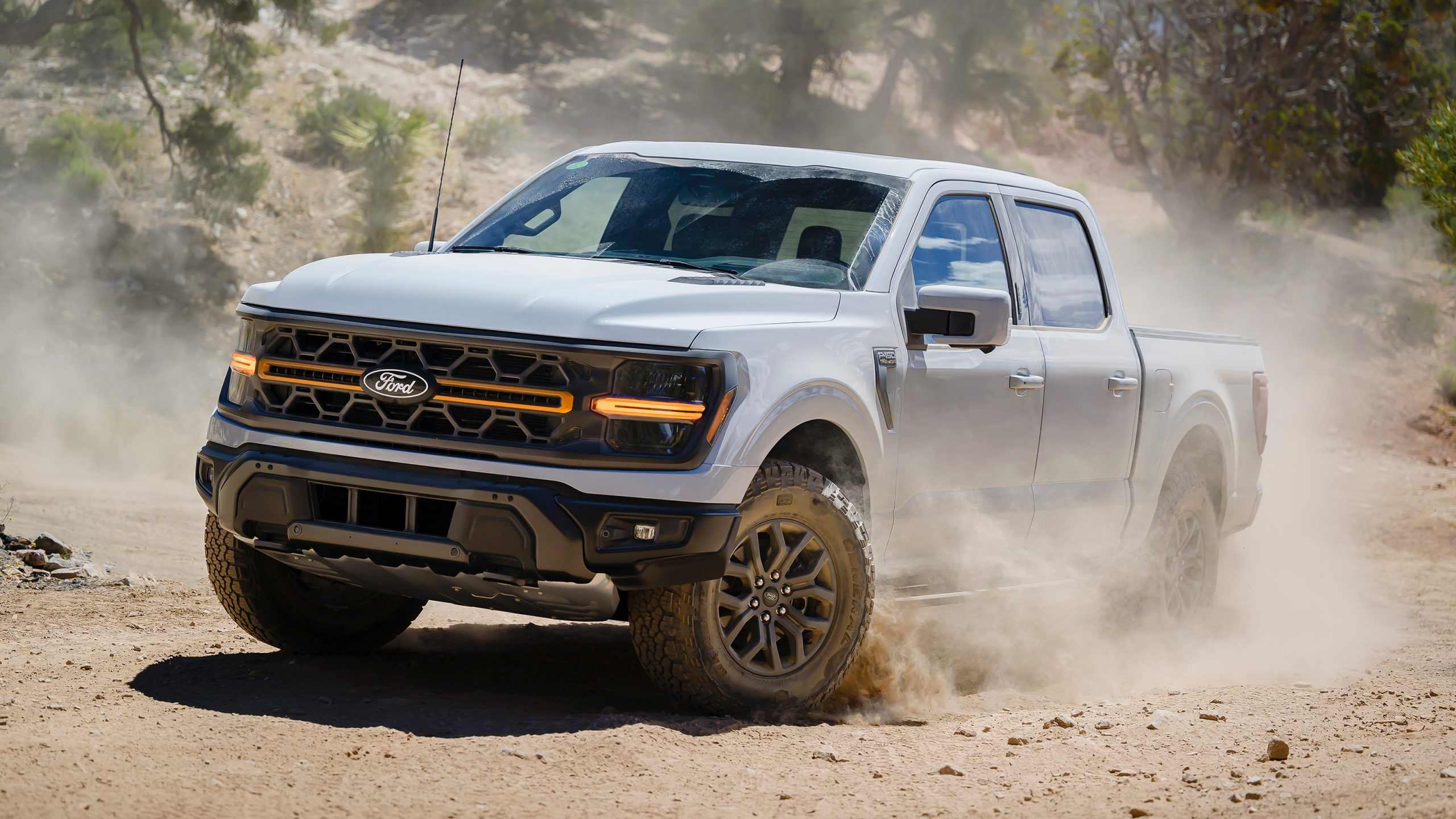
Ford temporarily halted production of the F-150 at its Dearborn Truck Plant during the week of May 25, 2026, after a stamping-related manufacturing issue interrupted operations at one of the company’s most important facilities.
The disruption affects production of America’s best-selling pickup truck and adds another example to the growing list of manufacturing challenges automakers continue facing, even as supply chains stabilize compared to the chaos of recent years.
The Dearborn facility plays a central role in Ford’s truck business. Any slowdown involving F-150 production immediately draws industry attention because the model remains not only Ford’s flagship vehicle but also one of the most profitable and strategically important products in the entire American automotive market.
According to reports surrounding the shutdown, the problem originated within the stamping process responsible for shaping large metal body panels used in vehicle assembly.
Stamping operations are among the earliest and most critical stages of automotive manufacturing. A defect or equipment problem at that point can quickly ripple through the entire production chain.
Ford reportedly paused operations while engineers and plant teams worked to identify the issue, inspect affected components, and restore manufacturing quality standards before assembly resumed.
The company has not publicly detailed the exact nature of the defect, but industry experts note that even relatively small inconsistencies in stamped parts can create major downstream problems involving fitment, safety systems, paint quality, or structural integrity. In modern vehicle manufacturing, precision matters at every stage.
Also Read: 8 Cars That Are Nearly Impossible to Steal
Why the F-150 Matters More Than Almost Any Other Vehicle
Production interruptions involving the F-150 carry far greater significance than typical factory slowdowns because of the truck’s enormous role inside Ford’s business structure.
The F Series lineup has remained America’s top-selling truck family for decades. Beyond sales volume, the vehicles generate massive profits that help fund development across the company’s broader portfolio, including electric vehicles, software investments, and future manufacturing projects.
For Ford, keeping F-150 assembly lines moving efficiently is financially critical. The Dearborn Truck Plant itself represents one of Ford’s most advanced manufacturing sites. The facility combines traditional truck production with newer automation systems and advanced quality monitoring technologies.
Even so, automotive manufacturing remains extraordinarily complex, involving thousands of interconnected processes where a single issue can disrupt output rapidly. Stamping operations illustrate that complexity clearly.
Massive industrial presses shape steel and aluminum sheets into doors, hoods, fenders, roofs, and structural body sections using precisely engineered dies. Those components must meet extremely tight tolerances before moving into the welding and assembly stages.
If dimensions drift even slightly outside acceptable ranges, entire batches of parts may require inspection or replacement.
Because production schedules operate with limited inventory buffers, especially after years of supply chain optimization, manufacturers often cannot continue assembly for long once a major component issue emerges. That appears to be what happened at Dearborn.
While temporary shutdowns are not uncommon in the automotive industry, disruptions involving high-volume products like the F-150 attract greater scrutiny because they can quickly affect dealership inventory levels, supplier schedules, and delivery timelines.
Manufacturing Challenges Continue Across the Industry
The Ford shutdown highlights how vulnerable even modern factories remain to operational disruptions.
Over the past several years, automakers dealt with semiconductor shortages, logistics bottlenecks, labor disputes, supplier instability, and raw material constraints. Many companies invested heavily in strengthening manufacturing resilience after pandemic-era shutdowns exposed weaknesses in global supply systems.
Yet even as those broader crises eased, routine production problems never disappeared. Automotive manufacturing involves millions of individual parts, thousands of workers, and highly synchronized production flows operating under intense time pressure.
Equipment failures, software errors, defective materials, or tooling wear can still interrupt output with little warning.
Stamping problems in particular can become serious quickly because body panels influence multiple later stages of assembly. Misaligned panels may affect aerodynamics, safety performance, sealing, or visual quality. Automakers, therefore, tend to respond aggressively once issues are detected.
Stopping production temporarily often proves less costly than allowing defective vehicles to continue down the line. Ford’s decision to pause F-150 assembly likely reflects that calculation.
The company has spent years working to improve manufacturing quality after facing criticism related to recalls and launch issues across several recent products. Protecting the F-150’s reputation remains especially important because truck buyers often prioritize durability and reliability above nearly every other factor.
A visible quality problem involving the company’s most iconic model could create much larger long-term consequences than a short production interruption.
Truck Market Competition Leaves Little Room for Disruption
The timing of the Dearborn slowdown also matters because competition in the full-size truck market remains extremely intense.
Ford continues battling General Motors, Ram, Toyota, and increasingly electric truck rivals for dominance in one of the industry’s most profitable segments.
Maintaining strong inventory levels is particularly important as interest rates, affordability pressures, and shifting consumer demand create a more unpredictable sales environment. Dealers rely heavily on consistent F-150 shipments, especially during periods of strong seasonal truck demand.
Even short disruptions can complicate allocation schedules and delivery timing. Some buyers waiting for specific configurations or higher demand trims may experience delays if production interruptions extend longer than expected.
At the same time, Ford is balancing multiple transitions within the truck market itself. The company continues expanding hybrid and electric truck offerings while also defending traditional gasoline-powered models that still generate the majority of sales.
Manufacturing operations must now accommodate increasing drivetrain complexity alongside evolving software systems and stricter quality expectations.
That balancing act places additional strain on production systems already operating at an enormous scale.
Industry analysts note that modern factories are more technologically advanced than ever, but they are also more interconnected and dependent on precision timing. Small problems can spread faster because manufacturing networks operate with minimal margin for error.
Ford has not indicated that the stamping issue will create any long-term production impact, and reports suggest the company moved quickly to contain the disruption before broader assembly problems developed.
Still, the incident serves as another reminder that building modern vehicles remains extraordinarily difficult even for experienced manufacturers operating world-class facilities.
Consumers often view vehicle production as fully automated and routine. Reality is far more complicated. Every truck rolling off an assembly line represents thousands of synchronized manufacturing steps where precision must remain consistent hour after hour.
One problem deep inside a stamping operation can stop one of America’s most important production lines almost instantly.
For Ford, restoring full F-150 output quickly will be essential not only for sales numbers but also for preserving confidence in the manufacturing systems supporting its most valuable vehicle.
Also Read: 8 Cars With the Highest Number of Owner Complaints Filed With NHTSA