
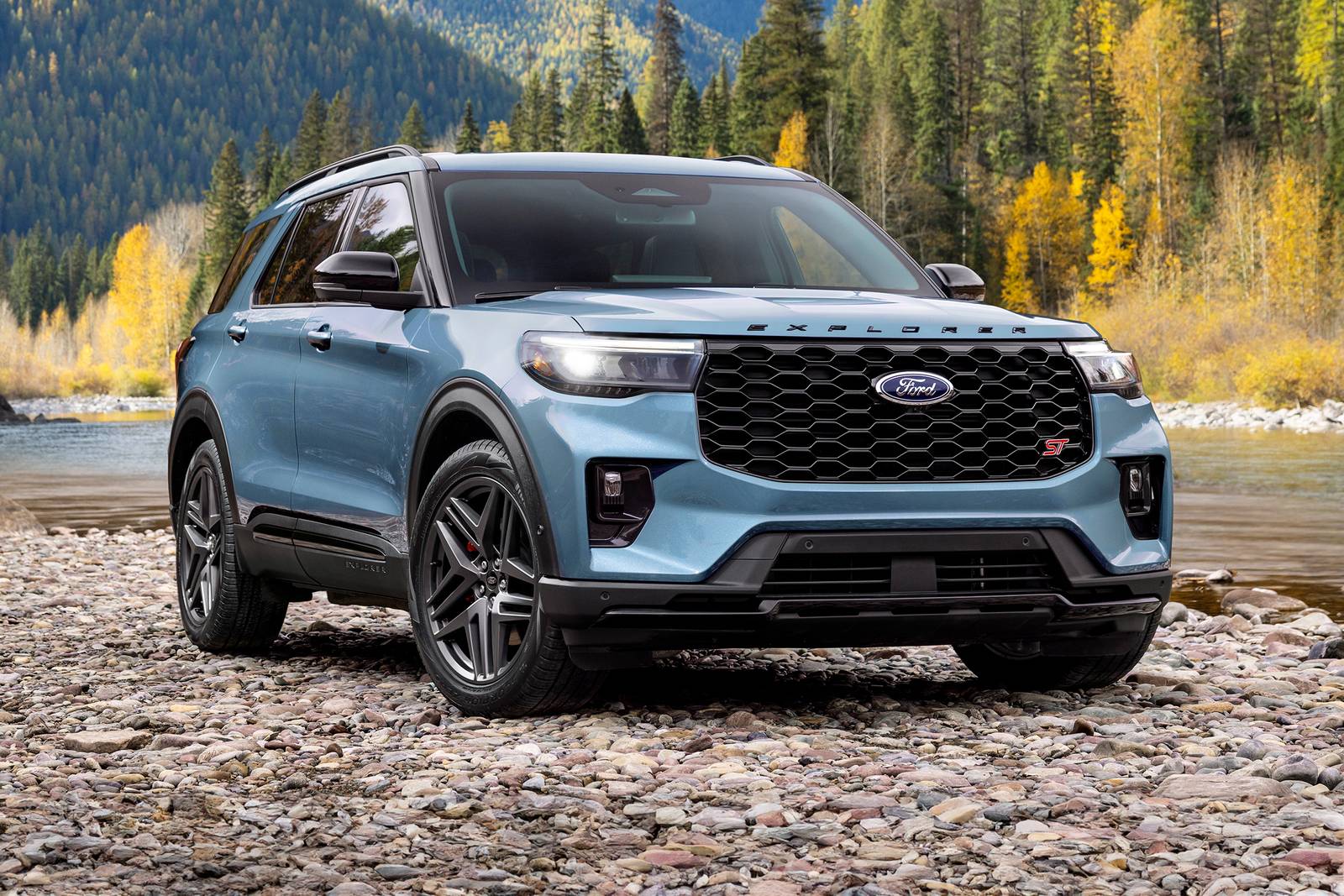
Few vehicles have shaped the American automotive world quite like the Ford Explorer. Since its debut in 1991, this midsize SUV has been a cultural touchstone, a symbol of suburban family life, road-trip ambition, and weekend adventure. It didn’t just enter the market; it practically invented the mainstream SUV segment as we know it today.
Over more than three decades, the Explorer has gone through six distinct generations, each reflecting the priorities, pressures, and possibilities of its era. Some generations earned legendary status for their durability and driving character. Others became cautionary tales of rushed development and reliability disasters.
The Explorer has been a bestseller, a scandal, a reinvention, and ultimately a comeback story all wrapped into one nameplate. It has competed against the Jeep Grand Cherokee, Toyota 4Runner, Chevrolet Traverse, and Kia Telluride and it has outlasted or out-sold many of them at various points.
This ranking takes an honest look at all six generations spanning seven distinct production eras and places them from worst to best based on reliability, driving dynamics, technology, design, and lasting legacy. Whether you’re a die-hard Explorer fan or a first-time buyer researching used options, this is the definitive guide to knowing which Explorer deserves your attention and which one deserves a wide berth.
7. Third Generation (2002–2005)
The third generation of the Ford Explorer is, without any doubt, the most troubled chapter in this SUV’s long history. It holds the highest complaint volumes of any Explorer generation ever produced.
The 2002 model year alone attracted thousands of owner reports centered on catastrophic failures, many appearing before the 100,000-mile mark. Visually, this generation represented a clean break from its truck-like predecessors.
Ford gave it rounder, more European styling and a refined interior aimed at family buyers who wanted something more car-like. The exterior looked fresh and modern for its time, with smooth body lines and an upright stance that projected quiet confidence.
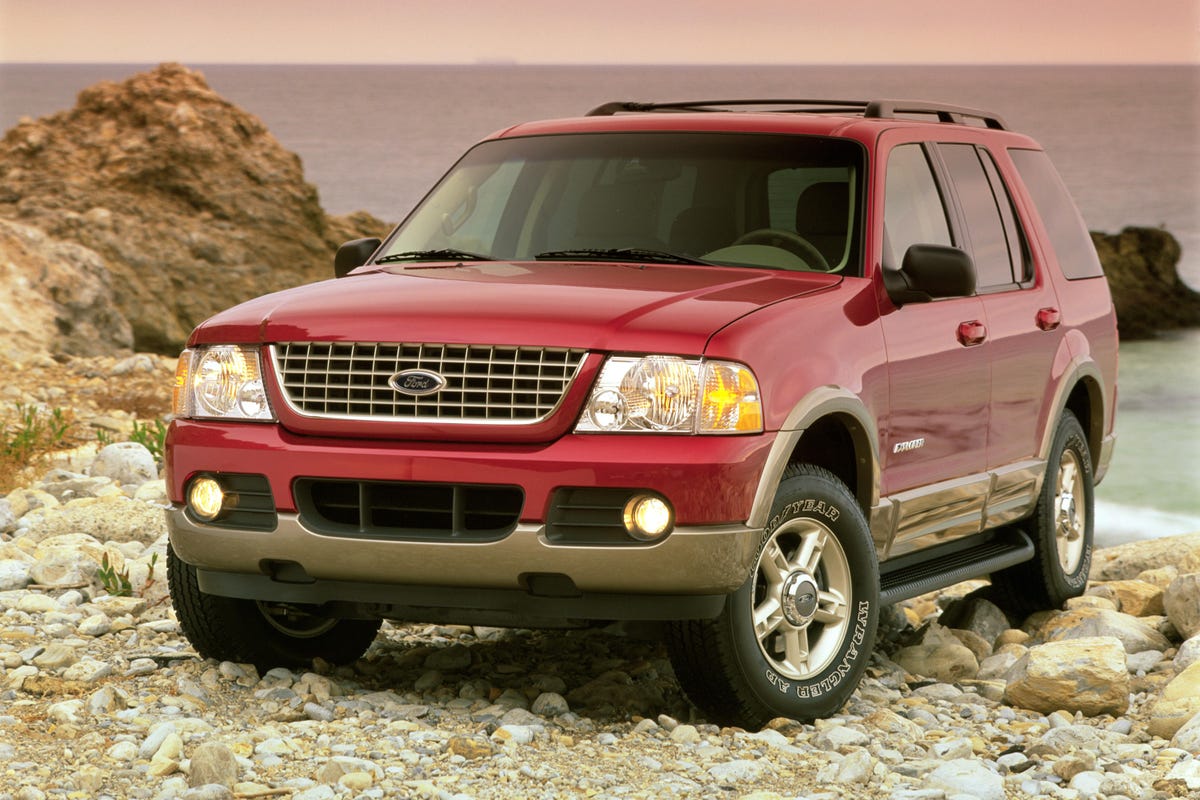
Specifications:
- Engine: 4.0L SOHC V6 / 4.6L V8
- Horsepower: 210 hp (V6) / 239 hp (V8)
- Torque: 254 lb-ft (V6) / 282 lb-ft (V8)
- Length: 4,826 mm (190.0 in)
- Width: 1,876 mm (73.9 in)
However, beneath the surface, the story turned dark very quickly. The new independent rear suspension, intended to improve ride comfort, introduced a cascade of reliability nightmares.
The 5R55W automatic transmission became infamously notorious for internal component wear that led to harsh shifting, delayed gear engagement, and outright failure, often before the odometer hit six figures.
The 4.0L SOHC V6, carried over from the previous generation, was also plagued by timing chain problems. The timing chain and tensioner system on this engine were known to stretch and fail prematurely, causing catastrophic engine damage if ignored.
Repair costs for this issue regularly exceeded the vehicle’s depreciated market value, making many third-gen Explorers financially liable. Body and paint deterioration was another widespread complaint.
Owners across all climate zones reported premature rusting, particularly along the rocker panels and around the rear window. Interior quality also disappointed, with cheap plastics, fragile trim pieces, and early electrical gremlins making ownership feel frustrating. The rear window defroster and power window systems were frequently cited as failure points.
To Ford’s credit, they did attempt to address some issues during the run. The 2005 model year received upgraded AdvanceTrac RSC Roll Stability Control as a standard feature, improving the rollover safety reputation that had dogged the Explorer brand since the infamous Firestone tire scandal of 2000. This was a meaningful improvement, but not enough to rescue the generation’s reputation.
The bottom line is stark. The third-generation Explorer is consistently recommended as the Ford Explorer years to avoid by nearly every independent automotive authority.
The combination of transmission failure, engine issues, body corrosion, and interior problems makes it the clear last-place finisher in this ranking. It should be approached with extreme caution on the used market.
6. Fourth Generation (2006–2010)
The fourth generation of the Ford Explorer is a study in redemption that arrived a bit too late to fully repair the brand’s damaged reputation. It addressed many of the third generation’s weaknesses and gave buyers a significantly more reliable and comfortable vehicle.
However, in the 2006 model year, the opening chapter of this generation continued to carry the baggage of its predecessor with troubling frequency.
Ford made meaningful structural changes here. The 4.6L V8 was upgraded to produce an impressive 292 horsepower and was paired with a smoother 6-speed automatic transmission, a welcome upgrade over the notoriously fragile 5R55W.
The V6 models continued with a 5-speed automatic, which was less refined but considerably more durable than what came before. Ride quality improved noticeably, and the refinement of the cabin took a meaningful step forward.

Specifications:
- Engine: 4.0L SOHC V6 / 4.6L V8
- Horsepower: 210 hp (V6) / 292 hp (V8)
- Torque: 254 lb-ft (V6) / 315 lb-ft (V8)
- Length: 4,808 mm (189.3 in)
- Width: 1,920 mm (75.6 in)
The interior received a significant rethink. Third-row seating became available in a more usable configuration, and the dashboard layout was tidied up with cleaner controls and better material quality than the troubled third generation. Available features included rear DVD entertainment, power-folding third-row seats, and rear climate control features that helped the Explorer feel more premium and family-friendly.
Off-road capability remained strong thanks to the body-on-frame construction shared with the Ford Ranger. The available 4WD system with a low-range transfer case made it a legitimate trail vehicle, particularly in the Eddie Bauer and XLT trims. Towing capacity was class-competitive, and the V8 engine gave the Explorer a muscular, confident driving character on the highway.
The 2006 model year is the weak link in this generation. Engine and transmission problems persisted from the prior generation, and some issues appeared at lower mileage with higher repair costs than even the notorious 2002–2005 models. The 2007 and later models, however, told a much more encouraging story. By 2009 and 2010, the fourth-generation Explorer had matured into one of the more dependable used-market options in the entire Explorer lineage.
Fuel economy remained a significant weakness throughout this generation. The V6 delivering around 14 mpg city was difficult to justify as crossover SUVs from Toyota and Honda were offering 20 mpg-plus with comparable utility. Sales declined sharply as a result, falling from over 400,000 units per year in the late 1990s to just over 52,000 in 2009. The fourth gen earned its place, but time and the market had moved on.
5. First Generation (1991–1994)
The first-generation Ford Explorer didn’t just enter the market, it essentially created the modern mainstream SUV segment. When it arrived for the 1991 model year as a replacement for the two-door Bronco II, it was offered in both three-door and five-door body styles, giving it a practicality advantage over virtually every competitor on the road.
Built on the Ford Ranger’s body-on-frame platform, the Explorer was straightforward, honest, and rugged. The 4.0L OHV V6 produced a modest 155–160 horsepower, which was sufficient for the era.
The available four-wheel drive system with a Borg Warner transfer case made it capable off-road and reassuring in winter conditions. It outsold the Jeep Cherokee and Chevrolet S-10 Blazer almost immediately, and its commercial success reshaped the entire American automotive market.

Specifications:
- Engine: 4.0L OHV V6 (Ford Cologne)
- Horsepower: 155 hp (1991–92) / 160 hp (1993–94)
- Torque: 220 lb-ft (298 Nm)
- Length: 4,471 mm (3-door) / 4,749 mm (5-door)
- Width: 1,784 mm (70.2 in)
The first-gen Explorer became a cultural phenomenon almost overnight. By the mid-1990s, it was the best-selling SUV in the United States, and it helped normalize the idea of a large, family-oriented vehicle that wasn’t a minivan. The interior was spacious for its time, and the driving dynamics, while truck-like, were predictable and confidence-inspiring.
Its weaknesses are well-documented. The A4LD automatic transmission earned a poor reputation for longevity, particularly when owners neglected fluid changes.
Cracked cylinder heads on the 4.0L OHV engine were a recurring complaint, as were rust problems in the undercarriage and door panels, especially in northern states where road salt was used liberally. Power steering leaks and worn ball joints added to the maintenance burden of high-mileage examples.
Electrical gremlins were also a nuisance on many first-gen models. Dashboard rattles developed over time, and interior plastics showed their age quickly.
The first-gen Explorer had no driver’s
side airbag, which puts it at a disadvantage compared to the newer Jeep Grand Cherokee. Despite its flaws, the first generation earns a mid-table ranking because of its sheer historical significance and honest mechanical simplicity.
Many owners reported 200,000-plus miles of service with basic maintenance. It ranks fifth rather than higher because its primitiveness, safety limitations, and advancing age now make it more of a curiosity than a practical daily-driver recommendation.
Also Read: IIHS Dings BMW i4 for Weak Headlights and AEB System
4. Second Generation (1995–2001):
The second generation of the Ford Explorer represented the SUV hitting its commercial stride in the most dramatic fashion possible. Between 1998 and 2001, the Explorer was regularly sold over 400,000 units per year.
In 1999, approximately 430,000 Explorers left showroom floors, making it the single best-selling SUV in America by an enormous margin. Ford gave this generation a full exterior and interior redesign for 1995, with smoother styling and a noticeably more refined cabin.
The most significant addition was the 5.0L V8 engine, which gave buyers genuine performance credentials and strong towing capability. A new 4.0L SOHC V6 gradually replaced the OHV unit, providing more power and refinement, though it came with its own timing chain concerns in later years.
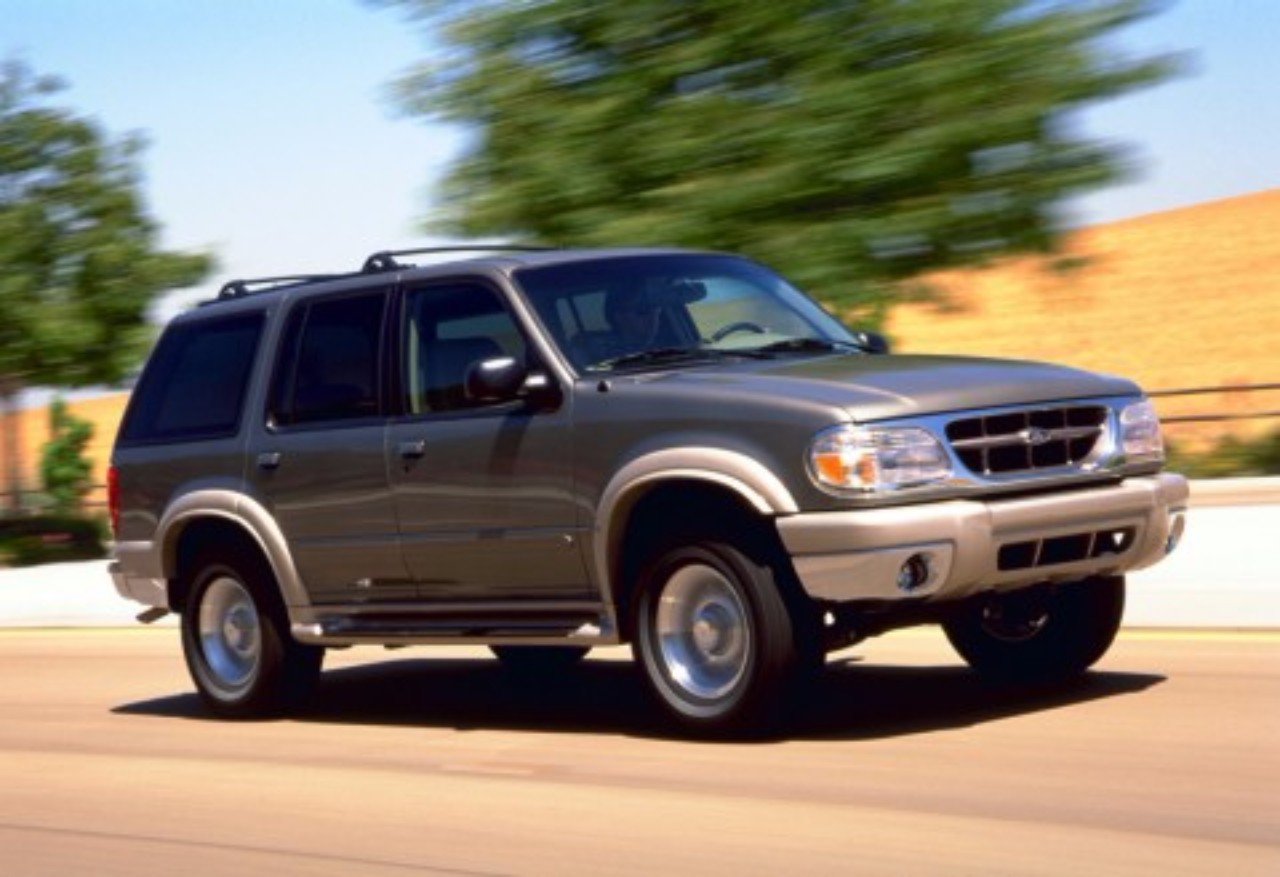
Specifications:
- Engine: 4.0L SOHC V6 / 5.0L V8
- Horsepower: 205 hp (V6) / 215 hp (V8)
- Torque: 250 lb-ft (V6) / 288 lb-ft (V8)
- Length: 4,757 mm (187.3 in)
- Width: 1,830 mm (72.0 in)
The second generation was also a safety landmark for American SUVs. It was among the first American-made SUVs to offer dual front airbags as standard equipment, a meaningful step forward for occupant protection. The available ControlTrac four-wheel-drive system, which could shift automatically between 2WD and 4WD high based on traction conditions, was genuinely innovative for its time.
This generation does carry a black mark, however. The Firestone tire scandal of 2000 hit the second-generation Explorer at the height of its success. A combination of Firestone Wilderness AT tires and the Explorer’s high center of gravity contributed to rollover accidents that drew massive media attention, congressional hearings, and a recall affecting hundreds of thousands of vehicles. The scandal temporarily damaged the Explorer brand’s reputation significantly.
Despite the tire controversy, the underlying vehicle itself was solid for its era. Owners who maintained their Explorers properly, particularly with regular transmission fluid changes, often reported reliable service well beyond 150,000 miles. The V8-powered versions in particular were known for smooth, effortless highway cruising with a quiet, composed ride.
The second generation ranks fourth because of its sales dominance, genuine capability, and improved refinement over its predecessor. The Firestone scandal and the timing chain issues of the SOHC V6 prevent it from ranking higher, but this remains one of the most iconic and culturally significant Explorers ever built.
3. Fifth Generation (2011–2019)
The fifth generation of the Ford Explorer was the most dramatic transformation in the model’s history up to that point. For 2011, Ford abandoned the body-on-frame truck architecture that had defined the Explorer for two decades and replaced it with a unibody platform derived from the Ford Taurus.
It was a controversial decision that paid off commercially, even if it alienated some hardcore off-road enthusiasts who preferred the old formula. The move to unibody construction transformed the driving experience entirely. Ride quality improved enormously, and the Explorer became quieter, more composed on highways, and genuinely pleasant to drive on a daily basis.
The three-row, seven-passenger interior offered a family-hauler versatility that previous generations could never match. The second row was genuinely spacious, and even the third row was more usable than anything Ford had offered before in this nameplate.
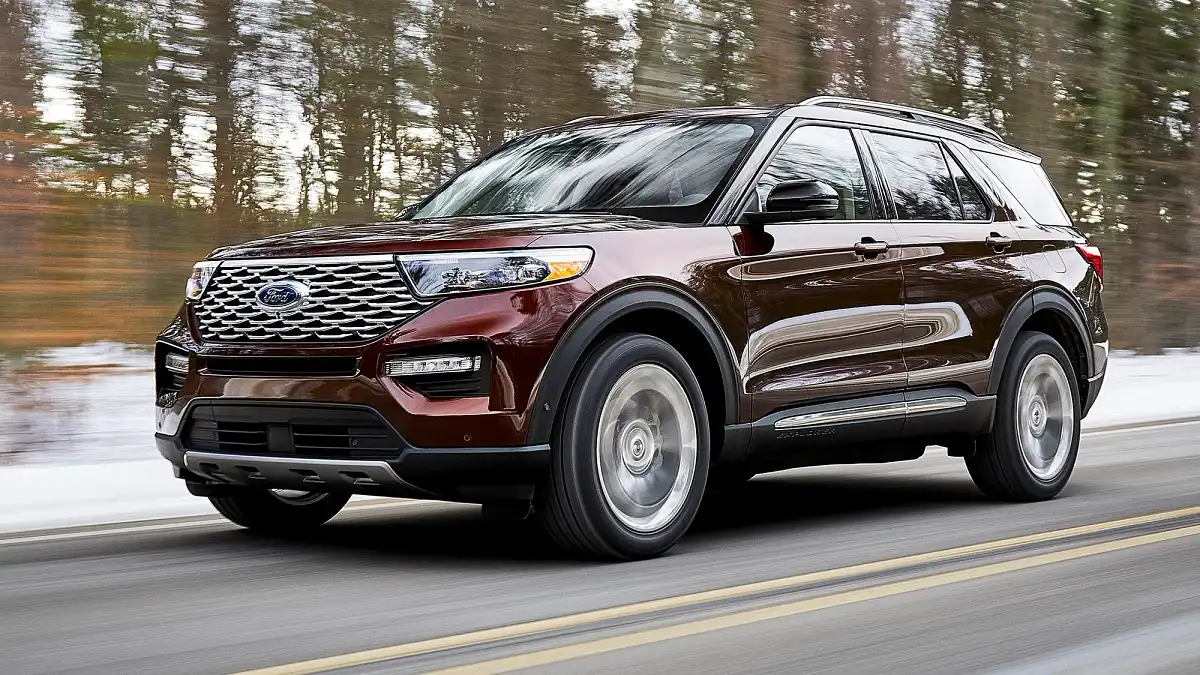
Specifications
- Engine: 2.0L EcoBoost Turbocharged Inline-4 | 3.5L Ti-VCT V6 | 3.5L EcoBoost Twin-Turbo V6 (Sport/Platinum)
- Horsepower: 240 hp (2.0L EcoBoost) | 290 hp (3.5L V6) | 365 hp (3.5L EcoBoost V6)
- Torque: 270 lb-ft (2.0L EcoBoost) | 255 lb-ft (3.5L V6) | 350 lb-ft (3.5L EcoBoost V6)
- Length: 197.1 in (5,006 mm)
- Width: 78.9 in (2,004 mm)
The engine lineup showcased Ford’s commitment to the EcoBoost turbocharged strategy. The 2.0L four-cylinder EcoBoost delivered reasonable fuel economy along with adequate power for most daily tasks.
The 3.5L EcoBoost V6 in the Sport and Platinum trims was genuinely impressive, producing 365 horsepower and enabling 0–60 mph times that surprised many buyers. This was the first Explorer that felt genuinely fast in a modern sense.
Technology took a major leap forward with this generation. The Ford SYNC infotainment system debuted, giving the Explorer voice-activated controls, Bluetooth connectivity, and an eight-inch touchscreen in higher trims.
MyFord Touch, introduced in 2013, added further capability, though it also attracted criticism for its complexity and occasional unresponsiveness in cold weather or direct sunlight.
The fifth generation’s weak points are worth acknowledging honestly. Early models, particularly 2011 through 2013, suffered cooling system leaks, power steering complaints, and some transmission hesitation.
The 3.5L EcoBoost’s internal water pump was a known failure point that could allow coolant to contaminate the oil. Exhaust fume intrusion into the cabin was another significant issue that resulted in a formal recall. Later models from 2016 onward improved substantially in reliability, with the 2017 and 2018 model years consistently recommended as the sweet spot for this entire generation.
2. Sixth Generation (2020–Present)
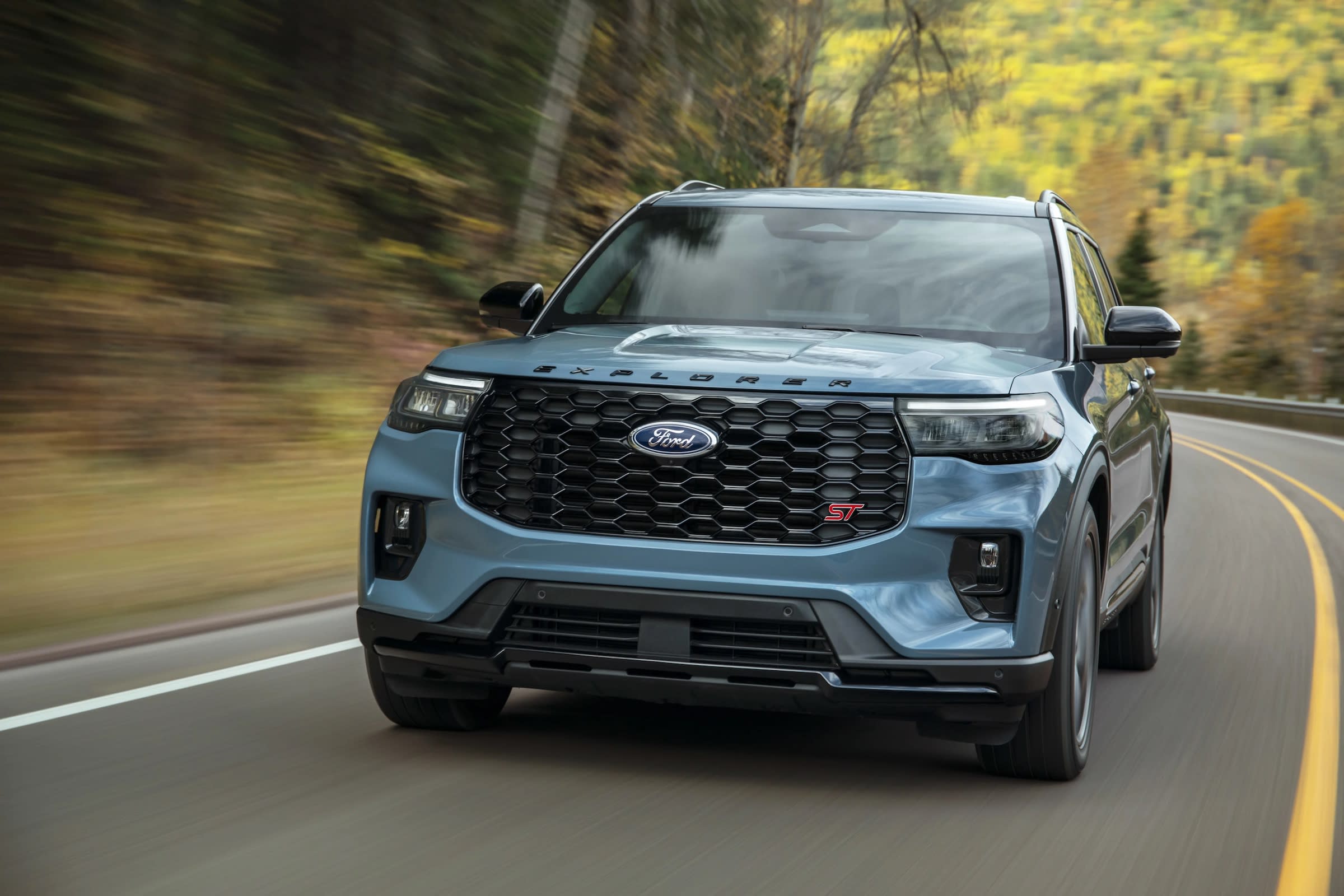
The sixth-generation Ford Explorer represented a fundamental rethinking of what the nameplate should stand for in the modern era. Arriving for 2020 on the new CD6 platform shared with the Lincoln Aviator, Ford made a bold decision to abandon the front-wheel-drive-biased unibody layout of its predecessor and return to a rear-wheel-drive architecture. It was the right call, and the vehicle felt transformed as a result.
The RWD-based platform transformed the Explorer’s driving dynamics completely. Handling became sharper and more predictable. Weight distribution improved markedly.
The Explorer felt planted and composed at highway speeds in a way that earlier unibody versions never quite achieved. The longer 119.1-inch wheelbase also translated directly into a more spacious interior, with noticeably more legroom in the second and third rows compared to the fifth generation.
Specifications:
- Engine: 2.3L EcoBoost I4 / 3.0L EcoBoost V6
- Horsepower: 300 hp (2.3L) / 365 hp (3.0L) / 400 hp (ST)
- Torque: 310 lb-ft (2.3L) / 380 lb-ft (3.0L) / 415 lb-ft (ST)
- Length: 5,050 mm (198.8 in)
- Width: 2,004 mm (78.9 in)
The powertrain lineup was entirely updated and more powerful across the board. The 2.3L EcoBoost four-cylinder, producing 300 horsepower, became the standard engine a significant 60 hp jump from the fifth generation’s base 2.0L unit.
The 3.0L twin-turbo EcoBoost V6 in the Explorer ST produced 400 horsepower and delivered genuine performance-SUV credentials with a 0–60 mph time of approximately 5.5 seconds. Ford also offered a 3.3L V6 hybrid, the first electrified Explorer ever produced.
The 10-speed automatic transmission was a revelation compared to the aging 6-speed unit of the previous generation. Gear changes were nearly imperceptible during normal driving, and the wide ratio spread helped both performance and fuel economy in equal measure.
The ST trim with its sport-tuned suspension, aggressive 21-inch wheels, and visual upgrades made a genuine case for Explorer ownership among driving enthusiasts who had previously dismissed the nameplate.
The 2025 refresh brought a full-digital instrument cluster, a 13.2-inch infotainment screen, and the Ford Digital Experience that integrates Google accounts directly into the vehicle, synchronizing music, apps, and navigation preferences automatically. New LED headlights and a revised front fascia kept the design fresh and modern.
Driver assistance technology, including adaptive cruise control, blind-spot monitoring, rear cross-traffic alert, and a driver attention monitor, came standard across all trim levels.
The sixth generation is not flawless. The third-row seating, while improved, remains tight for adult passengers on longer journeys. Upper trims can reach sticker prices that challenge value-conscious buyers significantly. Early 2020 models had some quality control hiccups during the transition to the new platform. But the arc of this generation is one of genuine improvement, returning ambition, and class-competitive excellence.
1. Late Second Generation (1997–2001):
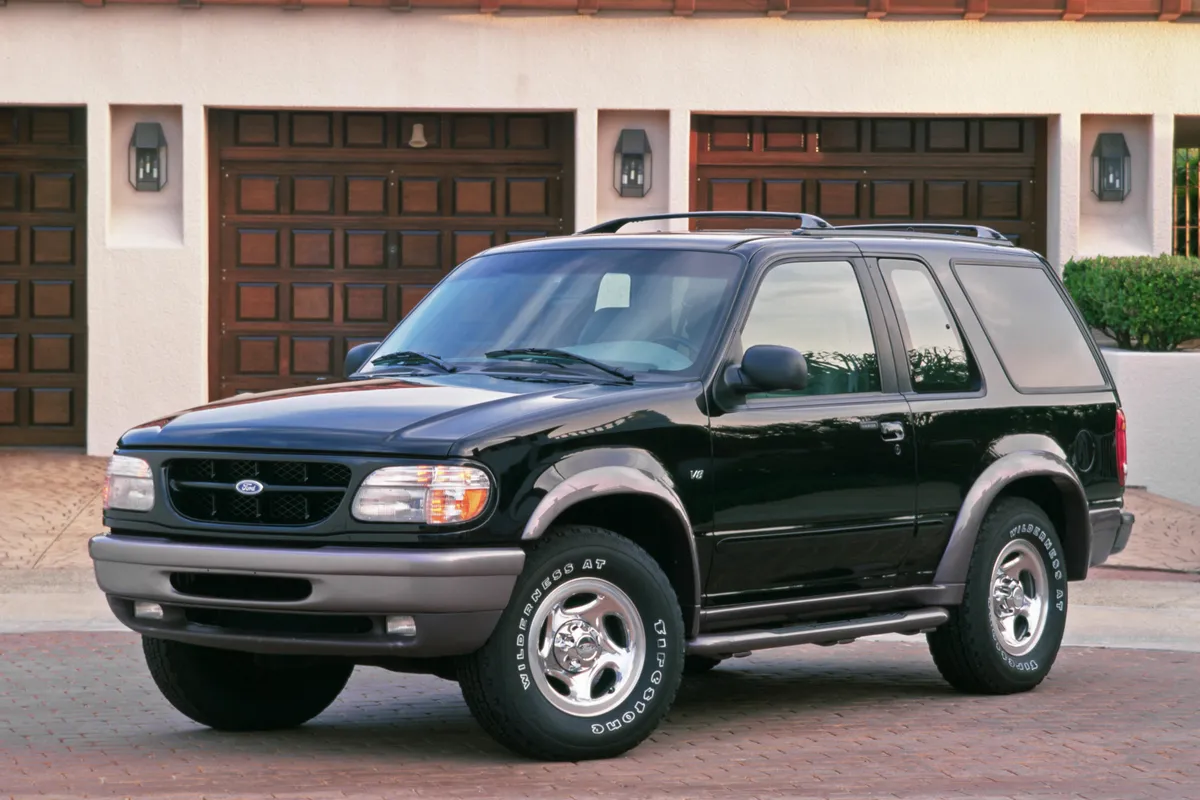
The late second-generation Explorer, particularly the 1997, 1998, and 1999 model years, represents the single strongest combination of everything that makes the Ford Explorer great.
It was the Explorer at the absolute height of its commercial power, engineering maturity, and cultural influence. Around 425,000 units were sold in 1998 alone, and no other SUV on the market came remotely close.
By 1997, Ford had had nearly two full years to work out the initial teething issues of the 1995 redesign. The SOHC V6 had been refined and became more dependable with proper maintenance.
The automatic transmission had been improved, and the four-wheel-drive systems were more intuitive and polished. This was a generation that had genuinely found its groove, and buyers rewarded Ford with historic sales numbers year after year.
The 5.0L V8 option gave buyers a genuinely powerful, smooth-pulling engine that made the Explorer feel effortless at highway speeds. It was capable of towing up to 6,500 pounds with confidence and composure.
The ride quality was compliant for a body-on-frame vehicle, and the interior while not luxury-level, offered space, functionality, and a sense of solidity that buyers found deeply reassuring year after year.
Specifications:
- Engine: 4.0L SOHC V6 / 5.0L V8
- Horsepower: 205 hp (V6) / 215 hp (V8)
- Torque: 250 lb-ft V6 (339 Nm) / 288 lb-ft V8 (390 Nm)
- Length: 4,757 mm (187.3 in)
- Width: 1,830 mm (72.0 in)
Dual front airbags, available four-wheel disc brakes, and optional traction control were meaningful safety advances for the era. The available Eddie Bauer and Limited trim levels offered genuine leather, wood-grain interior accents, and convenience features that competed seriously with much more expensive luxury SUVs. These premium trims sold extremely well because they delivered perceived value that was genuinely hard to match at the price point.
The Explorer’s off-road capability in this era was authentic and practical. The available ControlTrac four-wheel-drive system, which could switch automatically between 2WD and 4WD high based on traction conditions, was genuinely innovative and made the Explorer feel far more sophisticated than its truck roots suggested. It was capable on moderate trails, supremely confident in snow and ice, and composed on demanding highway curves.
The 5.0L V8 models from 1997 to 2001 are among the most well-regarded used Explorers on the market today, and rightly so. They combined honest mechanical simplicity with genuine capability, meaningful safety features, and excellent long-term durability.
They did not have the refinement of the sixth generation or the technology of the fifth, but they were pure, honest, and enormously effective at everything a great SUV should do. That is precisely why they claim the top position in this ranking.
Also Read: 10 Best Vehicles for Rural Gravel Roads
