
Cadillac has long been the crown jewel of American luxury automotive engineering. For over a century, this iconic brand has symbolized prestige, power, and the pinnacle of domestic craftsmanship. Yet in today’s fiercely competitive luxury market, not every Cadillac badge delivers equal value for your hard-earned dollar.
The modern Cadillac lineup spans a diverse range of vehicles from sleek sedans and commanding SUVs to electrifying performance machines. Some models genuinely punch above their price point, offering European-rivaling refinement, cutting-edge technology, and exhilarating performance at a comparatively reasonable cost. Others, however, lean heavily on the Cadillac name alone, asking premium prices without delivering a proportionally premium experience.
This deep-dive analysis cuts through the marketing gloss to give you a clear, honest assessment. We examine real-world performance figures, cabin quality, technology integration, ride dynamics, and long-term ownership value. Whether you are a first-time luxury buyer or a seasoned Cadillac enthusiast, understanding where the brand excels and where it falls short is essential before signing on the dotted line.
The five models we identify as worth the money represent genuine engineering achievement and smart value positioning. The five we flag as overpriced reveal where Cadillac is coasting on reputation rather than substance. Let the facts guide your decision.
5 Cadillac Models Worth the Money
These exceptionally refined vehicles feature genuine luxury appointments and compelling technology perfectly justifying premium pricing, delivering sophisticated American luxury through powerful engines, beautifully crafted interiors, and magnetic ride control that rivals European alternatives costing significantly more while offering stronger dealer networks and surprisingly competitive reliability throughout ownership.
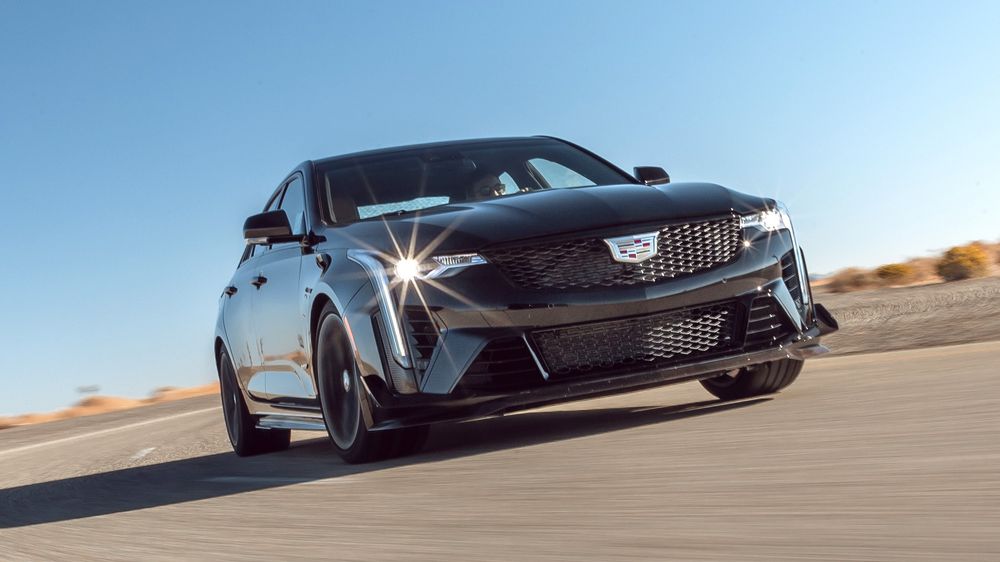
1. Cadillac CT5-V Blackwing
The CT5-V Blackwing is arguably the greatest performance sedan ever built on American soil. It is a car that silences critics who once dismissed Cadillac as merely a comfort brand.
This machine was engineered with one singular, uncompromising purpose to dominate both the racetrack and the open highway without apology. The Blackwing carries genuine supercar credentials wrapped inside a luxury four-door body.
It competes directly with the BMW M5, Mercedes-AMG E63, and Alfa Romeo Giulia Quadrifoglio and frequently beats them on driver engagement. For its asking price, the CT5-V Blackwing represents one of the most extraordinary performance bargains in the entire luxury segment today.
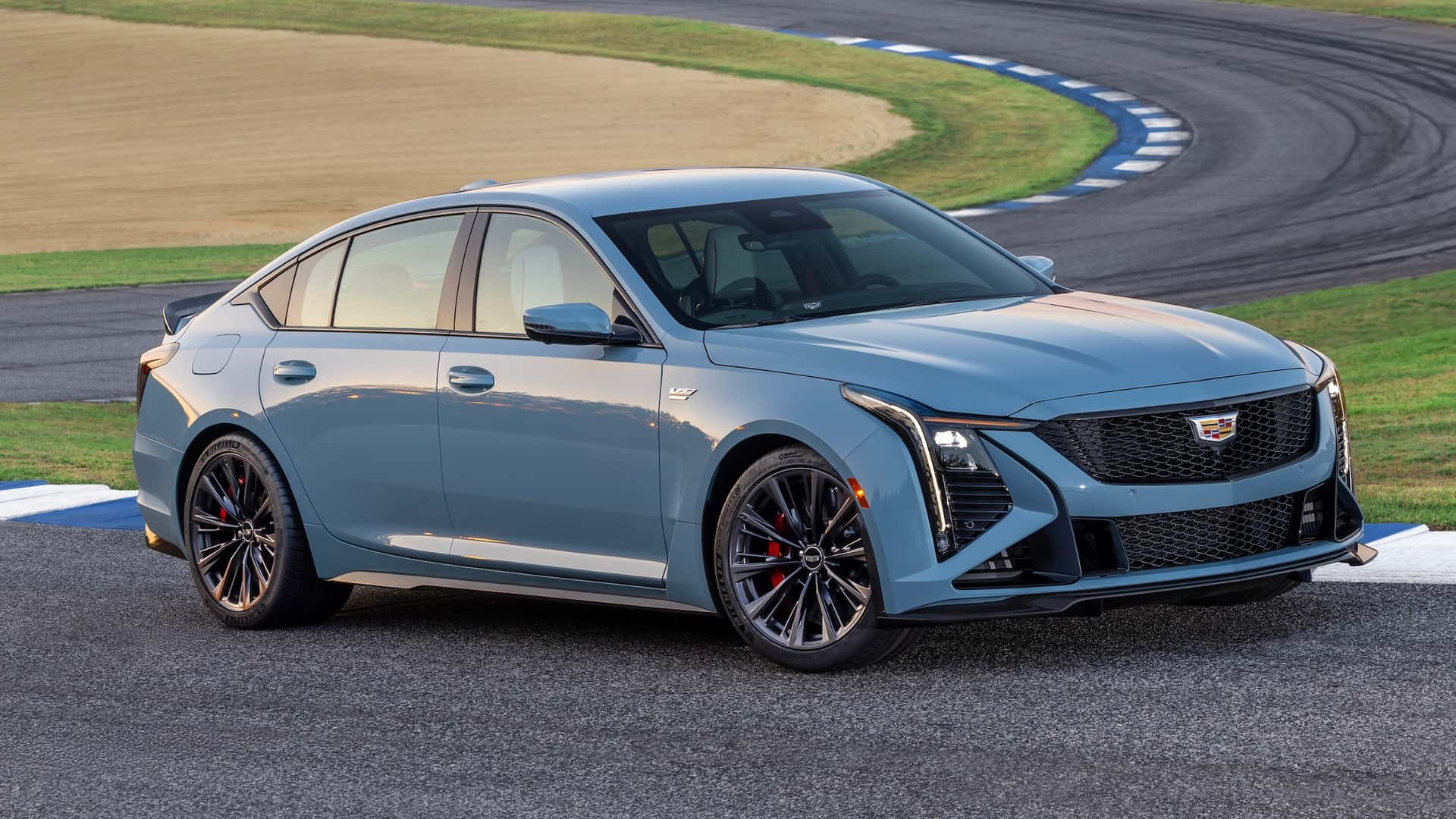
The heart of the Blackwing is a hand-built, supercharged 6.2-liter V8 engine. Every single engine is assembled by a dedicated technician who signs their name to the finished unit, a tradition borrowed from Ferrari.
Specifications:
- Engine: Supercharged 6.2-liter V8 (LT4)
- Horsepower: 668 hp @ 6,400 rpm
- Torque: 893 Nm (659 lb-ft) @ 3,600 rpm
- Length: 4,924 mm
- Width: 1,882 mm
The CT5-V Blackwing comes standard with magnetic ride control, a limited-slip differential, and Brembo carbon-ceramic brake options. It offers performance hardware that costs twice as much on European competitors. The fact that Cadillac offers a six-speed manual transmission in this class is extraordinary and almost unheard of.
The interior blends Recaro sport seats with genuine leather, carbon fiber trim, and a fully configurable Performance Data Recorder. Track-ready ABS, launch control, and multiple drive modes make it a legitimate circuit weapon. No other American sedan at this price point delivers this level of holistic performance engineering.
Compared to the BMW M5 Competition at a significantly higher price, the Blackwing delivers 95% of the experience at roughly 75% of the cost. That value gap is simply impossible to ignore for any serious performance buyer.
2. Cadillac Lyriq
The Cadillac Lyriq represents the brand’s bold, confident leap into the electric vehicle era. It is not a tentative first step it is a full-throated declaration that Cadillac intends to lead American luxury into an electrified future.
The Lyriq successfully blends stunning aesthetics, thoughtful technology, and competitive range into one cohesive, desirable package. In a segment crowded with Tesla Model X, BMW iX, and Genesis GV80 Electrified competitors, the Lyriq holds its own with remarkable confidence.
Its pricing positions it as attainable luxury, and what you receive in return genuinely justifies every rupee and dollar spent on this forward-thinking machine.
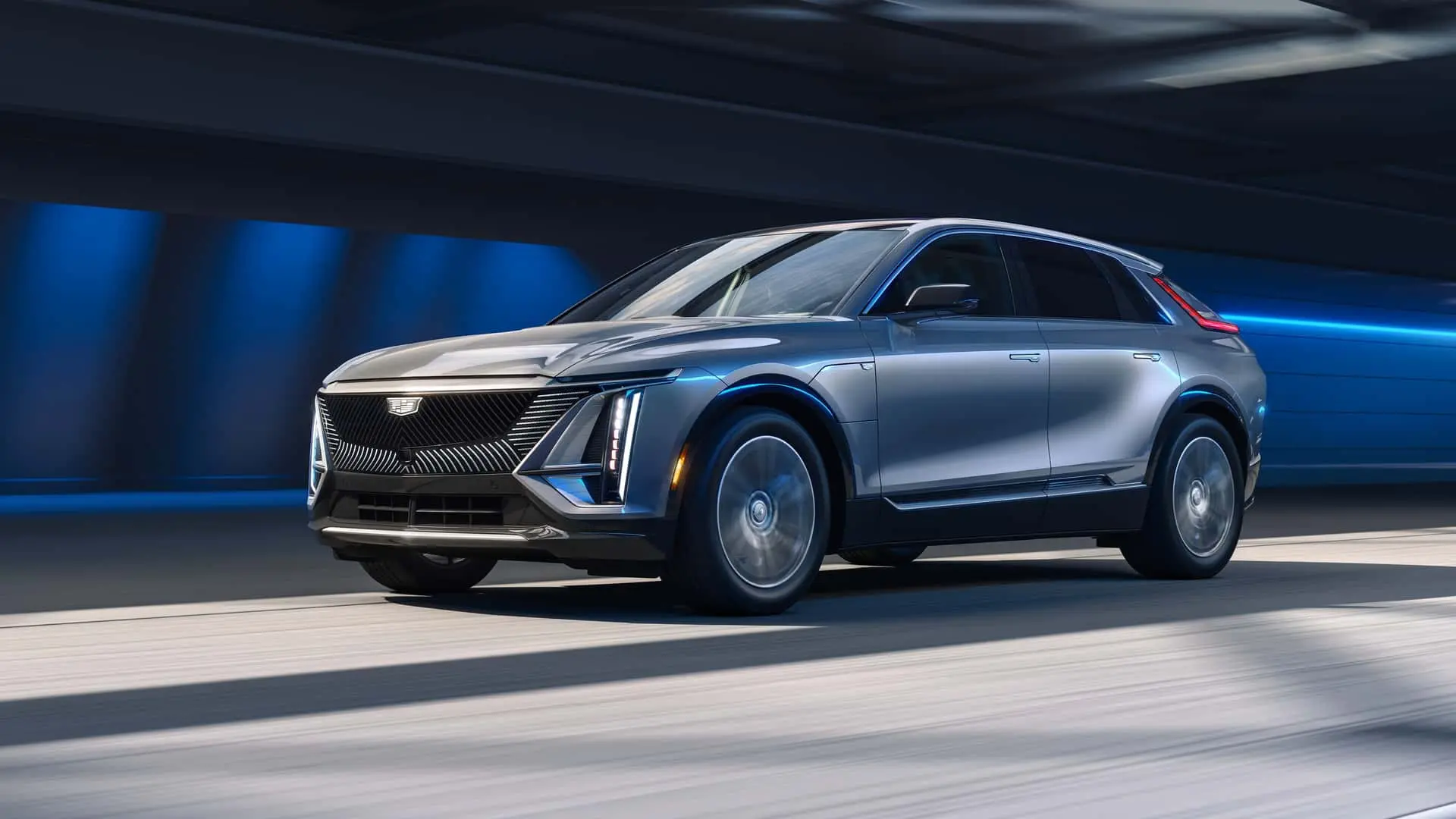
The Lyriq rides on GM’s Ultium platform, a next-generation electric architecture designed from scratch for maximum efficiency. The AWD variant deploys dual motors delivering immediate, seamless torque to all four wheels.
Specifications:
- Engine: Dual electric motors (All-Wheel Drive)
- Horsepower: 500 hp
- Torque: 610 Nm (450 lb-ft)
- Length: 4,996 mm
- Width: 1,977 mm
The Lyriq’s interior is genuinely breathtaking by any standard. A 33-inch diagonal LED display stretches across the entire dashboard, combining the driver’s cluster and infotainment into one seamless, curved canvas. The system is sharp, responsive, and far more intuitive than many European rivals manage at this price point.
Noise insulation is exceptional the cabin achieves near-silence at highway speeds. Cadillac fitted acoustic laminated glass throughout and tuned the suspension specifically to absorb road noise as a priority. The result is a serene environment that matches or exceeds the Mercedes EQE in acoustic refinement.
The Lyriq also benefits from Super Cruise, Cadillac’s hands-free highway driving system, which independent testing consistently rates as the most capable driver assistance system available today. At its price point, the Lyriq delivers EV technology that punches firmly into the tier above it.
3. Cadillac Escalade
The Cadillac Escalade needs no elaborate introduction it is simply the benchmark by which all full-size luxury SUVs are measured. For decades, the Escalade has defined what American luxury transportation looks like at its most commanding. It dominates driveways, red carpets, and corporate motorcades with equal authority.
What makes the current generation Escalade genuinely worth its considerable price is the quantum leap in technology, ride quality, and interior craftsmanship it delivers.
The fifth-generation model addressed every criticism of its predecessor and emerged as a genuinely world-class luxury vehicle that competes directly with the Range Rover and Mercedes GLS.
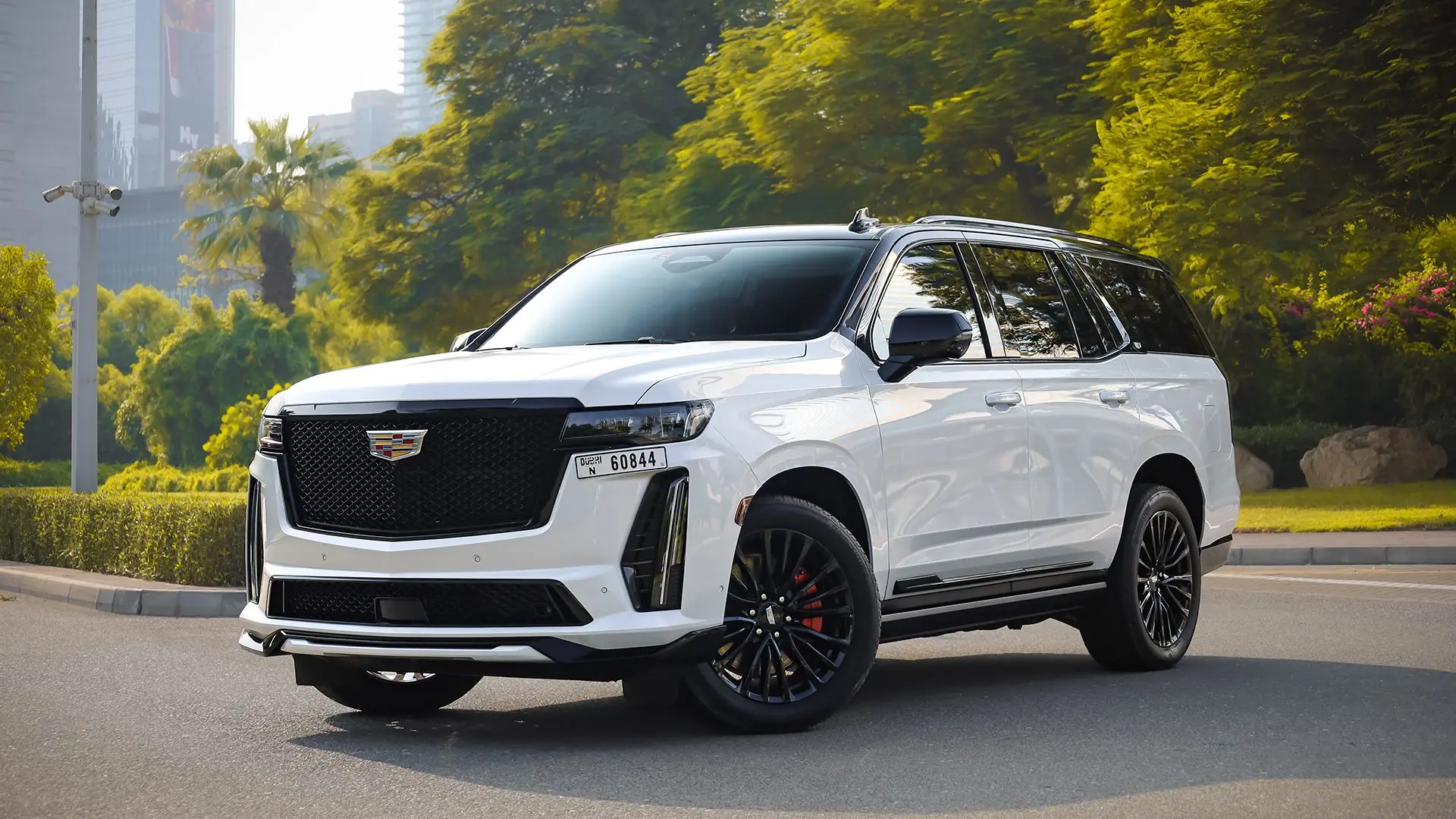
The standard Escalade carries a potent 6.2-liter V8 delivering effortless, smooth power. A diesel option and a Super Cruise-equipped variant further expand the lineup’s breadth. Air suspension is standard, delivering a cloud-like ride across all road conditions.
Specifications:
- Engine: 6.2-liter V8 (L87) with Dynamic Fuel Management
- Horsepower: 420 hp @ 5,600 rpm
- Torque: 623 Nm (460 lb-ft) @ 4,100 rpm
- Length: 5,383 mm (Standard) / 5,765 mm (ESV)
- Width: 2,059 mm
The fifth-generation Escalade introduced an interior that shocked even longtime critics with its ambition. A sweeping 38-inch curved OLED display, the largest in any production SUV, dominates the dashboard with crystal clarity. The screen technology was sourced from LG’s finest display division and delivers contrast ratios that embarrass most luxury competitors.
Third-row access and space are genuinely generous, addressing a long-standing complaint about the segment. Magnetic Ride Control 4.0 adapts the suspension 1,000 times per second, delivering a ride quality that seems impossible for a vehicle of this size.
Against the Range Rover Sport and Mercedes GLS at comparable price points, the Escalade offers superior interior volume, more advanced display technology, and unmatched road presence.
4. Cadillac CT4-V Blackwing
The CT4-V Blackwing occupies a unique and brilliant position in the performance car world. It is a compact, lightweight performance sedan that delivers an almost perfectly balanced driving experience.
In a world where performance cars have grown increasingly heavy and electronically insulated, the CT4-V Blackwing feels refreshingly pure and connected.
This is a car built for drivers who prioritize the act of driving above all else. It challenges the BMW M3 and Mercedes-AMG C63 directly and consistently wins on driver engagement and value proposition. The CT4-V Blackwing is a future classic in the making.
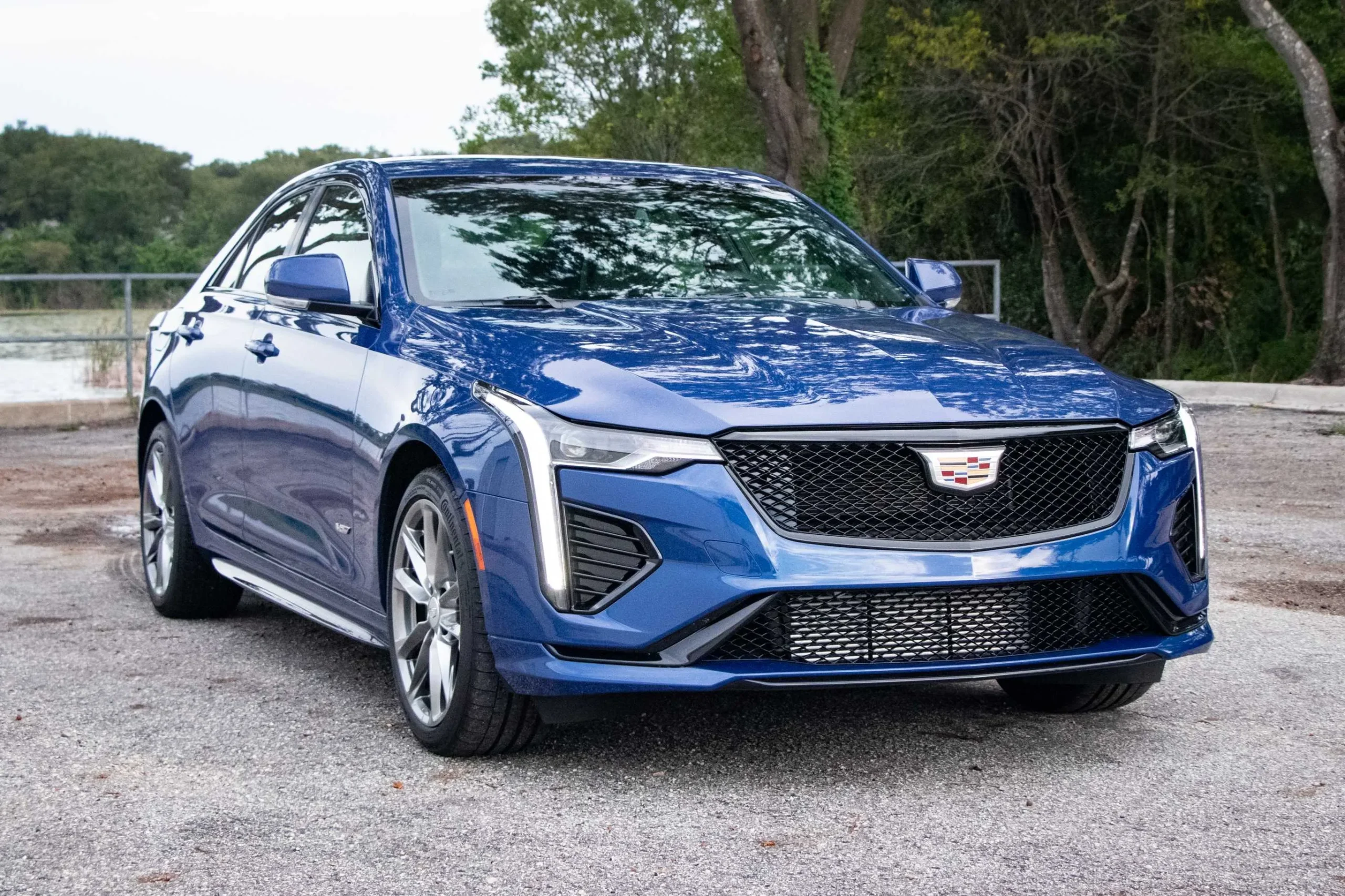
The CT4-V Blackwing uses a twin-turbocharged 3.6-liter V6 that revs with enthusiasm and delivers power with linear, addictive progression. A six-speed manual transmission is available, making it one of the very few modern performance sedans to offer this increasingly rare option.
Specifications:
- Engine: Twin-Turbocharged 3.6-liter V6 (LF4)
- Horsepower: 472 hp @ 6,500 rpm
- Torque: 603 Nm (445 lb-ft) @ 5,500 rpm
- Length: 4,752 mm
- Width: 1,826 mm
The CT4-V Blackwing weighs significantly less than its German competitors, and that weight advantage translates directly into sharper turn-in and more communicative steering.
The chassis was specifically tuned at the Nürburgring Nordschleife, and that development process is clearly evident in every corner. The car simply flows through bends with a naturalness that feels almost organic.
Pricing sits meaningfully below the BMW M3 Competition xDrive while delivering comparable or superior track performance. The Recaro seats grip perfectly during hard cornering yet remain comfortable on long highway journeys.
For enthusiasts who want genuine engagement without paying European hypercar-adjacent prices, the CT4-V Blackwing is an almost irresistible proposition.
Also Read: IIHS Dings BMW i4 for Weak Headlights and AEB System
5. Cadillac XT5
The Cadillac XT5 represents the sweet spot of the entire Cadillac lineup for the majority of luxury buyers. It delivers everything most people actually need from a luxury SUV, premium materials, advanced technology, comfortable dynamics, and sufficient performance without demanding an extravagant financial commitment. It is, in essence, the most honest Cadillac in the range.
The XT5 competes in the most fiercely contested segment of the luxury market against the Audi Q5, BMW X3, Mercedes GLC, and Lexus RX. It holds its ground with genuine quality and a strong value argument, particularly when cross-shopped carefully against its European rivals.
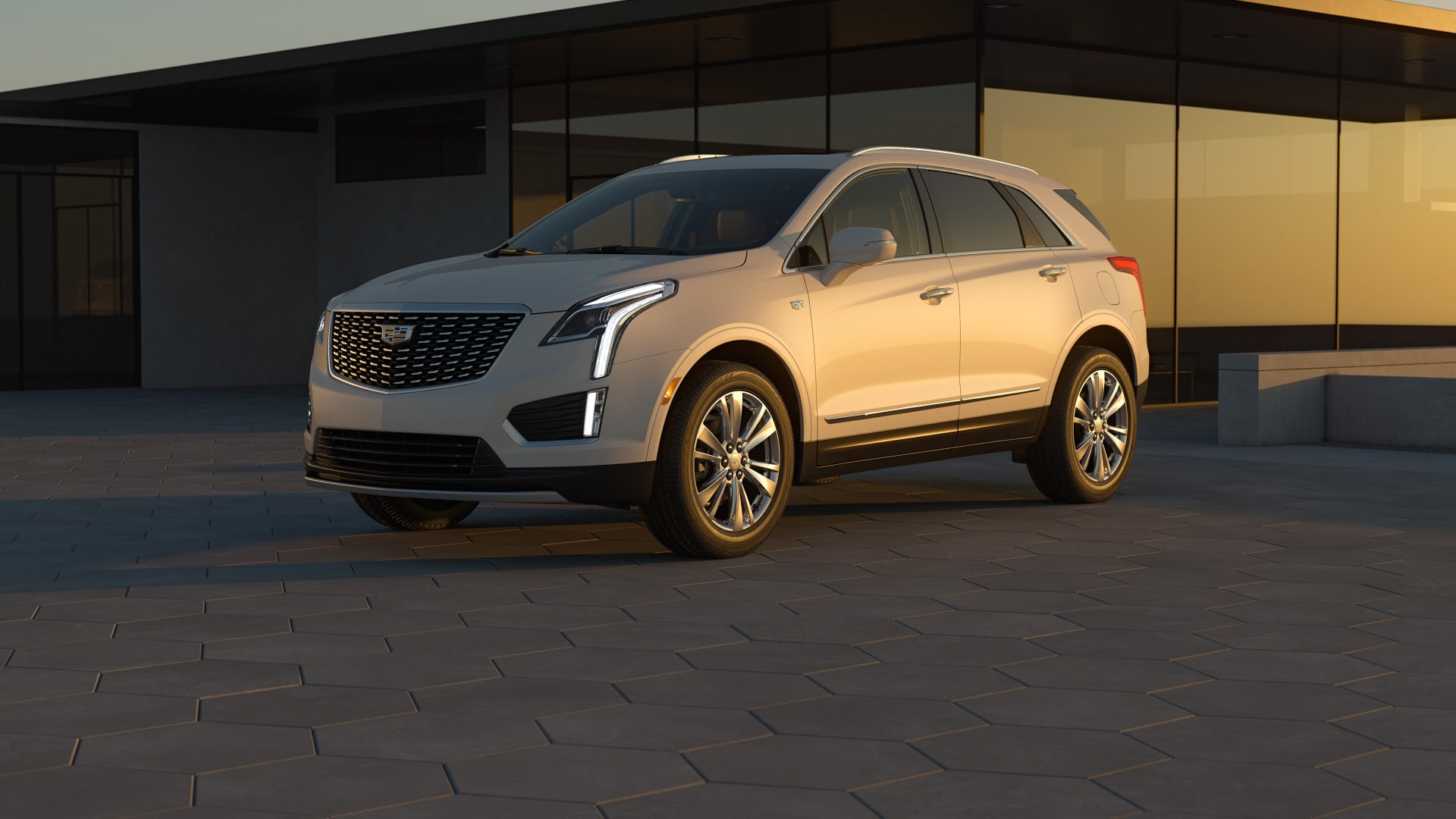
The XT5 is powered by a turbocharged 2.0-liter four-cylinder in base trim and a smooth, refined 3.6-liter V6 in upper configurations. Both engines deliver adequate, relaxed performance suited to the vehicle’s luxury touring character.
Specifications:
- Engine: 3.6-liter V6 (LGX)
- Horsepower: 310 hp @ 6,800 rpm
- Torque: 367 Nm (271 lb-ft) @ 5,000 rpm
- Length: 4,813 mm
- Width: 1,903 mm
The XT5’s interior quality punches above its price bracket. Soft-touch surfaces dominate every touchpoint, and the available leather and wood trim combinations create a genuinely premium atmosphere.
Cadillac’s User Experience infotainment system, while initially controversial, has matured significantly and now operates with satisfying speed and logic.
Rear passenger space is genuinely competitive, and the 887-liter cargo volume with rear seats up is practical without compromise. The XT5 also benefits from Cadillac’s strong dealer network and comparatively lower service costs versus equivalent German alternatives. For buyers seeking real-world luxury without financial stress, the XT5 makes a compelling, rational case.
5 Cadillac Models That Are Overpriced
These disappointingly expensive vehicles suffer from premium pricing without corresponding luxury execution, creating genuine hesitation as German and Japanese competitors deliver superior refinement, stronger resale values, and more prestigious badges at comparable investments, while certain Cadillac configurations struggle with rapid depreciation, inconsistent interior quality, and brand prestige that still meaningfully trails European luxury competitors, making ambitious pricing genuinely difficult to justify.
1. Cadillac CT5 (Standard, Non-V)
The standard Cadillac CT5 is not a bad car by any conventional measure. It is comfortable, reasonably well-appointed, and carries the Cadillac crest with sufficient dignity.
However, when you examine what you actually receive for the asking price, the value proposition begins to unravel rather quickly under scrutiny. The non-V CT5 sits in a segment dominated by the BMW 5 Series, Mercedes-Benz E-Class, Audi A6, and Genesis G80, and it struggles to justify its positioning against all of them.
The CT5 asks premium prices while delivering a driving experience and interior ambiance that feels distinctly second-tier compared to the class leaders.
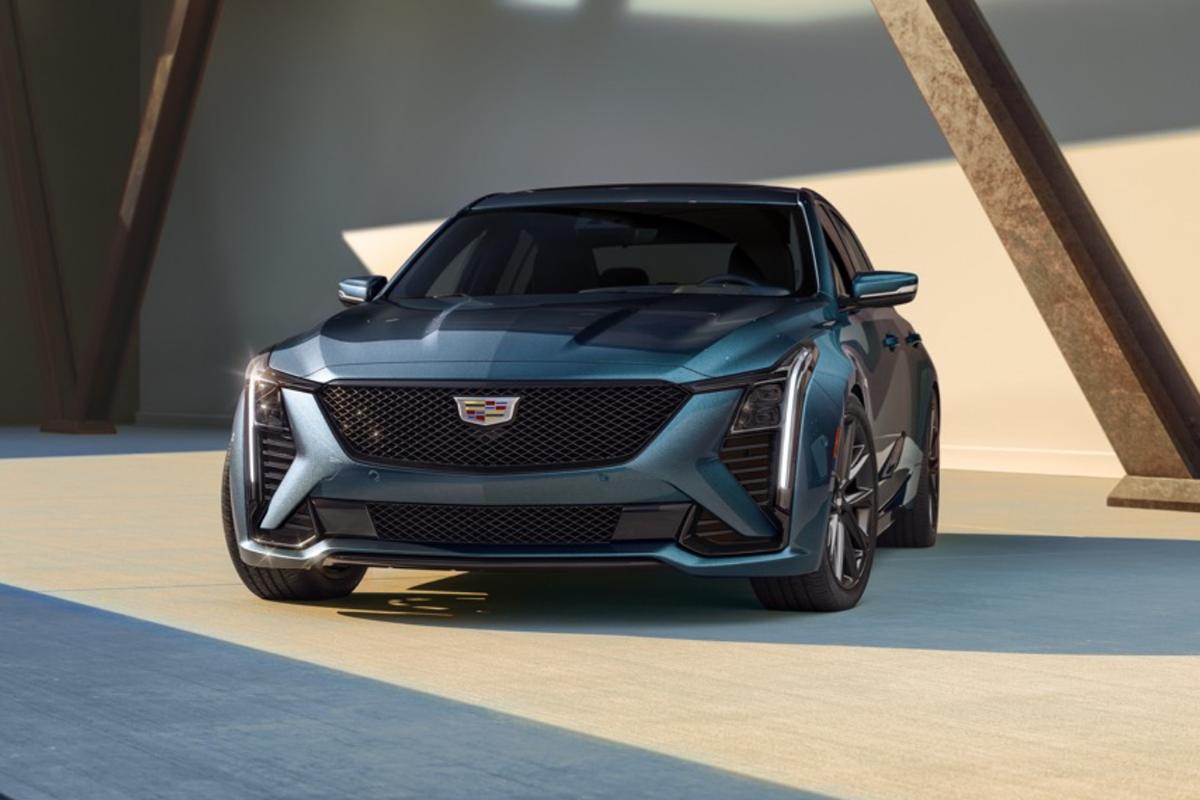
The base CT5’s 237-horsepower turbocharged four-cylinder engine feels genuinely underwhelming for a luxury sedan at this price point. Acceleration is adequate but uninspiring, and the engine note lacks the character expected of a premium vehicle. The Genesis G80 offers a more powerful twin-turbocharged 2.5-liter engine at a lower entry price.
Specifications:
- Engine: Turbocharged 2.0-liter 4-cylinder (LSY)
- Horsepower: 237 hp @ 5,000 rpm
- Torque: 350 Nm (258 lb-ft) @ 1,500 rpm
- Length: 4,924 mm
- Width: 1,882 mm
The interior, while not poor, lacks the tactile richness of the BMW 5 Series or Mercedes E-Class at comparable trim levels. Certain plastics appear in places where German competitors consistently use higher-grade materials.
Cadillac’s infotainment system, though improved, still trails the iDrive and MBUX systems in depth and responsiveness. For the money, the standard CT5 asks you to pay Cadillac prices for a sub-Cadillac experience.
2. Cadillac XT6
The Cadillac XT6 was introduced as a three-row luxury SUV positioned between the XT5 and the full-size Escalade. On paper, it sounded like an intelligent product gap solution. In practice, it has proven to be one of the more perplexing value propositions in the Cadillac lineup — a vehicle that charges premium prices without delivering premium proportions.
The XT6 competes against the Audi Q7, BMW X5, Volvo XC90, and Acura MDX. Against all of these rivals, the XT6 struggles to articulate a clear reason for its existence, let alone justify its price premium over the smaller, less expensive XT5.
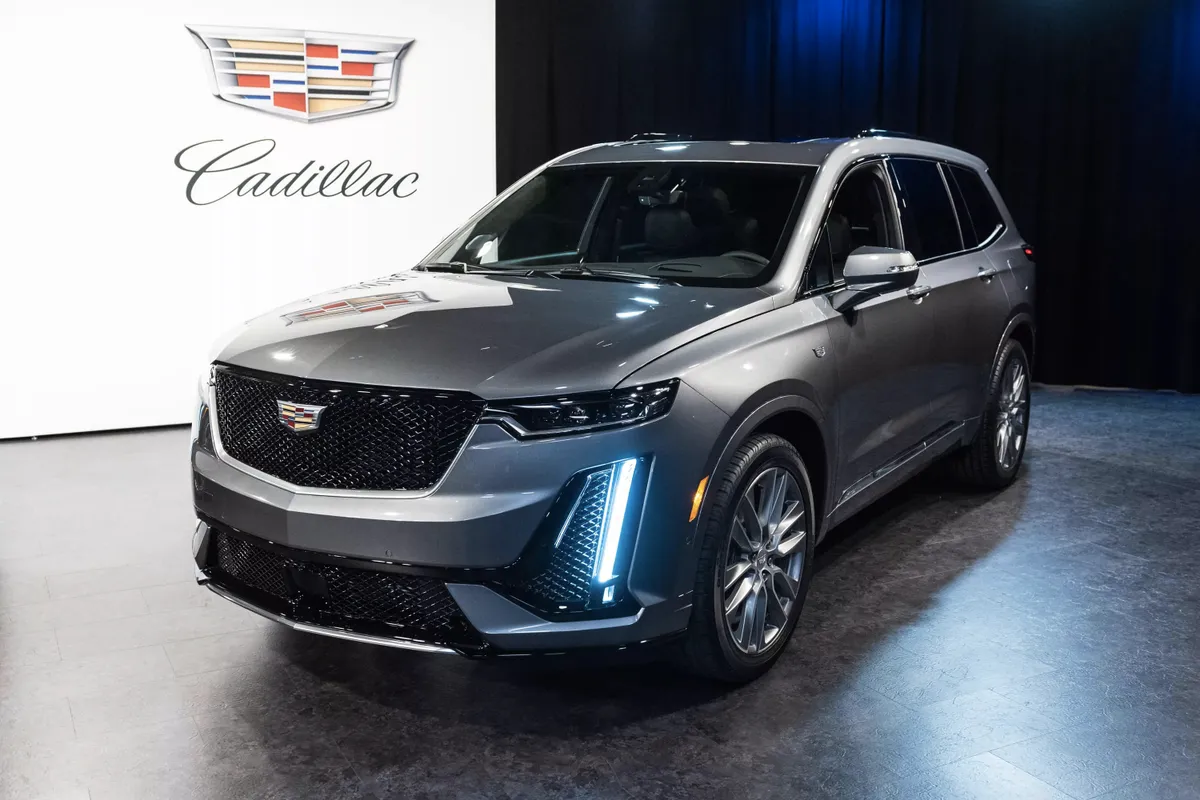
The XT6’s fundamental problem is that it shares its platform, engine, and a significant percentage of its interior components with the less expensive XT5.
Yet Cadillac charges substantially more for the privilege of a third row that most adults will find cramped and nearly unusable on longer journeys. This is a fundamental product integrity issue.
Specifications:
- Engine: 3.6-liter V6 (LGX)
- Horsepower: 310 hp @ 6,800 rpm
- Torque: 367 Nm (271 lb-ft) @ 5,000 rpm
- Length: 5,046 mm
- Width: 1,963 mm
The BMW X5 and Volvo XC90 at similar price points deliver meaningfully superior interior materials, more advanced powertrain options, including hybrid variants, and third rows that are at least marginally more accommodating.
The XT6 feels like a packaging exercise rather than a genuine product development investment. Buyers stretching toward this price point deserve better clarity of purpose from the vehicle they are purchasing.
3. Cadillac Escalade-V
The Cadillac Escalade-V is an undeniably spectacular machine on paper. A supercharged 6.2-liter V8 producing 682 horsepower inside a full-size luxury SUV sounds like automotive theatre at its most indulgent
. And it is which is precisely the problem. The Escalade-V conflates power with purpose, and the result is a vehicle that is deeply difficult to justify financially for the vast majority of buyers.
At a price point that approaches and sometimes exceeds the Range Rover Sport SVR and Porsche Cayenne Turbo GT, the Escalade-V asks you to invest in performance that can almost never be accessed responsibly on public roads. It is engineering for the sake of a brochure statistic rather than a genuinely enhanced ownership experience.
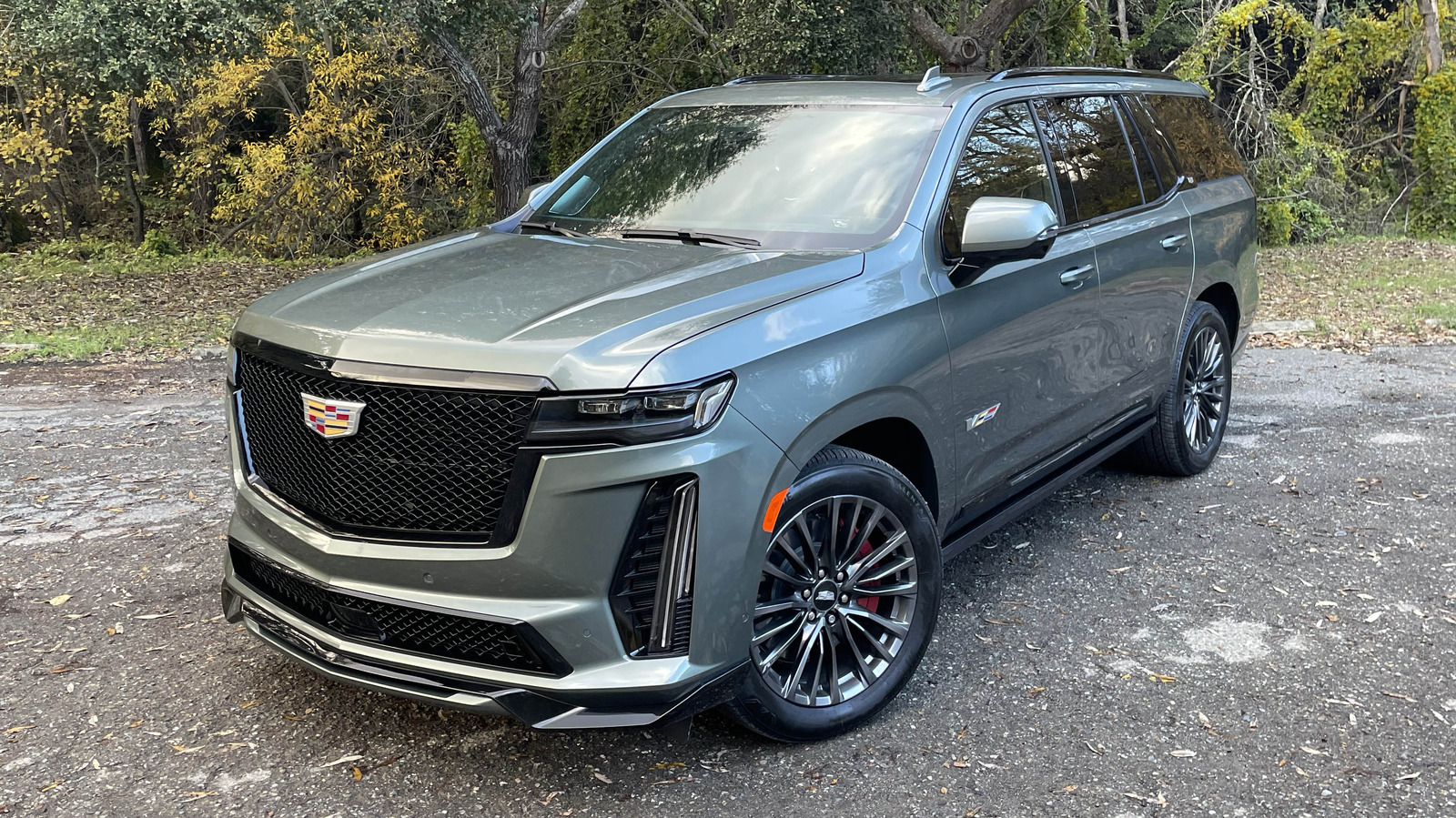
The Escalade-V commands a price premium of approximately $40,000 over the standard Escalade for what amounts to a more powerful engine and cosmetic differentiation.
The suspension, braking system, and chassis dynamics were not fundamentally redesigned to support or exploit that additional power. The result is a very fast vehicle that still rolls and wallows in ways that undermine any genuine performance credibility.
Specifications:
- Engine: Supercharged 6.2-liter V8 (LT4)
- Horsepower: 682 hp @ 6,400 rpm
- Torque: 893 Nm (659 lb-ft) @ 3,600 rpm
- Length: 5,383 mm
- Width: 2,059 mm
Fuel consumption is punishing, averaging near 16 liters per 100 kilometers in mixed driving conditions. For buyers wanting a powerful, capable luxury SUV, the standard Escalade with its 420 hp provides 90% of the real-world experience at a significantly lower price. The Escalade-V exists primarily as a status symbol, and status symbols of this magnitude rarely represent sound financial decisions.
4. Cadillac CT4 (Standard)
The standard Cadillac CT4 occupies what should be a compelling entry point into the Cadillac sedan experience. A compact luxury sedan carrying the Cadillac nameplate at a relatively accessible price ought to be a strong proposition for younger professional buyers entering the luxury segment. Unfortunately, the CT4 in standard trim consistently fails to deliver the experience its price implies.
The CT4 competes against the BMW 2 Series Gran Coupe, Mercedes-Benz A-Class Sedan, and Audi A3, yet it frequently asks for pricing that approaches or matches the entry-level BMW 3 Series and Mercedes C-Class, which are categorically superior vehicles in almost every measurable dimension.
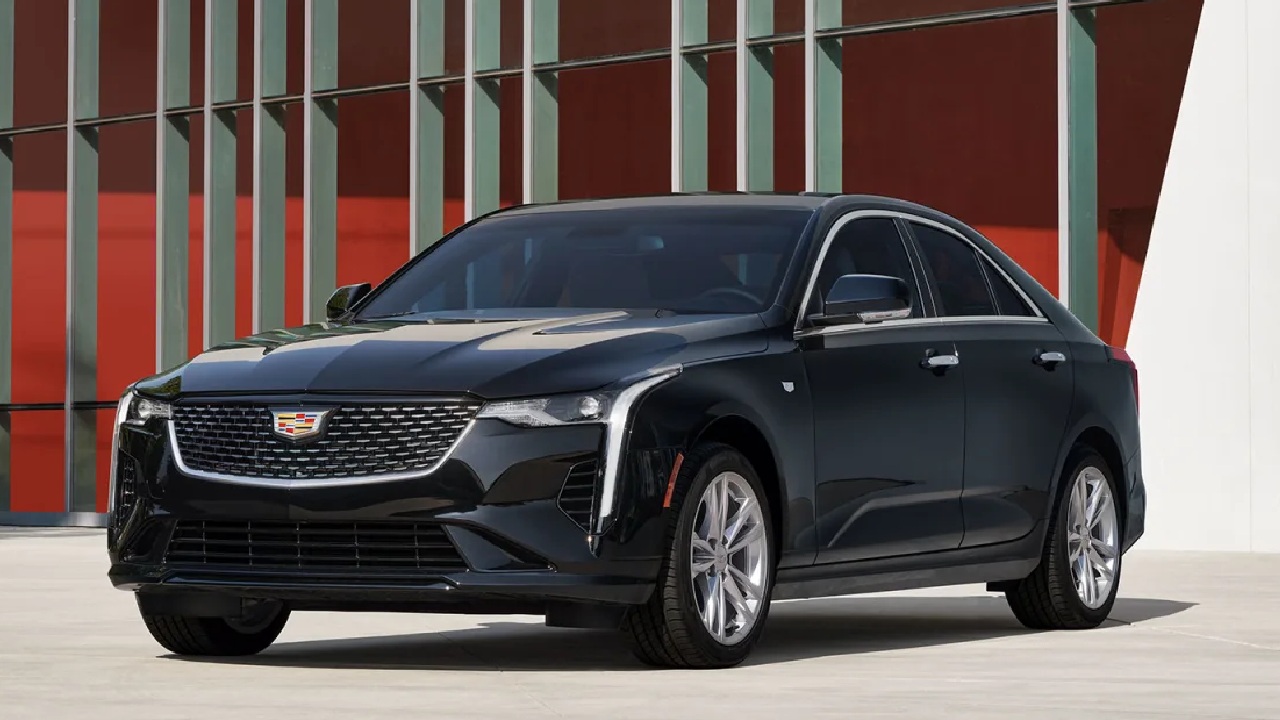
The CT4’s interior dimensions are legitimately tight, and rear-seat occupants of average height will find the experience genuinely uncomfortable on anything beyond short journeys. This is not a minor inconvenience, it is a fundamental usability compromise that affects the vehicle’s core luxury credentials in a significant way.
Specifications:
- Engine: Turbocharged 2.0-liter 4-cylinder (LSY)
- Horsepower: 237 hp @ 5,000 rpm
- Torque: 350 Nm (258 lb-ft) @ 1,500 rpm
- Length: 4,752 mm
- Width: 1,826 mm
The infotainment system, while functional, lacks the polish and depth of BMW’s iDrive or Audi’s Virtual Cockpit at this price tier. Material quality in the lower trim levels exposes cost-cutting decisions that feel incongruent with the Cadillac brand promise.
Buyers investing at this price point will consistently find better value, more sophisticated technology, and greater refinement by crossing the street to the BMW or Mercedes dealership.
5. Cadillac Optiq
The Cadillac Optiq is the brand’s newest and smallest electric SUV, positioned as an accessible entry into the Cadillac EV family. It arrives with significant expectations generated by the genuinely impressive Lyriq that preceded it.
Unfortunately, the Optiq demonstrates that Cadillac has not yet mastered the art of creating genuinely differentiated products across its electric lineup without resorting to price inflation as the primary differentiator.
The Optiq competes against the Volvo EX40, BMW iX1, Audi Q4 e-tron, and Hyundai Ioniq 5, a group that collectively delivers sharper technology execution, more distinctive design language, and stronger real-world range at comparable or lower pricing in most markets.
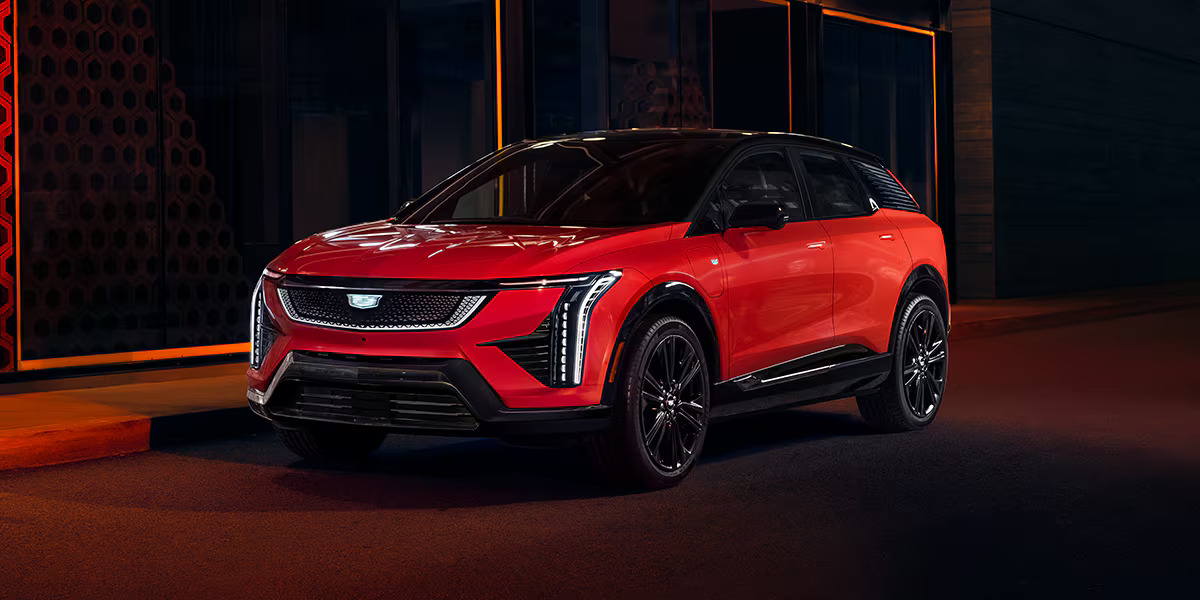
The Optiq’s 150 kW charging capability trails competitors significantly. The Hyundai Ioniq 5 offers 350 kW ultra-fast charging at a lower price point, making the Cadillac’s infrastructure story feel outdated before the vehicle even reaches dealerships. Charging speed directly impacts ownership practicality, and this gap is not trivial.
Specifications:
- Engine: Single electric motor (Front-Wheel Drive) / Dual motors (AWD)
- Horsepower: 300 hp (AWD variant)
- Torque: 480 Nm (354 lb-ft)
- Length: 4,820 mm
- Width: 1,883 mm
The interior, while competent, lacks the visual drama and material differentiation that the Lyriq established so convincingly. Buyers who stretch their budget to reach Cadillac EV territory rightfully expect a clearly premium experience over Korean and European competitors.
The Optiq delivers a Cadillac badge and modest luxury refinement, but the underlying technology package does not justify the premium positioning Cadillac insists on maintaining. At its current pricing, the Optiq asks for Lyriq-adjacent money while delivering a distinctly Bolt-adjacent experience.
Also Read: 10 SUVs That Are Just Tall Hatchbacks
