
Movie cars have a way of staying in people’s minds long after the credits stop rolling. They are more than props with engines. These vehicles carry personality, attitude, and memory, often becoming as recognizable as the characters who drove them.
A single chase scene or quiet moment behind the wheel can turn an ordinary production vehicle into something larger than life. Years later, viewers still ask what became of these machines once cameras shut off and sets were cleared. Some of these cars were treated like priceless artifacts from day one, protected and tracked with care.
Others lived harder lives, wrecked repeatedly for the sake of dramatic shots or modified beyond recognition. A few vanished entirely, slipping into mystery through theft or neglect. Their paths after filming can be surprising, disappointing, or strangely poetic.
This page looks closely at ten famous movie cars and follows their real stories beyond the screen. Each one had a different fate shaped by studio decisions, collector interest, and plain chance. Some ended up in museums under bright lights. Others were broken down quietly, piece by piece. A few still sit behind locked doors, owned by individuals who value privacy more than attention.
What ties them together is cultural impact. These vehicles became symbols, reminders of moments that defined eras of film history. Their real journeys offer insight into how Hollywood treats its most mechanical stars and why certain cars become legends long after their engines stop running.
1. 1968 Ford Mustang GT from Bullitt
- Engine: 6.4L V8
- Horsepower: 320 hp
- Torque: 427 lb-ft
- Length: 183.6 in
- Width: 70.9 in
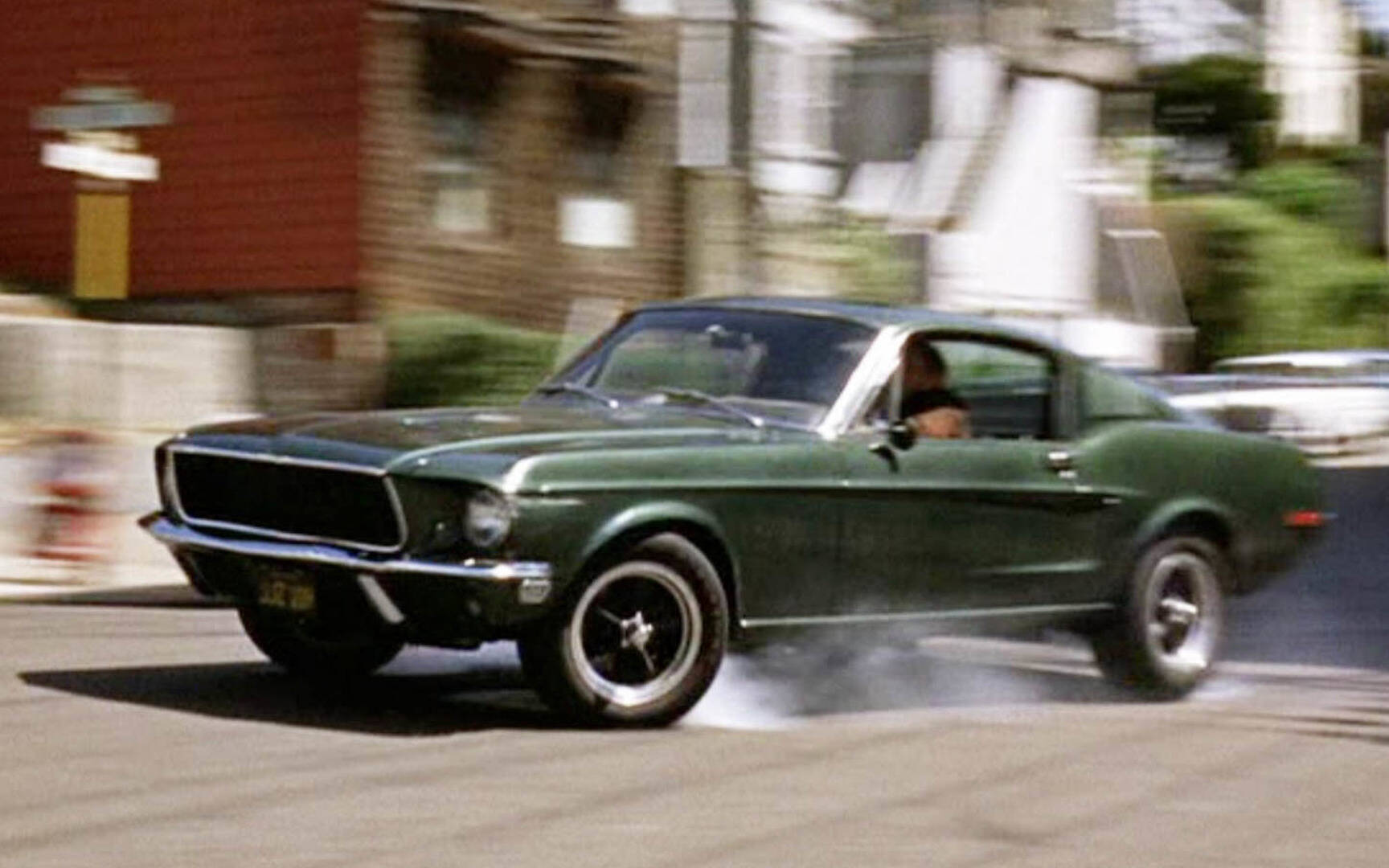
San Francisco streets provided a demanding stage for the 1968 Ford Mustang GT featured in Bullitt, released in 1968 under director Peter Yates. The vehicle appeared in a chase sequence that relied heavily on real urban roads, steep gradients, and practical driving rather than controlled studio environments.
Painted in Highland Green, the Mustang carried a restrained appearance that matched the film’s understated tone, while its V8 sound and firm road behavior shaped the intensity of the pursuit scenes. Production used two primary Mustang GT units. One unit handled high-risk driving sequences across San Francisco’s hilly routes, while the second acted as a standby vehicle for continuity and backup requirements.
Both cars were modified to support filming demands, including the removal of branding elements and adjustments to suspension systems to withstand repeated high-speed use during shooting schedules. After filming ended, one of the Mustangs suffered heavy wear and damage that rendered it unsuitable for further use.
That vehicle was eventually dismantled, with parts removed and the remaining structure scrapped. This outcome reflected standard practice for many action vehicles used during that period, where long-term preservation was not part of production planning.
The second Mustang followed a different path. It left studio ownership and entered private hands, remaining away from public display for many years. During that period, little confirmed information existed about its condition, which led to speculation among collectors and automotive historians regarding its survival and location.
Reports varied, with some suggesting loss or disassembly, while others pointed to continued private storage. Public attention returned when the surviving Mustang reappeared decades later. Its condition reflected age-related wear, with original paint still present and signs of long-term storage visible across body panels and interior surfaces.
Restoration work was limited, preserving much of its original state rather than altering its appearance for cosmetic perfection. In 2020, the vehicle entered public auction at Mecum Auctions. Interest extended beyond automotive collectors, reaching film enthusiasts who associated the car with one of cinema’s most recognized chase sequences.
2. 1964 Aston Martin DB5 from Goldfinger
- Engine: 4.0L inline-6
- Horsepower: 282 hp
- Torque: 280 lb-ft
- Length: 180 in
- Width: 66 in
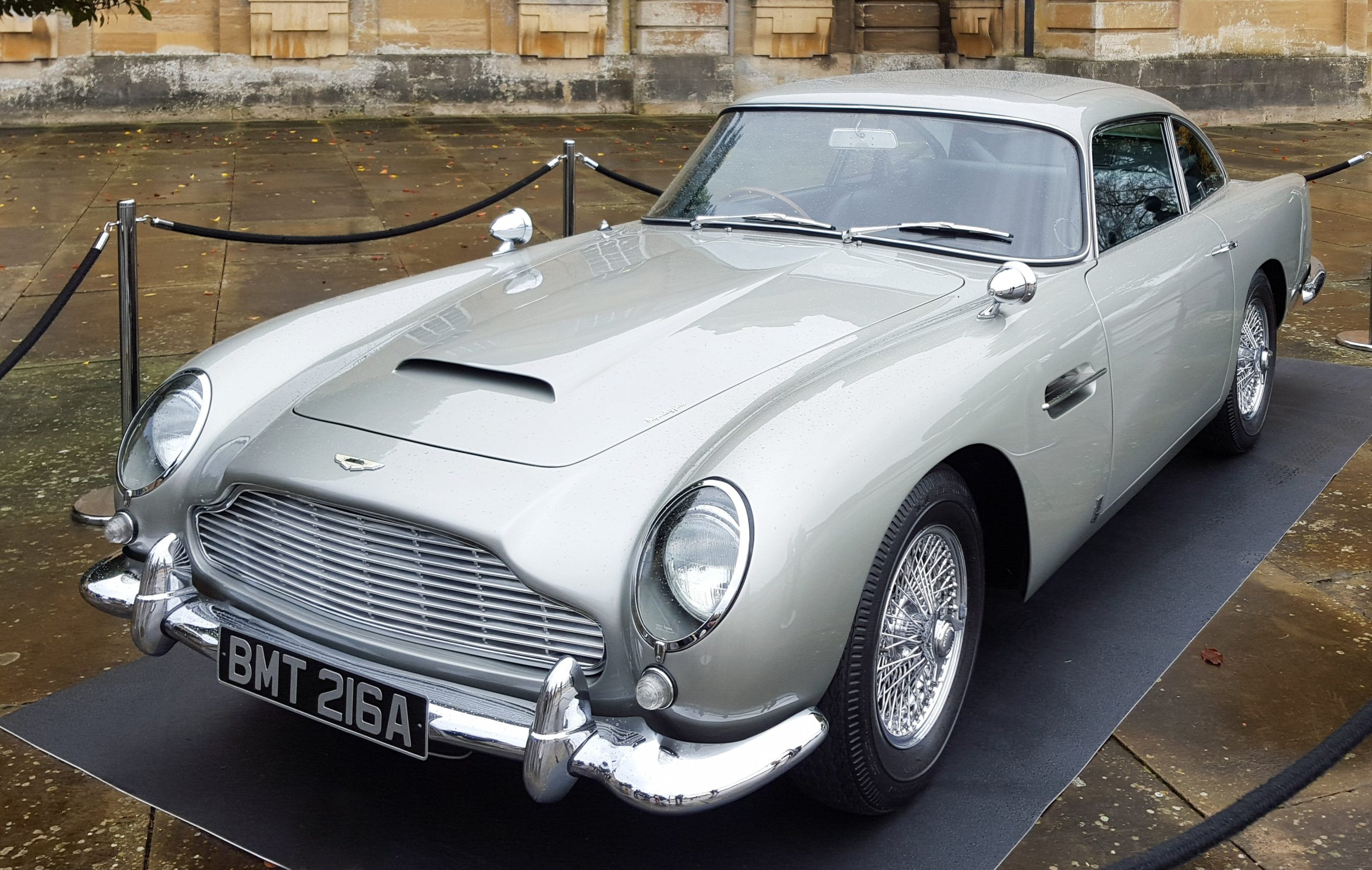
Clean proportions, polished surfaces, and refined engineering defined the 1964 Aston Martin DB5 used in Goldfinger, released in 1964 under director Guy Hamilton. The vehicle introduced audiences to a refined grand touring car equipped with fictional spy technology, blending luxury design with cinematic imagination. Its appearance established a lasting visual identity associated with sophistication and covert operations.
Production constructed several DB5 units for filming purposes. Each unit served a designated role, including close-range camera work, driving sequences, and static display shots. Modifications varied across units depending on required functionality, with internal adjustments made to accommodate filming equipment and exterior detailing adapted for visual continuity.
Following the release, one DB5 entered promotional circulation and appeared at exhibitions, trade events, and publicity tours. This vehicle became widely recognized due to its repeated public exposure, serving as a representative example of the film’s automotive design direction. Its consistent display helped reinforce its association with the franchise during early promotional cycles.
During the late 1990s, that same promotional DB5 disappeared from a secure storage facility in Florida. Reports indicated that it was stolen under circumstances that remain unresolved. Despite investigation efforts and periodic claims regarding possible sightings, no verified recovery occurred. Its location has not been confirmed since the incident.
The disappearance introduced an unusual dimension to the vehicle’s history. A car associated with fictional espionage became part of a real, unresolved theft case. Unlike other film vehicles that remained within collections or deteriorated through use, this DB5 left public record through loss rather than destruction or resale.
Other DB5 units associated with Goldfinger remained in circulation and later appeared at auctions and exhibitions. These vehicles achieved strong valuation based on documentation, condition, and verified production linkage. Auction results for surviving examples have reached high figures, reflecting sustained interest in the model’s cinematic role.
Also Read: 12 Futuristic Cars That Seem Straight Out of Sci-Fi Movies
3. DeLorean DMC-12 from Back to the Future
- Engine: 2.85L V6
- Horsepower: 130 hp
- Torque: 153 lb-ft
- Length: 168 in
- Width: 73.1 in
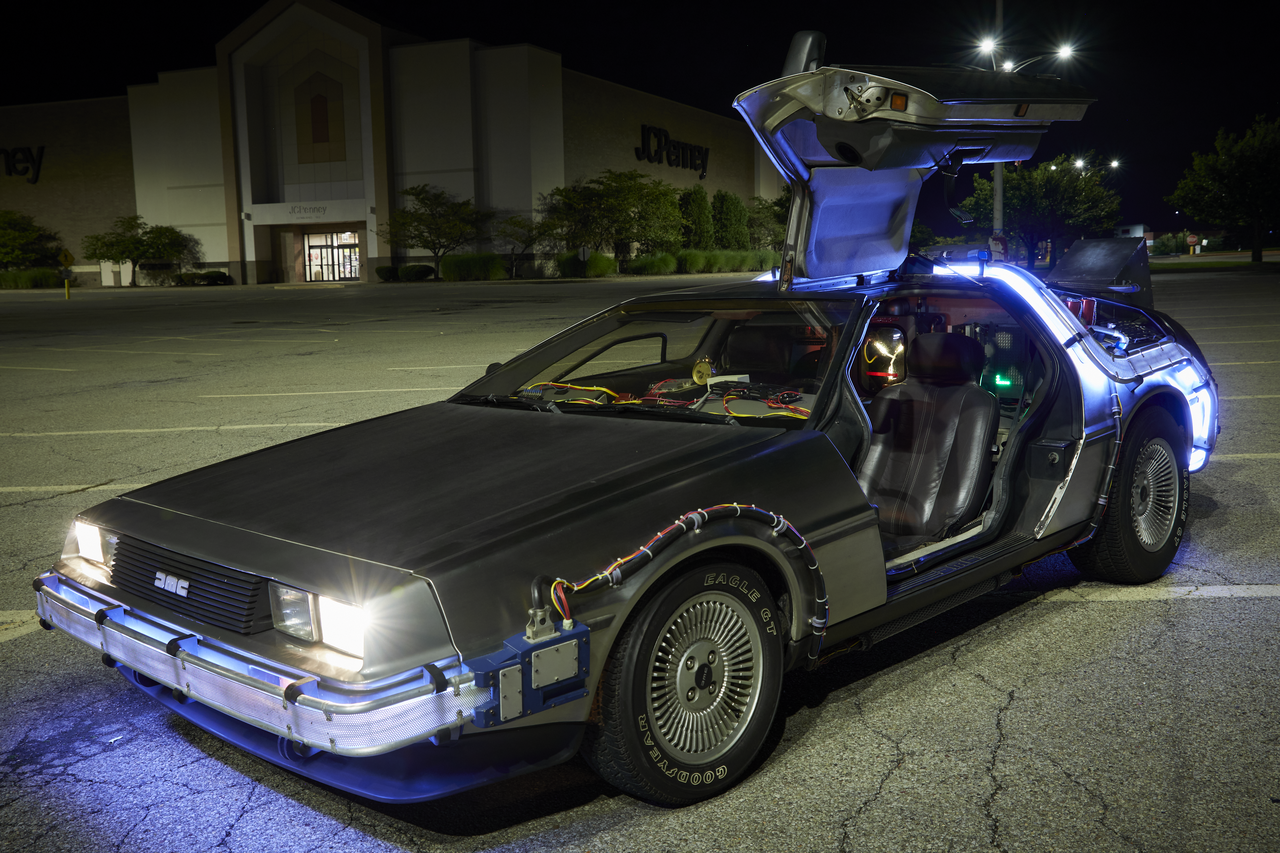
Brushed stainless steel body panels and upward-opening gullwing doors gave the DeLorean DMC-12 an unusual visual identity that suited its role in Back to the Future, released in 1985 under Robert Zemeckis. The production team selected the vehicle due to its unconventional styling, then transformed it into a fictional time machine by adding lighting elements, wiring assemblies, and mechanical-looking components mounted across the exterior.
Several DeLorean units were prepared for filming duties. Certain cars were configured for driving scenes, allowing movement across streets and studio lots. Others were modified for interior filming, with removed panels and altered cabin layouts to accommodate camera rigs.
A few units served as static shells used only for close-up shots or special effects work. Each version served a distinct production purpose, reducing strain on any single vehicle. Filming demands placed heavy stress on the available units.
Repeated modifications, stunt work, and scene-specific alterations led to wear and damage across multiple cars. Some units lost working drivetrains, while others were dismantled for parts to keep remaining vehicles operational during production schedules. By the end of filming, only a limited number retained a usable structure.
One preserved DeLorean associated with production survived and later entered private collection circles before being placed in public exhibition. A well-known example is displayed at the Petersen Automotive Museum in Los Angeles. There, it is presented in its time machine configuration, maintained under controlled lighting and environmental conditions to preserve appearance and structural stability.
The DeLorean’s reputation changed sharply after its screen appearance. A vehicle once associated with limited commercial success gained lasting recognition through film exposure. Its transformation into a fictional machine overshadowed its original market reception, placing emphasis on design imagination rather than performance specifications.
Preservation efforts ensure that surviving examples continue to reflect their screen identity. Whether held in museums or private collections, these vehicles maintain their role as physical representations of a fictional concept that continues to influence popular culture.
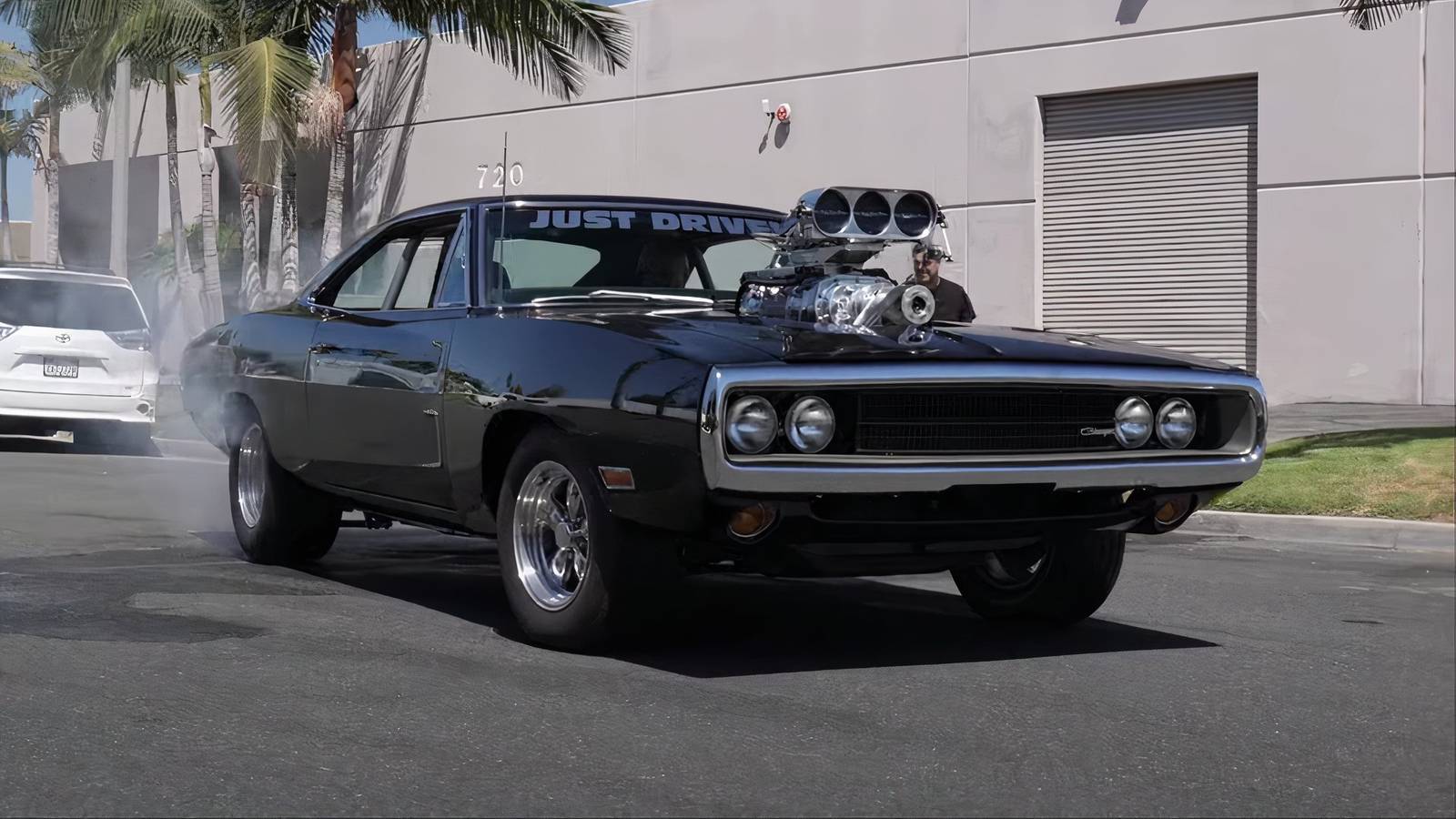
4. 1970 Dodge Charger R/T from Fast & Furious
- Engine: 7.2L V8
- Horsepower: 375 hp
- Torque: 480 lb-ft
- Length: 208 in
- Width: 76.6 in
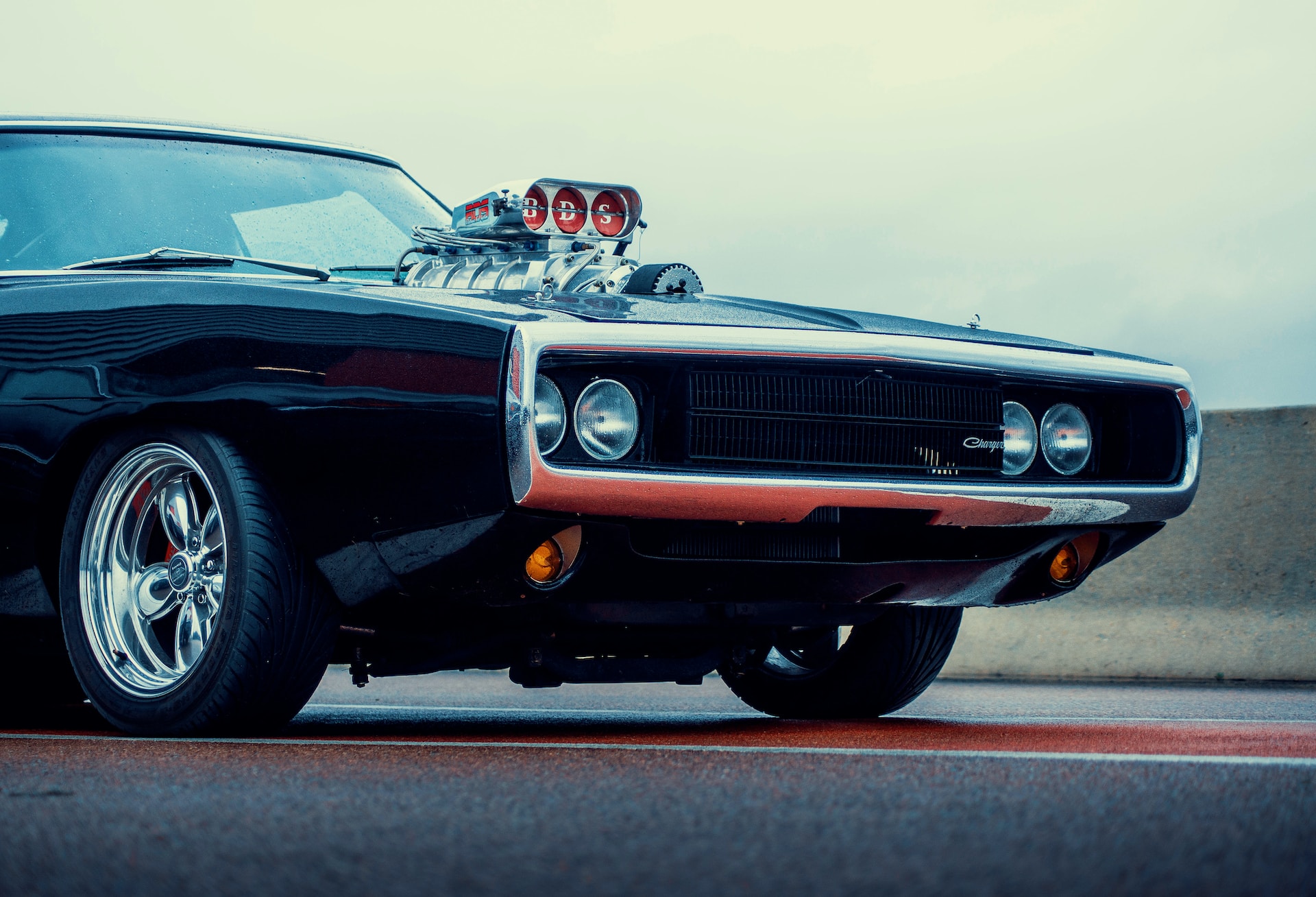
Muscular proportions and aggressive engine presence defined the 1970 Dodge Charger R/T used in the early Fast & Furious franchise, which began in 2001 under director Rob Cohen. The vehicle was introduced as a symbol of raw street power, fitted with a supercharged engine protruding through the hood, reinforcing its mechanical intensity and visual force during key driving sequences.
Production required multiple Charger units to handle different filming responsibilities. Certain cars were constructed for high-speed driving scenes, while others were reinforced with internal cages and strengthened frames for stunt work involving collisions and jumps. Additional units were prepared solely for exterior shots, ensuring visual consistency while preserving working vehicles for repeated use.
Filming conditions placed heavy strain on the available Chargers. High-impact sequences resulted in rapid wear, with some units suffering structural damage that made further use impossible. Replacement vehicles were introduced during production to maintain continuity, though each build faced similar operational stress due to the demands of action-heavy filming.
After production ended, a few original units remained intact. Many were stripped for usable components, with surviving parts redistributed across other builds or stored for reference. Several shells were retired once they lost structural integrity. This left a small number of incomplete or heavily modified remnants rather than fully preserved original vehicles.
The Charger’s role within the franchise reflects a production approach focused on physical performance rather than preservation. Vehicles were treated as working tools for stunts and action sequences, resulting in heavy usage and limited long-term survival.
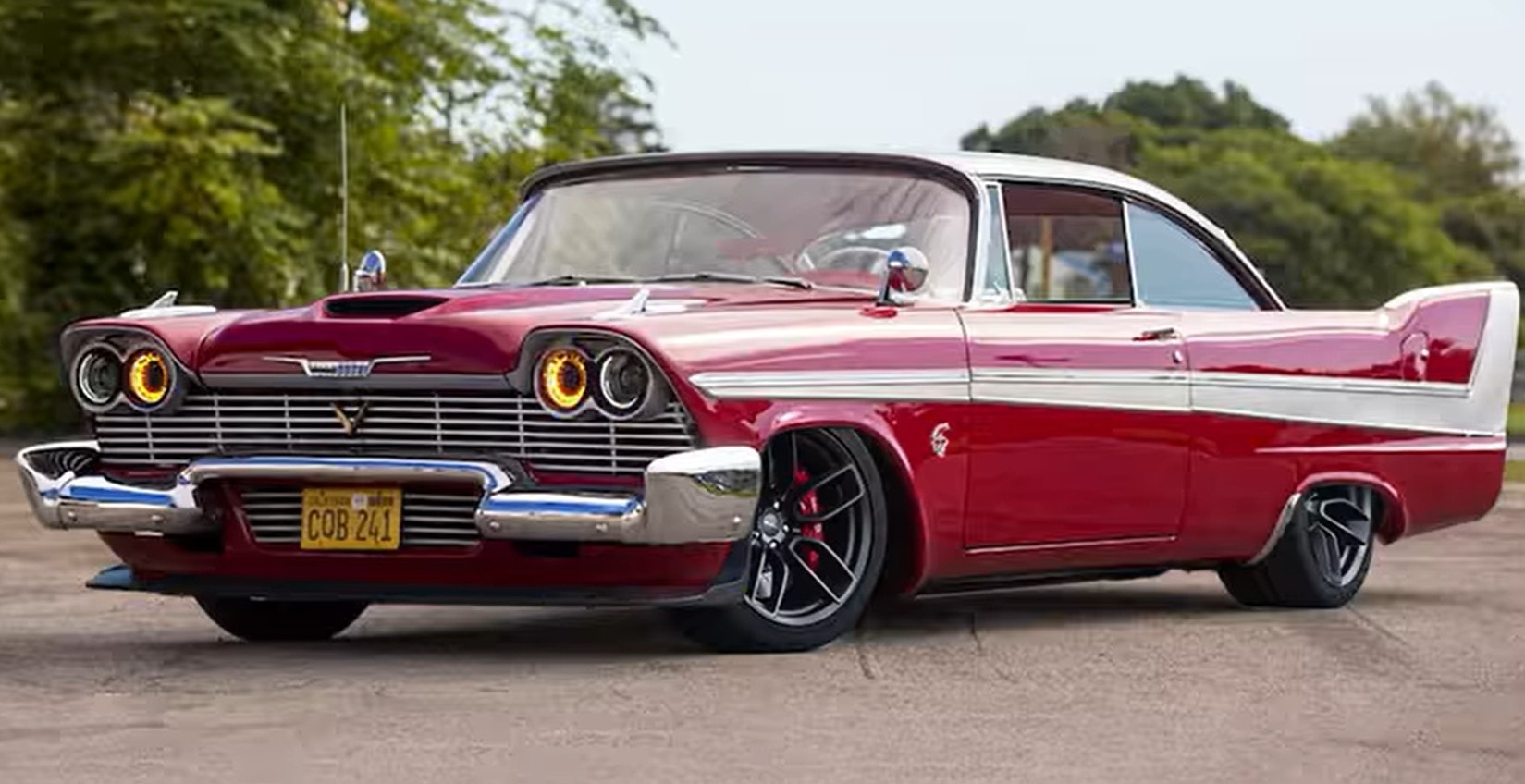
5. 1958 Plymouth Fury from Christine
- Engine: 5.2L V8
- Horsepower: 290 hp
- Torque: 325 lb-ft
- Length: 209.4 in
- Width: 78.5 in
Sharp tailfins and a deep red finish gave the 1958 Plymouth Fury its screen identity in Christine, released in 1983 under the direction of John Carpenter. The vehicle carried a chilling presence tied to the story’s supernatural themes, where the car itself appears to have a will beyond human control. Its styling suited that concept, with a long body, chrome detailing, and an aggressive stance that worked well for horror-driven storytelling.
Production required several Fury units along with similar Plymouth models to meet filming demands. Some were prepared for close-up work, while others were modified for stunt sequences that involved collisions, fire effects, and controlled destruction. Filmmakers used repeated takes involving physical damage, which reduced the number of usable vehicles by the end of production.
A portion of the fleet was intentionally sacrificed for effect shots. Crushing sequences and staged destruction required vehicles that could not be reused. This approach helped create realism on screen, but left only a small number of surviving examples once filming ended. The remaining units carried different levels of modification depending on their use during production.
One surviving Fury was preserved after filming and later entered private ownership. That unit avoided heavy alteration after production and was maintained in a condition that reflected its appearance in the film. Restoration work focused on matching screen-accurate details, including exterior paint tone, trim placement, and interior layout. Care was taken to preserve the car’s association with its film role rather than modern styling updates.
A collector’s interest in surviving Fury units depends strongly on documented production history. Vehicles with a verified connection to filming activity attract stronger attention than standard Plymouth Fury models from the same period. Documentation, production records, and visual matching to screen-used units influence valuation in private sales and auction appearances.
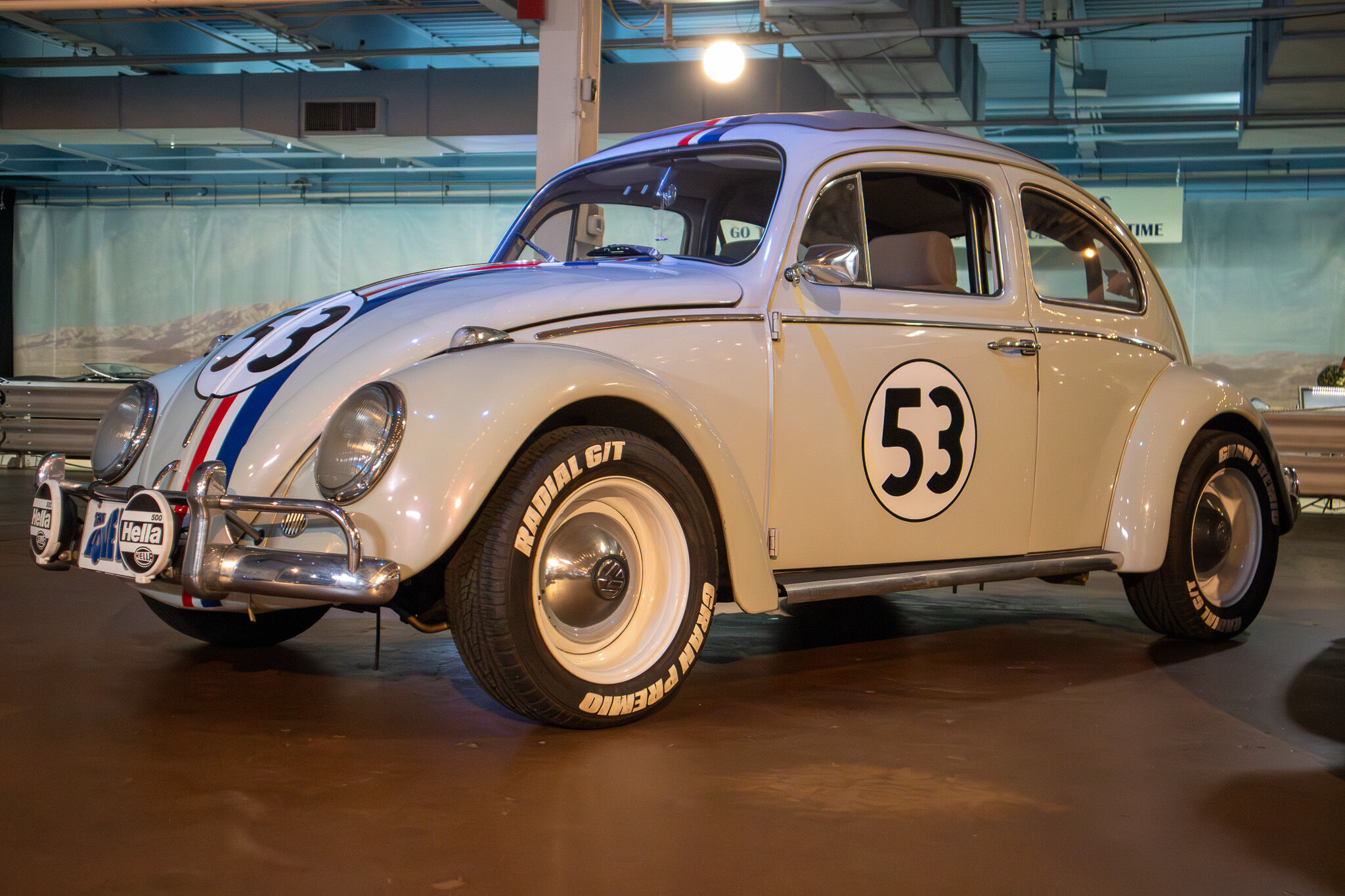
6. 1963 Volkswagen Beetle from Herbie
- Engine: 1.2L flat-4
- Horsepower: 40 hp
- Torque: 65 lb-ft
- Length: 160.6 in
- Width: 60.6 in
A rounded silhouette and gentle personality defined the 1963 Volkswagen Beetle used as the base for Herbie in The Love Bug, released in 1968 by Walt Disney Productions. The vehicle became a central character rather than a supporting prop, shaped through filming techniques that gave it personality without altering its simple mechanical foundation. Its design allowed audiences to connect with it in a way rarely seen with automobiles on screen.
Production required multiple Beetles to handle different filming demands. Certain units were prepared for driving sequences, others for interior shots, and additional versions were modified for stunt work. Each vehicle carried slight variations depending on its assigned role. This approach ensured continuity across scenes while reducing strain on individual cars.
Mechanical simplicity of the Volkswagen Beetle made repeated use practical. Air-cooled engines and straightforward construction allowed quick repairs between filming sessions. That durability made the model suitable for long production schedules and multiple retakes without excessive downtime.
After filming concluded, one surviving Beetle associated with production entered private ownership. Restoration work focused on returning it to its recognizable appearance, including racing stripes, numbering, and exterior detailing consistent with its screen identity. Efforts remained centered on accuracy rather than modernization, preserving its connection to the film.
Other units used during production followed different paths. Some were sold off, while others deteriorated due to heavy use during filming. Several stunt versions did not survive, having been pushed beyond repair during action sequences. Their loss formed part of the production process required to achieve practical effects.
Occasional public appearances by surviving Herbie Beetles occur at automotive exhibitions and themed events. These appearances are carefully controlled to prevent wear while allowing audiences to engage with the film’s background. Preservation efforts prioritize maintaining visual accuracy and mechanical stability.
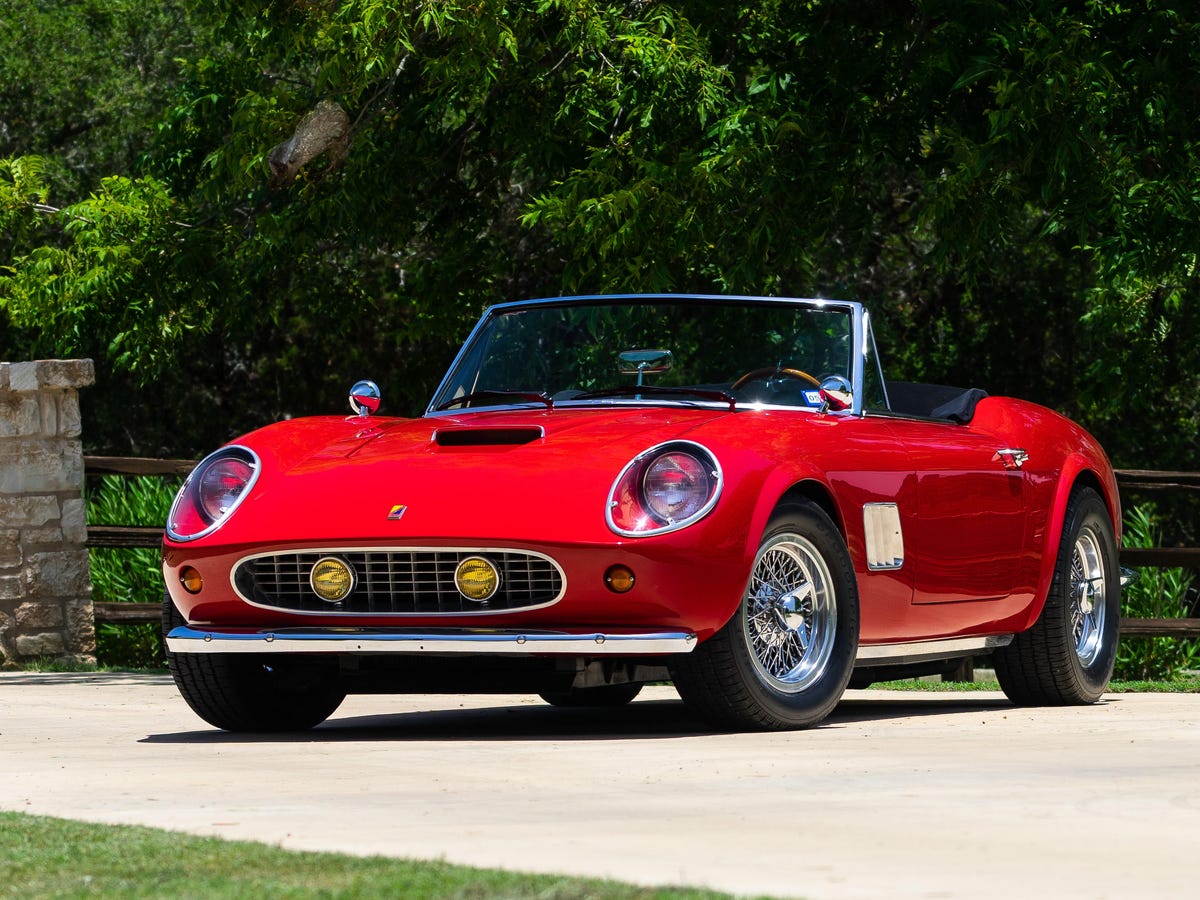
7. 1961 Ferrari 250 GT California Replica from Ferris Bueller’s Day Off
- Engine: 5.0L V8
- Horsepower: 225 hp
- Torque: 300 lb-ft
- Length: 168 in
- Width: 64 in
A sense of privilege and defiance defines the 1961 Ferrari 250 GT California replica featured in Ferris Bueller’s Day Off, which was released in 1986 under the direction of John Hughes. The production required a vehicle that matched the appearance of one of Ferrari’s most prized classics without exposing an irreplaceable collector car to stunt work or destruction.
That requirement led to the construction of replica units that carried the visual identity of the original model while serving the practical needs of filming. Several replica units were prepared for production use. One unit was assigned to driving scenes involving movement through suburban streets and controlled highway sequences.
Another unit supported stationary filming, allowing camera crews to capture interior detail and close exterior framing without mechanical strain. This division of roles ensured continuity during shooting while reducing risk to any single vehicle.
During filming, one of the replicas was used in the sequence involving the dramatic fall from the garage structure. That moment became one of the most recognized scenes in 1980s teen cinema. The destruction sequence was carefully staged using controlled effects, and the vehicle used for that segment was not an original Ferrari chassis.
This decision preserved the historical authenticity of the original 250 GT California design while allowing the film to achieve its desired visual impact. After production ended, one surviving replica remained in working condition and later entered auction circulation. That unit achieved a sale price of approximately 337,500 dollars.
Valuation was shaped less by mechanical pedigree and more by its association with a widely recognized film that remains part of American pop culture. Buyers placed weight on documentation linking the vehicle to production use, along with its preserved condition.
The destroyed replica from the film served a different role. Its removal from operation formed part of a planned cinematic sequence designed to emphasize consequence and youthful excess. While no longer functional after filming, its role contributed to one of the most remembered visual moments in the movie.
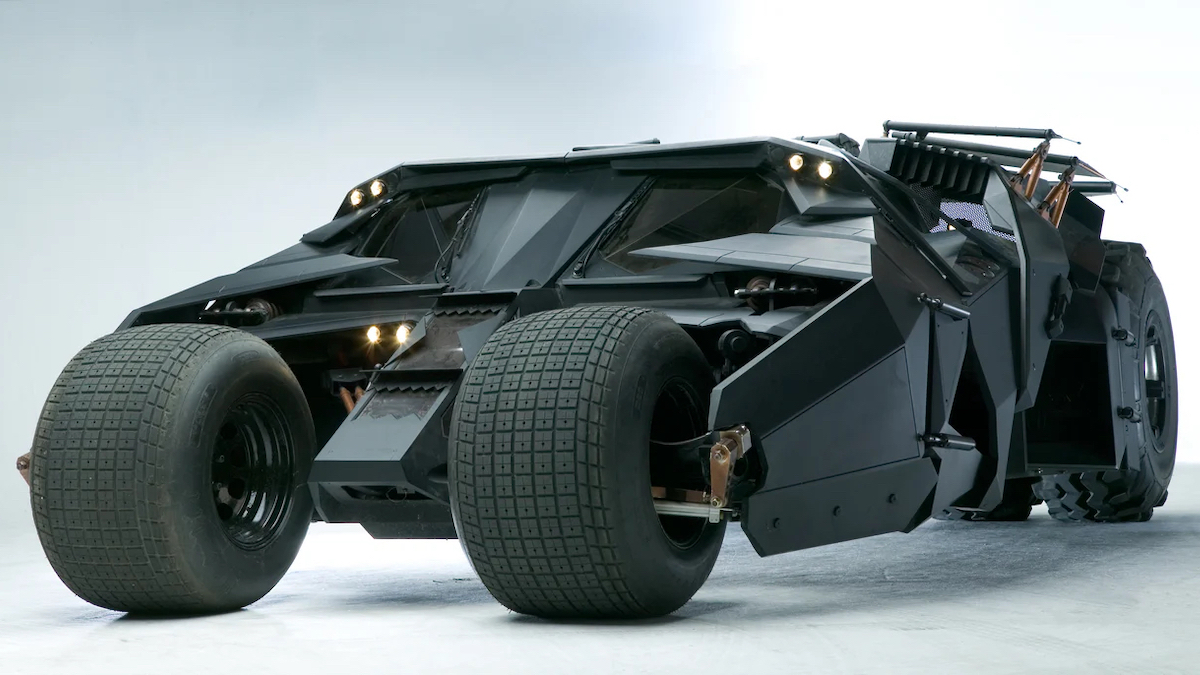
8. Batmobile Tumbler from The Dark Knight
- Engine: 5.7L V8
- Horsepower: 500 hp
- Torque: 500 lb-ft
- Length: 182 in
- Width: 118 in
Mechanical aggression and armored design define the Batmobile Tumbler developed for The Dark Knight, released in 2008 under director Christopher Nolan. Unlike earlier stylized versions of the Batmobile, this vehicle was engineered as a fully functional stunt machine, built to perform high-speed driving, sharp directional changes, and controlled impact sequences without relying solely on visual effects.
Production involved the construction of multiple Tumbler units, each assigned to specific duties during filming. Certain units were built for high-speed driving across urban and closed-road environments, while others were designed for jump sequences and controlled destruction shots.
Each version carried reinforced structural framing, heavy-duty suspension systems, and internal safety components to support stunt drivers during demanding scenes. Filming placed heavy operational demands on these machines. The vehicles were required to perform repeated runs under controlled conditions, with modifications applied between sequences to maintain operational stability.
Engineering teams worked closely with production staff to ensure mechanical reliability during extended filming schedules. After completion of filming, one primary Tumbler unit was retained under studio custody. Instead of entering public auction or touring circuits, the vehicle was placed in controlled storage.
This decision aligned with studio asset management practices, where high-value production vehicles are preserved for archival and potential future use. The stored Tumbler remains under protection in a studio facility. Environmental controls and restricted access policies are applied to maintain structural conditions.
Direct public exposure is limited, with occasional appearances at sanctioned exhibitions or promotional events. These rare displays allow viewing without exposing the vehicle to continuous handling or environmental stress. Unlike earlier television and film cars that frequently enter auction markets, the Tumbler’s handling reflects modern intellectual property management practices.
Studio ownership policies prioritize preservation and brand control rather than commercial resale. As a result, auction activity involving authentic production units has not occurred in the same manner as seen with older screen vehicles.
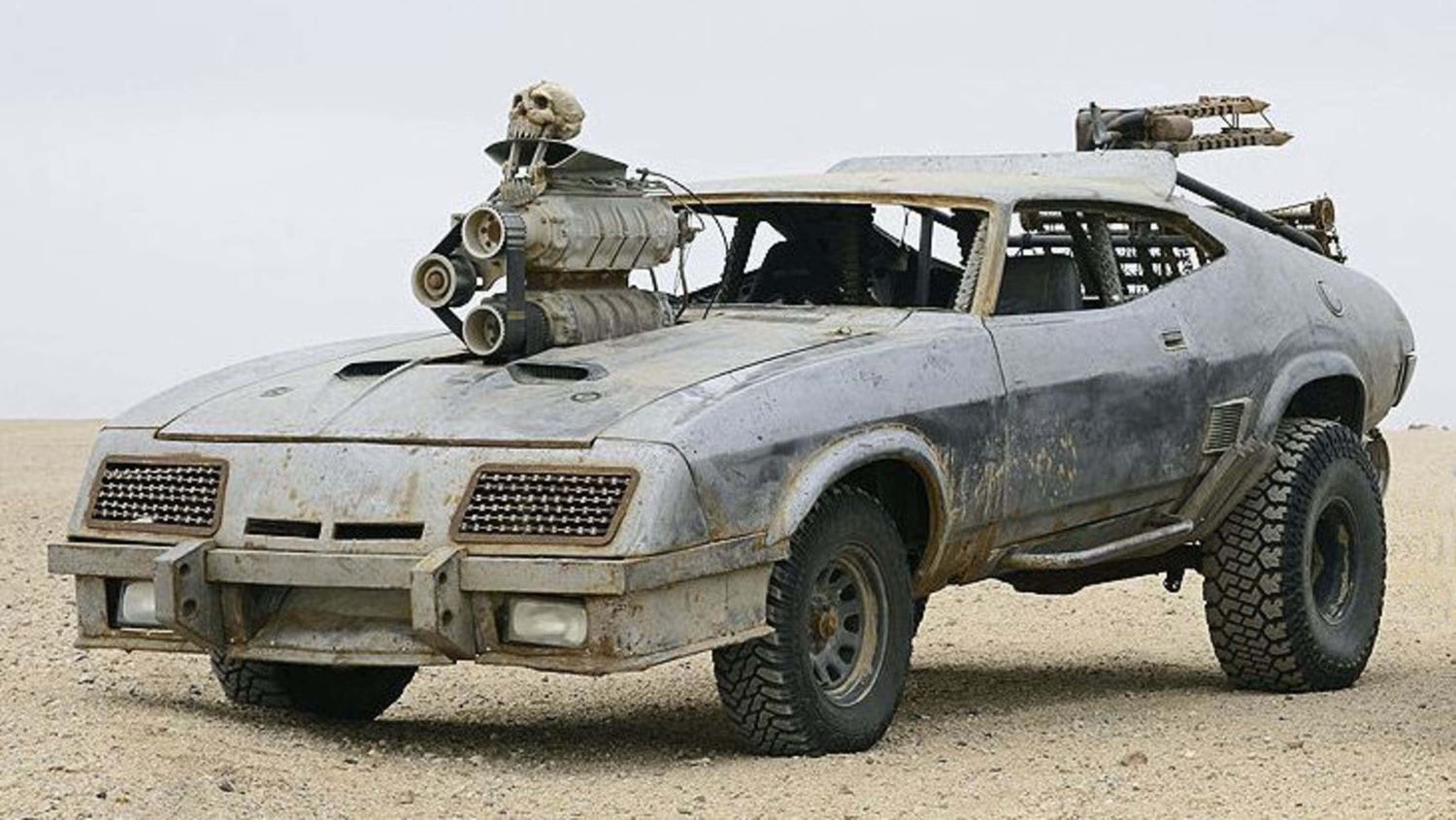
9. 1973 Ford Falcon XB GT from Mad Max
- Engine: 5.8L V8
- Horsepower: 300 hp
- Torque: 380 lb-ft
- Length: 191 in
- Width: 73 in
The 1973 Ford Falcon XB GT modified for Mad Max carries a reputation shaped by raw presentation and heavy mechanical alteration for film purposes. Produced for the 1979 Australian action film directed by George Miller, the vehicle became one of the central visual elements that defined the film’s harsh driving sequences.
Several Falcon units were sourced during production, each subjected to varying degrees of modification depending on stunt requirements and camera demands. Some were reinforced for high-speed scenes, while others were stripped down for destruction sequences that featured heavily in the film’s final cut.
Production demands placed heavy pressure on the available vehicles. Several units were destroyed during filming, leaving only a small number of surviving examples after production ended. This scarcity later influenced collector interest and preservation efforts.
The surviving vehicles were treated as historical pieces tied directly to Australian cinema development rather than standard automotive collectibles. A restored version of the Falcon XB GT was later preserved in Australia and placed within a museum setting.
That environment presented the car as a cultural object linked to film history rather than a modified road machine. The restoration process focused on stabilizing structural elements while maintaining the screen’s appearance. Careful attention was given to exterior finish, mechanical integrity, and visual accuracy relative to the film version.
Restoration specialists approached the work with restraint, avoiding excessive cosmetic refinement. Signs of wear were retained in controlled form to preserve authenticity linked to production use. This approach ensured the vehicle reflected its cinematic role without appearing artificially renewed.
Also Read: 10 Most Legendary Cars in Hollywood That Became Movie Icons
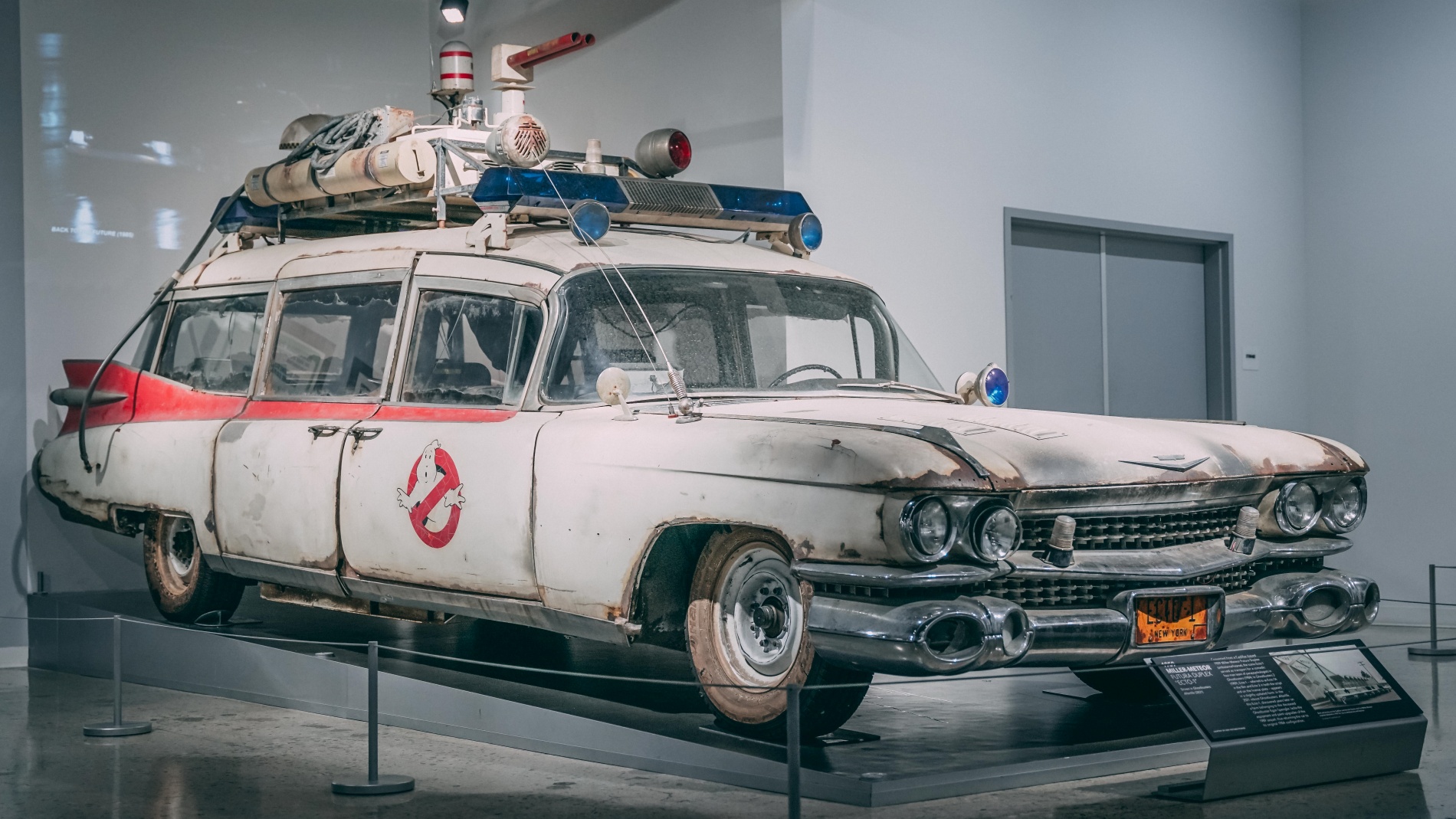
10. 1959 Cadillac Miller Meteor from Ghostbusters
- Engine: 6.4L V8
- Horsepower: 320 hp
- Torque: 430 lb-ft
- Length: 240 in
- Width: 80 in
The 1959 Cadillac Miller Meteor used in Ghostbusters became widely known as the Ecto-1, serving as a central visual identity element for the 1984 film directed by Ivan Reitman. The vehicle was originally a professional combination ambulance and hearse before being modified for production use.
Its long body, distinctive fins, and large frame made it suitable for transformation into a mobile equipment carrier for the fictional team. Production teams selected multiple Cadillac Miller Meteor units to handle filming demands. Each vehicle was adapted differently depending on scene requirements, including interior fittings for equipment storage and exterior additions such as sirens, roof-mounted gear, and thematic branding.
These modifications ensured continuity across action sequences and promotional appearances. After filming, surviving units followed different paths. One primary vehicle remained in relatively stable condition and later received structured restoration work under the supervision of Sony Pictures.
Restoration efforts aimed to return the vehicle to its recognizable film appearance, including paint finish, lighting configuration, and external equipment layout. The process required careful reference to original production materials to maintain visual accuracy.
Restoration teams approached the project with controlled precision. Structural repairs were completed first, followed by cosmetic refinishing aligned with the original screen version. Attention was given to maintaining proportions and equipment placement so that the vehicle retained its identity as seen in the film.
