
The story of the automobile is a timeline of breakthroughs that reshaped how humans move, work, and live. From the earliest experiments in steam and electricity to the internal combustion engine, each milestone reflects a leap in engineering ambition and human curiosity. 10 First-Ever Automotive Innovations and Who Made Them explores the defining inventions that established the foundation of modern transportation.
It highlights pioneering figures such as Carl Benz, Ferdinand Porsche, Henry Ford, and other engineers who turned experimental machines into practical mobility solutions. These innovations include the first gasoline-powered car, the first electric vehicle, the first hybrid system, and revolutionary manufacturing and safety technologies that still influence vehicles today.
Understanding these breakthroughs is essential to appreciating how modern cars evolved from fragile prototypes into highly advanced, interconnected systems. Each invention marks not only technical progress but also a shift in society’s relationship with mobility and industrial capability worldwide progress
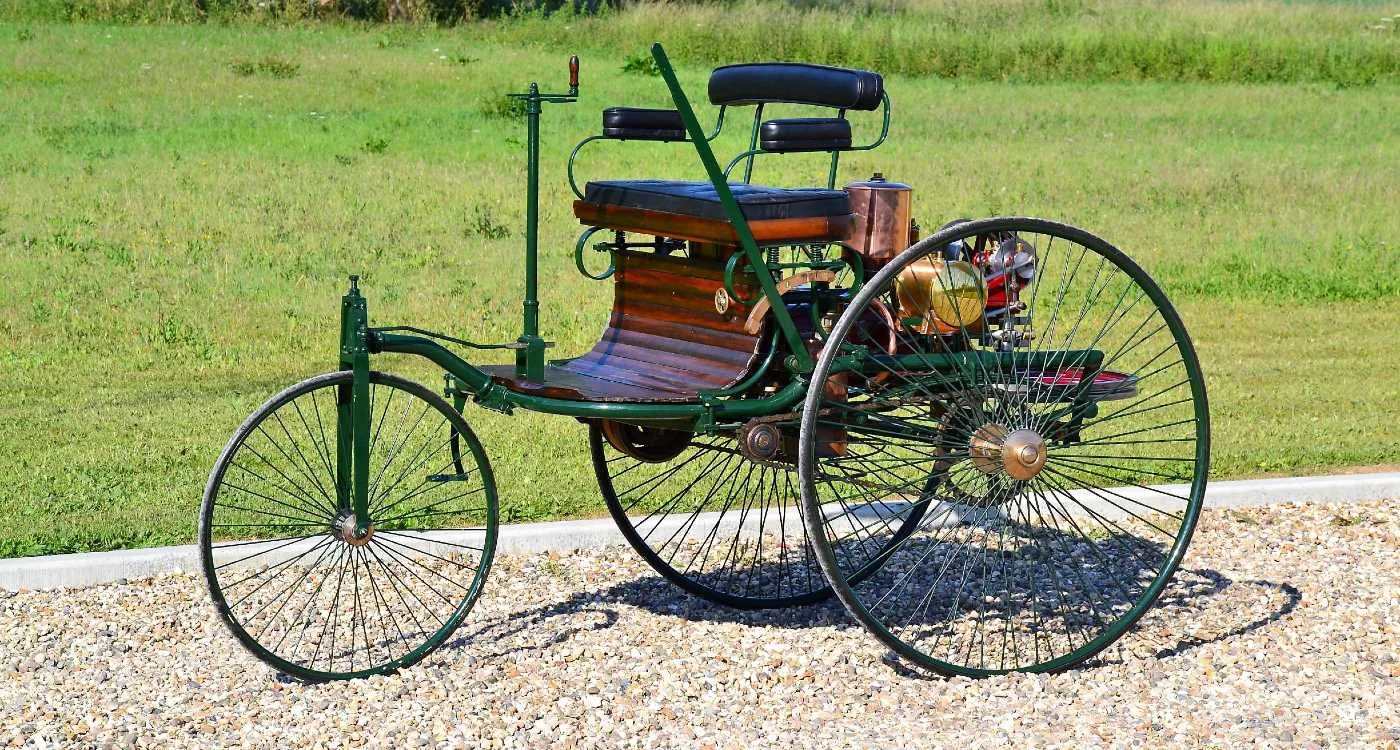
1. 1886 Benz Patent-Motorwagen (First Gas-Powered Car)
The 1886 Benz Patent-Motorwagen is universally recognized as the world’s first true stationary, gasoline-powered automobile. Invented by German mechanical engineer Carl Benz, this historic three-wheeled vehicle revolutionized human mobility by introducing a machine designed from the ground up to be powered by an internal combustion engine, rather than adapting an engine to a traditional horse carriage.
Benz was granted Patent No. 37435 for his “vehicle powered by a gas engine” on January 29, 1886. The innovative machine featured a lightweight, integrated tubular steel frame, wire wheels, and an automatic intake valve. It was powered by a compact, horizontal single-cylinder four-stroke engine that utilized ligroin (a light petroleum spirit) and produced 0.88 horsepower.
The advanced drivetrain included an electrical vibrator ignition with a spark plug, a simple belt transmission, a differential, and a chain drive to the rear axle. Because Benz had not yet devised a way to steer a four-wheeled vehicle, it utilized a delicate tiller steering system.
While Carl Benz focused on technical engineering, his wife and business partner, Bertha Benz, drove commercial viability. In 1888, without her husband’s knowledge, Bertha financed and undertook the world’s first long-distance road trip spanning over 60 miles with her sons.
This historic journey proved the practical reliability of the automobile to the public. Upon their return, her sons’ complaints about pushing the vehicle uphill prompted Benz to add a lower gear, marking the first user-inspired automotive improvement. By combining a lightweight chassis, petroleum fuel, and adequate power, Benz initiated the systematic development of modern automotive transportation.
- Engine: 954 cc single-cylinder, 4-stroke internal combustion engine (horizontally mounted)
- Horsepower: 0.75 hp @ 400 rpm
- Torque: 0.59 lb-ft (0.8 Nm)
- Length: 2,700 mm (106.3 in)
- Width: 1,400 mm (55.1 in)
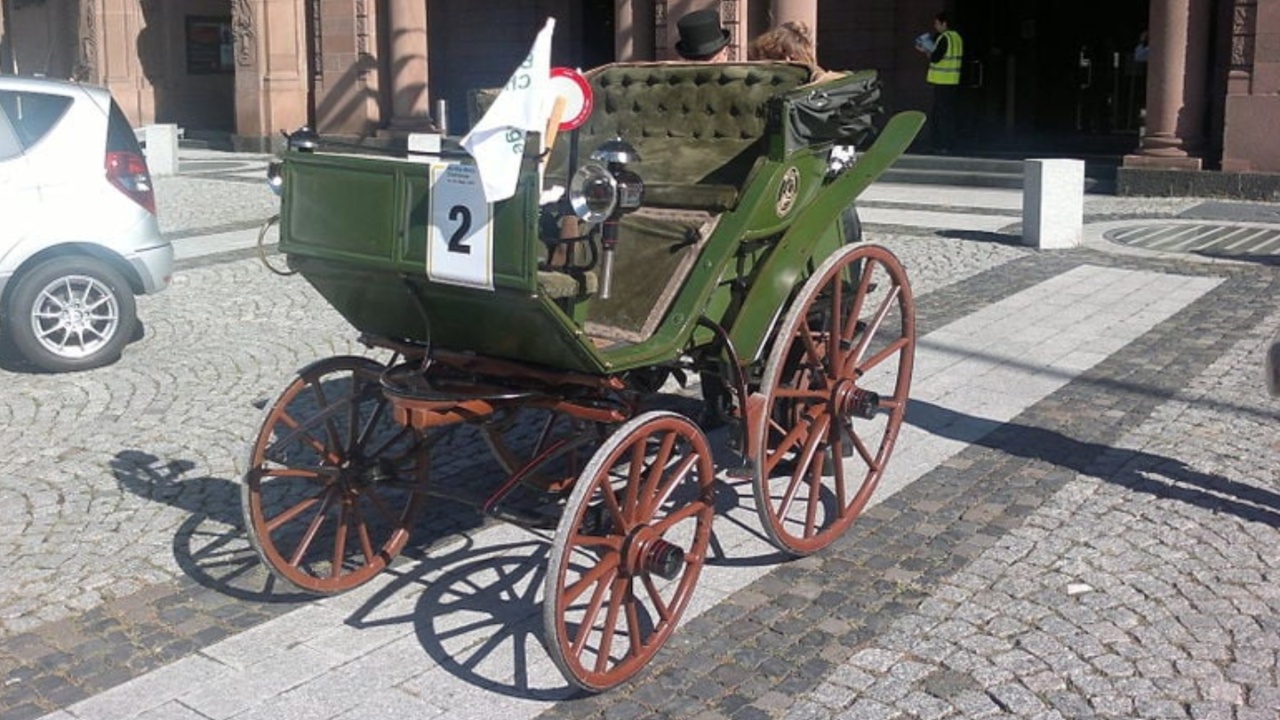
2. 1888 Flocken Elektrowagen (First Electric Car)
The history of electric vehicles (EVs) began in 1888 with German engineer Andreas Flocken’s Flocken Elektrowagen. Regarded as the world’s first practical, four-wheeled electric car, it featured a 1-horsepower motor, a rechargeable lead-acid battery, and a top speed of 9 mph. Unlike early, polluting internal combustion engine (ICE) vehicles that required manual hand-cranking, the Elektrowagen offered a silent, instant-start, and emissions-free ride. By the early 1900s, EVs like the Detroit Electric gained popularity among urban drivers.
However, the rapid ascent of electric cars was halted by the 1908 debut of Henry Ford’s gasoline-powered Model T. The Model T was twice as fast, offered double the driving range, and cost significantly less. Combined with the 1911 invention of the electric starter, which eliminated the hassle of the ICE hand crank and a lack of rural electrical infrastructure, EVs were effectively pushed out of the market for a century.
In the late 20th century, escalating climate change concerns revived interest in clean transportation. The modern EV era truly shifted gears in the 2000s with the entry of Tesla, Inc., which transformed electric cars from boring prototypes into luxury, high-performance powerhouses.
Today’s EVs utilize advanced alternating-current (AC) motors and high-density lithium-ion batteries, allowing them to match or exceed the range and acceleration of their gasoline counterparts. Supported by global government tax incentives, expanding public DC fast-charging networks, and convenient Level 2 home charging infrastructure, modern electric vehicles have successfully overcome their historical limitations, securing a permanent and competitive foothold in the global automotive future.
- Engine/Motor: 0.7–0.9 kW DC electric motor (lead-acid battery powered, belt-driven rear axle)
- Horsepower: ~1 hp (up to ~1.2 hp estimated)
- Torque: Not historically documented
- Length: Not officially recorded (horse-carriage-style chassis, narrow-track design)
- Width: Not officially recorded (narrow carriage-style track)
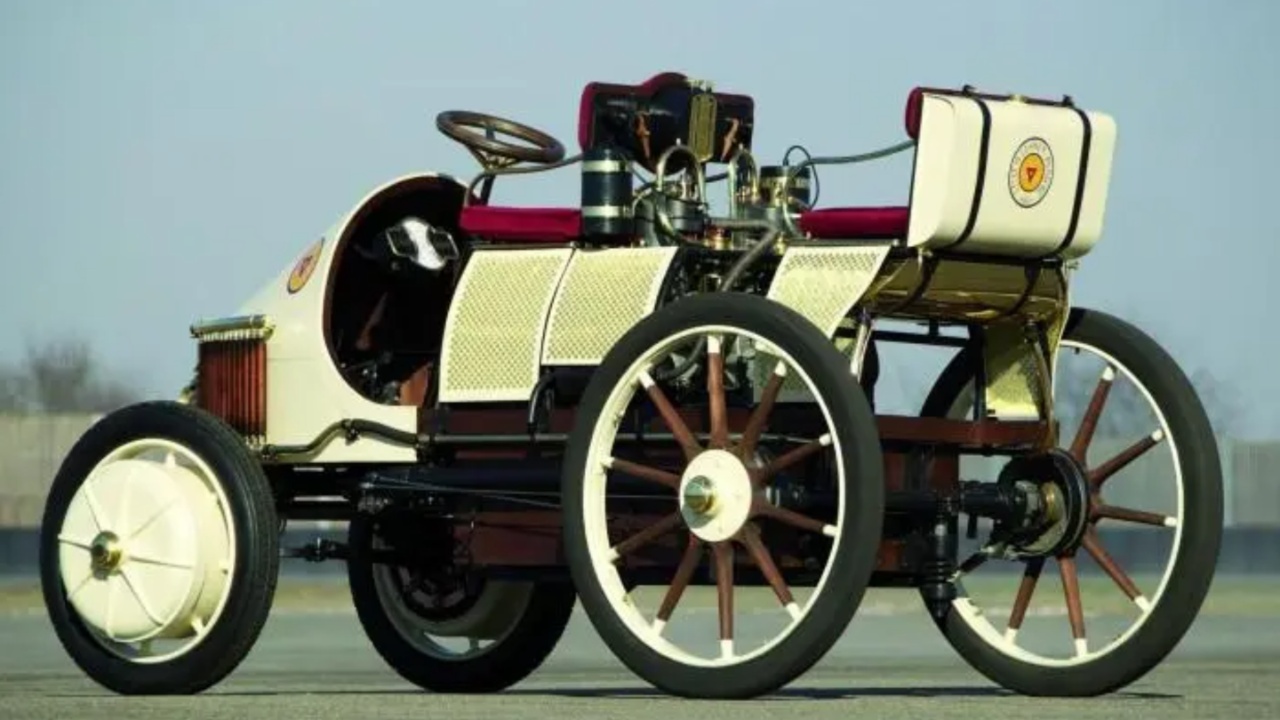
3. 1900 Lohner-Porsche Mixte (First Hybrid Car)
In 1900, long before founding his iconic sports car brand, a young Ferdinand Porsche collaborated with Viennese coachbuilder Ludwig Lohner to create the Lohner-Porsche Mixte. It stands historically as the world’s first functional gasoline-electric hybrid vehicle, proving that hybrid technology is a century-old milestone rather than a modern invention.
The development began with a fully electric prototype showcased at the 1900 Paris World Exhibition, but to solve the limited range of early battery systems, Porsche introduced the “Semper Vivus” (Latin for “Always Alive”) concept, creating the world’s first series-hybrid powertrain.
This revolutionary vehicle featured several innovations that remain foundational to modern electric and hybrid cars today. Instead of a traditional drivetrain, Porsche built electric motors directly into the front wheel hubs to eliminate mechanical friction.
These motors were powered by a serial drive system, where dual single-cylinder gas engines spun onboard generators to continuously charge a 44-cell battery and supply steady power to the wheels. The system was sophisticated enough to feature early concepts of regenerative braking and even all-wheel drive when racing variants utilized motors on all four wheels.
While the bare-bones prototype was too heavy for viable production, the 1901 market version solved these issues by upgrading to a 25-hp, 5.5-liter four-cylinder engine. The Mixte remained in production until 1915. Though combustion engines eventually dominated the 20th century due to the convenience of petrol, the technology was largely forgotten until the late 1990s. The Mixte’s blueprint ultimately paved the way for mass-production icons like the Toyota Prius and the sophisticated hybrid powertrains dominating the automotive industry today.
- Engine: Series-hybrid drivetrain with De Dion-Bouton gasoline engines driving a generator and electric wheel-hub motors
- Horsepower: ~14–28 hp combined system output (depending on two- or four-motor configuration)
- Torque: Not officially recorded; wheel-hub motors provided high instantaneous torque
- Length: Not officially recorded
- Width: 1,880 mm (74.0 in)
4. 1913 Ford Model T (Moving Assembly Line)
In 1913, the Ford Motor Company introduced the world’s first moving assembly line at its Highland Park plant, a breakthrough that permanently altered global manufacturing. Conceptualized by Henry Ford and key engineers like Peter E. Martin and Clarence W. Avery, the system was inspired by continuous flow processes in meat packing plants and breweries. It incorporated Frederick Taylor’s scientific management principles, breaking down complex labor into precise, repetitive, stationary tasks.
By utilizing a conveyor system to pull the vehicle chassis past stationary workers, Ford shattered production bottlenecks. Final assembly time for a single vehicle plummeted from 12.5 hours to just 93 minutes. At its production peak, a completed Model T rolled off the line every 24 seconds, allowing the factory to churn out nearly 10,000 cars daily by 1925.
This unprecedented scale dramatically reduced manufacturing costs. Built with standardized, interchangeable parts and famously restricted to the color black to maximize drying efficiency, the Model T’s price dropped from $850 in 1908 to $260 by 1924. This democratization of car ownership transformed automobiles from handcrafted luxuries into affordable necessities for the American working class, ultimately spurring modern highway construction.
However, the hyper-efficient process came with a human cost. The extreme monotony of the assembly line triggered staggering employee turnover. To stabilize his workforce and enable his own employees to buy the vehicles they built, Ford introduced a revolutionary $5 a day wage in January 1914. This more than doubled the industry average while simultaneously reducing the standard workday to eight hours, cementing a new era for modern industrial labor.
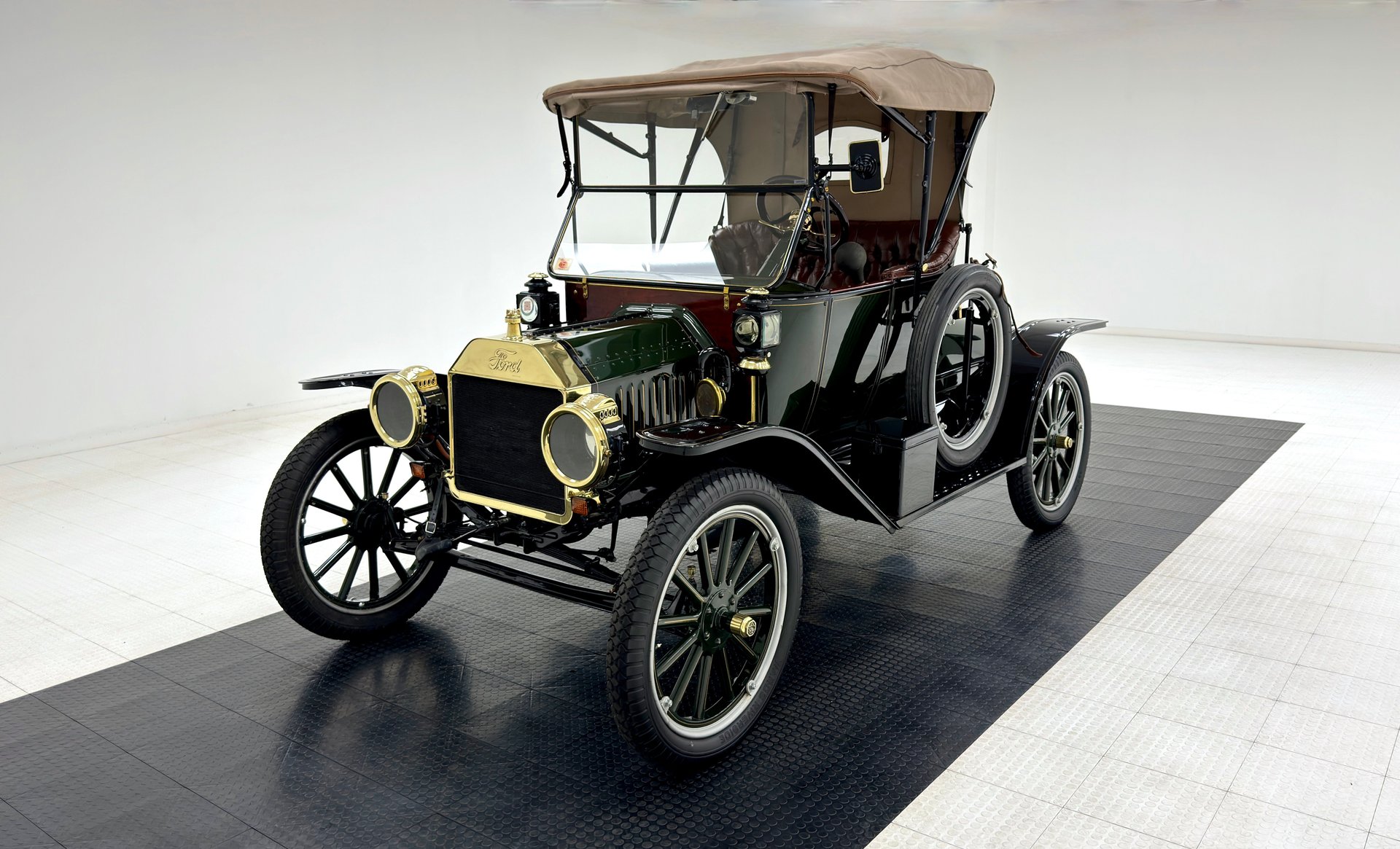
- Engine: 177 cu in (2.9L) side-valve inline-4 (cast-iron)
- Horsepower: 20 hp
- Torque: 83 lb-ft
- Length: 131–134 in (3.33–3.40 m), depending on body style
- Width: 65–66 in (1.65–1.68 m)
5. 1912 Cadillac Touring Edition (Electric Self-Starter)
The introduction of the 1912 Cadillac Model 30 Touring Edition marked one of the most significant milestones in automotive history by featuring the first integrated electric self-starter. Developed by visionary engineer Charles F. Kettering and his company, DELCO, in collaboration with Cadillac’s Henry M. Leland, this groundbreaking technology completely transformed the industry.
Before 1912, operating an internal combustion vehicle required manually turning a heavy hand crank at the front of the car. This physical process was not only exhausting but highly dangerous; engine backfires frequently caused severe facial injuries, broken wrists, and even death. Because of these hazards, many early buyers favored primitive electric cars, which could start with a simple button press but suffered from severely limited battery range.
Kettering’s innovative 24-volt DELCO system solved this dilemma. It utilized a powerful electric motor to automatically spin the flywheel, switching to a generator once the engine ran to recharge the vehicle’s lighting and ignition. This effectively eliminated the dangerous hand crank and obsolete acetylene headlights in favor of a modern, integrated electrical ecosystem.
By removing the requirement for brute physical strength, the electric self-starter democratized driving. It opened the consumer market to a much wider demographic, allowing women and elderly operators to drive independently. This single innovation caused an immediate shift away from electric vehicles toward internal combustion engines, overcoming early public skepticism regarding the safety and dependability of “horseless carriages” and permanently shaping the future of global transportation.
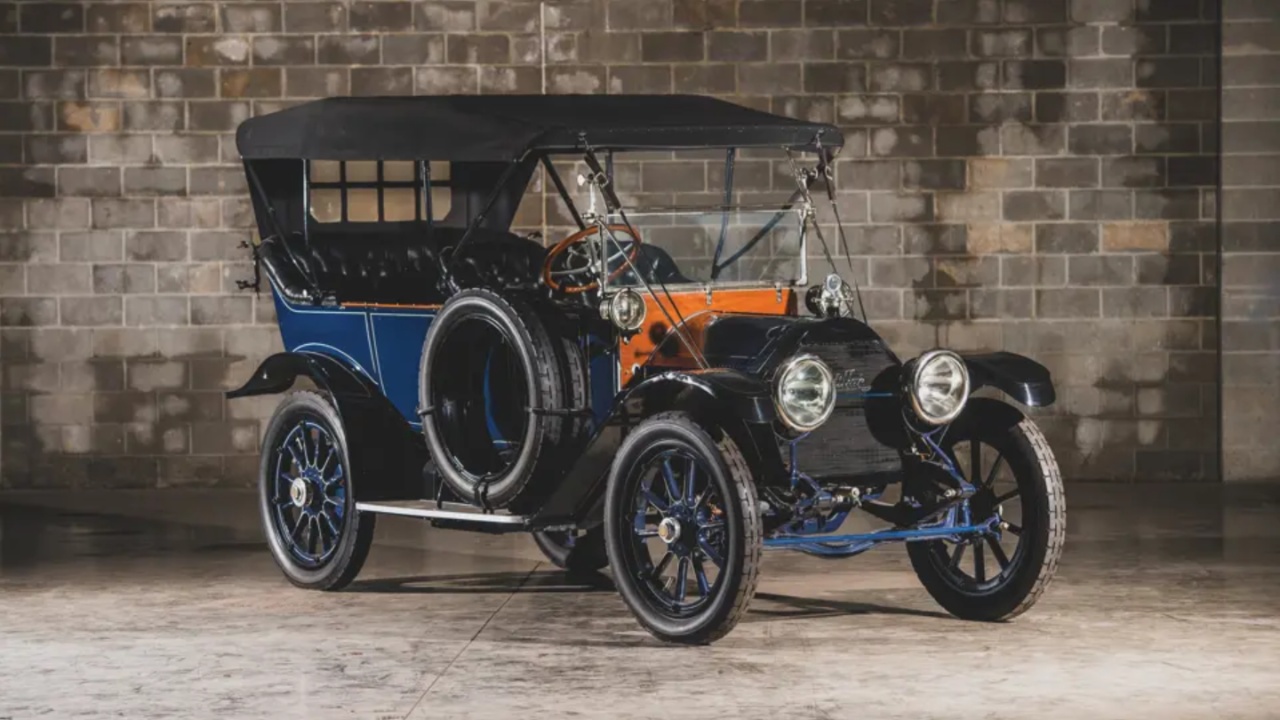
- Engine: 286.3 cu in (4.7L) inline-4, L-head (flathead)
- Horsepower: 40 hp
- Torque: Not officially rated; modern estimates place it at roughly 200–250 lb-ft (271–339 Nm)
- Length: 205 in (5.21 m)
- Width: 72 in (1.83 m)
Also read: 5 Cars Whose Interiors Age Well vs 5 That Wear Out Fast
6. 1939 Packard Custom Super Eight (Air Conditioning)
The 1939 Packard Custom Super Eight, introduced for the 1940 model year, secured its place in history by becoming the first production vehicle to offer a factory-installed air conditioning system. Developed in collaboration with the Bishop and Babcock Manufacturing Company, this revolutionary option was known as the “Weather Conditioner.” It represented a milestone that transformed passenger comfort and set a new standard for luxury.
Unlike previous experimental builds, Packard integrated this climate control system as a purchasable option. The setup featured a year-round configuration combining both a heater and a cooling unit. Mechanically, the apparatus was massive. A belt-driven compressor was mounted to the car’s 160-horsepower, 356 cubic inch straight eight engine, while the large evaporator and blower assembly was installed in the trunk, consuming nearly half of the cargo space.
Because the parts were manufactured in Cleveland, Ohio, completed vehicles had to be shipped from Detroit for final installation. The system was an ultra-luxury feature, costing between $274 and $310, which is equivalent to over $5,000 today.
Despite the steep price, the system was primitive by modern standards. It completely lacked a dashboard switch, thermostat, or compressor clutch. The cooling ran continuously once started. If the cabin became too cold, the driver had to pull over, shut off the engine, pop the hood, and manually remove the compressor’s drive belt to turn the system off.
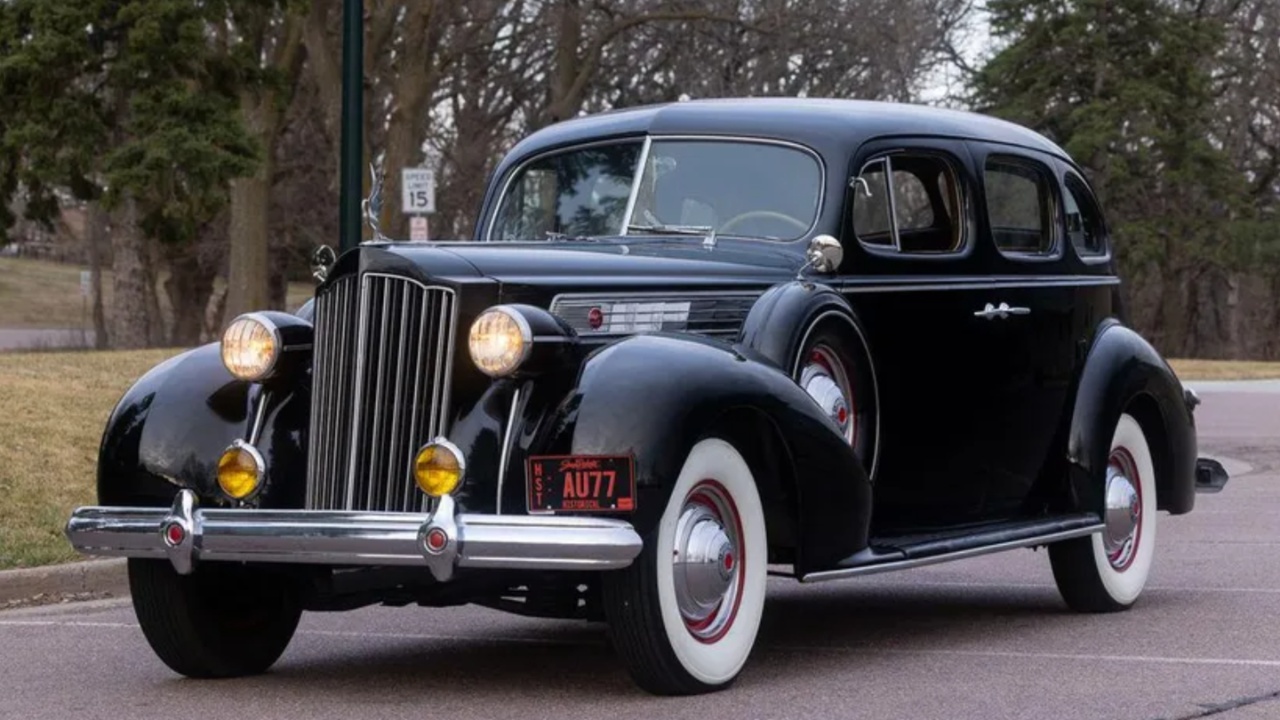
- Engine: 320 cu in (5.2L) L-head straight-8 (inline-8)
- Horsepower: 130 hp @ 3,200 rpm
- Torque: ~221–242 lb-ft (300–328 Nm)
- Length: 201.6–223.1 in (5.12–5.67 m), depending on body style
- Width: 74.8 in (1.90 m)
7. 1940 Oldsmobile Series 90 (Automatic Transmission)
The 1940 model year marked a massive triumph for Oldsmobile, representing a dramatic turnaround from the company’s production low point in 1932. Under the leadership of general manager C.L. McCuen, the automaker reached a milestone by manufacturing its one-millionth vehicle, which was a Series 90 Custom Cruiser sedan.
This period of success also signaled a changing of the guard as S.E. Skinner took over the reins, positioning Oldsmobile to continue its legacy as General Motors’ premier division for mechanical experimentation and design innovation.
The defining achievement of the 1940 Series 90 was the introduction of the Hydra-Matic transmission, the world’s first mass-produced fully automatic transmission. Developed by General Motors and offered for an affordable fifty-seven dollars, this groundbreaking system paired a hydraulic fluid coupling with a four-speed planetary gearbox.
By automatically shifting gears based on vehicle speed and throttle position, the Hydra-Matic completely eliminated the traditional clutch pedal. This mechanical breakthrough made driving much safer and less tiring in heavy traffic, and the system proved so remarkably durable that it was later utilized in wartime military tanks.
Replacing the older Series 80, the new Series 90 safely elevated Oldsmobile into the near-luxury market with a longer wheelbase and a completely modernized exterior. The styling featured a lower hood, a refined front grille, integrated sealed-beam headlights, and a semi-notchback profile.
Functional updates included the removal of running boards, lower fifteen-inch tires for easier entry, and front-hinged rear doors that replaced the older suicide door style. The interior of the Custom Cruiser exuded luxury, boasting a walnut-grain dashboard, a deluxe steering wheel, and premium broadcloth upholstery over comfortable foam-rubber padding.
Despite facing stiff competition from more powerful engines offered by rivals like Buick and Hudson, the Oldsmobile Series 90 held a highly competitive position in the market. The car relied on a twenty-five-point-one cubic inch straight eight engine that produced one hundred ten horsepower.
Priced reasonably at one thousand one hundred thirty-one dollars, the Series 90 four-door sedan became an instant commercial success by capturing over thirty-three thousand buyers. It went on to become Oldsmobile’s second most popular model of the year, cementing its place in automotive history as a pioneer of modern driving comfort.
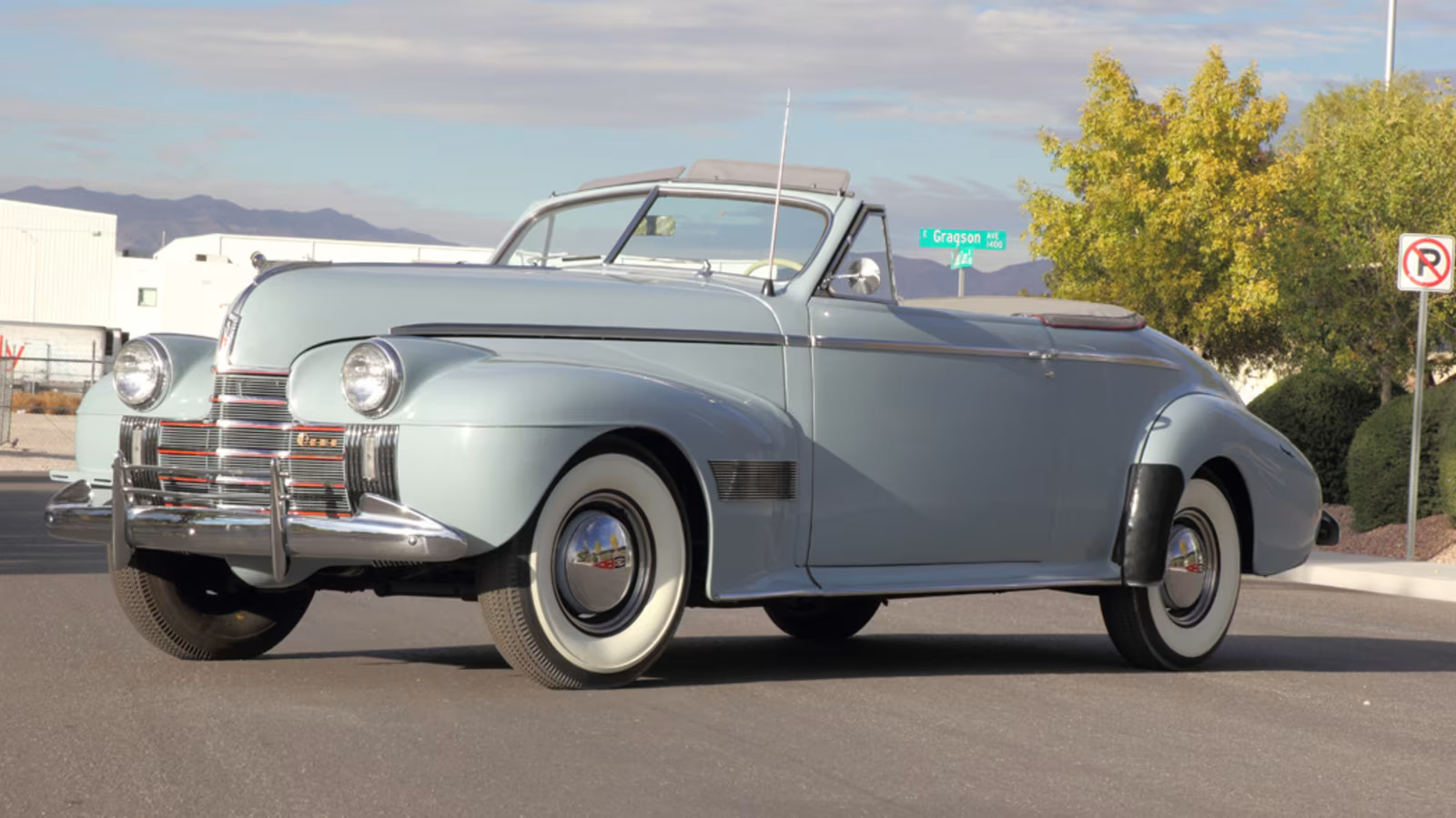
- Engine: 257.1 cu in (4.2L) L-head straight-8 (inline-8)
- Horsepower: 110 hp @ 3,600 rpm
- Torque: 200 lb-ft @ 2,000 rpm
- Length: 210.75 in (5.35 m)
- Width: ~74.25 in (1.89 m)
8. 1949 Nash Ambassador (Factory Seat Belts)
When Nash Motors introduced its radically redesigned 1949 Ambassador, the automotive world encountered a vehicle that prioritized engineering substance over post-war styling trends. Known as the “Airflyte” for its distinctive rounded “bathtub” shape, the car was developed through wind-tunnel testing led by engineer Nils Eric Wahlberg.
This advanced aerodynamic profile allowed the massive sedan to slice through the air with 20% less drag than its contemporary rivals, drastically improving fuel efficiency. Beneath its smooth exterior, the Ambassador utilized groundbreaking unitized body (unibody) construction, which significantly reduced vehicle weight while maximizing structural rigidity and passenger safety.
Beyond its frame, the 1949 Ambassador secured a permanent place in automotive history as the first American production car to offer factory-installed seat belts. Recognizing the escalating dangers of high-speed highway travel, Nash engineers anchored simple lap restraints directly to the vehicle’s robust steel chassis.
Unfortunately, the mid-century public fiercely rejected the safety feature, viewing the belts as cumbersome or as an alarming sign that the vehicle was inherently dangerous. Many buyers went so far as to demand dealers cut them out with razor blades, resulting in fewer than 1,000 sets being used that first model year. Despite this initial resistance, Nash’s bold experiment laid the foundational groundwork for the modern occupant restraint systems used today.
Under the hood, the Ambassador was powered by a smooth, durable 234.5-cubic-inch overhead valve inline-six engine delivering 112 horsepower. Built with seven main bearings, the robust engine featured unique structural choices, such as an intake manifold cast directly into the cylinder head and a water pump driven by the generator shaft.
This powertrain offered adequate, reliable performance perfectly matched to the era’s 50 mph speed limits. Drivers monitored the vehicle via the “Uniscope,” a revolutionary, bullet-shaped instrument cluster mounted directly on the steering column. This early variation of a heads-up display kept vital gauges in the driver’s line of sight, requiring only a minimal downward glance from the road.
True to the company’s philosophy of giving customers more than they paid for, the Ambassador was packed with premium, highly advanced creature comforts. It featured the “Weather Eye” system, a pioneering thermostatic heater and flow-through ventilation setup that automatically maintained a chosen cabin temperature with filtered fresh air.
For long-distance travelers, the interior easily converted into a mobile hotel room using Nash’s famous “Bed-In-A-Car” feature, where the plush seats folded completely flat to accommodate two sleepers. Topped off with an elegant, optional hood ornament designed by famous pin-up artist George Petty, the 1949 Nash Ambassador seamlessly blended lounge-car luxury with visionary engineering.
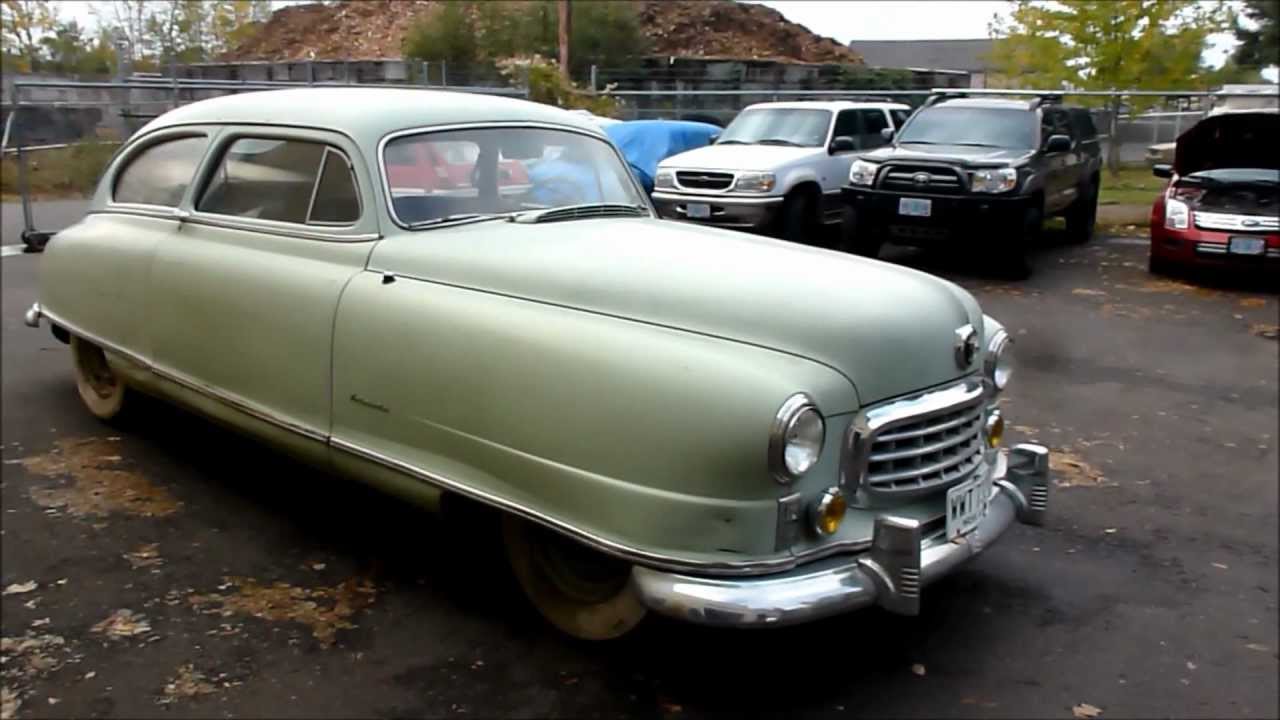
- Engine: 234.8 cu in (3.8L) OHV inline-6
- Horsepower: 112 hp @ 3,400 rpm
- Torque: 208 lb-ft @ 1,600 rpm
- Length: 210 in (5.33 m)
- Width: 77.8 in (1.98 m)
9. 1971 Chrysler Imperial (Four-Wheel ABS)
The 1971 Chrysler Imperial secured its place in automotive history by introducing the world’s first production four-wheel automated anti-lock braking system (ABS). Dubbed “Sure-Brake” and developed alongside the Bendix Corporation, this digital-age breakthrough utilized wheel-speed sensors and a trunk-mounted electronic control unit to automatically pulse brake pressure during panic stops.
By preventing wheel lockup, the system cut stopping distances on slick roads by up to 40% and allowed drivers to maintain steering control, laying the vital groundwork for today’s electronic stability systems.
Beyond its technological firsts, the Imperial was a quintessential American luxury behemoth. Measuring over 19 feet long with a distinct “fuselage” body design, it offered premium leather interiors and a smooth, surprisingly nimble ride. Under the hood, a massive 440 cubic-inch (7.2L) V8 engine generated 350 horsepower, allowing the 5,000-pound vehicle to cruise effortlessly.
However, being ahead of its time came with a cost. Sure-Brake was a hefty $351.50 option, and its mechanical operation produced an audible, tactile clunking noise that unnerved drivers. Due to customer apprehension and the high price tag, only about 230 to 300 units were ever produced. While European automakers would later perfect and standardize digital ABS in the late 1970s, this rare iteration of the Chrysler Imperial remains an engineering marvel that pioneered life-saving safety technology.
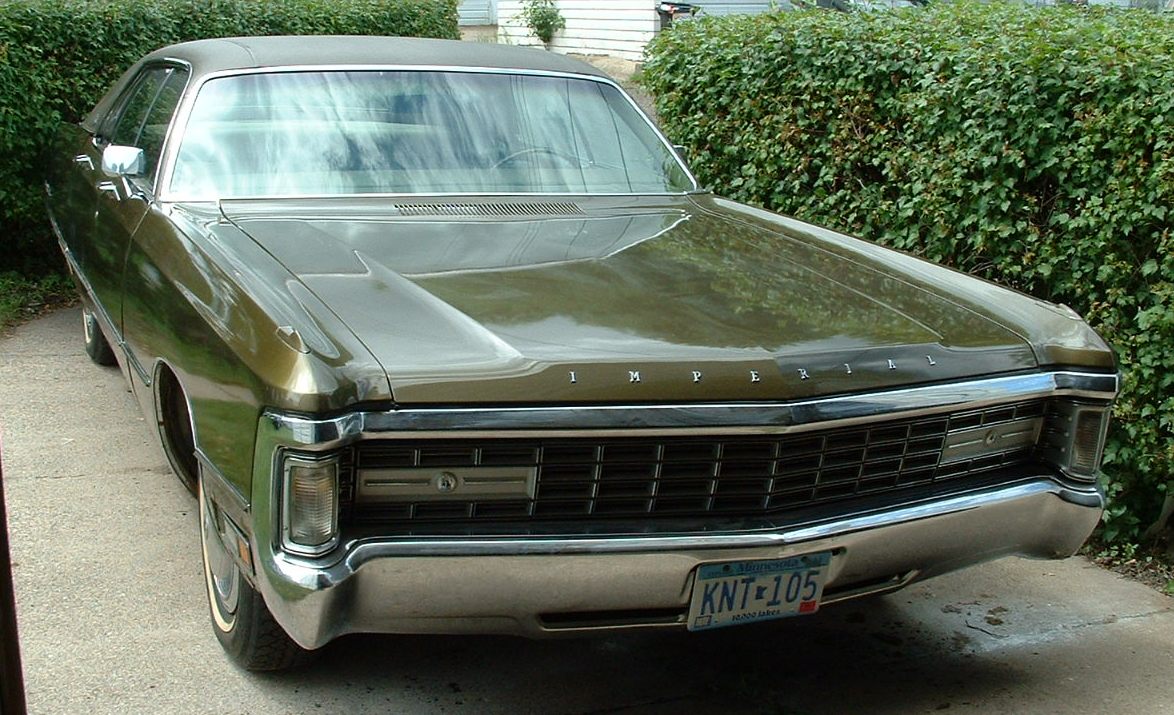
- Engine: 440 cu in (7.2L) “Wedge” big-block V8
- Horsepower: 230 hp
- Torque: 350 lb-ft (474 Nm) @ 3,200 rpm
- Length: 229.7 in (5,834 mm)
- Width: 79.1 in (2,009 mm)
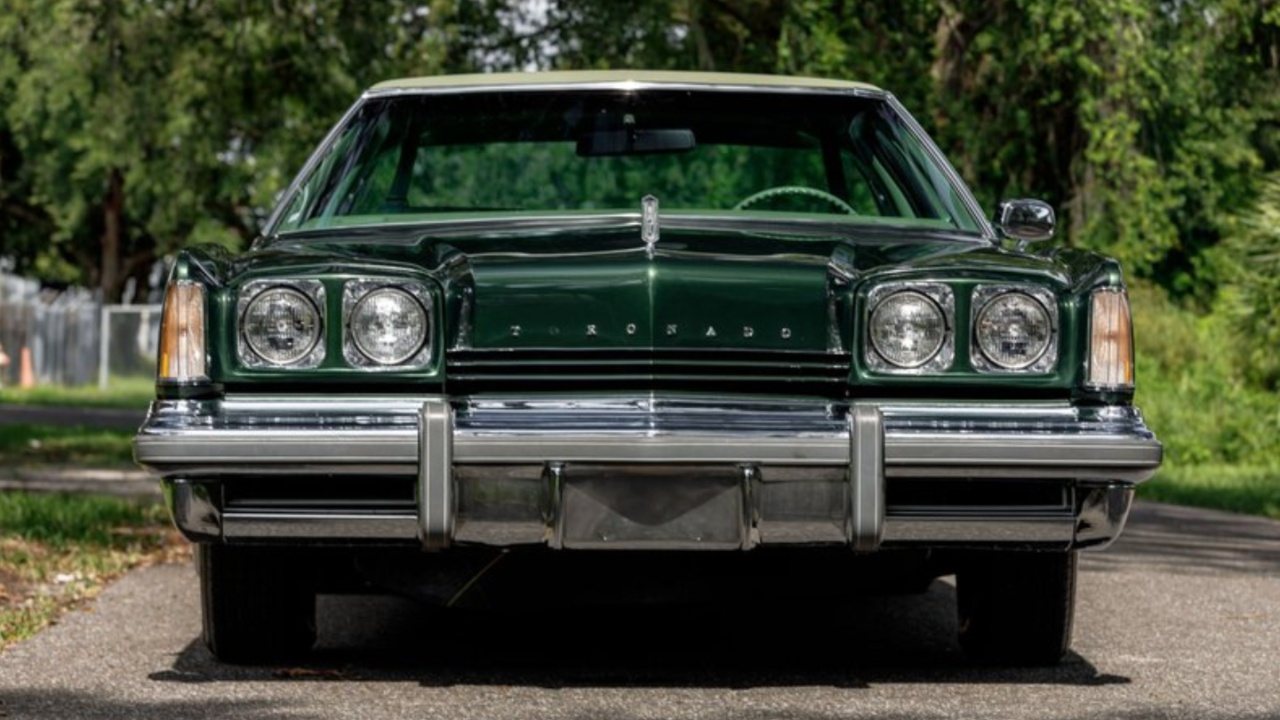
10. 1974 Oldsmobile Toronado (Commercial Airbag)
Long before safety features became major selling points for car buyers, General Motors used the 1974 Oldsmobile Toronado to test a radical idea: protecting passengers with rapidly inflating cushions of air. By introducing the Air Cushion Restraint System (ACRS), the Toronado transitioned airbag technology out of the experimental phase and into the public market, making automotive history as the first production passenger vehicle to offer factory-installed driver and passenger airbags.
This engineering feat relied on a sophisticated crash sensor designed by the Breed Corporation, which featured a magnetized steel ball inside a tube. Upon an impact exceeding 10 mph, the ball would break free to complete an electrical circuit. This instantly triggered a small explosion of sodium azide rather than relying on slow compressed air, inflating the canvas cushions from the steering wheel and dashboard in less than 30 milliseconds.
The system offered undeniable, pioneering benefits for its time. Borrowing data-logging sensors originally designed for the Boeing 747, the ACRS successfully reduced head and chest trauma in real-world frontal accidents. Best of all for the era, buyers did not have to sacrifice any of the Toronado’s legendary personal luxury or its massive 455 cubic-inch V8 power to get this futuristic protection.
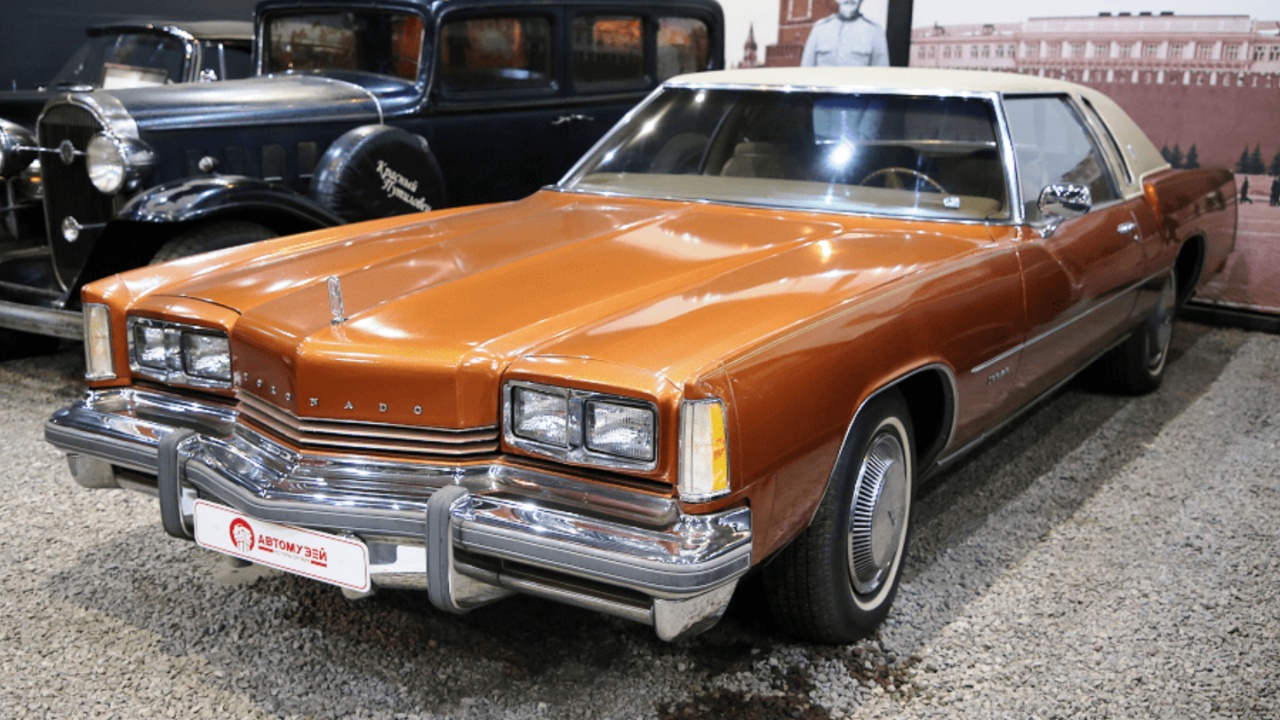
However, the ACRS suffered from significant drawbacks, primarily because GM dangerously marketed it as a complete substitute for traditional shoulder belts. Additionally, the package added 60 pounds of weight and a hefty $225 price tag (equivalent to nearly $1,400 today). The hardware has also aged poorly; modern experts warn that these vintage, single-stage chemical inflators can be volatile and are nearly impossible to service.
Consumer hesitation and high costs doomed the project, leading GM to pull the option in 1977 after selling just over 10,000 airbag-equipped vehicles across all its luxury brands. Though it was a commercial failure in the 1970s, the Toronado’s flawed but brilliant experiment proved the concept worked, laying the indispensable mechanical groundwork for the mandatory airbag systems of the 1990s.
- Engine: 455 cu in (7.5L) Oldsmobile V8 (4-barrel Rochester 4MC carburetor)
- Horsepower: 230 hp @ 4,000 rpm
- Torque: 375 lb-ft @ 2,800 rpm
- Length: 228.0 in (5,791 mm)
- Width: 79.8 in (2,027 mm)
