
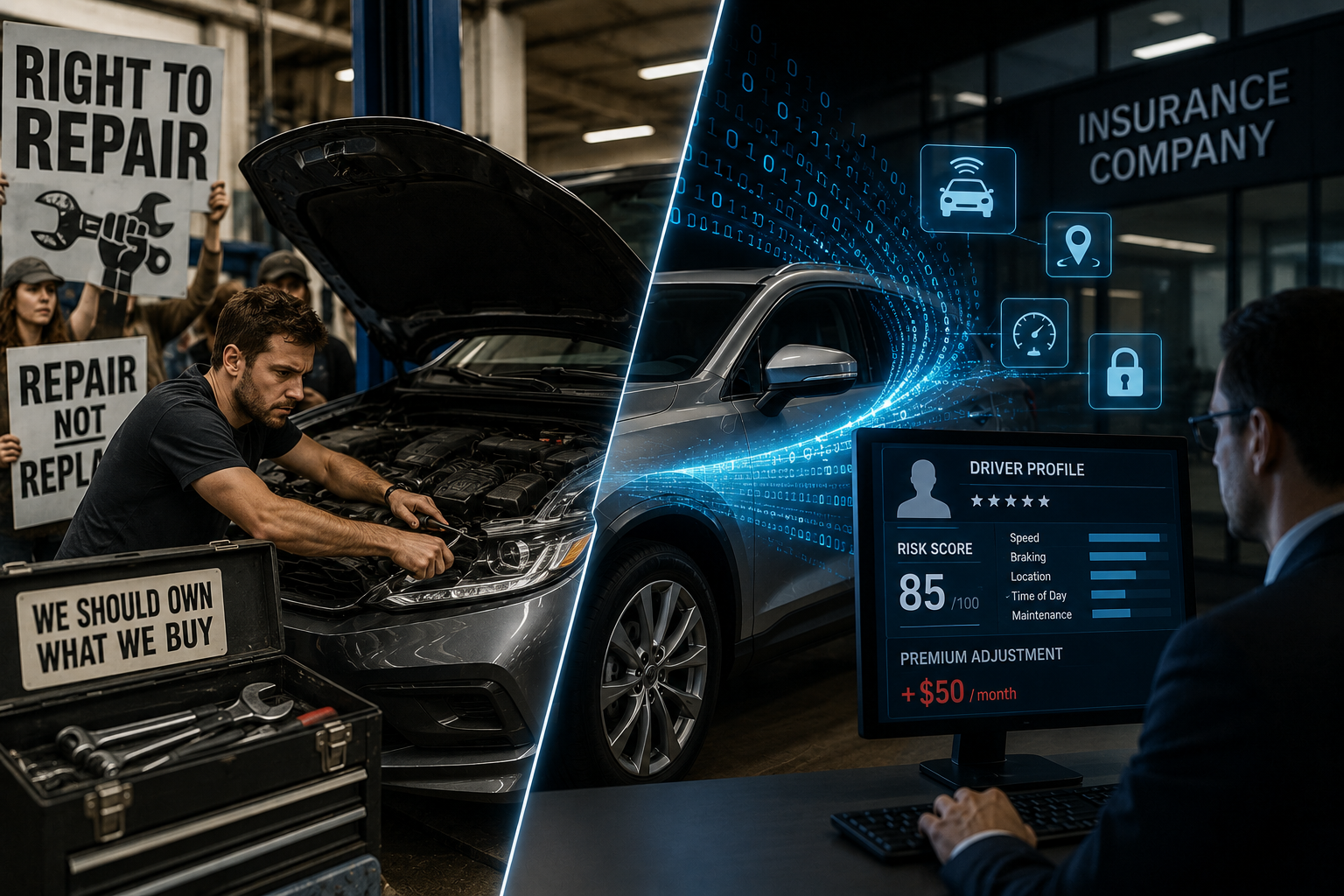
The modern automobile has become one of the most technologically advanced consumer products ever created. New vehicles contain millions of lines of software code, dozens of electronic control units, sophisticated sensors, cloud-based connectivity, and advanced driver-assistance systems that continuously collect information.
Automakers frequently promote these technologies as evidence of innovation, safety improvements, and convenience for consumers. Yet a growing contradiction sits at the center of the connected-car era.
Many manufacturers have spent years resisting right-to-repair efforts that would give vehicle owners and independent repair shops greater access to diagnostic information, software tools, and repair procedures.
At the same time, some of those same companies have enthusiastically embraced business models built around collecting, analyzing, and sharing vehicle-generated data with third parties, including insurance providers.
For critics, consumer advocates, and right-to-repair supporters, the inconsistency is difficult to ignore. If automakers believe vehicle owners should not have unrestricted access to information needed to repair their own cars, why should those same companies have broad authority to monetize data generated by those vehicles?
The debate touches on fundamental questions about ownership, privacy, competition, and consumer rights. As vehicles become increasingly connected, the tension between repair access and data collection is becoming one of the most important issues facing the automotive industry.
Also Read: 10 Surprisingly Spacious Hatchbacks That Beat Compact Crossovers
The Right-To-Repair Movement Has Gained Momentum
The right-to-repair debate did not begin with automobiles. For years, consumers, farmers, electronics technicians, and independent businesses have argued that manufacturers should provide access to the tools, software, parts, and information necessary to repair products they own.
Advocates contend that ownership should include the ability to maintain and repair purchased products without being forced to rely exclusively on authorized service networks.
In the automotive sector, the issue has become particularly important because modern vehicles rely heavily on software.
A study conducted by the consulting firm AlixPartners estimated that software content in vehicles has increased dramatically over the past decade and will continue growing as electrification and connectivity expand.
Repairing a modern vehicle increasingly requires access to diagnostic systems, electronic modules, software calibration tools, and manufacturer databases.
Independent repair shops argue that restricted access creates unfair competitive advantages for dealership service departments. Consumers often face higher repair costs, longer wait times, and fewer choices when repair information is limited.
Organizations supporting right-to-repair legislation maintain that vehicle owners should have access to the same information available to authorized dealerships.
The argument appears straightforward: if consumers purchase a vehicle, they should have the ability to repair it.
Automakers Cite Safety And Cybersecurity Concerns
Manufacturers generally defend their position by emphasizing safety and cybersecurity. Modern vehicles contain systems that directly affect braking, steering, powertrain operation, battery management, and driver-assistance technologies.
Automakers argue that unrestricted access to software and vehicle networks could create safety risks if repairs are performed incorrectly. Cybersecurity concerns have become increasingly important as well.
Connected vehicles communicate with external networks, receive software updates remotely, and rely on cloud-based services. Automakers warn that expanded access to vehicle systems could potentially expose vehicles to hacking attempts or malicious software.
Industry groups have repeatedly stated that they support repair access while also maintaining that sensitive vehicle systems require protection. Some of these concerns are legitimate.
Few consumers would want critical safety systems modified carelessly. However, right-to-repair advocates counter that independent repair facilities have successfully serviced complex vehicles for decades and that cybersecurity should not become a blanket justification for restricting competition.
The debate remains unresolved in many jurisdictions, but the issue becomes more complicated when data collection enters the conversation.
Connected Vehicles Collect Enormous Amounts Of Information
The modern vehicle is effectively a rolling computer. Connected cars routinely collect information related to location, speed, braking habits, acceleration patterns, fuel consumption, battery performance, maintenance conditions, navigation destinations, entertainment preferences, and much more.
Research conducted by the Mozilla Foundation generated widespread attention after examining privacy practices across numerous automotive brands. Researchers concluded that vehicles had become some of the most extensive data-collection devices consumers regularly use.
The volume of information being generated is enormous. According to S&P Global Mobility, hundreds of millions of connected vehicles now operate worldwide, creating vast datasets that manufacturers can analyze for product development, maintenance planning, software improvements, and commercial partnerships.
Many consumers appreciate certain benefits of connectivity. Remote vehicle monitoring, predictive maintenance alerts, navigation services, emergency assistance, and over-the-air software updates all depend on information sharing. The problem arises when consumers discover how broadly their data may be used.
Vehicle owners often have limited visibility into how information is collected, stored, analyzed, and shared. That lack of transparency has become a major source of criticism.
Insurance Companies Have Become Valuable Partners
One of the most controversial uses of connected-car data involves insurance. Usage-based insurance programs rely on driving behavior information to assess risk. Acceleration habits, braking frequency, mileage, travel times, and route patterns can all influence premium calculations.
J.D. Power research indicates that many consumers participate in these programs because safe driving behavior can produce discounts. From a purely technical standpoint, the concept makes sense. Better information allows insurers to evaluate risk more accurately.
However, concerns arise when consumers are unaware that data sharing is occurring or when consent procedures are unclear.
Several investigations and media reports over the past few years have highlighted cases where vehicle-generated information was allegedly shared with data brokers or insurance-related entities. These revelations sparked public backlash because many drivers did not realize the extent of data collection taking place.
Critics argue that if automakers are willing to provide extensive access to consumer data for commercial purposes, their resistance to repair access appears increasingly difficult to justify. The contrast has become a central theme in the right-to-repair debate.
Ownership Should Mean More Than Monthly Payments
At the heart of the issue lies a basic philosophical question. What does it mean to own a vehicle?
Historically, ownership implied control. Consumers could maintain, modify, repair, and operate their vehicles largely as they saw fit, provided they complied with applicable laws and safety regulations. The connected-car era has complicated that relationship.
Software licenses, subscription services, digital restrictions, and proprietary diagnostic systems have introduced new limitations. In some cases, consumers may discover that they have purchased a vehicle while lacking access to certain information necessary for repairs.
At the same time, manufacturers continue benefiting from data generated by that same vehicle.
Many consumer advocates argue that ownership rights should evolve alongside technology rather than diminish because of it. If companies can profit from information generated by a vehicle, they contend that owners should have greater authority over both repair decisions and data usage.
This perspective has gained support among lawmakers, independent repair organizations, and consumer-rights groups. The argument is not necessarily anti-technology.
Instead, it focuses on ensuring that technological advancements do not erode traditional ownership rights.
The Economic Stakes Are Significant
The right-to-repair debate involves substantial financial interests. The automotive repair industry generates hundreds of billions of dollars annually in the United States alone. Independent repair facilities represent a significant portion of that market, providing competition that can help keep repair costs lower for consumers.
At the same time, connected-car services and data-driven revenue streams are becoming increasingly important for manufacturers.
McKinsey & Company has projected that connected services, software subscriptions, and data-related business opportunities could generate hundreds of billions of dollars globally in the coming years.
Investors are paying close attention because recurring digital revenue often produces stronger margins than vehicle manufacturing. The conflict becomes obvious.
Automakers seek to maintain control over vehicle ecosystems while simultaneously expanding opportunities to monetize consumer information.
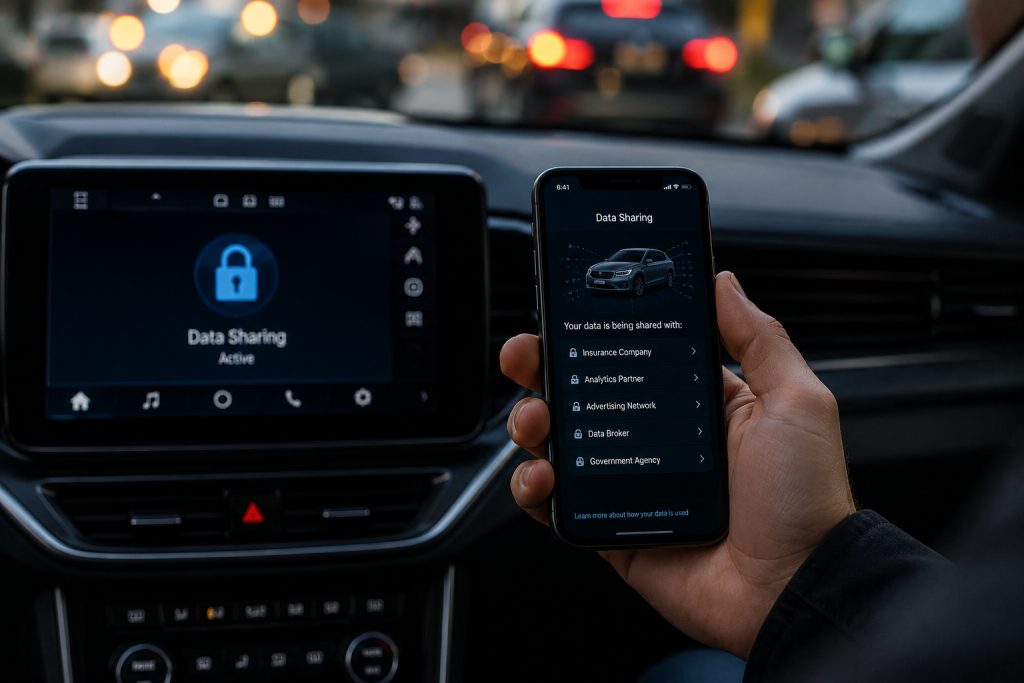
Independent repair providers and consumer advocates argue that such control should not come at the expense of ownership rights. As vehicles become more software-dependent, these economic tensions are likely to intensify.
Transparency Could Help Rebuild Trust
One area where many observers agree that improvement is needed involves transparency. Consumers should understand what information their vehicles collect, how it is used, who receives access to it, and how long it is retained. Clear disclosures and meaningful consent mechanisms would help address many privacy concerns.
Likewise, manufacturers could provide broader repair access while maintaining appropriate cybersecurity protections. These goals are not mutually exclusive.
Technology companies in other industries have demonstrated that secure systems can coexist with consumer choice. The automotive industry may eventually need to adopt similar approaches if it hopes to maintain public trust.
The current situation often creates the perception that manufacturers want maximum access to consumer information while providing minimal access to repair information. Whether fair or not, that perception fuels criticism.
Why The Contradiction Matters
The automotive industry is entering an era where software, connectivity, and data will shape nearly every aspect of vehicle ownership.
Consumers are increasingly being asked to accept subscription services, connected features, remote monitoring, and ongoing data collection. In return, many expect greater transparency, stronger privacy protections, and meaningful ownership rights. That expectation is reasonable.
When automakers argue that vehicle owners should have limited access to repair information while simultaneously profiting from data generated by those vehicles, the position becomes difficult to defend.
Safety and cybersecurity concerns deserve serious consideration, but those concerns lose credibility when commercial data-sharing arrangements appear to receive greater priority than consumer access.
The right-to-repair debate is ultimately about more than fixing cars. It is about ownership, control, and fairness in an increasingly connected world.
As vehicles become more sophisticated, manufacturers will need to decide whether they view customers primarily as owners or as ongoing sources of valuable data. The answer could have lasting implications for consumer trust, regulatory policy, and the future of the automotive industry itself.
Also Read: 10 Cars Faster Than A Ferrari With Less than $40,000
